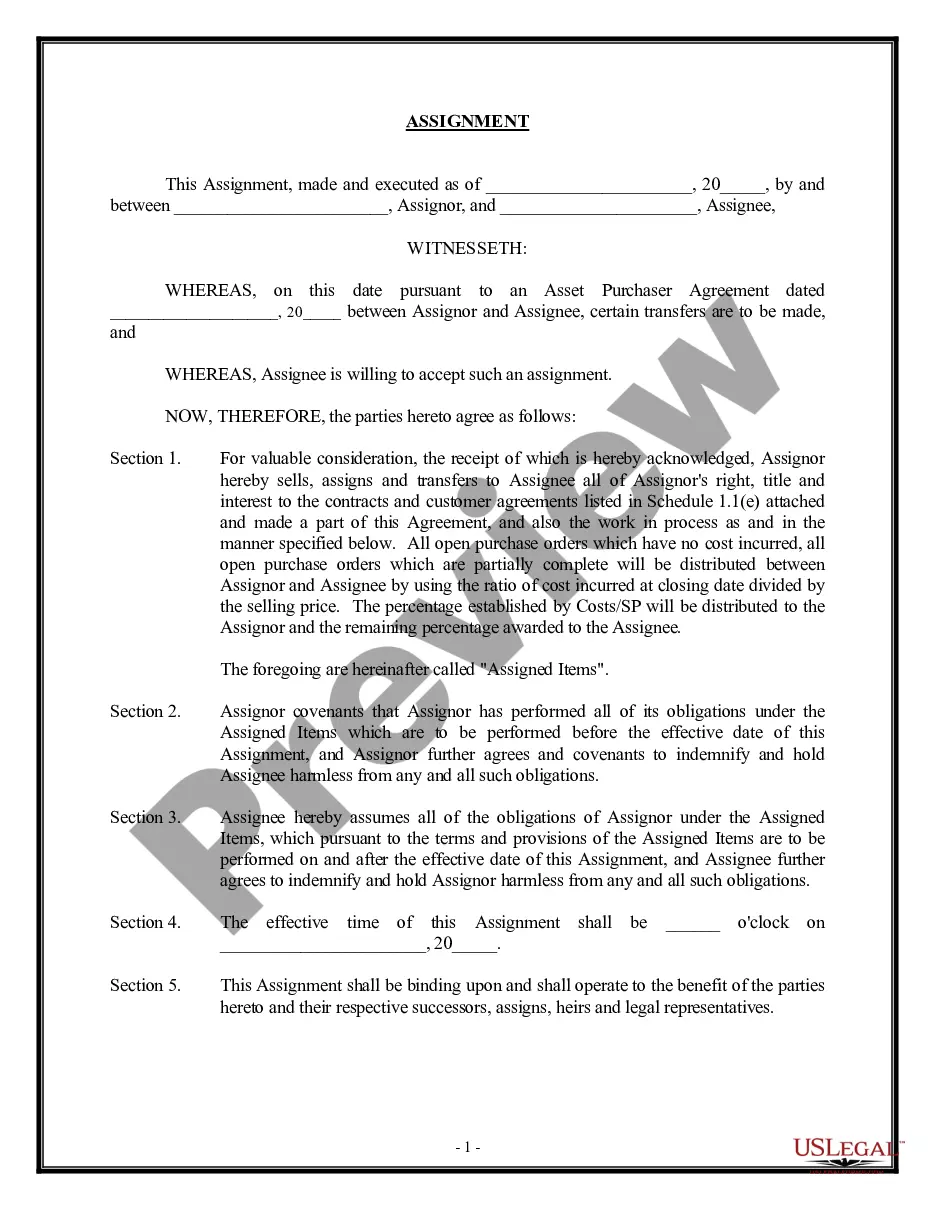
This form is an Authority to Release. The county clerk is authorized and requested to release from a deed of trust a parcel of land to the executor of the estate. The form must be signed in the presence of a notary public.
Indiana Authority to Release of Deed of Trust
State:
Multi-State
Control #:
US-00186
Format:
Word;
Rich Text
Instant download
Description
Free preview

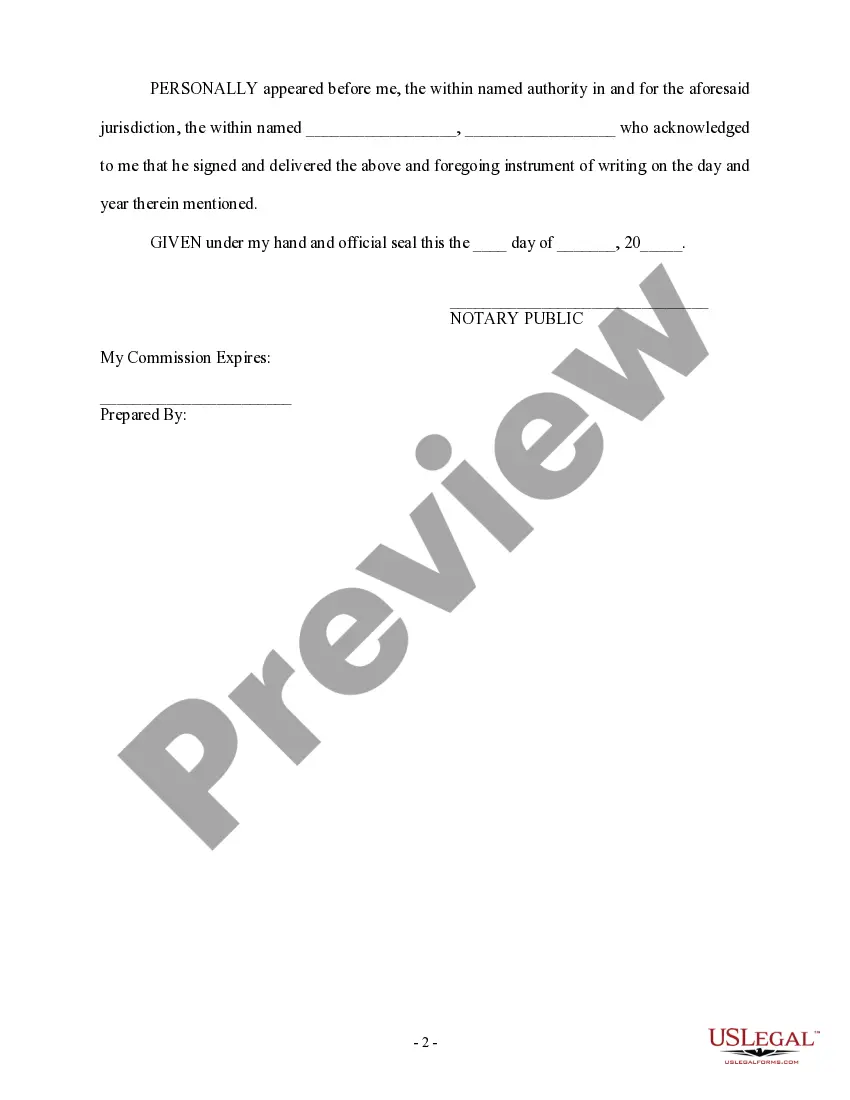
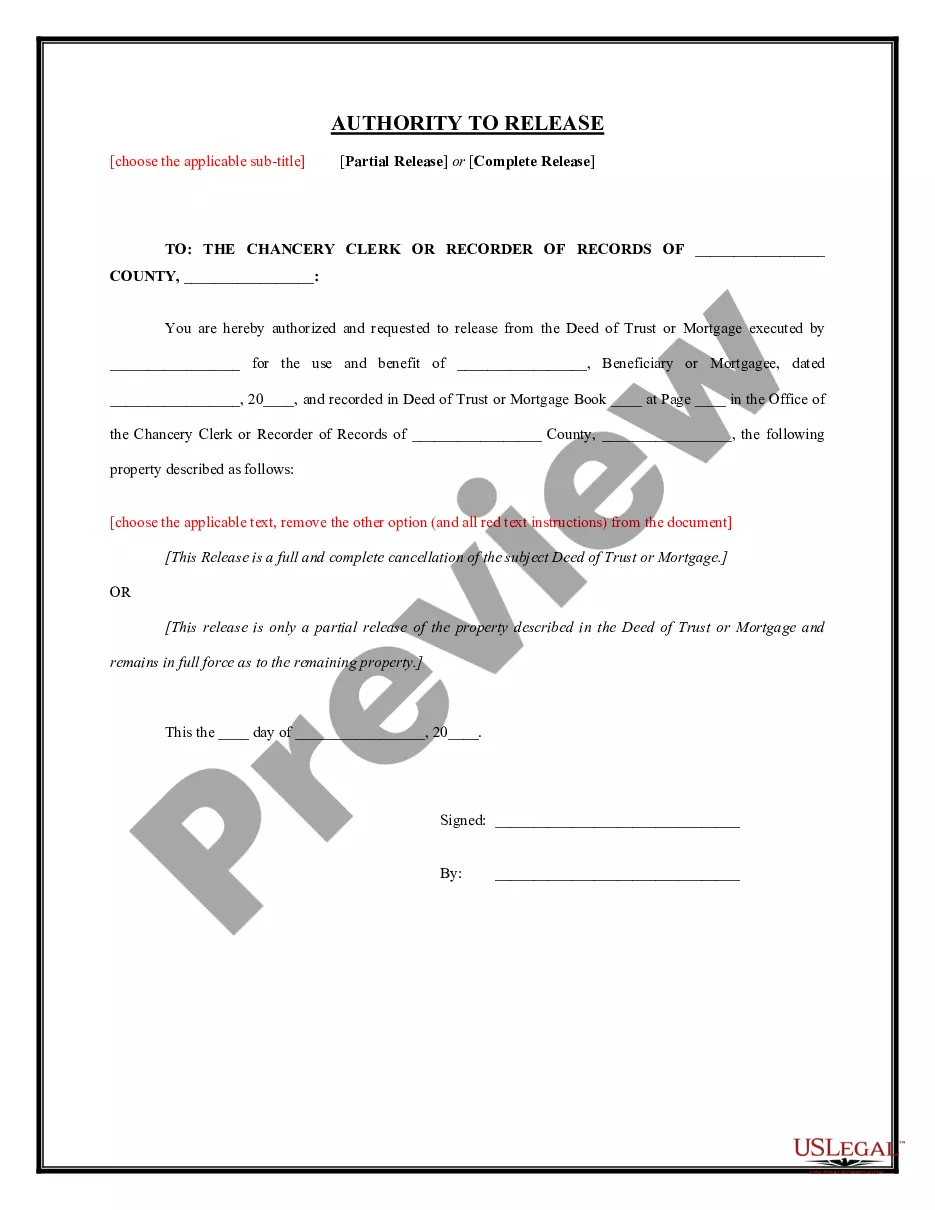
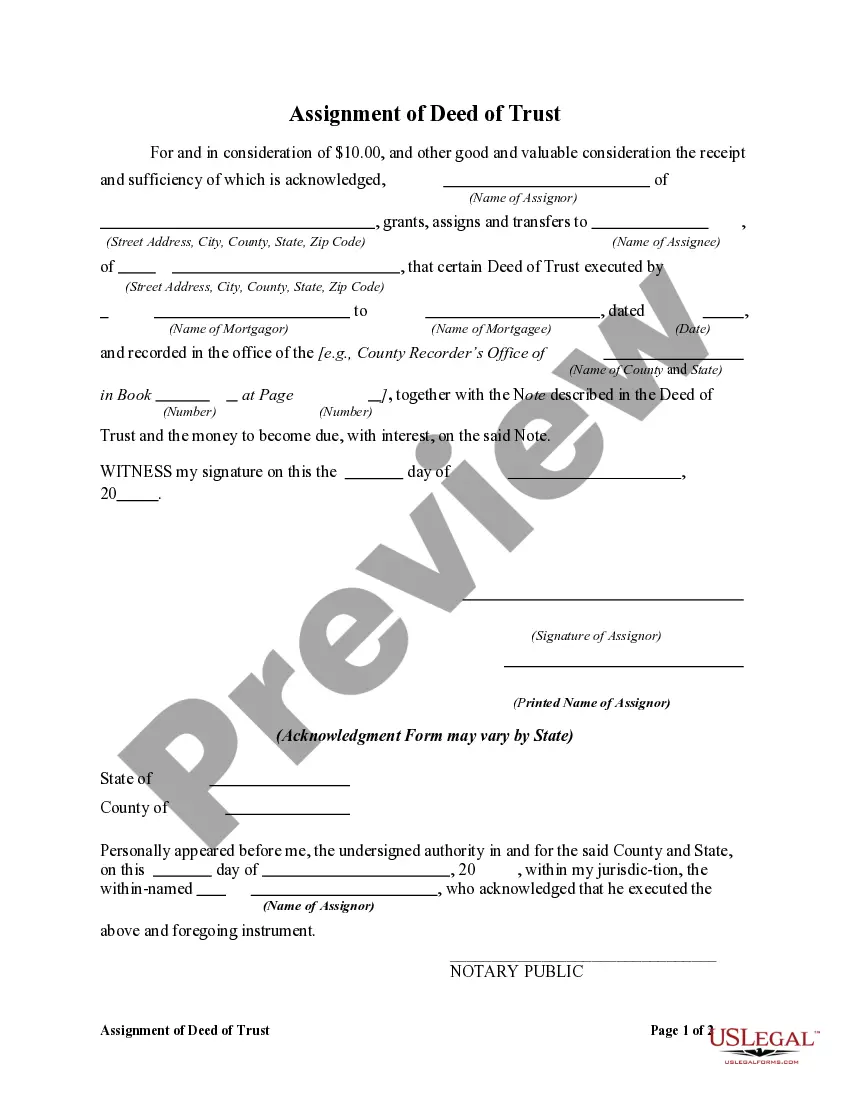
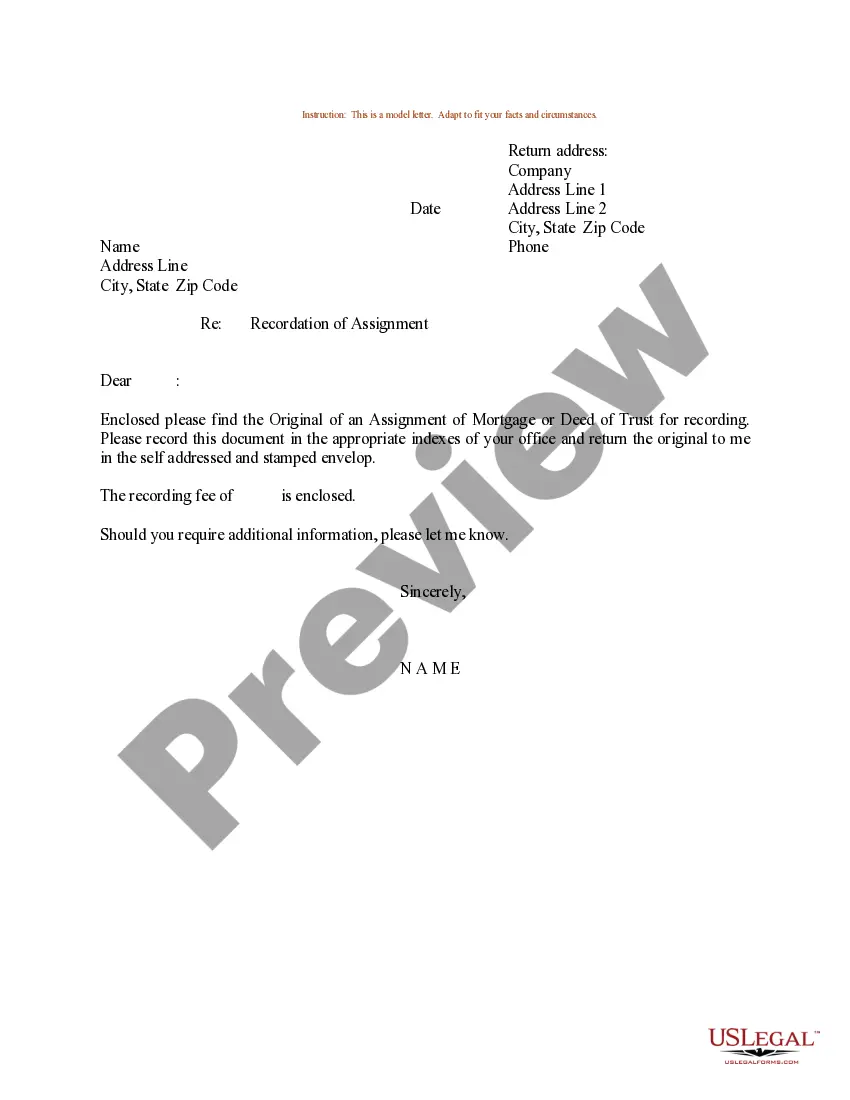

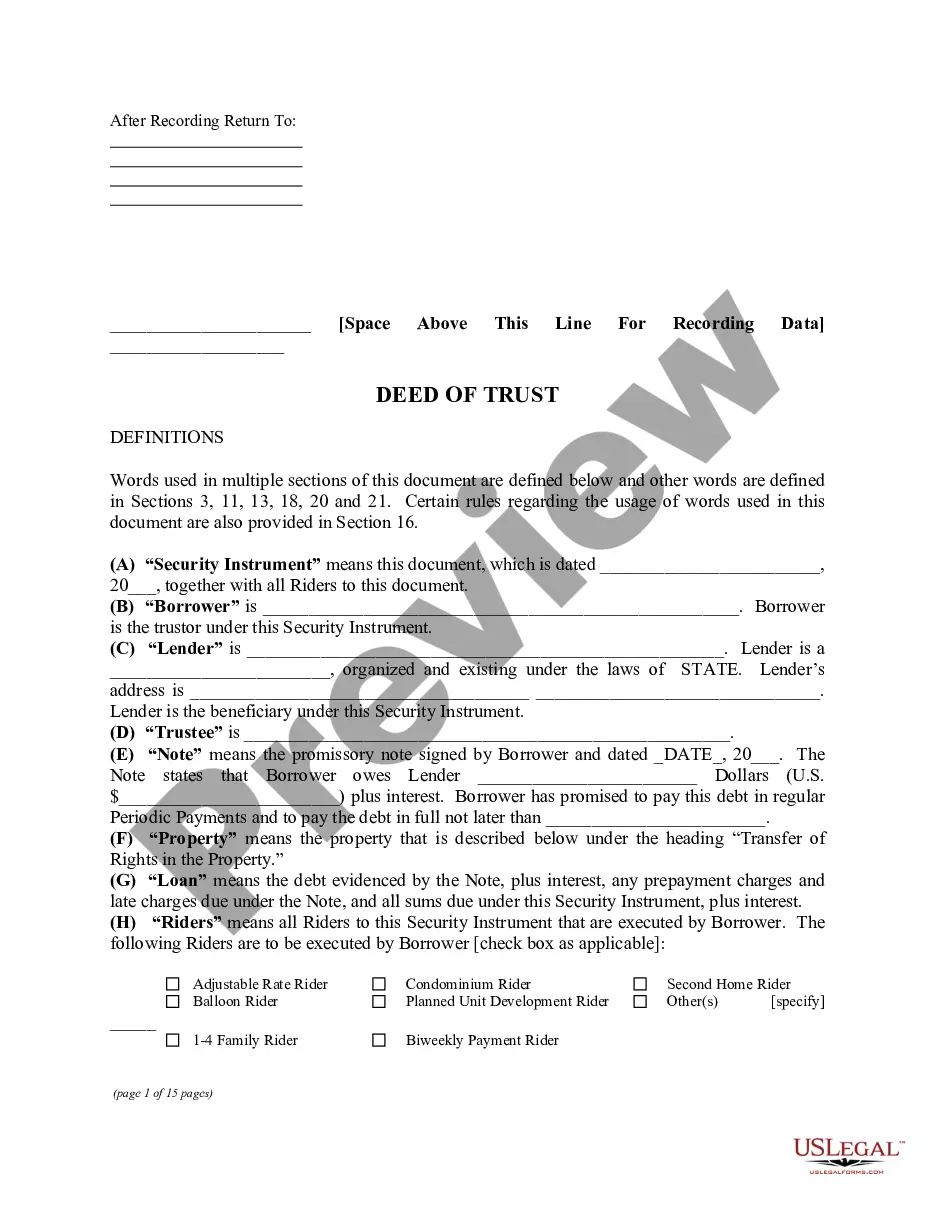



How to fill out Authority To Release Of Deed Of Trust?
If you need to complete, acquire, or print legitimate document web templates, use US Legal Forms, the largest assortment of legitimate kinds, that can be found on the web. Utilize the site`s basic and hassle-free research to discover the papers you need. Various web templates for company and personal reasons are sorted by classes and states, or keywords and phrases. Use US Legal Forms to discover the Indiana Authority to Release of Deed of Trust in a couple of click throughs.
When you are presently a US Legal Forms buyer, log in for your accounts and click on the Acquire button to obtain the Indiana Authority to Release of Deed of Trust. Also you can gain access to kinds you in the past downloaded from the My Forms tab of your respective accounts.
If you work with US Legal Forms the first time, refer to the instructions below:
- Step 1. Ensure you have selected the form to the appropriate metropolis/region.
- Step 2. Make use of the Preview choice to examine the form`s information. Never forget to read through the description.
- Step 3. When you are unsatisfied with all the type, utilize the Research discipline on top of the display screen to find other models in the legitimate type format.
- Step 4. Once you have located the form you need, go through the Acquire now button. Pick the costs prepare you like and add your credentials to sign up for an accounts.
- Step 5. Method the financial transaction. You may use your bank card or PayPal accounts to perform the financial transaction.
- Step 6. Pick the format in the legitimate type and acquire it in your system.
- Step 7. Full, change and print or signal the Indiana Authority to Release of Deed of Trust.
Every legitimate document format you acquire is yours forever. You may have acces to every type you downloaded with your acccount. Click the My Forms section and decide on a type to print or acquire once again.
Be competitive and acquire, and print the Indiana Authority to Release of Deed of Trust with US Legal Forms. There are thousands of professional and state-particular kinds you can use for the company or personal requires.
Form popularity
FAQ
To complete a quit claim deed in Indiana, you first need to obtain the correct form and fill it out with the necessary information, including the names of the grantor and grantee, the property description, and the legal language. Next, ensure that both parties sign the document in the presence of a notary public to validate the deed. After signing, you must file the completed quit claim deed with the county recorder’s office to make it official. For a smooth process, consider using US Legal Forms, which provides easy access to the necessary forms and guidance on Indiana Authority to Release of Deed of Trust.
Filing a quitclaim deed in Indiana involves a few straightforward steps. First, you must prepare the deed, including the legal description of the property and the names of the grantor and grantee. After signing the deed, you should file it with the county recorder’s office to officially transfer ownership. The Indiana Authority to Release of Deed of Trust can assist you in ensuring compliance with all requirements.
To obtain a lien release in Indiana, you must first ensure that all payments related to the lien have been made. Then, request a lien release document from the lienholder, which they must sign. Finally, file the signed release with the county recorder to officially remove the lien from the property. The Indiana Authority to Release of Deed of Trust can provide guidance throughout this process.
A Transfer on Death (TOD) deed in Indiana allows property owners to transfer their property to beneficiaries upon their death. This deed avoids probate, providing a straightforward way to pass on assets. To initiate a TOD, you must properly file the deed with the county recorder, ensuring that the Indiana Authority to Release of Deed of Trust is followed for any existing liens.
To discharge a trust in Indiana, you need to follow a few essential steps. First, gather all relevant documents, including the trust agreement. Then, ensure that all obligations under the trust have been fulfilled, and finally, file the necessary paperwork with the appropriate authority. Understanding the Indiana Authority to Release of Deed of Trust can simplify this process.
This deed is used by trustees of trusts or administrators of estates to transfer title to property without incurring any liability for warranties on themselves.
Code § 29-1-13-1. Every personal representative shall have a right to take, and shall take, possession of all the real and personal property of the decedent.
(b) A conveyance must: (1) be in writing; (2) be executed or signed by the: (A) lessor or landlord; (B) grantor (as defined in IC 32-17-1-1) ; or (C) land contract seller; and (3) have an acknowledgment (as defined in IC 33-42-0.5-2) or a proof (as defined in and permitted under IC 32-21-2) .
Section 32-17-14-12 - Transfer on death transfers of tangible personal property (a) A deed of gift, bill of sale, or other writing intended to transfer an interest in tangible personal property is effective on the death of the owner and transfers ownership to the designated transferee beneficiary if the document: (1) ...
Prior to the real property owner's death, the transfer on death deed must: (1) be executed by the owner of the real property, or their legal representative, and (2) be recorded in the county where the real property is located. Indiana Code Section 32-17-14-11.