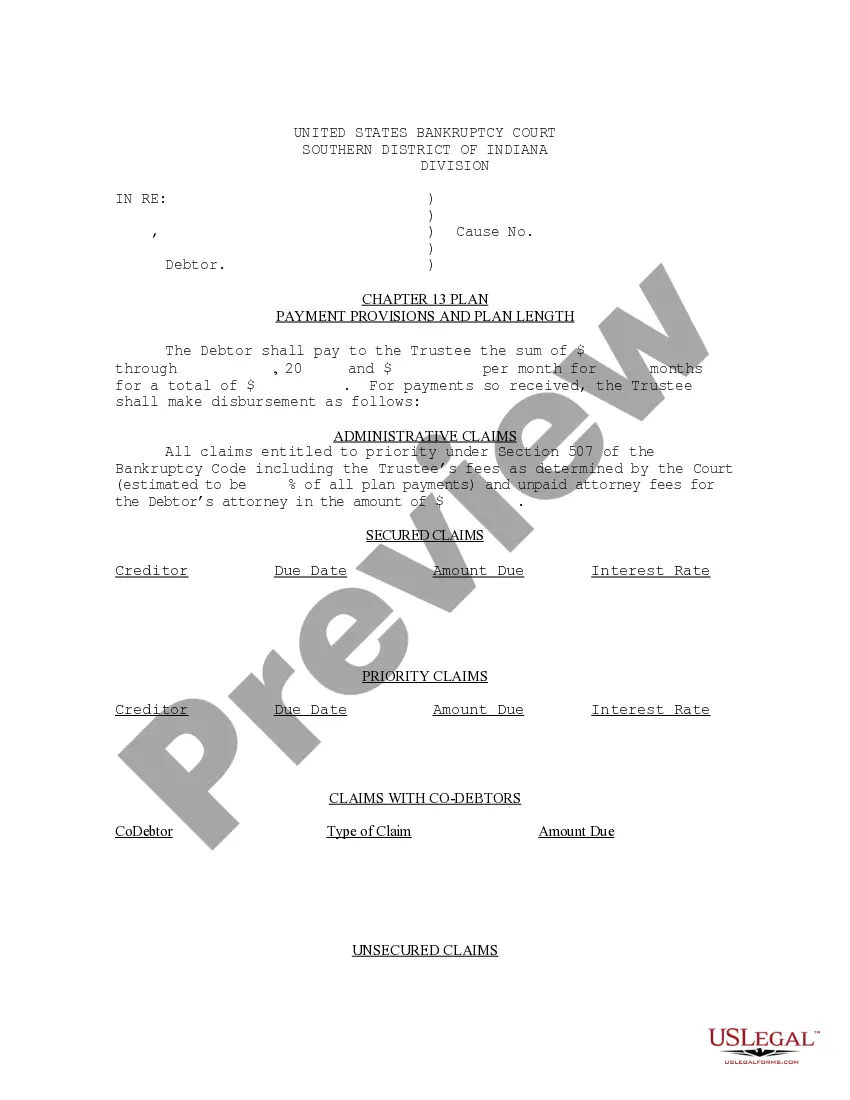
Indiana Default Judgment
Overview of this form
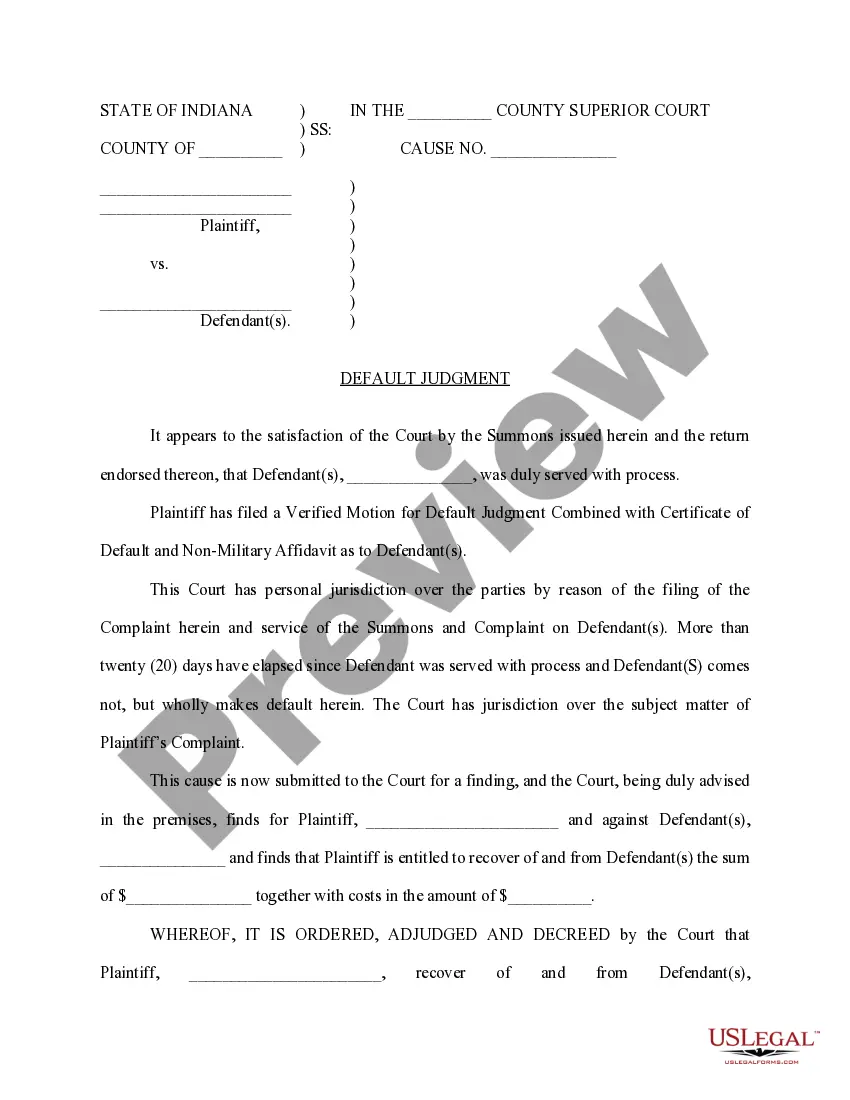
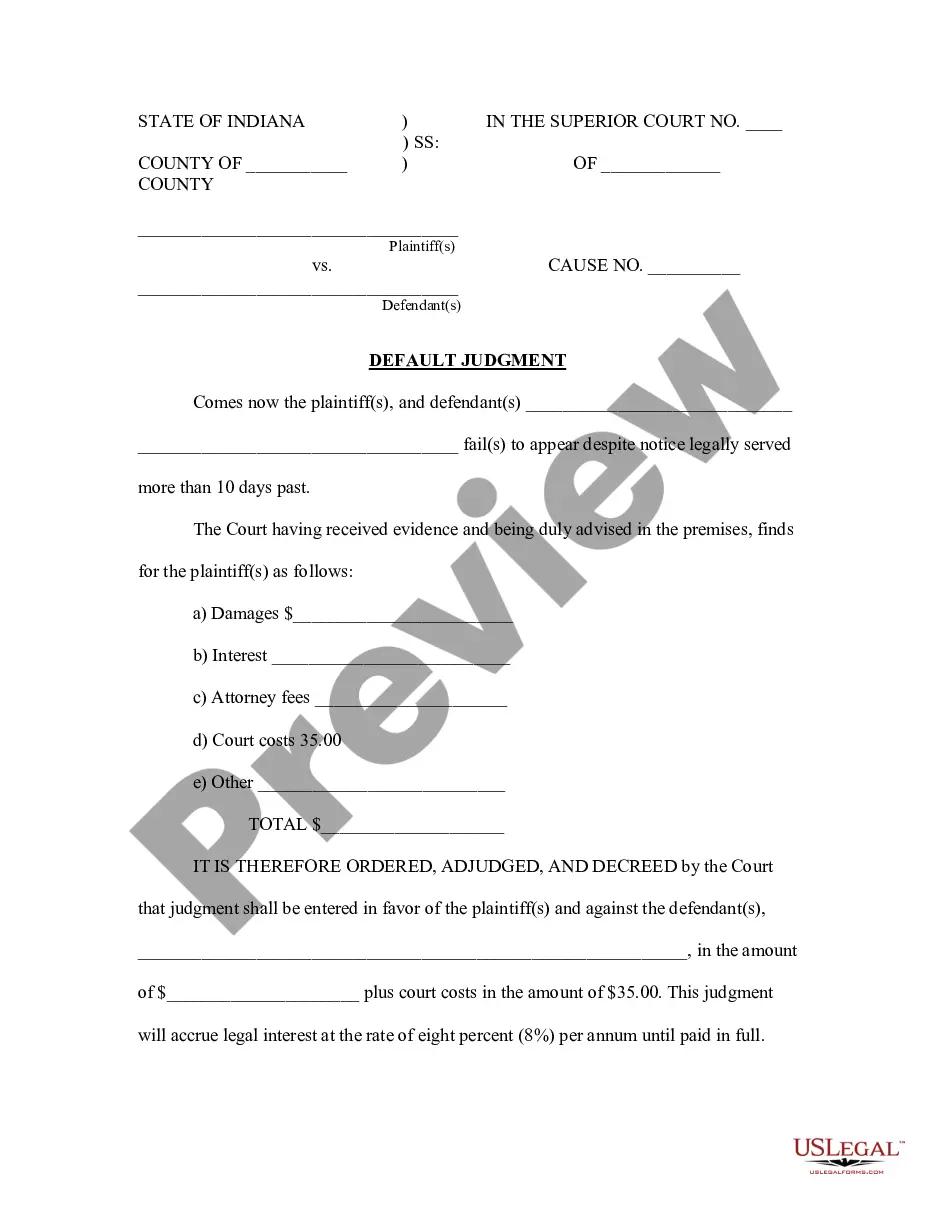
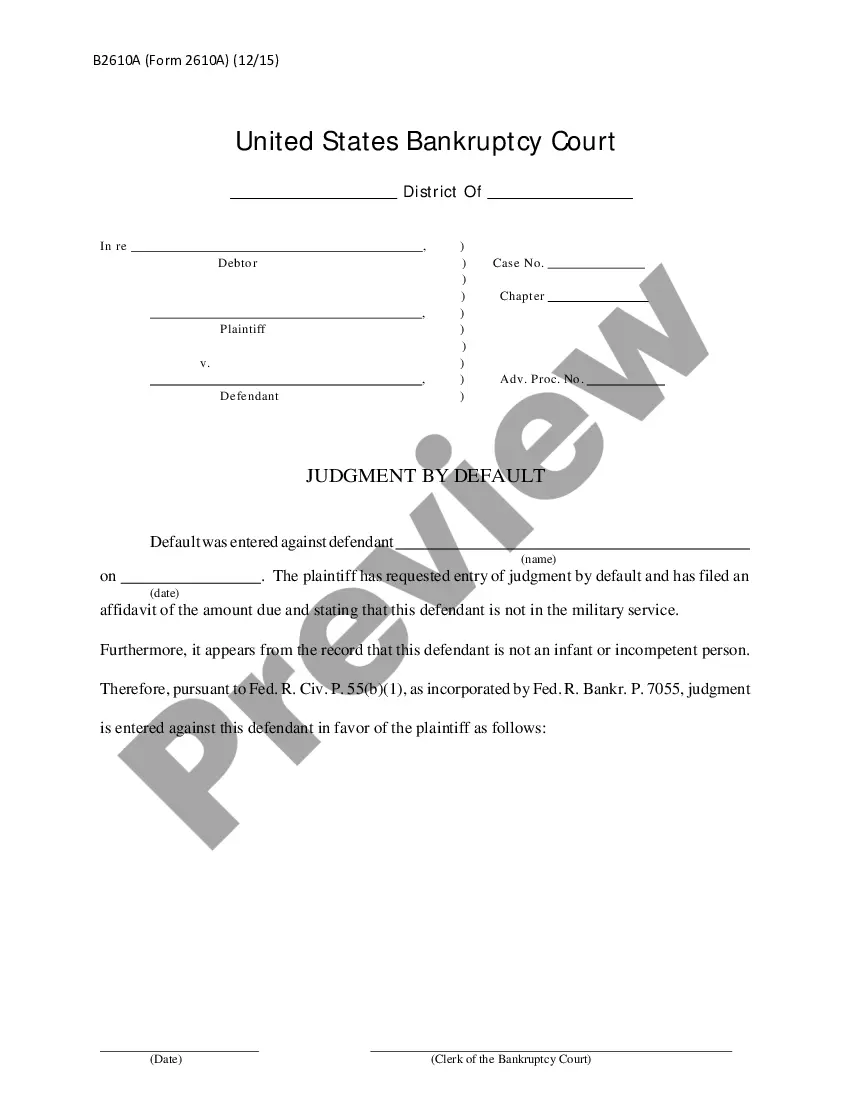
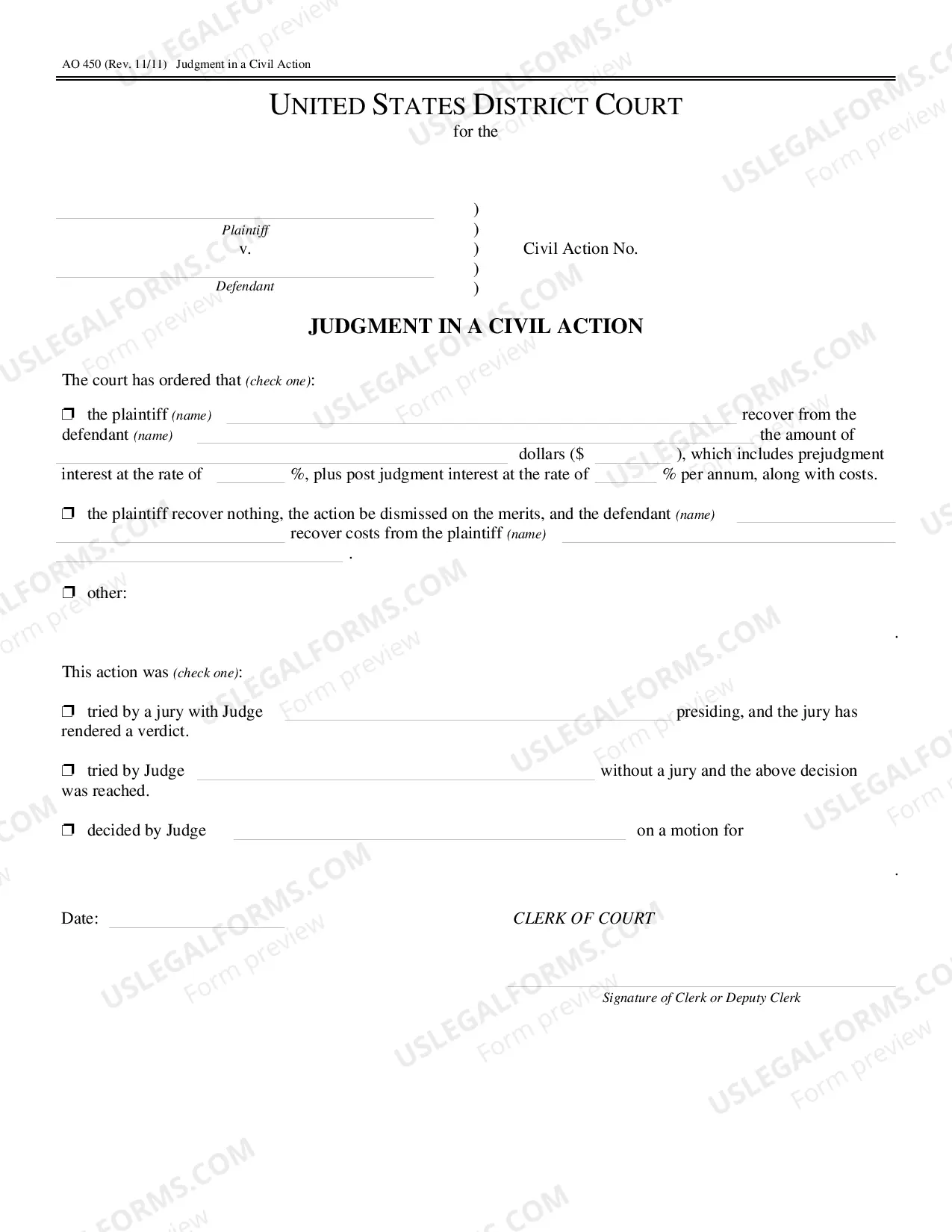
A Default Judgment is a legal decision made by a court when one party, either the Plaintiff or Defendant, fails to respond to court documents filed by the opposing party. This form streamlines the process for the Plaintiff to obtain a judgment without the Defendant's presence or participation. It serves to establish the outcome of a case where the Defendant has not taken necessary legal steps to contest the claim. Unlike other judgments, this one arises from a lack of action rather than the merits of a case being contested in court.
Key components of this form
- Parties involved: Names of both Plaintiff and Defendant are required.
- Court information: Details of the court handling the case and the cause number.
- Service confirmation: Affirms the Defendant was properly served with the complaint.
- Judgment amount: Specifies the financial amount the Plaintiff is entitled to recover.
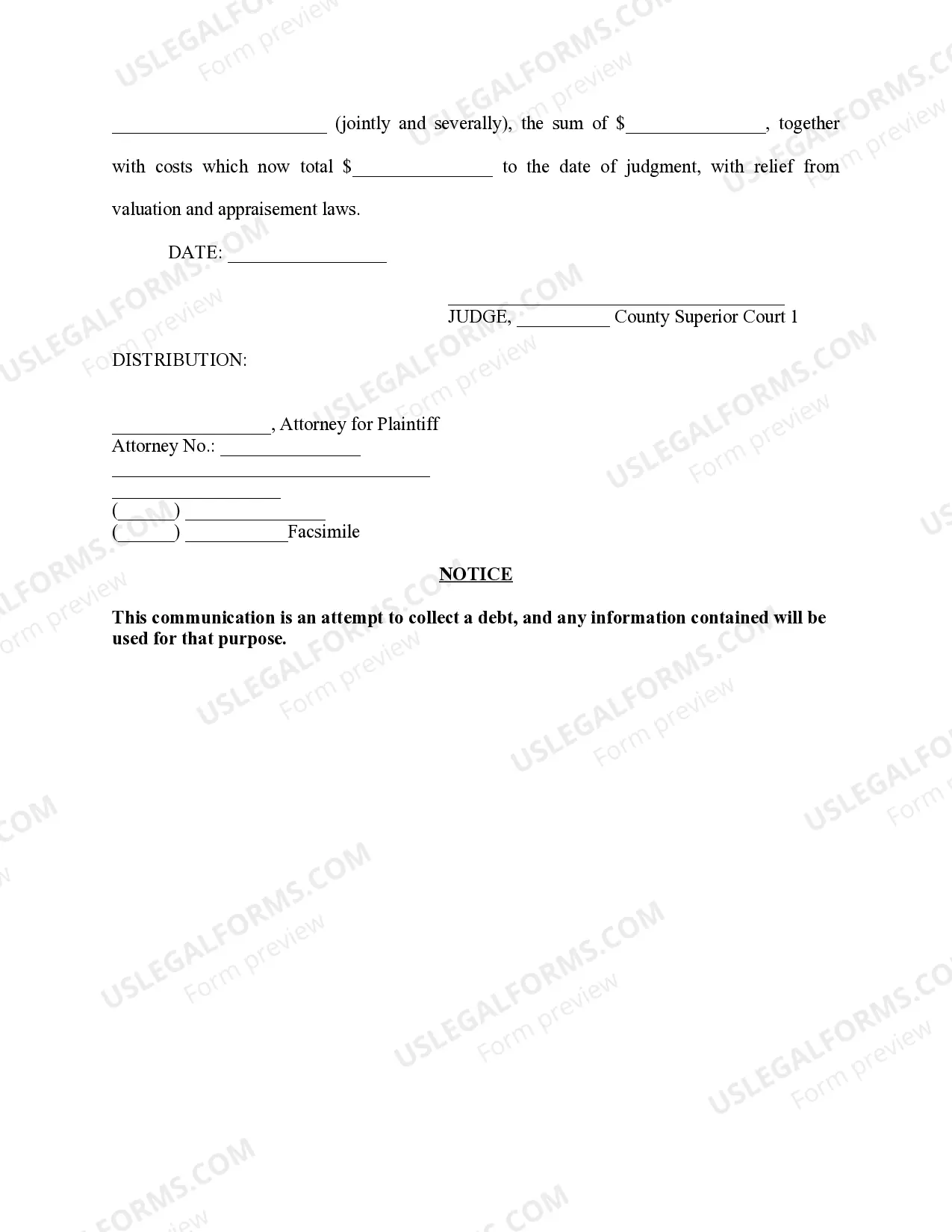
- Legal relief: Contains a declaration of judgment and potential costs awarded to the Plaintiff.
- Judge's signature: Validates the judgment by a presiding judge.
When this form is needed
This form is necessary when a Defendant fails to file an answer or respond to a complaint within the specified time frame set by court rules. If you, as the Plaintiff, are seeking a legal resolution to a dispute and the Defendant does not engage with the process, submitting this Default Judgment form allows you to proceed with obtaining a court ruling in your favor without further delay.
Who should use this form
- Plaintiffs seeking a judgment against non-responding Defendants.
- Individuals or entities involved in a legal dispute where the Defendant has not answered court documents.
- Parties requiring a legal remedy when the Defendant fails to appear in court.
Instructions for completing this form
- Identify the parties: Clearly fill in the names of the Plaintiff and Defendant.
- Provide court details: Enter the name of the county and the cause number associated with the case.
- Confirm service: Ensure to document the service status of the Defendant as outlined in the form.
- Specify the judgment amount: State the total amount the Plaintiff is seeking from the Defendant.
- Include the date and signature: Sign and date the form where indicated, which is essential for court validation.
Notarization guidance
This form does not typically require notarization unless specified by local law. However, it is essential to verify the rules in Indiana to ensure compliance with all legal requirements regarding this form.
Get your form ready online
Our built-in tools help you complete, sign, share, and store your documents in one place.
Make edits, fill in missing information, and update formatting in US Legal Forms—just like you would in MS Word.
Download a copy, print it, send it by email, or mail it via USPS—whatever works best for your next step.
Sign and collect signatures with our SignNow integration. Send to multiple recipients, set reminders, and more. Go Premium to unlock E-Sign.
If this form requires notarization, complete it online through a secure video call—no need to meet a notary in person or wait for an appointment.
We protect your documents and personal data by following strict security and privacy standards.

Make edits, fill in missing information, and update formatting in US Legal Forms—just like you would in MS Word.

Download a copy, print it, send it by email, or mail it via USPS—whatever works best for your next step.

Sign and collect signatures with our SignNow integration. Send to multiple recipients, set reminders, and more. Go Premium to unlock E-Sign.

If this form requires notarization, complete it online through a secure video call—no need to meet a notary in person or wait for an appointment.

We protect your documents and personal data by following strict security and privacy standards.
Typical mistakes to avoid
- Failing to correctly identify the parties involved in the case.
- Not providing the correct cause number or court information.
- Neglecting to confirm service of process on the Defendant.
- Inaccurately calculating the judgment amount or associated costs.
- Not obtaining the required signature from the judge before submitting the form.
Why use this form online
- Convenience of immediate access and download from your home or office.
- Editability allows you to prepare the document accurately and at your own pace.
- Reliability as these forms are drafted by licensed attorneys ensuring compliance with legal standards.
Summary of main points
- A Default Judgment is a court decision made due to a party's failure to respond.
- This form is specifically for Plaintiffs when a Defendant does not participate in the case.
- Correct completion of the form is crucial for it to be granted by the court.
Looking for another form?







Form popularity
FAQ
When a judgment is entered against you in Indiana, it can lead to serious consequences. First, the creditor may begin collection actions to recover the debt, which could include wage garnishment or bank levies. Additionally, an Indiana Default Judgment can negatively impact your credit score, making future borrowing more challenging. It's crucial to understand your options, such as negotiating a settlement or appealing the judgment, and platforms like US Legal Forms can provide you with the necessary legal resources and documents to navigate this process effectively.
To set aside an Indiana Default Judgment, you must generally demonstrate three key elements: a valid reason for your failure to respond in time, a meritorious defense to the original claim, and a timely request to the court. Providing evidence that supports your reasons and defense is essential for the court's consideration. If you find yourself in this situation, US Legal Forms provides tools and resources to help navigate the process effectively.
To successfully collect on a judgment in Indiana, start by confirming the details of the Indiana Default Judgment you hold. Next, explore different collection methods such as levying bank accounts, garnishing wages, or placing liens on property. You can also utilize the resources available through platforms like USLegalForms to help streamline the collection process and navigate legal requirements. Being proactive and informed will enhance your chances of recovering the funds owed.
In Indiana, a judgment generally remains valid for ten years from the date it was entered. However, you can extend this period by renewing the Indiana Default Judgment before it expires. This ensures that you maintain your ability to collect on the debt if the debtor does not fulfill their obligations. Keeping track of renewal dates is crucial for successful enforcement.
To collect a judgment in Indiana, you need to first secure a copy of the Indiana Default Judgment. After obtaining this document, you can file it with your local courts to initiate collection efforts. Consider using garnishment, property liens, or bank levies, depending on the debtor's situation. The Indiana legal system provides various tools to help you enforce your judgment effectively.