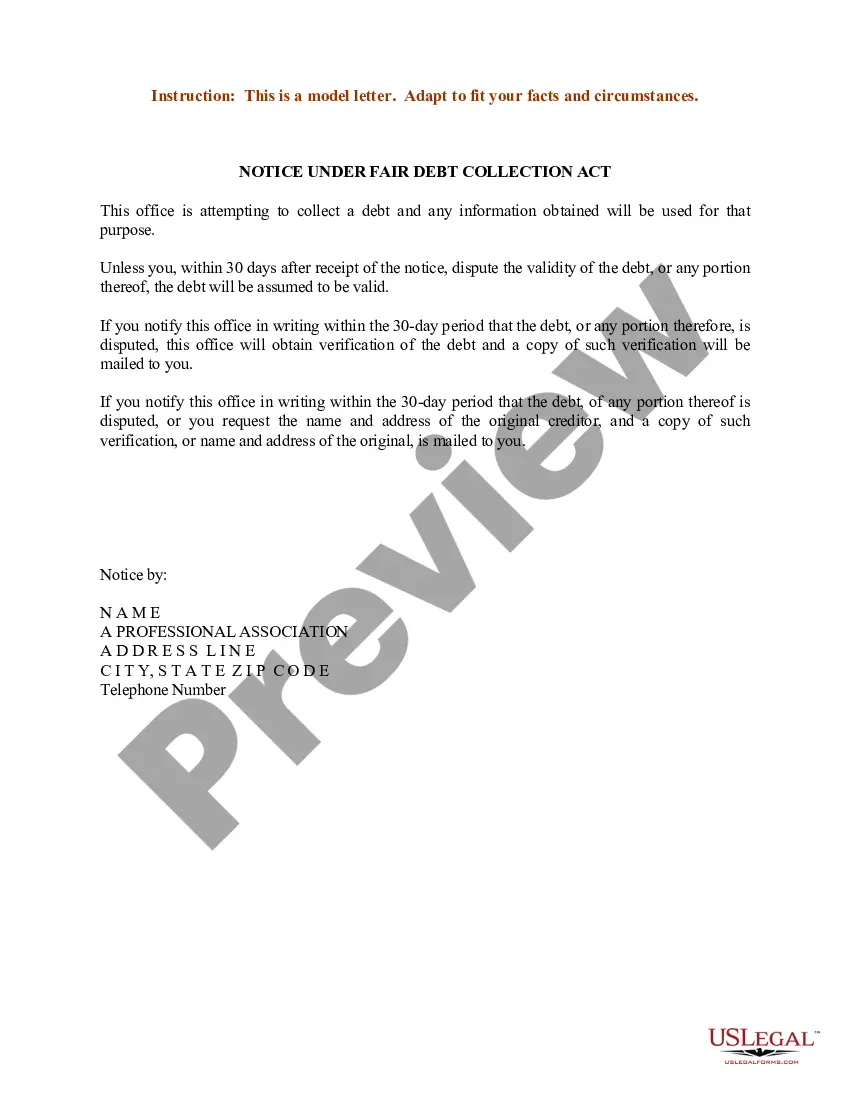
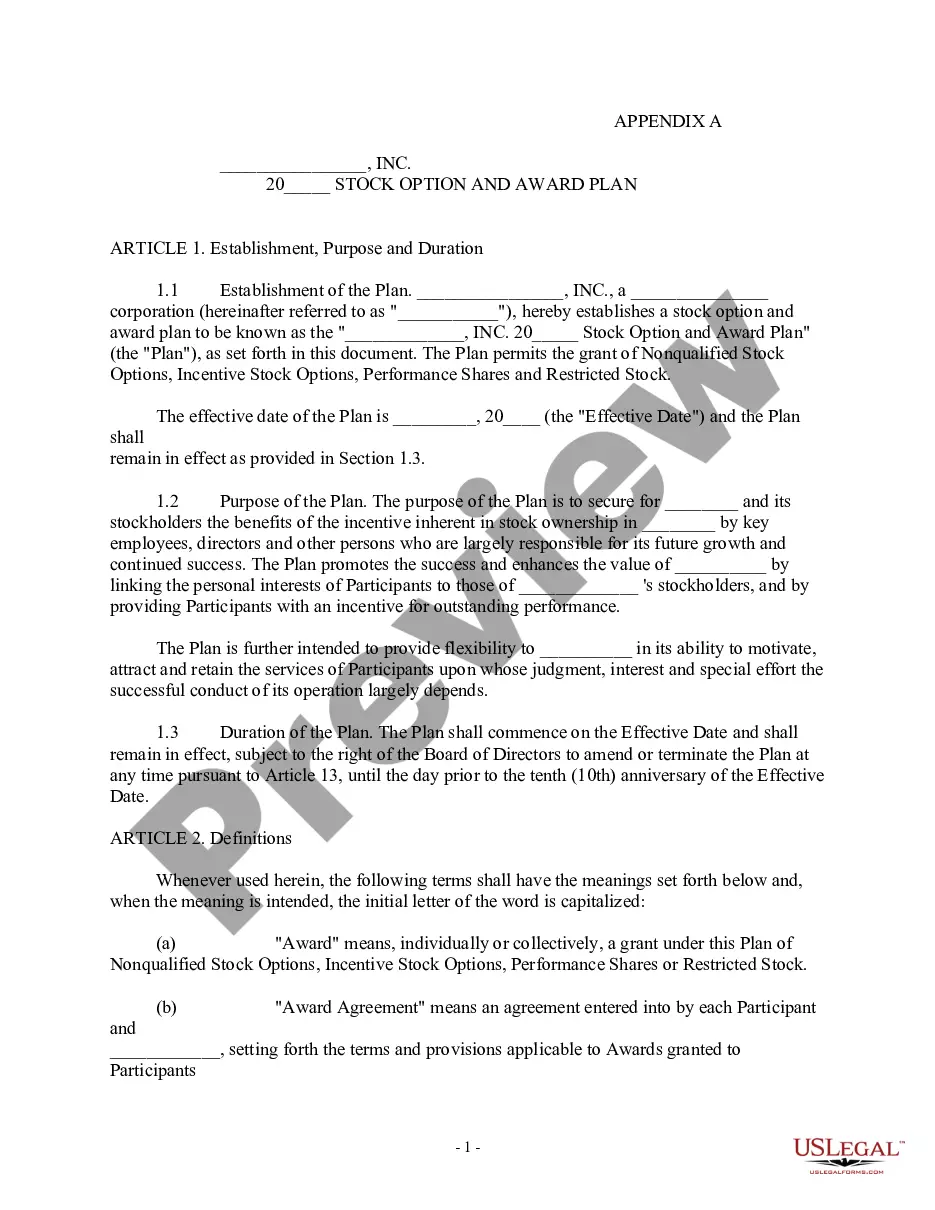
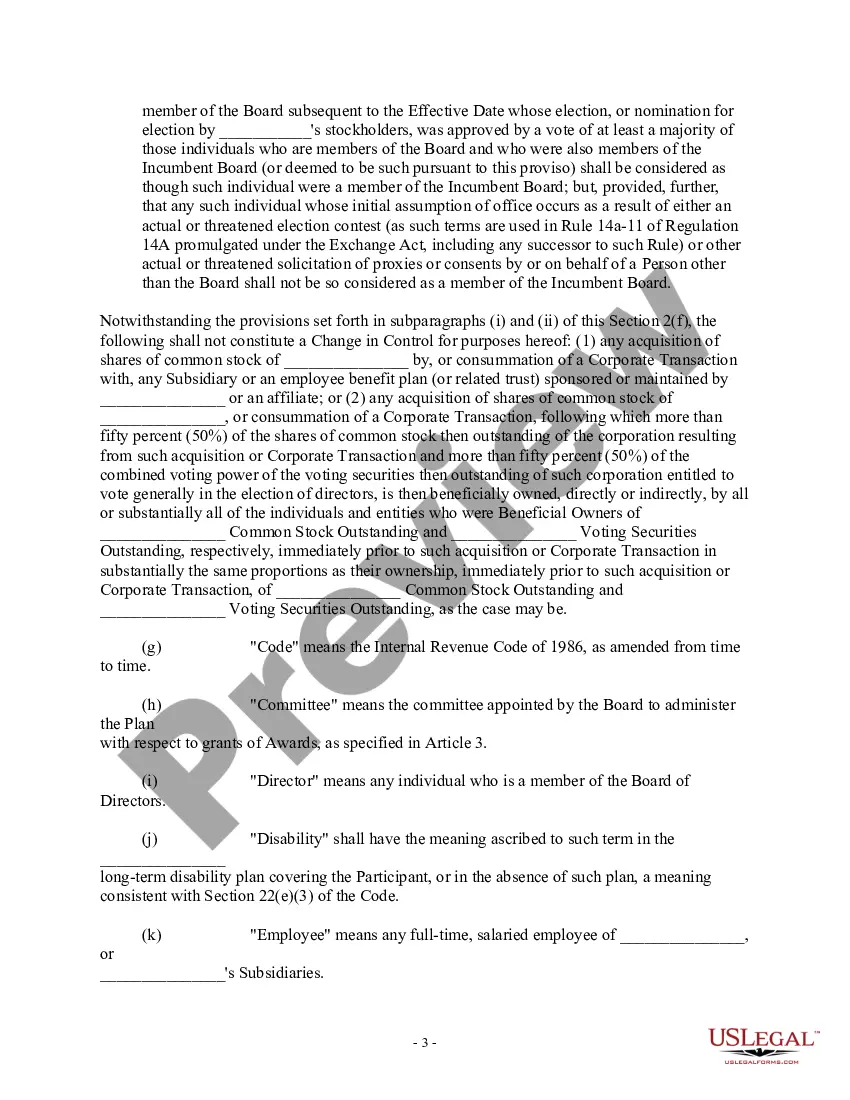
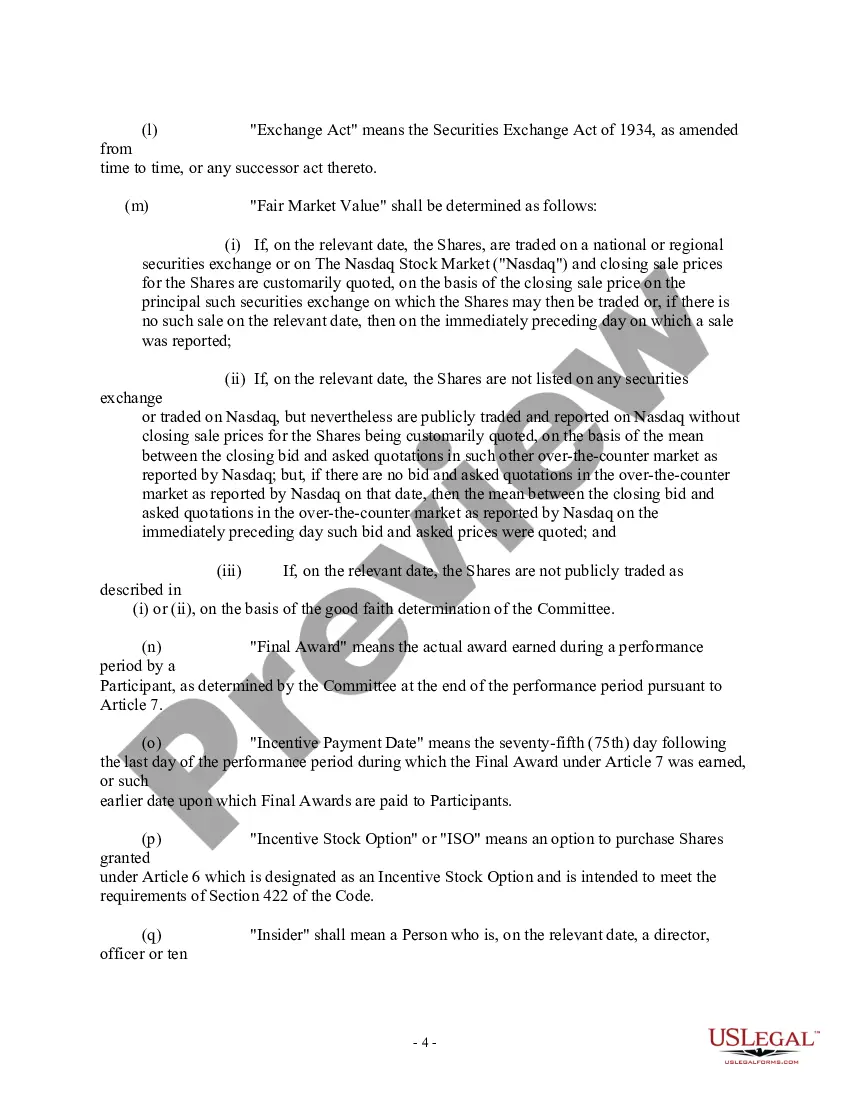
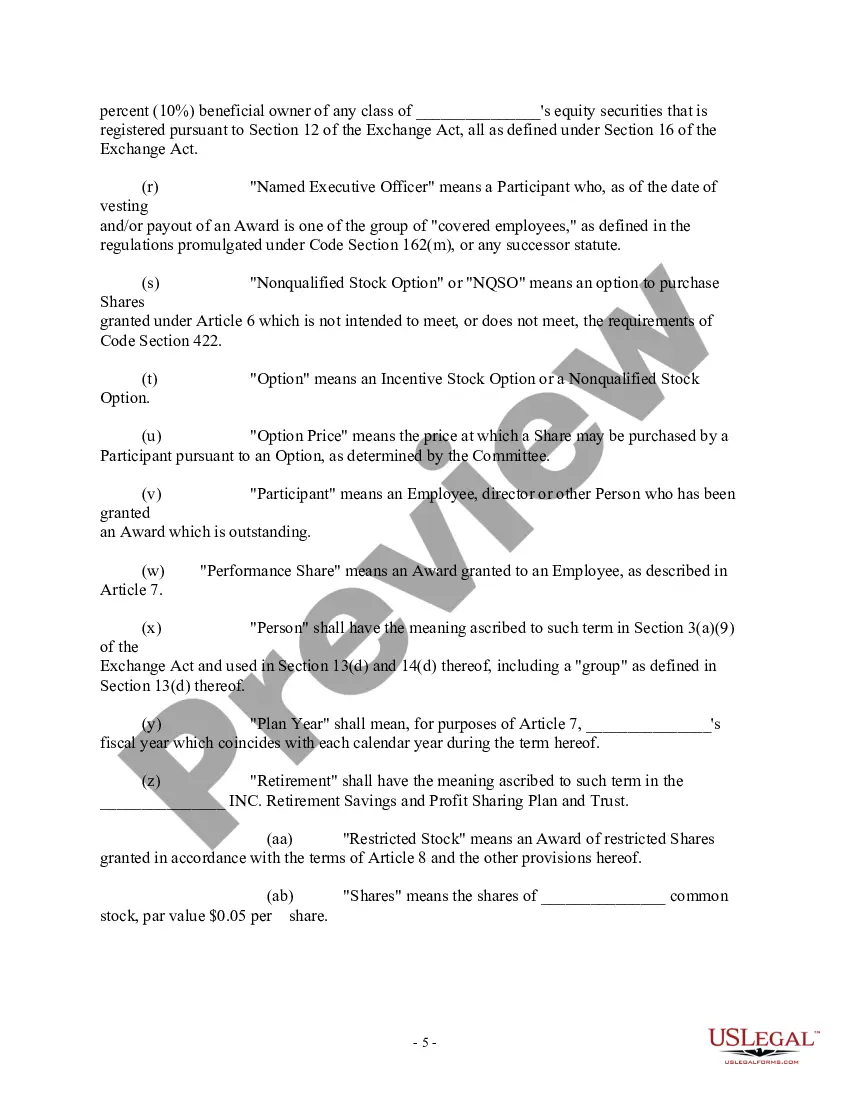
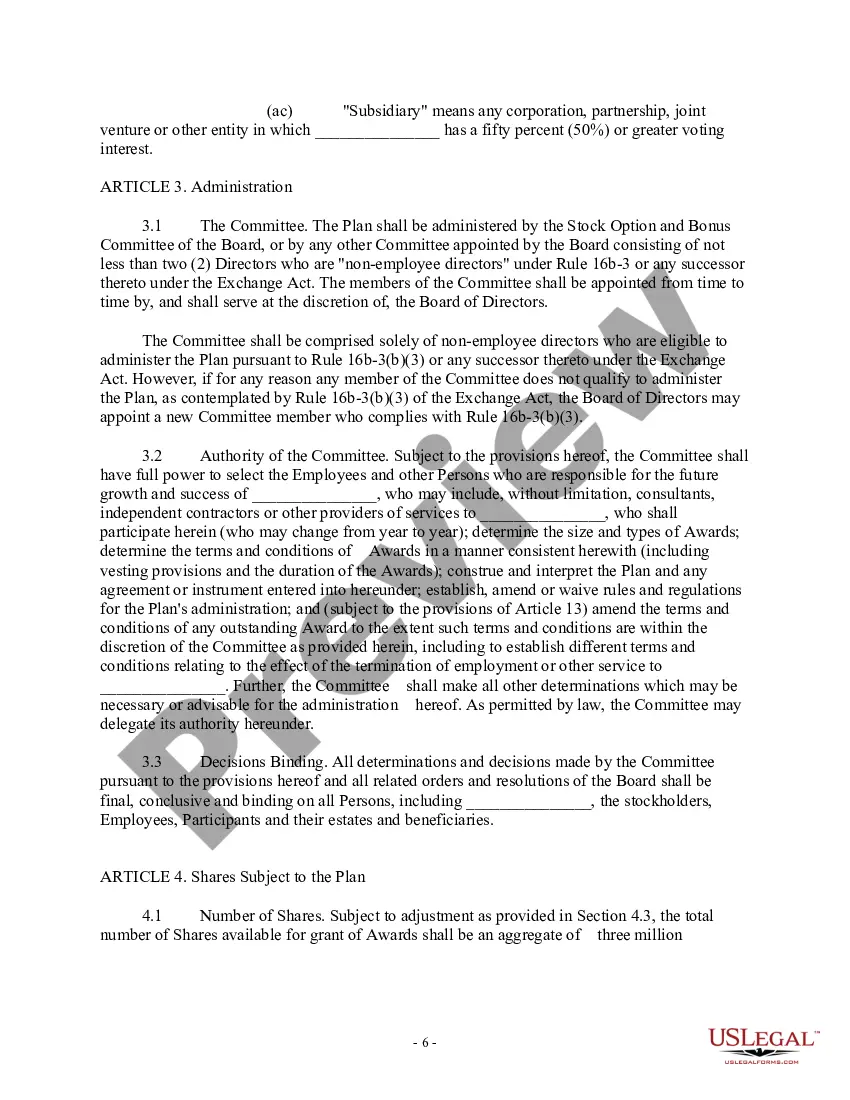
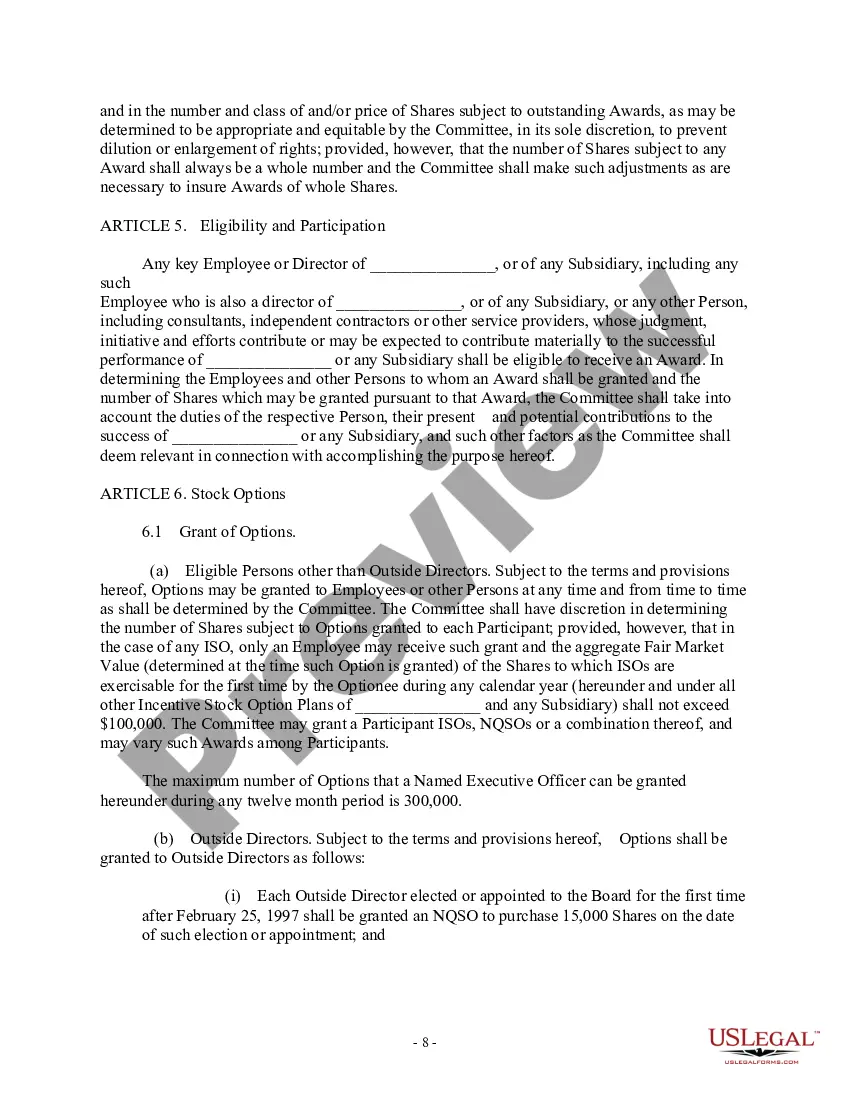
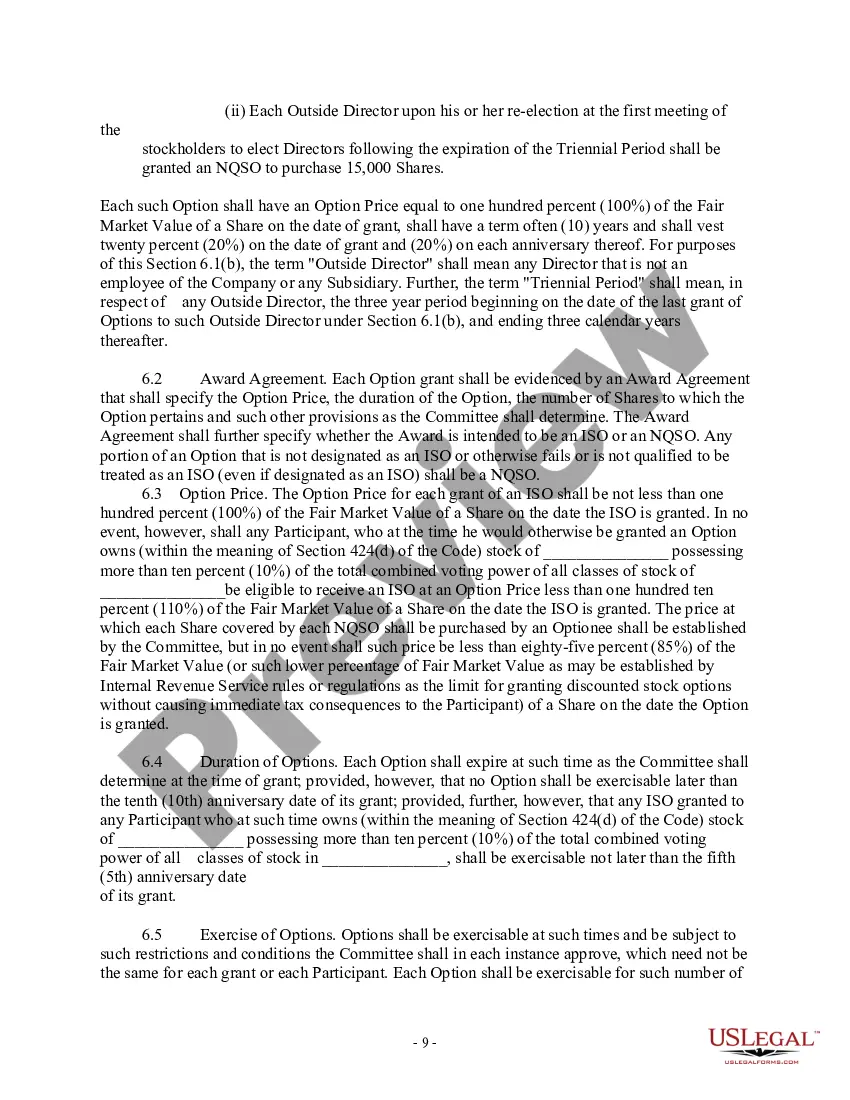
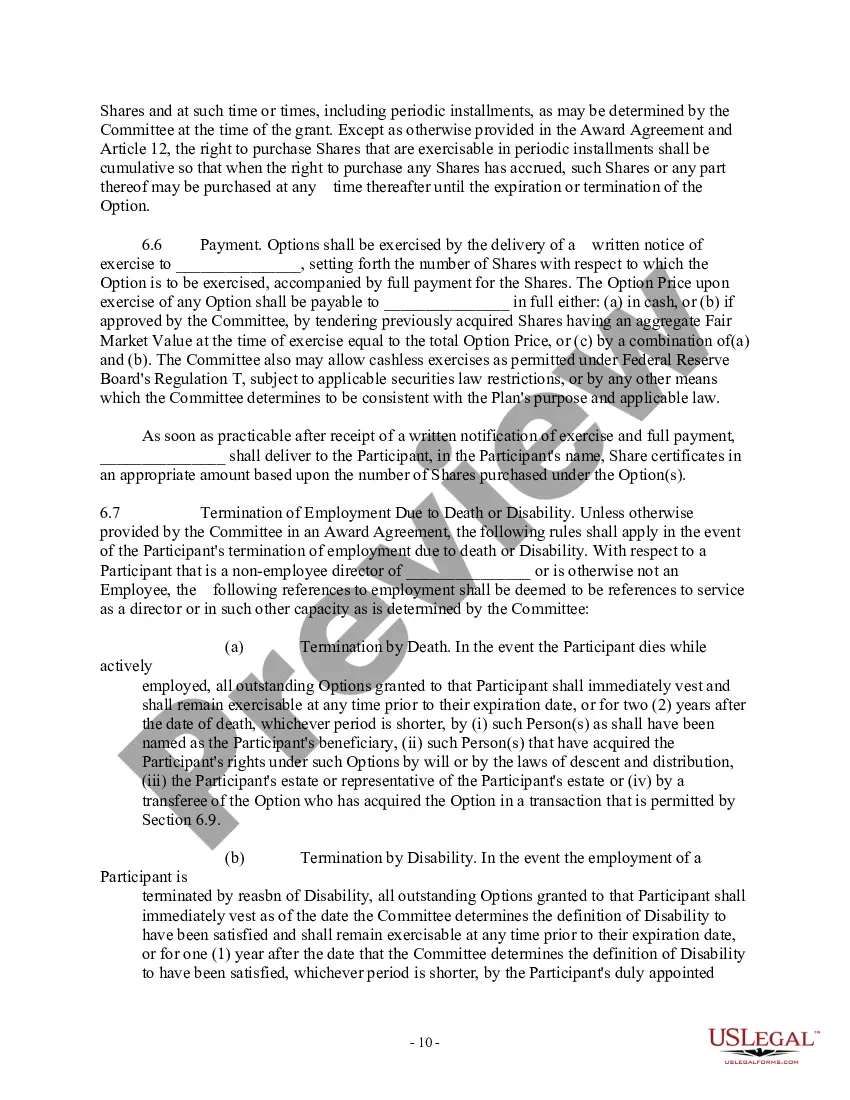
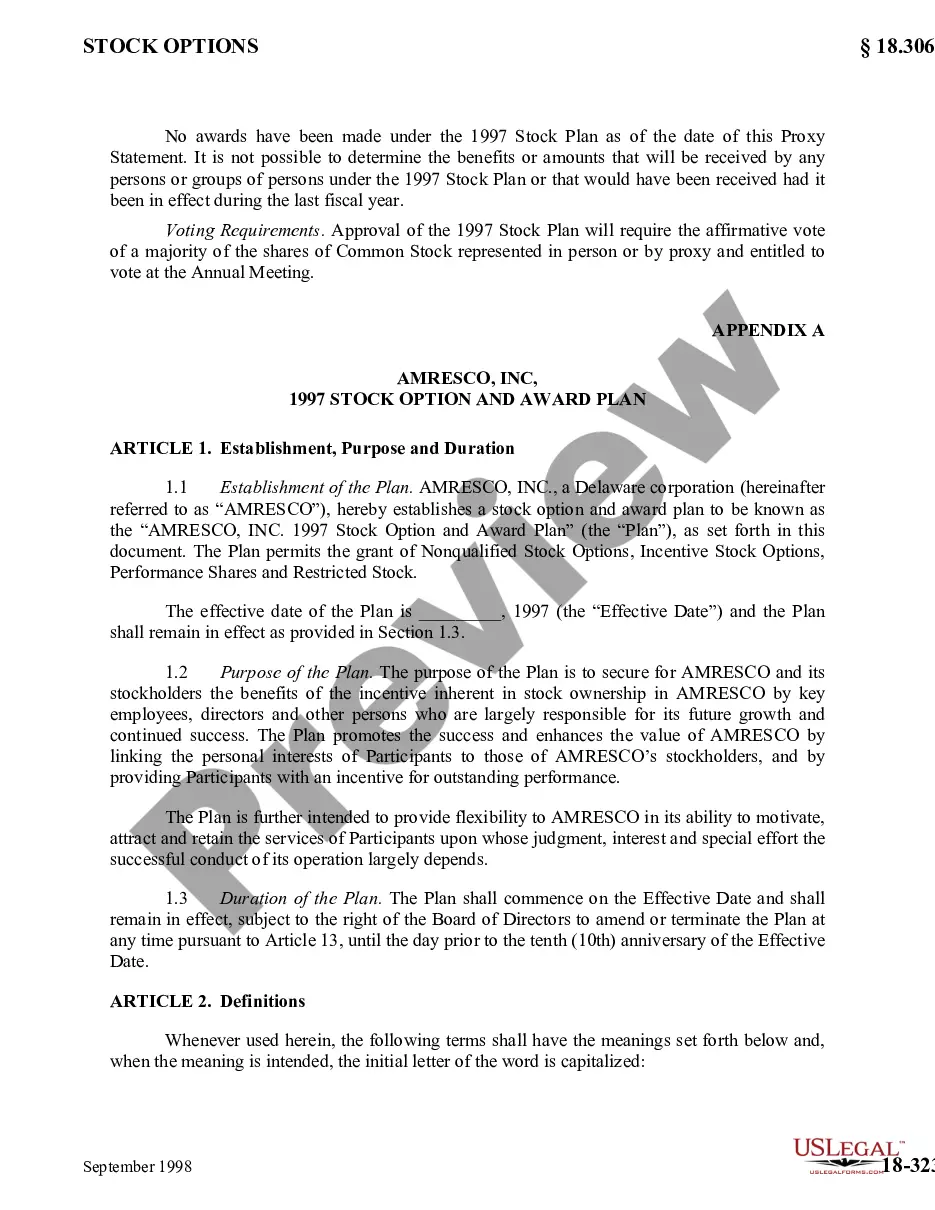
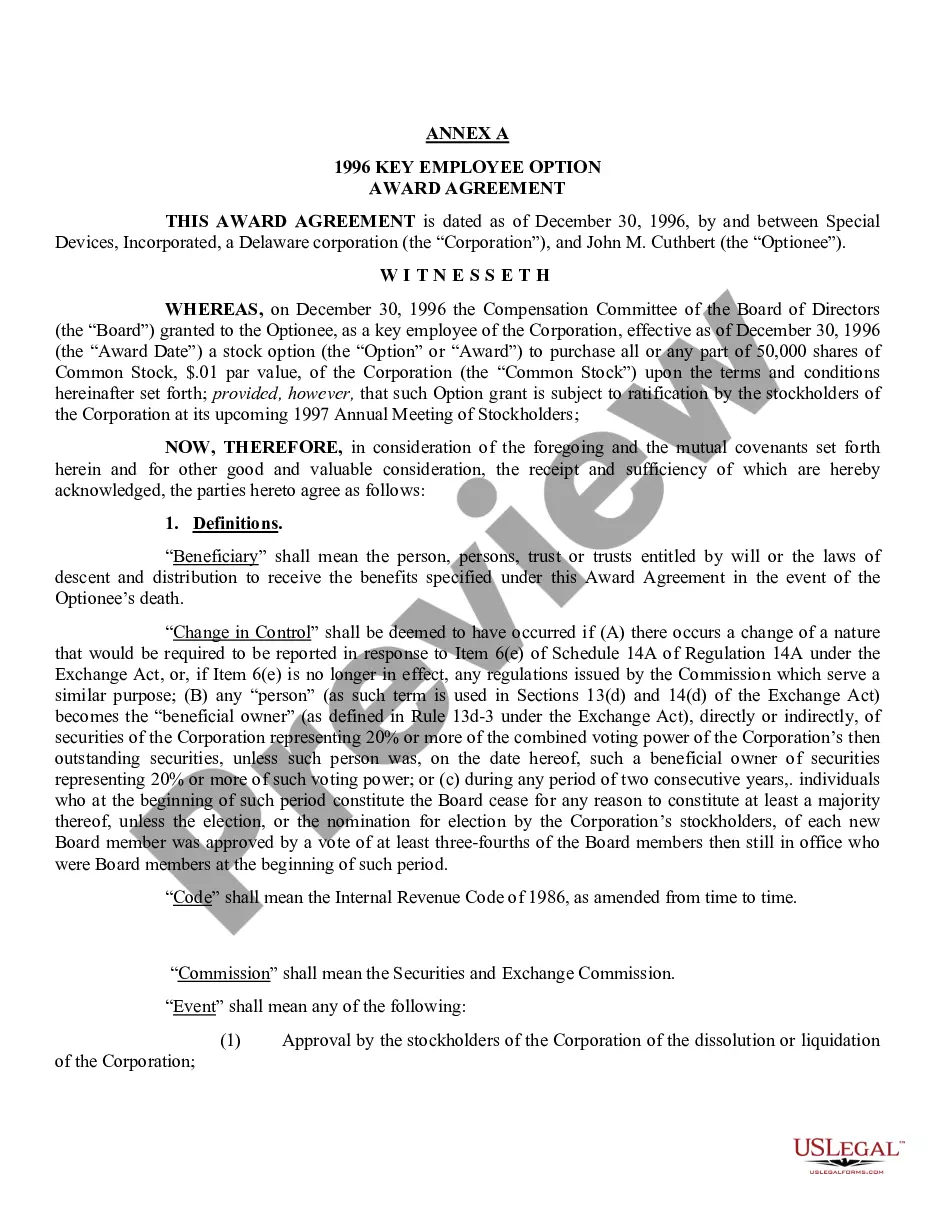
This form is a Stock Option and Award Plan. The purpose of the plan is to secure for the stockholders the benefits of the incentive in stock ownership. The transactions are intended to comply with all applicable conditions of Rule 16b-3.
Illinois Stock Option and Award Plan
Instant download
Description
Free preview












How to fill out Stock Option And Award Plan?
Identifying the correct legal document format can be challenging. Obviously, there are numerous templates accessible online, but how can you locate the legal form you require.
Utilize the US Legal Forms website. The platform offers a vast array of templates, including the Illinois Stock Option and Award Plan, which you can utilize for both business and personal needs. All forms are verified by experts and meet federal and state regulations.
If you are currently registered, Log In to your account and click on the Download button to obtain the Illinois Stock Option and Award Plan. Use your account to search for the legal forms you have previously purchased. Navigate to the My documents section of your account and retrieve another copy of the document you need.
Fill out, modify, and print, then sign the received Illinois Stock Option and Award Plan. US Legal Forms is the largest repository of legal forms where you can find various document templates. Utilize the service to obtain professionally-crafted documents that comply with state requirements.
- If you are a new user of US Legal Forms, here are simple instructions to follow.
- First, ensure you have selected the appropriate form for your city/county. You can review the form using the Preview option and read the form description to ensure it is suitable for you.
- If the form does not meet your requirements, utilize the Search field to find the correct form.
- Once you are confident the form is suitable, click the Download now button to acquire the form.
- Select the pricing plan you prefer and enter the required information. Create your account and complete the order using your PayPal account or credit/debit card.
- Choose the file format and download the legal document format for your device.
Form popularity
FAQ
To claim your stock options under the Illinois Stock Option and Award Plan, you need to first confirm your eligibility and understand the vesting schedule. You can typically exercise your options by submitting a request to your employer or the plan administrator. Be sure to follow the specific instructions provided, including any necessary paperwork. If you need assistance navigating the process, consider utilizing uslegalforms, which offers resources and guidance tailored for stock options.
Employees pay no tax on the contributions to the ESOP, only the distribution of their accounts, and then at potentially favorable rates: The employees can roll over their distributions in an IRA or other retirement plan or pay current tax on the distribution, with any gains accumulated over time taxed as capital gains.
Section 1256 options are always taxed as follows: 60% of the gain or loss is taxed at the long-term capital tax rates. 40% of the gain or loss is taxed at the short-term capital tax rates.
Key Takeaways Non-qualified stock options (NSOs) are granted to employees, advisors, and consultants; incentive stock options (ISOs) are for employees only. With NSOs, you pay ordinary income taxes when you exercise the options, and capital gains taxes when you sell the shares.
An incentive stock option (ISO) is a corporate benefit that gives an employee the right to buy shares of company stock at a discounted price with the added benefit of possible tax breaks on the profit. The profit on qualified ISOs is usually taxed at the capital gains rate, not the higher rate for ordinary income.
When you buy stock under an employee stock purchase plan (ESPP), the income isn't taxable at the time you buy it. You'll recognize the income and pay tax on it when you sell the stock. When you sell the stock, the income can be either ordinary or capital gain.
Statutory Stock OptionsYou have taxable income or deductible loss when you sell the stock you bought by exercising the option. You generally treat this amount as a capital gain or loss. However, if you don't meet special holding period requirements, you'll have to treat income from the sale as ordinary income.
Non-qualified stock options (NSOs) are granted to employees, advisors, and consultants; incentive stock options (ISOs) are for employees only. With NSOs, you pay ordinary income taxes when you exercise the options, and capital gains taxes when you sell the shares.
Statutory Stock Options You have taxable income or deductible loss when you sell the stock you bought by exercising the option. You generally treat this amount as a capital gain or loss. However, if you don't meet special holding period requirements, you'll have to treat income from the sale as ordinary income.
Your W-2 includes income from any other compensation sources you may have, such as stock options, restricted stock, restricted stock units, employee stock purchase plans, and cash bonuses.