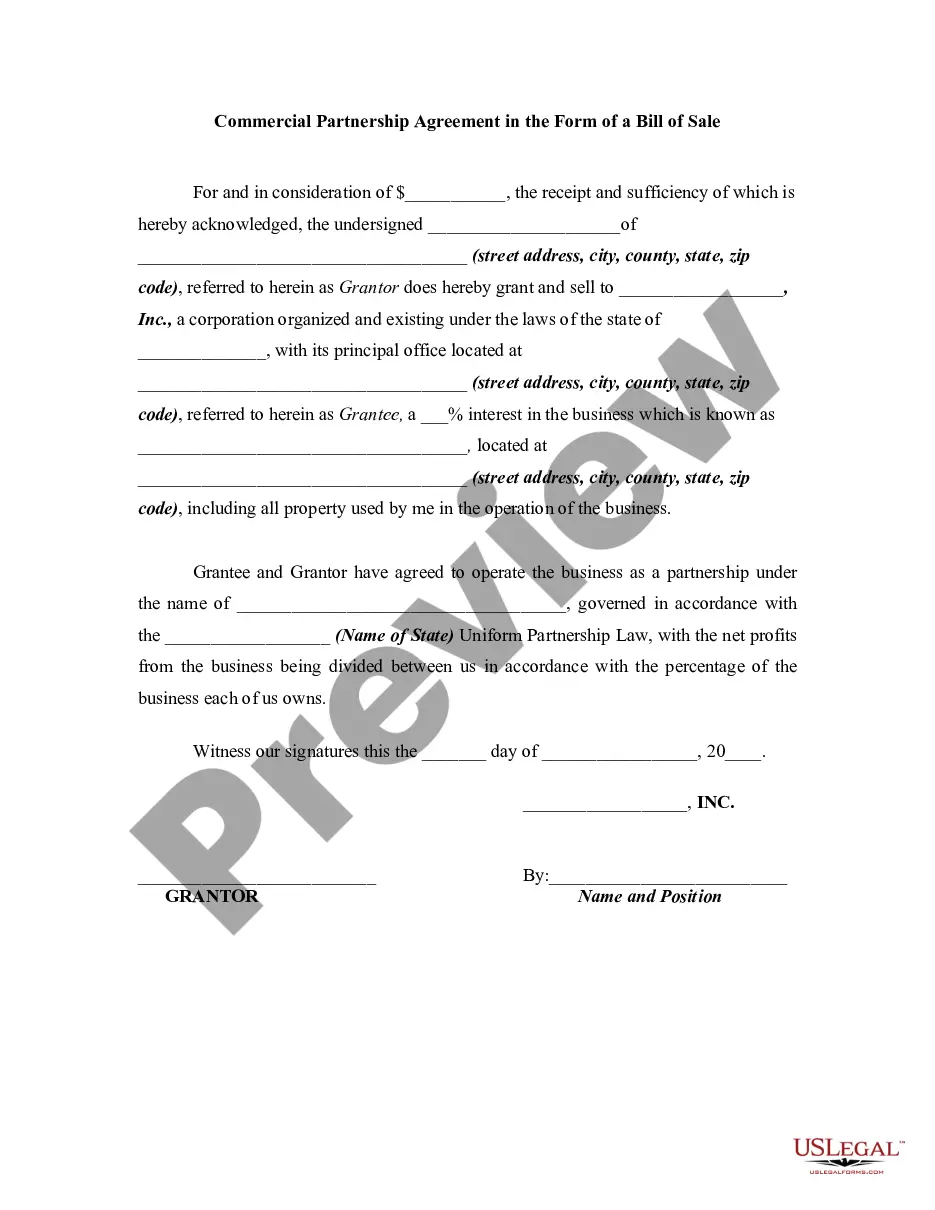
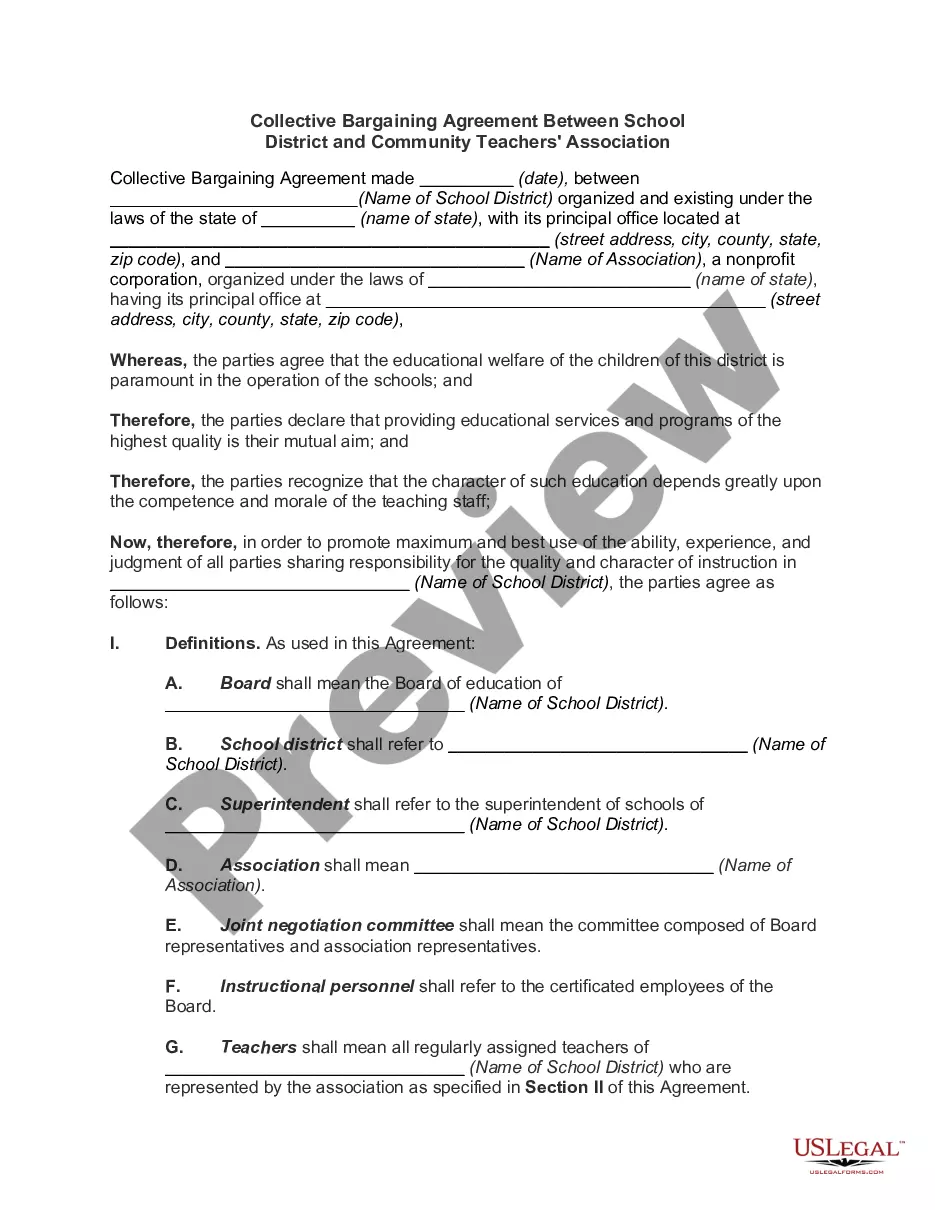
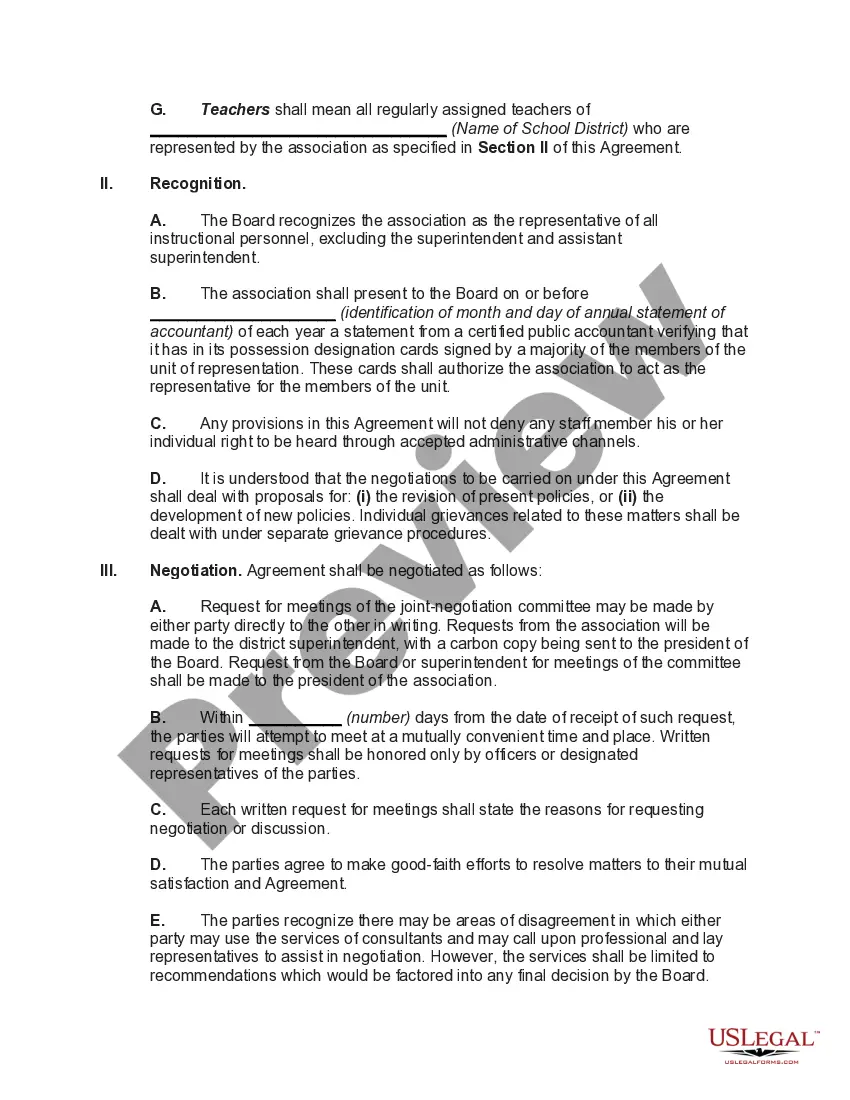
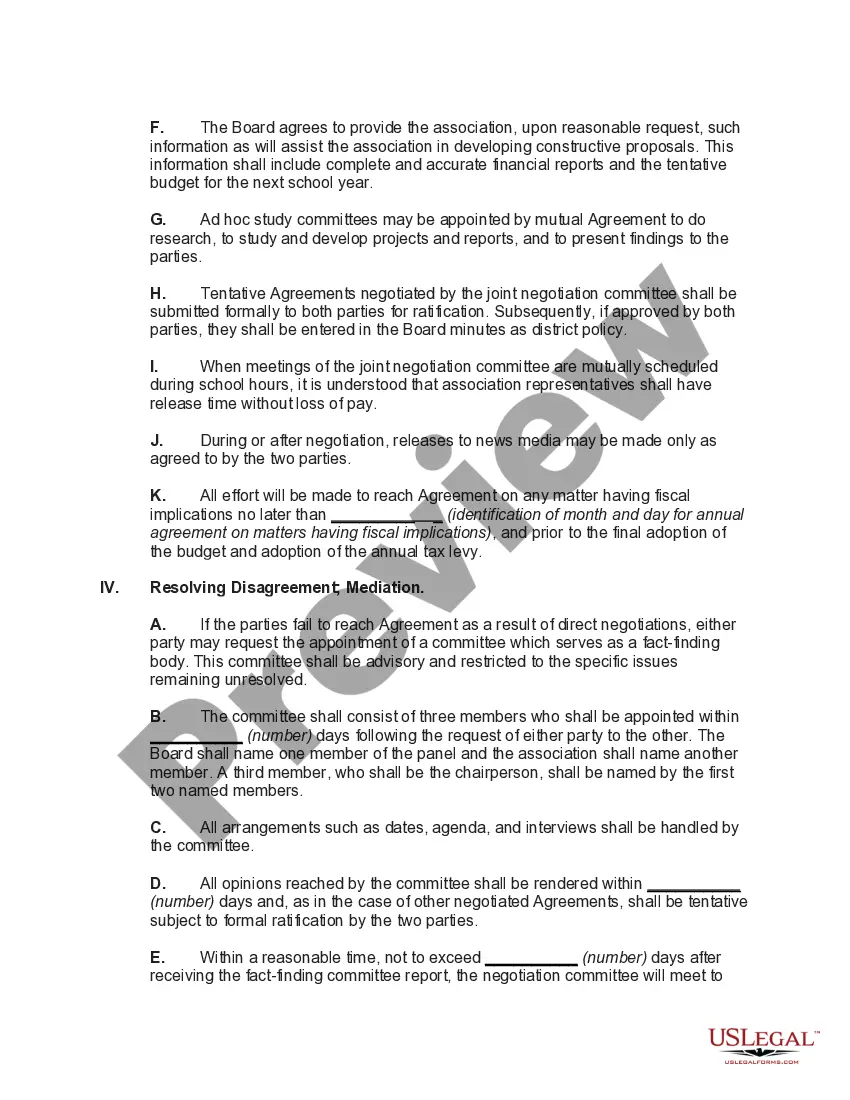
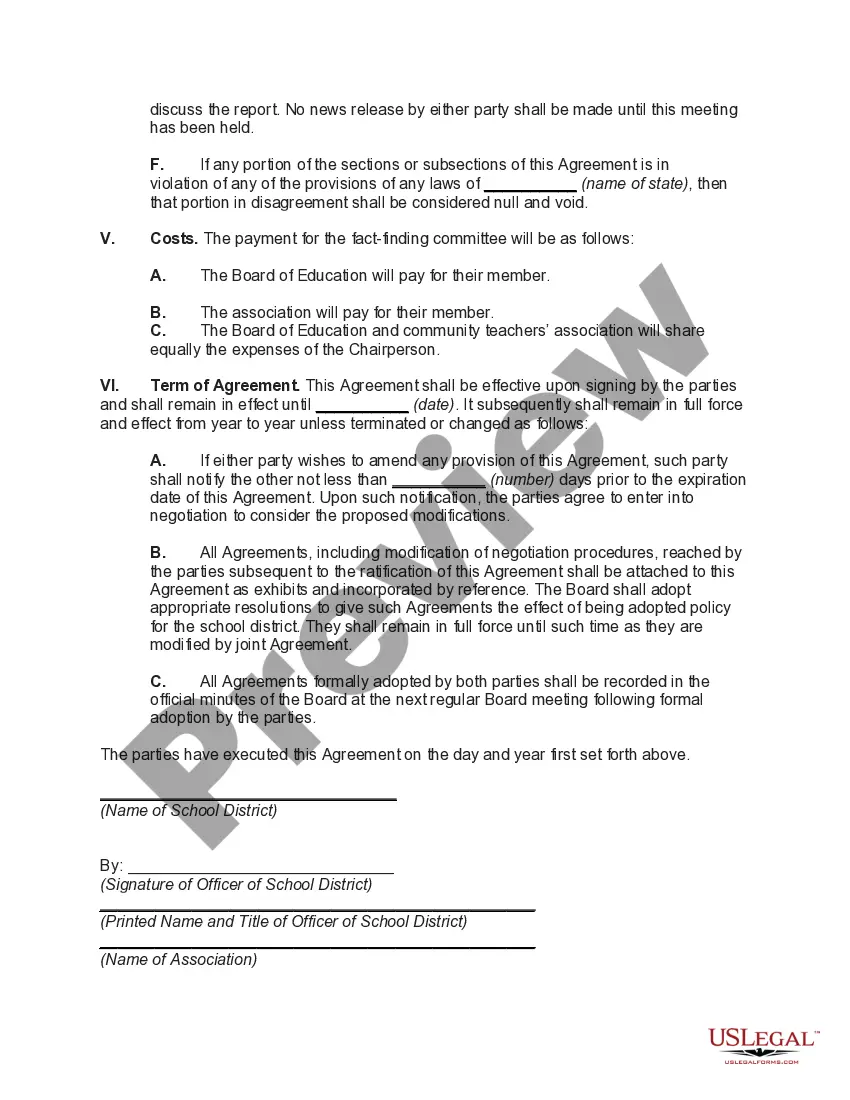
Illinois Collective Bargaining Agreement Between School District and Community Teachers' Association
Description

Get your form ready online
Our built-in tools help you complete, sign, share, and store your documents in one place.
Make edits, fill in missing information, and update formatting in US Legal Forms—just like you would in MS Word.
Download a copy, print it, send it by email, or mail it via USPS—whatever works best for your next step.
Sign and collect signatures with our SignNow integration. Send to multiple recipients, set reminders, and more. Go Premium to unlock E-Sign.
If this form requires notarization, complete it online through a secure video call—no need to meet a notary in person or wait for an appointment.
We protect your documents and personal data by following strict security and privacy standards.

Make edits, fill in missing information, and update formatting in US Legal Forms—just like you would in MS Word.

Download a copy, print it, send it by email, or mail it via USPS—whatever works best for your next step.

Sign and collect signatures with our SignNow integration. Send to multiple recipients, set reminders, and more. Go Premium to unlock E-Sign.

If this form requires notarization, complete it online through a secure video call—no need to meet a notary in person or wait for an appointment.

We protect your documents and personal data by following strict security and privacy standards.
Looking for another form?






How to fill out Collective Bargaining Agreement Between School District And Community Teachers' Association?
If you want to complete, download, or print authentic document templates, utilize US Legal Forms, the largest collection of official forms available online.
Utilize the site’s straightforward and convenient search to find the documents you require.
Various templates for business and personal reasons are organized by categories and claims or keywords.
Step 4. After locating the form you need, click the Get Now button. Choose the pricing plan you prefer and enter your credentials to register for an account.
Step 5. Process the payment. You can use your credit card or PayPal account to complete the transaction.
- Use US Legal Forms to locate the Illinois Collective Bargaining Agreement Between School District and Community Teachers' Association with just a few clicks.
- If you are an existing US Legal Forms user, Log In to your account and then click the Download button to access the Illinois Collective Bargaining Agreement Between School District and Community Teachers' Association.
- You can also access forms you previously downloaded in the My documents section of your account.
- If you are using US Legal Forms for the first time, follow these instructions.
- Step 1. Ensure you have chosen the form for the correct area/region.
- Step 2. Use the Preview option to review the form’s content. Do not forget to check the description.
- Step 3. If you are not satisfied with the form, use the Search field at the top of the screen to find other templates in the legal form format.
Form popularity
FAQ
Collective bargaining in education offers an organized and transparent system to improve student learning and the overall environment in public schools, and helps ensure that educators receive a professional level of pay.
Traditional teacher strikes occur when a teachers union and a school district cannot come to an agreement around various work issues through a process known as collective bargaining. Collective bargaining is legal for teachers in 34 states, optional in an additional 10 states, and illegal in seven states.
Collective bargaining gives educators a voice in their workplace. It helps assure fair wages and benefits, im- proving teacher recruitment and retention. Educators also negotiate better teaching and learning conditions.
Teachers have a constitutional right to join unions, which can be designated as collective bargaining representatives for school districts. "The public employer and the exclusive representative, through appropriate officials or their representatives, have the authority and the duty to bargain collectively."
The right to collective bargaining is the right of individual employees in a workplace to come together and to choose a representative, based on a majority vote, who will then negotiate with their employer over terms and conditions of employment.
Teachers, as with other public employees, do not have the constitutional right to collectively bargain (that is for the states to decide). But the First Amendment does provide that people have the right to "peaceably assemble," which includes the right to join a union (if not as a vehicle for collective bargaining).
The Act excludes certain individuals, such as agricultural laborers, independent contractors, supervisors and persons in managerial positions, from the meaning of "employees." None of these individuals can be included in a bargaining unit established by the Board.
Bargaining gives education professionals a genuine voice Negotiations ensure that education employees have a respected voice in the workplace and are involved in both identifying and solving school and classroom issues, which in turn promotes student learning.