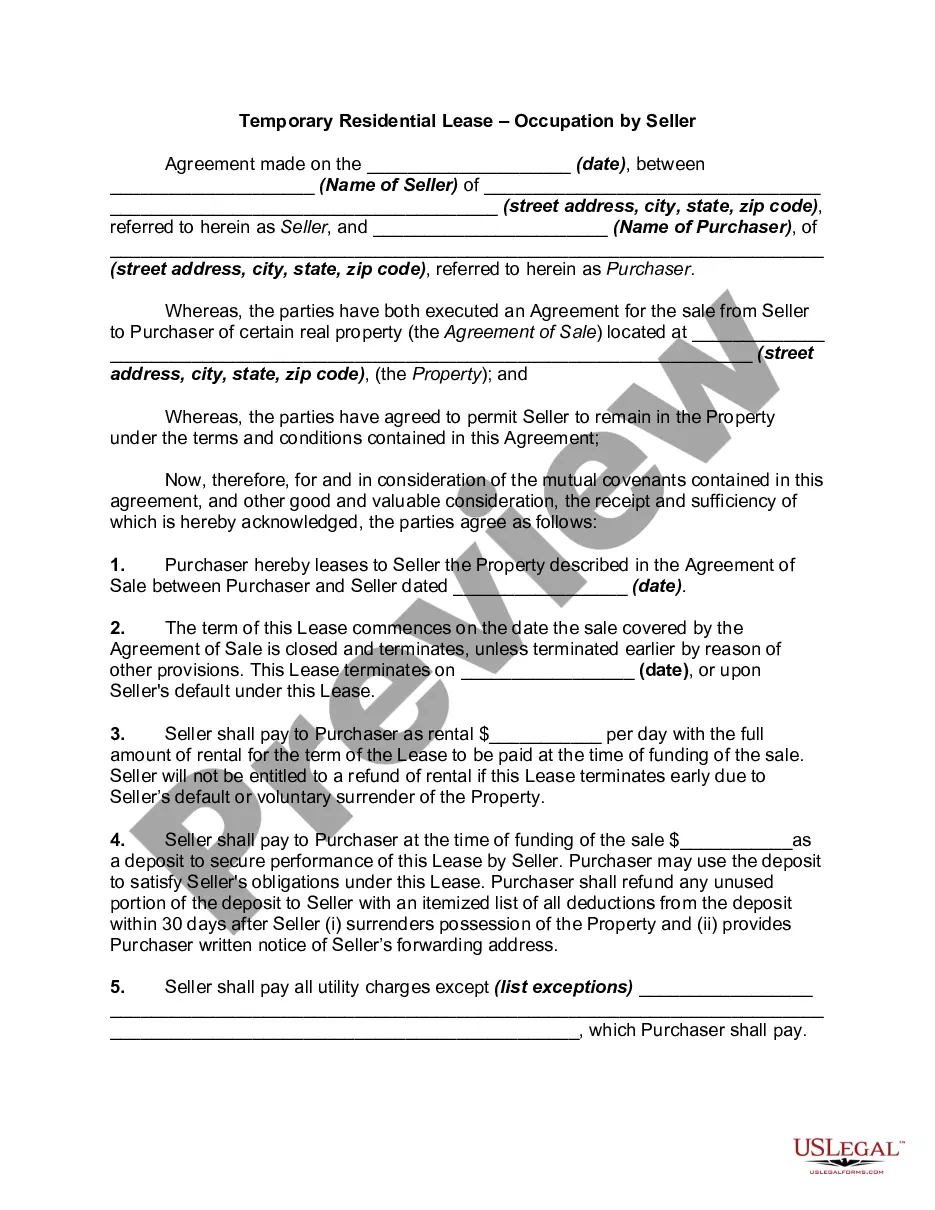
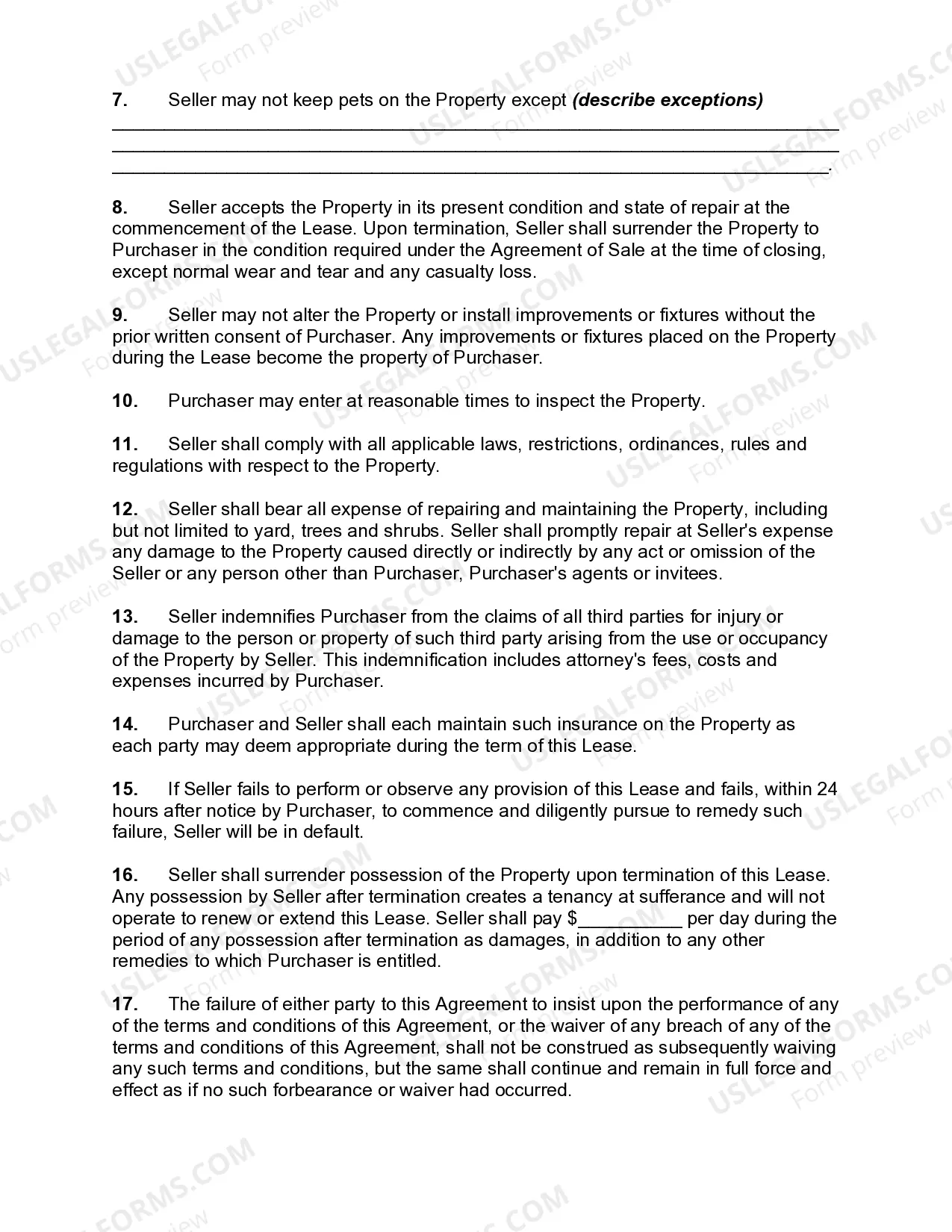
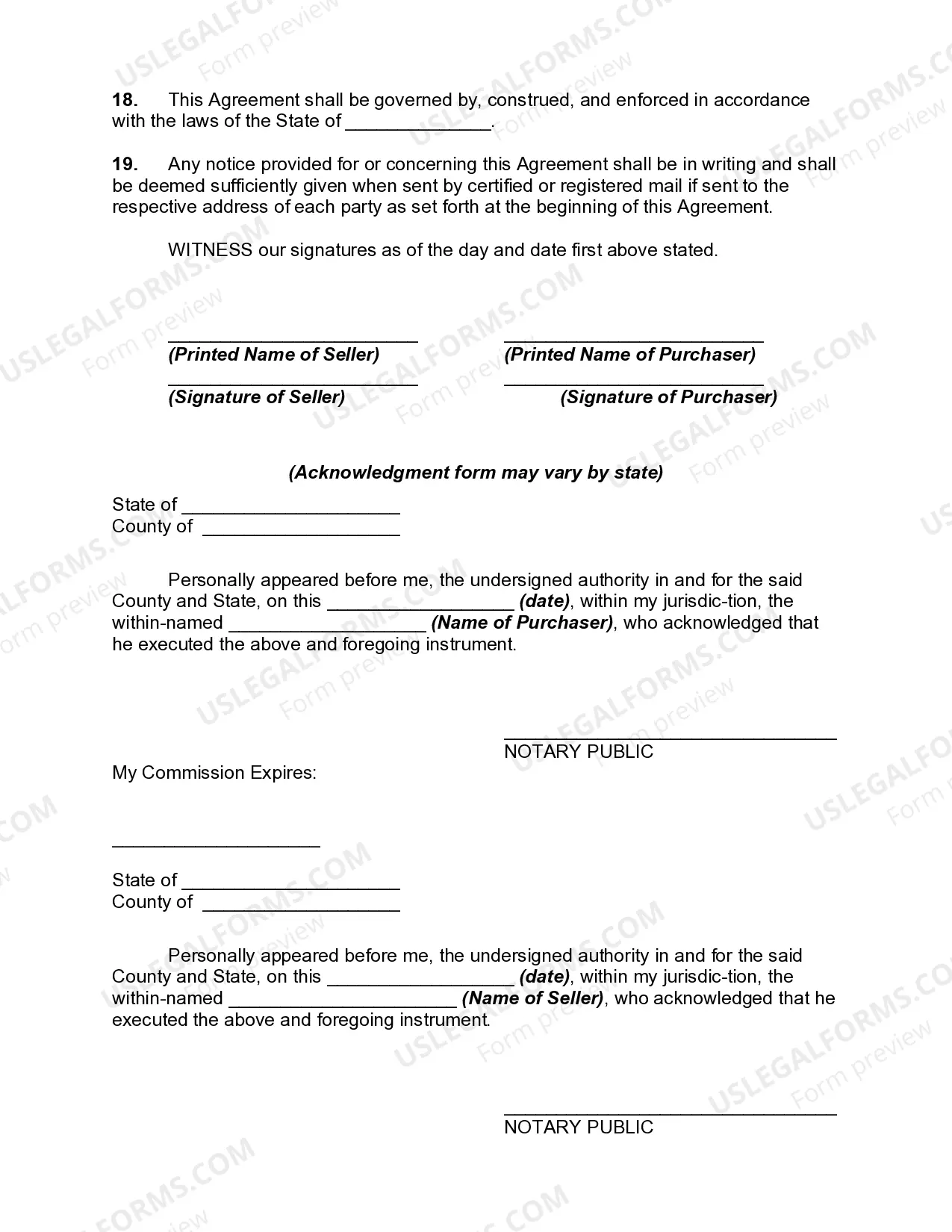
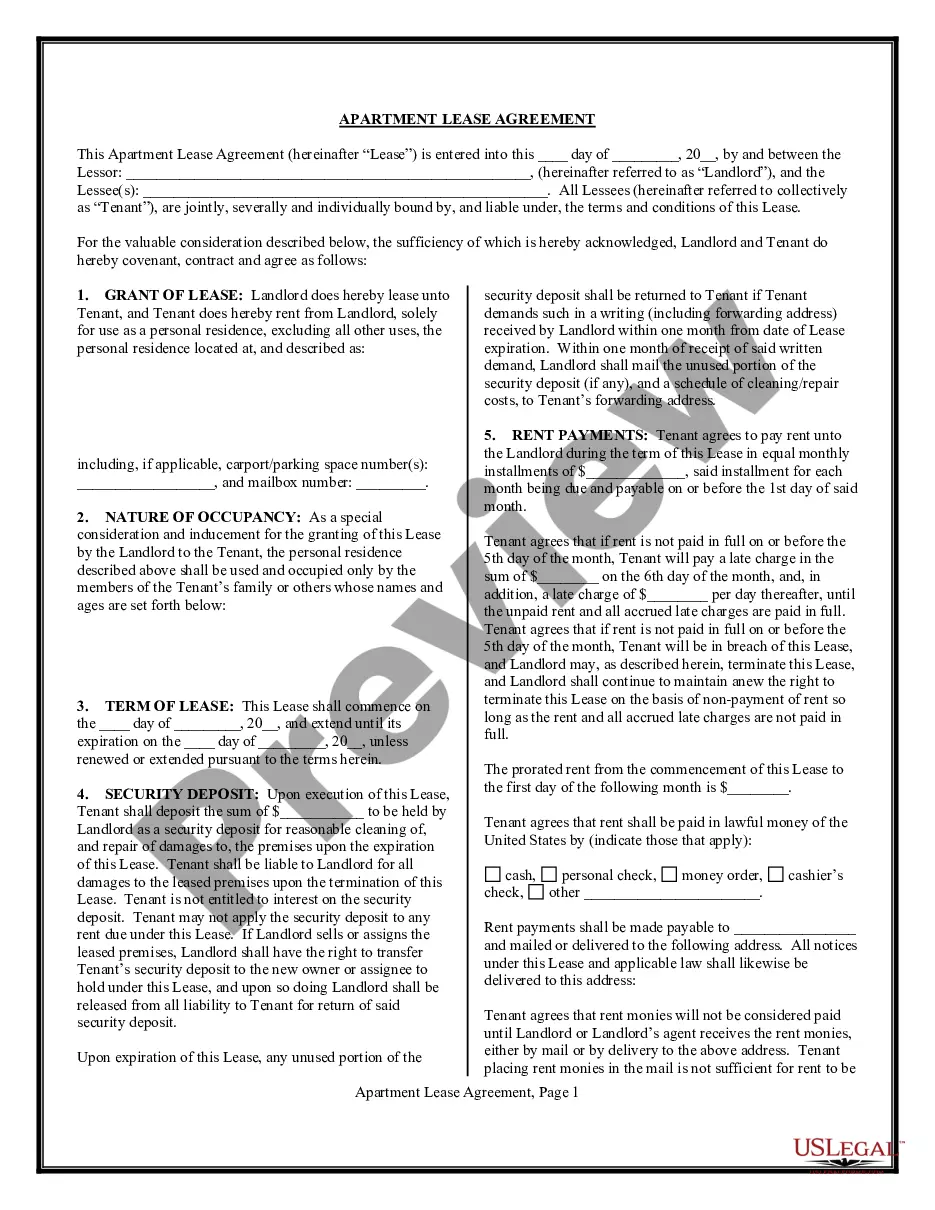
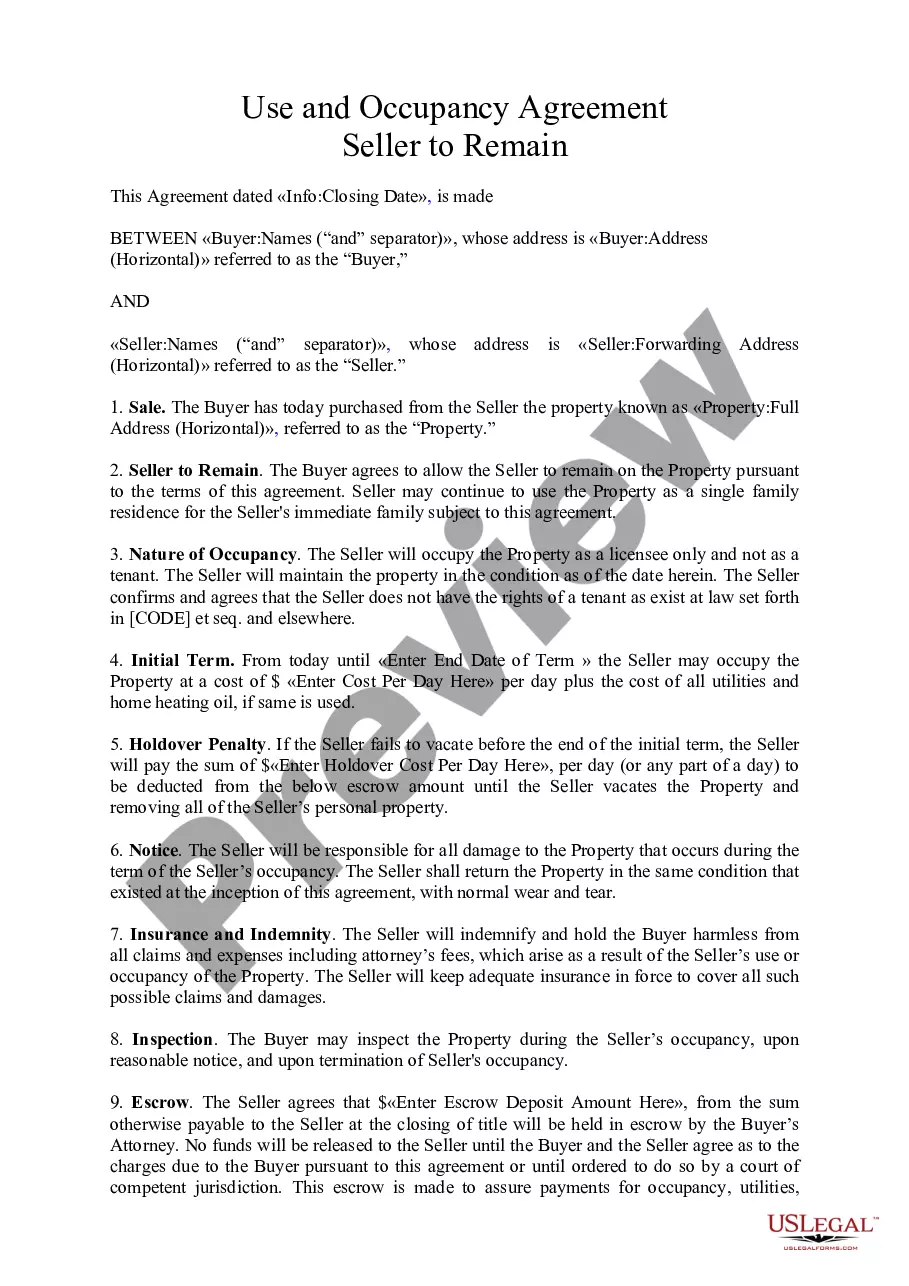
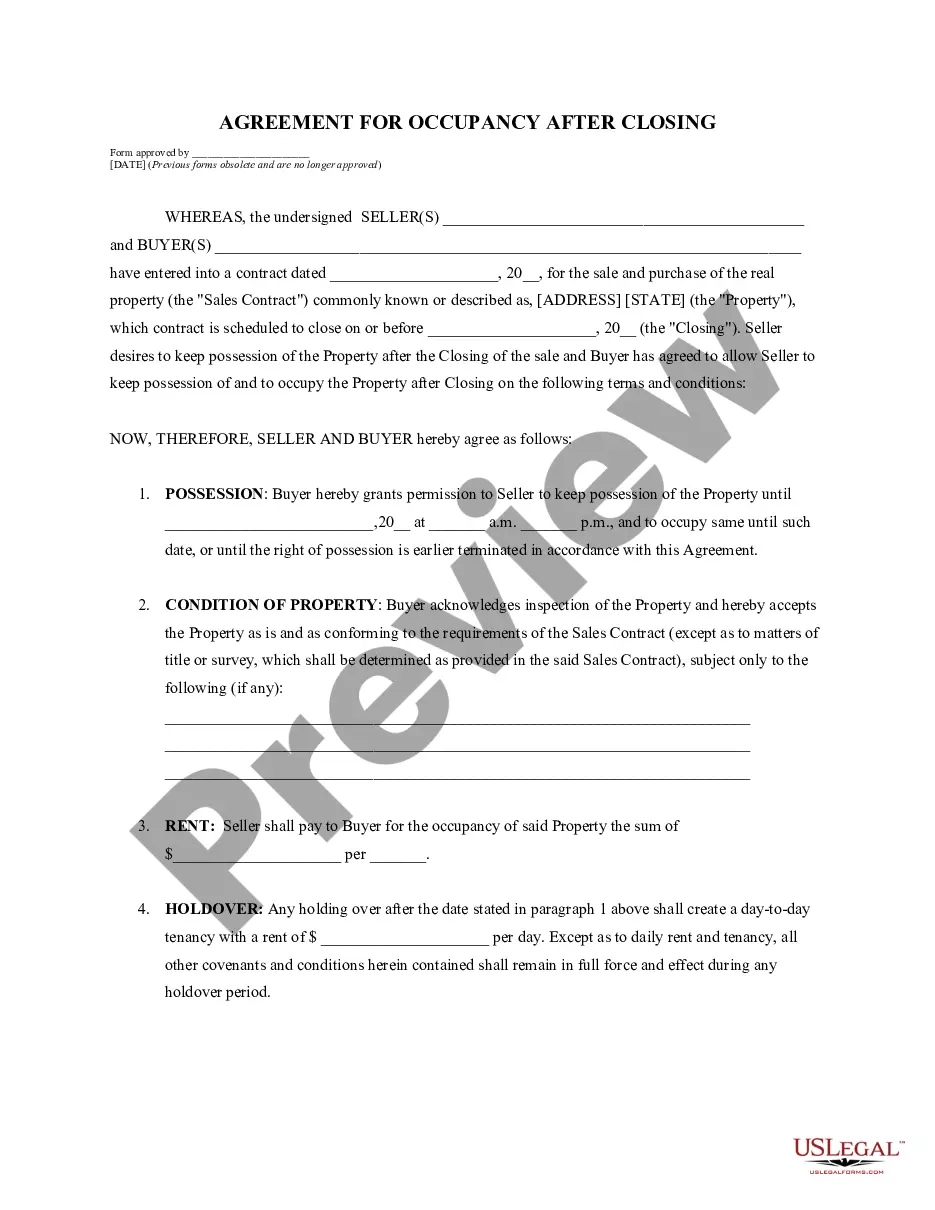
Illinois Temporary Residential Lease - Occupation by Seller - Post-Closing
Description

Get your form ready online
Our built-in tools help you complete, sign, share, and store your documents in one place.
Make edits, fill in missing information, and update formatting in US Legal Forms—just like you would in MS Word.
Download a copy, print it, send it by email, or mail it via USPS—whatever works best for your next step.
Sign and collect signatures with our SignNow integration. Send to multiple recipients, set reminders, and more. Go Premium to unlock E-Sign.
If this form requires notarization, complete it online through a secure video call—no need to meet a notary in person or wait for an appointment.
We protect your documents and personal data by following strict security and privacy standards.

Make edits, fill in missing information, and update formatting in US Legal Forms—just like you would in MS Word.

Download a copy, print it, send it by email, or mail it via USPS—whatever works best for your next step.

Sign and collect signatures with our SignNow integration. Send to multiple recipients, set reminders, and more. Go Premium to unlock E-Sign.

If this form requires notarization, complete it online through a secure video call—no need to meet a notary in person or wait for an appointment.

We protect your documents and personal data by following strict security and privacy standards.
Looking for another form?
How to fill out Temporary Residential Lease - Occupation By Seller - Post-Closing?
If you need to complete, download, or print legal document templates, utilize US Legal Forms, the largest compilation of legal forms available online.
Take advantage of the site's easy and straightforward search feature to find the documents you require.
Various templates for business and personal purposes are organized by categories and states, or keywords.
Every legal document template you acquire is yours permanently. You have access to all forms you downloaded in your account. Check the My documents section to select a form to print or download again.
Be proactive and download, then print the Illinois Temporary Residential Lease - Occupation by Seller - Post-Closing with US Legal Forms. There are millions of professional and state-specific forms you can use for your business or personal needs.
- Use US Legal Forms to acquire the Illinois Temporary Residential Lease - Occupation by Seller - Post-Closing with just a few clicks.
- If you are already a US Legal Forms customer, Log In to your account and click the Download button to access the Illinois Temporary Residential Lease - Occupation by Seller - Post-Closing.
- You can also retrieve forms you previously downloaded from the My documents section of your account.
- If you are using US Legal Forms for the first time, follow these instructions.
- Step 1. Ensure you have selected the form for your appropriate city/state.
- Step 2. Utilize the Review feature to examine the form's content. Don't forget to read the description.
- Step 3. If you are unhappy with the form, use the Search box at the top of the screen to locate alternative versions of the legal form template.
- Step 4. Once you have found the form you need, click on the Purchase now button. Choose your preferred pricing plan and enter your information to sign up for the account.
- Step 5. Complete the payment process. You can use your credit card or PayPal account to finalize the transaction.
- Step 6. Choose the format of the legal form and download it to your device.
- Step 7. Fill out, edit, and print or sign the Illinois Temporary Residential Lease - Occupation by Seller - Post-Closing.
Form popularity
FAQ
In certain situations, it can be normal for a seller to remain in a house after closing, particularly with a proper agreement like the Illinois Temporary Residential Lease - Occupation by Seller - Post-Closing. This arrangement allows sellers a transitional period to complete their move. However, it is crucial for buyers to have clear terms outlined in their lease agreement to avoid misunderstandings. Understanding this option helps both parties feel secure during the transition.
When a seller remains in possession after closing, the buyer should first review the terms of the Illinois Temporary Residential Lease - Occupation by Seller - Post-Closing. It's essential to communicate directly with the seller to understand their intentions and timeline for moving out. If necessary, the buyer may need to take legal steps to evict the seller, protecting their rights to the property. Consulting with a legal expert can help ensure all actions adhere to state laws.
If the seller refuses to vacate the property after closing, it can create significant complications for the buyer. In such cases, the Illinois Temporary Residential Lease - Occupation by Seller - Post-Closing may provide a structured approach to addressing this issue. The buyer might need to initiate legal proceedings to restore possession of the home, which can be time-consuming and costly. Having a clear agreement in place helps buyers navigate this situation more effectively.
If the seller does not leave by the closing date, it can complicate matters. An Illinois Temporary Residential Lease - Occupation by Seller - Post-Closing secures the seller's ability to stay beyond this date legally. It is essential to have contingencies in place within your agreement, and leveraging platforms like uslegalforms can guide you in drafting a solid lease agreement.
A buyer's temporary residential lease is a legal agreement allowing the seller to remain in the property after closing. This arrangement is part of the Illinois Temporary Residential Lease - Occupation by Seller - Post-Closing. It defines the terms, including rent, duration, and responsibilities, offering peace of mind for both buyer and seller.
Typically, sellers do not have to be moved out by the final walk-through if an Illinois Temporary Residential Lease - Occupation by Seller - Post-Closing is in place. However, it is advisable to communicate with the buyer about your plans. Ensuring that both parties understand the timeline will help maintain a smooth transition.
Yes, a seller can stay in the house after closing with an Illinois Temporary Residential Lease - Occupation by Seller - Post-Closing. Many buyers are open to this arrangement, as it provides convenience to the seller during their transition. Make sure to negotiate the rent amount and duration of the stay ahead of time for transparency.
When a seller stays in the house after closing, it is commonly referred to as 'post-closing occupancy.' This arrangement is often formalized in the Illinois Temporary Residential Lease - Occupation by Seller - Post-Closing. It allows the seller to remain in the home for a specified period while ensuring the buyer’s interests are protected. Understanding this term is vital for both parties to navigate their obligations and rights confidently.
Seller occupancy after closing refers to the arrangement where the seller continues to reside in the property even after the sale has been finalized, per the Illinois Temporary Residential Lease - Occupation by Seller - Post-Closing. This arrangement benefits sellers by providing them time to move while ensuring buyers have future plans in mind. Clear agreements and timelines help avoid confusion and conflict. A well-drafted lease can ease this transition considerably.
The post-closing occupancy clause is a provision in the Illinois Temporary Residential Lease - Occupation by Seller - Post-Closing that outlines the terms under which the seller can remain in the property after closing. This clause stipulates the duration of occupancy, any payment obligations, and the responsibilities of both parties. Including this clause in the lease provides legal clarity and protects everyone involved. It's crucial to understand this clause to avoid potential disputes down the line.