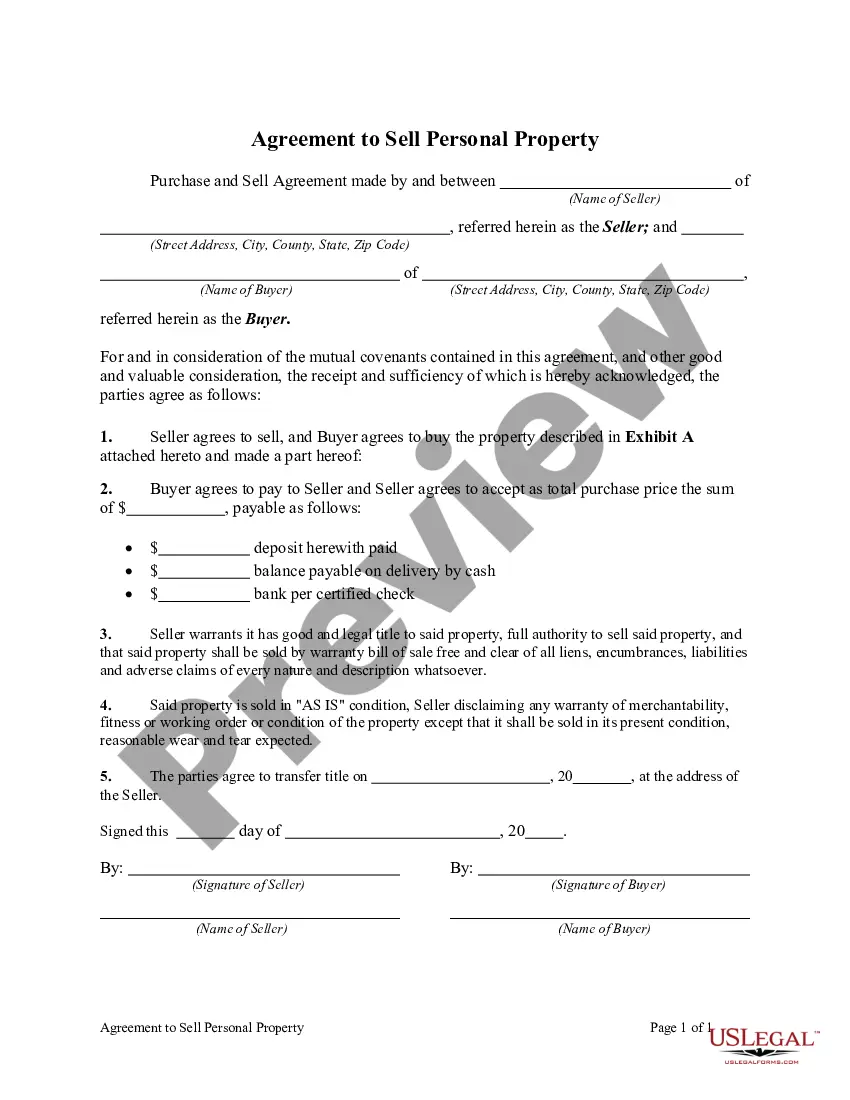
Illinois Agreement to Sell Personal Property
Description
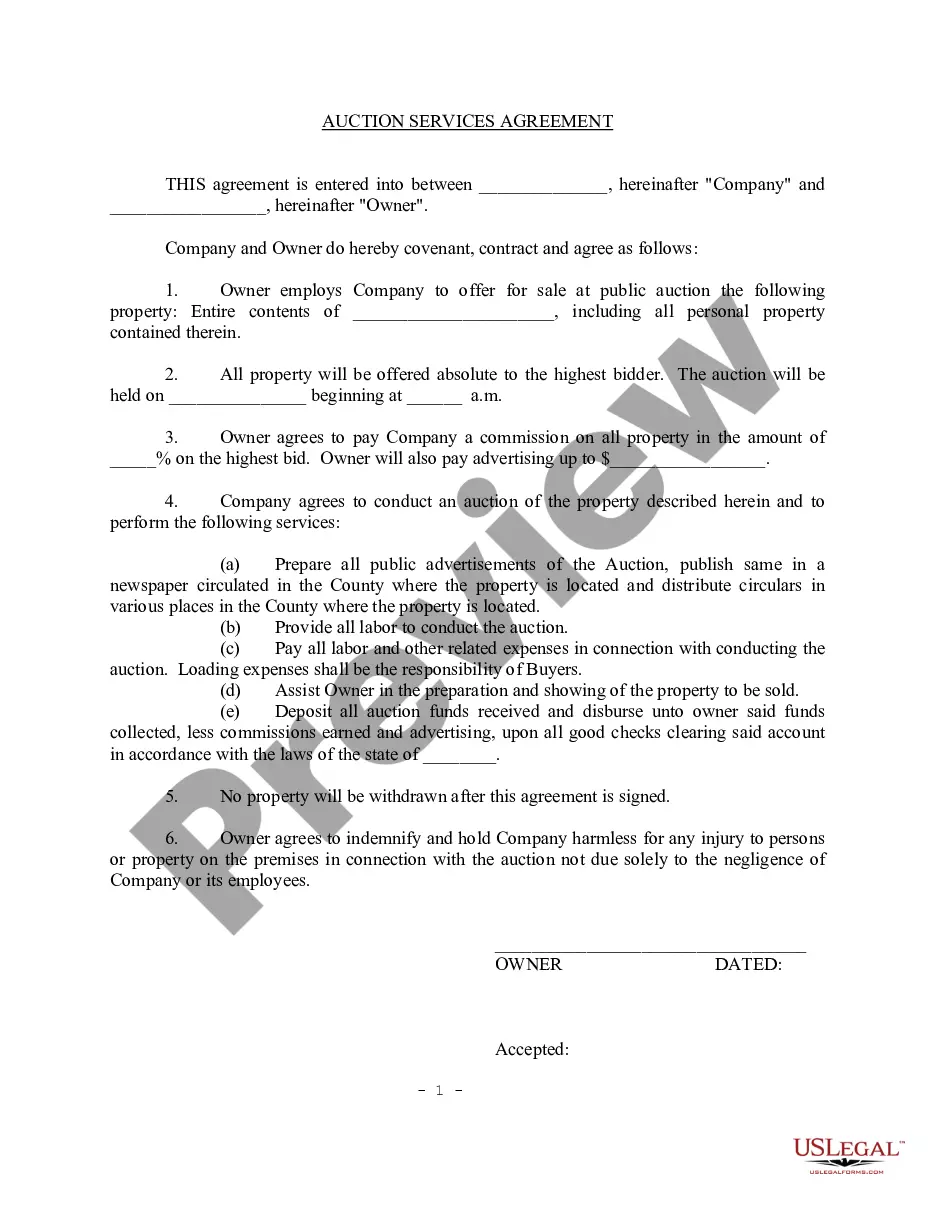
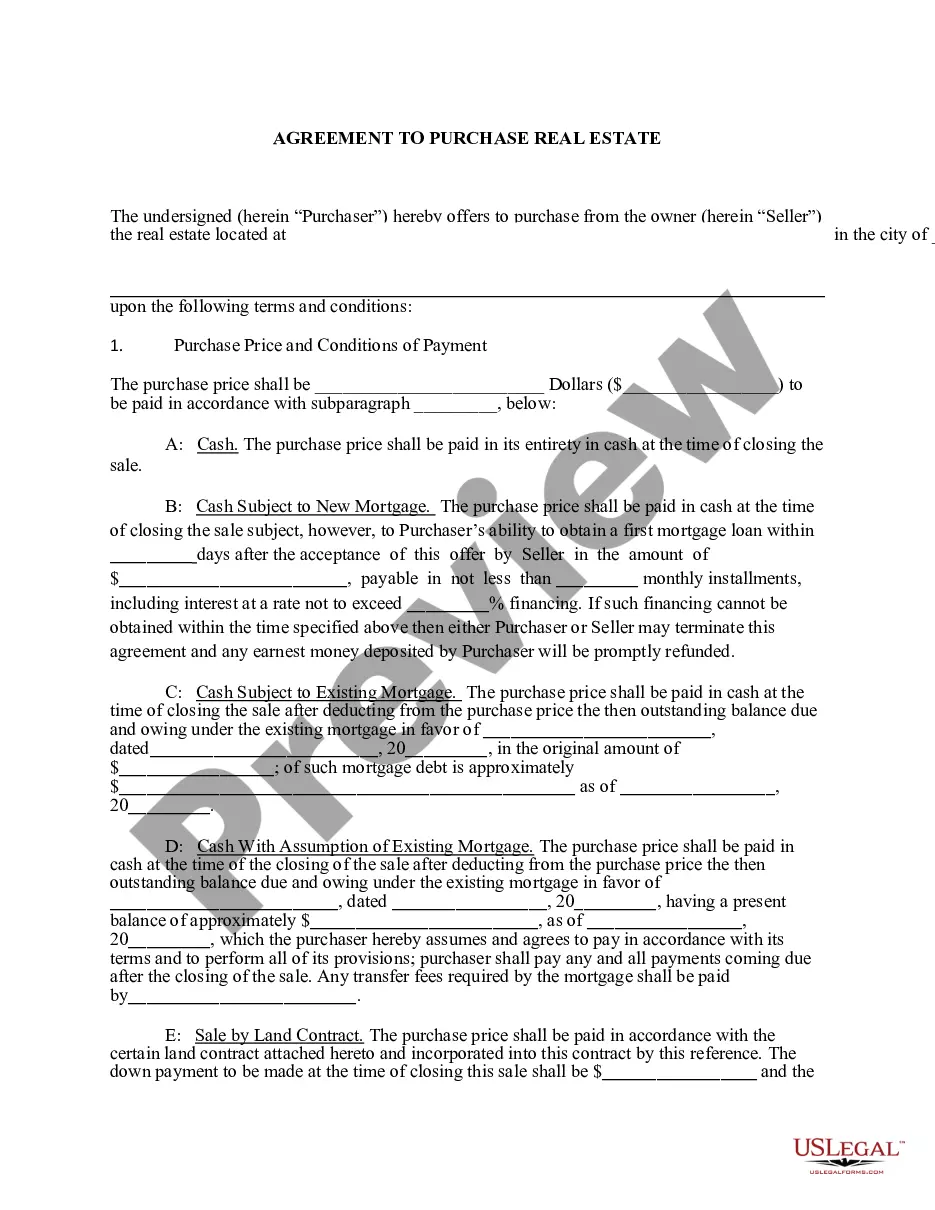
Get your form ready online
Our built-in tools help you complete, sign, share, and store your documents in one place.
Make edits, fill in missing information, and update formatting in US Legal Forms—just like you would in MS Word.
Download a copy, print it, send it by email, or mail it via USPS—whatever works best for your next step.
Sign and collect signatures with our SignNow integration. Send to multiple recipients, set reminders, and more. Go Premium to unlock E-Sign.
If this form requires notarization, complete it online through a secure video call—no need to meet a notary in person or wait for an appointment.
We protect your documents and personal data by following strict security and privacy standards.

Make edits, fill in missing information, and update formatting in US Legal Forms—just like you would in MS Word.

Download a copy, print it, send it by email, or mail it via USPS—whatever works best for your next step.

Sign and collect signatures with our SignNow integration. Send to multiple recipients, set reminders, and more. Go Premium to unlock E-Sign.

If this form requires notarization, complete it online through a secure video call—no need to meet a notary in person or wait for an appointment.

We protect your documents and personal data by following strict security and privacy standards.
Looking for another form?
How to fill out Agreement To Sell Personal Property?
Selecting the optimal legal document template can be quite challenging.
Clearly, there is a multitude of templates available online, but how can you find the legal form you need.
Utilize the US Legal Forms website. The platform provides thousands of templates, including the Illinois Agreement to Sell Personal Property, which can be used for both business and personal purposes.
You can preview the form using the Review button and read the form details to ensure it suits your needs.
- All of the forms are verified by experts and comply with state and federal regulations.
- If you are already registered, Log In to your account and click the Obtain button to acquire the Illinois Agreement to Sell Personal Property.
- Leverage your account to browse through the legal forms you have previously purchased.
- Visit the My documents section of your account to obtain another copy of the document you need.
- If you are a new user of US Legal Forms, here are simple steps to follow.
- First, ensure you have selected the appropriate form for your area/county.
Form popularity
FAQ
A PTAX 203 is a form used in Illinois for real estate transactions, specifically for the assessment of property transfer taxes. It must be completed and submitted when recording a deed for real property ownership changes. The form provides necessary information that ensures proper state and local tax calculations. When drafting an Illinois Agreement to Sell Personal Property, including details related to the PTAX 203 can clarify financial obligations for both sellers and buyers.
In Illinois, foreclosure transactions are typically exempt from transfer taxes, which can ease the financial burden for homeowners facing this situation. As properties transition from one ownership to another through the foreclosure process, the standard transfer tax does not apply. This exemption can enhance the appeal of the Illinois Agreement to Sell Personal Property during such challenging times. Always confirm the specific circumstances with legal guidance to ensure compliance.
To transfer ownership of a property in Illinois, you need to execute a deed, such as a warranty deed or quitclaim deed. The deed must be properly signed, notarized, and then recorded with the county clerk. This helps ensure the transfer is legally recognized, protecting both the buyer and seller. Utilizing the Illinois Agreement to Sell Personal Property can facilitate this process by outlining the terms clearly between the parties involved.
The exclusive right to sell agreement in Illinois is a contract that gives one real estate agent the sole authority to sell a property. This means that even if the property owner finds a buyer independently, the agent is still entitled to their commission. This agreement can enhance marketing efforts and provide a dedicated approach to selling your property. When considering the Illinois Agreement to Sell Personal Property, an exclusive right to sell agreement offers a structured path for successful transactions.
To write an agreement between a buyer and seller, begin with a clear title such as Illinois Agreement to Sell Personal Property. Identify both parties clearly with their full names and addresses. Detail the transaction terms, including the sale items, payment structure, and signatures. By following these steps, you can create an effective agreement that protects both parties' interests.
A simple contract agreement should be direct and easy to understand. Begin with the title, such as Illinois Agreement to Sell Personal Property, and state the parties involved. Clearly specify the terms of the agreement, including responsibilities, payment details, and how disputes will be handled. Always include signatures to validate the agreement.
To write a good agreement letter, start with a clear title that identifies the type of agreement, such as an Illinois Agreement to Sell Personal Property. Include the date, the parties' names, and their contact information. Clearly outline the terms, responsibilities, and any payment details, ensuring that all critical points are addressed in a straightforward manner. Finally, conclude with space for both parties to sign.
Writing a written agreement between two parties involves clear communication and conciseness. Start by outlining the main terms of the agreement, including the parties involved and the subject, such as an Illinois Agreement to Sell Personal Property. Use simple language to detail each party's obligations and rights. Make sure both parties sign and date the document to confirm their acceptance.
You do not need a lawyer to sell your house privately in Illinois, but having one can simplify the process. A lawyer can help you navigate the legal requirements involved in an Illinois Agreement to Sell Personal Property. They can ensure that your documentation is clear and protect your interests during the transaction. If you're unsure about the steps, consulting a legal professional might be beneficial.
In Illinois, having an attorney at closing is not mandatory, but it is beneficial. An attorney can review all closing documents and ensure that your interests are protected. If you're using an Illinois Agreement to Sell Personal Property, your attorney can help confirm that all terms are met before you finalize the sale. Their expertise simplifies the process and gives you peace of mind.