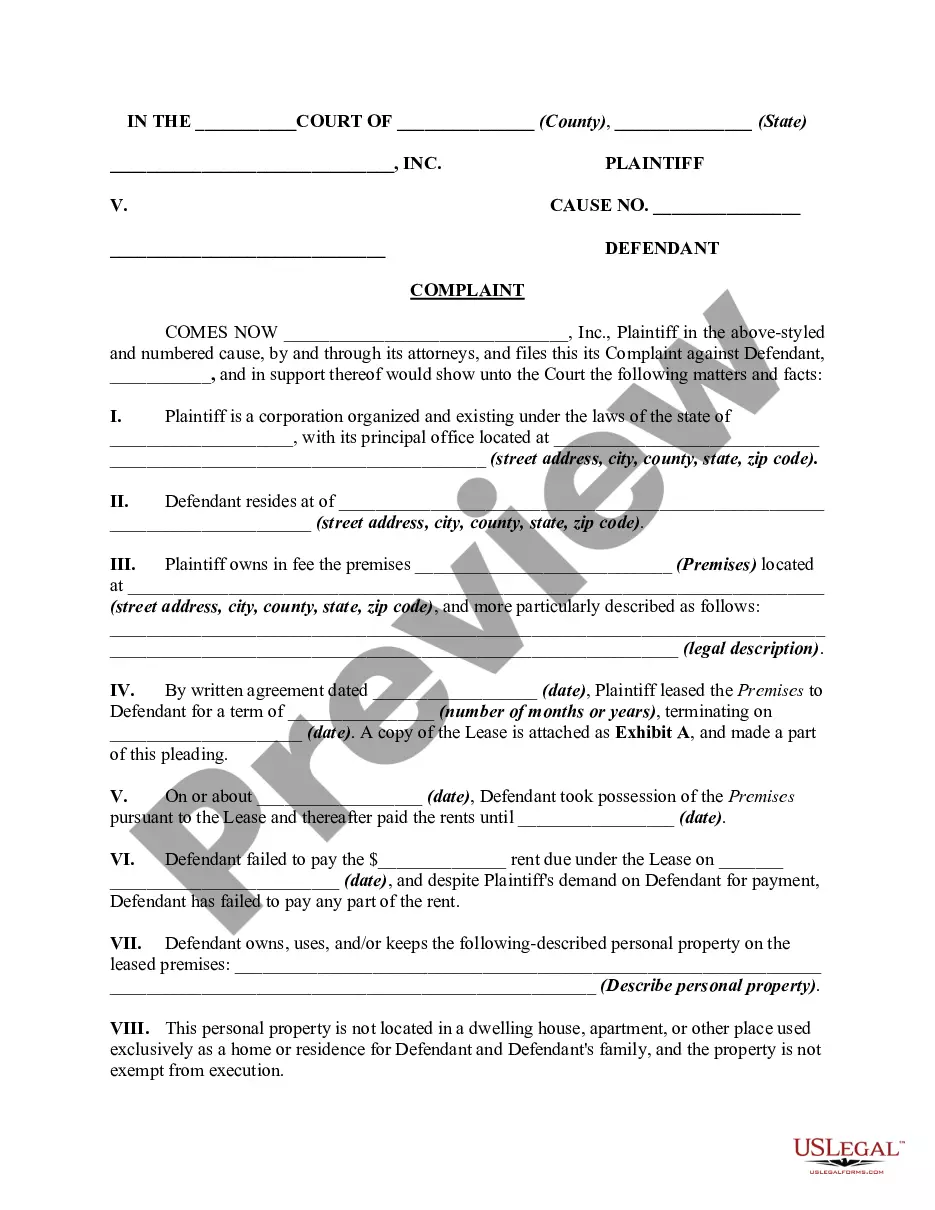
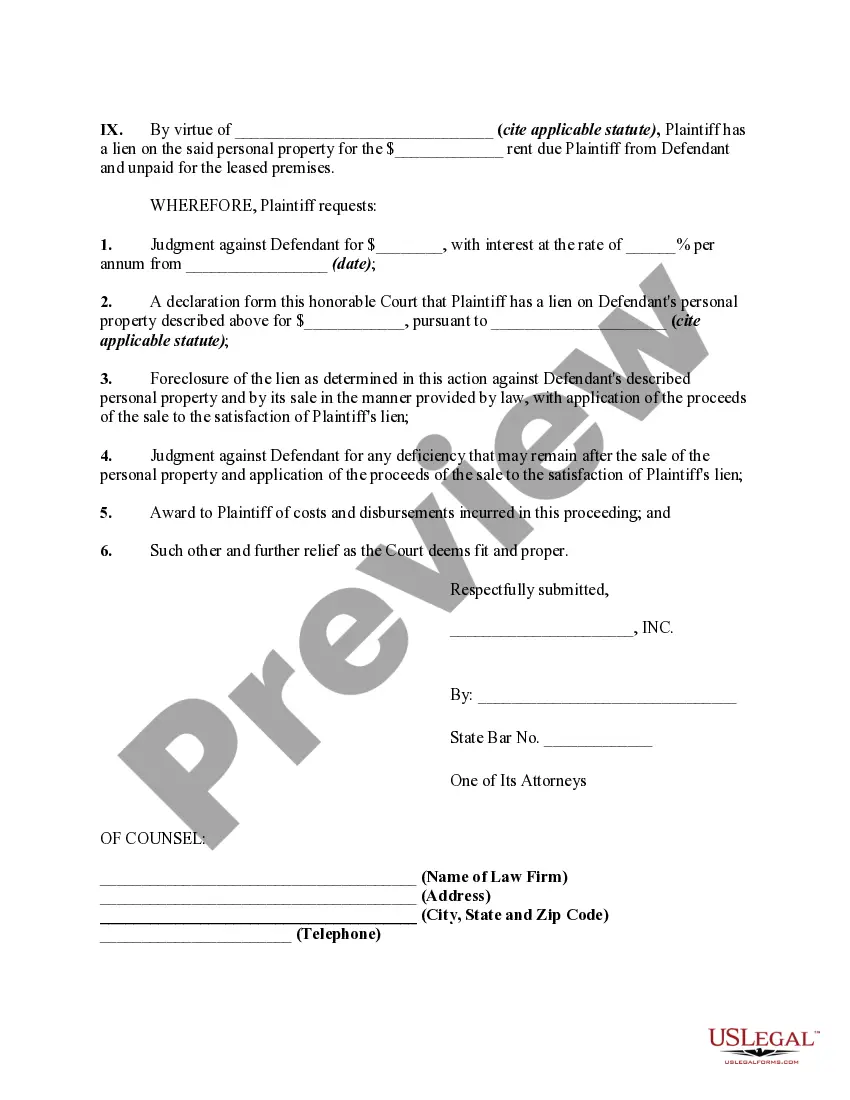
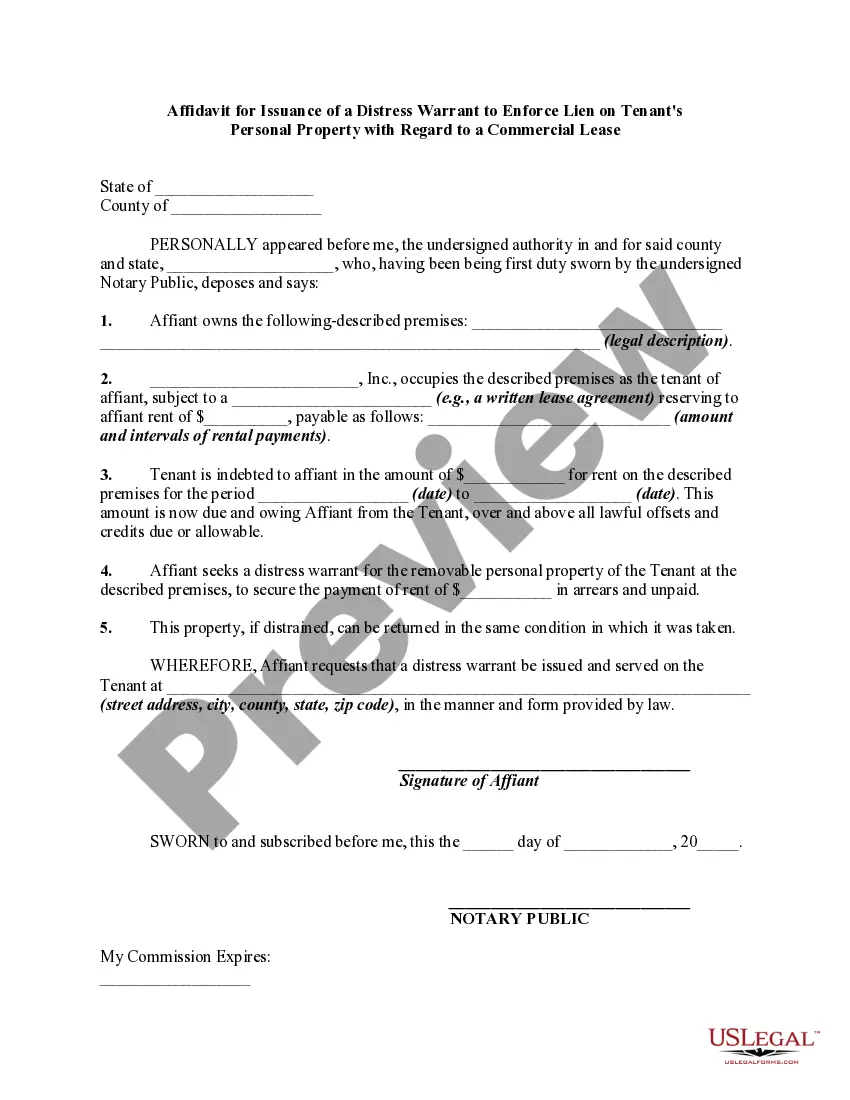
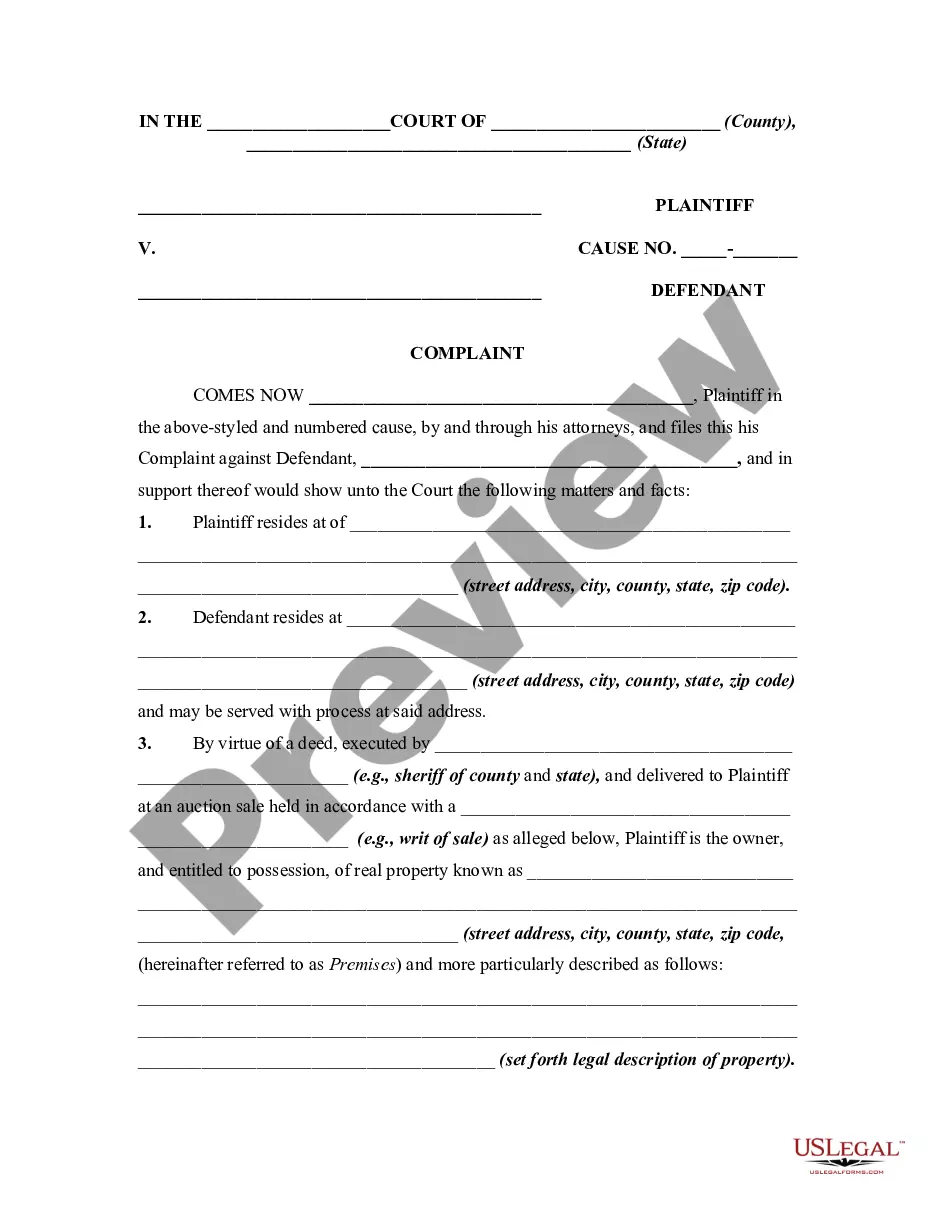
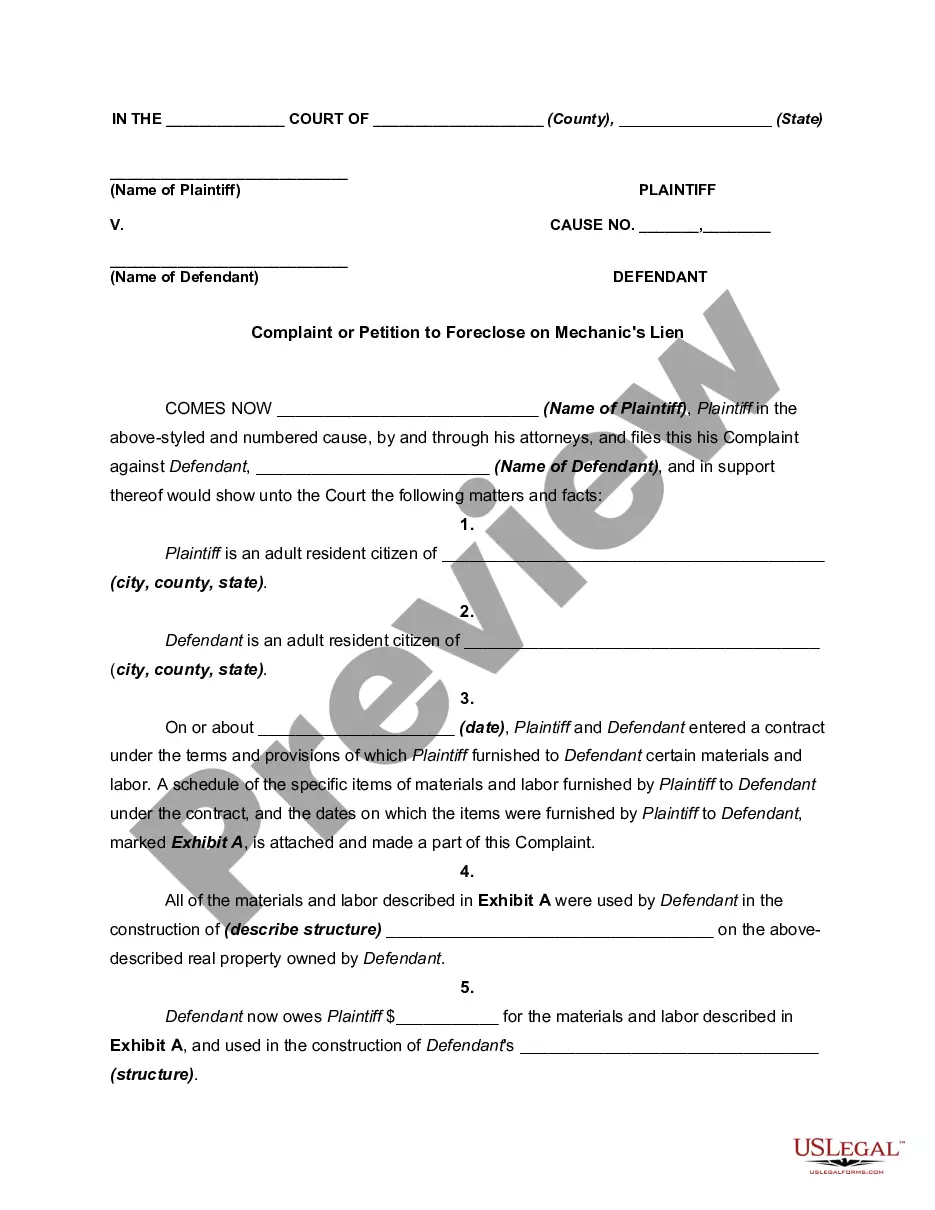
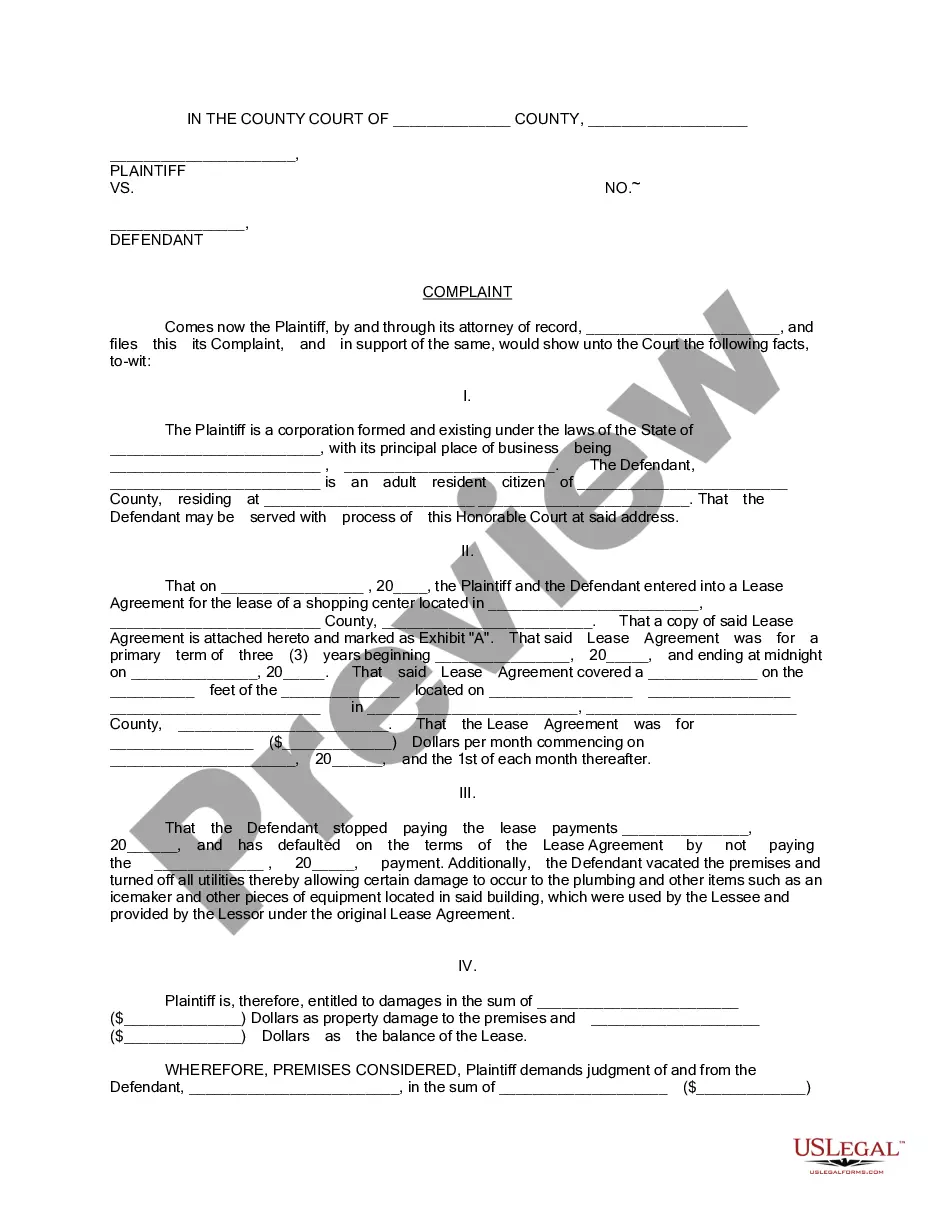
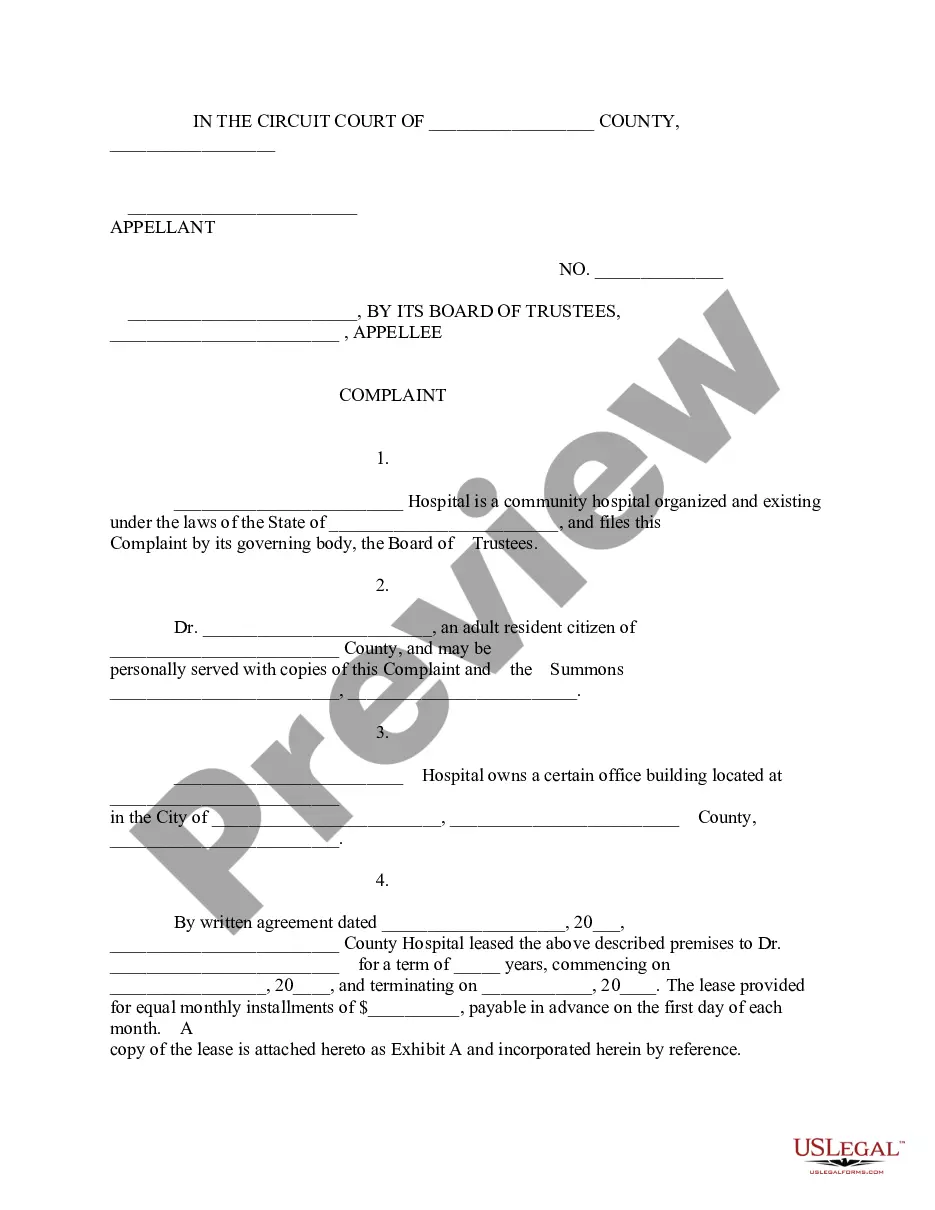
Illinois Complaint or Petition to Enforce Statutory Lien on Tenant's Personal Property with Regard to a Commercial Lease
Description
Get your form ready online
Our built-in tools help you complete, sign, share, and store your documents in one place.
Make edits, fill in missing information, and update formatting in US Legal Forms—just like you would in MS Word.
Download a copy, print it, send it by email, or mail it via USPS—whatever works best for your next step.
Sign and collect signatures with our SignNow integration. Send to multiple recipients, set reminders, and more. Go Premium to unlock E-Sign.
If this form requires notarization, complete it online through a secure video call—no need to meet a notary in person or wait for an appointment.
We protect your documents and personal data by following strict security and privacy standards.

Make edits, fill in missing information, and update formatting in US Legal Forms—just like you would in MS Word.

Download a copy, print it, send it by email, or mail it via USPS—whatever works best for your next step.

Sign and collect signatures with our SignNow integration. Send to multiple recipients, set reminders, and more. Go Premium to unlock E-Sign.

If this form requires notarization, complete it online through a secure video call—no need to meet a notary in person or wait for an appointment.

We protect your documents and personal data by following strict security and privacy standards.
Looking for another form?
How to fill out Complaint Or Petition To Enforce Statutory Lien On Tenant's Personal Property With Regard To A Commercial Lease?
Have you ever found yourself in a situation where you require documents for either business or personal purposes almost every day.
There are numerous valid document templates available online, but finding ones you can trust isn't easy.
US Legal Forms offers a vast array of form templates, such as the Illinois Complaint or Petition to Enforce Statutory Lien on Tenant's Personal Property Regarding a Commercial Lease, which are designed to comply with federal and state regulations.
Choose the pricing plan you prefer, complete the required information to create your account, and pay for the order using your PayPal or credit card.
Select a convenient file format and download your version.
- If you are already acquainted with the US Legal Forms website and possess an account, simply Log In.
- After that, you can download the Illinois Complaint or Petition to Enforce Statutory Lien on Tenant's Personal Property Regarding a Commercial Lease template.
- If you do not have an account and wish to start using US Legal Forms, follow these steps.
- Find the form you need and make sure it corresponds to the correct area/state.
- Utilize the Review button to examine the document.
- Check the description to ensure you have selected the right form.
- If the form isn't what you're looking for, use the Search field to locate the form that meets your needs.
- When you find the appropriate form, click on Get now.
Form popularity
FAQ
Creates the Tenant Bill of Rights, with provisions governing exclusions, the identification of an owner and agent, a landlord's right of access, prohibited harassment, required notices, a landlord's responsibility to maintain, a tenant's remedies, security deposits, notification of foreclosure actions, and the ...
Withholding rent can seem like a very extreme measure to take and the tenant might fear getting evicted, but it is perfectly legal in some state. However, that is not the case in Illinois.
Gross Leases: Commercial tenants often prefer this type of lease because the tenant is only responsible for the rental value of the property. The landlord pays the property insurance, taxes, maintenance or repair fees, and some of the utilities (heat, water, electricity).
Other major lease violations can allow eviction - Nonpayment of rent is not the only reason a commercial landlord may need to evict a tenant. A tenant who has caused significant damage to the property or is creating a significant disruption to your other tenants can also likely be evicted.
You must give written notice when you intend to move. The Illinois Retaliatory Eviction Act prohibits your landlord from evicting you for complaining to any governmental authority (housing inspector, human rights commission, etc.).
(e) A landlord may remove and store any property of a tenant that remains on premises that are abandoned. In addition to the landlord's other rights, the landlord may dispose of the stored property if the tenant does not claim the property within 60 days after the date the property is stored.
The commercial landlord is responsible for paying maintenance, repairs, and insurance.