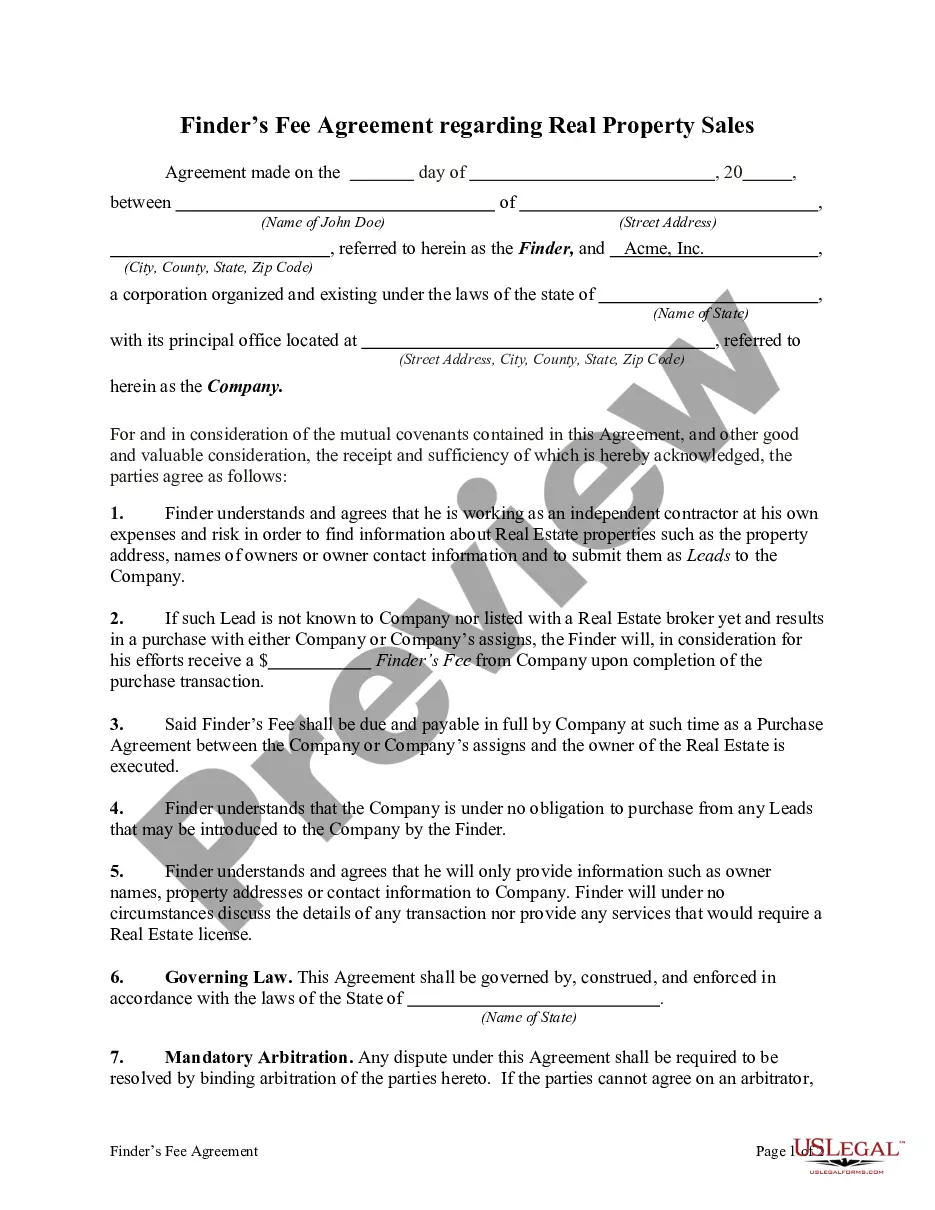
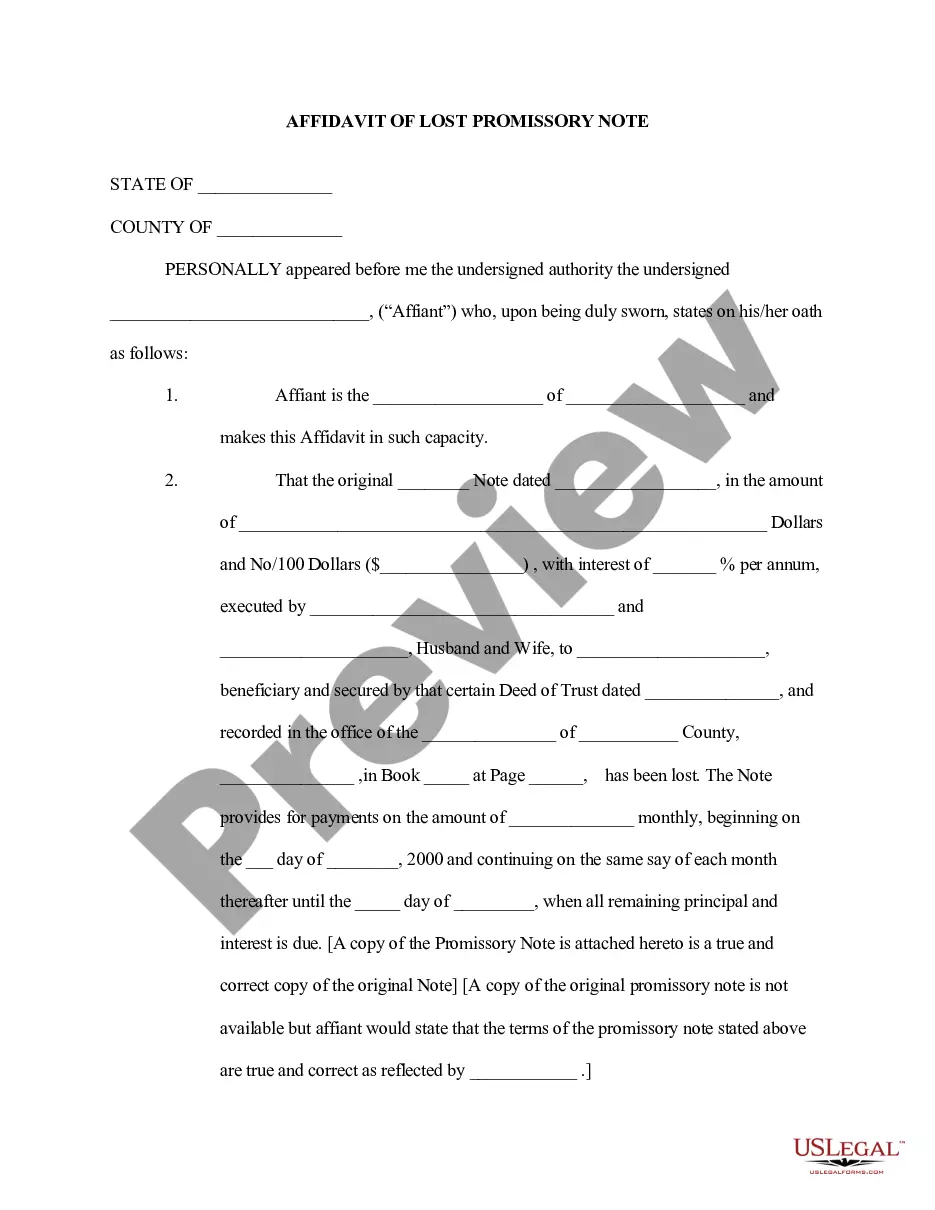
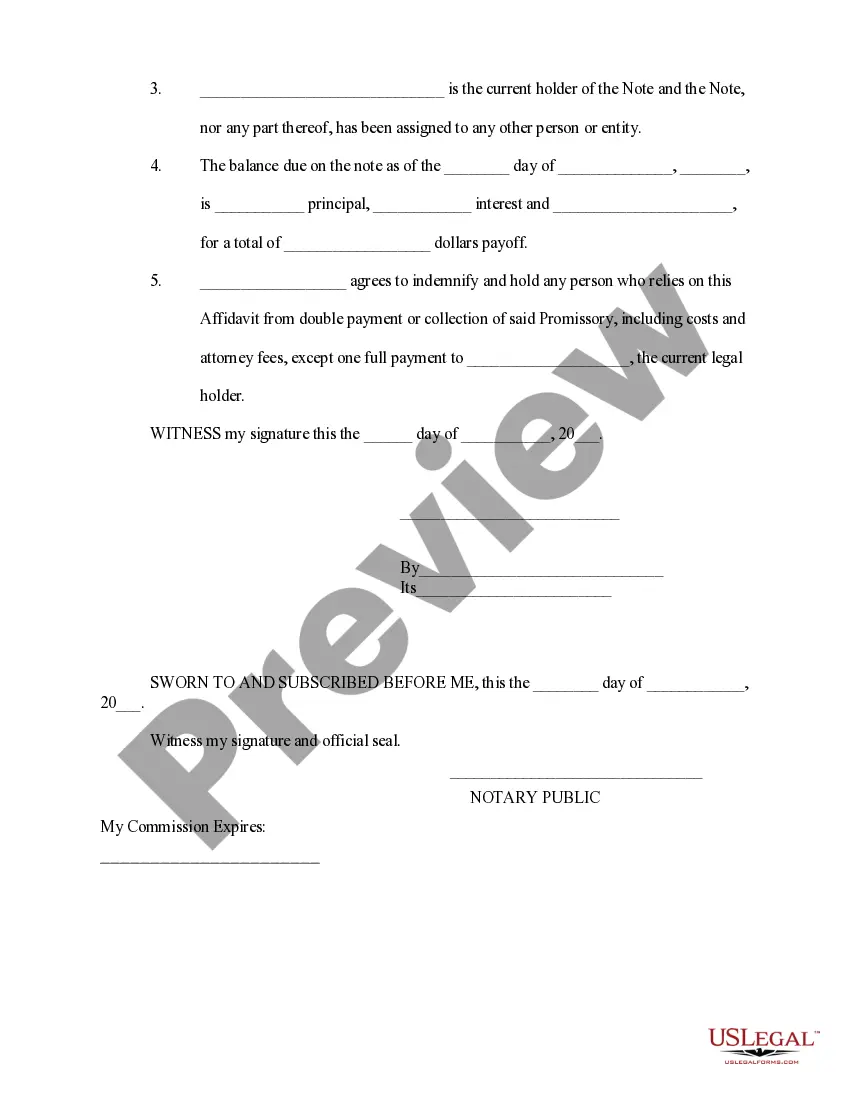
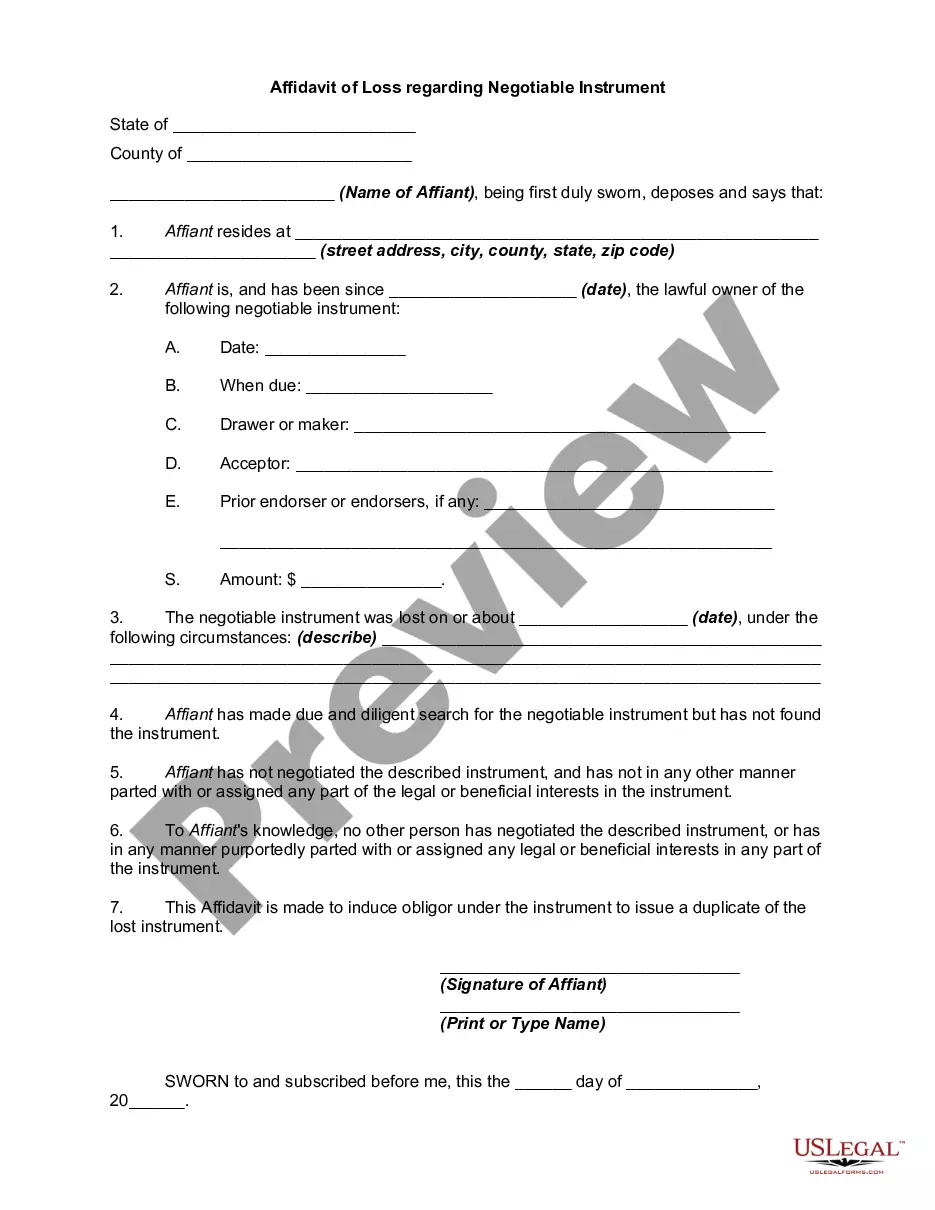
This affidavit is for execution when an original promissory note has been lost. The form provides a description of the contents contained in the original note and the balance due on the note at the time the note was lost. The form must also be signed in the presence of a notary public.
Illinois Affidavit of Lost Promissory Note
155 downloads
Description
Free preview
Get your form ready online
Our built-in tools help you complete, sign, share, and store your documents in one place.
Built-in online Word editor
Make edits, fill in missing information, and update formatting in US Legal Forms—just like you would in MS Word.
Export easily
Download a copy, print it, send it by email, or mail it via USPS—whatever works best for your next step.
E-sign your document
Sign and collect signatures with our SignNow integration. Send to multiple recipients, set reminders, and more. Go Premium to unlock E-Sign.
Notarize online 24/7
If this form requires notarization, complete it online through a secure video call—no need to meet a notary in person or wait for an appointment.
Store your document securely
We protect your documents and personal data by following strict security and privacy standards.

Make edits, fill in missing information, and update formatting in US Legal Forms—just like you would in MS Word.

Download a copy, print it, send it by email, or mail it via USPS—whatever works best for your next step.

Sign and collect signatures with our SignNow integration. Send to multiple recipients, set reminders, and more. Go Premium to unlock E-Sign.

If this form requires notarization, complete it online through a secure video call—no need to meet a notary in person or wait for an appointment.

We protect your documents and personal data by following strict security and privacy standards.
Looking for another form?




How to fill out Affidavit Of Lost Promissory Note?
Are you currently in a situation where you require documents for either business or personal purposes almost every day.
There are numerous legal document templates available online, but locating reliable ones isn't straightforward.
US Legal Forms offers thousands of form templates, such as the Illinois Affidavit of Lost Promissory Note, that are designed to comply with federal and state regulations.
If you find the correct form, just click Buy now.
Select the pricing plan you desire, fill in the necessary information to create your account, and complete the purchase using your PayPal or credit card.
- If you are already familiar with the US Legal Forms website and have an account, simply Log In.
- Next, you can download the Illinois Affidavit of Lost Promissory Note template.
- If you do not have an account and wish to start using US Legal Forms, follow these steps.
- Obtain the document you need and ensure it is for the correct city/region.
- Use the Review button to examine the form.
- Check the details to confirm that you have chosen the appropriate document.
- If the form isn't what you're after, use the Search field to locate the document that meets your needs.
Form popularity
FAQ
The buyer of the note becomes what is called a holder because they hold your note as the owner of it. A holder has a special right to collect from you right away if you don't pay. But only the holder of an original promissory note can collect from you. A promissory note can change many hands as it is bought and sold.
Even if a promissory note is lost, the legal obligation to repay the loan remains. The lender has a right to re-establish the note legally as long as it has not sold or transferred the note to another party.
Promissory notes are a common type of financial instrument in loan transactions. As the payer of such a note, it's important to know that, unless a note expressly stipulates that it is not negotiable, promissory notes are negotiable instruments that can be transferred or assigned by the original payee to a third party.
Even if you have the original note, it may be void if it was not written correctly. If the person you're trying to collect from didn't sign it and yes, this happens the note is void. It may also become void if it failed some other law, for example, if it was charging an illegally high rate of interest.
An Affidavit of Lost Note is a legal document that can be used to confirm under oath that a Promissory Note or other lending document has been lost.
You should demand to see your original promissory note if you are facing foreclosure of your home because only the party that holds the original note is allowed to sue you. If you bought a home, you probably didn't pay cash for it unless you are wealthy or you did a great job of saving money.
You can get a copy of your Master Promissory Notes by going to studentloans.gov and entering your FSA ID. Click on Completed Master Promissory Notes under the menu bar heading that says My Loan Documents. The completed Master Promissory Notes will appear, and you can download them directly.
Even if a promissory note is lost, the legal obligation to repay the loan remains. The lender has a right to re-establish the note legally as long as it has not sold or transferred the note to another party.
Losing the original note or a copyThe original copy of a valid promissory note is usually held by the lender, but the borrower should also keep a copy of the signed document. If the borrower does not repay the loan, the lender can pursue appropriate legal action.