This is a multi-state form covering the subject matter of the title.
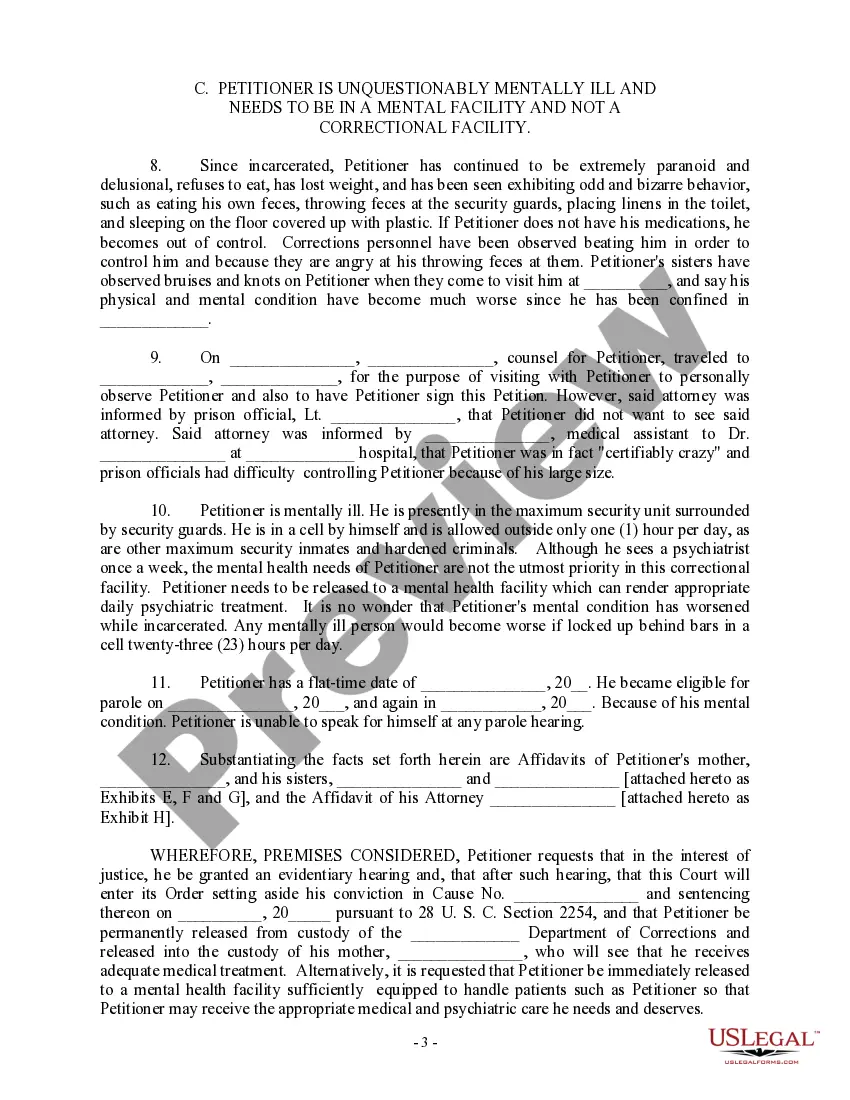
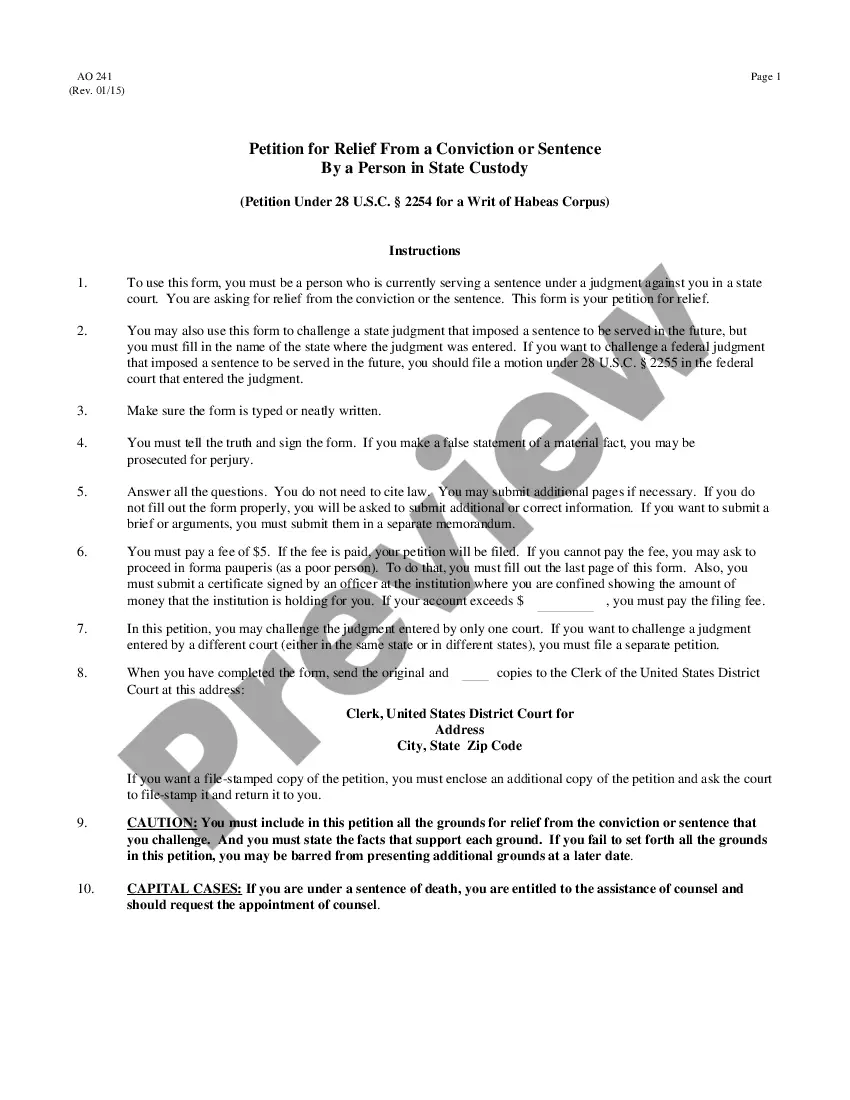
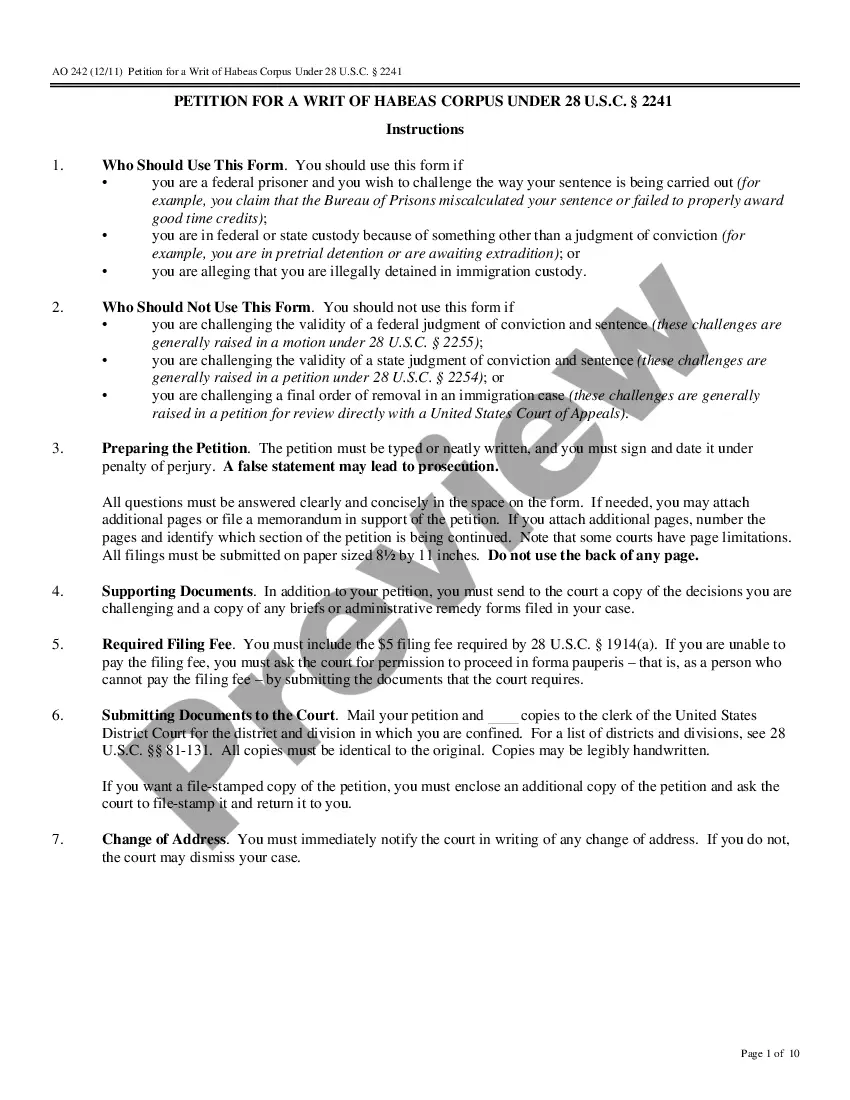
Illinois Petition for Writ of Habeas Corpus by a Person in State Custody
Category:
State:
Multi-State
Control #:
US-00277
Format:
Word;
Rich Text
Instant download
Description
Free preview



How to fill out Petition For Writ Of Habeas Corpus By A Person In State Custody?
Have you ever found yourself in a situation where you need documents for both business or personal purposes almost every day.
There are numerous legal document templates accessible online, but finding ones you can trust isn't easy.
US Legal Forms offers thousands of form templates, including the Illinois Petition for Writ of Habeas Corpus by a Person in State Custody, which can be tailored to meet federal and state requirements.
Utilize US Legal Forms, the most extensive collection of legal documents, to save time and avoid errors.
The service provides well-crafted legal document templates that can be used for a variety of purposes. Create an account on US Legal Forms and start making your life a bit easier.
- If you are already familiar with the US Legal Forms website and have an account, simply Log In.
- After that, you can download the Illinois Petition for Writ of Habeas Corpus by a Person in State Custody template.
- If you do not have an account and wish to start using US Legal Forms, follow these steps.
- Select the form you need and ensure it is for the correct city/county.
- Use the Review option to evaluate the form.
- Check the summary to confirm that you have chosen the correct form.
- If the form isn't what you're looking for, use the Search field to find the form that meets your needs and requirements.
- Once you find the correct form, click Purchase now.
- Choose the pricing plan you want, fill out the necessary information to create your account, and pay for the transaction using your PayPal or credit card.
- Select a convenient file format and download your version.
- You can find all the document templates you have purchased in the My documents menu.
- You can obtain an additional copy of the Illinois Petition for Writ of Habeas Corpus by a Person in State Custody at any time, if needed.
- Simply select the desired form to download or print the template.
Form popularity
FAQ
A good sentence for habeas corpus succinctly captures the essence of your legal argument. For example, you might write, 'I respectfully request that the court grant my petition for a writ of habeas corpus, as my detention violates my constitutional rights.' This statement clearly communicates your request while referencing the legal basis for your claim. For more guidance on phrasing your petition, refer to the Illinois Petition for Writ of Habeas Corpus by a Person in State Custody on US Legal Forms.
Grounds for a habeas corpus petition typically include unlawful detention, lack of due process, or violation of constitutional rights. Other reasons may involve expired sentences or improper jurisdiction. Each case must present a compelling argument to the court, which will review the facts and legal basis for the petition. To effectively prepare your case, you can refer to the Illinois Petition for Writ of Habeas Corpus by a Person in State Custody available on US Legal Forms.
The success rate of habeas corpus petitions can vary significantly based on multiple factors, including jurisdiction and the specific circumstances of each case. Generally, only a small percentage of these petitions are granted, often below 10%. However, the chances of success can improve with thorough preparation and strong legal arguments. Utilizing resources such as the Illinois Petition for Writ of Habeas Corpus by a Person in State Custody can provide valuable insights.
Writing a writ of habeas corpus involves several key steps. First, clearly state your name, the location of your detention, and the entity holding you. Then, describe the circumstances leading to your incarceration and explain why it is unlawful. Using the Illinois Petition for Writ of Habeas Corpus by a Person in State Custody template on US Legal Forms can simplify this process for you.
A writ of habeas corpus for child custody allows a person to challenge the legality of a child's detention or custody arrangement. This legal action can be crucial if you believe that a child's custody is unlawful or if you want to regain custody. It seeks to ensure the child's welfare and may require a court to review custody arrangements. For detailed procedures, consider the Illinois Petition for Writ of Habeas Corpus by a Person in State Custody available on US Legal Forms.
To write a petition for a writ of habeas corpus, start by clearly stating your name and the reason you are incarcerated. Next, outline the facts of your case, emphasizing any violations of your rights. Make sure to include the specific legal grounds under which you are filing, as well as any evidence supporting your claims. You can find templates and guidance for the Illinois Petition for Writ of Habeas Corpus by a Person in State Custody on the US Legal Forms platform.
Arguments that Can Overturn Convictions. A Writ of Habeas Corpus usually addresses claims of ineffective assistance of counsel, prosecutorial misconduct, newly discovered evidence, jury misconduct, and claims of actual innocence.
A writ of habeas corpus orders the custodian of an individual in custody to produce the individual before the court to make an inquiry concerning his or her detention, to appear for prosecution (ad prosequendum) or to appear to testify (ad testificandum).
Generally, a Writ is an order from a higher power or court to a lower body or court. In essence, when you file for a Writ of Habeas Corpus, you are invoking your right to challenge your unlawful or incorrect imprisonment and you're seeking the court's ability to make an order to the government agency.
Description. A writ of habeas corpus orders the custodian of an individual in custody to produce the individual before the court to make an inquiry concerning his or her detention, to appear for prosecution (ad prosequendum) or to appear to testify (ad testificandum).