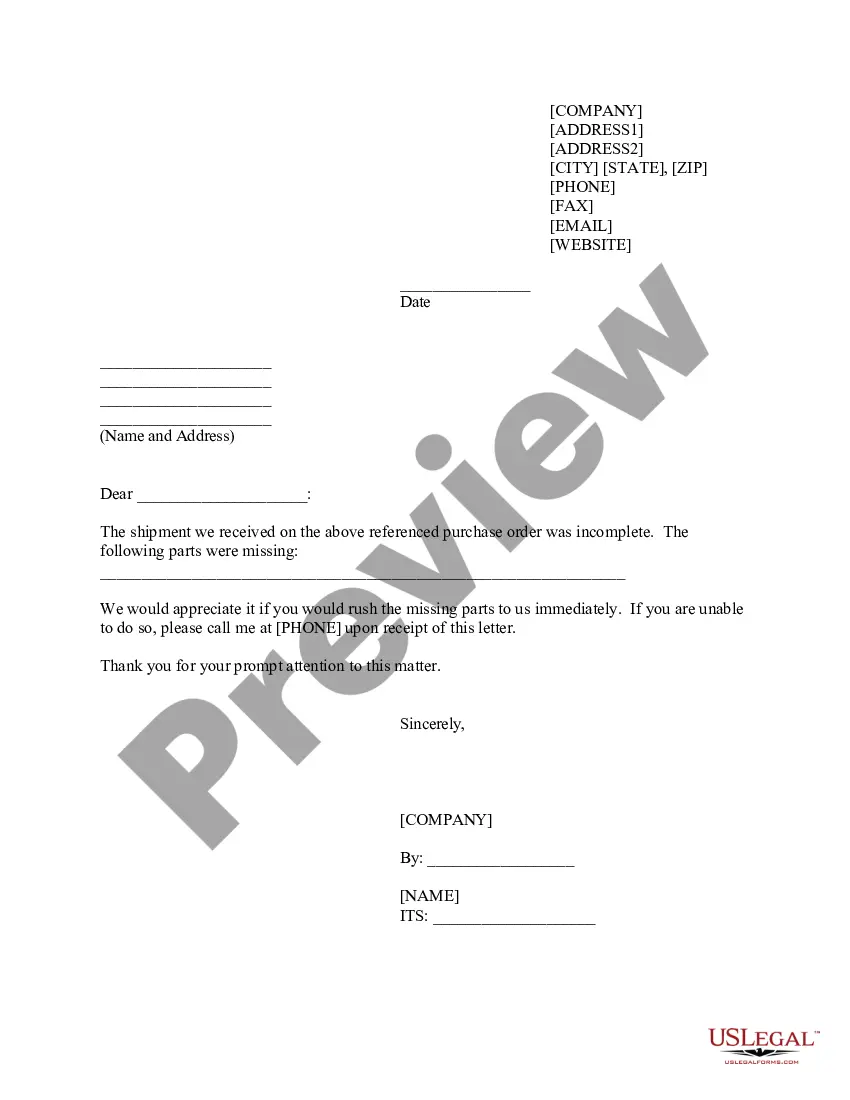
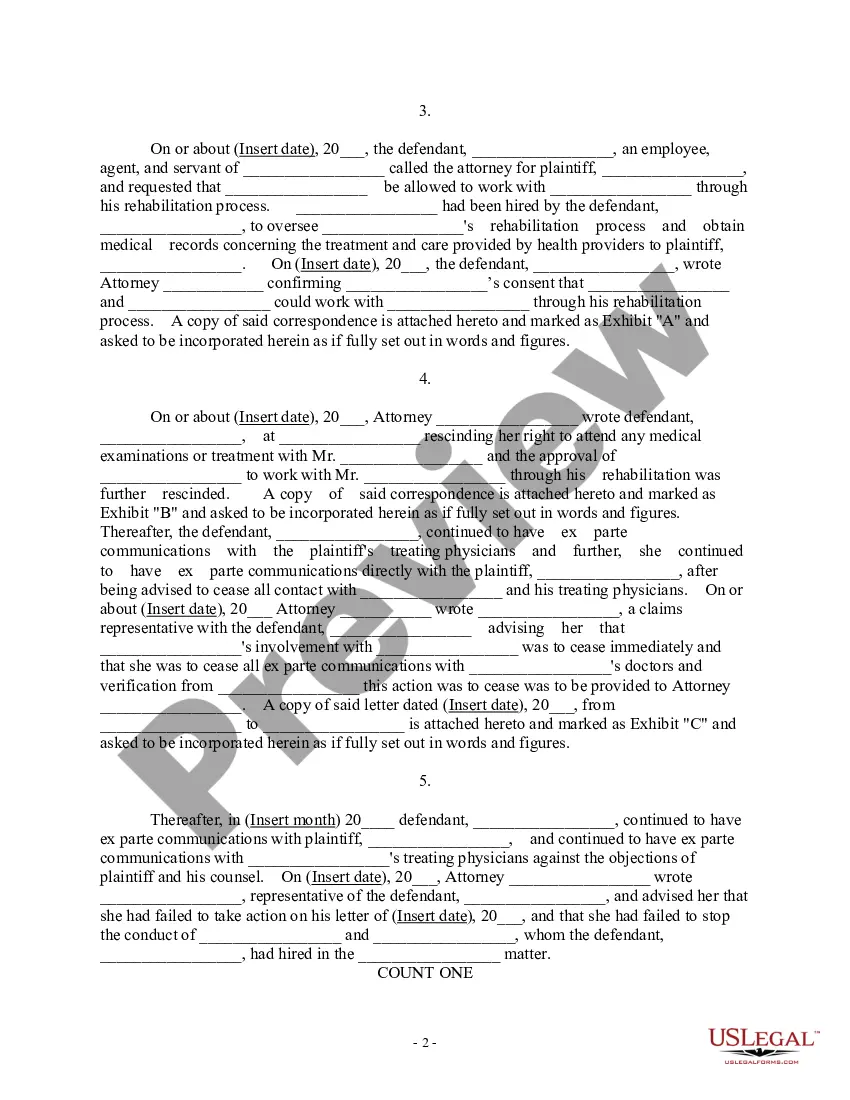
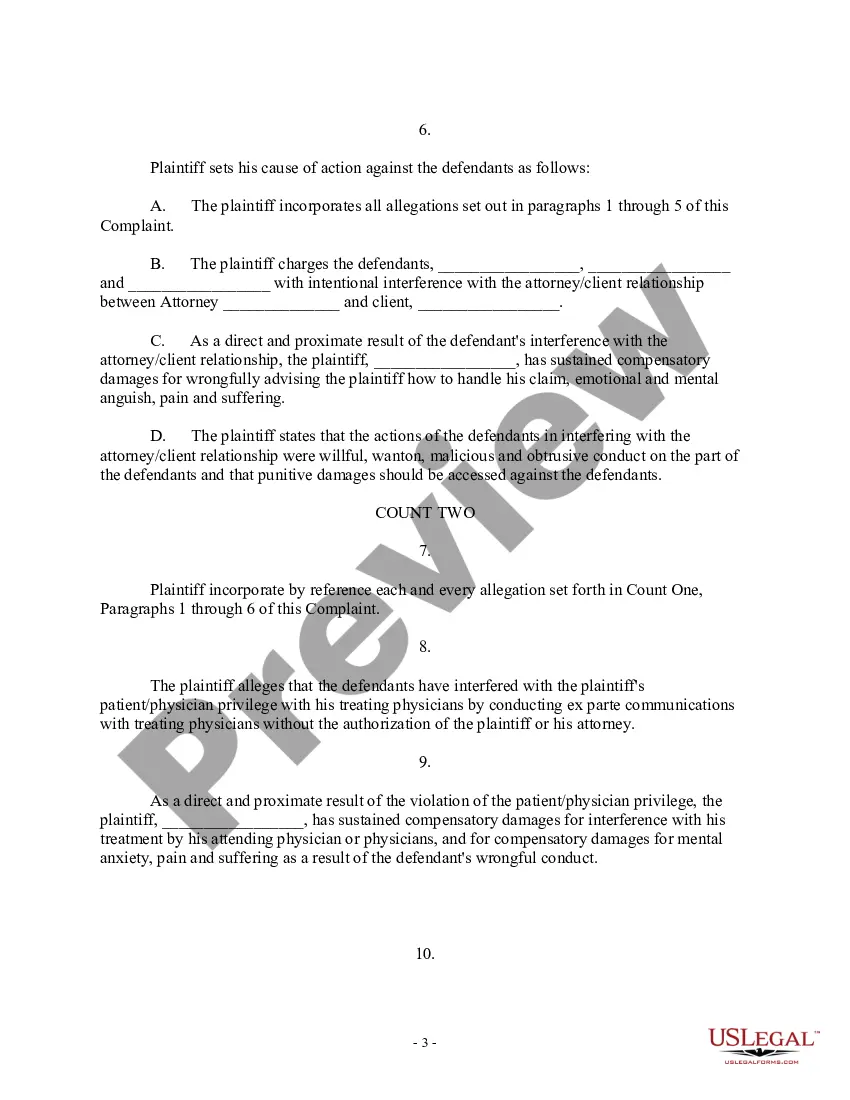
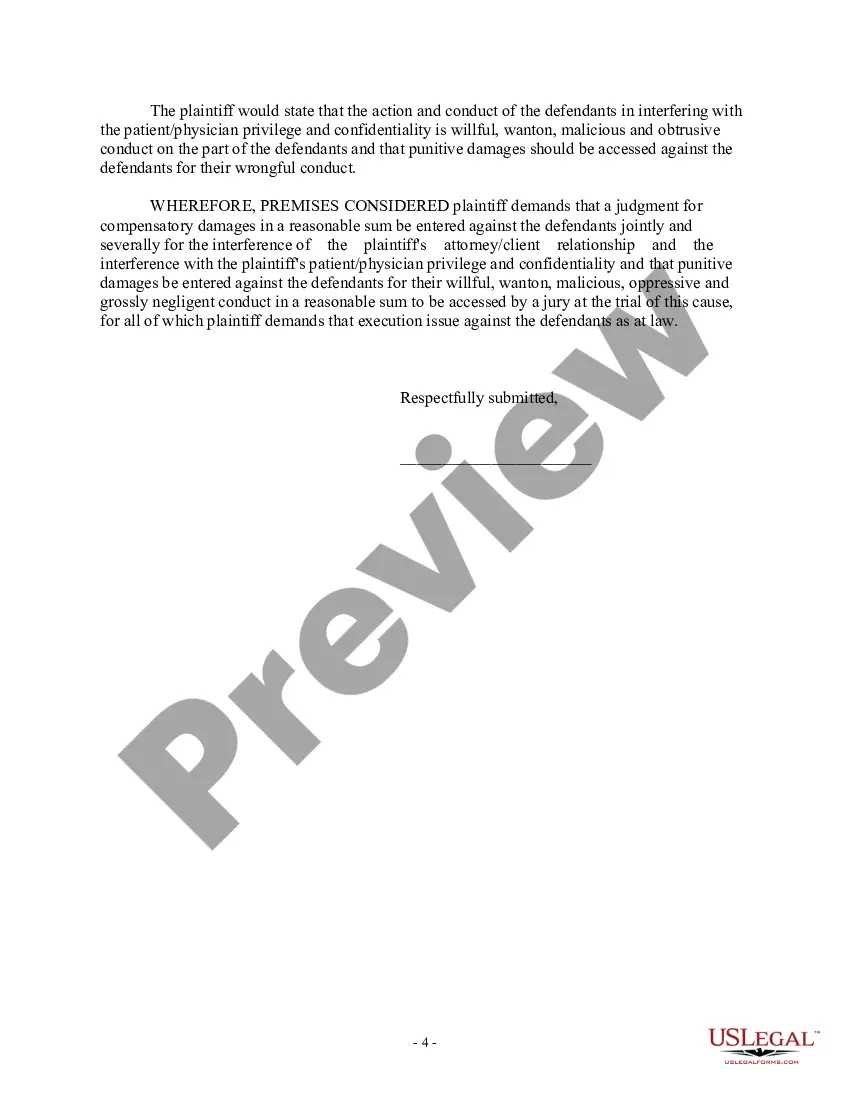
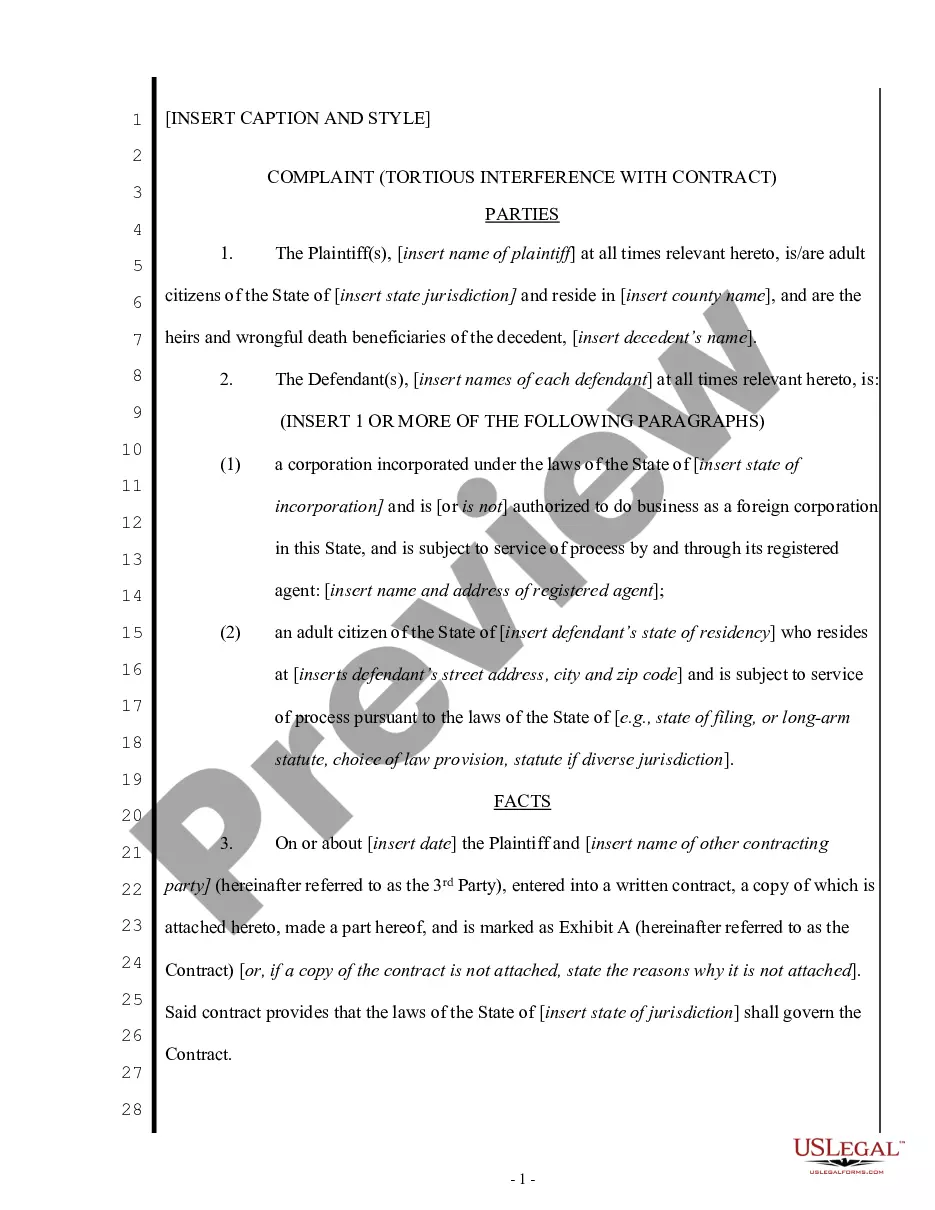
In this complaint, plaintiff charges defendants with intentional interference with the attorney/client relationship. The plaintiff states that the actions of the defendants in interfering with the attorney/client relationship were willful, wanton, malicious and obtrusive and that punitive damages should be accessed against the defendants.
Illinois Complaint For Intentional Interference With Attorney-Client Relationship
Category:
State:
Multi-State
Control #:
US-000295
Format:
Word;
Rich Text
Instant download
Description
Free preview





Get your form ready online
Our built-in tools help you complete, sign, share, and store your documents in one place.
Built-in online Word editor
Make edits, fill in missing information, and update formatting in US Legal Forms—just like you would in MS Word.
Export easily
Download a copy, print it, send it by email, or mail it via USPS—whatever works best for your next step.
E-sign your document
Sign and collect signatures with our SignNow integration. Send to multiple recipients, set reminders, and more. Go Premium to unlock E-Sign.
Notarize online 24/7
If this form requires notarization, complete it online through a secure video call—no need to meet a notary in person or wait for an appointment.
Store your document securely
We protect your documents and personal data by following strict security and privacy standards.

Make edits, fill in missing information, and update formatting in US Legal Forms—just like you would in MS Word.

Download a copy, print it, send it by email, or mail it via USPS—whatever works best for your next step.

Sign and collect signatures with our SignNow integration. Send to multiple recipients, set reminders, and more. Go Premium to unlock E-Sign.

If this form requires notarization, complete it online through a secure video call—no need to meet a notary in person or wait for an appointment.

We protect your documents and personal data by following strict security and privacy standards.
Looking for another form?
How to fill out Complaint For Intentional Interference With Attorney-Client Relationship?
Are you in a circumstance where you need documents for potential business or personal reasons nearly every working day.
There are numerous legal document templates accessible online, but finding reliable versions is not easy.
US Legal Forms provides thousands of form templates, including the Illinois Complaint For Intentional Interference With Attorney-Client Relationship, which can be tailored to meet federal and state requirements.
Choose the pricing plan you prefer, provide the necessary information to process your payment, and complete your purchase using your PayPal or credit card.
Select a convenient file format and download your copy.
- If you are already familiar with the US Legal Forms website and have an account, just Log In.
- Then, you can download the Illinois Complaint For Intentional Interference With Attorney-Client Relationship template.
- If you do not possess an account and wish to start using US Legal Forms, follow these steps.
- Obtain the form you need and ensure it is for the correct city/state.
- Utilize the Review button to verify the form.
- Examine the details to confirm you have selected the right form.
- If the form is not what you are looking for, use the Search field to find the form that suits your requirements.
- When you locate the appropriate form, simply click Buy now.
Form popularity
FAQ
The elements of tortious interference with a contract in Illinois require clear proof of several factors. You must show a valid contract existed, that the defendant was aware of the contract, that the defendant engaged in intentional and unjustified interference, and that this led to damages for the plaintiff. These elements are vital when preparing an Illinois Complaint For Intentional Interference With Attorney-Client Relationship. Ensuring you meet these criteria is crucial for a strong legal case.
One of the most common complaints against attorneys involves allegations of negligence or breach of duty to a client. Clients may feel that their attorney failed to act in their best interest, resulting in damages. This often leads to claims of intentional interference with the attorney-client relationship. If you’re considering filing an Illinois Complaint For Intentional Interference With Attorney-Client Relationship, it's wise to gather all relevant details.
In Illinois, the elements of tortious interference mirror the general principles but have specific nuances. You must prove the existence of a valid contract, the defendant's knowledge of that contract, intentional interference by the defendant, and resulting damages. These elements are critical for anyone filing an Illinois Complaint For Intentional Interference With Attorney-Client Relationship. A thorough understanding of these components can enhance your chances of a successful claim.
Rule 4.2 of the Illinois Rules of Professional Conduct addresses communication with a person represented by counsel. It prohibits a lawyer from communicating with someone who is known to be represented by another lawyer in a matter without the consent of that lawyer. This rule is significant for protecting clients and maintaining the integrity of the attorney-client relationship. If you’re facing issues related to this in an Illinois Complaint For Intentional Interference With Attorney-Client Relationship, understanding Rule 4.2 is essential.
Tortious interference involves specific elements that must be proven in court. The plaintiff must demonstrate the existence of a valid contract, the knowledge of the contract by the defendant, intentional interference by the defendant, and damages incurred due to that interference. Understanding these elements is vital for anyone contemplating an Illinois Complaint For Intentional Interference With Attorney-Client Relationship. Having clear information can strengthen your case.
To establish a claim for tortious interference with a contract, you need four essential elements. First, there must be a valid contract between two parties. Second, the defendant must know about this contract. Third, the defendant must intentionally interfere with the contract, which causes a breach. Lastly, the plaintiff must show that they suffered damages as a result of the interference. This information is crucial for anyone considering an Illinois Complaint For Intentional Interference With Attorney-Client Relationship.
Under Illinois law, the elements of a claim for tortious interference with a contract are that: The plaintiff and a third party entered into a valid and enforceable contract. The defendant knew of the contract. The defendant intentionally and unjustifiably induced the third party to breach the contract.
Primary tabs The existence of a valid contract between the plaintiff and a third party; The defendant having knowledge of the contract; The defendant intentionally and unjustifiably inducing the third party to breach the contract; The occurrence of the breach resulting from the defendant's conduct; and. Damages.
A contractual relationship might only require minimal interaction and last for a short time. For example, a hairdresser and a client have a brief contractual agreement. The hairdresser agrees to provide a service, or a haircut, to the client, while the client agrees to pay an agreed upon price for that service.
The requisite elements of tortious interference with contract claim are: (1) the existence of a valid and enforceable contract between plaintiff and another; (2) defendant's awareness of the contractual relationship; (3) defendant's intentional and unjustified inducement of a breach of the contract; (4) a subsequent ...