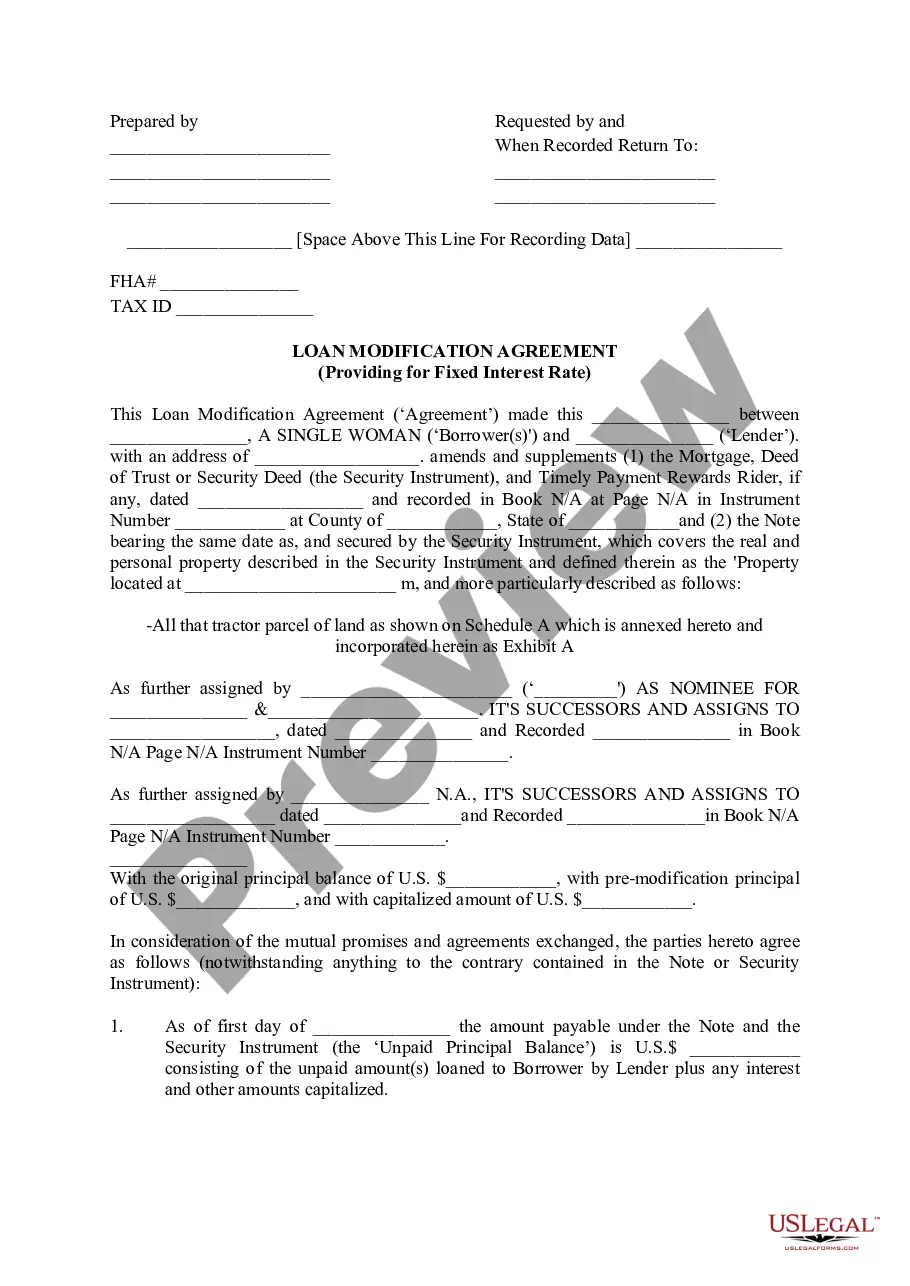
Illinois Loan Modification Agreement (Providing for Fixed Interest Rate
About this form
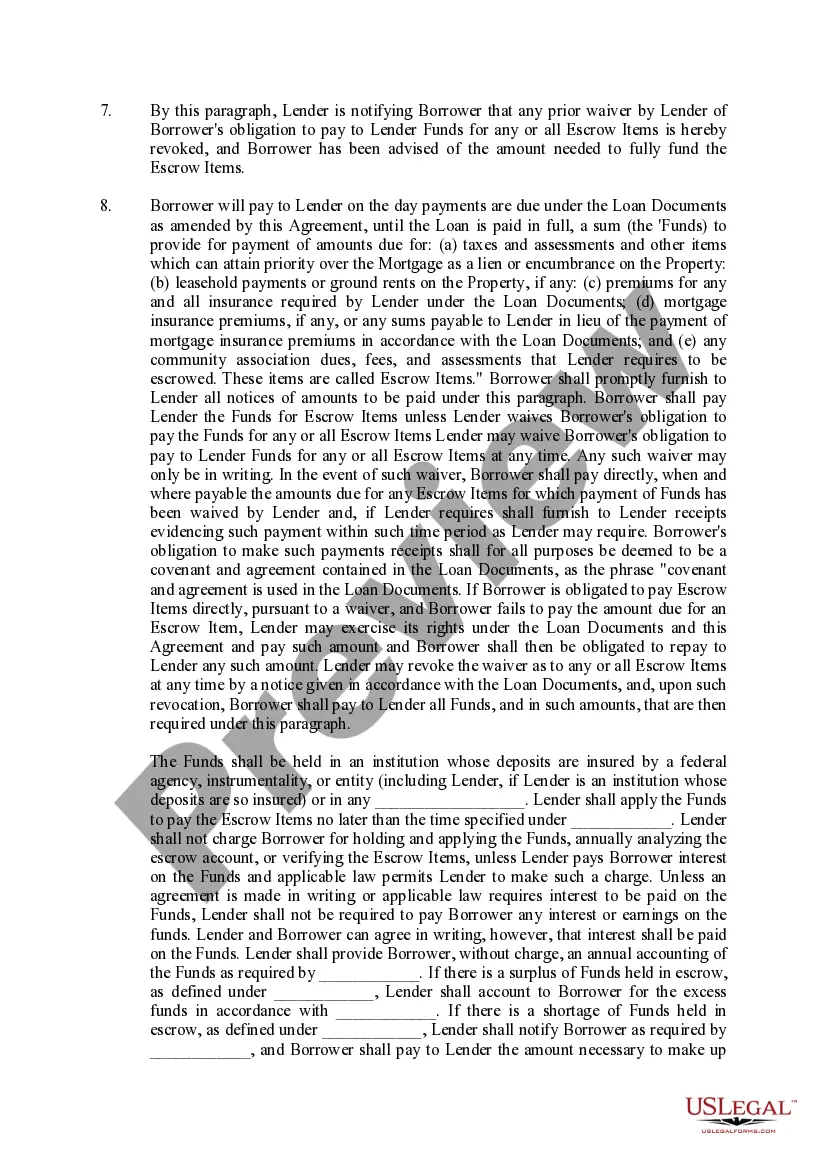
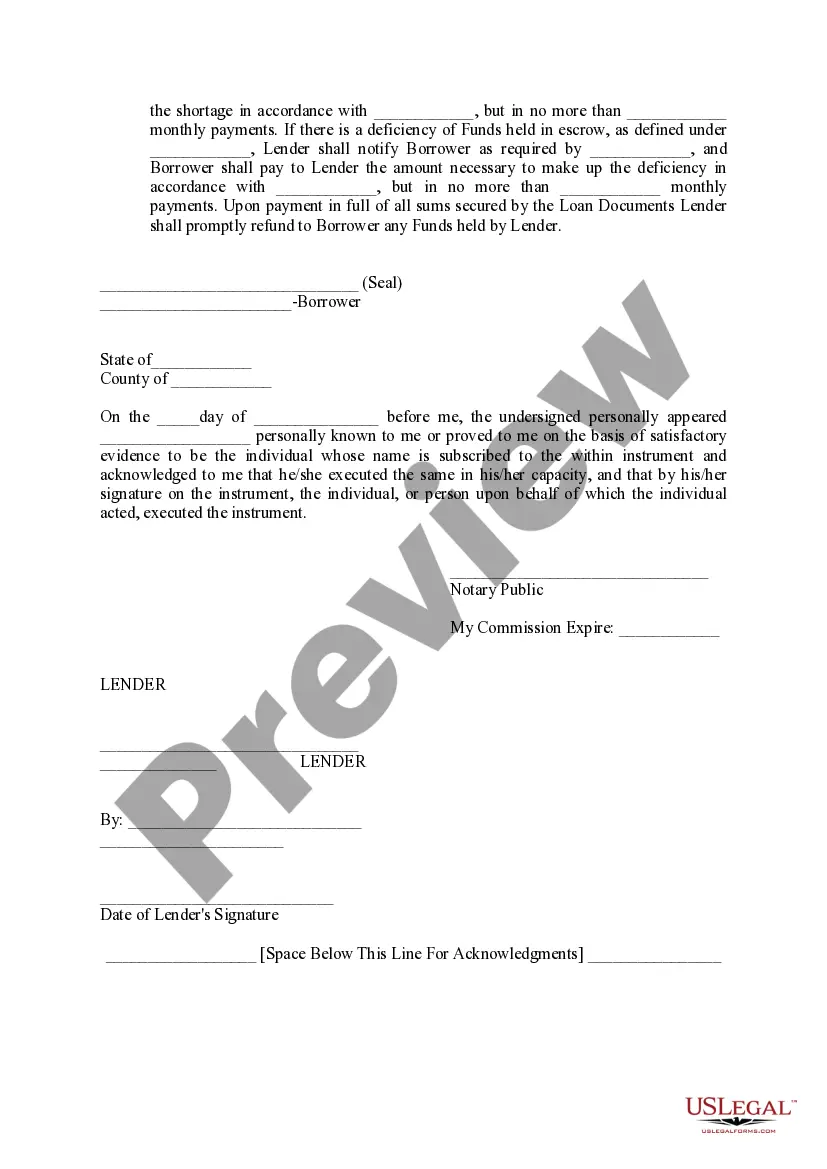
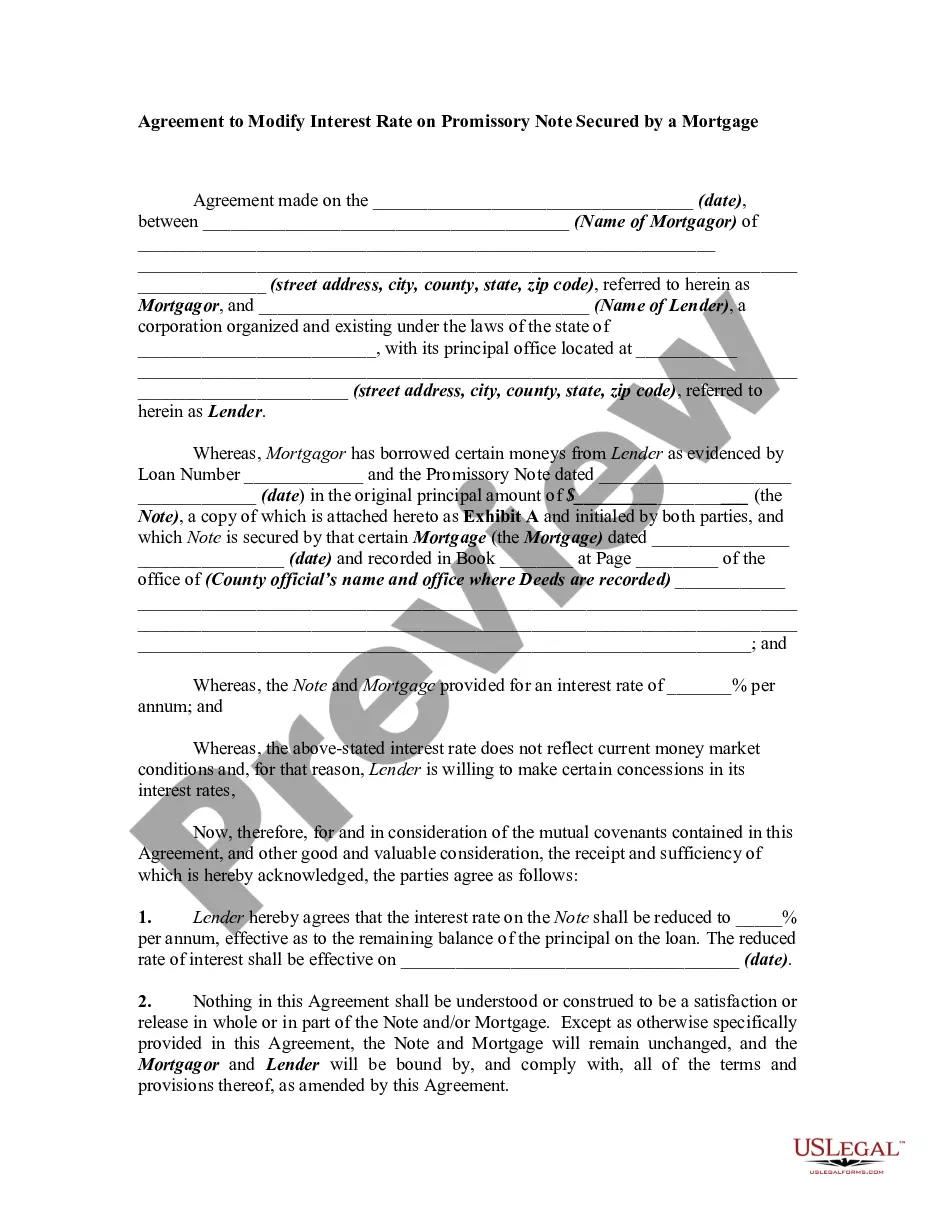
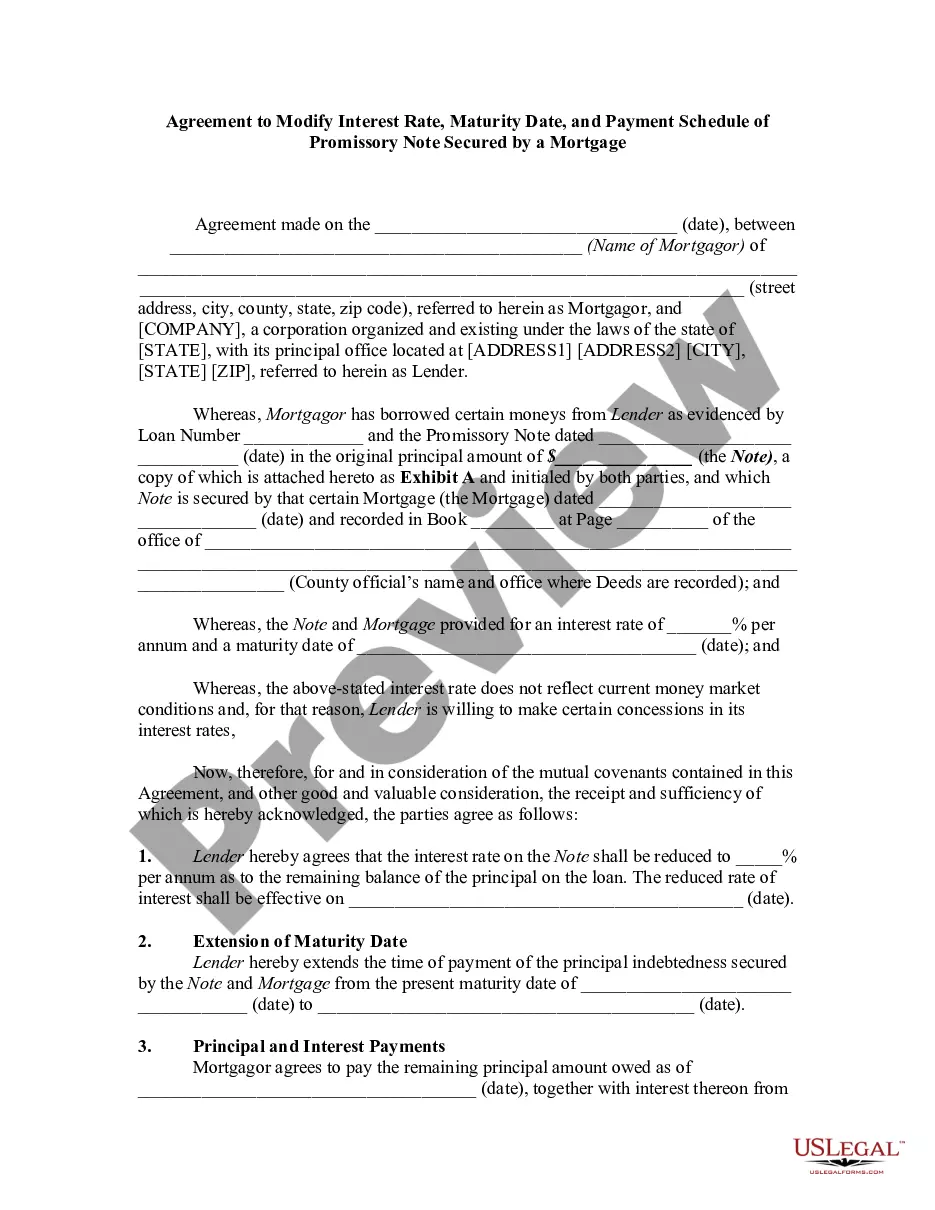
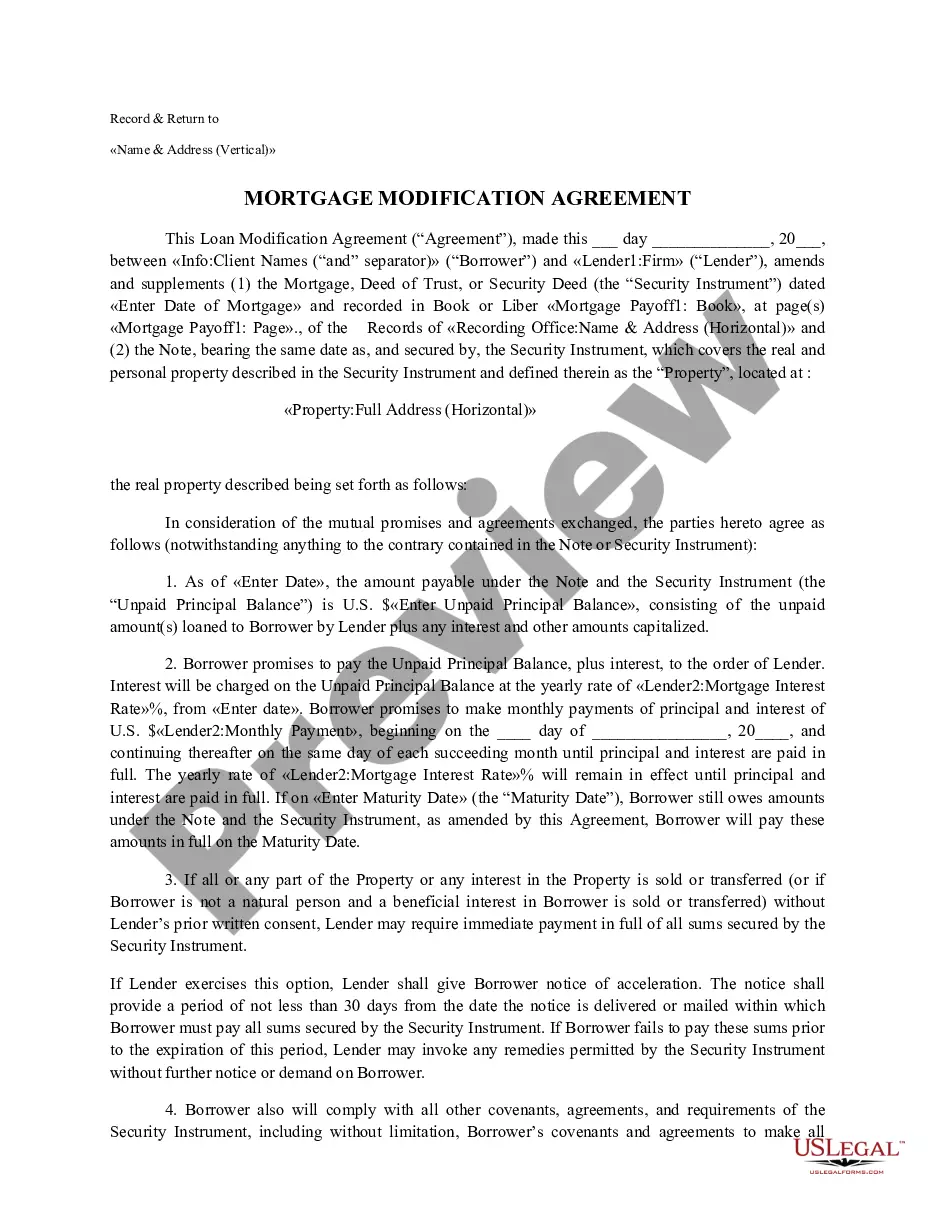
The Loan Modification Agreement (Providing for Fixed Interest Rate) is a legal document that formalizes changes to the terms of an existing loan. This agreement outlines the new payment terms, including interest rates and deadlines, making it binding for both the borrower and the lender. It differs from other loan documents by specifically focusing on altering existing loan conditions rather than creating a new loan.
Key parts of this document
- Identification of the borrower and lender including their addresses.
- Details of the original loan and modifications including principal balance and new interest rates.
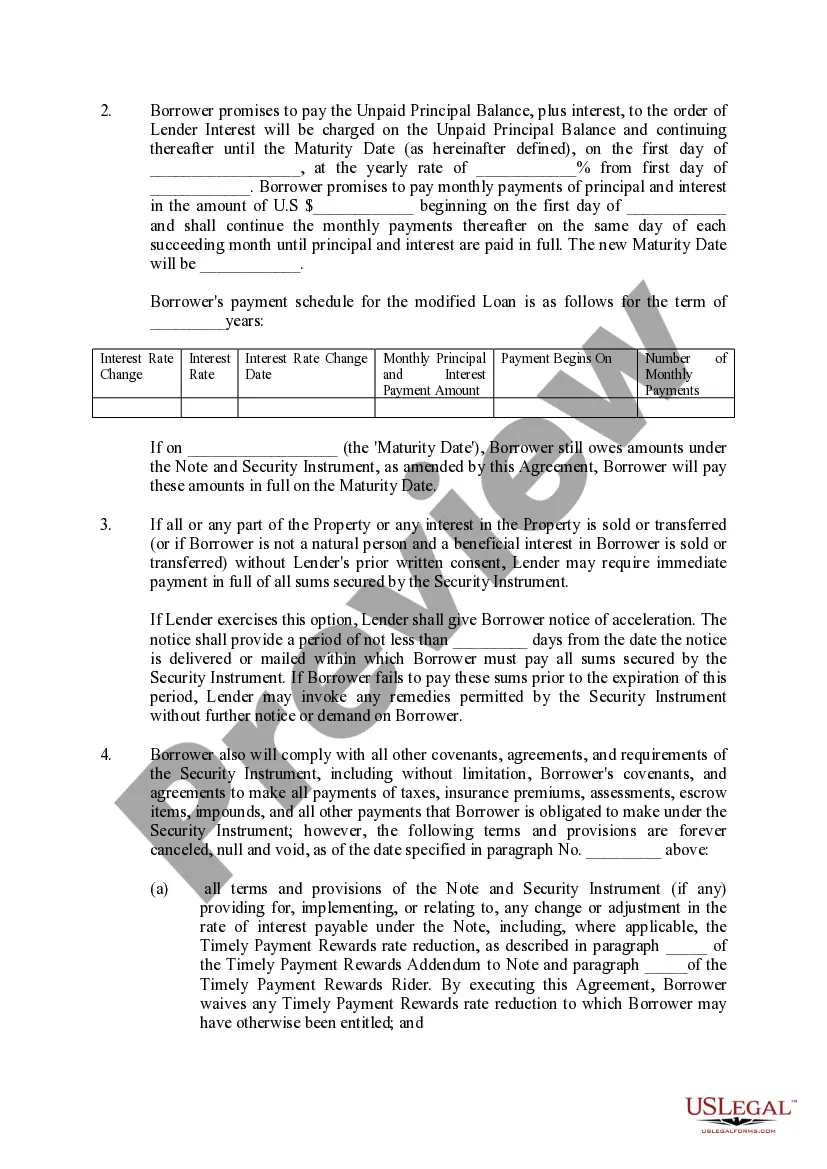
- Payment schedule and terms, specifying amounts, dates, and conditions for modification.
- Provisions regarding property transfer and potential consequences for non-compliance.
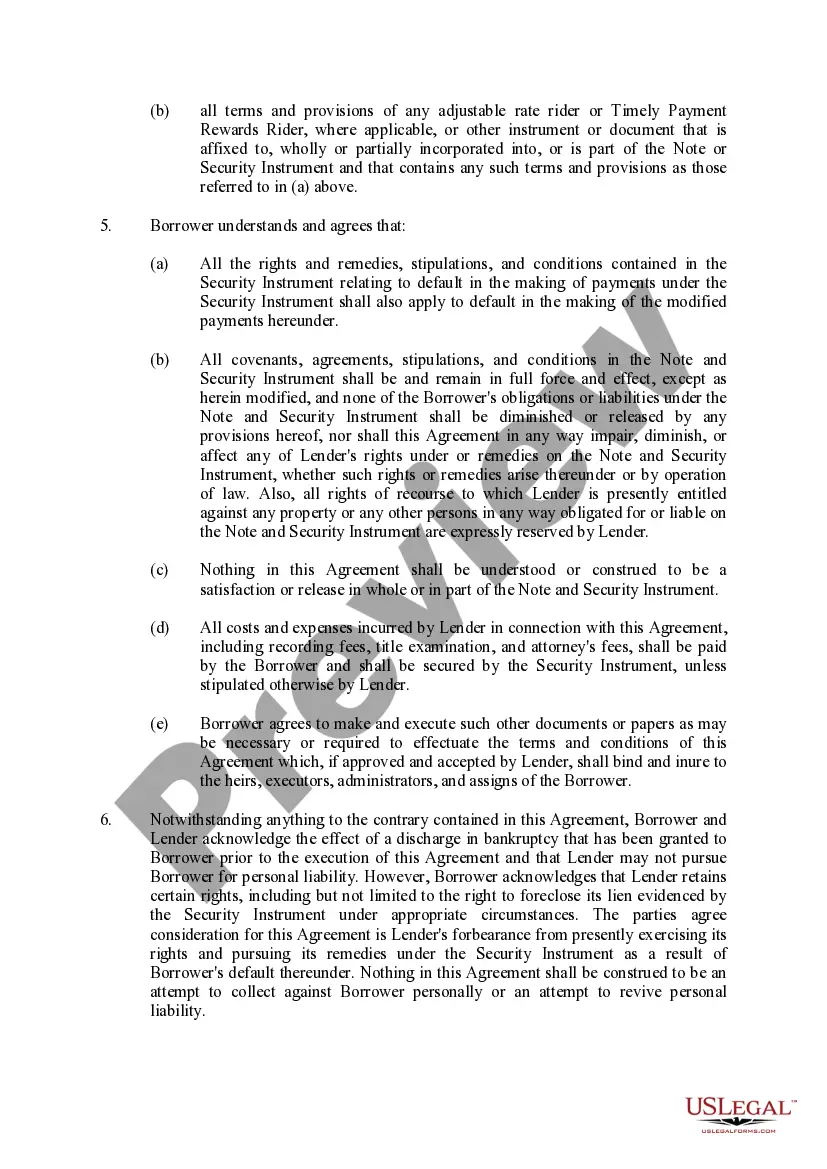
- Description of borrower obligations, including compliance with all covenants already in the original loan documents.
- Signatures and notarization requirements for legal validity.

Situations where this form applies
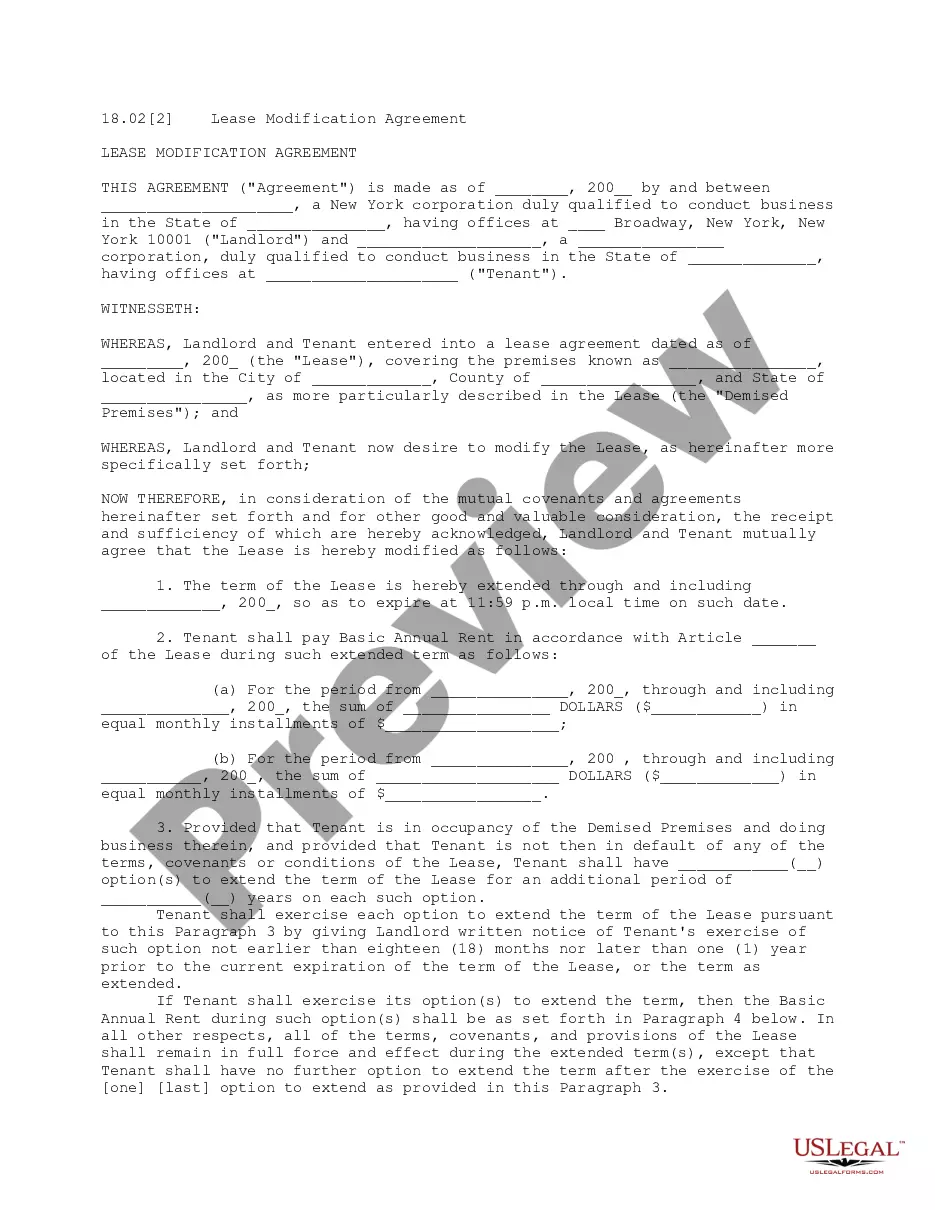
This loan modification agreement should be used when a borrower needs to change the terms of an existing loan, often due to financial hardship or changes in interest rates. Scenarios include when the borrower can no longer meet the original payment terms or when refinancing is not viable. This form enables parties to agree upon new terms that are more manageable for the borrower while ensuring that the lender's rights are preserved.
Intended users of this form
This form is intended for:
- Homeowners facing difficulty in keeping up with their mortgage payments.
- Lenders who need a formal agreement to alter the terms of a mortgage.
- Borrowers looking to negotiate more favorable loan conditions without refinancing.
Completing this form step by step
- Identify the parties involved by filling in the names and addresses of the borrower and lender.
- Specify the details of the original loan, including amount and securing documents.
- Enter the new loan terms such as the modified principal balance and interest rate, along with the payment schedule.
- Include any necessary modifications regarding the property and compliance terms.
- Ensure both parties sign the agreement in the presence of a notary public if required.
Does this document require notarization?
Yes, this form must be notarized to be legally valid. US Legal Forms offers integrated online notarization services, allowing borrowers and lenders to complete notarization through a secure video call without the need to travel. This service ensures that your Loan Modification Agreement complies with legal standards efficiently.
Get your form ready online
Our built-in tools help you complete, sign, share, and store your documents in one place.
Make edits, fill in missing information, and update formatting in US Legal Forms—just like you would in MS Word.
Download a copy, print it, send it by email, or mail it via USPS—whatever works best for your next step.
Sign and collect signatures with our SignNow integration. Send to multiple recipients, set reminders, and more. Go Premium to unlock E-Sign.
If this form requires notarization, complete it online through a secure video call—no need to meet a notary in person or wait for an appointment.
We protect your documents and personal data by following strict security and privacy standards.

Make edits, fill in missing information, and update formatting in US Legal Forms—just like you would in MS Word.

Download a copy, print it, send it by email, or mail it via USPS—whatever works best for your next step.

Sign and collect signatures with our SignNow integration. Send to multiple recipients, set reminders, and more. Go Premium to unlock E-Sign.

If this form requires notarization, complete it online through a secure video call—no need to meet a notary in person or wait for an appointment.

We protect your documents and personal data by following strict security and privacy standards.
Avoid these common issues
- Failing to accurately describe the original loan details, leading to potential disputes.
- Not specifying the new interest rate or payment terms clearly.
- Omitting required signatures or not completing notarization.
Why complete this form online
- Convenience of downloading and filling out the form at your own pace.
- Editability allows for easy adjustments to the details before finalizing the agreement.
- Access to professionally drafted templates ensures legal accuracy and compliance.
Looking for another form?
Form popularity
FAQ
A loan modification is different from a refinance. When you take a loan modification, you change the terms of your loan directly through your lender.When you refinance, you can change your loan's term, your interest rate and even your loan type. You can also take cash out of your equity with a cash-out refinance.
If your servicer or lender agrees to a mortgage loan modification, it may result in lowering your monthly payment, extending or shortening your loan's term, or decreasing the interest rate you pay.
A loan modification can relieve some of the financial pressure you feel by lowering your monthly payments and stopping collection activity. But loan modifications are not foolproof. They could increase the cost of your loan and add derogatory remarks to your credit report.
There are several reasons to renegotiate a mortgage. Perhaps you cannot afford your mortgage, and you are at risk of falling behind in your payments, or you are already several payments late. Alternatively, you might be able to afford your mortgage but want to take advantage of lower fixed interest rates.
Just Call and Request a Lower Rate While not conventional or at all common, some folks have obtained lower interest rates simply by calling up their mortgage lender and requesting one. You need to indicate that you have no interest in refinancing with them because otherwise they'll just take you down that route.
Conventional loan modification In particular, Freddie Mac and Fannie Mae offer Flex Modification programs designed to decrease a qualified borrower's mortgage payment by about 20%.
You would avoid foreclosure and remain in your home. If you are behind on payments, you would resolve your delinquency status. You may be able to reduce your monthly payments so they are more affordable. You would suffer less damage to your credit than if the bank foreclosed on your house.
There is one way you can get a lower mortgage interest rate without refinancing, however.A mortgage modification allows you to change the original terms of your home loan due to a financial hardship. Your lender may adjust your loan by: Extending your loan term.