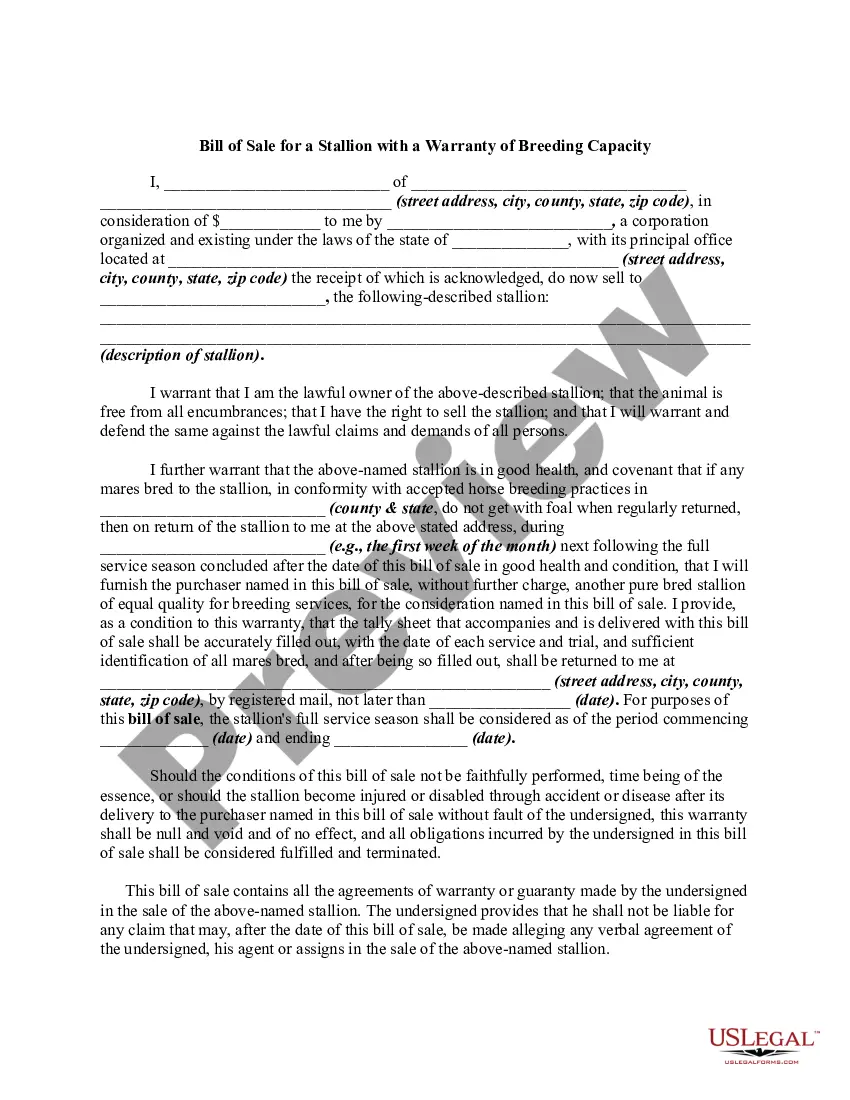
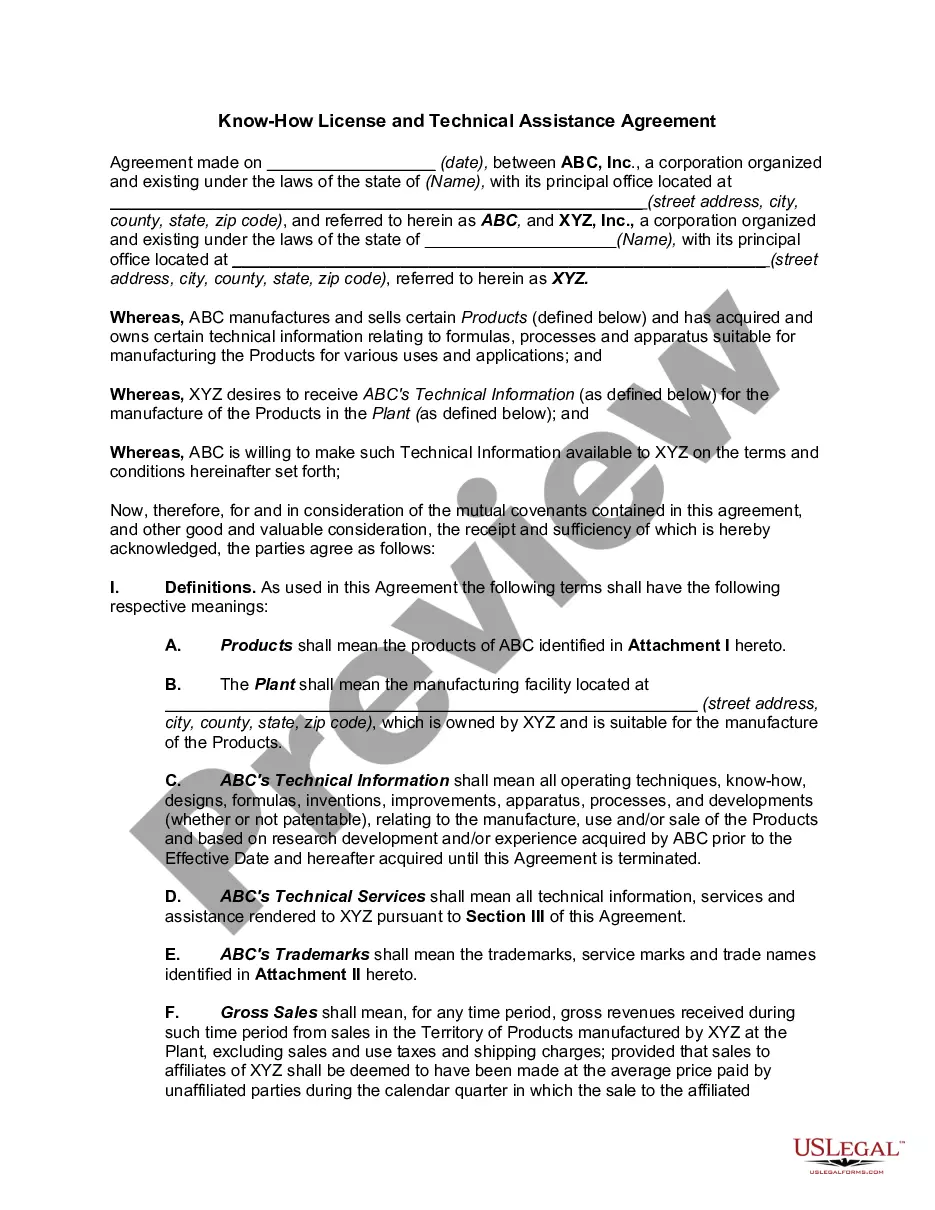
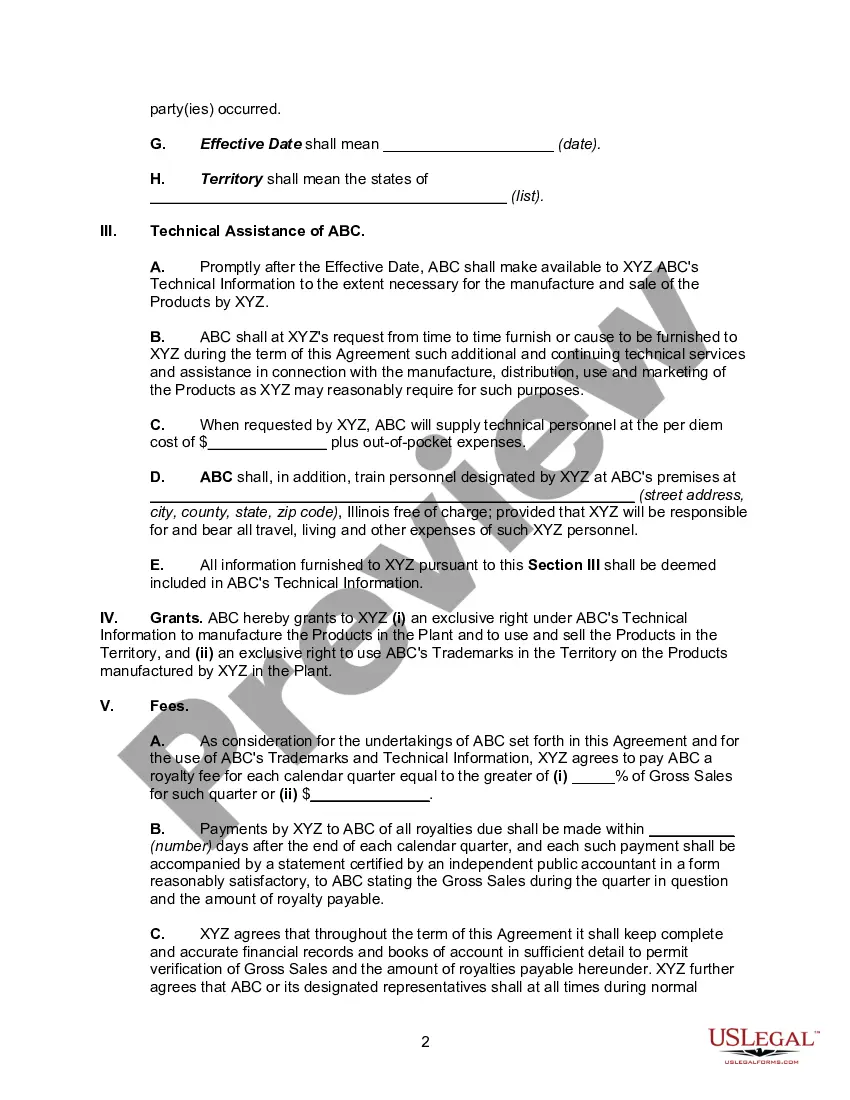
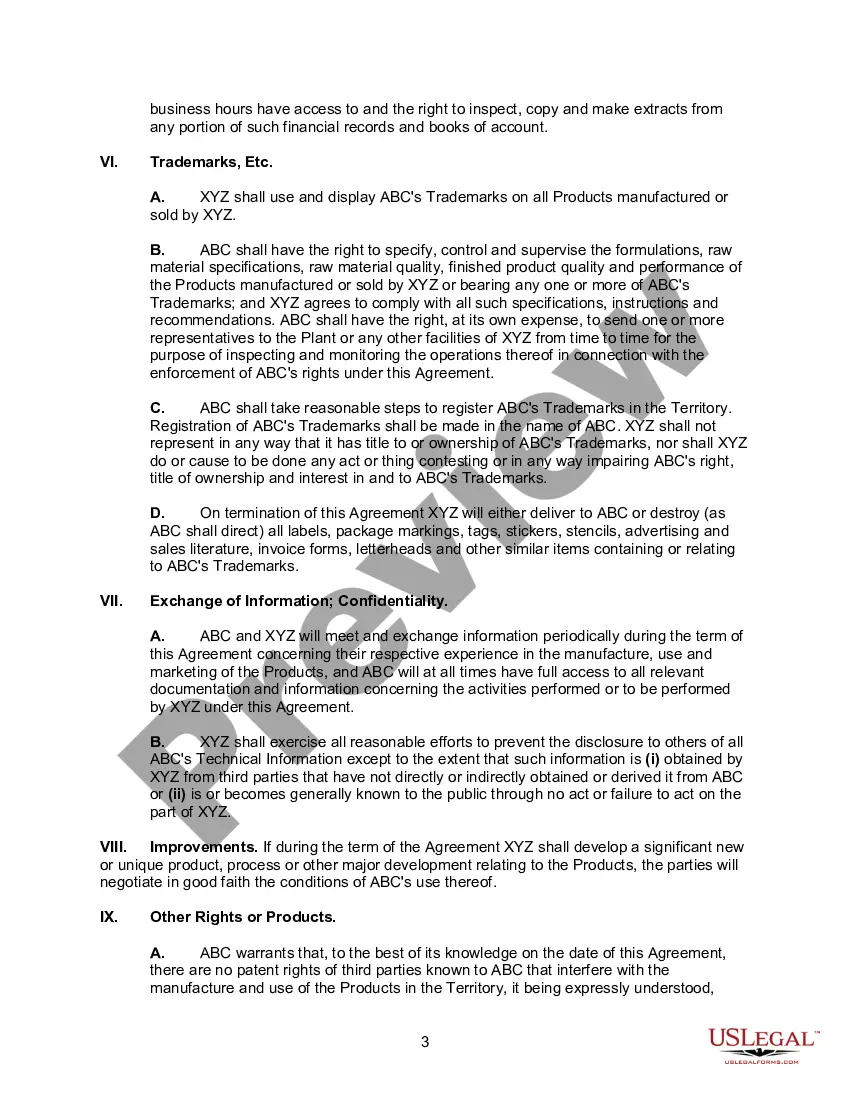
Idaho Know-How License and Technical Assistance Agreement
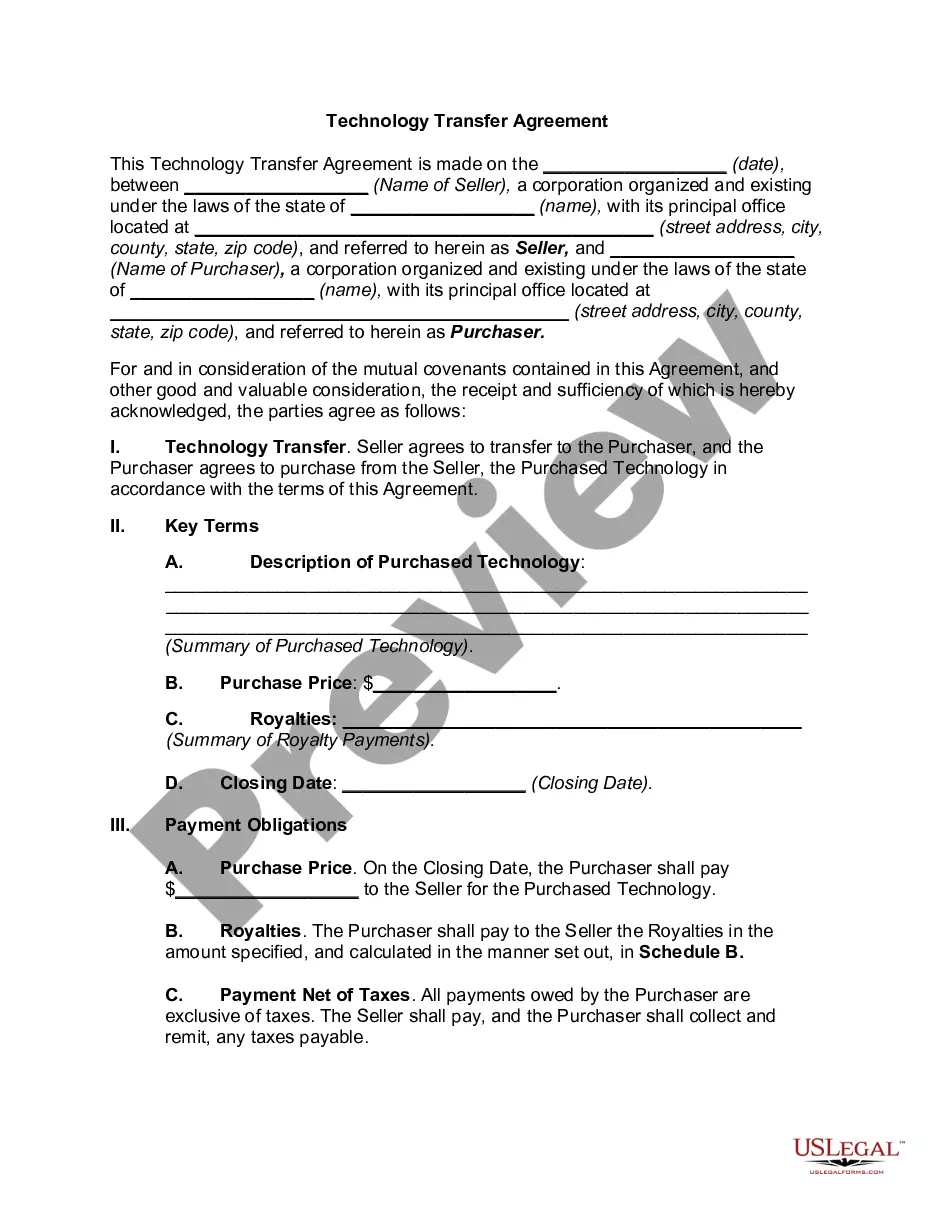
Description
Get your form ready online
Our built-in tools help you complete, sign, share, and store your documents in one place.
Make edits, fill in missing information, and update formatting in US Legal Forms—just like you would in MS Word.
Download a copy, print it, send it by email, or mail it via USPS—whatever works best for your next step.
Sign and collect signatures with our SignNow integration. Send to multiple recipients, set reminders, and more. Go Premium to unlock E-Sign.
If this form requires notarization, complete it online through a secure video call—no need to meet a notary in person or wait for an appointment.
We protect your documents and personal data by following strict security and privacy standards.

Make edits, fill in missing information, and update formatting in US Legal Forms—just like you would in MS Word.

Download a copy, print it, send it by email, or mail it via USPS—whatever works best for your next step.

Sign and collect signatures with our SignNow integration. Send to multiple recipients, set reminders, and more. Go Premium to unlock E-Sign.

If this form requires notarization, complete it online through a secure video call—no need to meet a notary in person or wait for an appointment.

We protect your documents and personal data by following strict security and privacy standards.
Looking for another form?

How to fill out Know-How License And Technical Assistance Agreement?
Finding the appropriate official document template can be challenging.
Of course, there are numerous formats available online, but how do you obtain the official form you require.
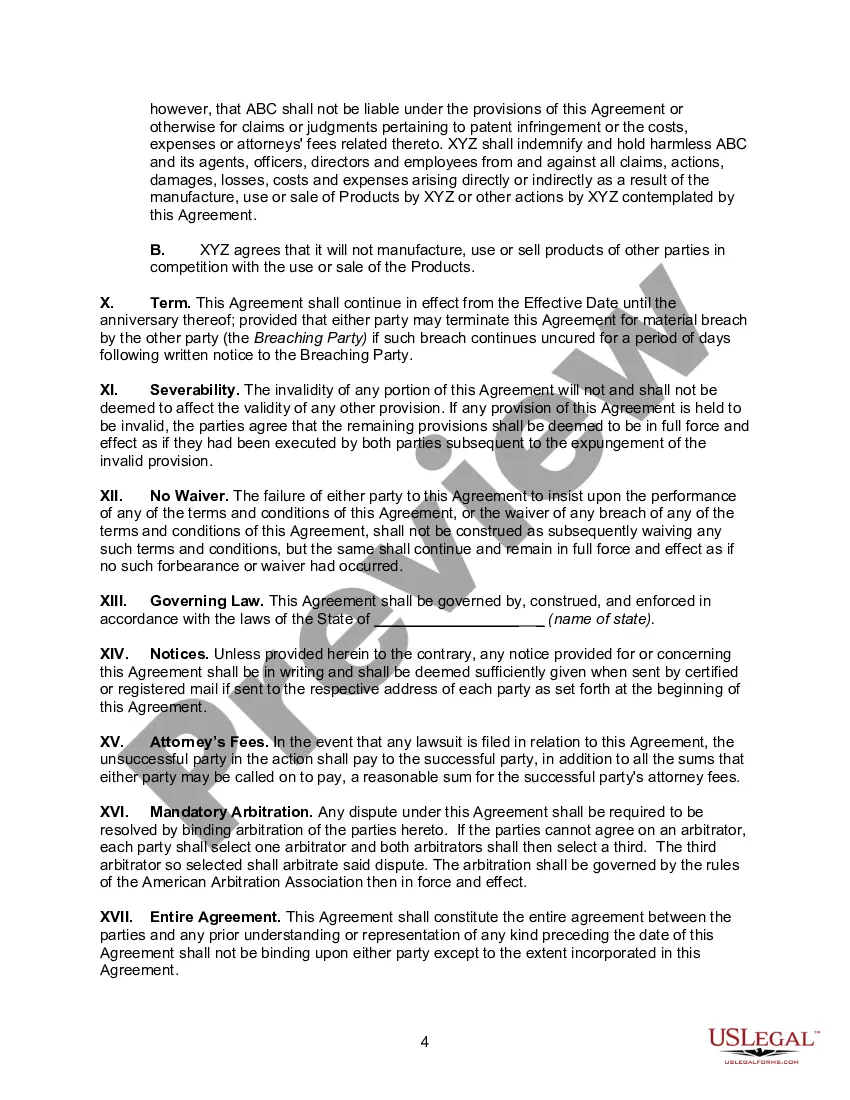
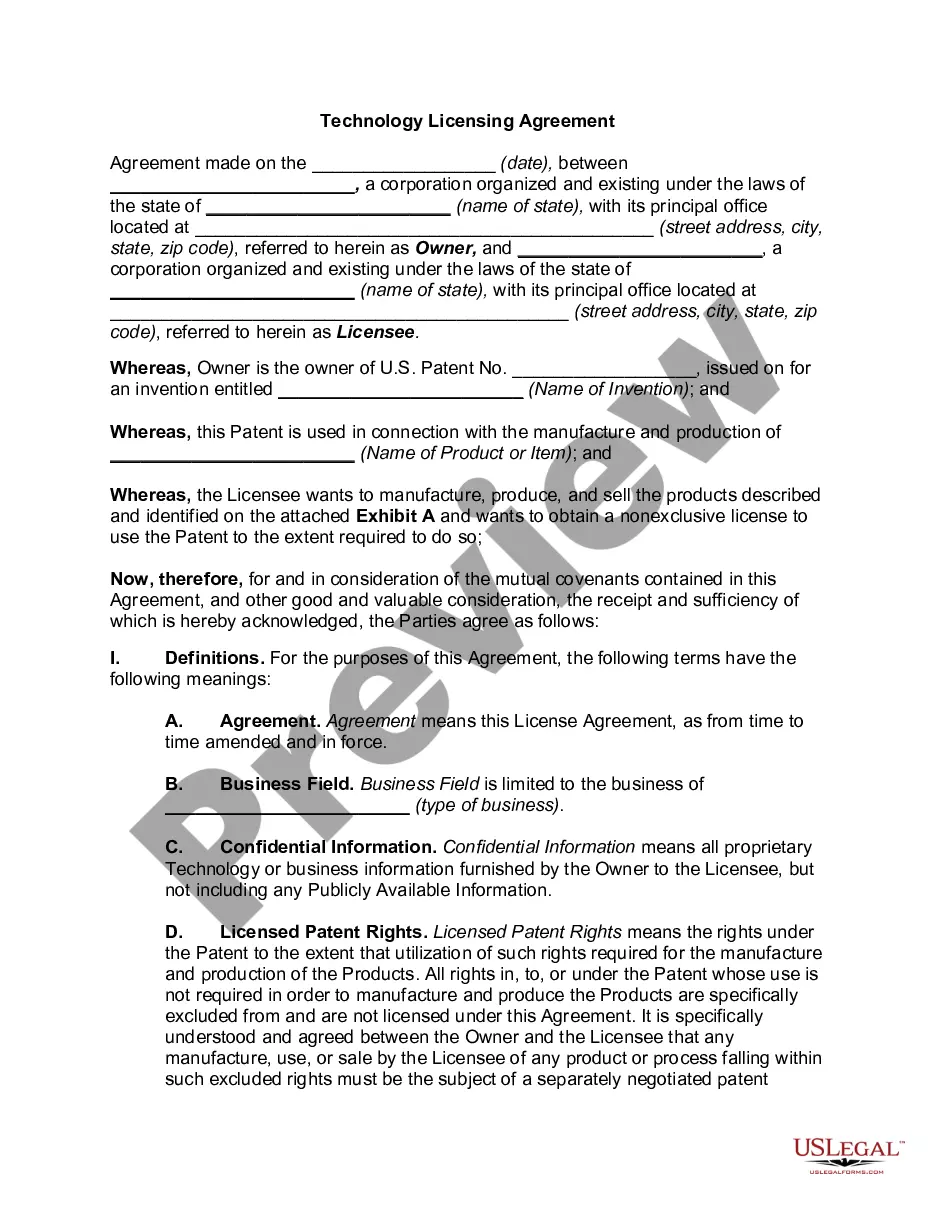
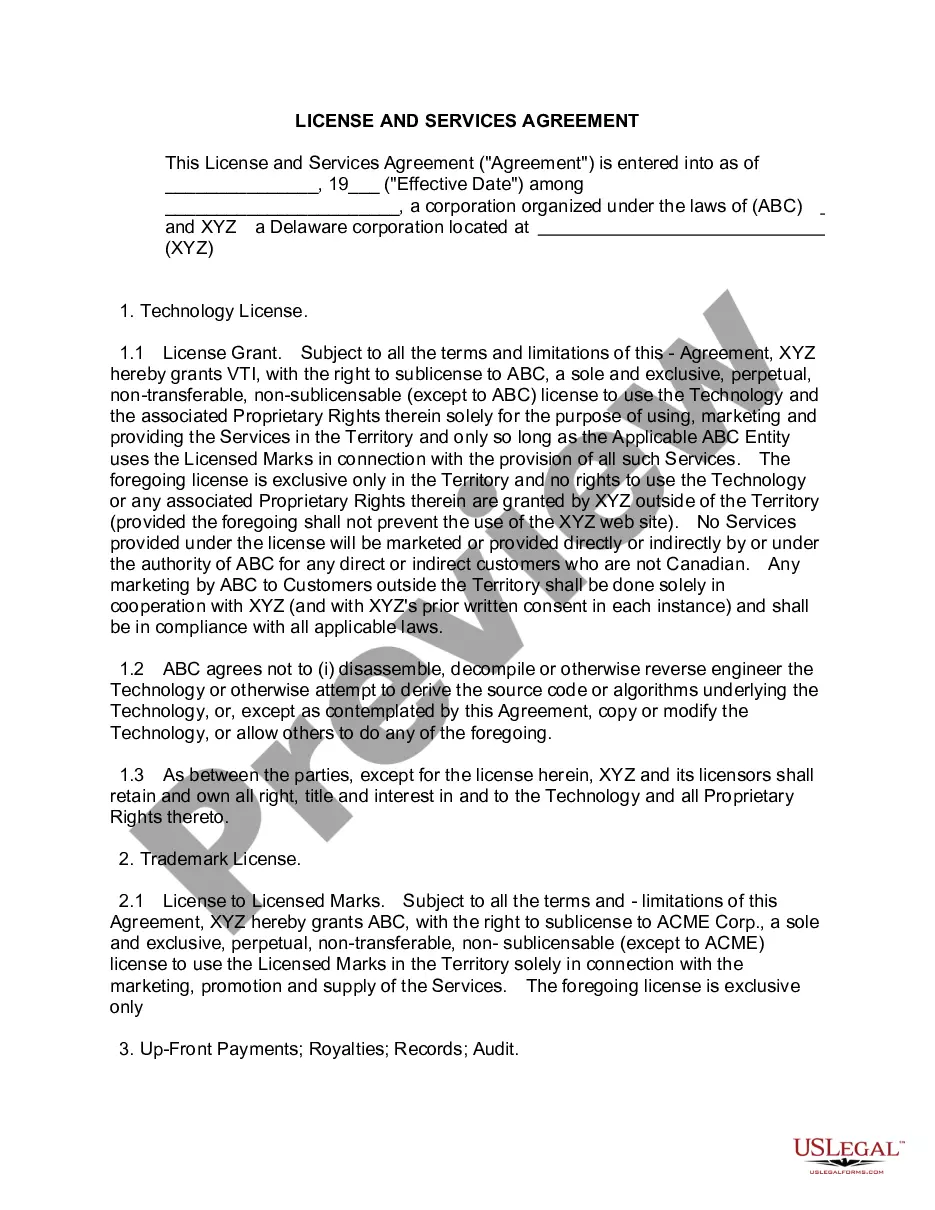
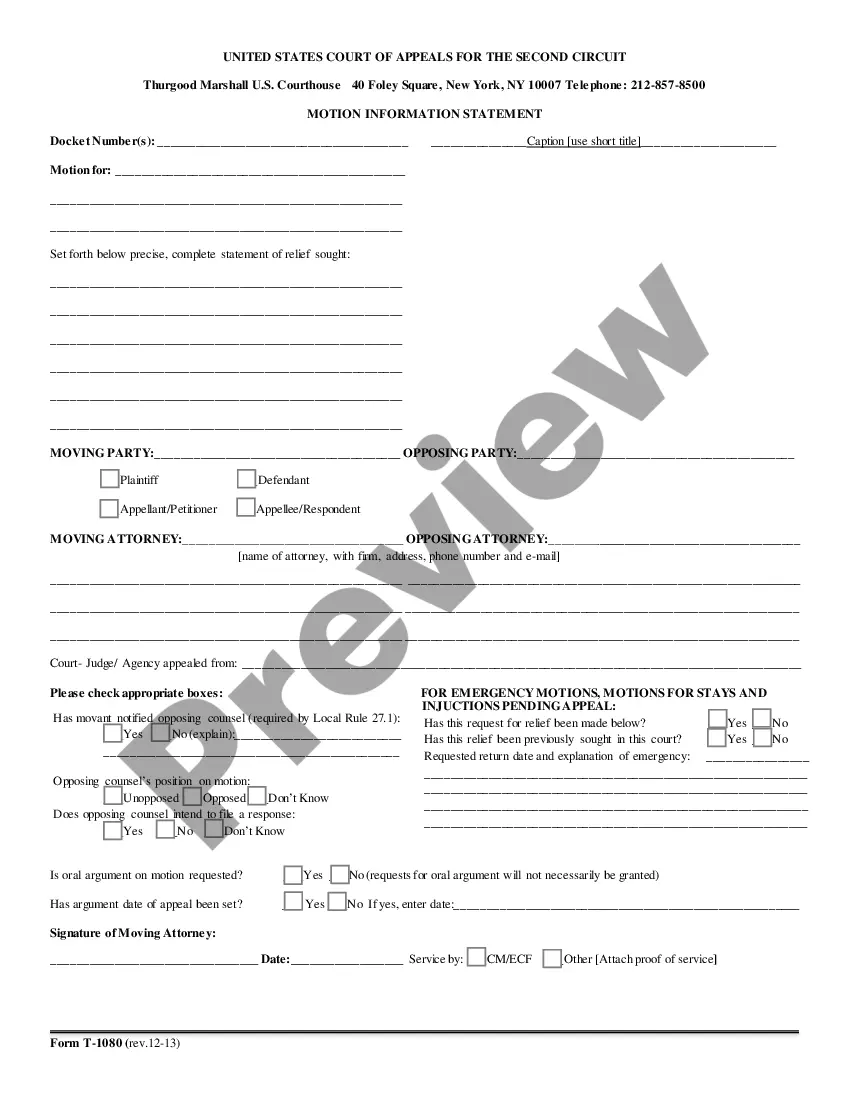
Utilize the US Legal Forms website. This service offers thousands of templates, including the Idaho Know-How License and Technical Assistance Agreement, which can be used for business and personal purposes.
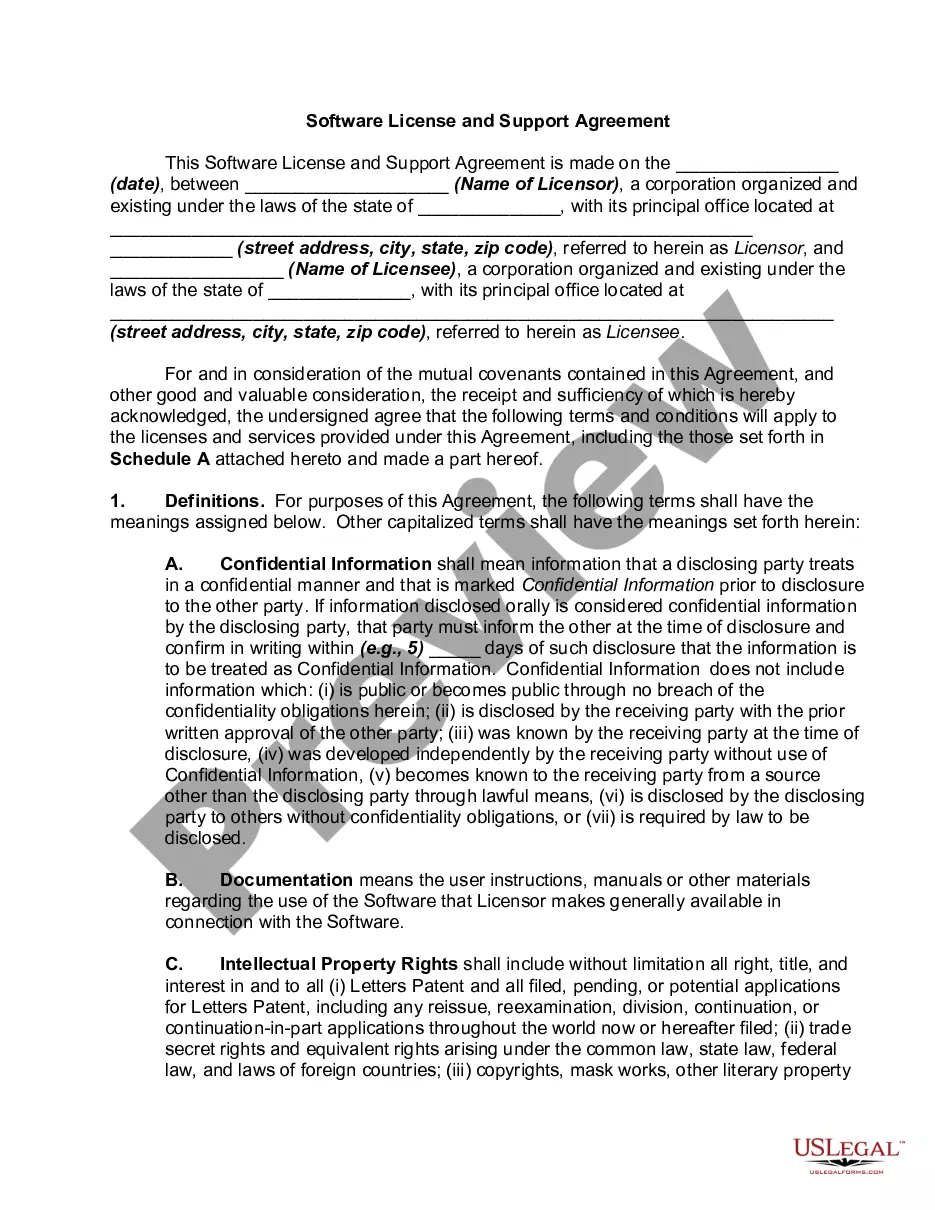
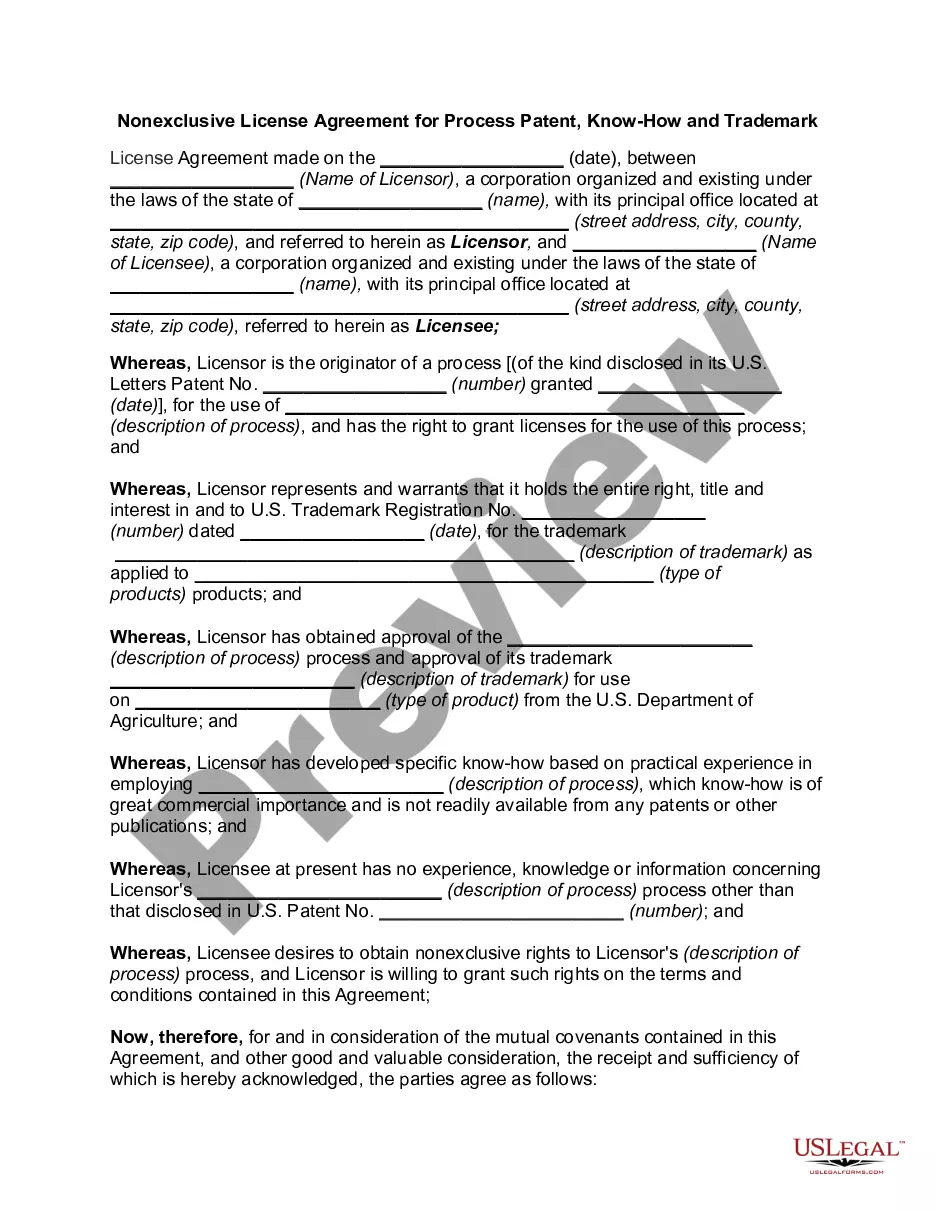
You can preview the form using the Preview option and read the form description to ensure it meets your needs.
- All forms are reviewed by professionals and meet state and federal regulations.
- If you are already registered, sign in to your account and click on the Get button to find the Idaho Know-How License and Technical Assistance Agreement.
- Use your account to browse the legal forms you have previously acquired.
- Visit the My documents section of your account to retrieve another copy of the document you need.
- If you are a new user of US Legal Forms, here are simple instructions you can follow.
- First, ensure you have selected the right form for your city/state.
Form popularity
FAQ
The term licensing agreement refers to a legal, written contract between two parties wherein the property owner gives permission to another party to use their brand, patent, or trademark.
The license of know-how is the information necessary or beneficial to the commercialization of the patented invention. A patent license combines matters of federal and state law, whereas a know-how license is subject only to state law since it is not subject to federal statutory protection.
Types of licensing agreement The unique feature of this type of agreement is that even the licensor is excluded to use or exploit the licensed property during the term of the agreement. Copyright, trademark and patent licenses are the best examples of an exclusive license agreement.
Practitioners and licensing executives often refer to three basic types of voluntary licenses: non-exclusive, sole, and exclusive. A non-exclusive licence allows the licensor to retain the right to use the licensed property and the right to grant additional licenses to third parties.
Technology licenses are agreements in which the owner of technological IP lets another party use, change, or even resell the property in exchange for compensation. The compensation can be either a lump sum royalty, royalties based on the value of production, or the right to use the licensee's technology.
A licensing agreement is a contract between two parties (the licensor and licensee) in which the licensor grants the licensee the right to use the brand name, trademark, patented technology, or ability to produce and sell goods owned by the licensor.
The license of know-how is the information necessary or beneficial to the commercialization of the patented invention. A patent license combines matters of federal and state law, whereas a know-how license is subject only to state law since it is not subject to federal statutory protection.
Licensing agreements are found in many different industries. An example of a licensing agreement is a contract between the copyright holders of software and another company, allowing the latter to use the computer software for their daily business operations.