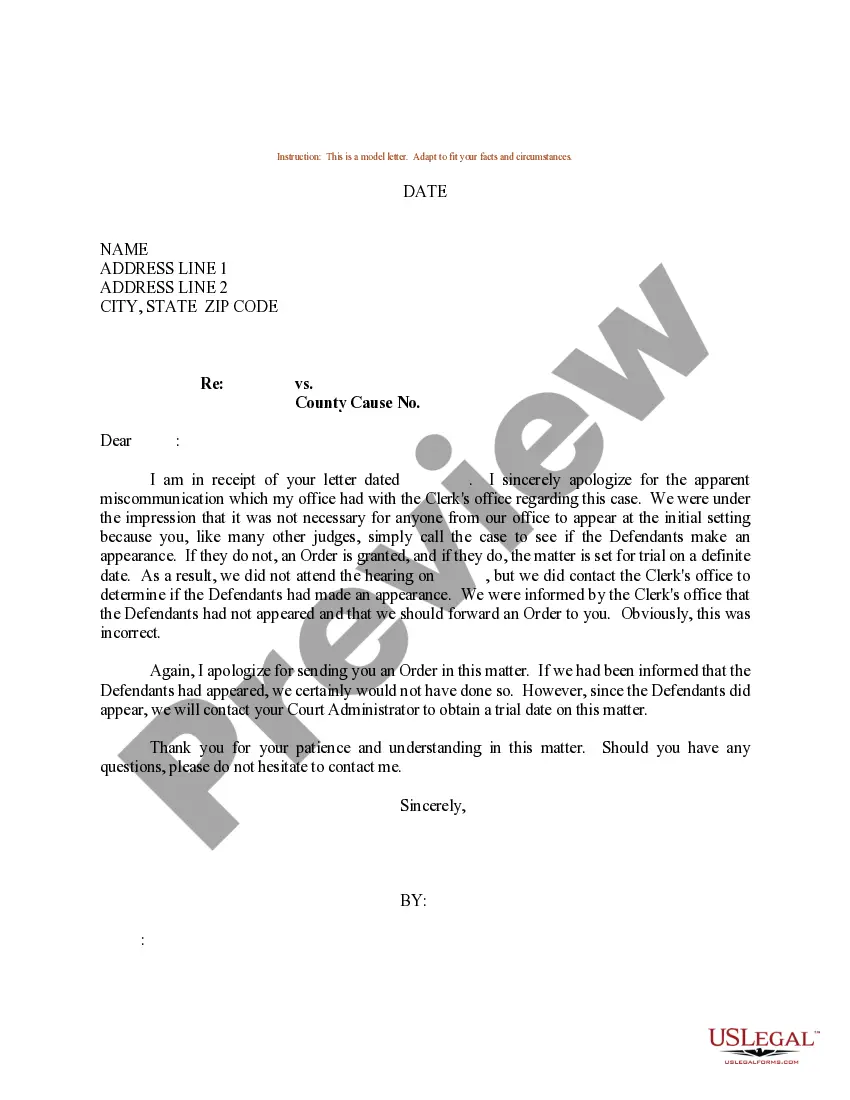
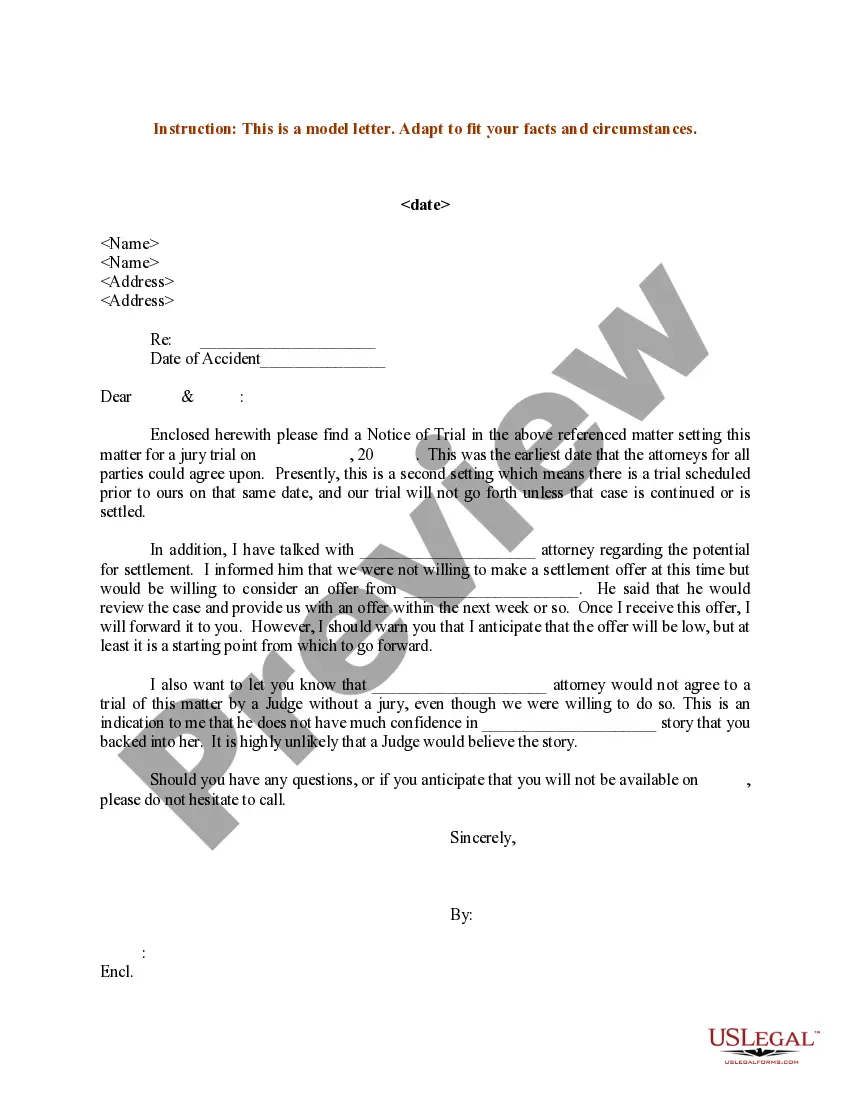
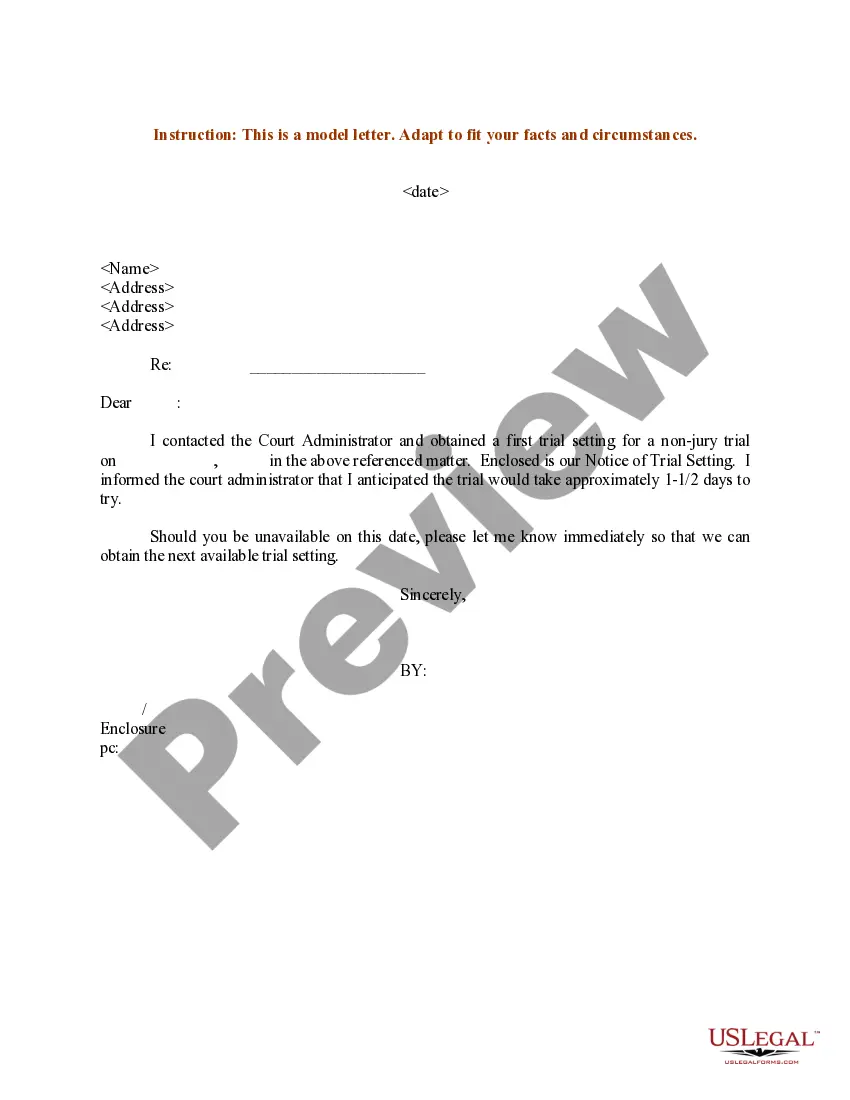
Idaho Sample Letter for Setting of Trial Date
Description
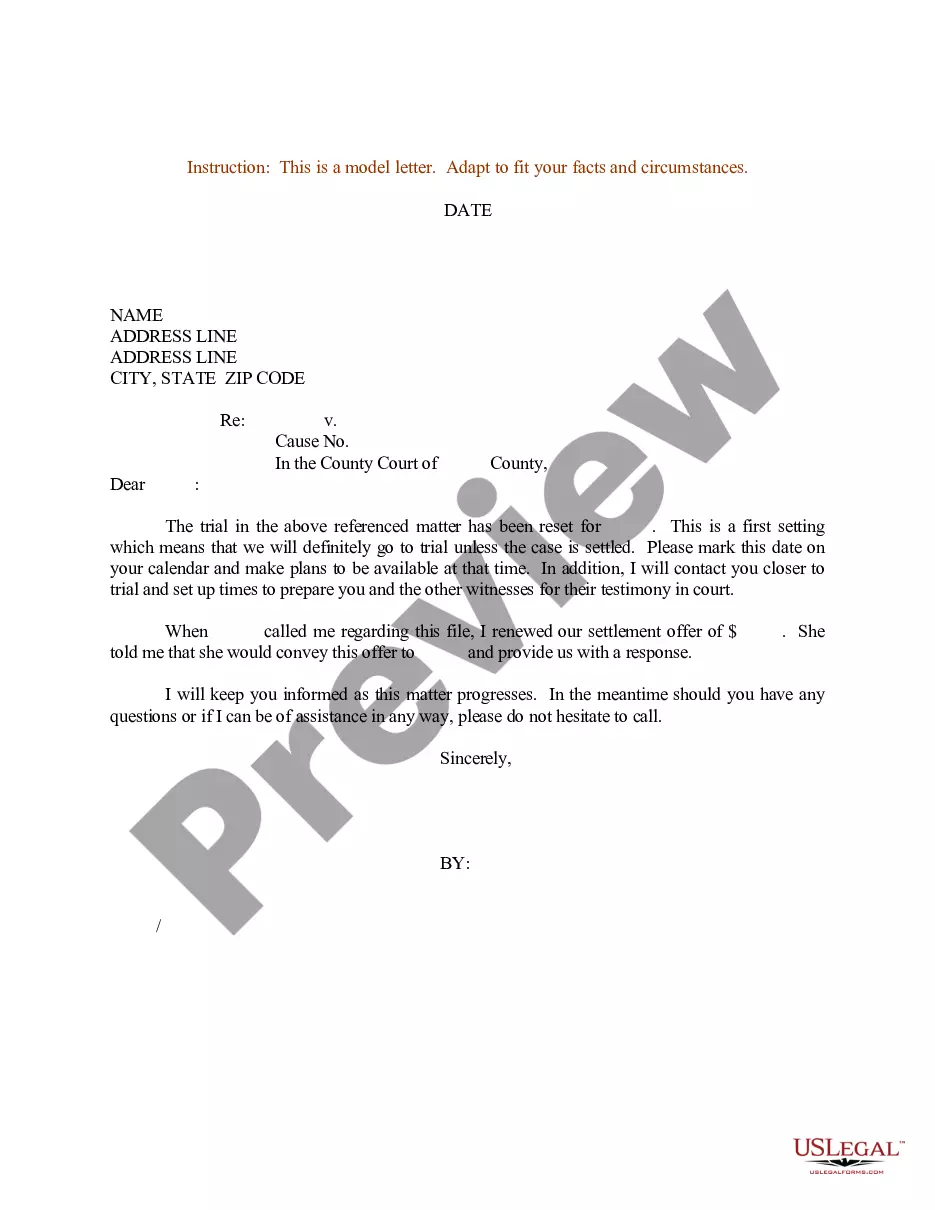
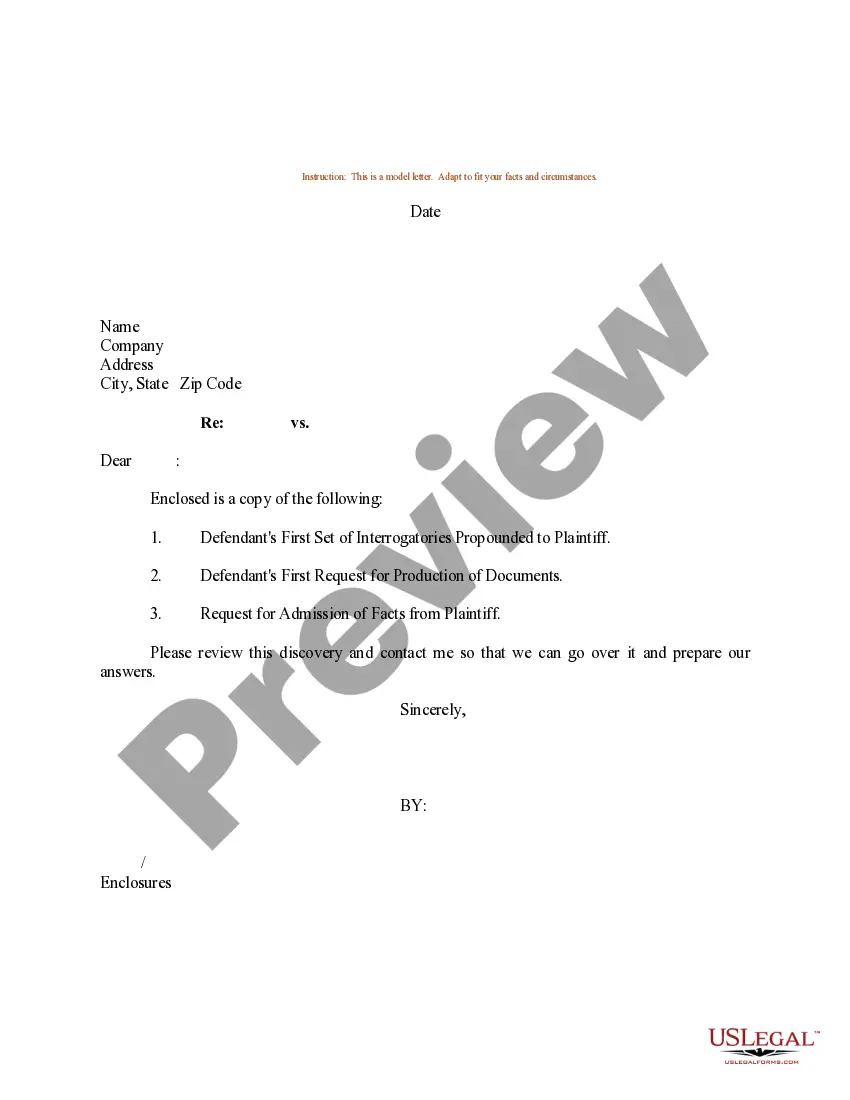
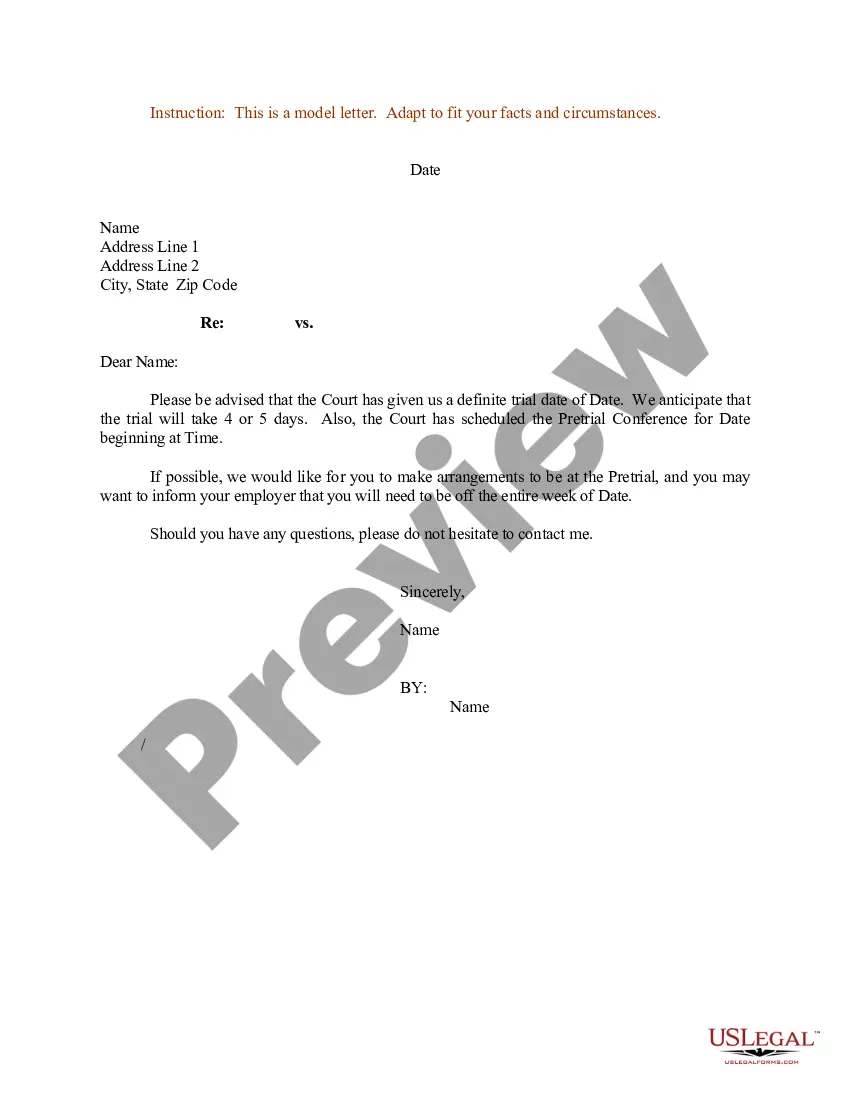
Get your form ready online
Our built-in tools help you complete, sign, share, and store your documents in one place.
Make edits, fill in missing information, and update formatting in US Legal Forms—just like you would in MS Word.
Download a copy, print it, send it by email, or mail it via USPS—whatever works best for your next step.
Sign and collect signatures with our SignNow integration. Send to multiple recipients, set reminders, and more. Go Premium to unlock E-Sign.
If this form requires notarization, complete it online through a secure video call—no need to meet a notary in person or wait for an appointment.
We protect your documents and personal data by following strict security and privacy standards.

Make edits, fill in missing information, and update formatting in US Legal Forms—just like you would in MS Word.

Download a copy, print it, send it by email, or mail it via USPS—whatever works best for your next step.

Sign and collect signatures with our SignNow integration. Send to multiple recipients, set reminders, and more. Go Premium to unlock E-Sign.

If this form requires notarization, complete it online through a secure video call—no need to meet a notary in person or wait for an appointment.

We protect your documents and personal data by following strict security and privacy standards.
Looking for another form?





How to fill out Sample Letter For Setting Of Trial Date?
It is feasible to dedicate multiple hours online trying to locate the legal document template that complies with the state and federal requirements you require. US Legal Forms offers numerous legal forms that are reviewed by professionals.
You can conveniently download or print the Idaho Sample Letter for Setting of Trial Date from the service. If you already possess a US Legal Forms account, you can Log In and then click the Download button. Subsequently, you can complete, modify, print, or sign the Idaho Sample Letter for Setting of Trial Date. Every legal document template you acquire is yours permanently. To obtain an additional copy of a purchased form, visit the My documents tab and click the corresponding button.
If you are using the US Legal Forms website for the first time, follow the simple instructions below: First, make sure that you have selected the correct document template for the county/region of your choice. Review the form description to ensure you have chosen the appropriate form. If available, use the Preview button to browse through the document template as well.
- If you wish to find another version of the form, utilize the Search section to find the template that meets your needs and specifications.
- Once you have located the template you need, click Buy now to proceed.
- Select the pricing plan you desire, enter your information, and register for a free account on US Legal Forms.
- Complete the transaction. You can use your credit card or PayPal account to pay for the legal form.
- Choose the format of the document and download it to your device.
- Make any necessary edits to your document. You can complete, modify, sign, and print the Idaho Sample Letter for Setting of Trial Date.
- Download and print thousands of document templates using the US Legal Forms website, which offers the largest collection of legal forms. Utilize professional and state-specific templates to address your business or personal needs.
Form popularity
FAQ
Within 30 days after an answer or notice of appearance has been filed, or, within 90 days after a complaint has been filed, if one or more defendants have been served but no appearance has been made, a court must take action, by setting a scheduling conference, requesting available trial dates, or by another method ...
In any felony or misdemeanor criminal action, excluding actions before drug courts or mental health courts, any party may disqualify one judge by filing a motion for disqualification without stating any grounds, and the motion must be granted if timely filed.
In every trial the testimony of witnesses must be taken orally in open court, unless otherwise provided by a statute or by these rules, the Idaho Rules of Evidence, or other rules adopted by the Idaho Supreme Court.
Within 120 days of the entry of the judgment imposing sentence or order releasing retained jurisdiction, a motion may be filed to correct a sentence that has been imposed in an illegal manner or to reduce a sentence and the court may correct or reduce the sentence.
In criminal cases not amounting to a felony, issues of fact must be tried by a jury, unless a trial by jury is waived by the consent of both parties expressed in open court and entered in the minutes.
Rule 16 of the Idaho Criminal Rules also provides that the prosecuting attorney can be required to give you other information before trial.
Idaho Criminal Rule 20. Transfer from the County for Plea and Sentence. (2) the prosecuting attorneys from each county involved, as well as the trial court where the case is pending, approve the transfer in writing.
If a defendant is not served within 182 days after the complaint is filed, the court, on motion or on its own after 14 days' notice to the plaintiff, must dismiss the action without prejudice against that defendant.