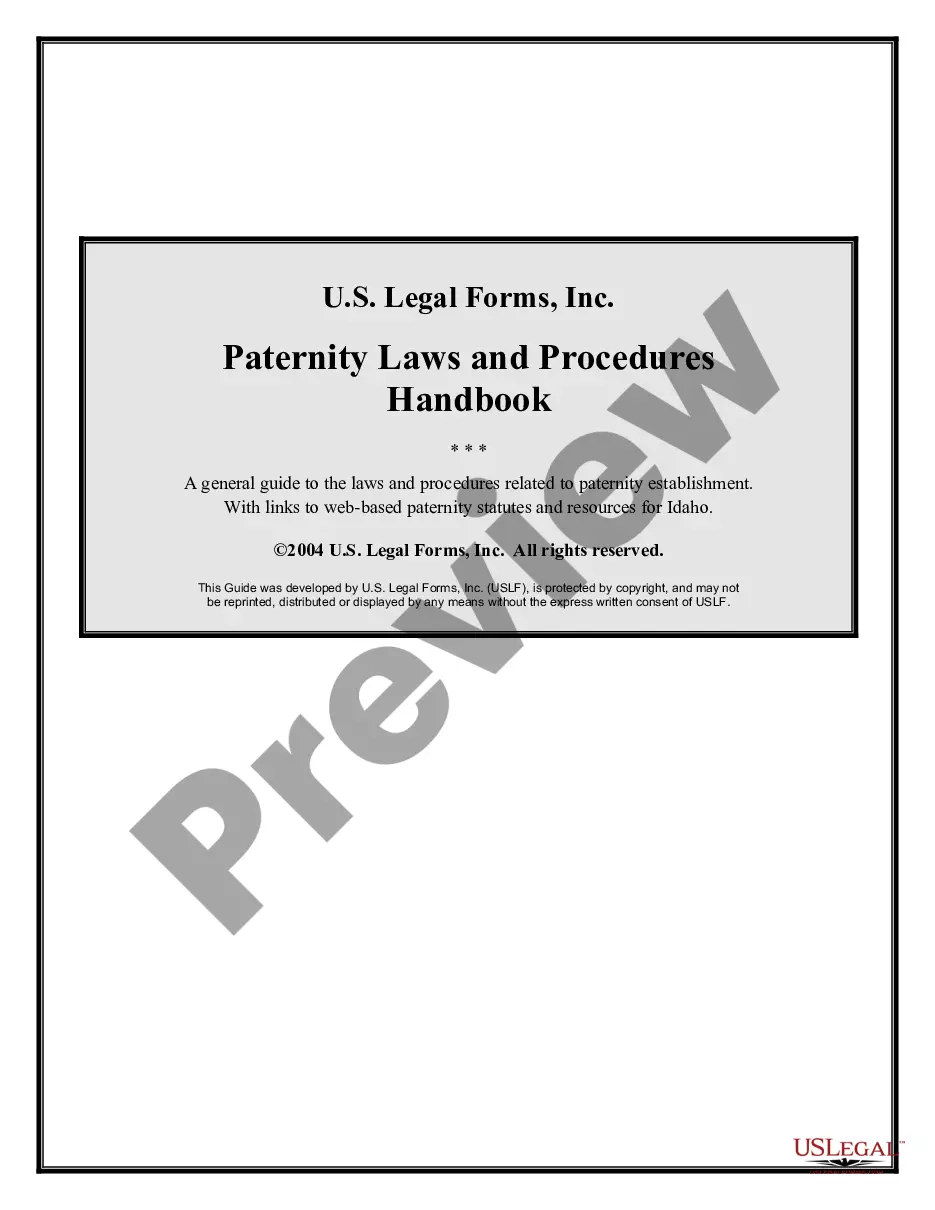
Idaho Paternity Law and Procedure Handbook
Overview of this form
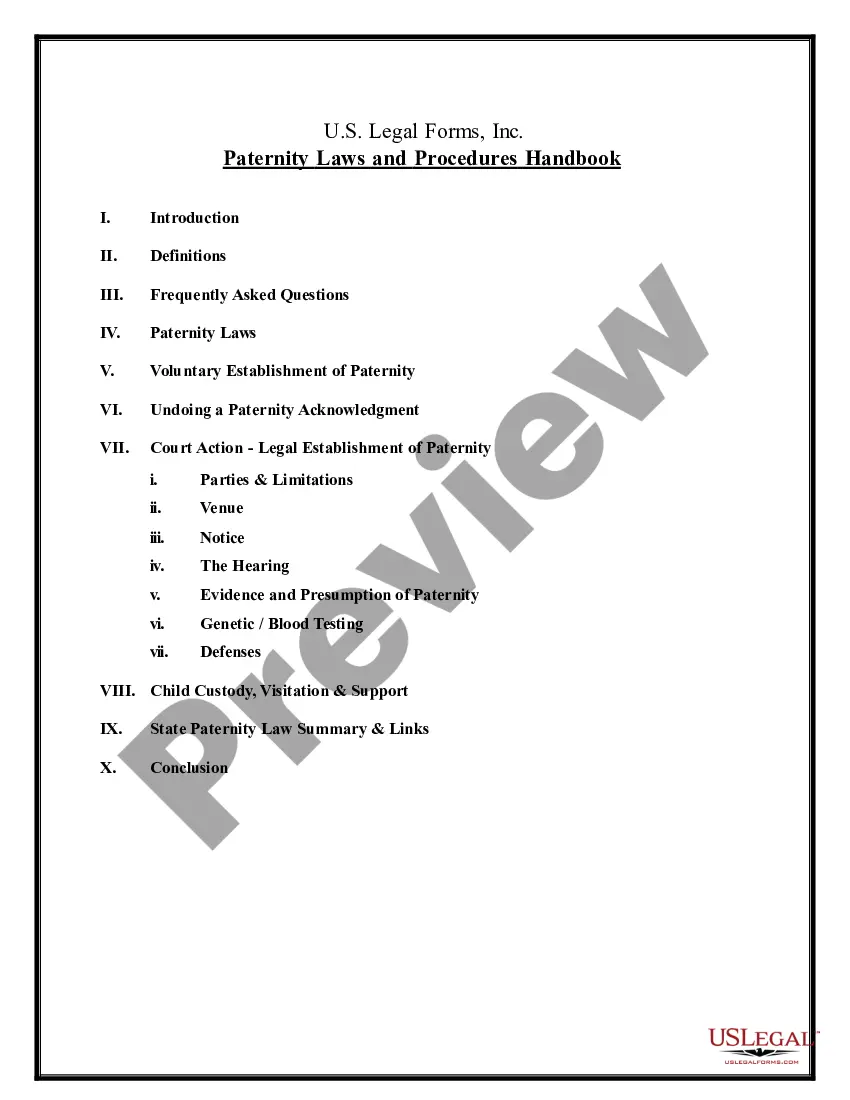
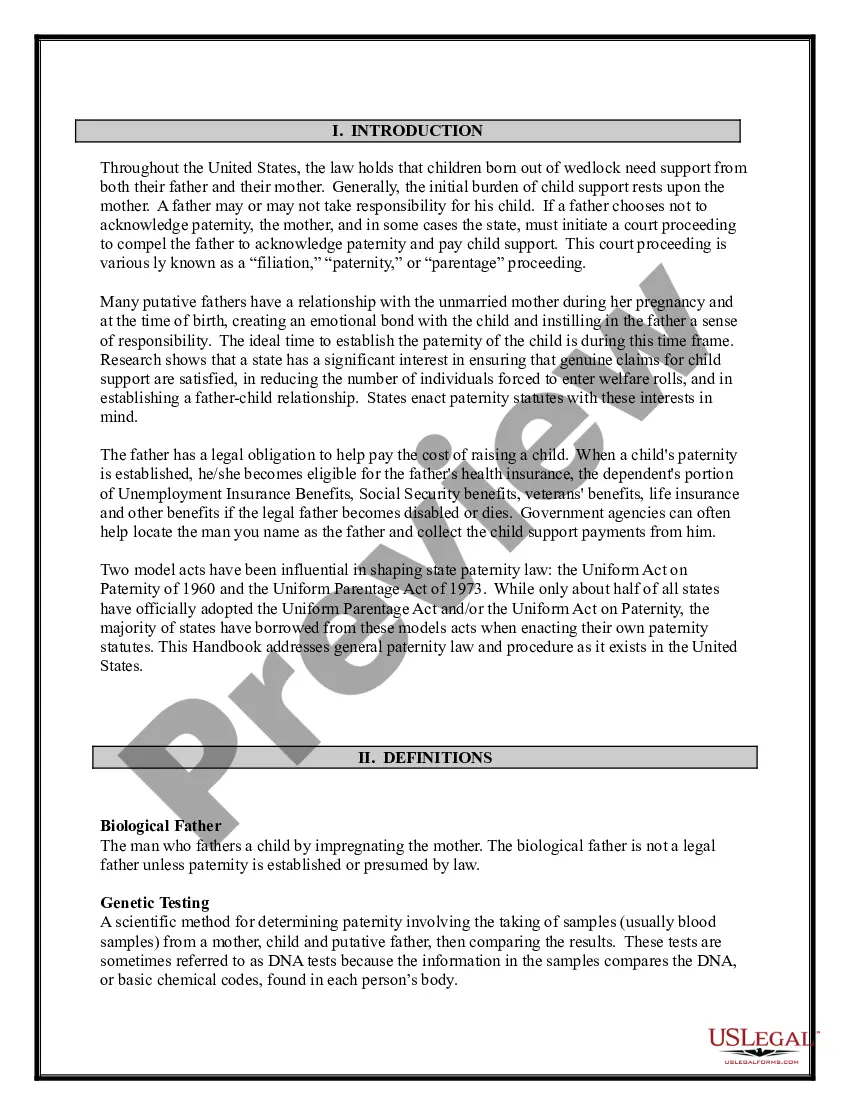
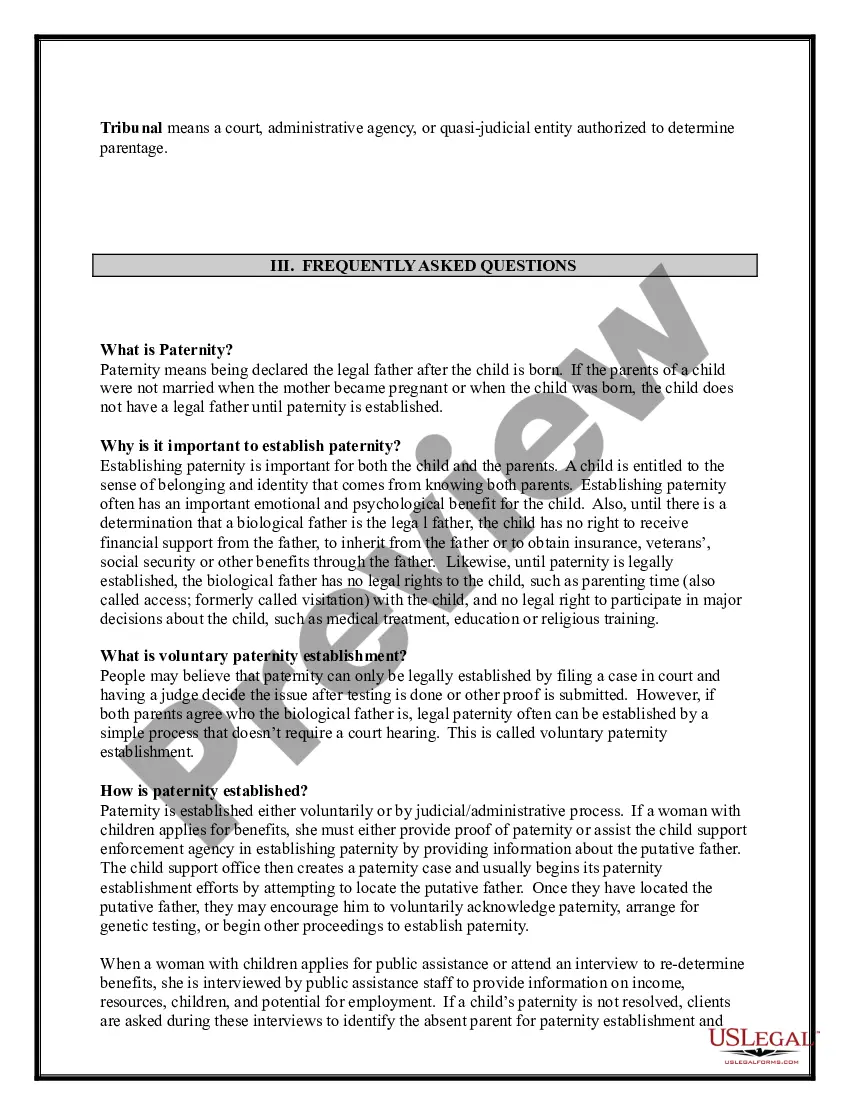
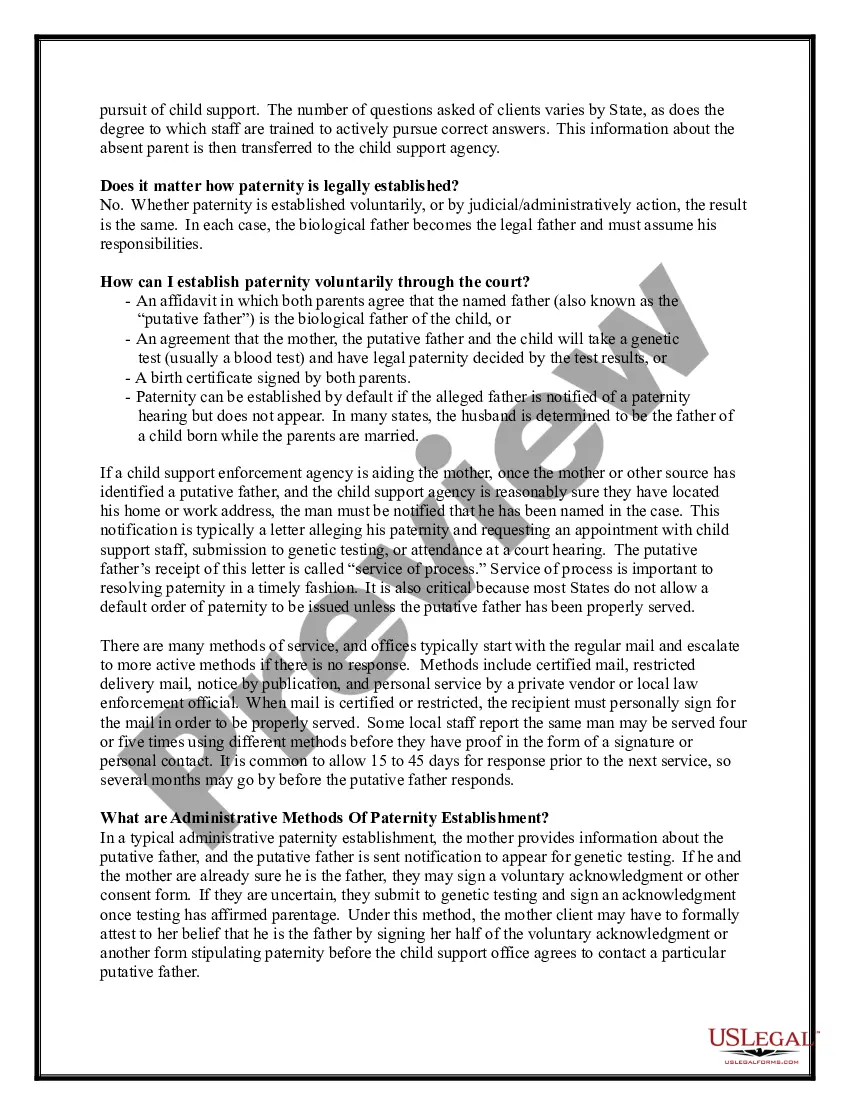
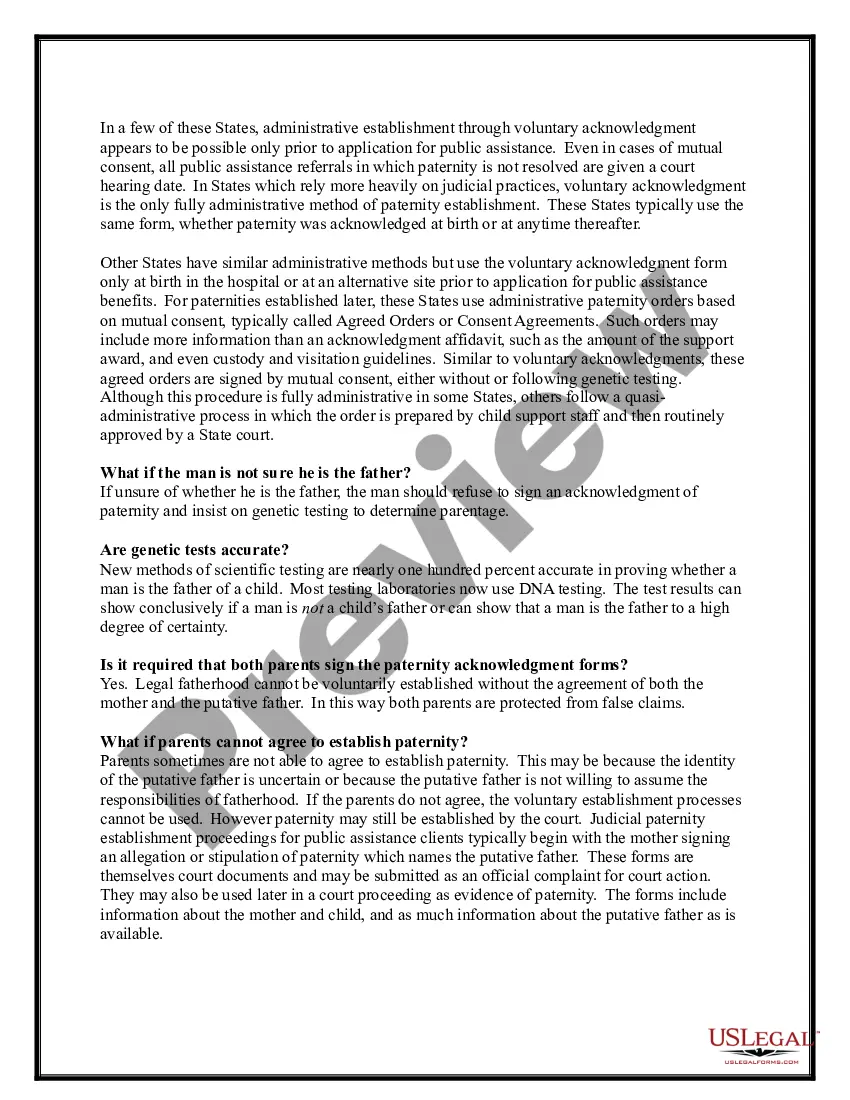
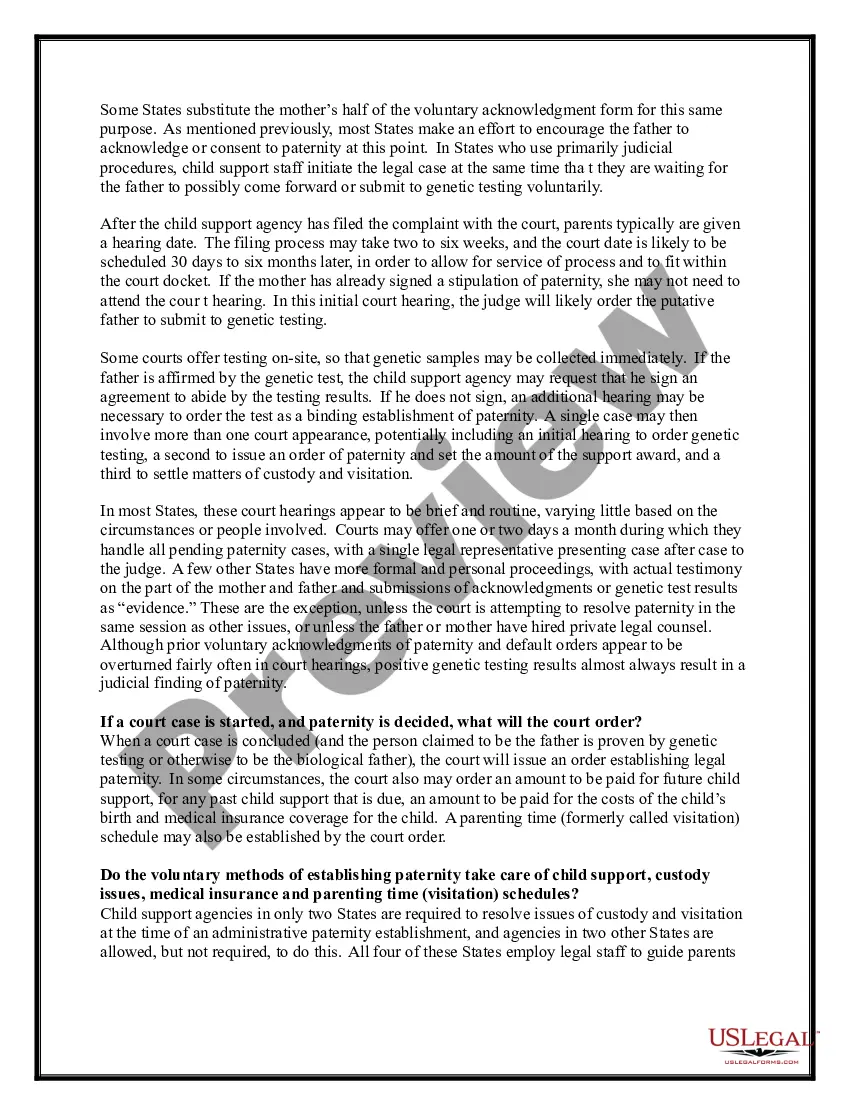
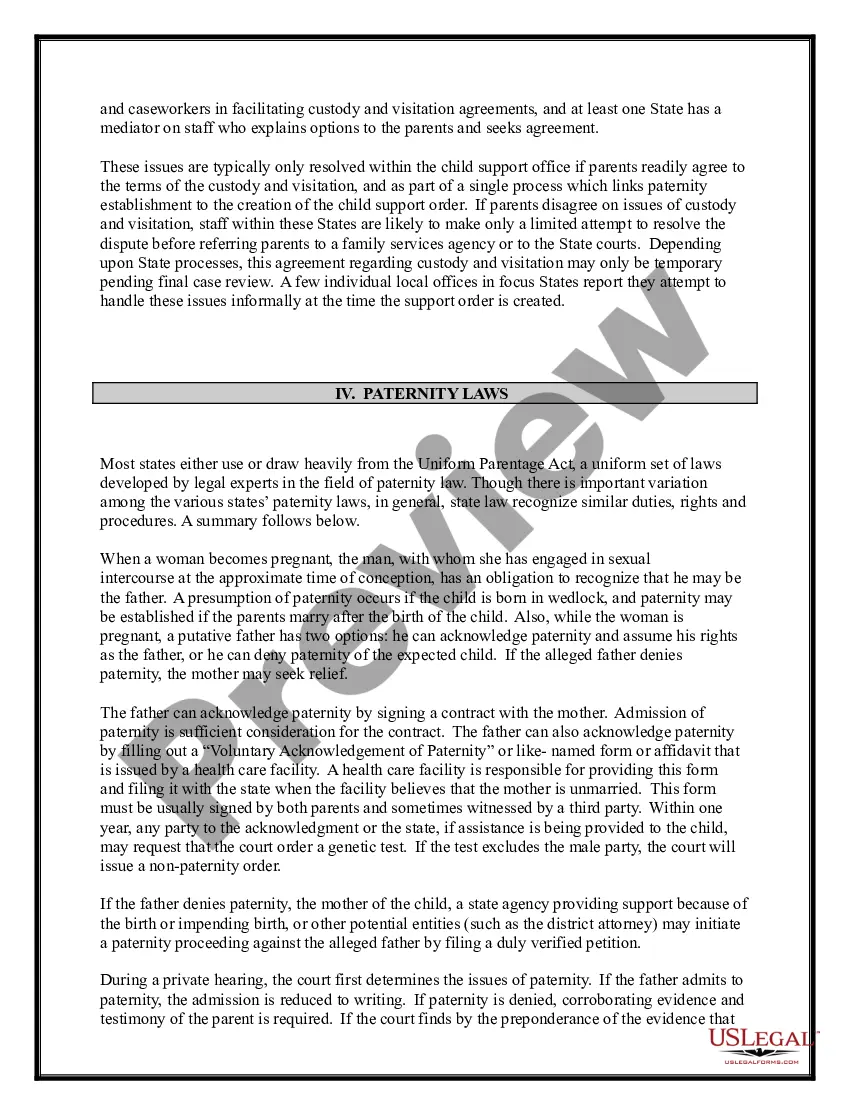
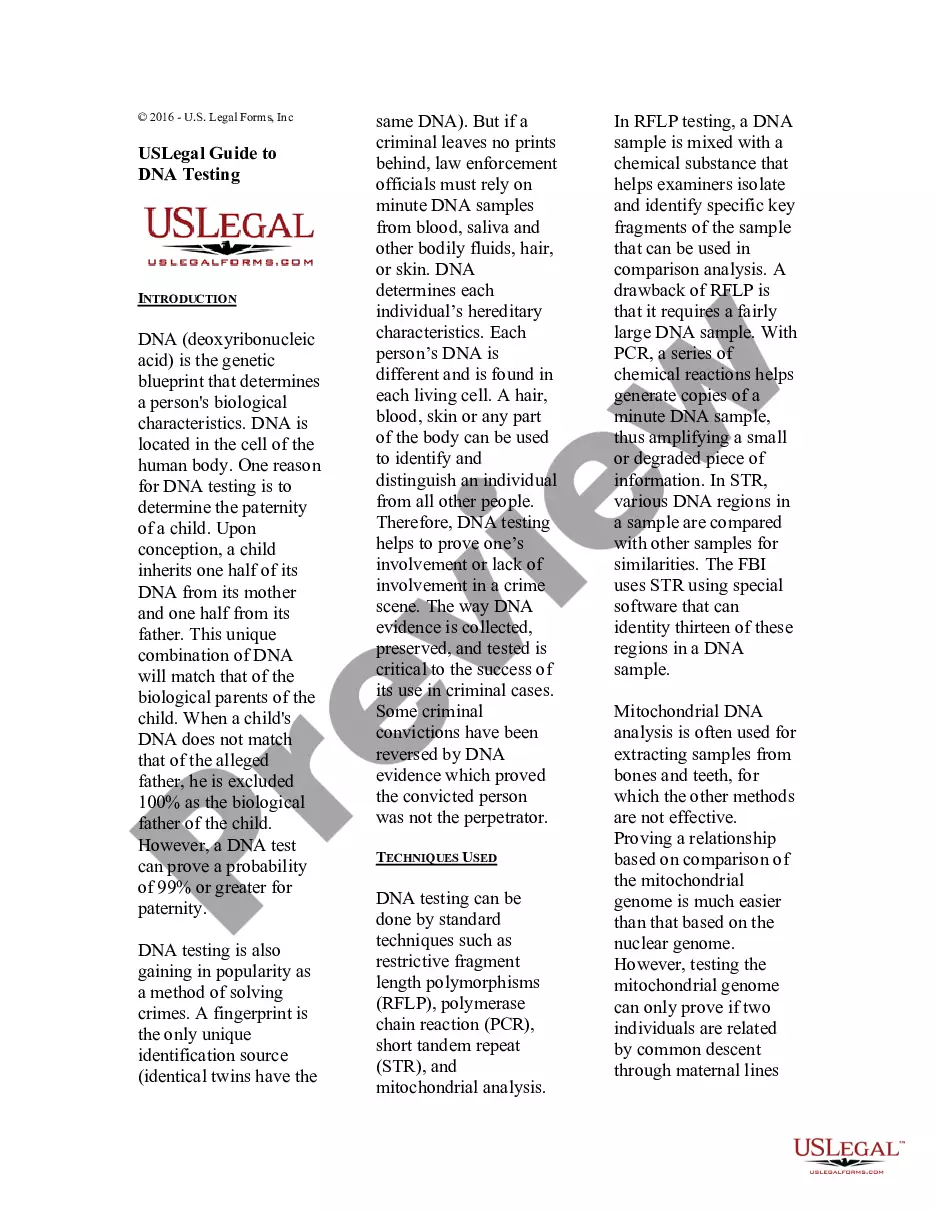
The Paternity Law and Procedure Handbook is a comprehensive guide that provides information about establishing legal paternity in the United States. This handbook is designed to clarify the legal rights and responsibilities concerning paternity, outlining the processes involved in both voluntary paternity establishment and court action. It serves as a valuable resource for individuals who need insight into the paternity laws specific to their state, helping parents navigate the often complex legal landscape of paternity recognition and child support obligations.
Key components of this form
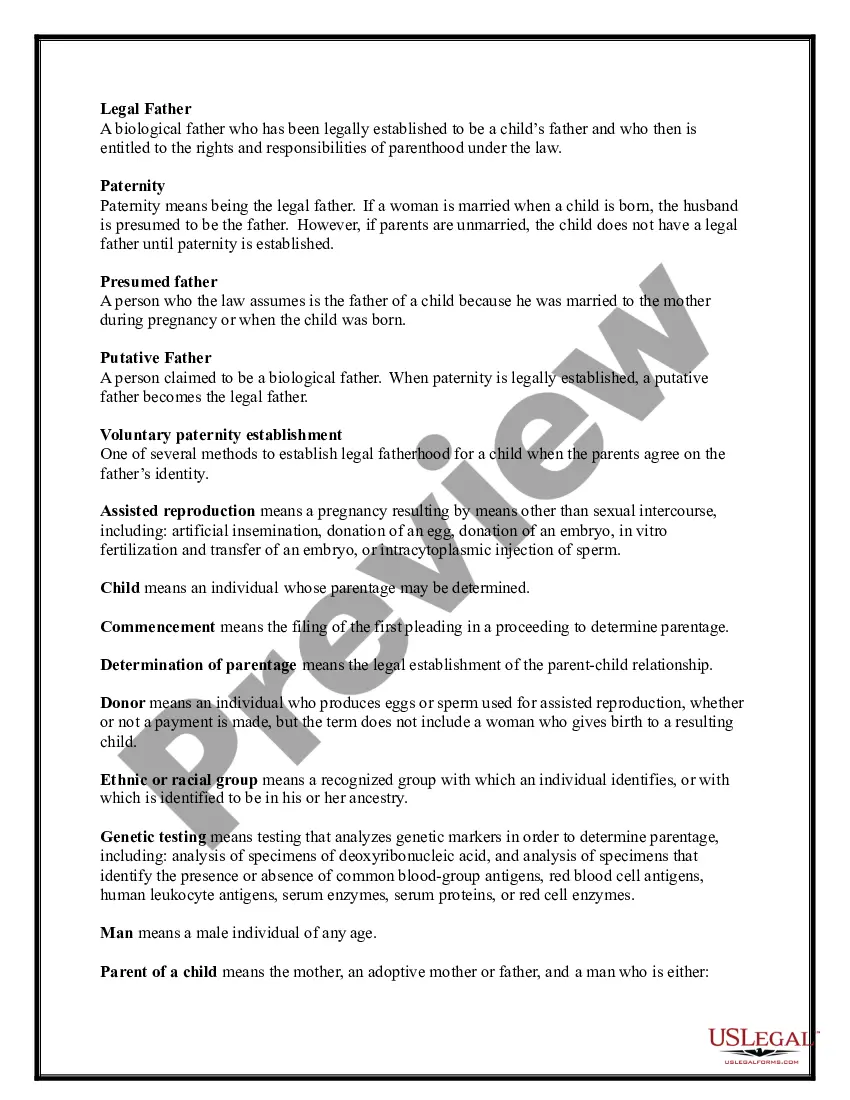
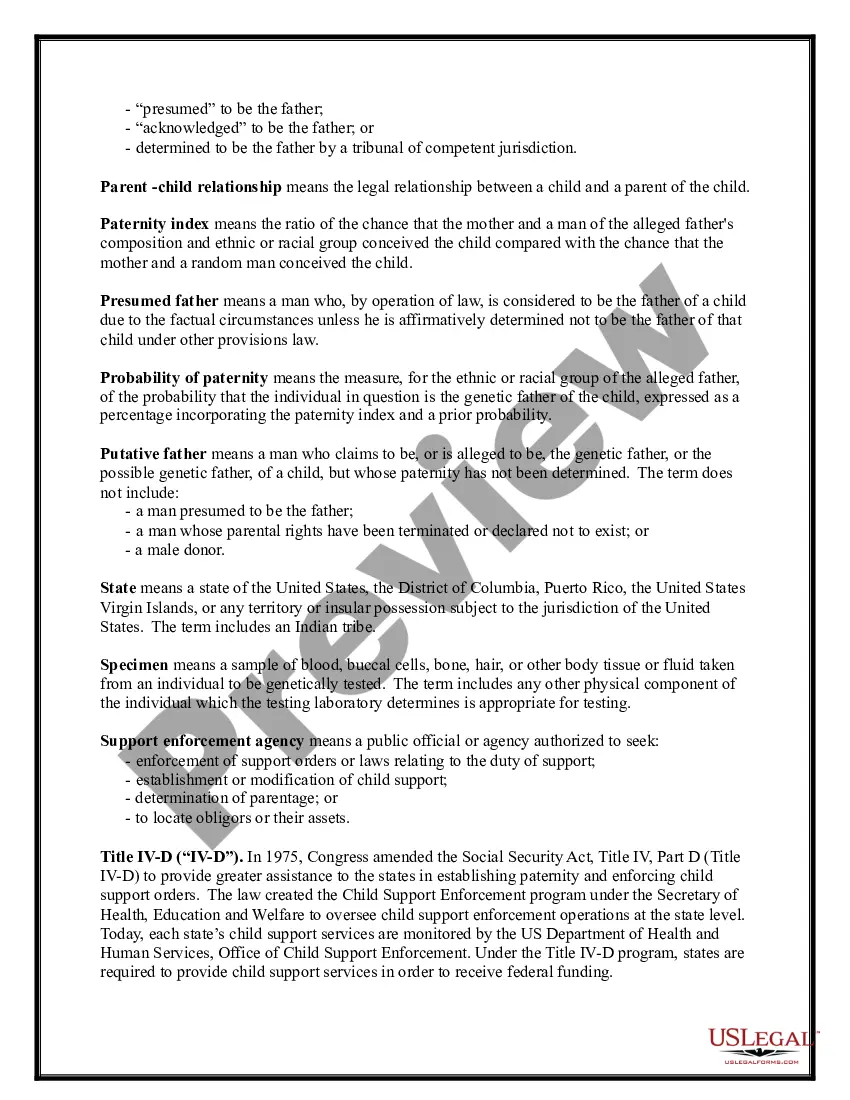
- Definitions of key legal terms related to paternity.
- Overview of voluntary paternity establishment and legal processes.
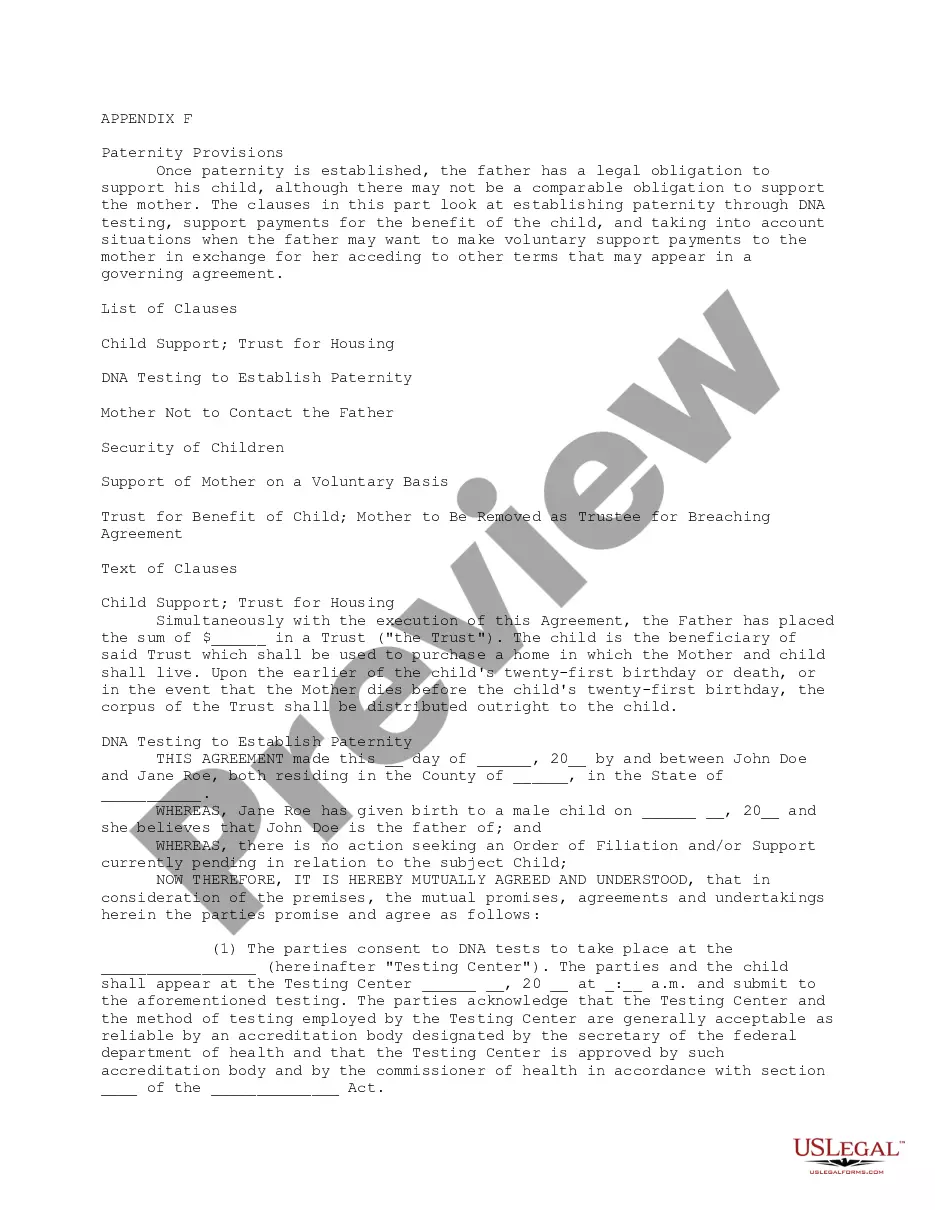
- Guidelines for genetic testing and its implications on paternity cases.
- Information on child custody, support, and visitation rights.
- State-specific summaries of paternity laws and procedures.
- Answers to frequently asked questions about paternity rights and responsibilities.

When this form is needed
This handbook is useful in various scenarios, such as when a child is born to unmarried parents and the father needs to establish legal paternity. It is applicable when parents are unsure of their rights or obligations, when financial support needs to be determined, or when custody arrangements are necessary. It also serves as a guide for legal representatives assisting clients with paternity issues.
Who can use this document
- Unmarried parents seeking to establish or dispute paternity.
- Legal professionals assisting clients in family law cases.
- State agencies involved in child support enforcement.
- Individuals uncertain about their rights and responsibilities regarding paternity.
How to prepare this document
- Read through the handbook to understand the definitions and legal requirements of paternity.
- Identify whether voluntary paternity establishment or court action is appropriate for your situation.
- Gather any required documentation, including birth certificates and necessary affidavits.
- If proceeding through the court, prepare any petitions or complaints as guided by the handbook.
- Follow the state-specific laws included in the handbook to ensure compliance.
- Consult a legal professional if unsure about the process or your rights.
Notarization requirements for this form
This form usually doesn’t need to be notarized. However, local laws or specific transactions may require it. Our online notarization service, powered by Notarize, lets you complete it remotely through a secure video session, available 24/7.
Get your form ready online
Our built-in tools help you complete, sign, share, and store your documents in one place.
Make edits, fill in missing information, and update formatting in US Legal Forms—just like you would in MS Word.
Download a copy, print it, send it by email, or mail it via USPS—whatever works best for your next step.
Sign and collect signatures with our SignNow integration. Send to multiple recipients, set reminders, and more. Go Premium to unlock E-Sign.
If this form requires notarization, complete it online through a secure video call—no need to meet a notary in person or wait for an appointment.
We protect your documents and personal data by following strict security and privacy standards.

Make edits, fill in missing information, and update formatting in US Legal Forms—just like you would in MS Word.

Download a copy, print it, send it by email, or mail it via USPS—whatever works best for your next step.

Sign and collect signatures with our SignNow integration. Send to multiple recipients, set reminders, and more. Go Premium to unlock E-Sign.

If this form requires notarization, complete it online through a secure video call—no need to meet a notary in person or wait for an appointment.

We protect your documents and personal data by following strict security and privacy standards.
Avoid these common issues
- Failing to understand the distinction between biological and legal paternity.
- Not obtaining genetic testing when unsure of paternity.
- Delaying the establishment of paternity, potentially losing rights.
- Not using the proper state-specific procedures for paternity acknowledgment.
Why use this form online
- Access to up-to-date information and legal standards regarding paternity.
- Convenience of downloading and printing forms as needed.
- Clear guidance on legal processes, reducing the likelihood of errors.
- Ability to reference state-specific laws that may impact your situation.
Legal use & context
- The handbook outlines legal obligations for fathers regarding child support.
- It clarifies the process for establishing paternity and the associated legal rights.
- Utilizing this handbook helps ensure compliance with both state and federal laws related to paternity.
Main things to remember
- Establishing paternity is essential for ensuring child support and legal rights of both parents.
- The handbook outlines various methods for establishing paternity, including voluntary and judicial processes.
- Users should be aware of state-specific laws that may affect the establishment of paternity.
- Legal advice is beneficial, especially in contested situations, to navigate the legal proceedings effectively.
Looking for another form?


Form popularity
FAQ
In this situation, there is a temptation to withhold child support, but this is not allowed. Child support payments and visitation are considered by law to be separate issues.You have an obligation to financially support your children, regardless of any visitation issues.
Idaho shared physical custody: Each parent has significant periods of physical custody, which allows them frequent and continuing contact with their children. Idaho law outlines shared custody as any arrangement in which the child has regular and continuing contact with both parents.
Typically, the court will permit the parties to agree that no child support will be paid to either party.The court may consider a change in income or living expenses or child's activities as a change in circumstances that would warrant an award of child support or a modification of an existing child support order.
What Happens if I Don't Pay Child Support as Ordered?All child support orders in Idaho are subject to automatic income withholding. This means if the paying parent falls one month behind, automatic withholding kicks in and the payment is deducted from the paying parent's paycheck.
I Have 50/50 Custody, Why Am I still Required to Pay Child Support? 50/50 custody arrangements do not necessarily absolve parents of child support obligations.A court will consider the income and earning potential of both parents and order the spouse with the higher income to pay child support.
Based in child custody laws governing in the state of Idaho, there is no age limit for a child to decide which parent he or she wants to live with. The court usually considers the child's wishes provided that the child is mature enough to make sound reasoning and independent preferences in parenting schedule.
If you believe there's been a substantial and material change in financial circumstances, you should file a motion to modify child support in your county court clerk's office. You and your child's other parent will have to appear before a judge to argue whether or not child support should change.
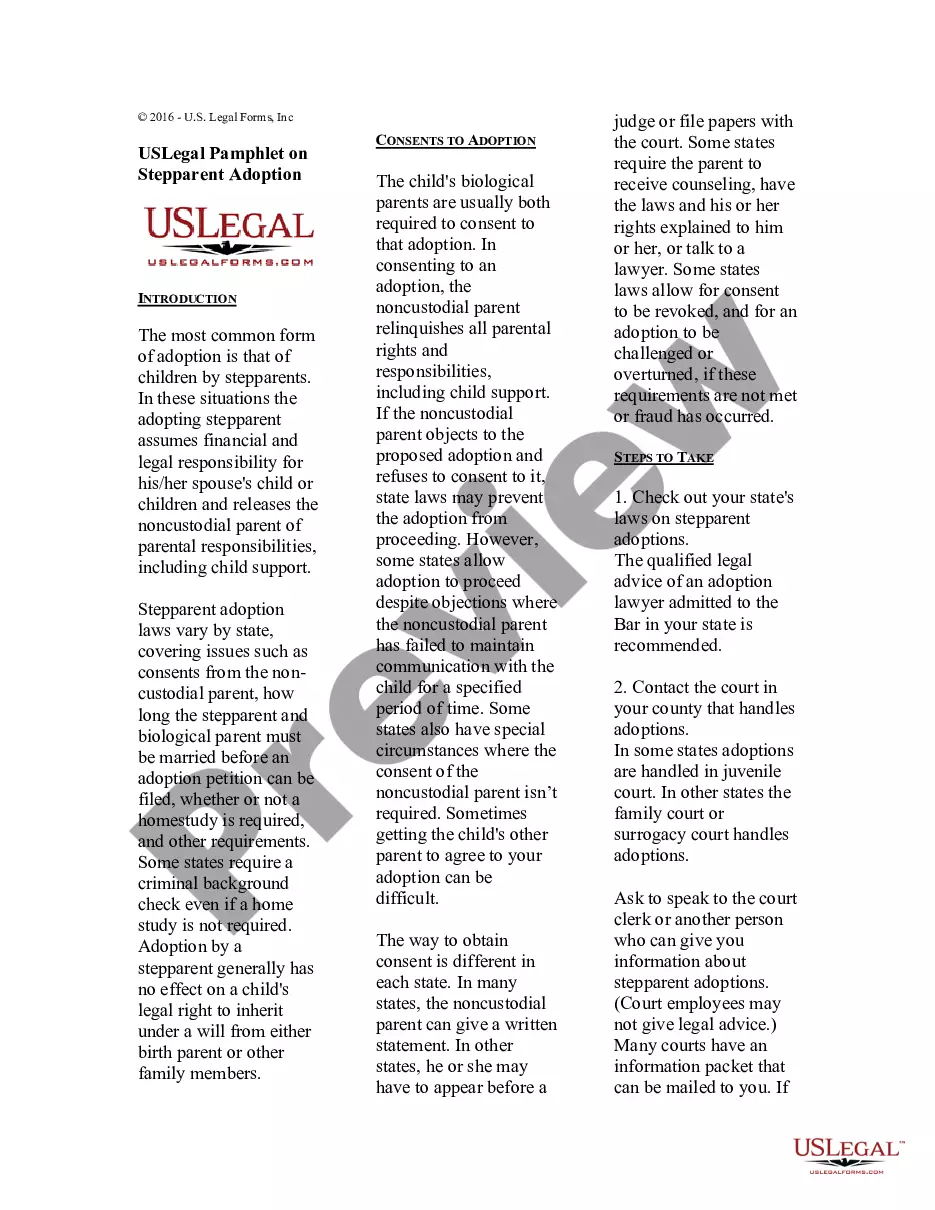
If you're a parent going through a divorce, or you're ending a relationship with your child's other parent, you'll need to establish child support. In Idaho, both parents are obligated to financially support their children.
In joint legal custody both parents make decisions regarding the child. Unless there are extenuating circumstances, Idaho is one of the 35 states whose court system favors awarding joint custody to parents after a divorce. Idaho courts may award either joint physical custody, joint legal custody or both.