This is a multi-state form covering the subject matter of the title.
Iowa Subordination and Attornment Agreement - Landlord - Tenant - Lender
Category:
State:
Multi-State
Control #:
US-XS-0014
Format:
Word;
Rich Text
Instant download
Description
Free preview
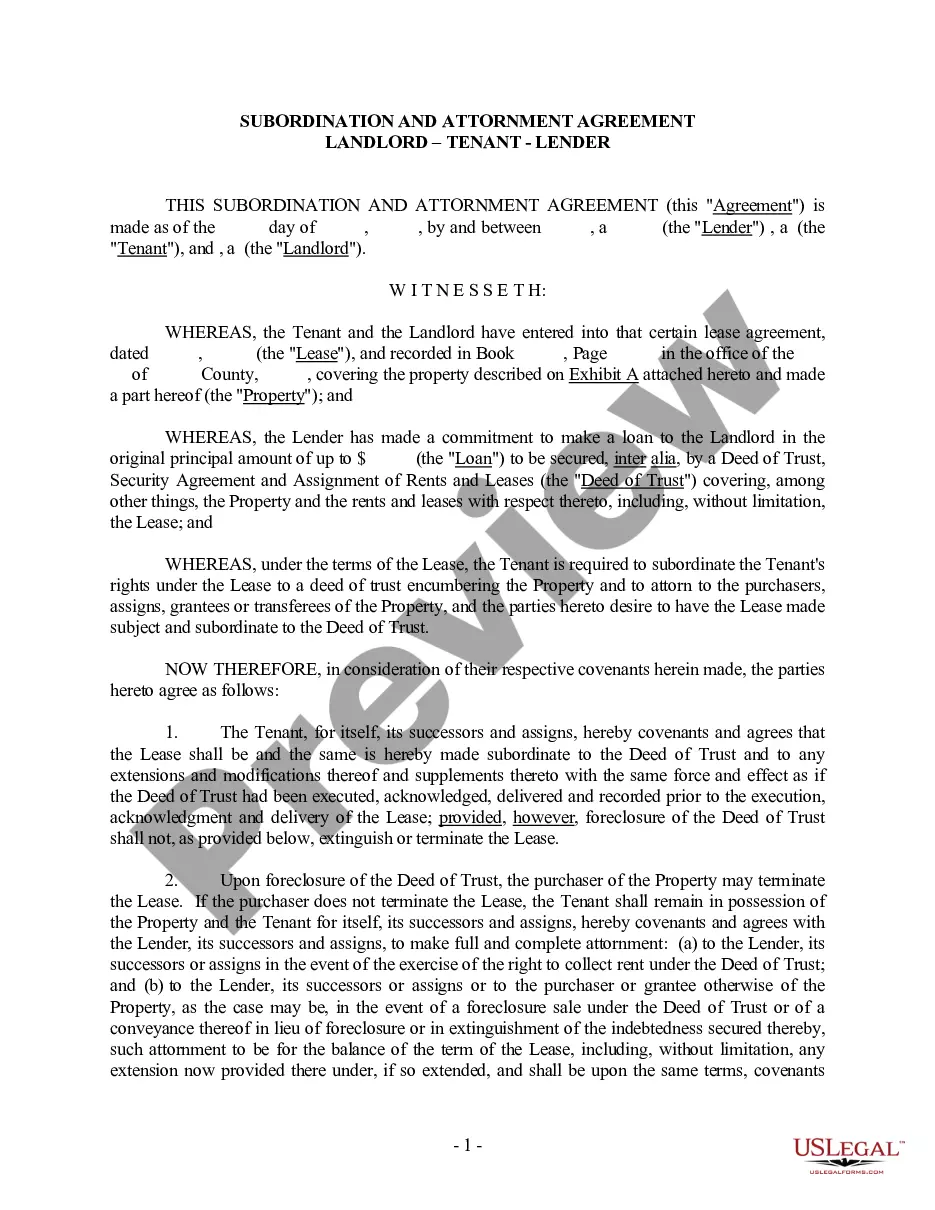
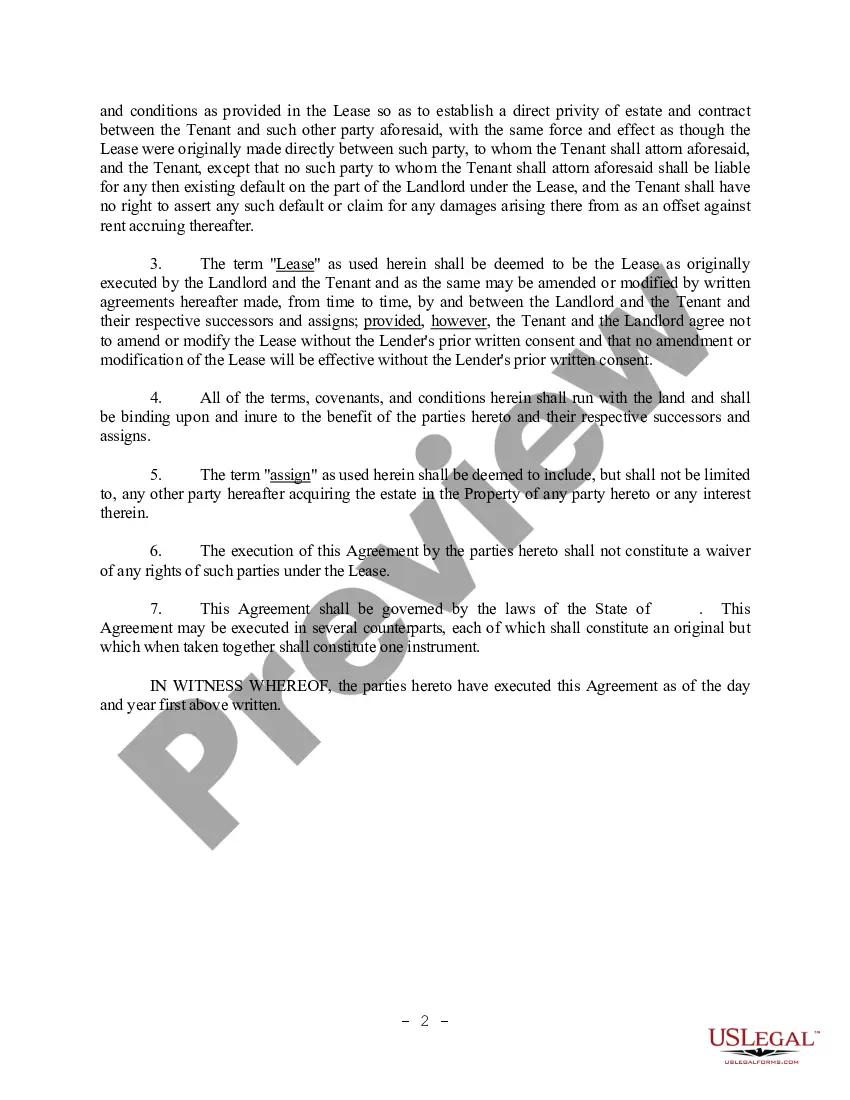
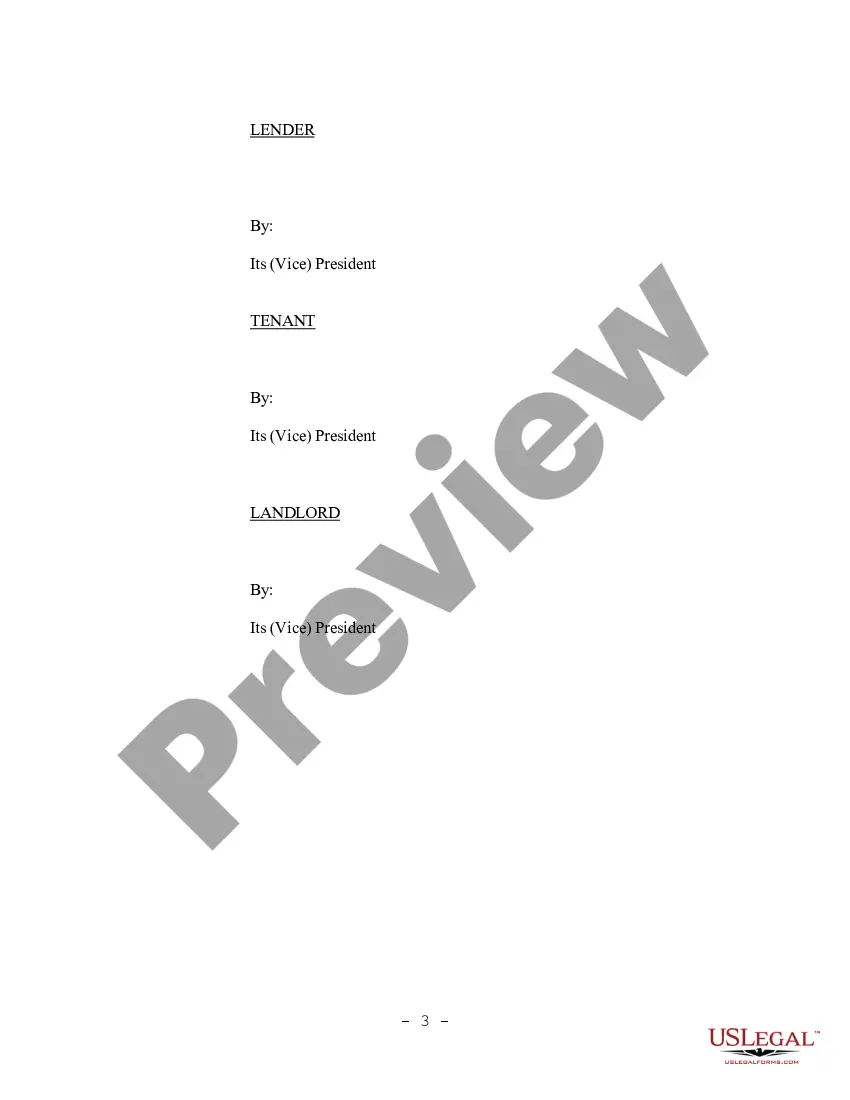
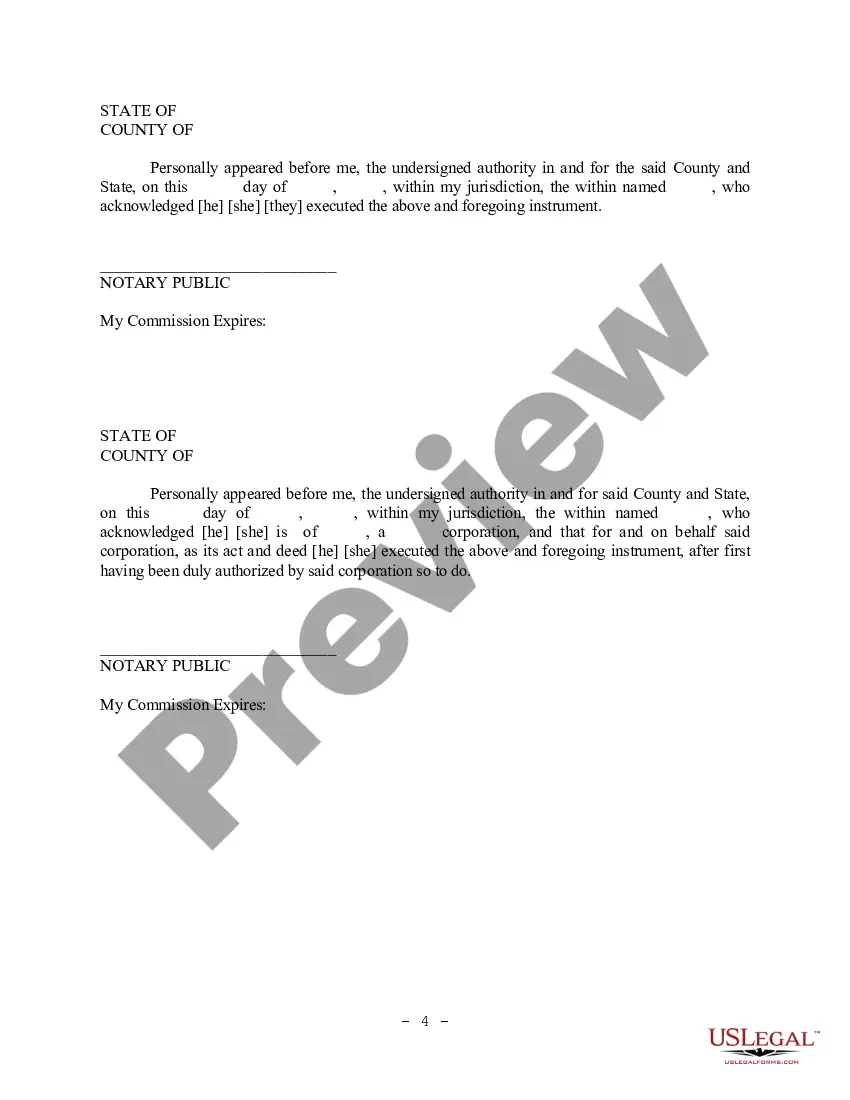
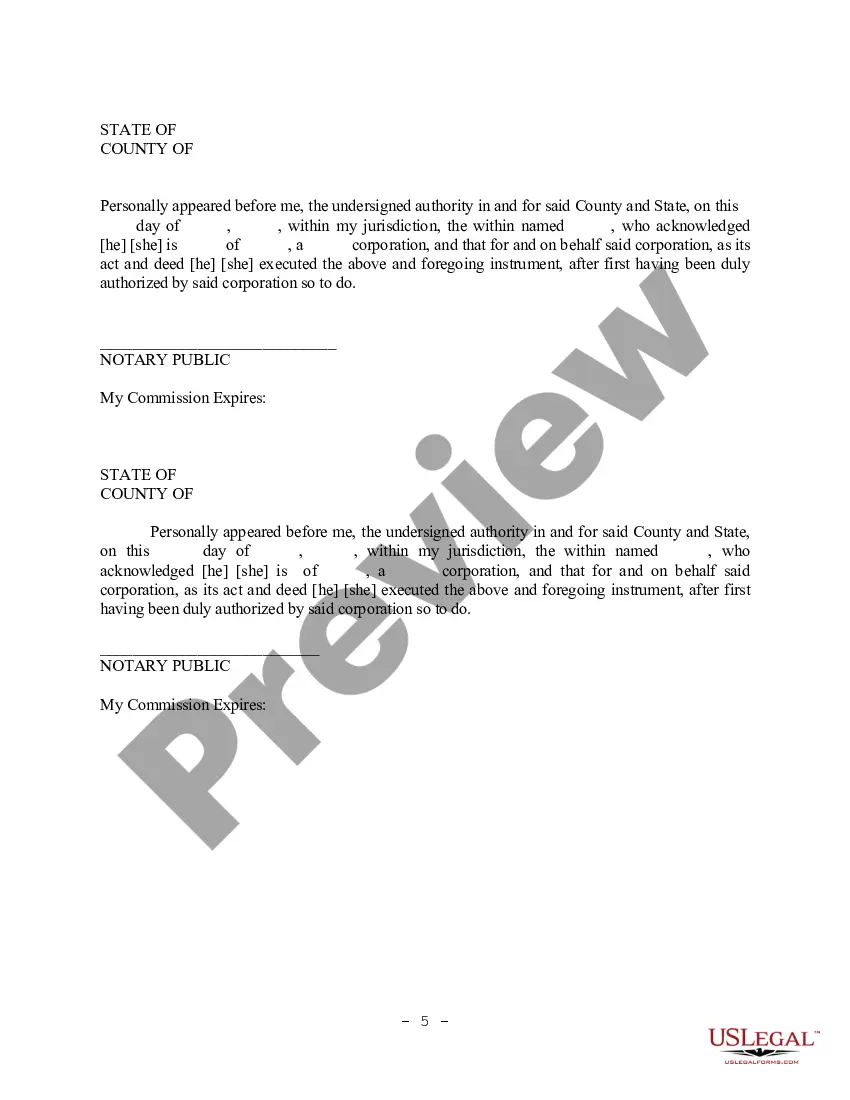
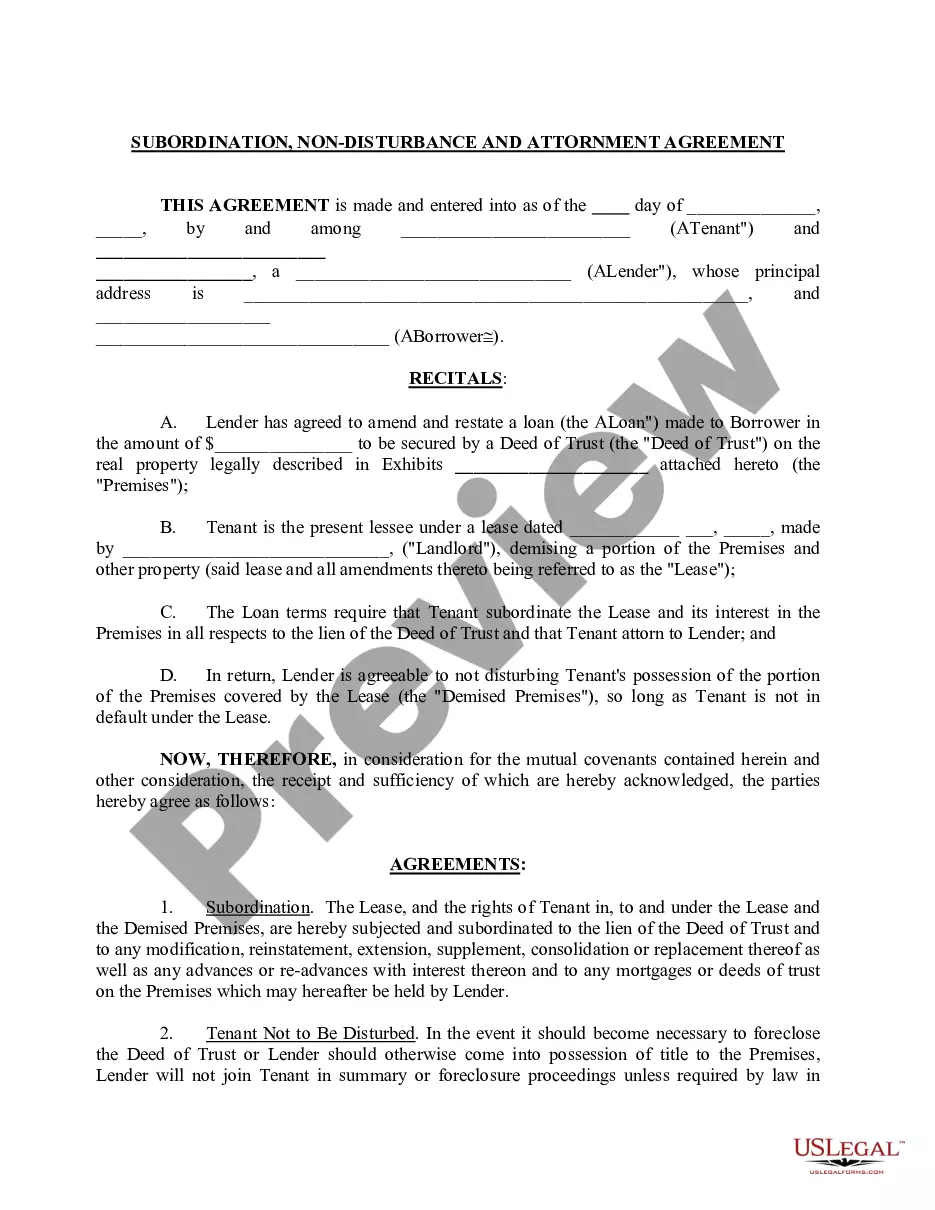
How to fill out Subordination And Attornment Agreement - Landlord - Tenant - Lender?
You can invest time online trying to locate the valid document format that fulfills the federal and state requirements you need. US Legal Forms offers numerous valid templates that can be reviewed by professionals.
You can easily acquire or print the Iowa Subordination and Attornment Agreement - Landlord - Tenant - Lender from your service.
If you already possess a US Legal Forms account, you can Log In and then click the Download button. After that, you can complete, modify, print, or sign the Iowa Subordination and Attornment Agreement - Landlord - Tenant - Lender. Each valid document format you purchase is yours permanently. To obtain another copy of a purchased form, visit the My documents section and click the corresponding button.
Select the format of your document and download it to your device. Make changes to your document if possible. You can complete, modify, sign, and print the Iowa Subordination and Attornment Agreement - Landlord - Tenant - Lender. Download and print thousands of document templates using the US Legal Forms website, which offers the largest collection of valid templates. Utilize professional and state-specific templates to meet your business or personal needs.
- If you are using the US Legal Forms website for the first time, follow the simple instructions below.
- First, ensure that you have chosen the correct document format for the state/town of your preference. Review the form description to confirm you have selected the right one.
- If available, use the Review button to look at the document format as well.
- If you want to search for another version of your form, use the Lookup field to find the format that satisfies your requirements.
- Once you have found the format you want, click Buy now to proceed.
- Select the pricing plan you prefer, enter your information, and create an account on US Legal Forms.
- Complete the transaction. You can use your credit card or PayPal account to pay for the valid form.
Form popularity
FAQ
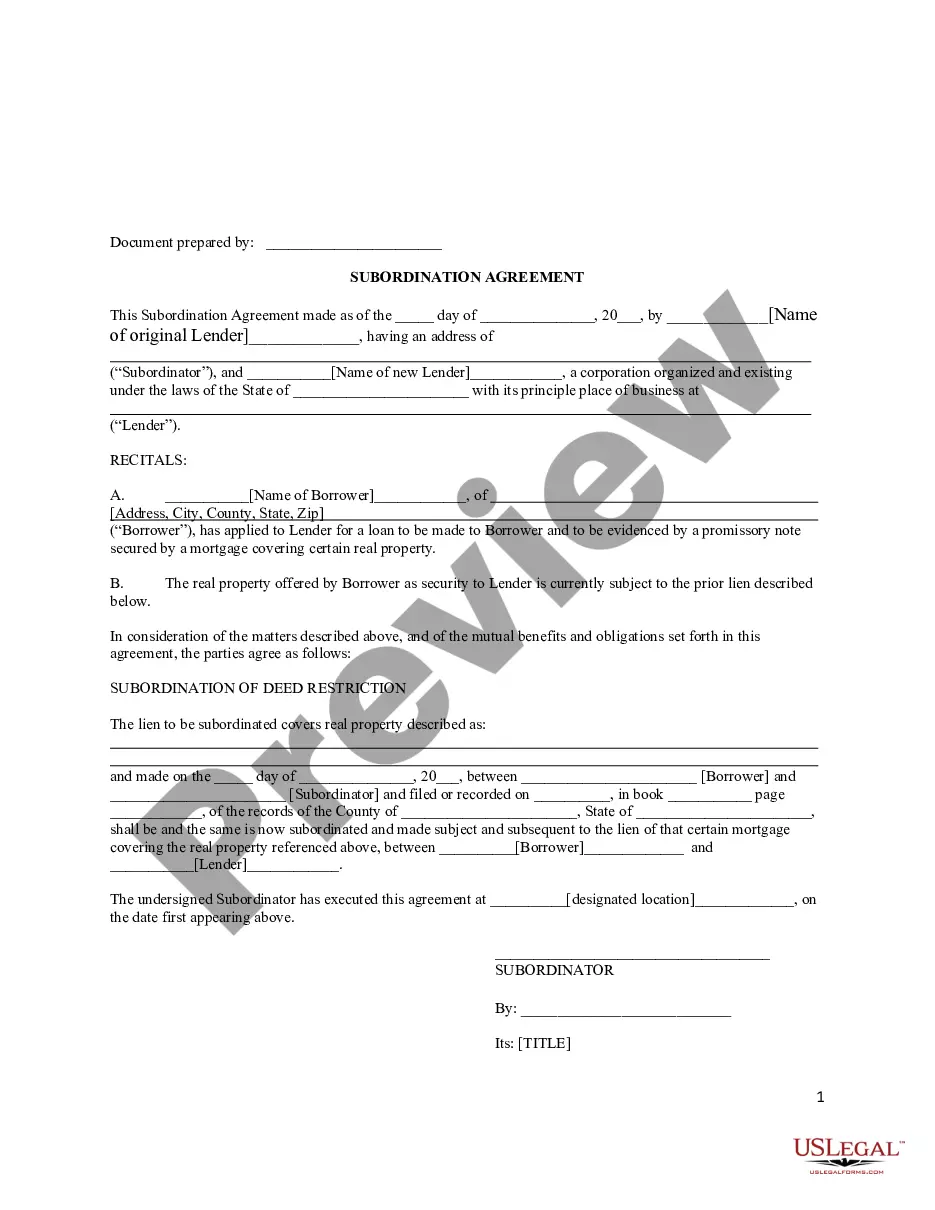
A landlord subordination agreement is a component of the Iowa Subordination and Attornment Agreement - Landlord - Tenant - Lender, where the landlord agrees to subordinate their lease to the lender’s mortgage. This means that the lender's rights to the property take precedence over the lease agreement. Such arrangements assure lenders that their investment is secure while providing tenants with continued occupancy rights. This agreement is vital for maintaining order and clarity in property transactions.
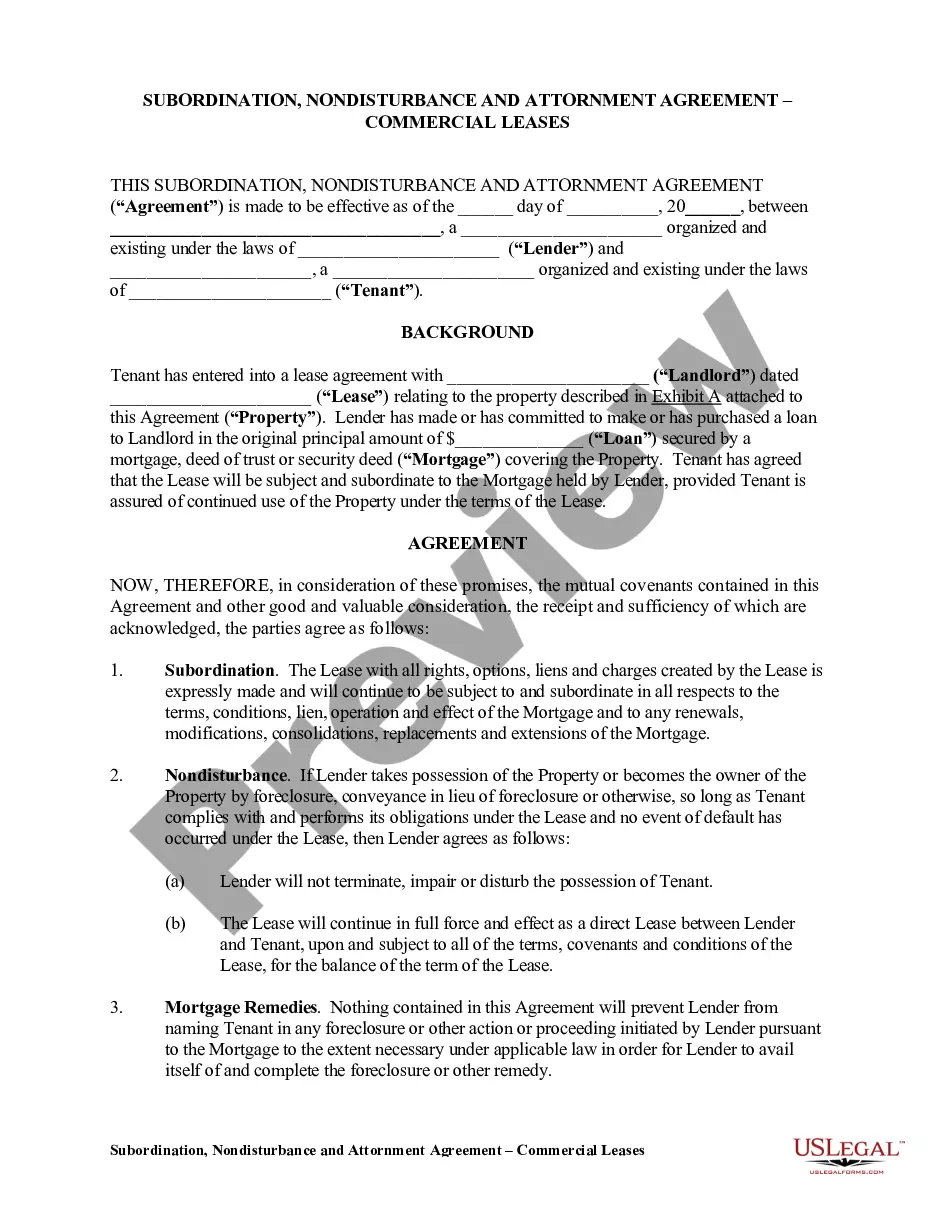
The purpose of an Iowa Subordination and Attornment Agreement - Landlord - Tenant - Lender is to establish a clear hierarchy of rights among the involved parties. This agreement allows landlords to subordinate their lease to the lender's mortgage, ensuring that the lender's claim takes precedence in case of foreclosure. Additionally, it protects tenant rights by allowing them to stay in the property even after ownership changes. Thus, the SNDA creates a balanced relationship among landlords, tenants, and lenders.
Lenders seek an Iowa Subordination and Attornment Agreement - Landlord - Tenant - Lender to protect their interests in the event of a default on the mortgage. This agreement clarifies the priority of claims among the lender, landlord, and tenant. By having an SNDA in place, lenders can ensure that their mortgage rights are preserved, even if the property is sold or transferred. This security is crucial for lenders when evaluating the risk of financing a property.
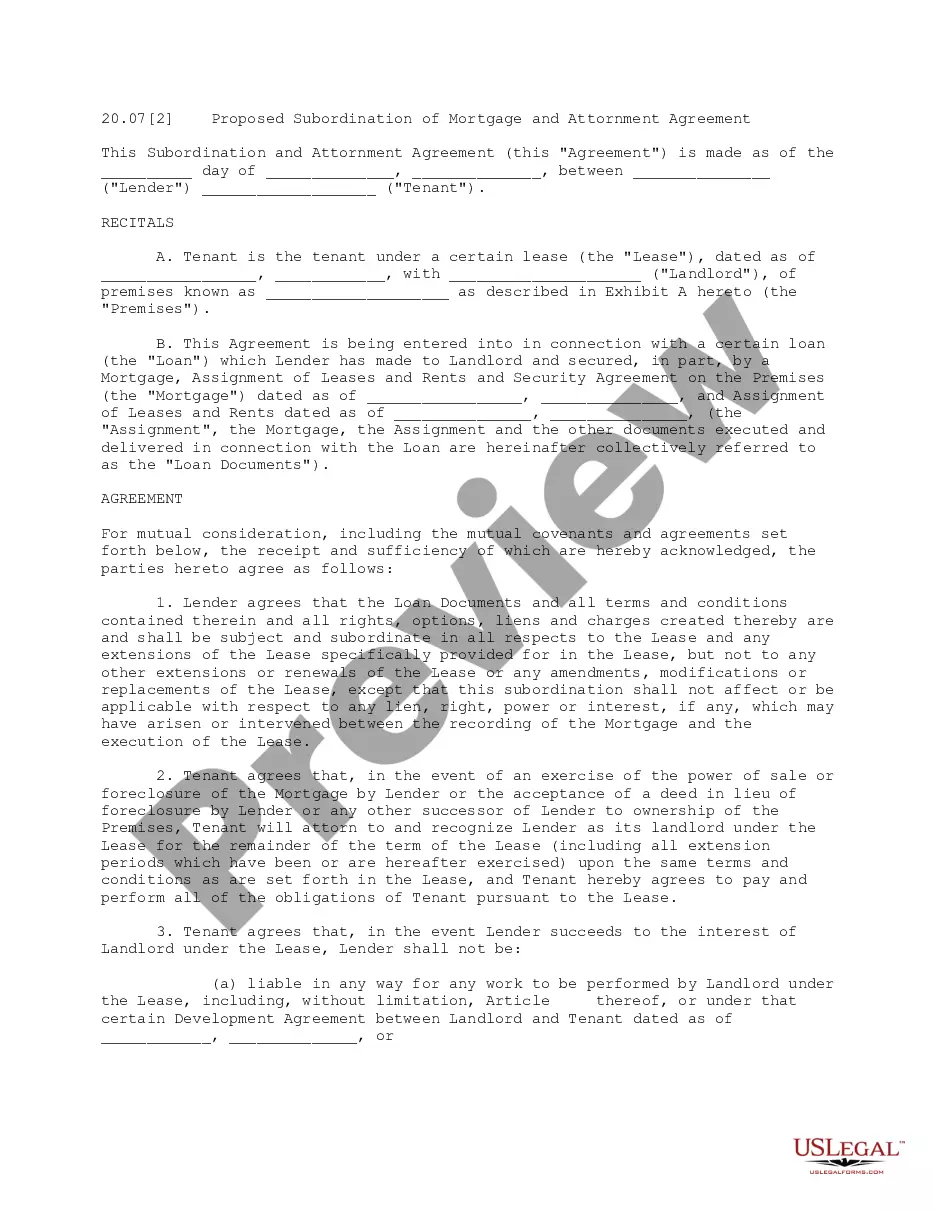
Attornment in the context of an Iowa Subordination and Attornment Agreement - Landlord - Tenant - Lender signifies the tenant's acknowledgment of the lender as the new landlord after a foreclosure. This relationship ensures that the lease remains valid despite changes in property ownership. By attorning, the tenant agrees to continue their lease under the new property owner, which secures the lender's investment. This dynamic fosters a smoother transition during ownership changes.
The primary beneficiaries of an Iowa Subordination and Attornment Agreement - Landlord - Tenant - Lender are typically the lender and the tenant. The lender gains assurance that their mortgage will remain valid even if ownership of the property changes. Meanwhile, tenants benefit by retaining their rights to occupy the premises, providing stability during ownership transitions. This agreement thus protects both parties in the leasing arrangement.
An Iowa Subordination and Attornment Agreement - Landlord - Tenant - Lender is a legal document that clarifies the relationship between landlords, tenants, and lenders. It establishes the priority of the lender's interest over the tenant's lease rights in case of property foreclosure. This agreement ensures that tenants recognize the lender's rights while securing the lender's position. For an easy way to create or understand this agreement, US Legal Forms offers valuable templates and explanations.
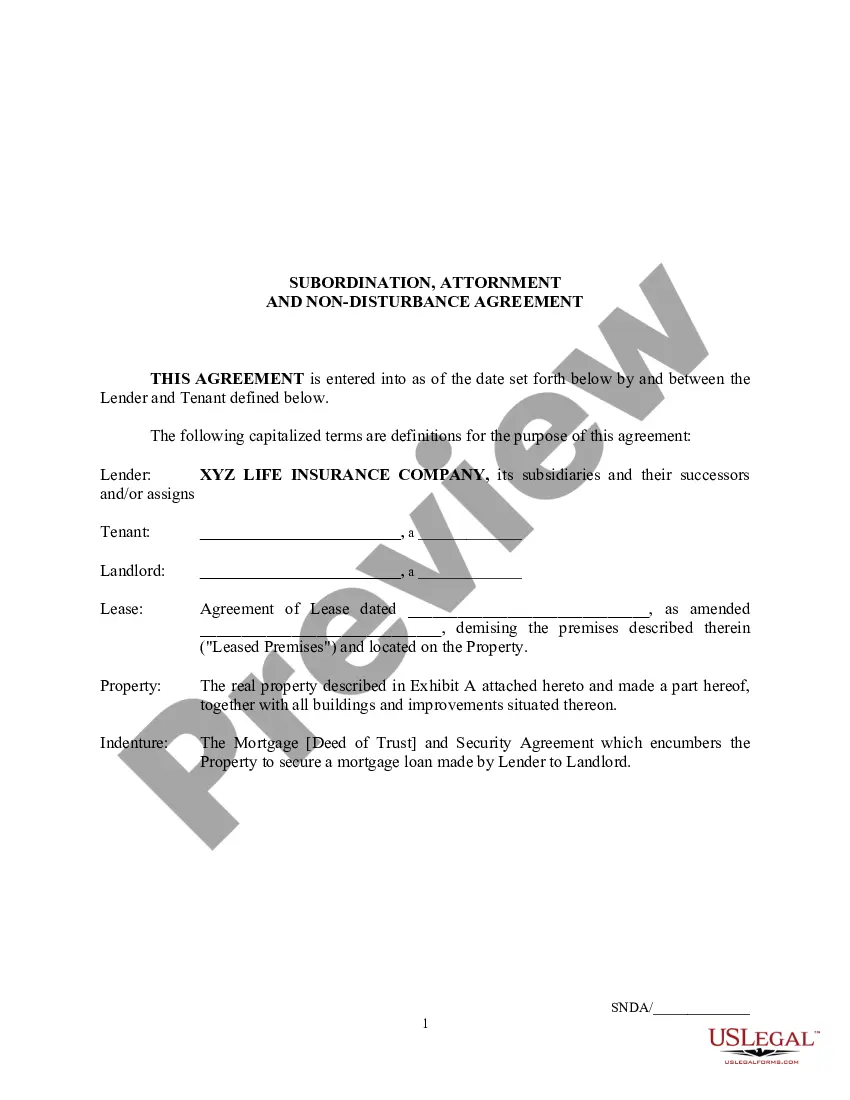
A lender seeks a Subordination, Non-Disturbance, and Attornment (SNDA) agreement to secure their position in the event of a foreclosure. This agreement ensures that the tenant's rights remain intact even if ownership of the property changes hands. By having an SNDA, lenders can protect their investment while providing tenants with peace of mind. If you need assistance with an Iowa Subordination and Attornment Agreement - Landlord - Tenant - Lender, consider using US Legal Forms for reliable resources.
In most cases, the landlord or their legal representative drafts the Iowa Subordination and Attornment Agreement - Landlord - Tenant - Lender. However, tenants and lenders may also have input in the drafting process to ensure their interests are protected. It is crucial to have a well-structured agreement to avoid future disputes. Utilizing a platform like US Legal Forms can help you access templates and guidance for creating this important document.