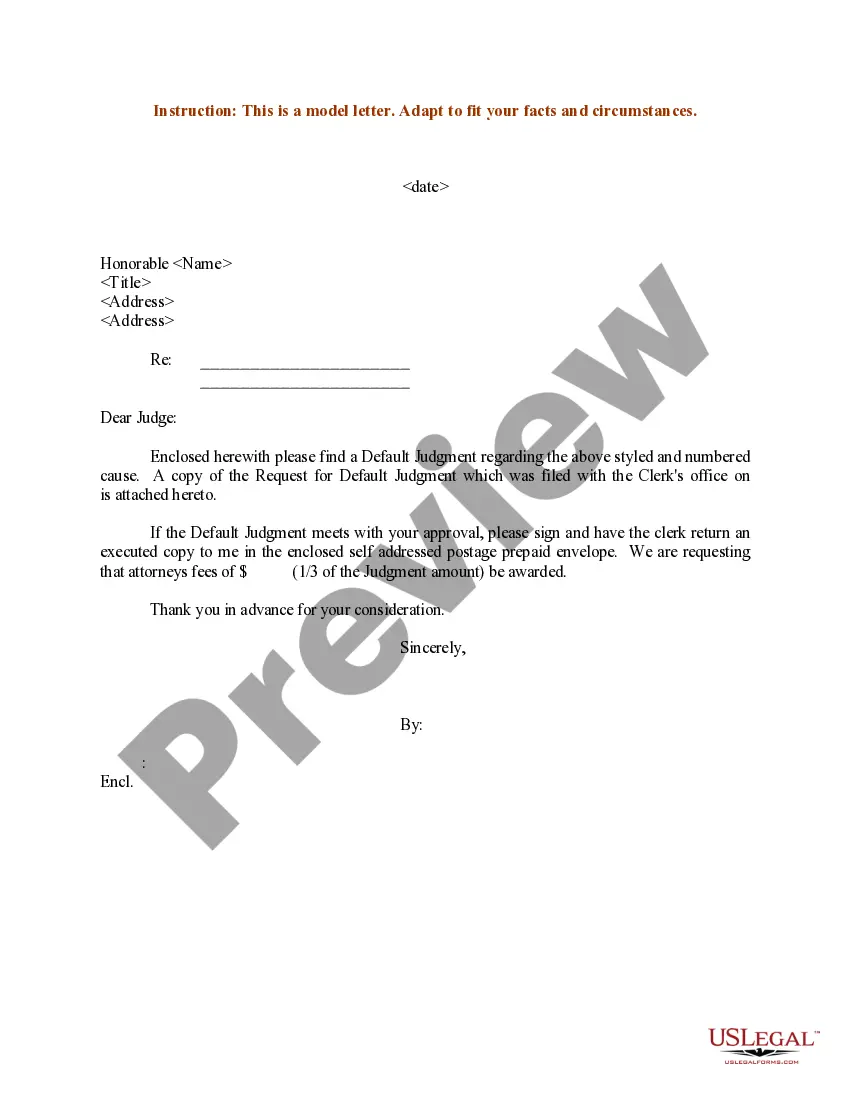
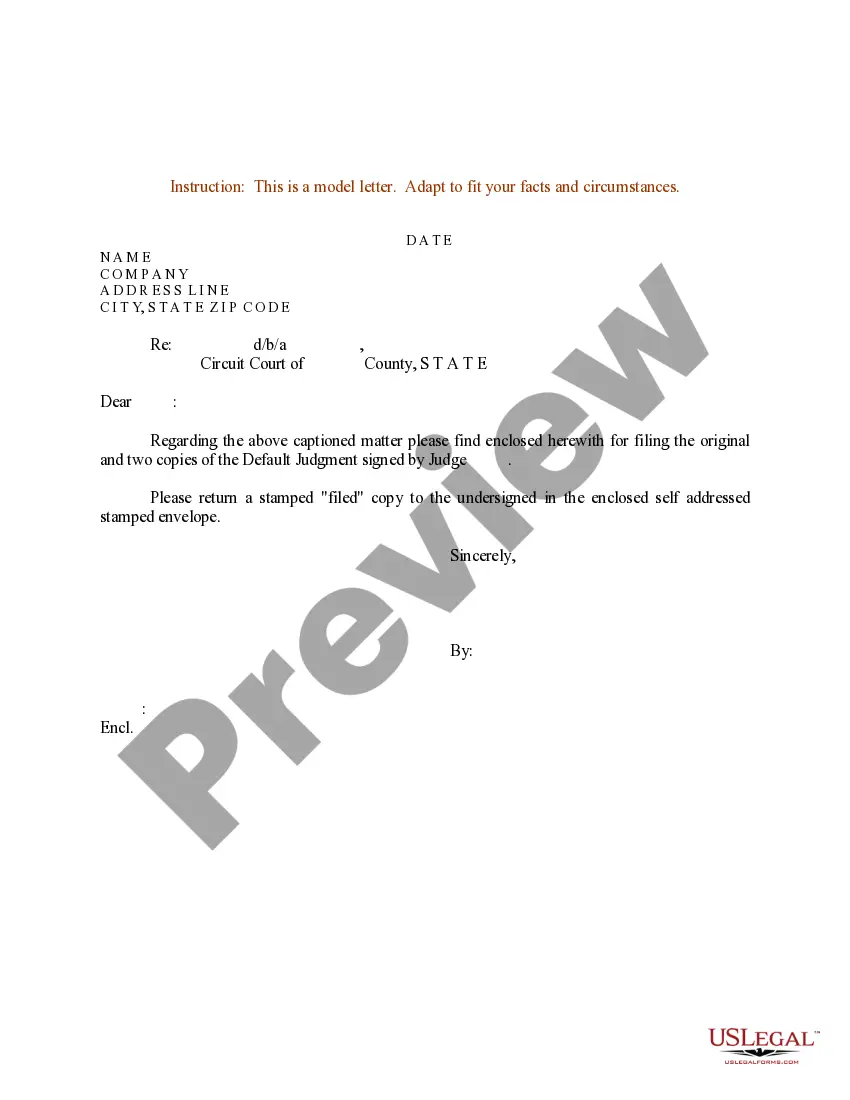
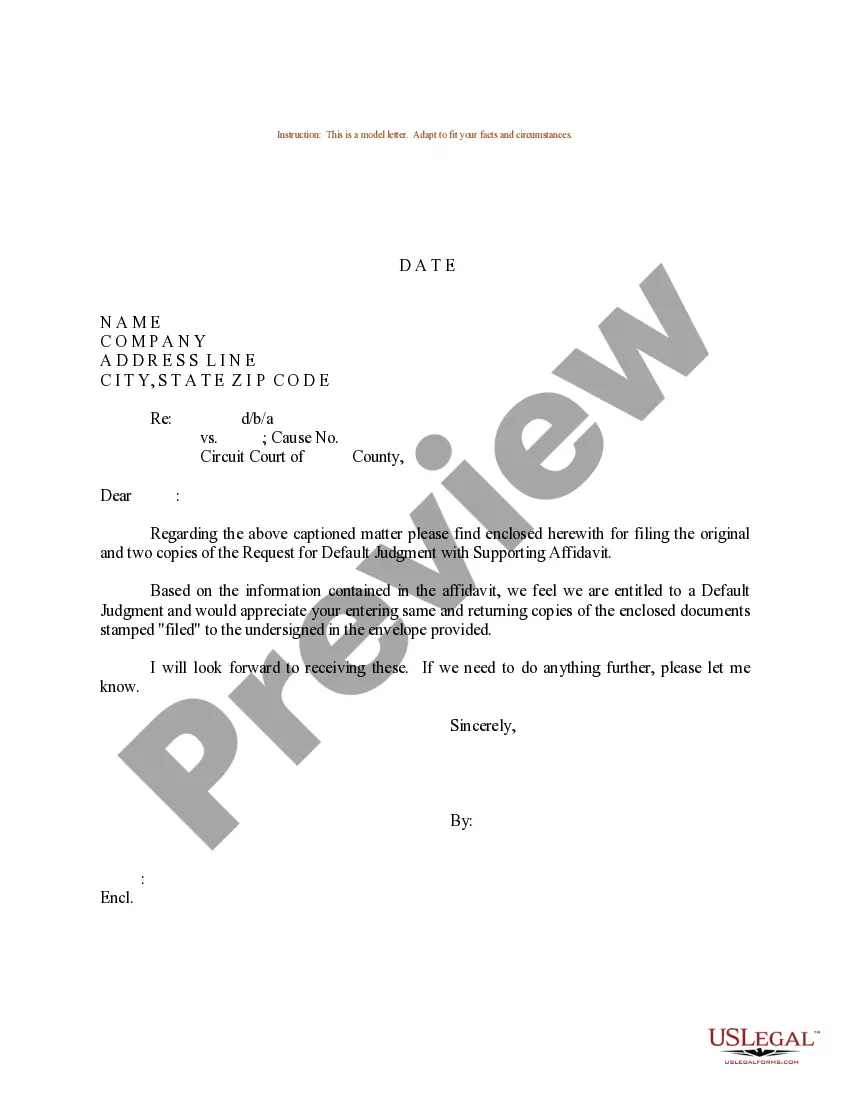
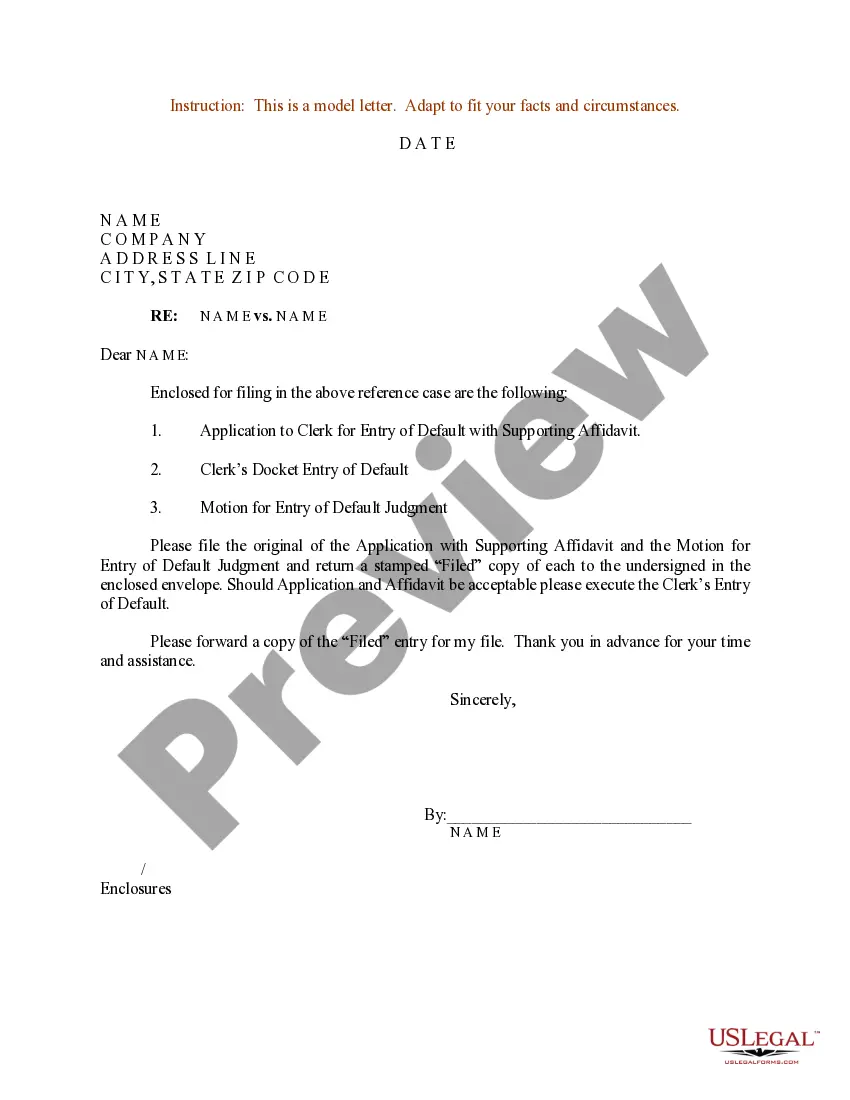
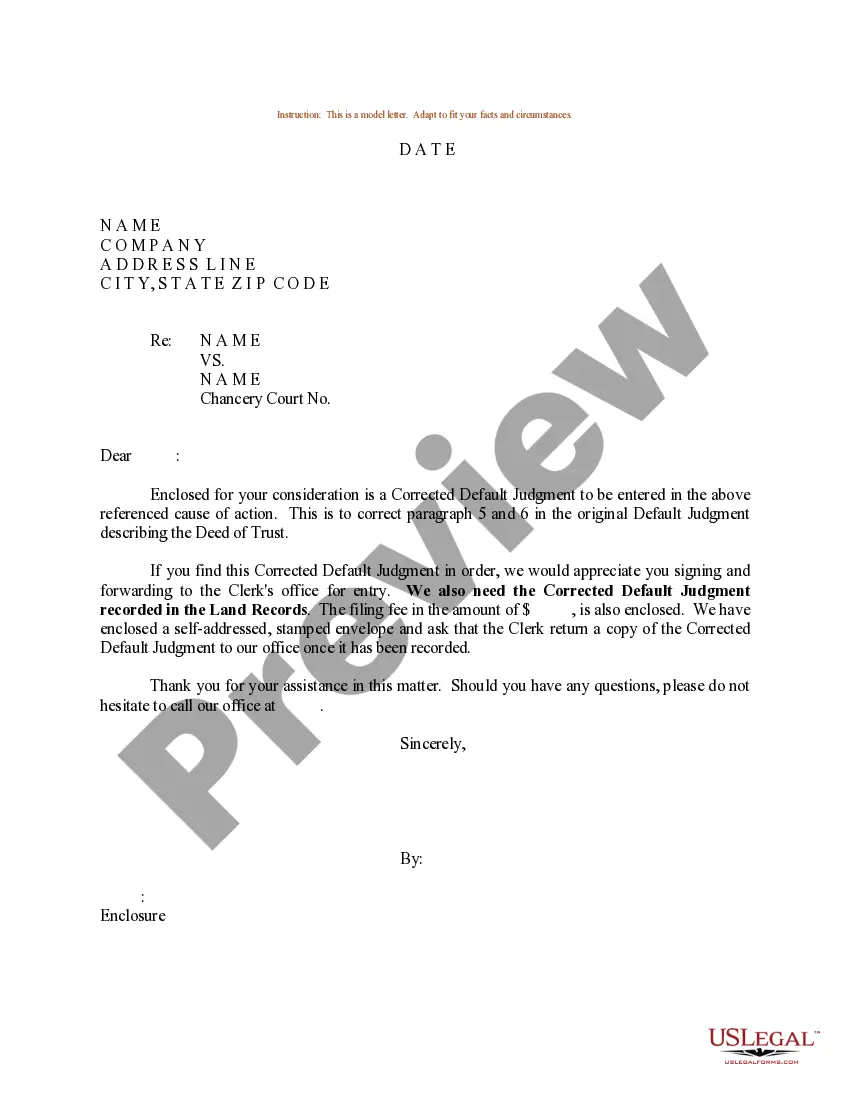
Iowa Sample Letter to Judge submitting Default Judgment
Description

Get your form ready online
Our built-in tools help you complete, sign, share, and store your documents in one place.
Make edits, fill in missing information, and update formatting in US Legal Forms—just like you would in MS Word.
Download a copy, print it, send it by email, or mail it via USPS—whatever works best for your next step.
Sign and collect signatures with our SignNow integration. Send to multiple recipients, set reminders, and more. Go Premium to unlock E-Sign.
If this form requires notarization, complete it online through a secure video call—no need to meet a notary in person or wait for an appointment.
We protect your documents and personal data by following strict security and privacy standards.

Make edits, fill in missing information, and update formatting in US Legal Forms—just like you would in MS Word.

Download a copy, print it, send it by email, or mail it via USPS—whatever works best for your next step.

Sign and collect signatures with our SignNow integration. Send to multiple recipients, set reminders, and more. Go Premium to unlock E-Sign.

If this form requires notarization, complete it online through a secure video call—no need to meet a notary in person or wait for an appointment.

We protect your documents and personal data by following strict security and privacy standards.
Looking for another form?


How to fill out Sample Letter To Judge Submitting Default Judgment?
Locating the appropriate legal document template can be a challenge. Naturally, there are numerous templates accessible online, but how can you identify the legal form you need? Utilize the US Legal Forms website. This service offers a vast array of templates, including the Iowa Sample Letter to Judge submitting Default Judgment, which you can employ for both business and personal purposes. All templates are reviewed by professionals and comply with state and federal standards.
If you are already registered, Log In to your account and click on the Download button to retrieve the Iowa Sample Letter to Judge submitting Default Judgment. Use your account to search for the legal documents you have previously obtained. Navigate to the My documents section of your account and acquire another copy of the document you need.
If you are a new user of US Legal Forms, here are simple steps you should follow: First, ensure that you have selected the correct form for your city/state. You can browse the document using the Review button and read the document description to confirm it is suitable for you. If the form does not meet your requirements, use the Search box to find the appropriate form. Once you are confident the form is suitable, click the Buy now button to obtain the document. Choose the pricing plan you prefer and input the necessary information. Create your account and pay for the order using your PayPal account or credit card. Select the file format and download the legal document template to your device. Complete, modify, print, and sign the acquired Iowa Sample Letter to Judge submitting Default Judgment.
Take advantage of the comprehensive resources provided by US Legal Forms to simplify your legal documentation process.
- US Legal Forms is the largest collection of legal templates available, providing various document formats.
- Leverage the service to obtain professionally crafted documents that conform to state regulations.
- Ensure you are following the correct steps to find and download the necessary legal forms.
- Utilize the search and review features effectively to locate the right documents.
- Keep your account updated to easily access previously downloaded documents.
Form popularity
FAQ
A Praecipe is a legal document that tells the clerk of court to begin the legal process of collecting (executing on) a judgment that the defendant is not paying. The praceipe directs the clerk of court to issue an execution directed to the sheriff of the county where the asset or property is located.
If you never knew you were being sued, and motion for default judgment is filed against you, you should respond with a Motion to Vacate Judgment, also known as a Motion to Set Aside Judgment.
1.972(2) Application. . . . No default shall be entered unless the application contains a certification that written notice of intention to file the written application for default was given after the default occurred and at least ten days prior to the filing of the written application for default.
Typically, the default process begins when the defendant has not responded to a properly served summons and complaint. When this happens, a defendant is ?in default,? and the plaintiff can take the first step to obtain an entry of default against the defendant. (See Cal. Rules of Court, rule 3.110.)
If the plaintiff fails to appear, but the defendant appears, the claim will be dismissed with prejudice, meaning the plaintiff may not refile the same claim. If the plaintiff appears, but the defendant does not, the court will enter a default judgment against the defendant.
The court must set aside a default judgment if you: have paid the whole amount owed (including any interest and costs) before the date the creditor entered judgment; sent back the acknowledgment of service form within the time limit; put in a defence within the time limit; or.
A Motion to Set Aside Default or Judgment is used to ask the court to set aside or "undo" a default or judgment or final order in a case, and to allow the case to move ahead as if the default or judgment had not been made.
Application to set aside ex-parte decree: It can be entertained on the two grounds: Where summon was not served. Defendant was prevented from appearing without sufficient cause.