Iowa Statement of Interest
Description
Get your form ready online
Our built-in tools help you complete, sign, share, and store your documents in one place.
Make edits, fill in missing information, and update formatting in US Legal Forms—just like you would in MS Word.
Download a copy, print it, send it by email, or mail it via USPS—whatever works best for your next step.
Sign and collect signatures with our SignNow integration. Send to multiple recipients, set reminders, and more. Go Premium to unlock E-Sign.
If this form requires notarization, complete it online through a secure video call—no need to meet a notary in person or wait for an appointment.
We protect your documents and personal data by following strict security and privacy standards.
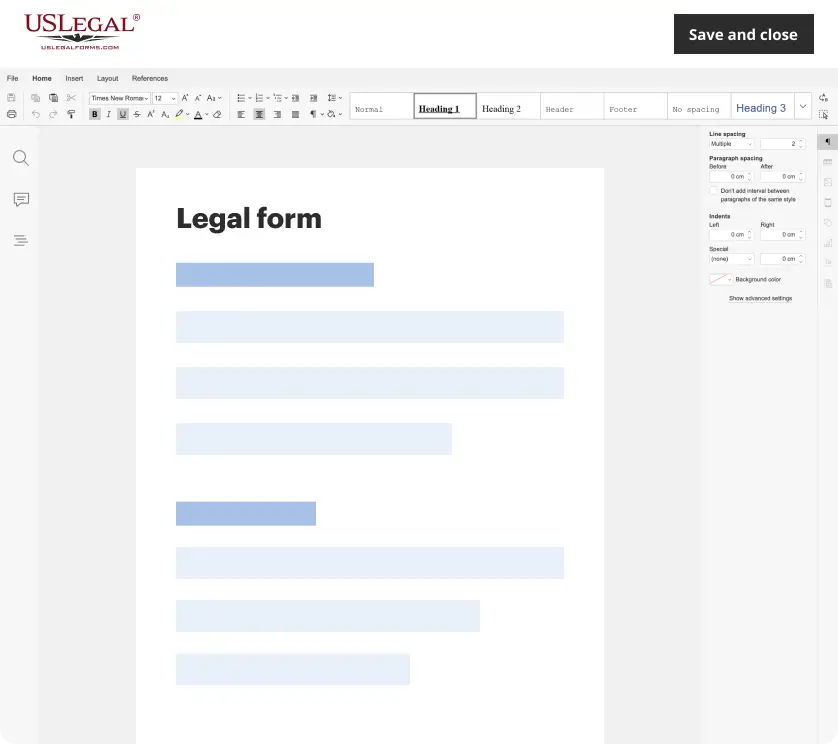
Make edits, fill in missing information, and update formatting in US Legal Forms—just like you would in MS Word.
Download a copy, print it, send it by email, or mail it via USPS—whatever works best for your next step.
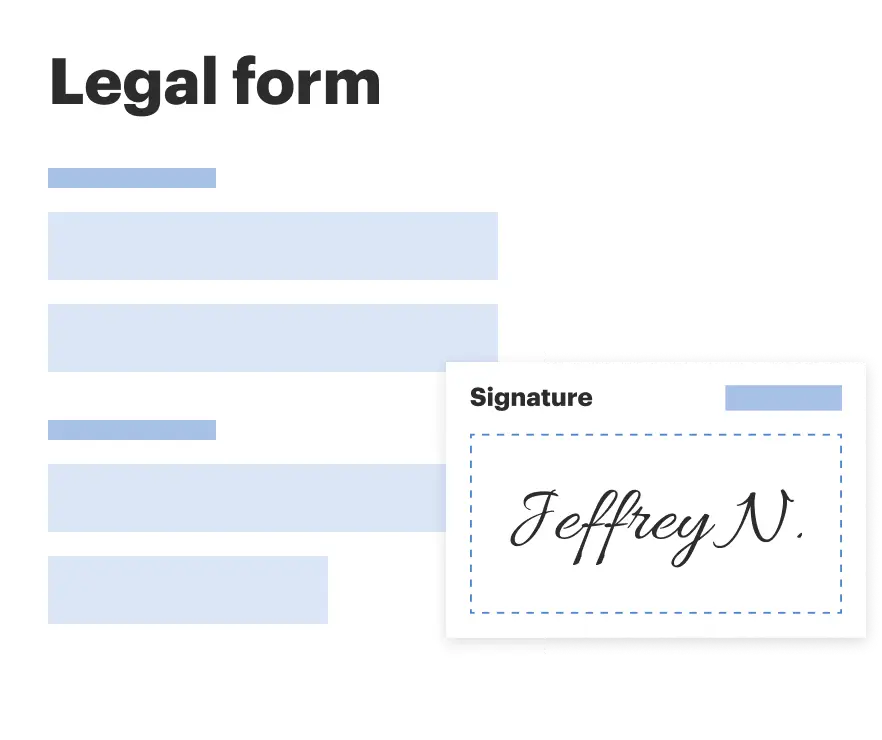
Sign and collect signatures with our SignNow integration. Send to multiple recipients, set reminders, and more. Go Premium to unlock E-Sign.

If this form requires notarization, complete it online through a secure video call—no need to meet a notary in person or wait for an appointment.
We protect your documents and personal data by following strict security and privacy standards.
Looking for another form?

How to fill out Iowa Statement Of Interest?
Obtain one of the most extensive collections of authorized documents. US Legal Forms is actually a site where you can discover any state-specific paperwork in just a few clicks, like Iowa Statement of Interest examples.
No need to waste your valuable time searching for a court-recognized form. Our qualified experts guarantee that you receive current samples every time.
To take advantage of the document library, select a subscription and create your account. If you've already registered, simply Log In and click on the Download button. The Iowa Statement of Interest template will be promptly saved in the My documents section (a section for all documents you save on US Legal Forms).
That's it! You need to submit the Iowa Statement of Interest template and review it. To ensure that everything is correct, consult your local legal advisor for assistance. Sign up and simply browse through approximately 85,000 helpful templates.
- If you plan to use a state-specific example, make sure to specify the correct state.
- If possible, check the description to understand all the details of the document.
- Use the Preview option if it’s available to find out the document's details.
- If everything is correct, click on the Buy Now button.
- After selecting a pricing plan, create your account.
- Pay using a credit card or PayPal.
- Download the template to your device by clicking on the Download button.
Form popularity
FAQ
A Statement of Interest is a crucial part of most graduate school applications. It may also be called a "statement of intent", "description of research interests" or something similar. Basically it is your opportunity to tell the graduate program:What you hope to achieve in the graduate program.
Part 1: Introduce yourself, your interests and motivations. Part 2: Summarize your undergraduate and previous graduate career. Part 3: Discuss the relevance of your recent and current activities. Part 4: Elaborate on your academic interests.
Customize. This first tip is the most important. Show Your Qualifications. Explain why you are qualified for this PhD program. Explain Your Interests. Your research interests should be a major part of your statement of purpose. Show Them You Belong. Be Concise. Don't Tell Your Life Story. Ask For Feedback. Proofread.
Generally, personal statements are short. Most schools require approximately 1-2 pages, but you should take extra care of the instructions you get from the particular Law school, Medical school, MBA program, or college. Don't view 'soft' guidelines as a free-for-all.
Part 1: Introduce yourself, your interests and motivations. Part 2: Summarize your undergraduate and previous graduate career. Part 3: Discuss the relevance of your recent and current activities. Part 4: Elaborate on your academic interests.
Ideally, a Statement of Purpose should have about 5-7 paragraphs of about 150 to 250 words each. Given below is a simple SOP template with a paragraph-wise explanation on SOP Format.
Should you put your name on your Statement of Purpose? In a traditional SOP, you do not need to write your name or course details anywhere in the document. The SOP is a part of your application/student profile, thus, it will have your name and course details by default.
Remember that a statement of purpose should be between 500 and 1,000 words. If you've written far more than this, read through your statement again and edit for clarity and conciseness. Less is often more; articulate your main points strongly and get rid of any clutter.