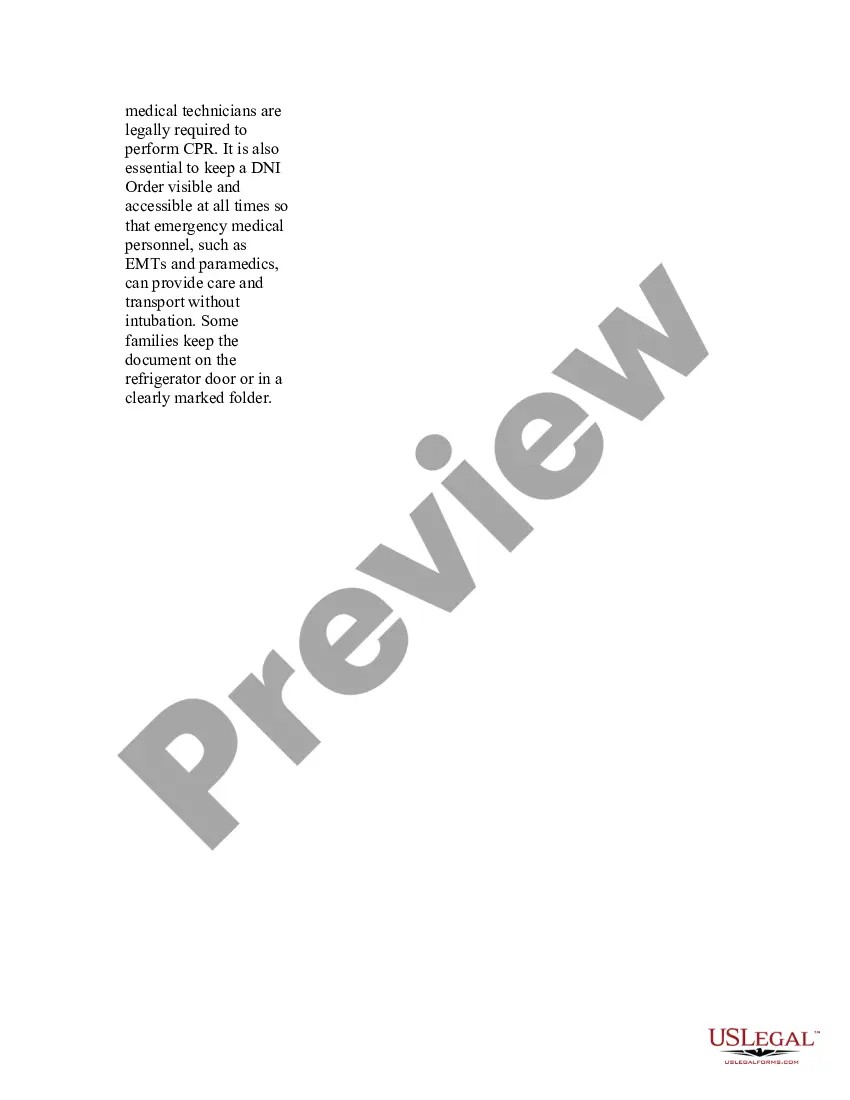
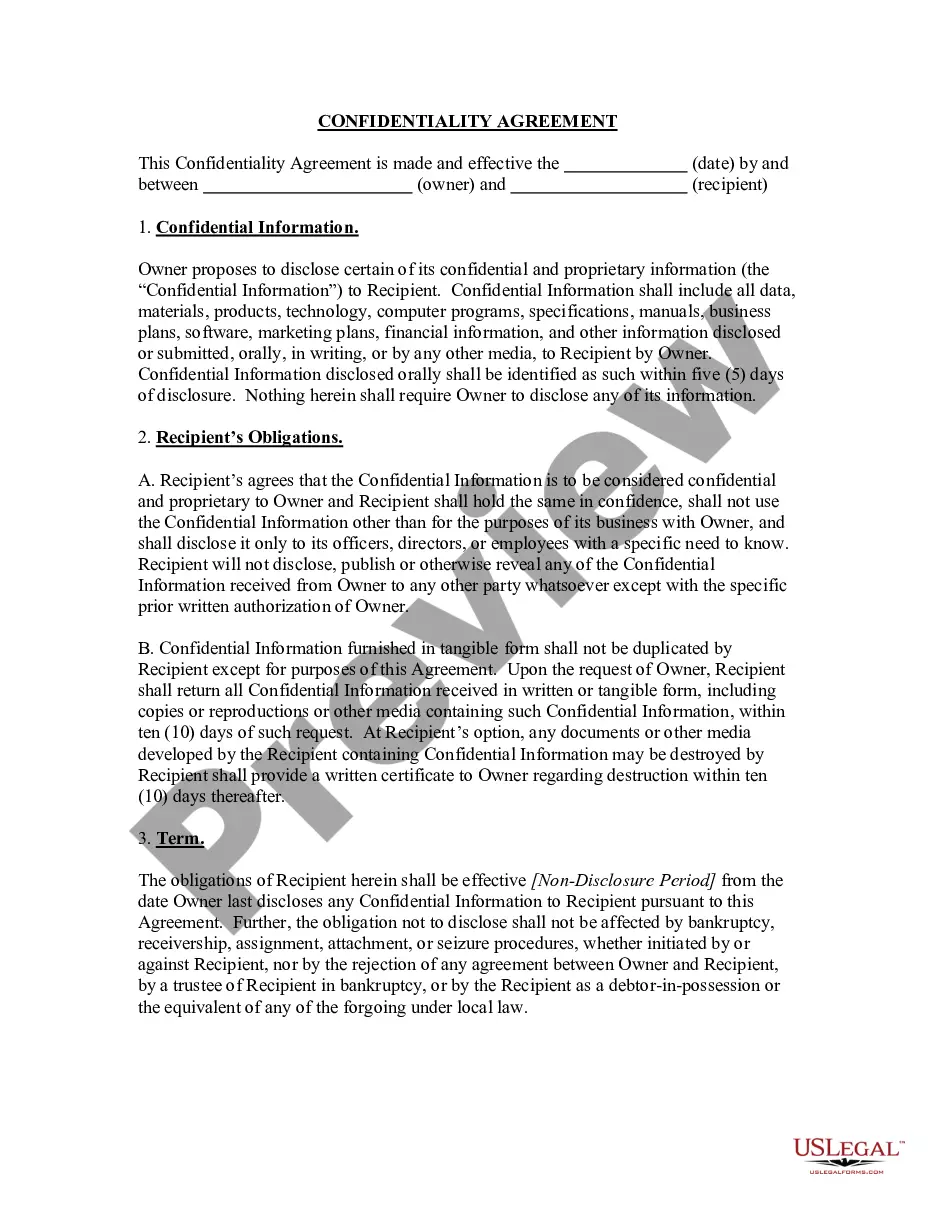
This pamphlet provides an overview on Do Not Resuscitate (DNI) orders. A comparison of DNI and DNR orders is included.
Hawaii USLegal Pamphlet on Do Not Intubate - DNI
Category:
State:
Multi-State
Control #:
US-PMPH-05
Format:
Word;
Rich Text
Instant download
Description
Free preview
How to fill out USLegal Pamphlet On Do Not Intubate - DNI?
Locating the correct valid document template can be challenging.
Clearly, there are numerous templates available online, but how do you find the valid form you require.
Utilize the US Legal Forms website. The platform offers thousands of templates, including the Hawaii USLegal Pamphlet on Do Not Intubate - DNI, that you can use for business and personal purposes. All the forms are reviewed by experts and comply with federal and state regulations.
If the form does not meet your needs, use the Search field to find the appropriate form. Once you are confident that the form is suitable, click the Get now button to acquire the form. Choose the pricing plan you want and enter the required information. Create your account and complete the order using your PayPal account or credit card. Select the document format and download the valid document template to your device. Complete, edit, print, and sign the obtained Hawaii USLegal Pamphlet on Do Not Intubate - DNI. US Legal Forms is the largest repository of valid forms where you will find a variety of document templates. Utilize the service to obtain professionally crafted documents that comply with state regulations.
- If you are already registered, Log In to your account and click the Download button to access the Hawaii USLegal Pamphlet on Do Not Intubate - DNI.
- Use your account to view the valid forms you have previously ordered.
- Navigate to the My documents section of your account and download another copy of the document you require.
- If you are a new user of US Legal Forms, here are straightforward instructions for you to follow.
- First, ensure you have selected the correct form for your city/region.
- You can browse the form using the Review button and read the form description to confirm it is the right one for you.
Form popularity
FAQ
To remove a Do Not Resuscitate (DNR) order, you must create a new document that explicitly states your wish to revoke the previous DNR. Use resources like the Hawaii USLegal Pamphlet on Do Not Intubate - DNI for guidance on the process. Make sure to inform your healthcare team and provide them with copies of the new document to update your medical records.
To document your DNR status, fill out a DNR order form, such as the Hawaii USLegal Pamphlet on Do Not Intubate - DNI. It is important to have this form signed by a physician to validate your wishes. Once completed, share copies with your healthcare providers, ensuring they are aware of your preferences.
When explaining a Do Not Resuscitate (DNR) or Do Not Intubate (DNI) order, clarify that these orders inform medical personnel of a patient's wishes regarding resuscitation and intubation efforts. Use the Hawaii USLegal Pamphlet on Do Not Intubate - DNI as a resource to provide comprehensive information. It helps caregivers understand the patient's preferences during critical situations.
Documenting a Do Not Resuscitate (DNR) or Do Not Intubate (DNI) order involves filling out the appropriate form, like the Hawaii USLegal Pamphlet on Do Not Intubate - DNI. Make sure to provide accurate information and signatures from your healthcare provider. After completing the form, keep copies for your records and distribute them to your healthcare team.
To put a Do Not Resuscitate (DNR) order on medical records, you need to obtain a DNR form, such as the Hawaii USLegal Pamphlet on Do Not Intubate - DNI. Complete the form with all necessary details and have it signed by your healthcare provider. Once signed, submit the form to your healthcare facility to ensure it becomes part of your medical records.
When you request a Do Not Resuscitate (DNR) order, your doctor may ask you whether or not you also want a Do Not Intubate (DNI) order. The two are separate because you can have trouble breathing before your heartbeat or breathing stops. If your breathing problems continue, your heart or lungs may go into full arrest.
Strictly defined, a do not resuscitate/do not intubate (DNR/DNI) status indicates a patient does not want to receive CPR or intubation in the event of cardiopulmonary arrest.
A DNI or Do Not Intubate order means that chest compressions and cardiac drugs may be used, but no breathing tube will be placed. An AND or Allow Natural Death order is a term used at some hospitals as an alternative to the more traditional DNR order.
It is an emergency rescue technique that was developed to save the life of people who are generally in good health. NOTE: If you do not have a DNR orders, health care providers will begin CPR in an emergency.
A natural reaction to medicine's use of CPR and MV was the advent of advance directives and more specific Do-Not-Resuscitate (DNR) and Do-Not-Intubate (DNI) orders meant to protect a patient's ability to remain autonomous with their end of life decisions. 1.