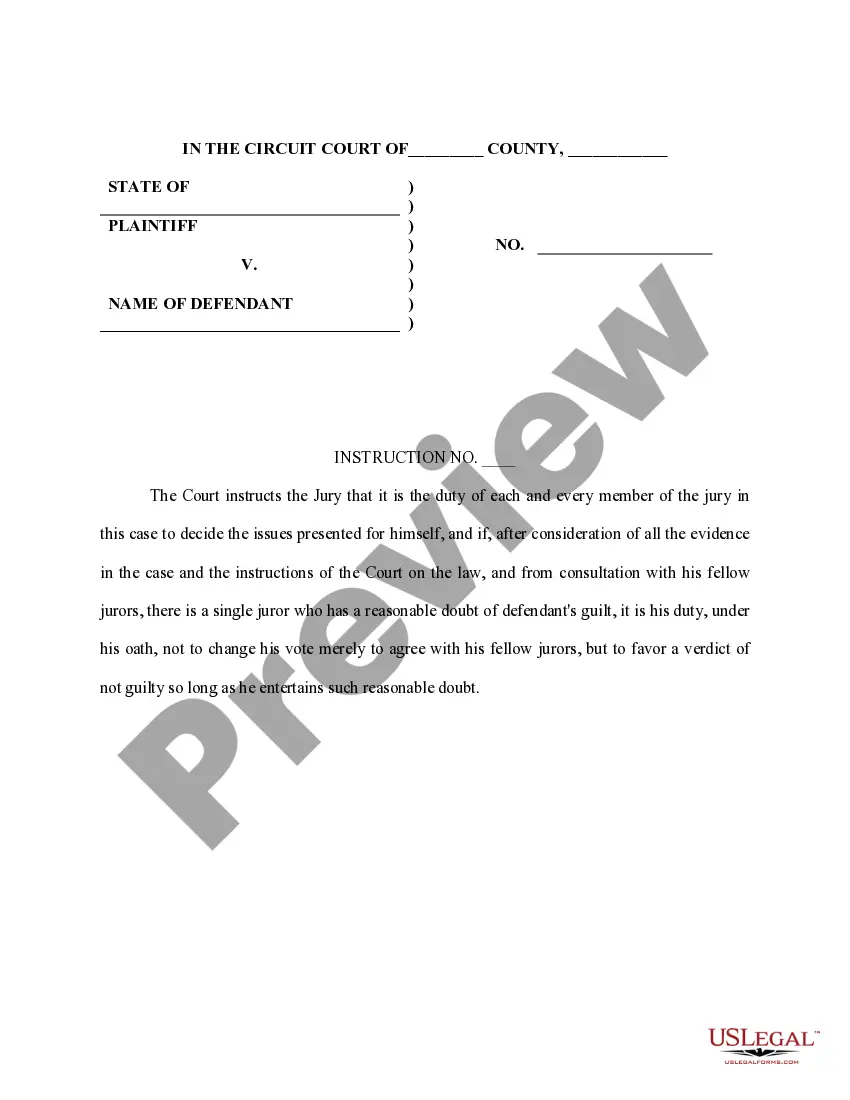
Hawaii Reasonable Doubt by Single Juror
Description
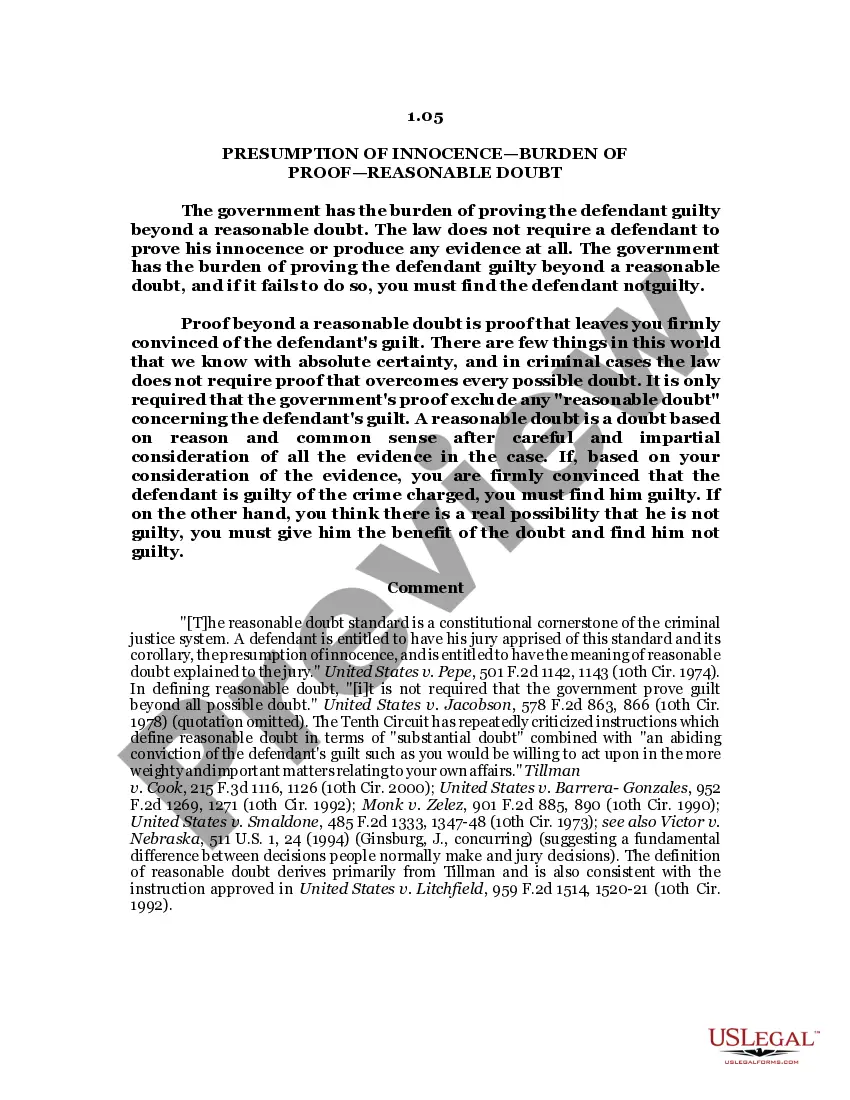
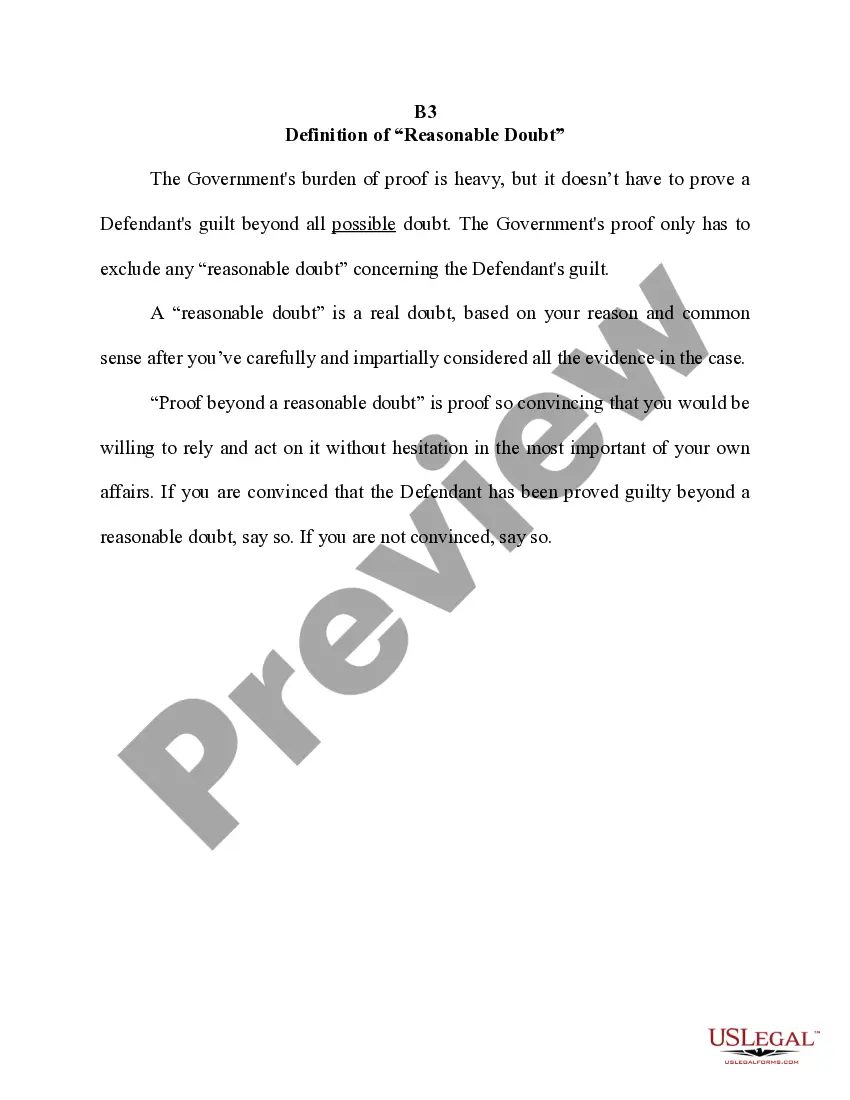
Get your form ready online
Our built-in tools help you complete, sign, share, and store your documents in one place.
Make edits, fill in missing information, and update formatting in US Legal Forms—just like you would in MS Word.
Download a copy, print it, send it by email, or mail it via USPS—whatever works best for your next step.
Sign and collect signatures with our SignNow integration. Send to multiple recipients, set reminders, and more. Go Premium to unlock E-Sign.
If this form requires notarization, complete it online through a secure video call—no need to meet a notary in person or wait for an appointment.
We protect your documents and personal data by following strict security and privacy standards.

Make edits, fill in missing information, and update formatting in US Legal Forms—just like you would in MS Word.

Download a copy, print it, send it by email, or mail it via USPS—whatever works best for your next step.

Sign and collect signatures with our SignNow integration. Send to multiple recipients, set reminders, and more. Go Premium to unlock E-Sign.

If this form requires notarization, complete it online through a secure video call—no need to meet a notary in person or wait for an appointment.

We protect your documents and personal data by following strict security and privacy standards.
Looking for another form?




How to fill out Reasonable Doubt By Single Juror?
US Legal Forms - one of the largest collections of legal documents in the USA - offers a variety of legal document templates you can obtain or print. By utilizing the website, you will access numerous forms for business and personal purposes, organized by categories, states, or keywords.
You can retrieve the latest versions of forms such as the Hawaii Reasonable Doubt by Single Juror within minutes. If you already have an account, Log In and obtain Hawaii Reasonable Doubt by Single Juror from your US Legal Forms library. The Acquire button will appear on every form you view. You have access to all previously obtained forms in the My documents tab of your account.
If you want to use US Legal Forms for the first time, here are straightforward instructions to assist you in getting started: Ensure you have selected the correct form for your region/area. Click the Review button to examine the form’s content. Check the form summary to confirm you have chosen the appropriate form. If the form does not meet your needs, use the Search field at the top of the screen to find one that does. If you are satisfied with the form, confirm your choice by clicking the Get now button. Then, select the pricing plan you prefer and provide your details to register for an account. Process the transaction. Use your credit card or PayPal account to complete the transaction. Choose the format and download the form onto your device. Make adjustments. Complete, modify, print, and sign the acquired Hawaii Reasonable Doubt by Single Juror. Every template you add to your account has no expiration date and belongs to you forever. Therefore, if you wish to obtain or print another copy, simply visit the My documents section and click on the form you need.
- Gain access to the Hawaii Reasonable Doubt by Single Juror with US Legal Forms, one of the most extensive libraries of legal document templates.
- Utilize a multitude of professional and state-specific templates that fulfill your business or personal requirements and specifications.
Form popularity
FAQ
In criminal law the burden of proof lies completely with the Crown. There is no doubt that it is a heavy and onerous burden and completely favours the accused. The Crown has to prove beyond a reasonable doubt that the accused has committed a crime.
While it is hard to put a percentage to what beyond a reasonable doubt is (should it be 99% guilty or 99.9%), it is closer to absolute certainty and is a higher standard than believing an accused person is probably guilty or even likely guilty.
For example, you may be excused if you have caregiving responsibilities and there is no one who can take your place. You may also ask to be excused because of a disability or medical condition.
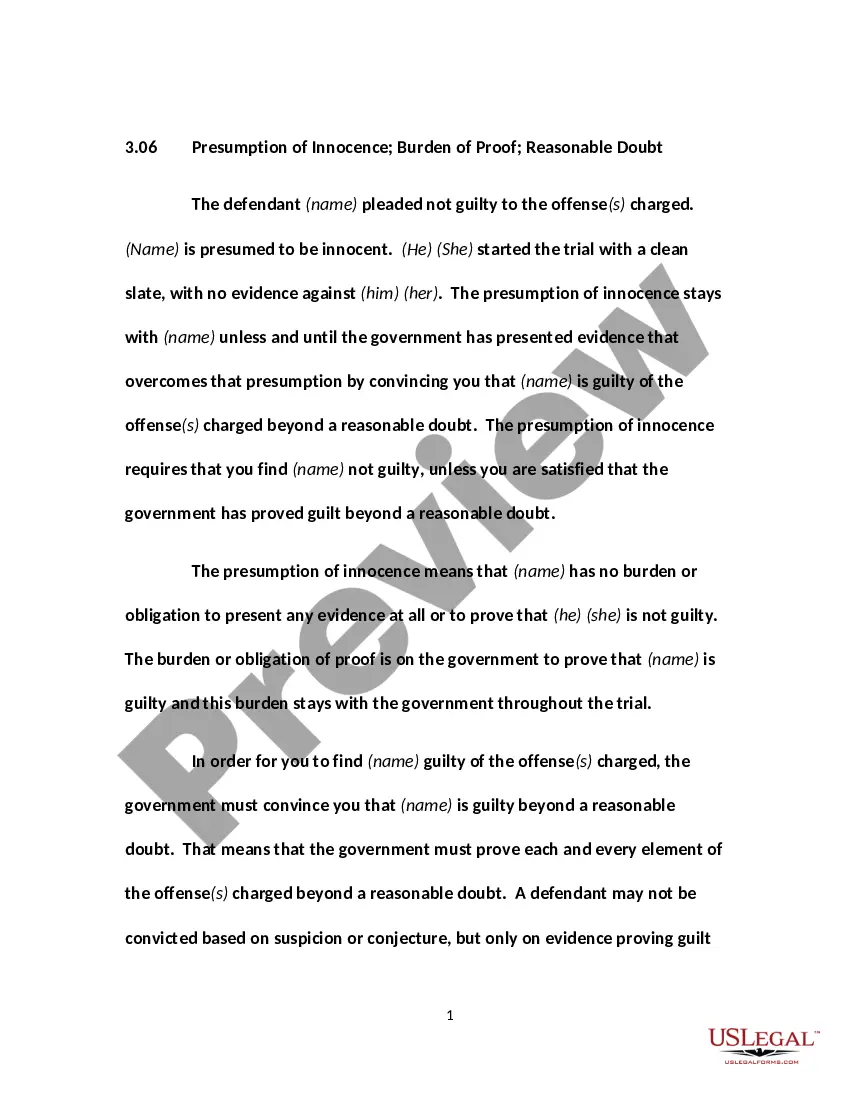
Reasonable doubt is insufficient evidence that prevents a judge or jury from convicting a defendant of a crime. If it cannot be proved without a doubt that a defendant in a criminal case is guilty, then that person should not be convicted.
If a juror feels that the definition of reasonable doubt implies that 80% certainty is required to convict, then 80% is the juror's perceived standard of reasonable doubt. In a given case, if the juror feels that it is 90% likely that the defendant committed the crime, then the juror's level of perceived guilt is 90%.
If a legal case or a person's guilt is proved beyond a reasonable doubt, there is enough proof for the person accused of a crime to be judged guilty: Her guilt was established beyond a reasonable doubt.
Reasonable doubt is legal terminology referring to insufficient evidence that prevents a judge or jury from convicting a defendant of a crime. It is the traditional standard of proof that must be exceeded to secure a guilty verdict in a criminal case in a court of law.
If even one member of the jury panel disagrees with the rest, the jury is hung, and the defendant retains the presumption of innocence. A ?hung jury? results in either: a mistrial (which means there may be a retrial with a new jury), a plea bargain to a reduced charge that carries a lesser sentence, or.