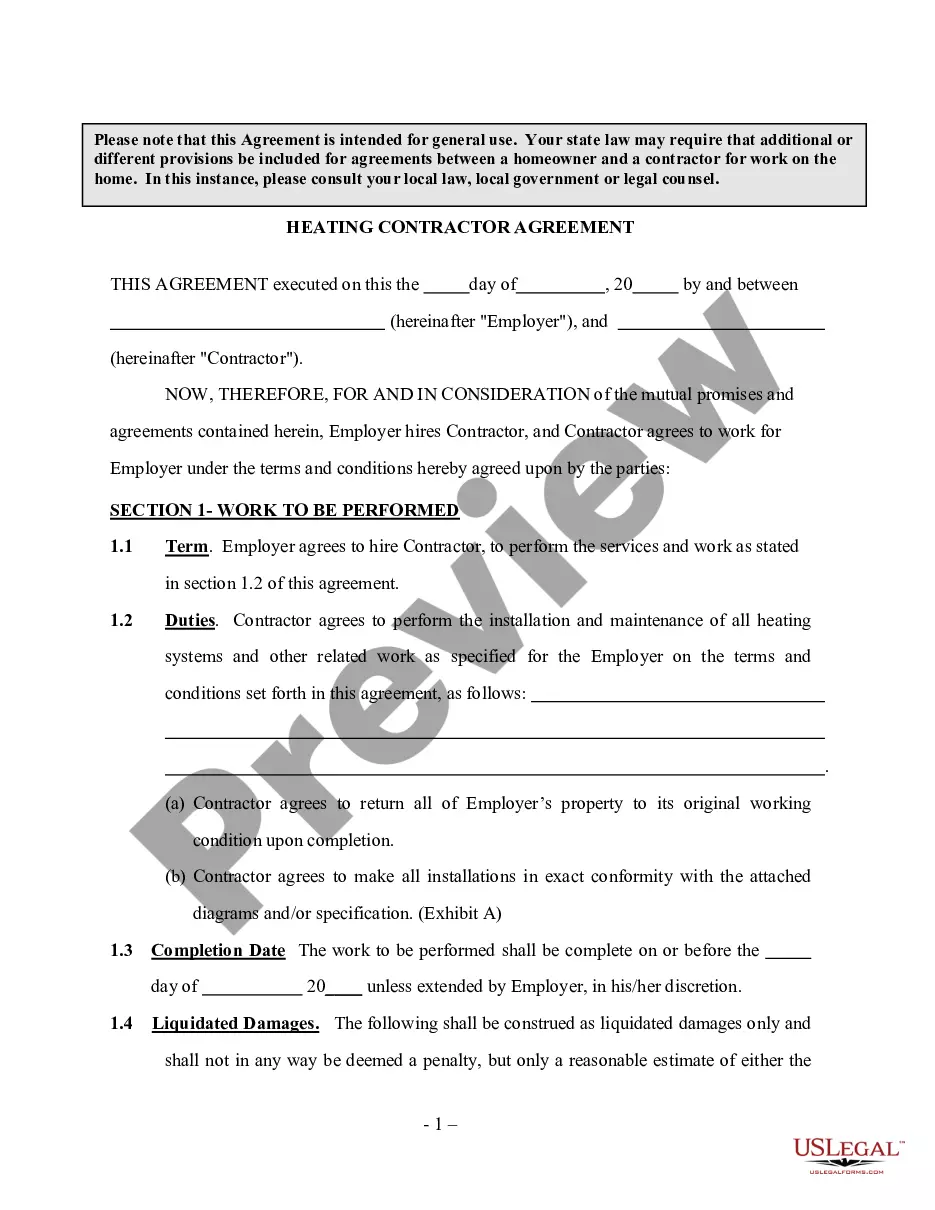
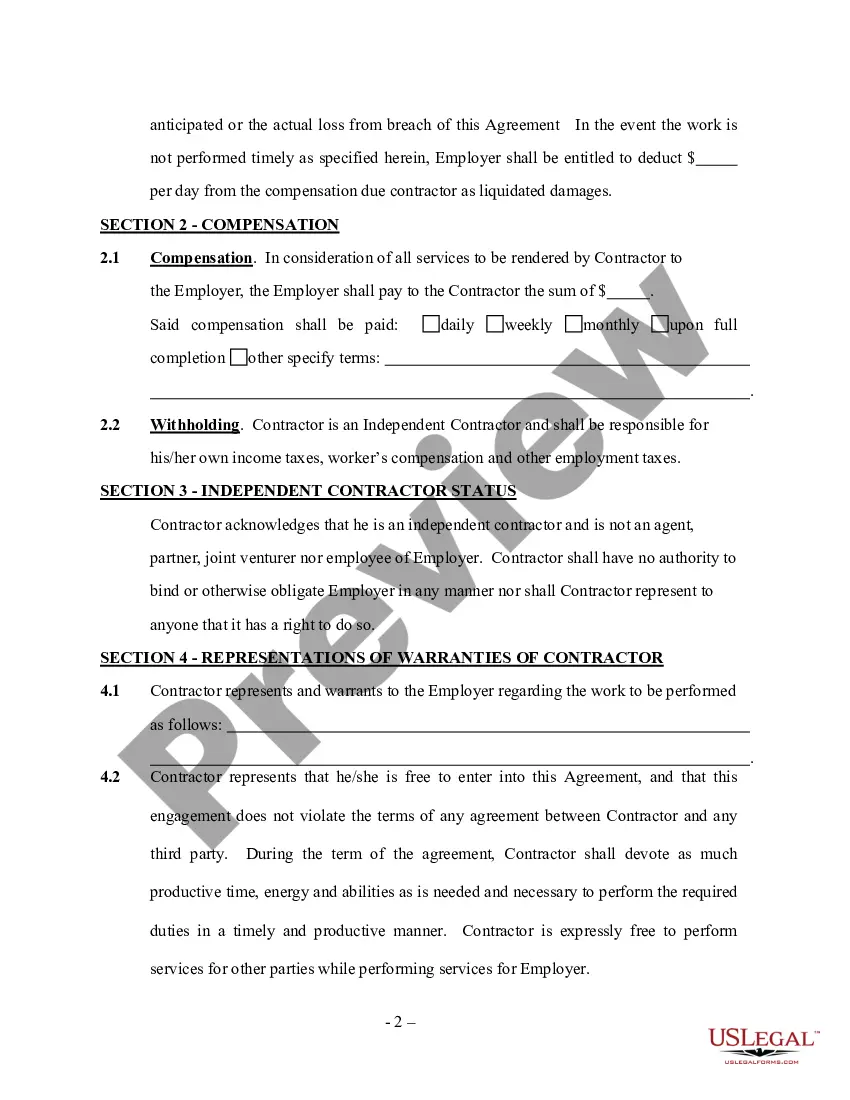
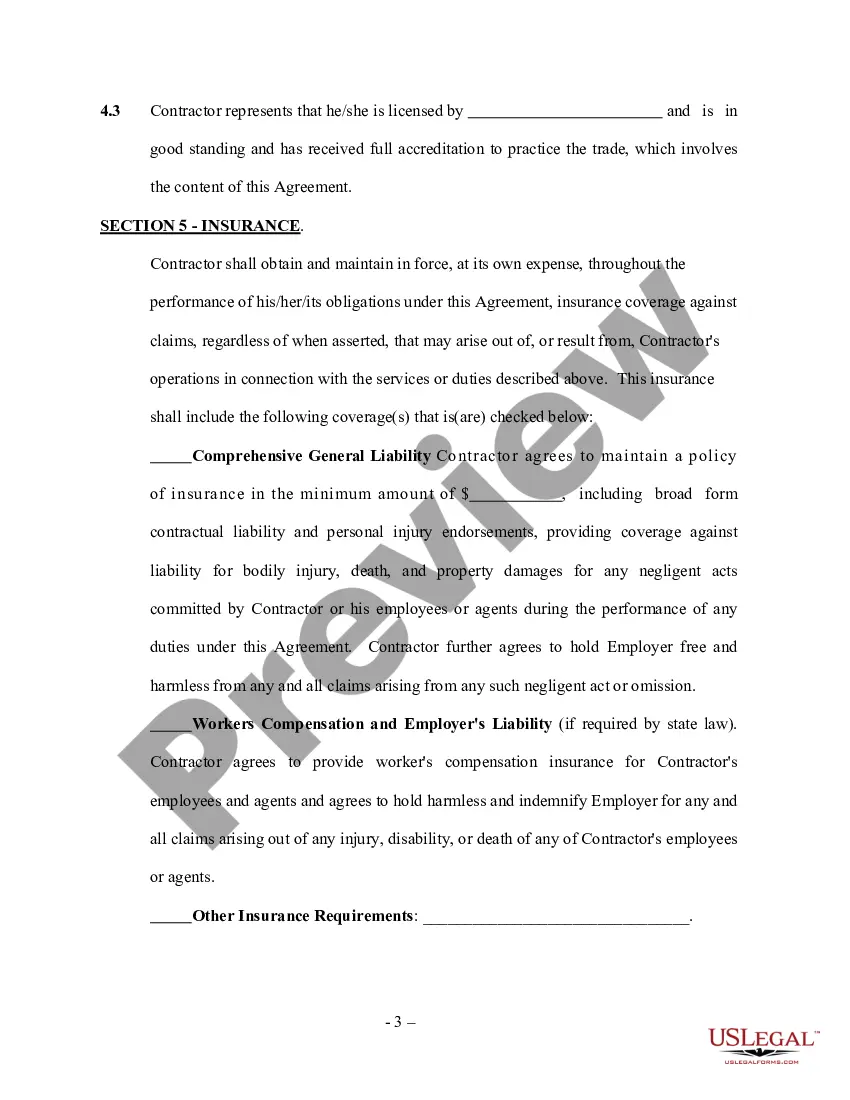
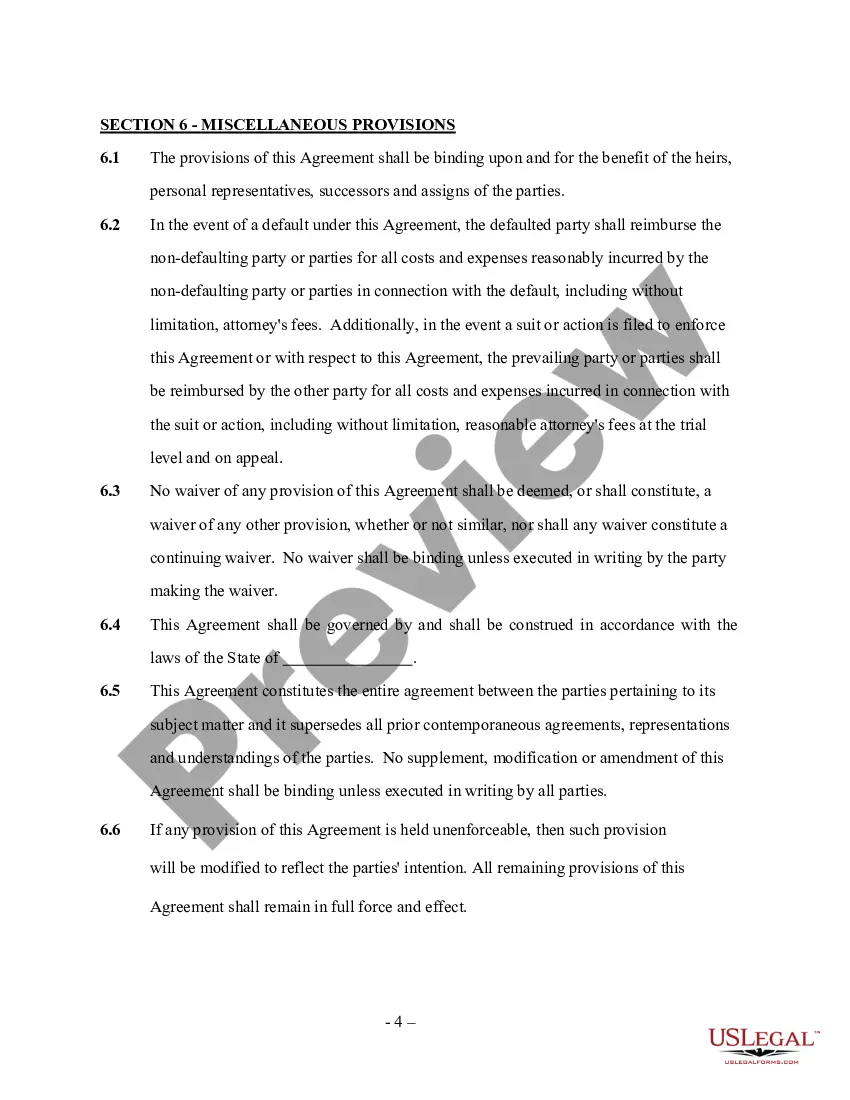
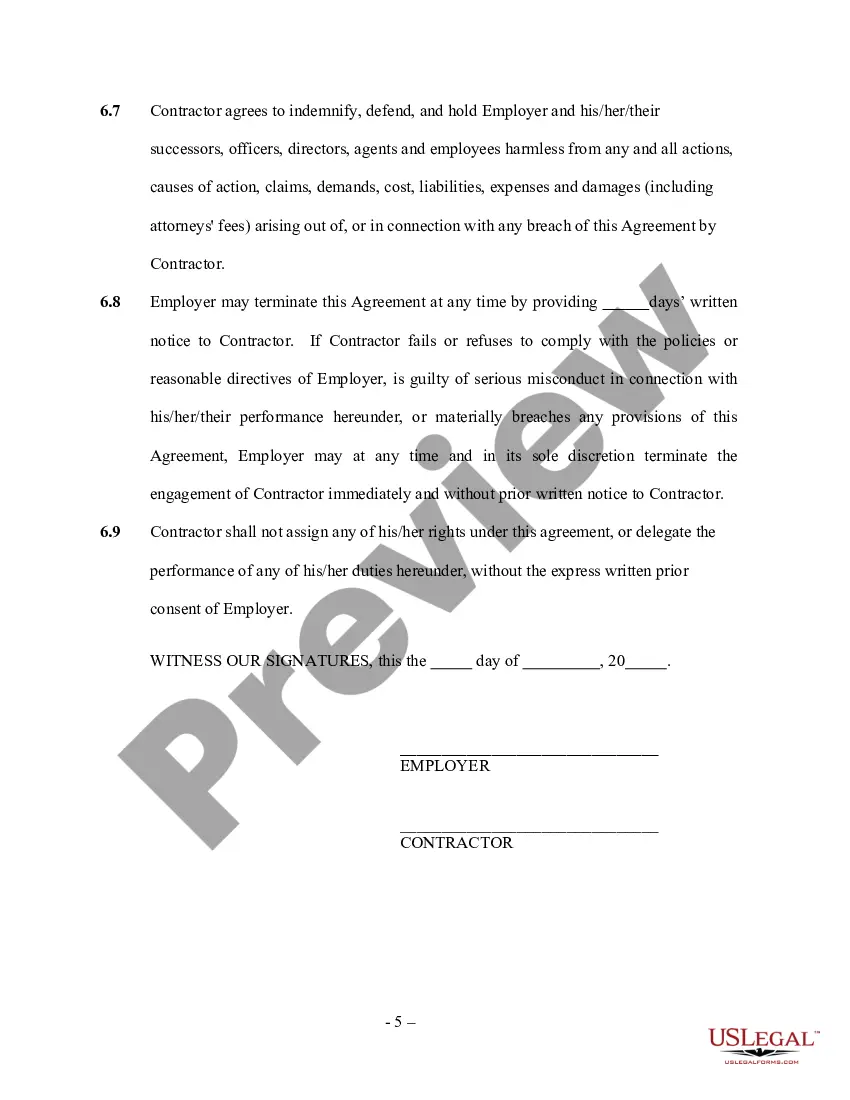
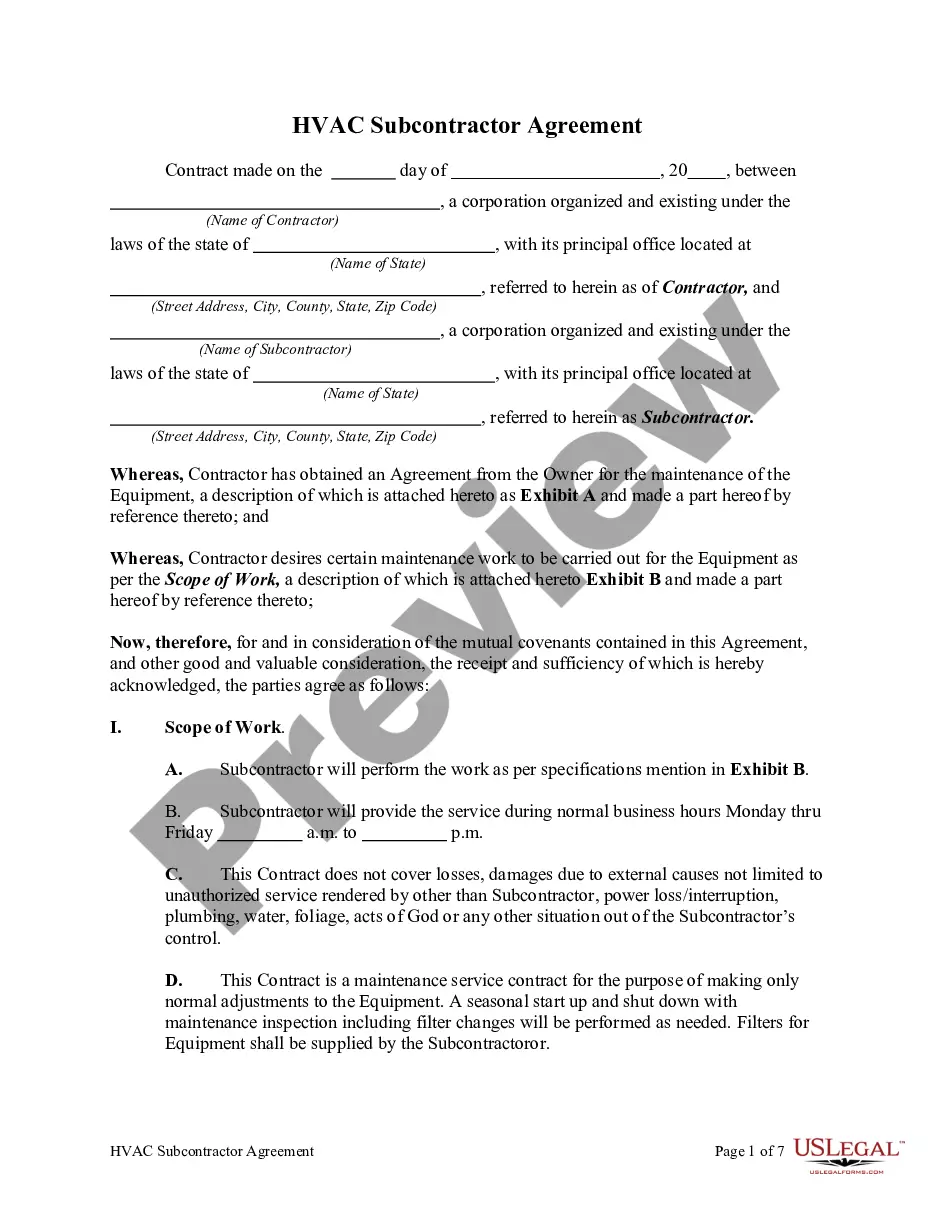
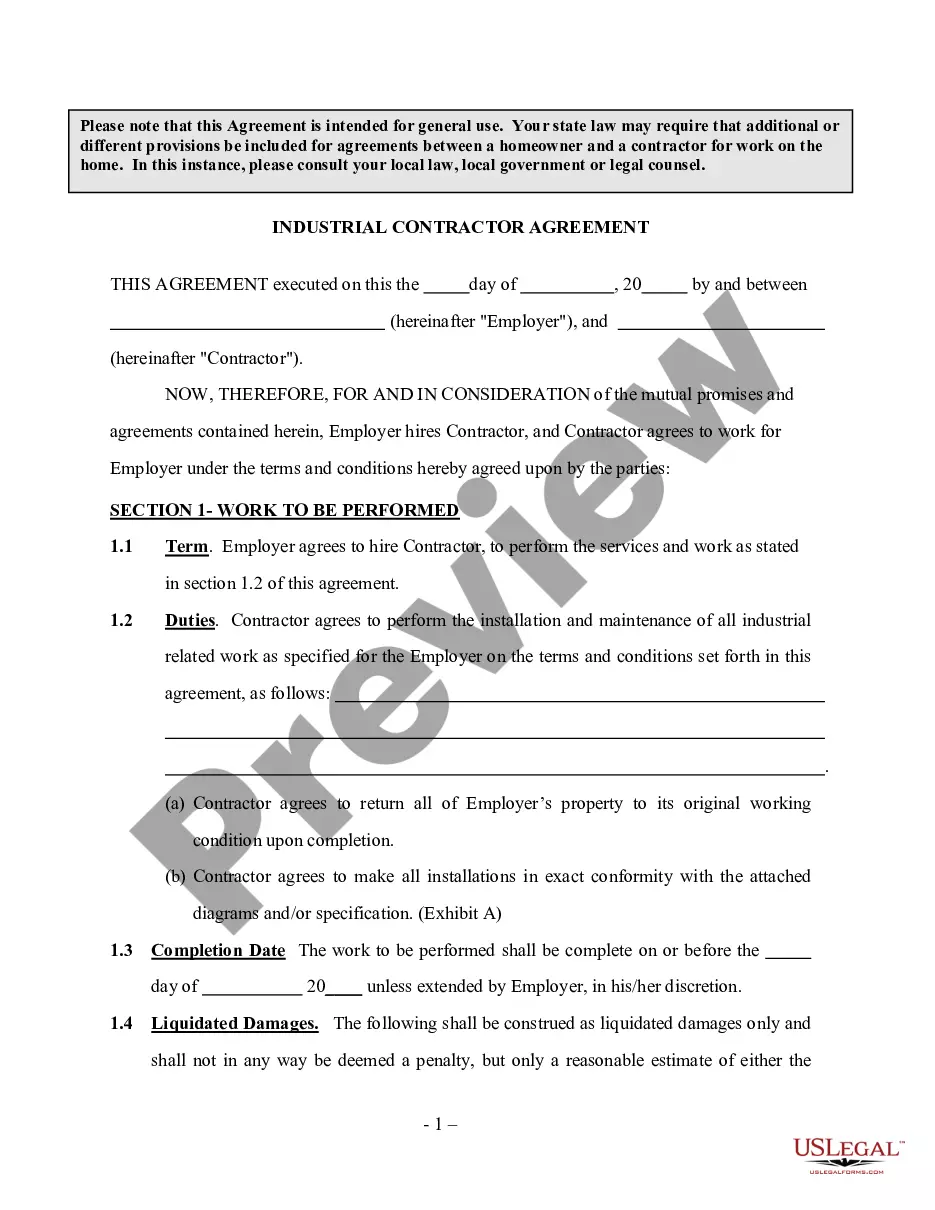
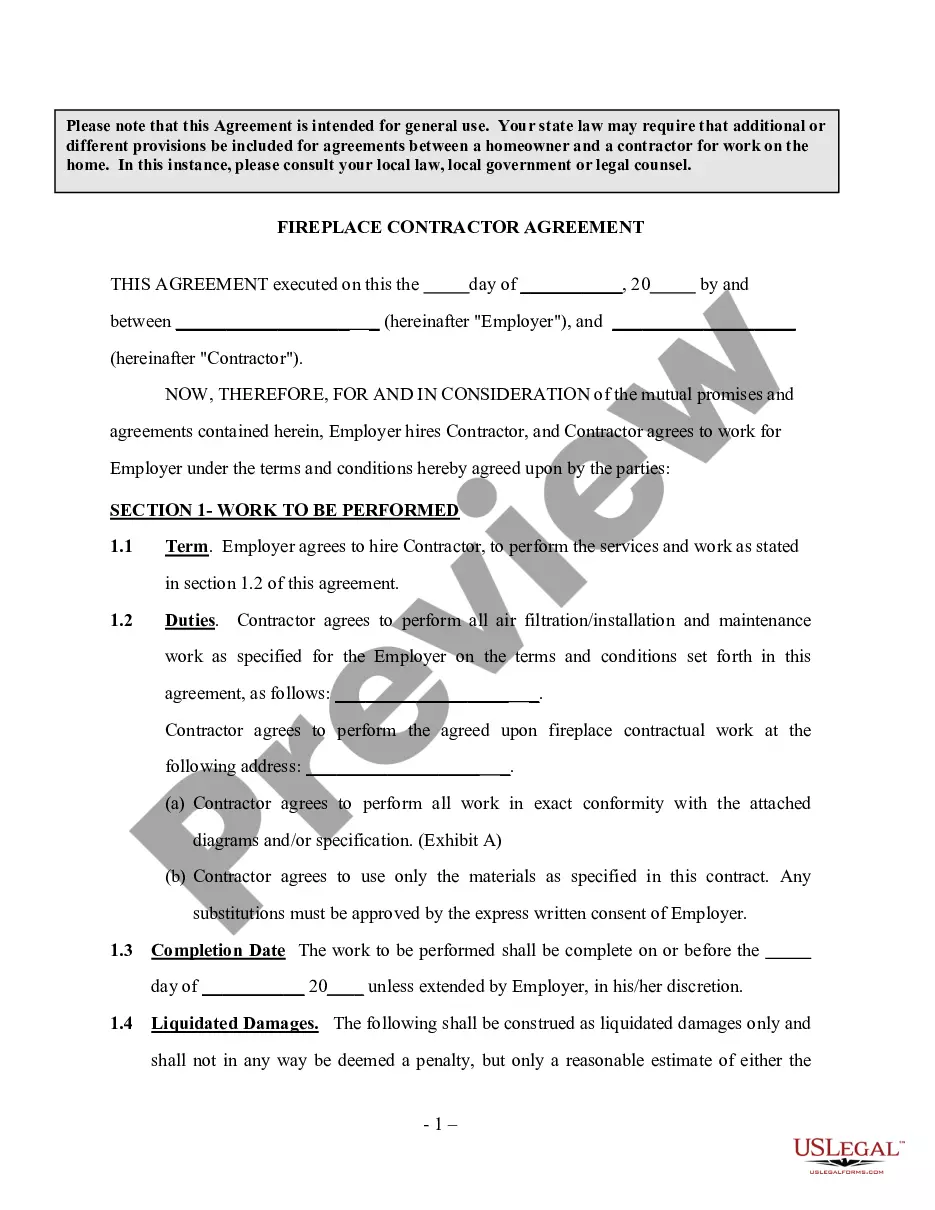
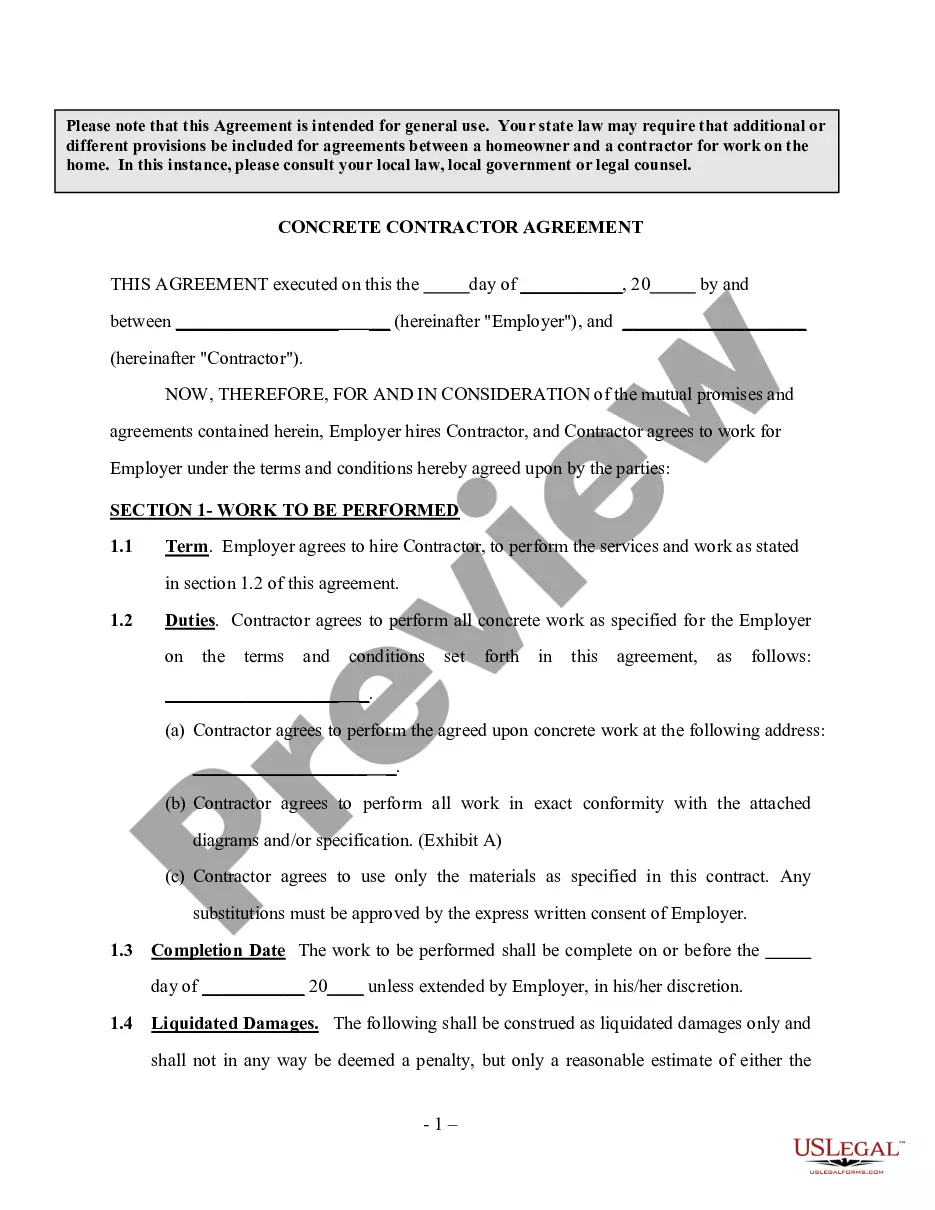
Employer contracts with an independent contractor to provide, install and service heating system as specified and agreed upon in the contract. Please note that this Agreement is intended for general use. Your state law may require that additional or different provisions be included for agreements between a homeowner and a contractor for work on the home. In this instance, please consult your local law, local government or legal counsel.
Guam Heating Contractor Agreement - Self-Employed
State:
Multi-State
Control #:
US-INDC-109
Format:
Word;
Rich Text
Instant download
Description
Free preview
Get your form ready online
Our built-in tools help you complete, sign, share, and store your documents in one place.
Built-in online Word editor
Make edits, fill in missing information, and update formatting in US Legal Forms—just like you would in MS Word.
Export easily
Download a copy, print it, send it by email, or mail it via USPS—whatever works best for your next step.
E-sign your document
Sign and collect signatures with our SignNow integration. Send to multiple recipients, set reminders, and more. Go Premium to unlock E-Sign.
Notarize online 24/7
If this form requires notarization, complete it online through a secure video call—no need to meet a notary in person or wait for an appointment.
Store your document securely
We protect your documents and personal data by following strict security and privacy standards.

Make edits, fill in missing information, and update formatting in US Legal Forms—just like you would in MS Word.

Download a copy, print it, send it by email, or mail it via USPS—whatever works best for your next step.

Sign and collect signatures with our SignNow integration. Send to multiple recipients, set reminders, and more. Go Premium to unlock E-Sign.

If this form requires notarization, complete it online through a secure video call—no need to meet a notary in person or wait for an appointment.

We protect your documents and personal data by following strict security and privacy standards.
Looking for another form?





How to fill out Heating Contractor Agreement - Self-Employed?
Locating the appropriate legal document format can be challenging.
Of course, there are numerous templates accessible online, but how do you obtain the legal document you need.
Visit the US Legal Forms website.
First, ensure you have selected the correct template for your area/state. You can review the form using the Preview option and read the form description to confirm it is the right one for you.
- The platform offers thousands of templates, such as the Guam Heating Contractor Agreement - Self-Employed, which you can utilize for business and personal purposes.
- All documents are reviewed by professionals and comply with state and federal requirements.
- If you are already registered, Log In to your account and click the Download button to retrieve the Guam Heating Contractor Agreement - Self-Employed.
- Make use of your account to browse through the legal documents you have previously purchased.
- Proceed to the My documents tab of your account and obtain another copy of the document you need.
- If you are a new user of US Legal Forms, below are simple steps you can follow.
Form popularity
FAQ
Yes, independent contractors file as self-employed individuals. This tax classification means you report your income from various contracts, such as those under a Guam Heating Contractor Agreement - Self-Employed. It is essential to understand this classification to fulfill your tax duties accurately and efficiently.
Independent contractors typically file their taxes using IRS Form 1040, including any additional schedules necessary, such as Schedule C. The process allows you to report income and expenses accurately. Utilizing a Guam Heating Contractor Agreement - Self-Employed can simplify expense tracking and reporting.
Absolutely, a self-employed person can have a contract. A well-structured agreement, like the Guam Heating Contractor Agreement - Self-Employed, provides clarity on terms, responsibilities, and expectations. Such a contract is beneficial in protecting both parties involved in the work relationship.
Filing taxes as an independent contractor involves completing the appropriate forms, such as Schedule C to report earnings. You will also need to fill out Schedule SE for self-employment tax purposes. Follow these steps carefully to ensure compliance, especially when backed by a Guam Heating Contractor Agreement - Self-Employed.
Yes, you can file your 1099 taxes yourself if you are organized and comfortable with tax forms. Many independent contractors find it manageable to navigate their taxes, especially when under a Guam Heating Contractor Agreement - Self-Employed. However, consider using tax software or consulting a tax professional if you have questions.
Independent contractors need to file taxes if they earn $400 or more in a year from self-employment. This means that if you are operating under the Guam Heating Contractor Agreement - Self-Employed and meet this threshold, it is essential to file your taxes. Keeping detailed financial records can help when it is time to prepare your tax return.
To prove you are an independent contractor, you can provide documentation such as a signed Guam Heating Contractor Agreement - Self-Employed. This agreement outlines your status and responsibilities. Additionally, maintaining records of invoices, payments, and project work strengthens your case as an independent worker.
Writing an independent contractor agreement involves outlining essential terms in a clear manner. Start with the contractors' details, specify the nature of the work, and set forth payment conditions. It's wise to consult the Guam Heating Contractor Agreement - Self-Employed template from US Legal Forms for a reliable layout that covers all necessary aspects and safeguards your interests.
employed contract should include key elements such as identification of the parties, a detailed scope of work, payment terms, and the duration of the agreement. Additionally, include clauses on liabilities, dispute resolution, and confidentiality to protect both parties. Utilizing the Guam Heating Contractor Agreement SelfEmployed template from US Legal Forms ensures you capture all vital details effectively.
Filling out an independent contractor agreement is straightforward. Begin by clearly defining the parties involved, followed by the work description and payment structure. Make sure to include a clause addressing confidentiality and liabilities. For assistance, consider using the Guam Heating Contractor Agreement - Self-Employed template from US Legal Forms to streamline the process.