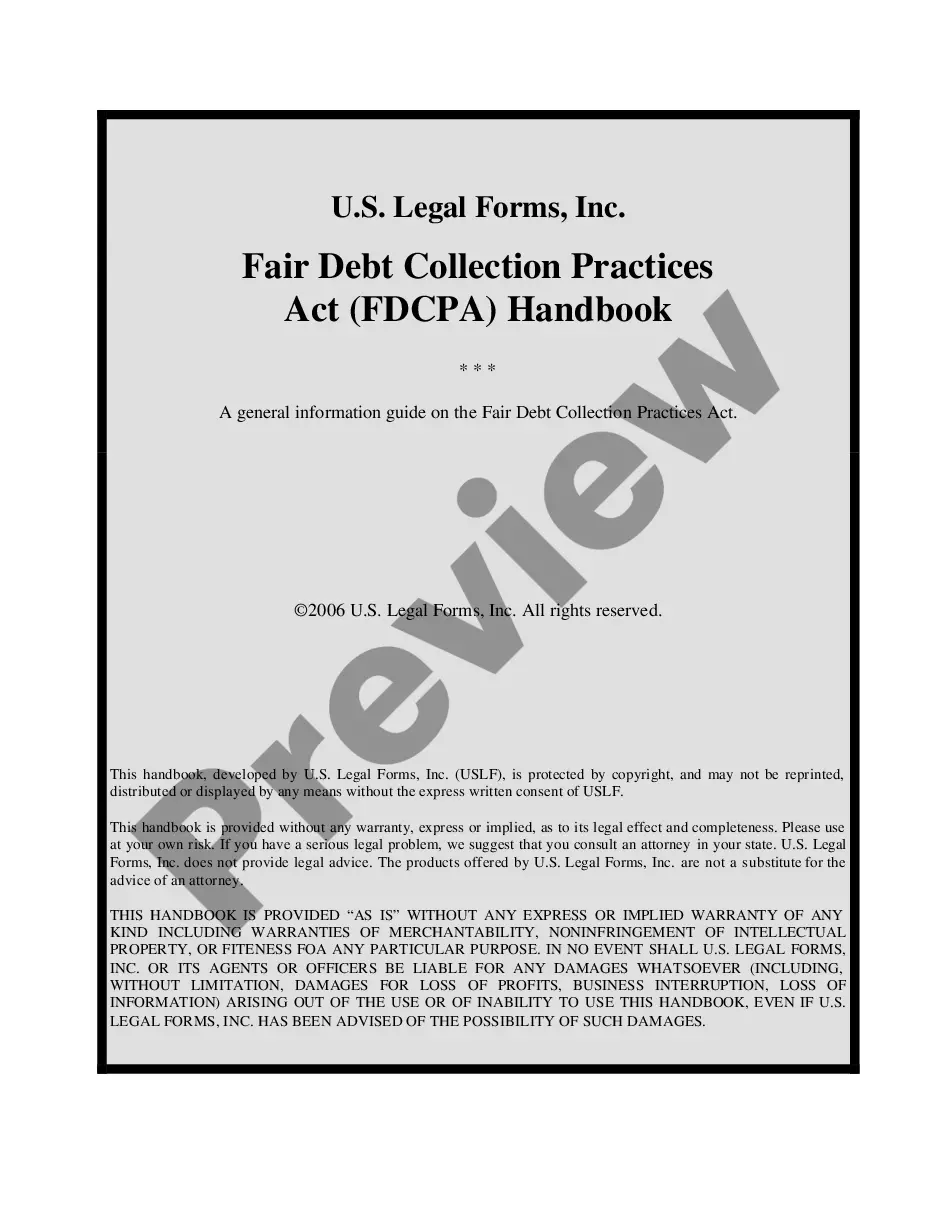
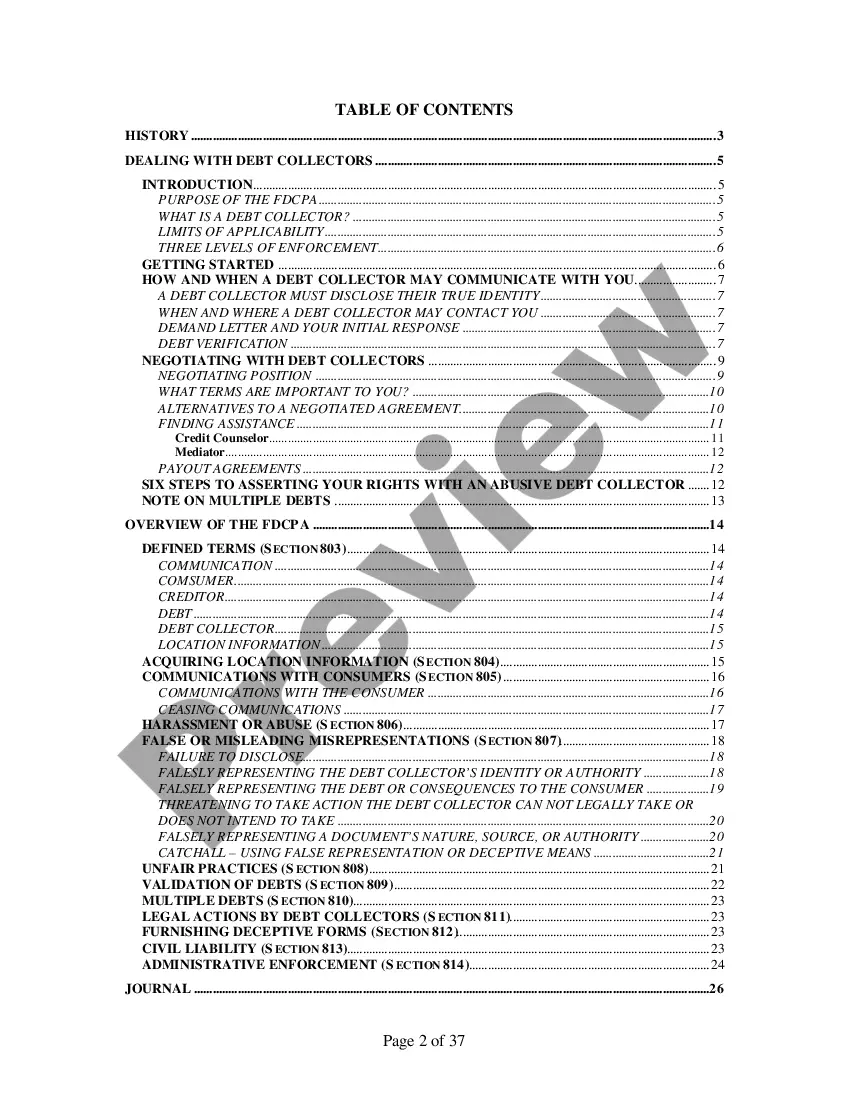
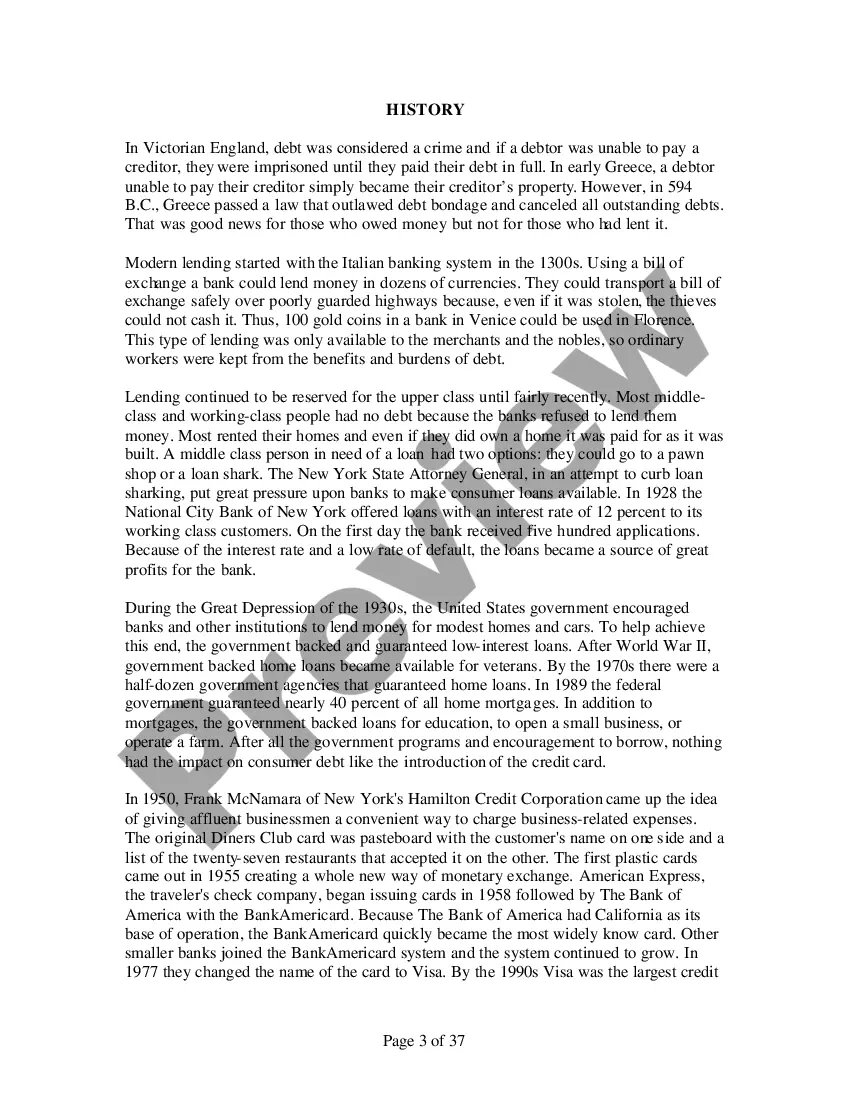
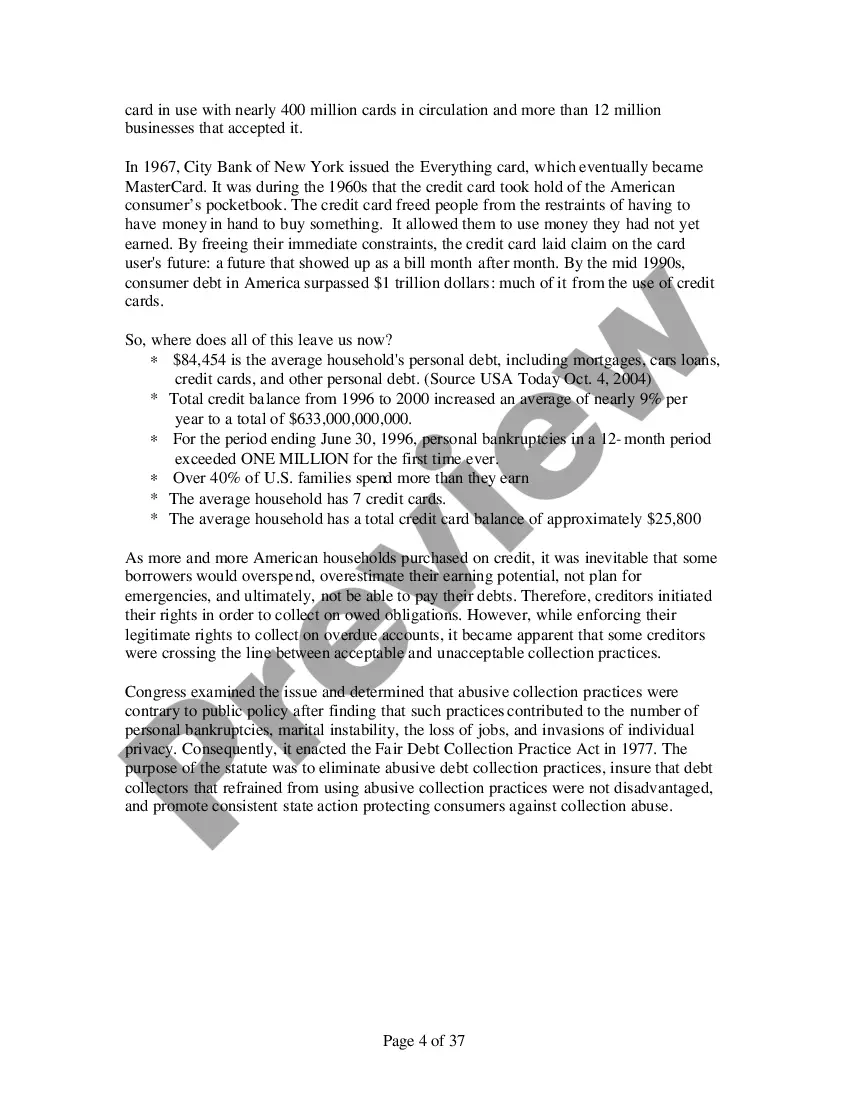
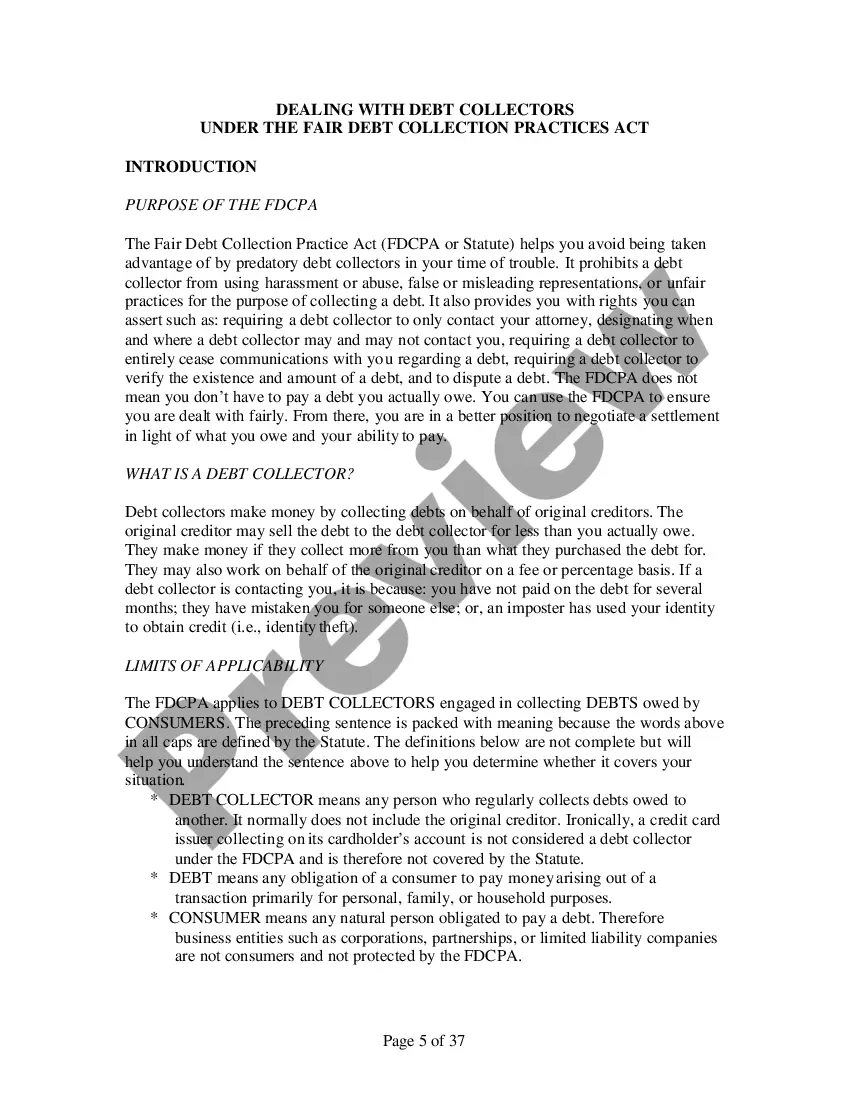
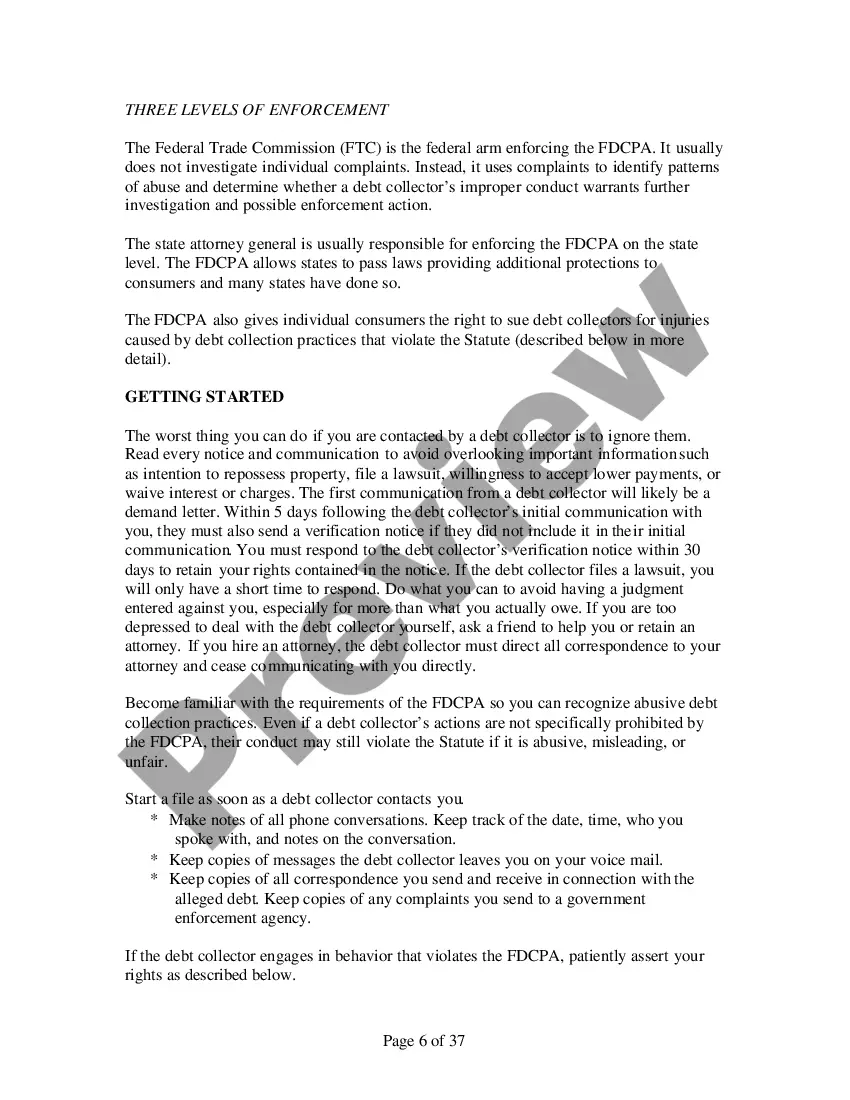
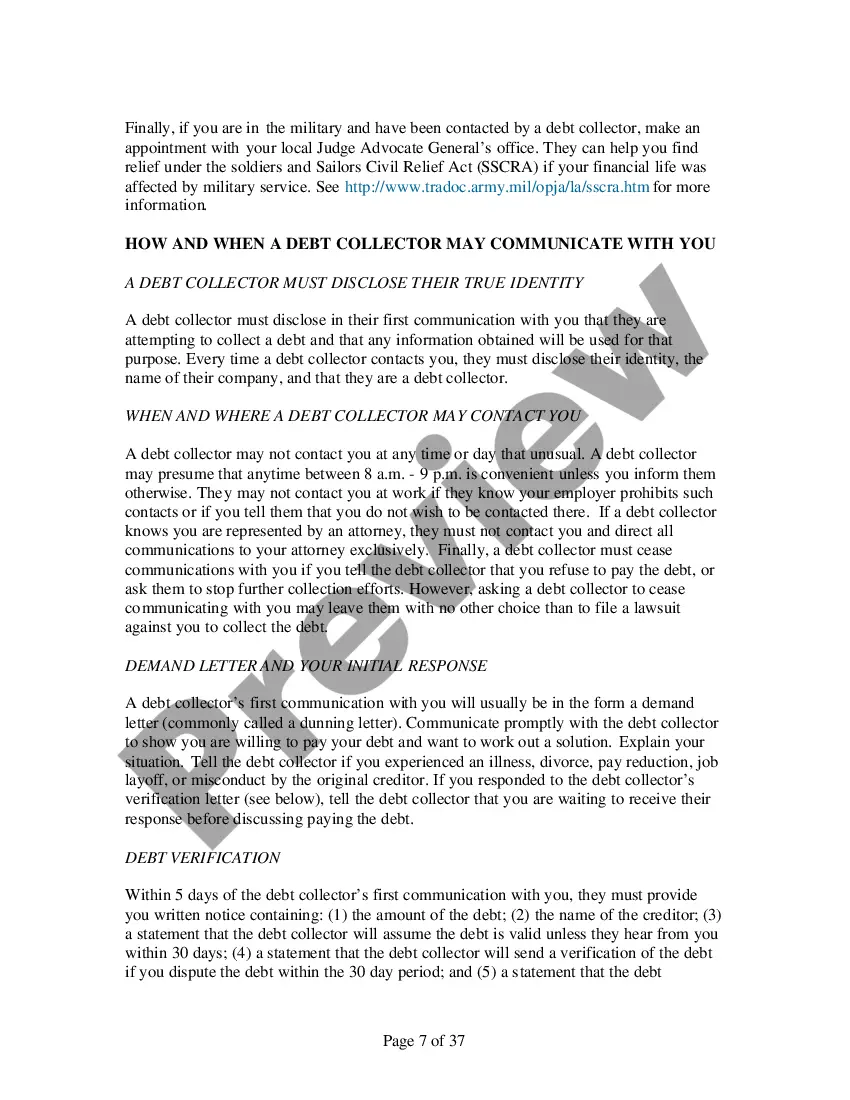
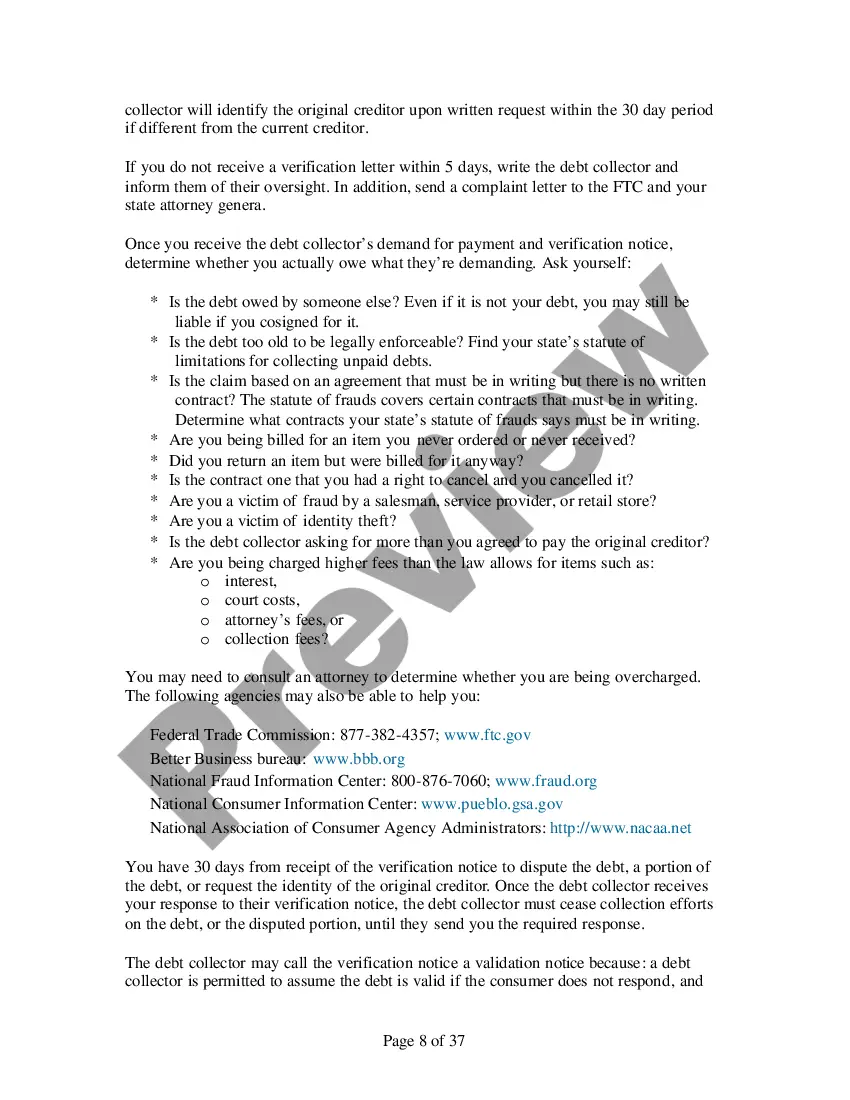
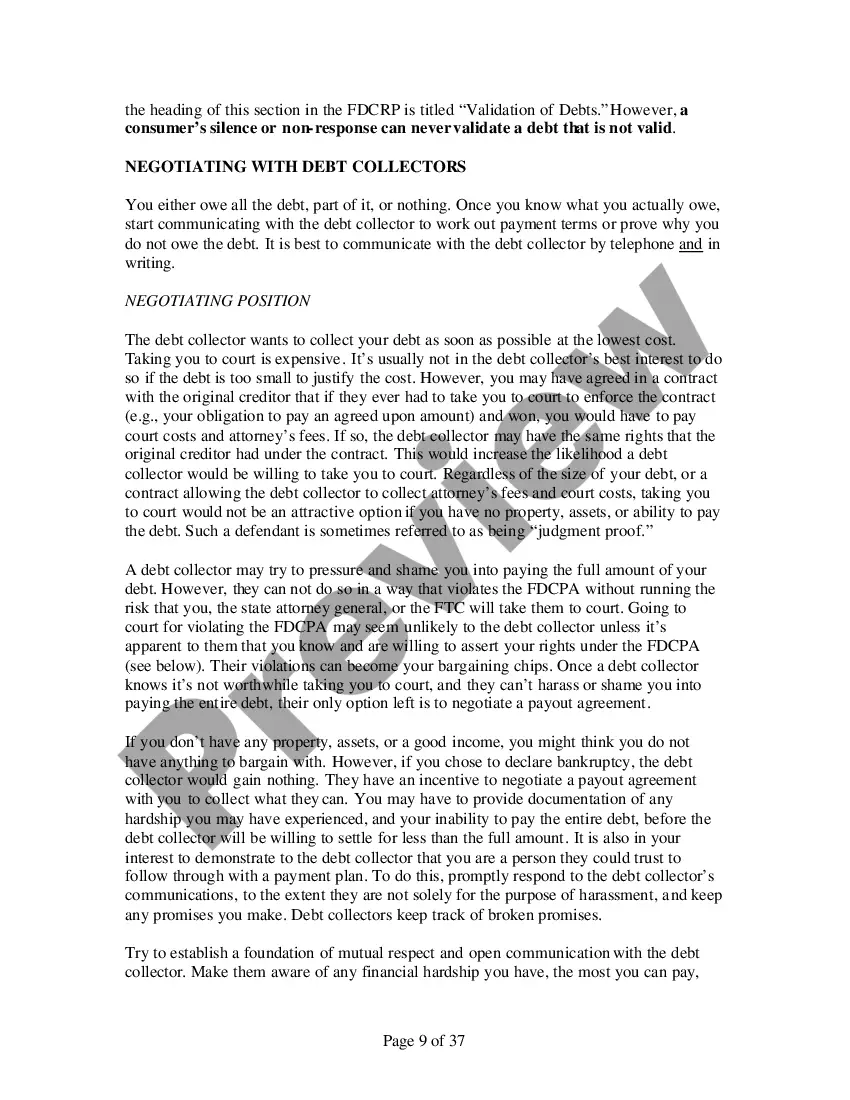
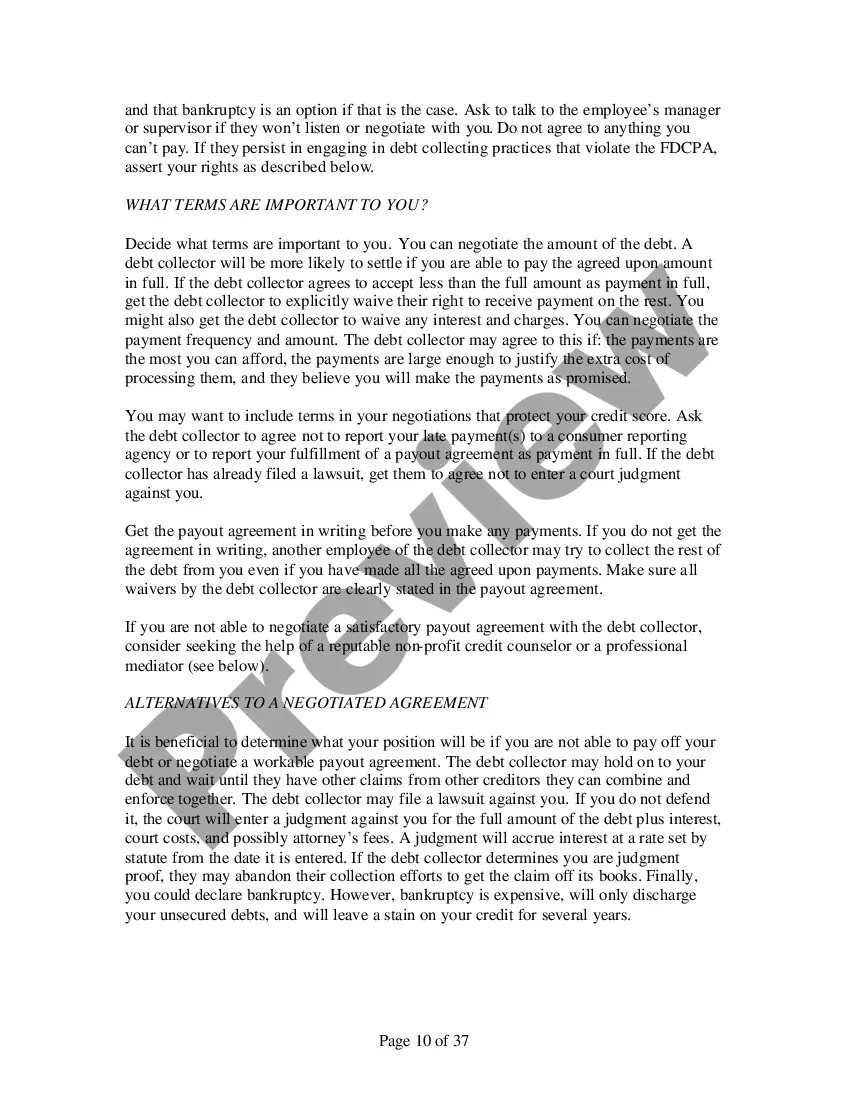
This handbook describes the Fair Debt Collection Practices Act (FDCPA) and discusses how to negotiate with debt collectors and creditors. The handbook is divided into 4 sections. Section 1 briefly describes how consumer credit got started. Section 2 describes how to deal with debt collectors. Section 3 provides a detailed overview of the FDCPA. Finally, Section 4 is a journal for you to use to document your communicatioins with debt collectors.
Guam Fair Debt Collection Practices Act Handbook
State:
Multi-State
Category:
Control #:
US-DCPA-23
Format:
PDF
124 downloads
Description
Free preview

Get your form ready online
Our built-in tools help you complete, sign, share, and store your documents in one place.
Built-in online Word editor
Make edits, fill in missing information, and update formatting in US Legal Forms—just like you would in MS Word.
Export easily
Download a copy, print it, send it by email, or mail it via USPS—whatever works best for your next step.
E-sign your document
Sign and collect signatures with our SignNow integration. Send to multiple recipients, set reminders, and more. Go Premium to unlock E-Sign.
Notarize online 24/7
If this form requires notarization, complete it online through a secure video call—no need to meet a notary in person or wait for an appointment.
Store your document securely
We protect your documents and personal data by following strict security and privacy standards.

Make edits, fill in missing information, and update formatting in US Legal Forms—just like you would in MS Word.

Download a copy, print it, send it by email, or mail it via USPS—whatever works best for your next step.

Sign and collect signatures with our SignNow integration. Send to multiple recipients, set reminders, and more. Go Premium to unlock E-Sign.

If this form requires notarization, complete it online through a secure video call—no need to meet a notary in person or wait for an appointment.

We protect your documents and personal data by following strict security and privacy standards.
Looking for another form?
How to fill out Fair Debt Collection Practices Act Handbook?
You can spend a few hours online looking for the legal document template that fulfills the local and national requirements you need.
US Legal Forms offers numerous legal forms that are verified by experts.
You can easily access or create the Guam Fair Debt Collection Practices Act Handbook from my assistance.
If available, utilize the Review button to browse through the document template as well.
- If you own a US Legal Forms account, you can sign in and then click the Download button.
- After that, you can complete, modify, print, or sign the Guam Fair Debt Collection Practices Act Handbook.
- Every legal document template you acquire is yours permanently.
- To retrieve an additional copy of a purchased form, navigate to the My documents tab and click the appropriate button.
- If this is your first time using the US Legal Forms website, follow the simple instructions below.
- First, make sure you have selected the correct document template for your chosen state or city.
- Review the form details to confirm you have chosen the right form.
Form popularity
FAQ
Your credit card debt, auto loans, medical bills, student loans, mortgage, and other household debts are covered under the FDCPA.
9 Ways to Outsmart Debt CollectorsDon't Get Emotional.Make Sure the Debt Is Really Yours.Ask for Proof.Resist the Scare Tactics.Be Wary of Fees.Negotiate.Call In Backup.Know the Time Limits.More items...?
Among the insider tips, Ulzheimer shared with the audience was this: if you are being pursued by debt collectors, you can stop them from calling you ever again by telling them '11-word phrase'. This simple idea was later advertised as an '11-word phrase to stop debt collectors'.
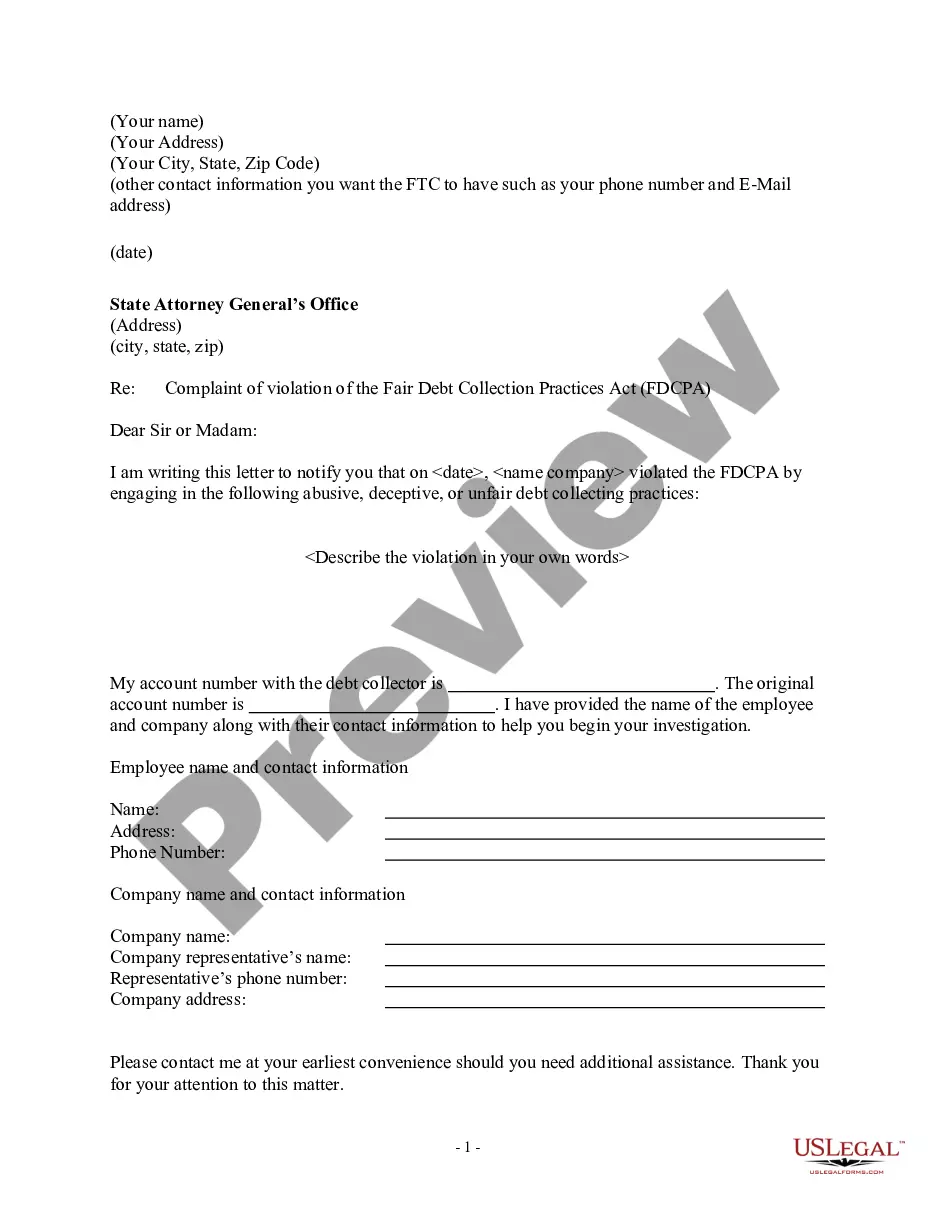
The Fair Debt Collection Practices Act (FDCPA) (15 USC 1692 et seq.), which became effective in March 1978, was designed to eliminate abusive, deceptive, and unfair debt collection practices.
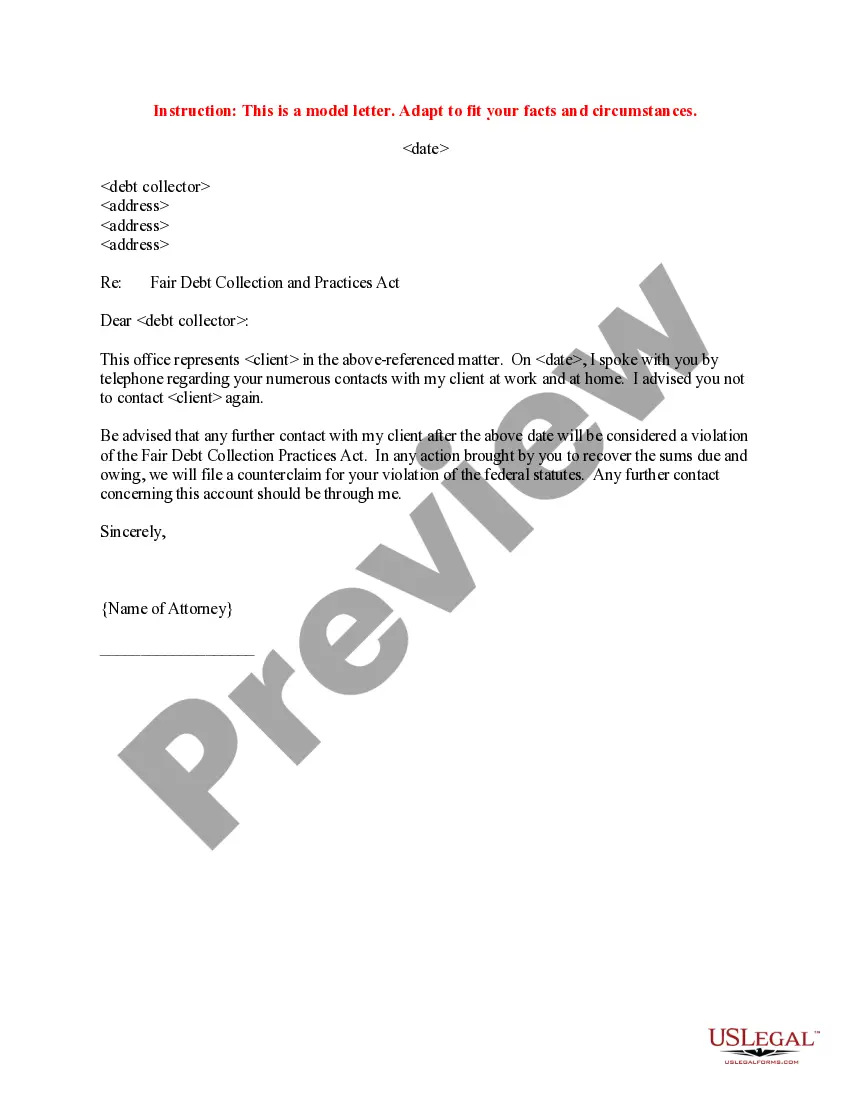
Try not to let all of the calls badgering you from a debt collector get to you. If you need to take a break, you can use this 11 word phrase to stop debt collectors: Please cease and desist all calls and contact with me, immediately. Here is what you should do if you are being contacted by a debt collector.
Those rules include:They must identify themselves as a debt collection agency and give their name and the address for the collection agency.They must tell you the name of the creditor (company or person you owe), the amount you owe and how you can dispute the debt or seek verification of the debt.More items...?
You have the right not to be contacted at work, and some local and state laws make it illegal for creditors to contact your place of employment if they have reason to know those calls are forbidden.
7 Most Common FDCPA ViolationsContinued attempts to collect debt not owed.Illegal or unethical communication tactics.Disclosure verification of debt.Taking or threatening illegal action.False statements or false representation.Improper contact or sharing of info.Excessive phone calls.16 Sept 2020
Problems Faced by Debt Collection Agents and How to Solve Them!Oral Contracts:Faulty Written Agreements:Money Recovery Issues:Collection Methods Are Not Real-Time:Mobile Borrowers:Too Many Calls:Contacting Wrong People:Customer Bankruptcy:More items...?30-Nov-2019