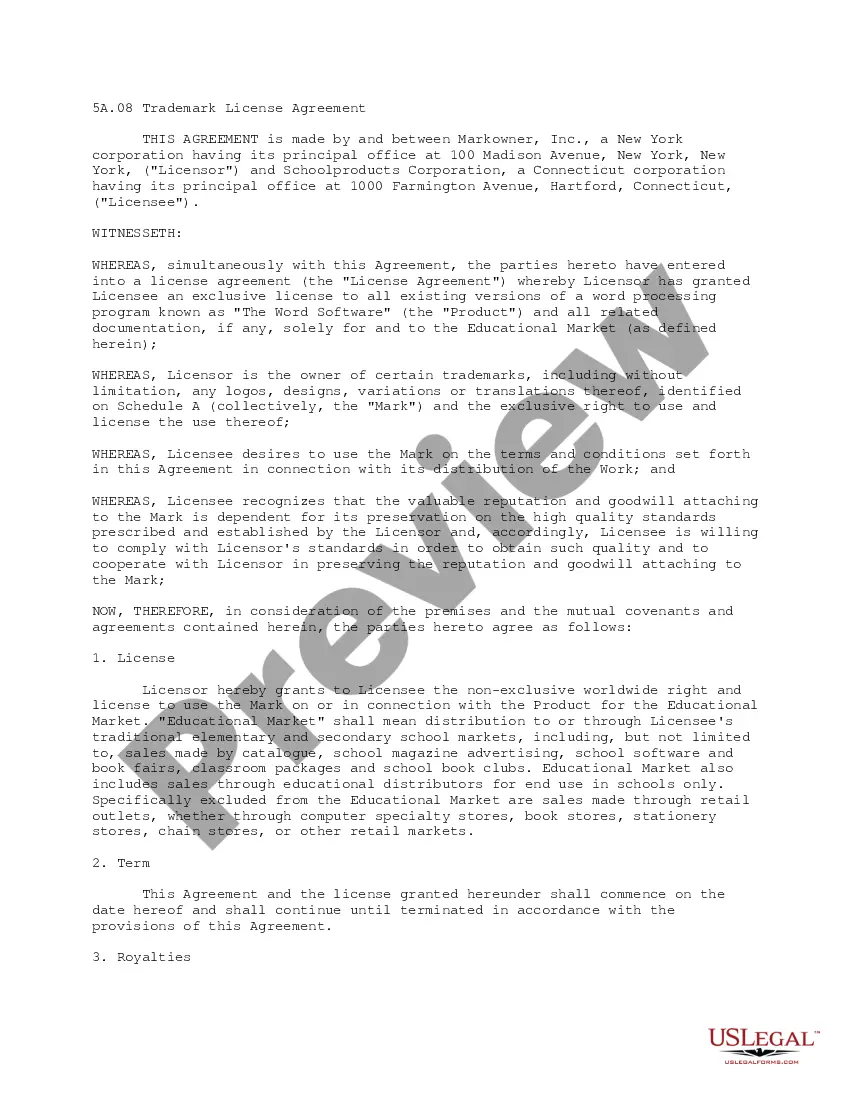
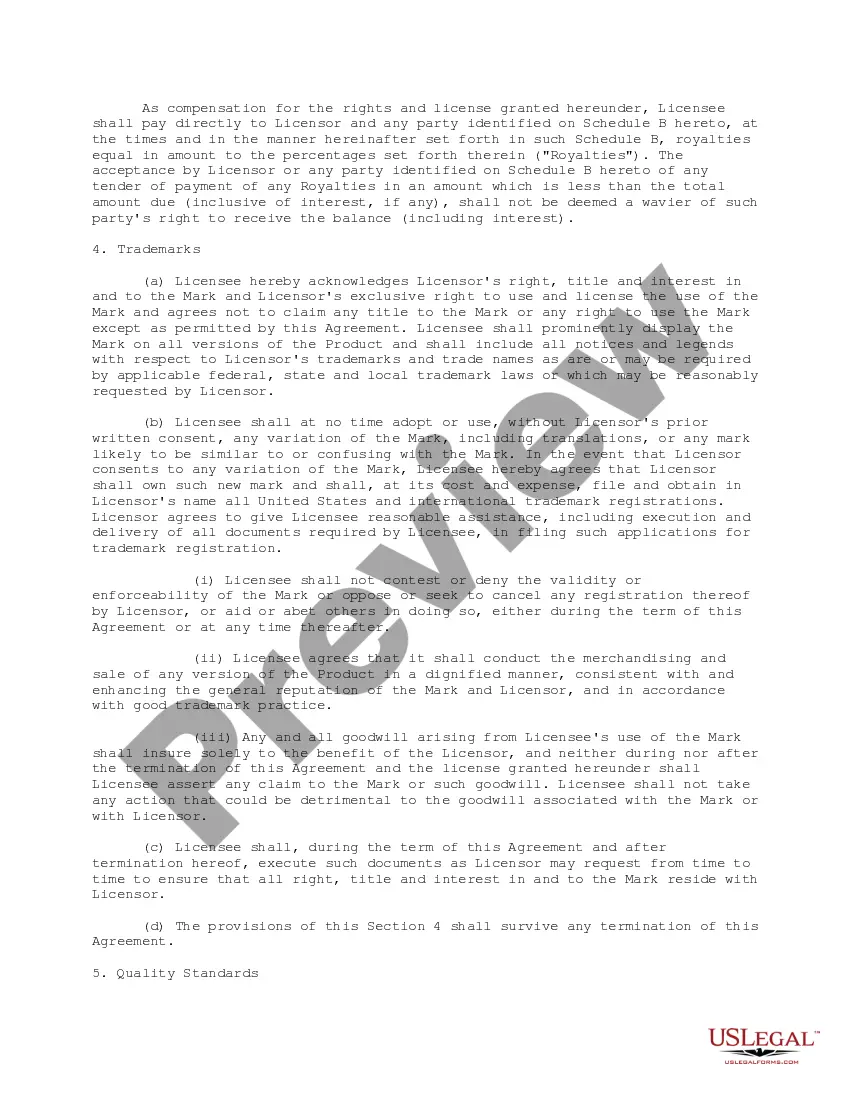
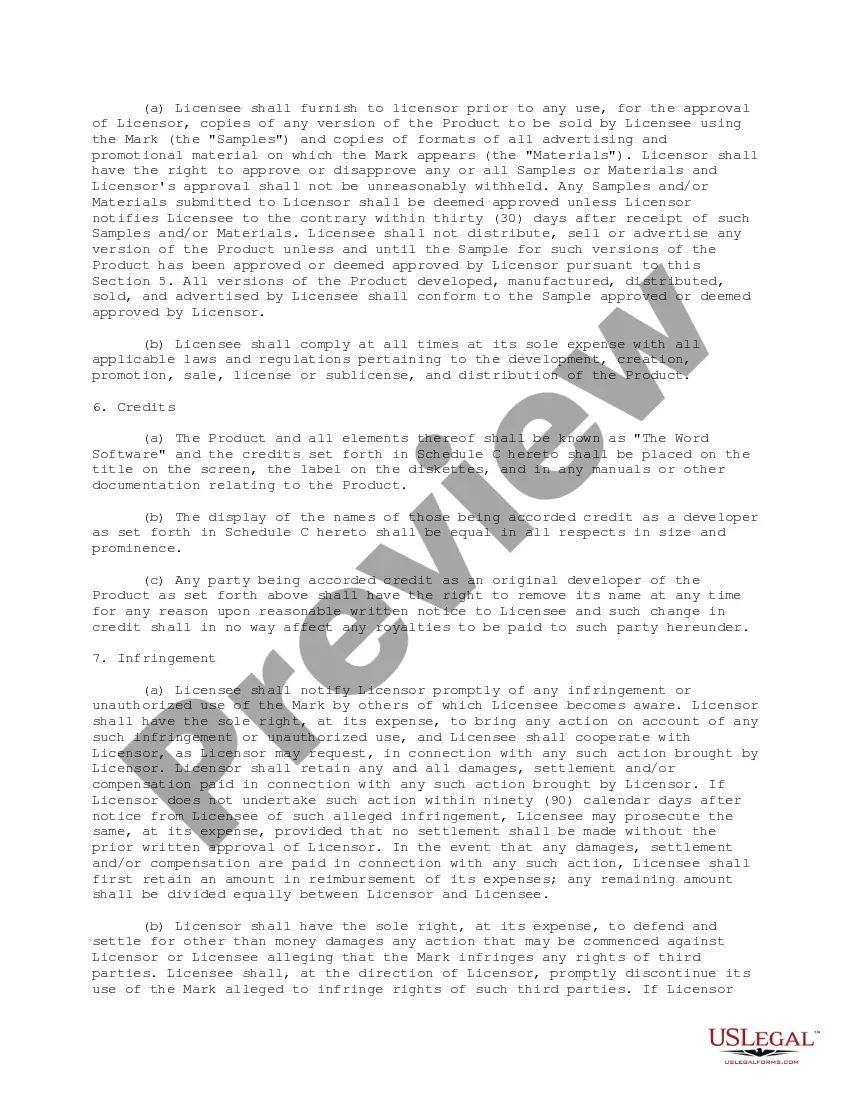
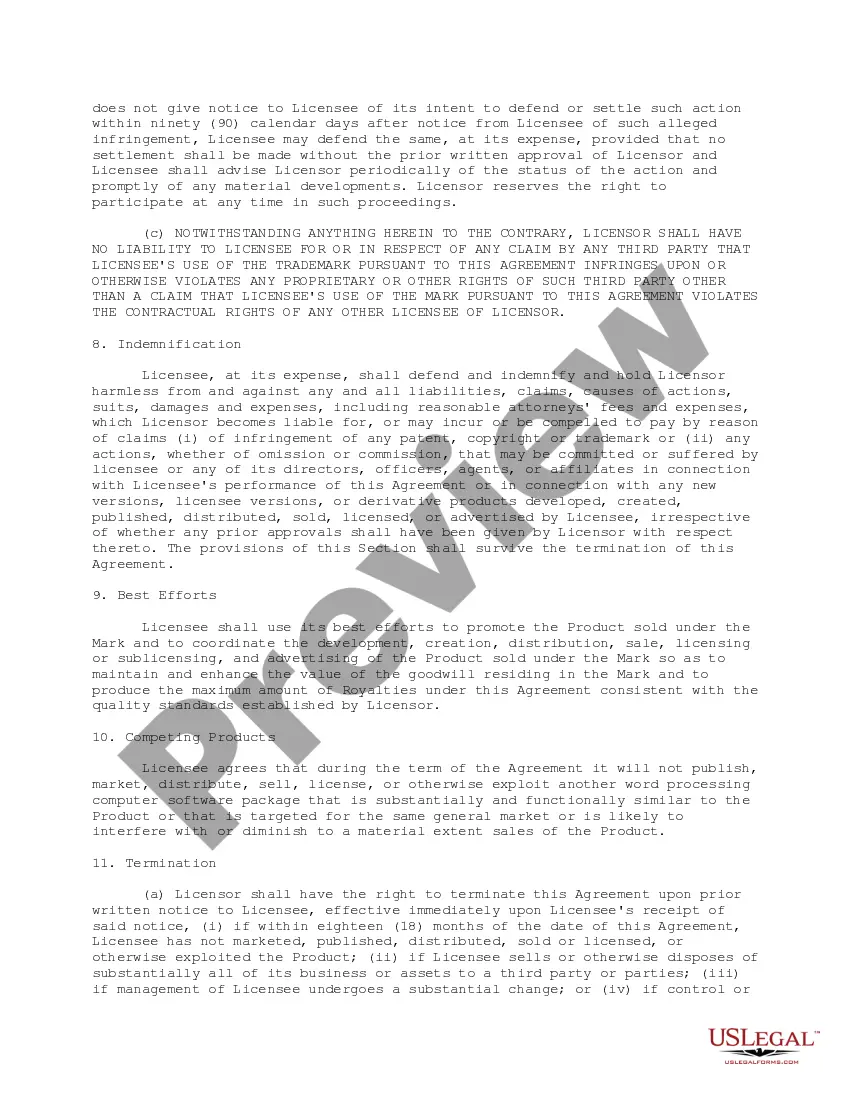
This agreement is used when a Licensor wishes to give the Licensee an exclusive license to all existing versions of a software program and all related documentation, if any, solely for a specific purpose.
Guam Trademark License Agreement
State:
Multi-State
Control #:
US-CP5A08
Format:
Word;
PDF;
Rich Text
Instant download
Description
Free preview
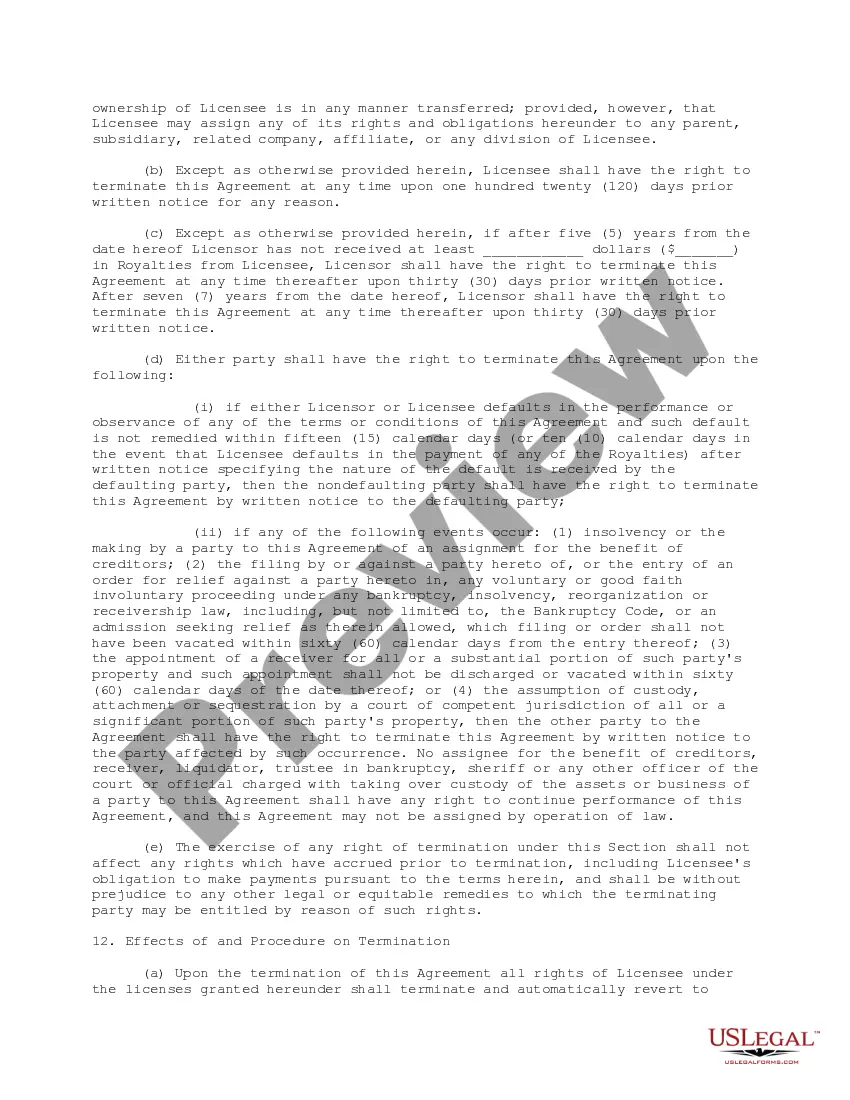
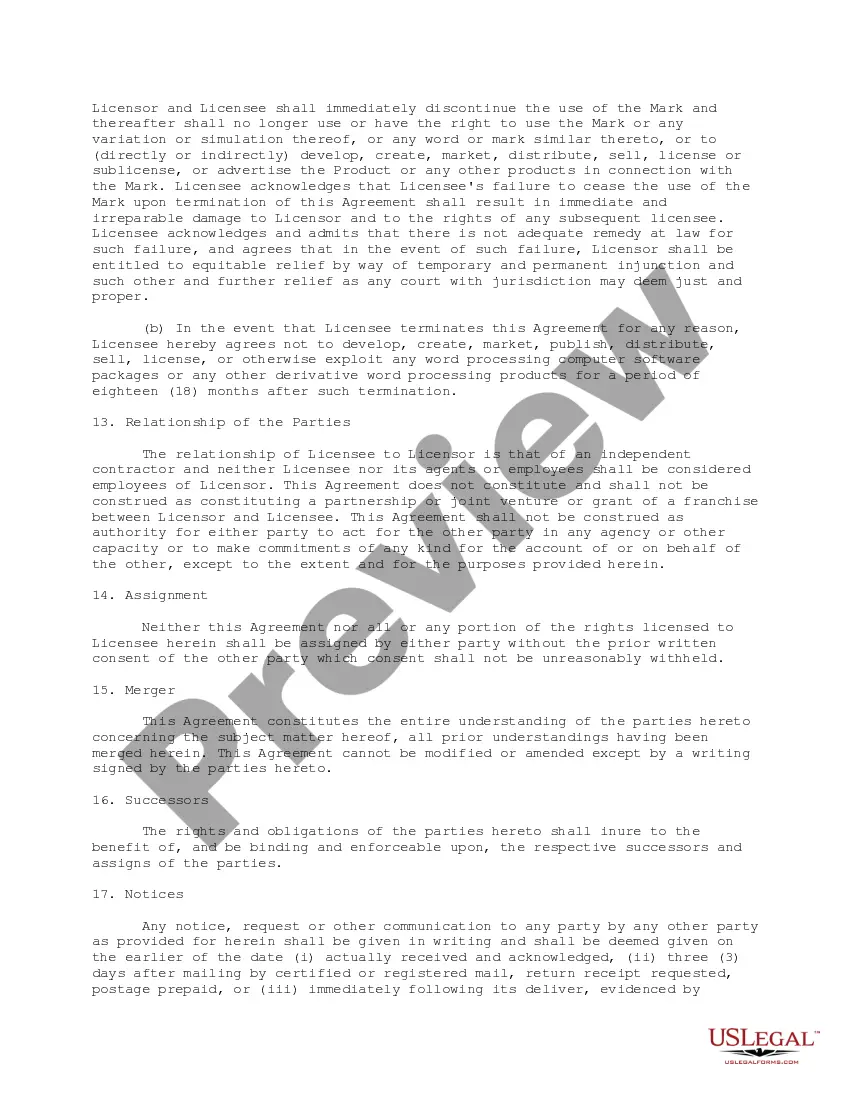
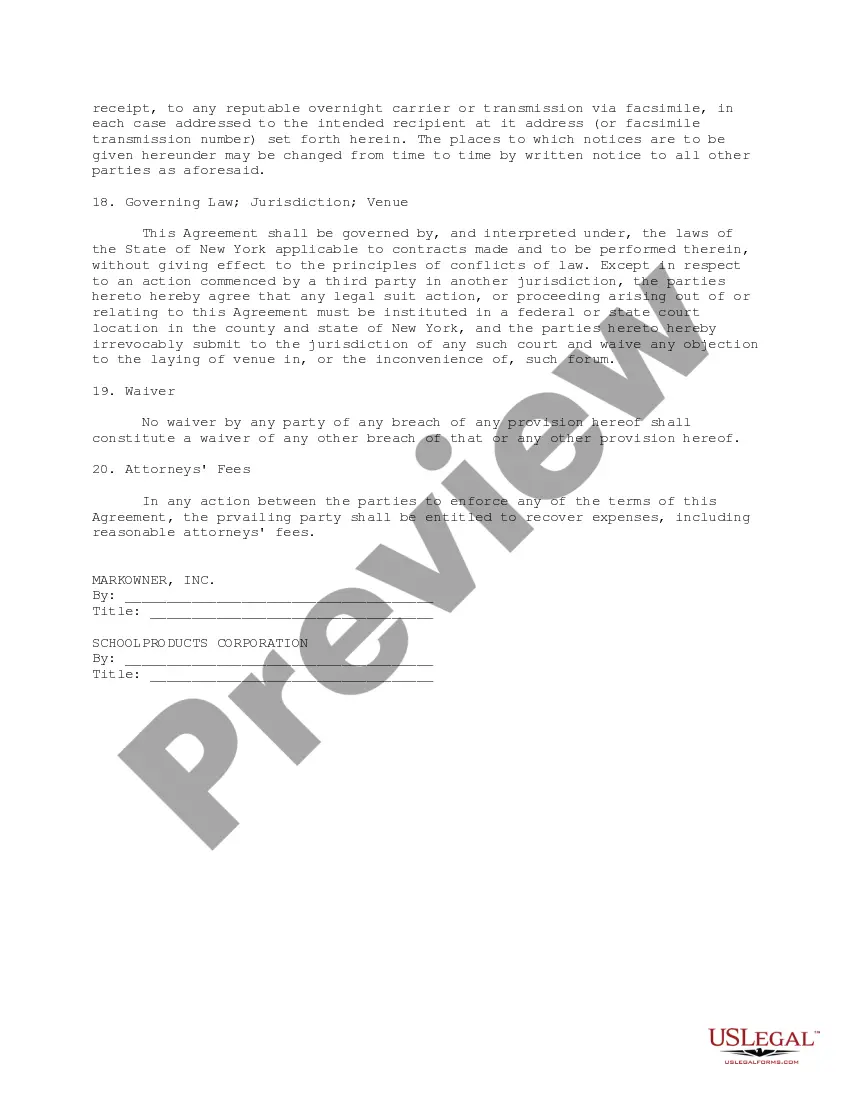
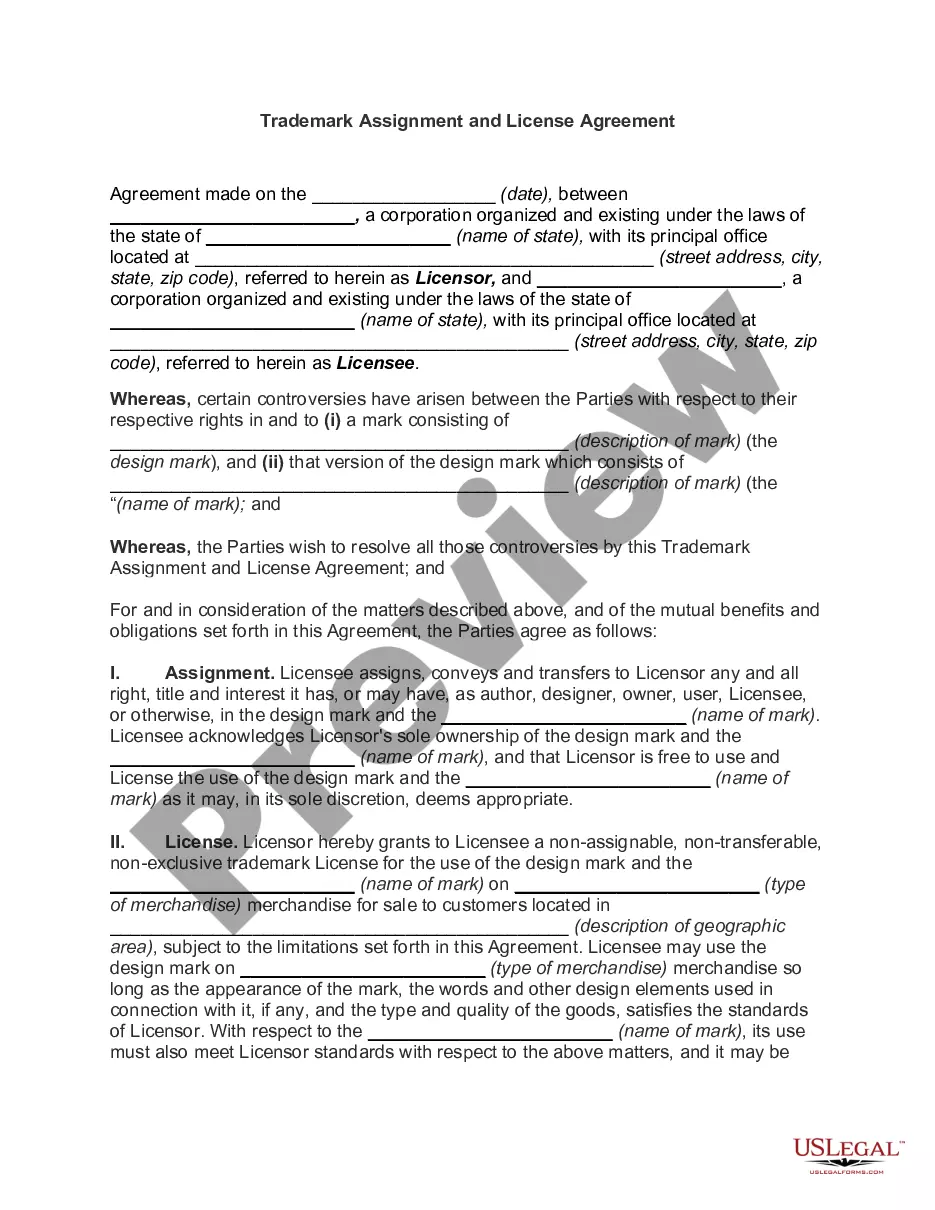
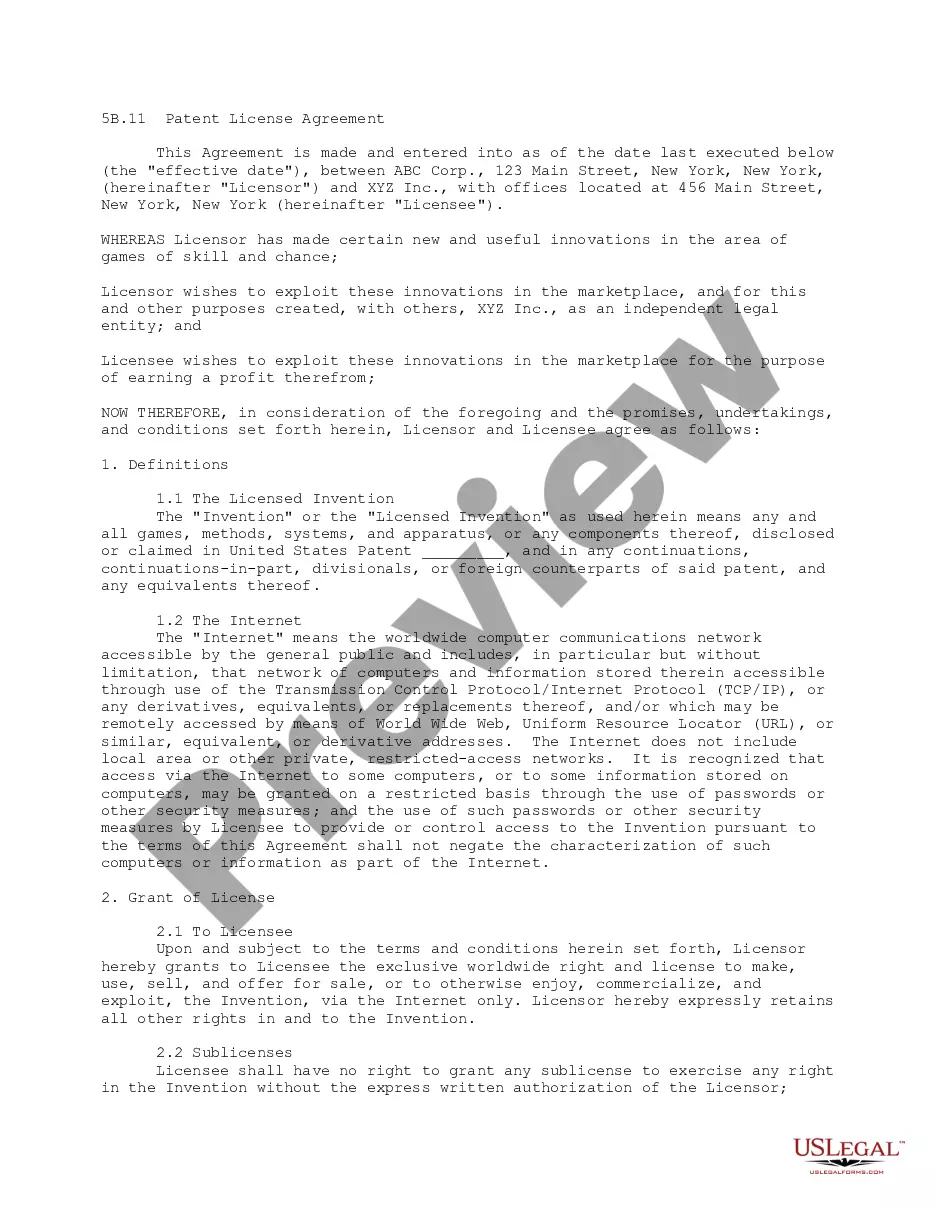
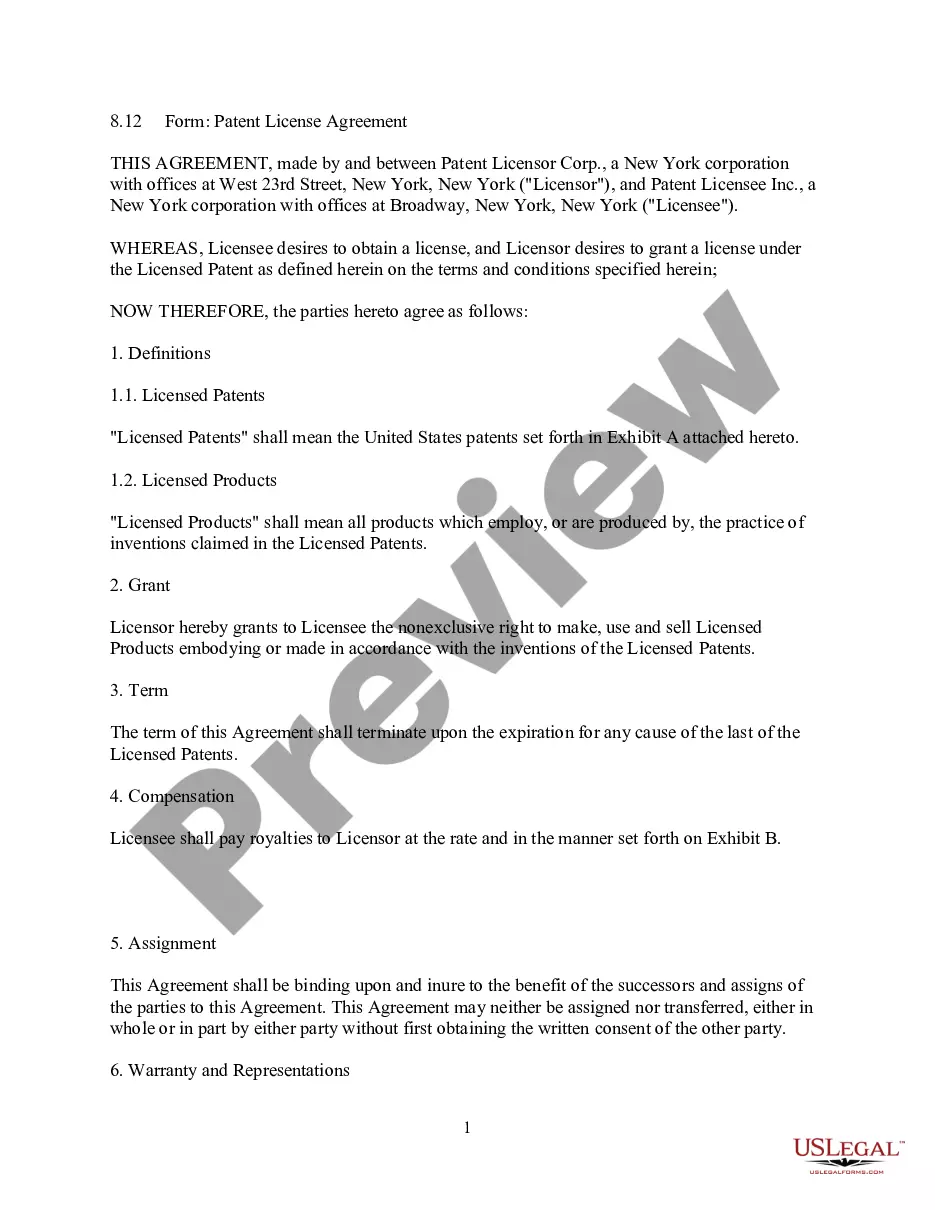
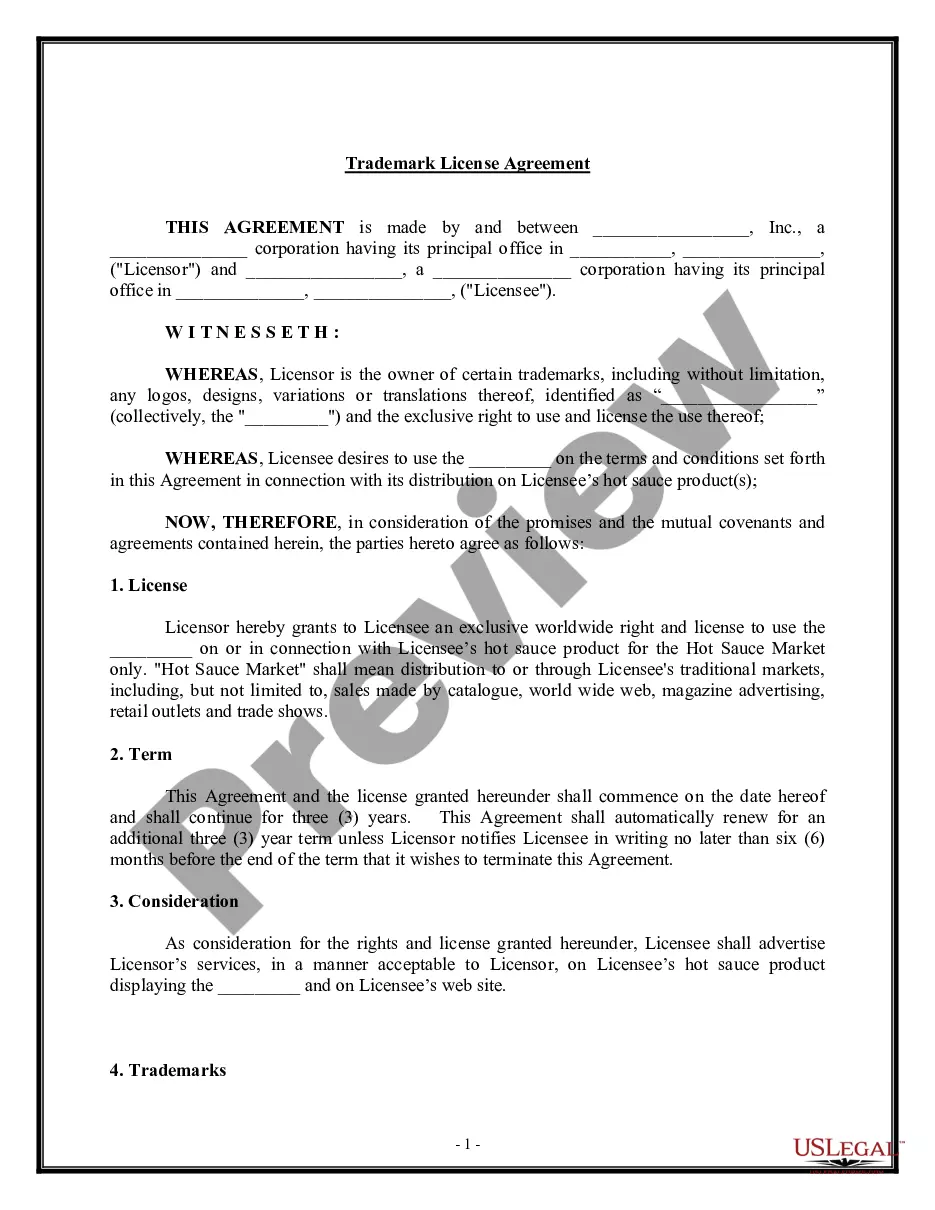
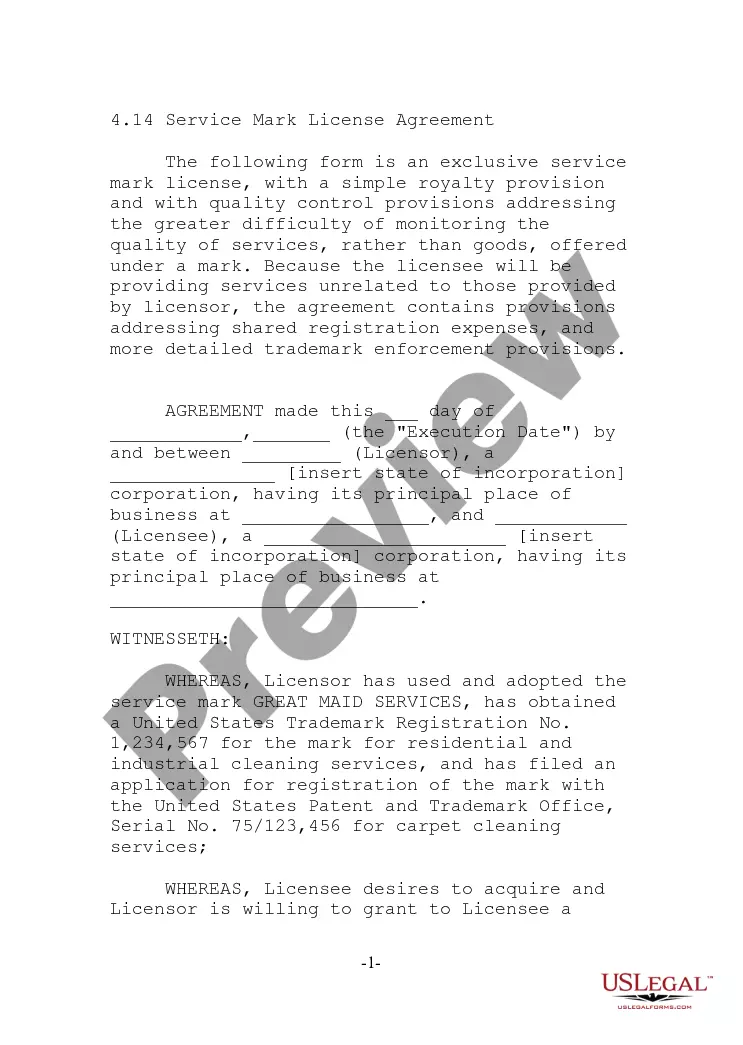
Get your form ready online
Our built-in tools help you complete, sign, share, and store your documents in one place.
Built-in online Word editor
Make edits, fill in missing information, and update formatting in US Legal Forms—just like you would in MS Word.
Export easily
Download a copy, print it, send it by email, or mail it via USPS—whatever works best for your next step.
E-sign your document
Sign and collect signatures with our SignNow integration. Send to multiple recipients, set reminders, and more. Go Premium to unlock E-Sign.
Notarize online 24/7
If this form requires notarization, complete it online through a secure video call—no need to meet a notary in person or wait for an appointment.
Store your document securely
We protect your documents and personal data by following strict security and privacy standards.

Make edits, fill in missing information, and update formatting in US Legal Forms—just like you would in MS Word.

Download a copy, print it, send it by email, or mail it via USPS—whatever works best for your next step.

Sign and collect signatures with our SignNow integration. Send to multiple recipients, set reminders, and more. Go Premium to unlock E-Sign.

If this form requires notarization, complete it online through a secure video call—no need to meet a notary in person or wait for an appointment.

We protect your documents and personal data by following strict security and privacy standards.
Looking for another form?
How to fill out Trademark License Agreement?
You might spend time online attempting to discover the valid document template that meets the state and federal standards you require.
US Legal Forms offers a vast array of valid forms that have been reviewed by professionals.
You can obtain or print the Guam Trademark License Agreement from the service.
If available, utilize the Review button to browse through the document template as well.
- If you already have a US Legal Forms account, you can Log In and then click the Download button.
- Then, you can complete, alter, print, or sign the Guam Trademark License Agreement.
- Every valid document template you purchase is yours forever.
- To have an extra copy of a purchased form, visit the My documents tab and click the corresponding button.
- If you are using the US Legal Forms site for the first time, follow the simple steps below.
- First, ensure that you have chosen the right document template for your selected state/region.
- Review the form description to confirm you have selected the appropriate form.
Form popularity
FAQ
Yes, you can trademark yourself, as long as you are in connection with your products or services. This information was provided by our founding attorney, Xavier Morales, Esq. It is possible for an individual to trademark an image of themselves as a product's logo.
However, registering a trademark federally offers much more legal protection. A federal registration gives the right to use the mark exclusively throughout the county while a state registration only covers within the territory of the state.
A trademark licensing agreement is a legal contract between a trademark owner and another party that have agreed to use the trademark on preapproved terms decided between the contracting parties.
Federal trademarks give you ownership across all 50 states, plus all U.S. territories. Federal trademarks allow you to use the ® symbol. You can file infringement suits in federal courts. Your mark will be listed in the U.S. Patent and Trademark Office (USPTO) database.
No, a U.S. trademark registration will not protect your trademark in a foreign country. Trademarks are territorial and must be filed in each country where protection is sought.
Here is what all this means for you and your brand.Trademark Requirement #1 No conflicts with other registered marks.Trademark Requirement #2 Trademark distinctiveness.Trademark Requirement #3 Use in commerce.Trademark Requirement #4 Capability to be a brand identifier.In the end, it comes down to this:
It applies to all fifty U.S. States as well as any territory under United States jurisdiction and control, including the American Virgin Islands (VI), in American Samoa (AS), Guam (GU) and Puerto Rico (PR). Trademark protection is obtained by registration.
5 Steps to Trademark a Product Name Come up with a unique brand name for your product. Hire a trademark attorney. Perform a trademark search on the selected brand name. File your trademark application with the USPTO. Follow through with the USPTO during the application process.
To register a trademark with the U.S. Patent and Trademark Office (USPTO), you will need to fill out and submit a trademark application. You can do this online, using the Trademark Electronic Application System (TEAS), an online trademark filing service, or you can submit a paper application.
The Contents of the ApplicationThe applicant's name and address.The applicant's type of legal entity and citizenship.Name and address (for correspondence).A drawing of the mark.A description of the mark.A list of goods and services covered by the application.The international classes of the goods and services.More items...?