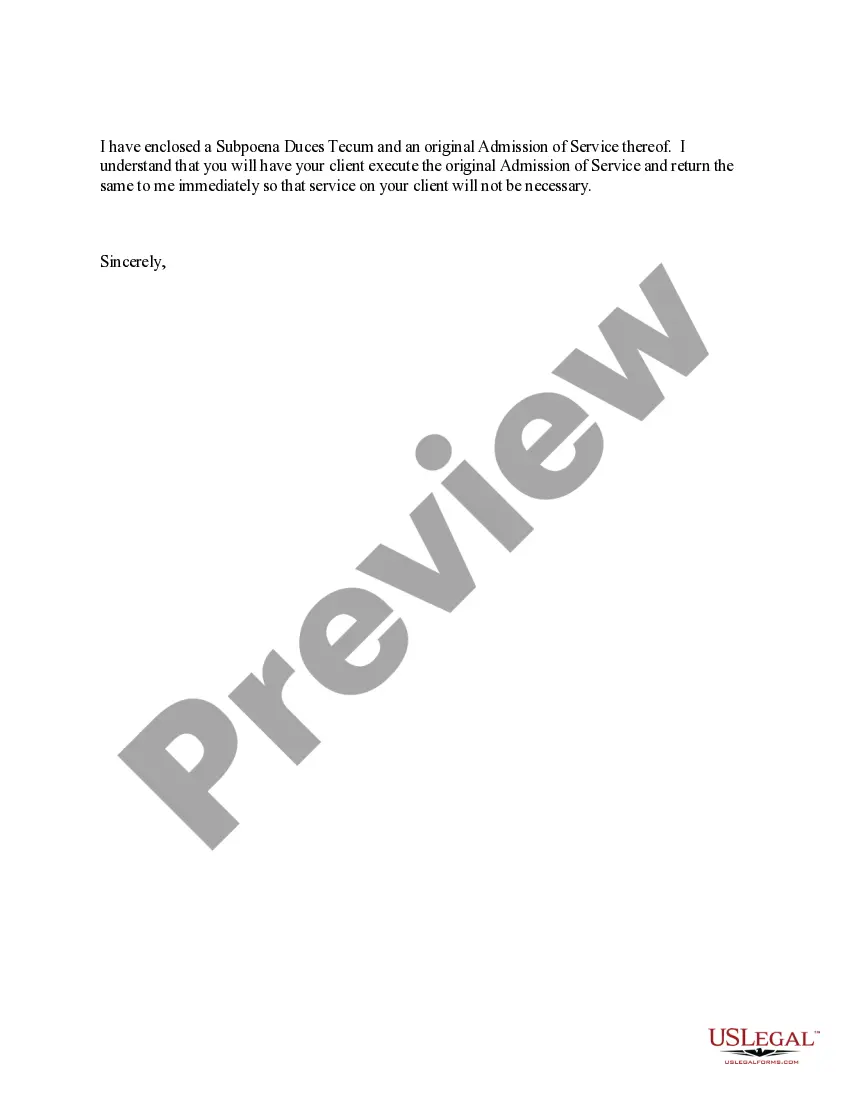
Guam Discovery - Sample Letter to Opposing Counsel regarding Deposition and Subpoena Duces Tecum
Description
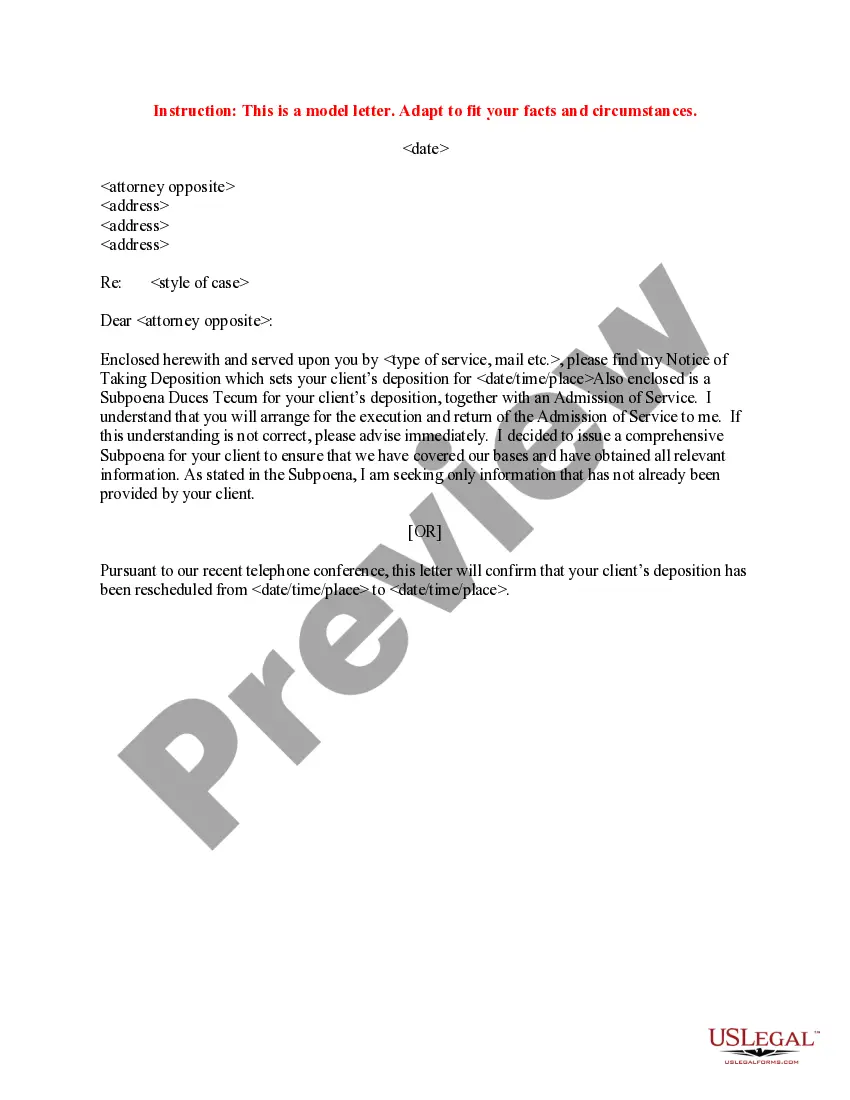
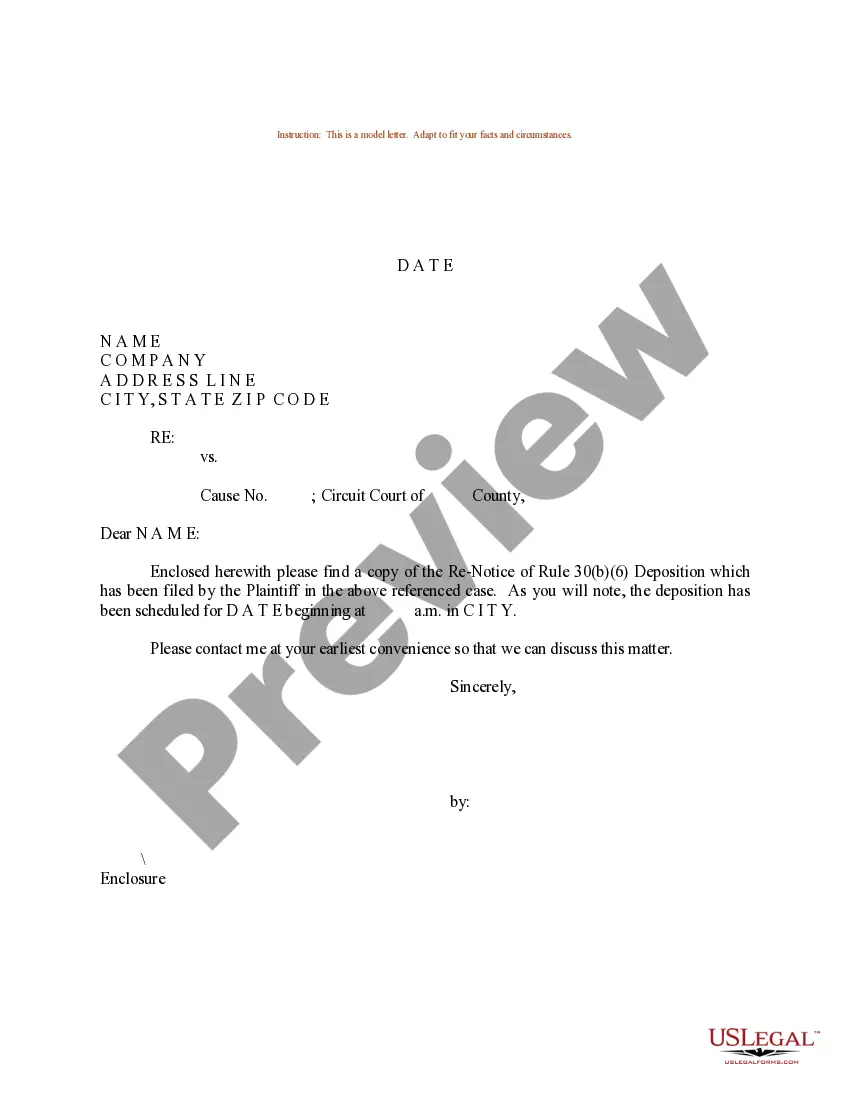
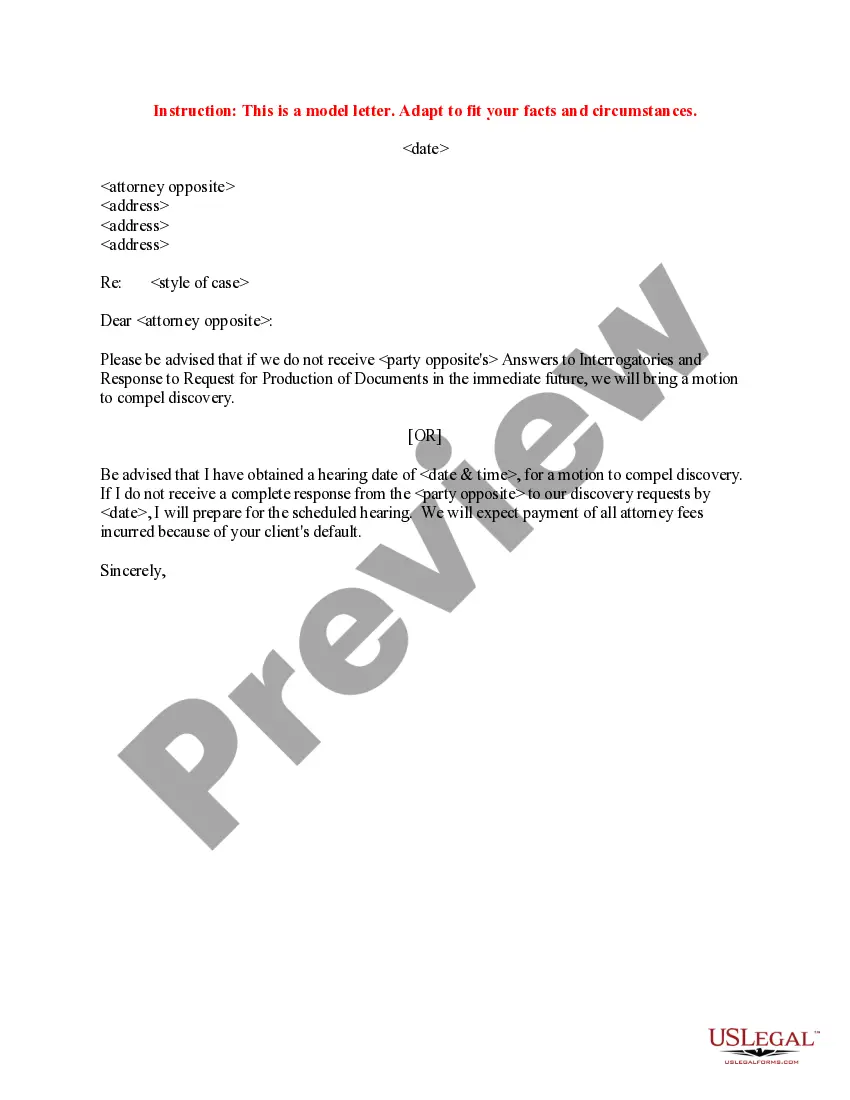
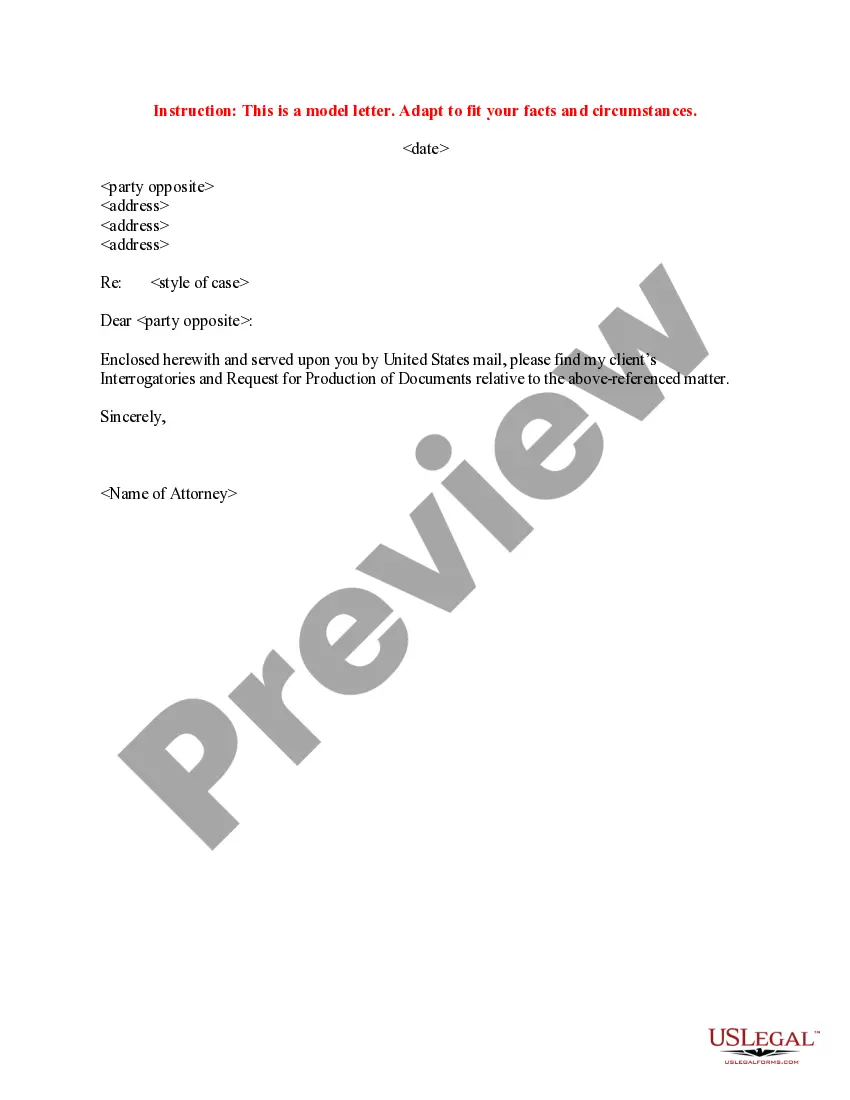
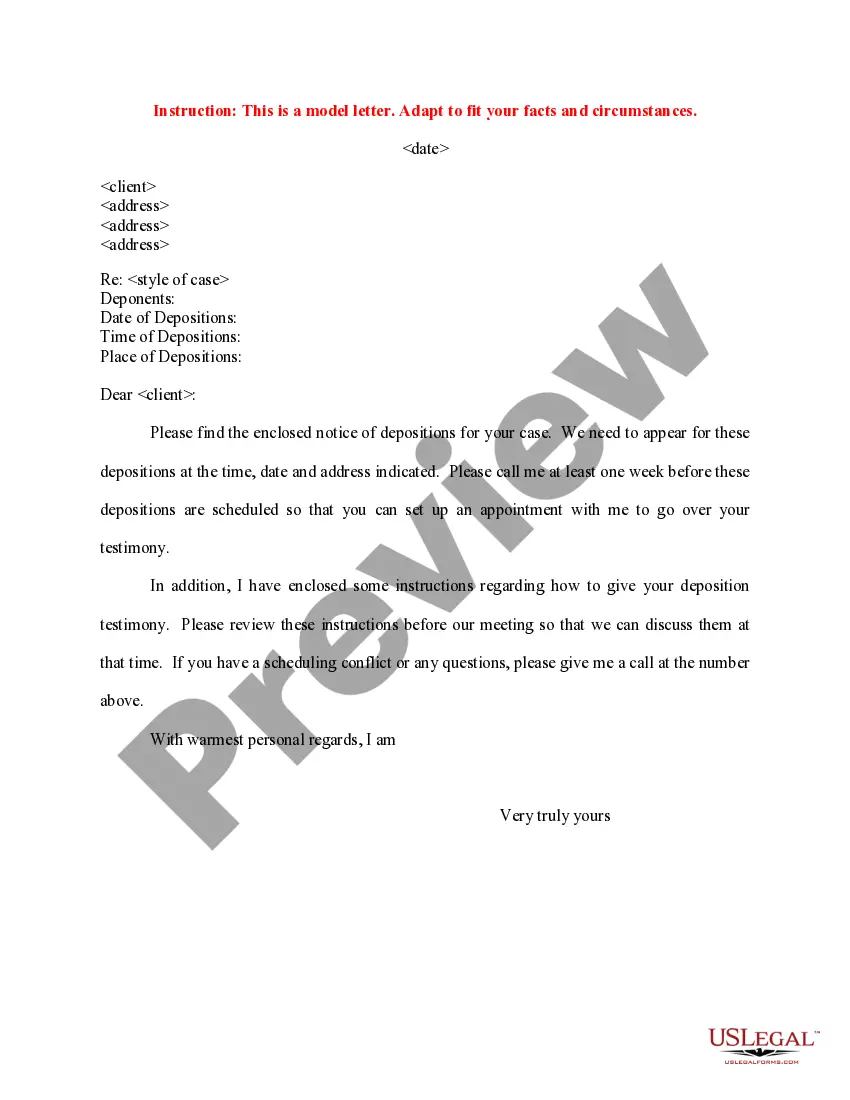
Get your form ready online
Our built-in tools help you complete, sign, share, and store your documents in one place.
Make edits, fill in missing information, and update formatting in US Legal Forms—just like you would in MS Word.
Download a copy, print it, send it by email, or mail it via USPS—whatever works best for your next step.
Sign and collect signatures with our SignNow integration. Send to multiple recipients, set reminders, and more. Go Premium to unlock E-Sign.
If this form requires notarization, complete it online through a secure video call—no need to meet a notary in person or wait for an appointment.
We protect your documents and personal data by following strict security and privacy standards.

Make edits, fill in missing information, and update formatting in US Legal Forms—just like you would in MS Word.

Download a copy, print it, send it by email, or mail it via USPS—whatever works best for your next step.

Sign and collect signatures with our SignNow integration. Send to multiple recipients, set reminders, and more. Go Premium to unlock E-Sign.

If this form requires notarization, complete it online through a secure video call—no need to meet a notary in person or wait for an appointment.

We protect your documents and personal data by following strict security and privacy standards.
Looking for another form?
How to fill out Discovery - Sample Letter To Opposing Counsel Regarding Deposition And Subpoena Duces Tecum?
Discovering the right lawful papers design can be a have difficulties. Obviously, there are a variety of templates available online, but how can you find the lawful kind you will need? Take advantage of the US Legal Forms site. The support gives a large number of templates, including the Guam Discovery - Sample Letter to Opposing Counsel regarding Deposition and Subpoena Duces Tecum, which can be used for organization and personal demands. All of the types are examined by pros and meet up with state and federal demands.
In case you are previously signed up, log in in your bank account and click the Download key to find the Guam Discovery - Sample Letter to Opposing Counsel regarding Deposition and Subpoena Duces Tecum. Utilize your bank account to appear throughout the lawful types you might have acquired formerly. Go to the My Forms tab of your bank account and acquire an additional copy in the papers you will need.
In case you are a brand new user of US Legal Forms, here are basic instructions that you should follow:
- Very first, make sure you have chosen the proper kind for your metropolis/region. You are able to examine the form using the Review key and browse the form explanation to make sure this is basically the best for you.
- When the kind is not going to meet up with your preferences, take advantage of the Seach industry to discover the appropriate kind.
- Once you are certain that the form is acceptable, click on the Acquire now key to find the kind.
- Pick the rates strategy you would like and type in the required details. Create your bank account and buy an order making use of your PayPal bank account or charge card.
- Opt for the submit file format and down load the lawful papers design in your device.
- Total, revise and print out and indication the acquired Guam Discovery - Sample Letter to Opposing Counsel regarding Deposition and Subpoena Duces Tecum.
US Legal Forms will be the biggest collection of lawful types for which you can see various papers templates. Take advantage of the service to down load skillfully-manufactured papers that follow express demands.
Form popularity
FAQ
The subpoena duces tecum can benefit either prosecutors or the defendant. For example, if you are being investigated for a federal crime and investigators believe there is evidence on your computer, they may serve you with a subpoena duces tecum ordering you to produce the computer for inspection.
This letter is often called a good faith letter. And it is needed under many courts' rules before you can file a motion to compel discovery if the other party ignores your requests or provides evasive responses or move for sanctions if your opponent refuses to comply with the court's discovery order.
Primary tabs. A subpoena duces tecum is a type of subpoena that requires the witness to produce a document or documents pertinent to a proceeding. From the Latin duces tecum, meaning "you shall bring with you". See, e.g., United States v. Nixon, 418 U.S. 683 (1974).
If you object to a discovery request, generally you have to let the other side know that you are not giving him/her documents that s/he has asked for.
Discovery means you send the other side questions and requests for information or items (like documents) in writing. The other side must respond to your question or request in writing.
The three forms of discovery are: Written - This form of discovery takes place on paper. ... Document Production - This form of discovery involves an exchange of documents. ... Oral - Sometimes known as depositions, this form of discovery allows parties to gain sworn statements from involved individuals.
Good faith is a legal term that describes the intention of the party or parties in a contract to deal in an honest manner with each other. In contracts, the parties signing abide by and uphold the contract. It requires people to act honestly without taking advantage of others.
There are several parts to a subpoena duces tecum. First, it will identify what is being requested. It can be specific (a document) or broad (a type of document, or all documents from a business). Second, it must name the relevant case and contact information from the party asking for it.