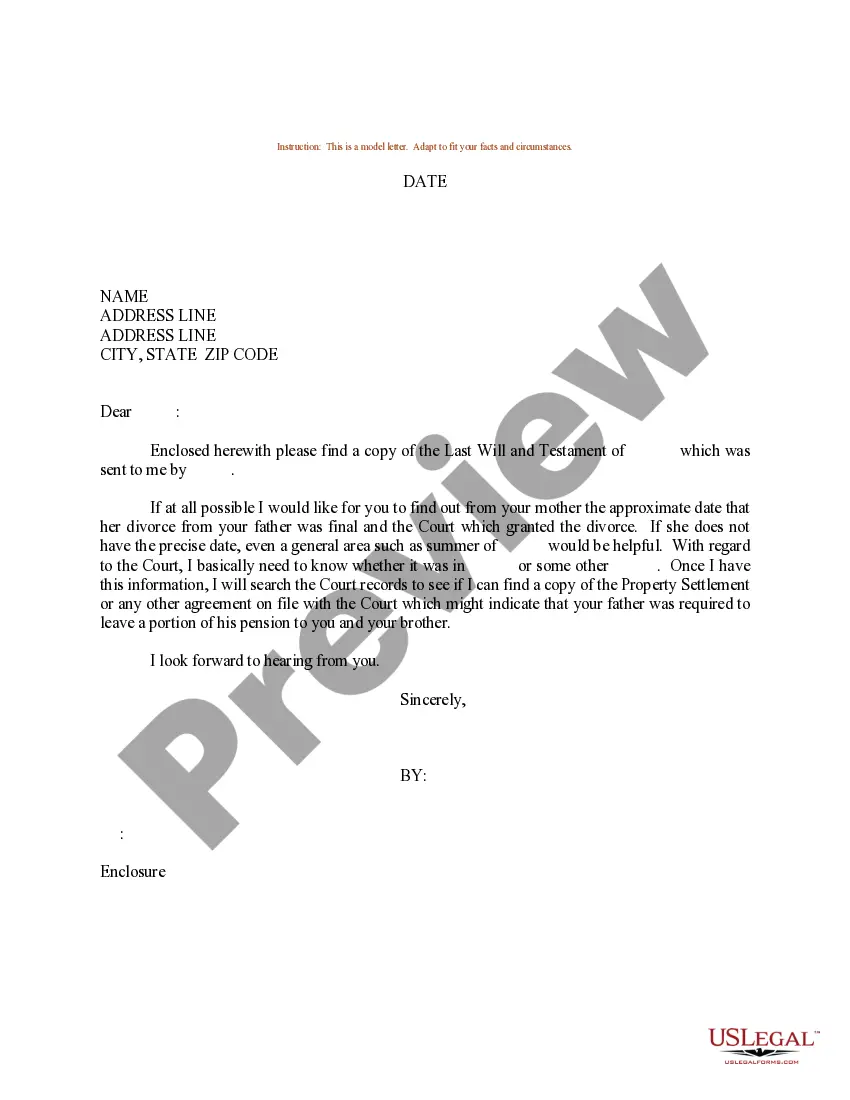
Guam Sample Letter transmitting Last Will and Testament of Decedent
Description
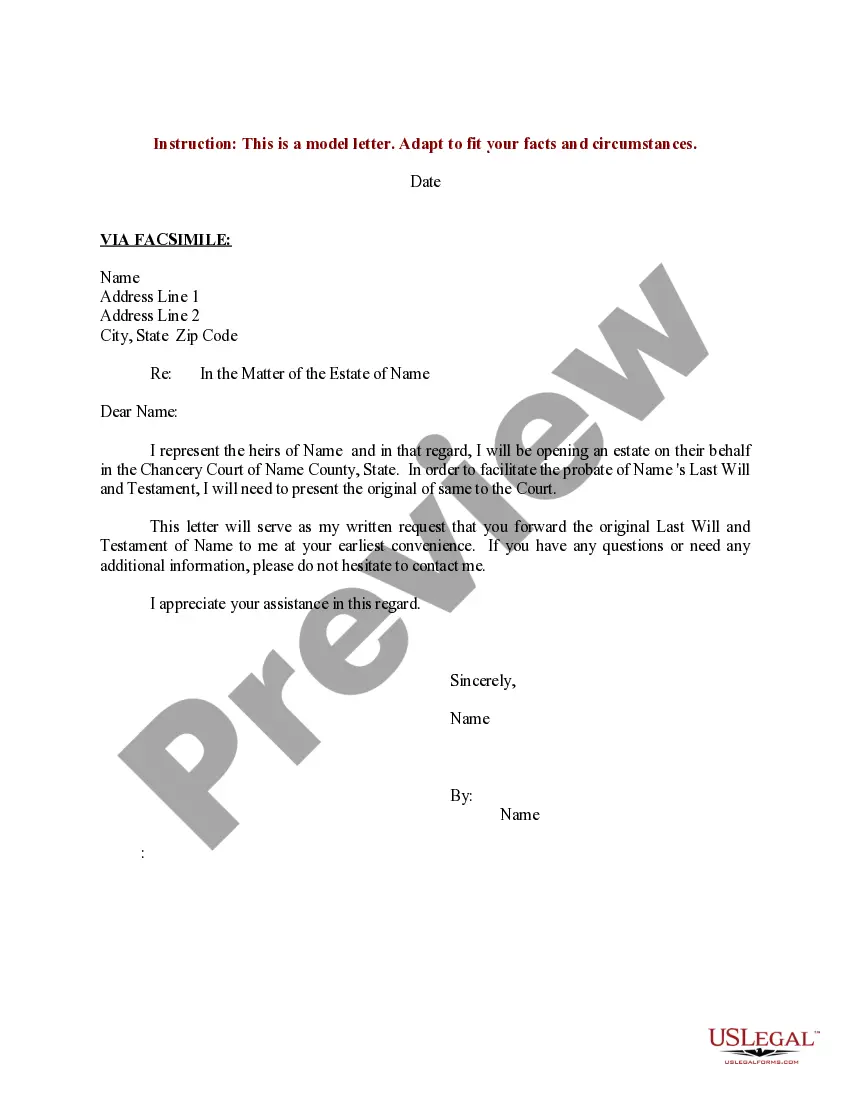
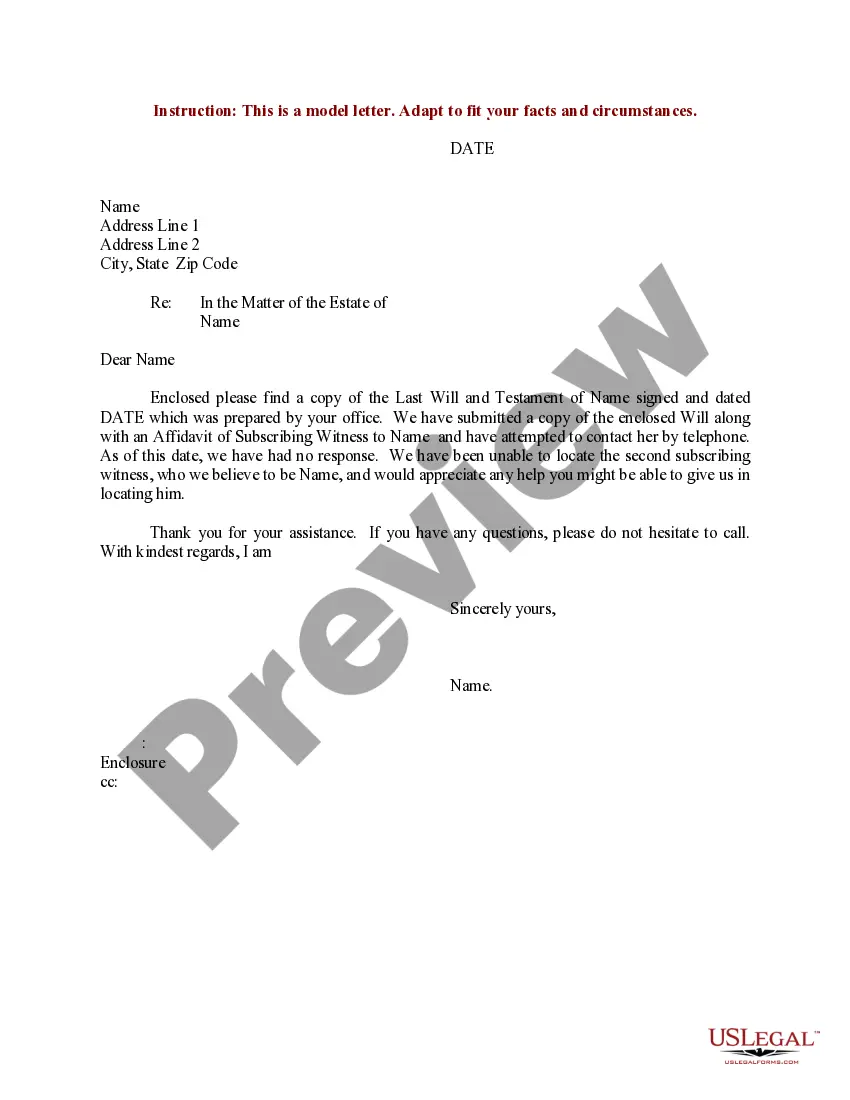
Get your form ready online
Our built-in tools help you complete, sign, share, and store your documents in one place.
Make edits, fill in missing information, and update formatting in US Legal Forms—just like you would in MS Word.
Download a copy, print it, send it by email, or mail it via USPS—whatever works best for your next step.
Sign and collect signatures with our SignNow integration. Send to multiple recipients, set reminders, and more. Go Premium to unlock E-Sign.
If this form requires notarization, complete it online through a secure video call—no need to meet a notary in person or wait for an appointment.
We protect your documents and personal data by following strict security and privacy standards.

Make edits, fill in missing information, and update formatting in US Legal Forms—just like you would in MS Word.

Download a copy, print it, send it by email, or mail it via USPS—whatever works best for your next step.

Sign and collect signatures with our SignNow integration. Send to multiple recipients, set reminders, and more. Go Premium to unlock E-Sign.

If this form requires notarization, complete it online through a secure video call—no need to meet a notary in person or wait for an appointment.

We protect your documents and personal data by following strict security and privacy standards.
Looking for another form?

How to fill out Sample Letter Transmitting Last Will And Testament Of Decedent?
You can spend time online looking for the valid document template that meets the federal and state requirements you desire. US Legal Forms provides thousands of valid forms that are reviewed by experts.
You can effortlessly obtain or create the Guam Sample Letter transmitting Last Will and Testament of Decedent from our service. If you already have a US Legal Forms account, you can Log In and then click the Obtain button. After that, you can complete, modify, print, or sign the Guam Sample Letter transmitting Last Will and Testament of Decedent. Each valid document template you purchase is yours permanently. To get an additional copy of the purchased form, visit the My documents section and click the appropriate button.
If you are visiting the US Legal Forms website for the first time, follow the simple steps outlined below: First, ensure that you have selected the correct document template for the area/region of your choice. Check the form description to confirm you have selected the right one. If available, utilize the Review button to look through the document template as well. If you wish to find another version of your form, use the Search field to locate the template that suits your needs and specifications. Once you have found the template you want, click Buy now to proceed. Choose the pricing plan you prefer, enter your details, and register for an account with US Legal Forms. Complete the transaction. You can use your credit card or PayPal account to pay for the valid form. Select the format of your document and download it to your device. Make adjustments to your document if necessary. You can complete, edit, sign, and print the Guam Sample Letter transmitting Last Will and Testament of Decedent. Access and print thousands of document templates using the US Legal Forms website, which offers the largest collection of valid forms. Utilize professional and state-specific templates to address your business or personal needs.
Form popularity
FAQ
Probate in Guam involves a legal process to validate a deceased person's will and oversee the distribution of their estate. The court reviews the will, appoints an executor, and ensures debts and taxes are settled before assets are distributed to beneficiaries. Utilizing a Guam Sample Letter transmitting Last Will and Testament of Decedent can assist in creating the necessary documentation to facilitate this process smoothly.
The final letter to beneficiaries from the executor summarizes the estate's administration and details the final distributions. It informs beneficiaries of their entitlements and provides closure regarding the estate's management. Including a Guam Sample Letter transmitting Last Will and Testament of Decedent can help ensure that this letter is clear and formal, fostering understanding among all involved.
Writing a letter to a deceased estate typically involves addressing the executor or personal representative. You should express your intent clearly, whether you are requesting information or seeking clarification about the estate. A Guam Sample Letter transmitting Last Will and Testament of Decedent can serve as a template to ensure all necessary details are included, making your communication more effective.
Estate distribution refers to the process of allocating a deceased person's assets to their heirs and beneficiaries. This process can be complex, involving various legal requirements. Proper documentation, such as a Guam Sample Letter transmitting Last Will and Testament of Decedent, simplifies the distribution process and helps prevent potential disputes among beneficiaries.
Final distribution refers to the last step in the probate process where the remaining assets of the estate are distributed to the beneficiaries. This occurs after all debts and taxes have been settled. It is essential to document this process correctly, often using a Guam Sample Letter transmitting Last Will and Testament of Decedent to ensure that all parties understand their entitlements.
Inheritance law in Guam dictates how an estate is distributed after a person's death. It varies depending on whether the deceased left a will or not. If there is a valid will, assets are distributed according to that document, which can include a Guam Sample Letter transmitting Last Will and Testament of Decedent to beneficiaries. For those without a will, assets are distributed based on Guam's intestacy laws.
Common items found in a letter of wishes include; Funeral instructions. Instructions regarding who to notify of your death. Details of how you would like your personal items to be distributed. Guidance to your executors and/or trustees on how you would like any money to be managed.
In terms of content, an Estate distribution letter should include: the deceased's personal details; a detailed and complete list of all assets and liabilities; the Beneficiary names and the details of their respective inheritances; any details on debt settlement and creditor communication;
7 elements to include in your letter of last instruction Contact information. ... Legal form, document, and property locations. ... Personal and financial passwords. ... Beneficiary information. ... Guidance for pets. ... Funeral or memorial service wishes. ... Legal and financial information and wishes.
It will include their full name, their relationship to you and clearly state that they should not receive any of your Estate, to ensure there can be no doubt that the exclusion is any other than deliberate and not a mistaken omission.