Guam Sample Letter Confirming Additional Time to Respond to Defendant's First Set of Interrogatories and First Request for Production of Documents
Description

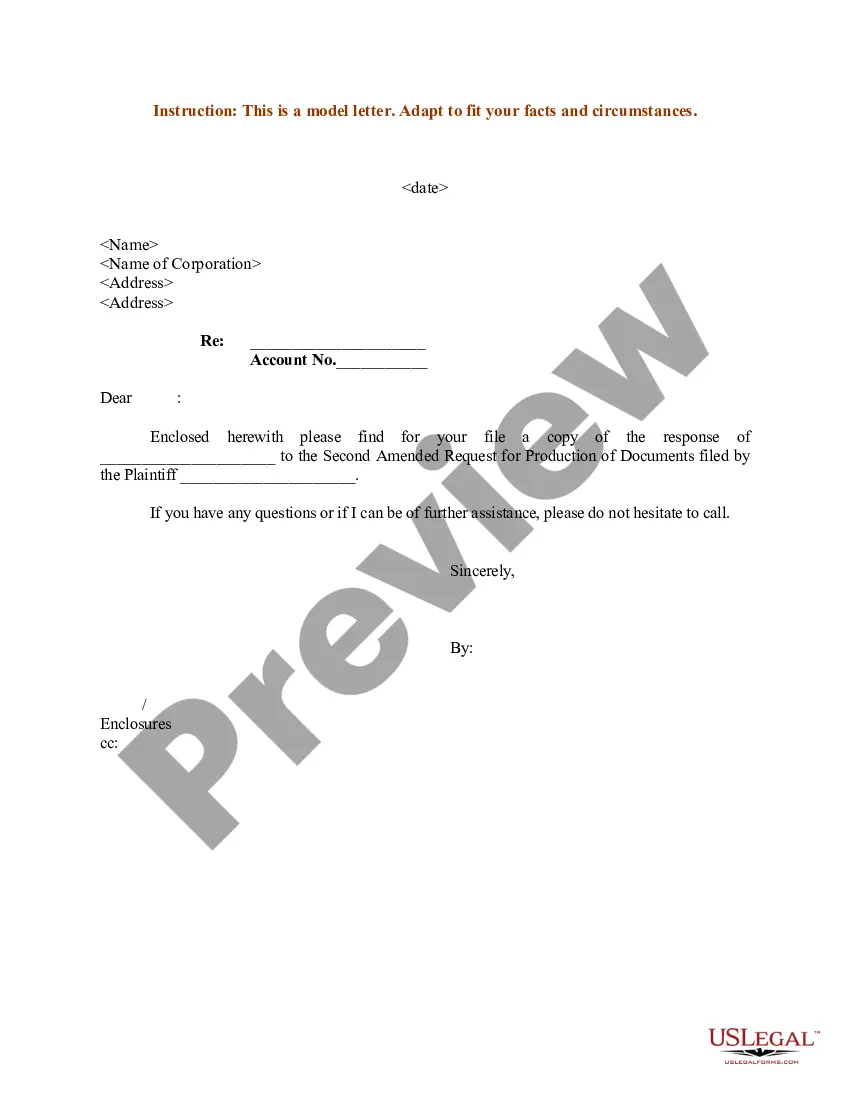
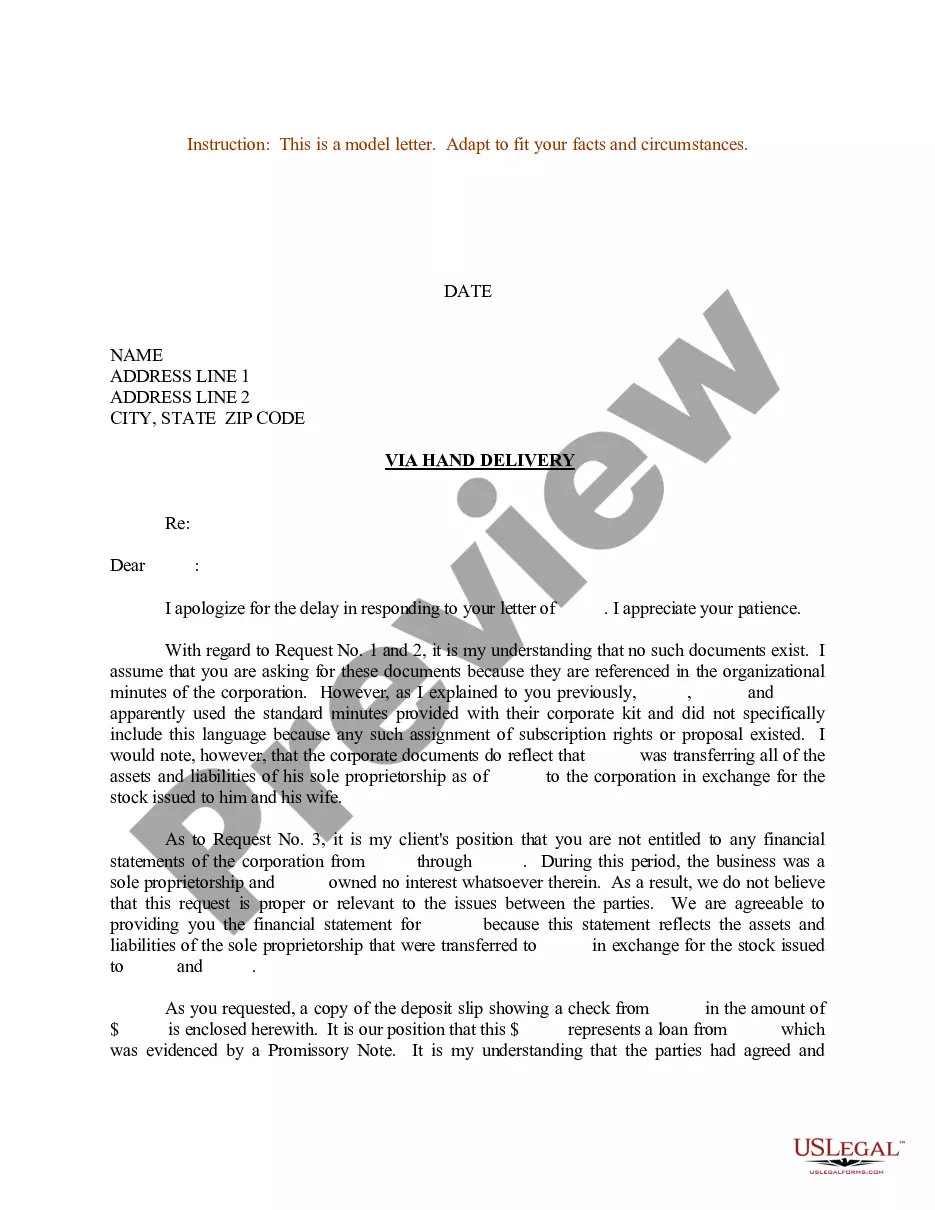
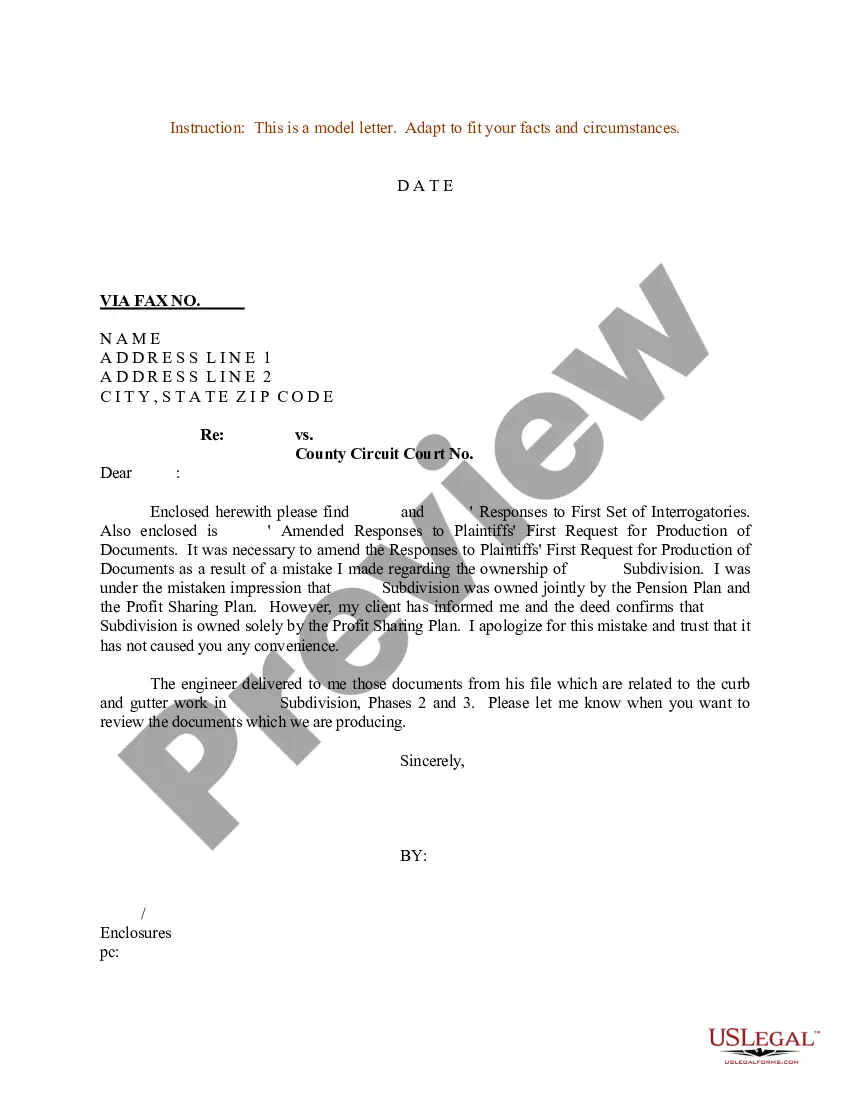
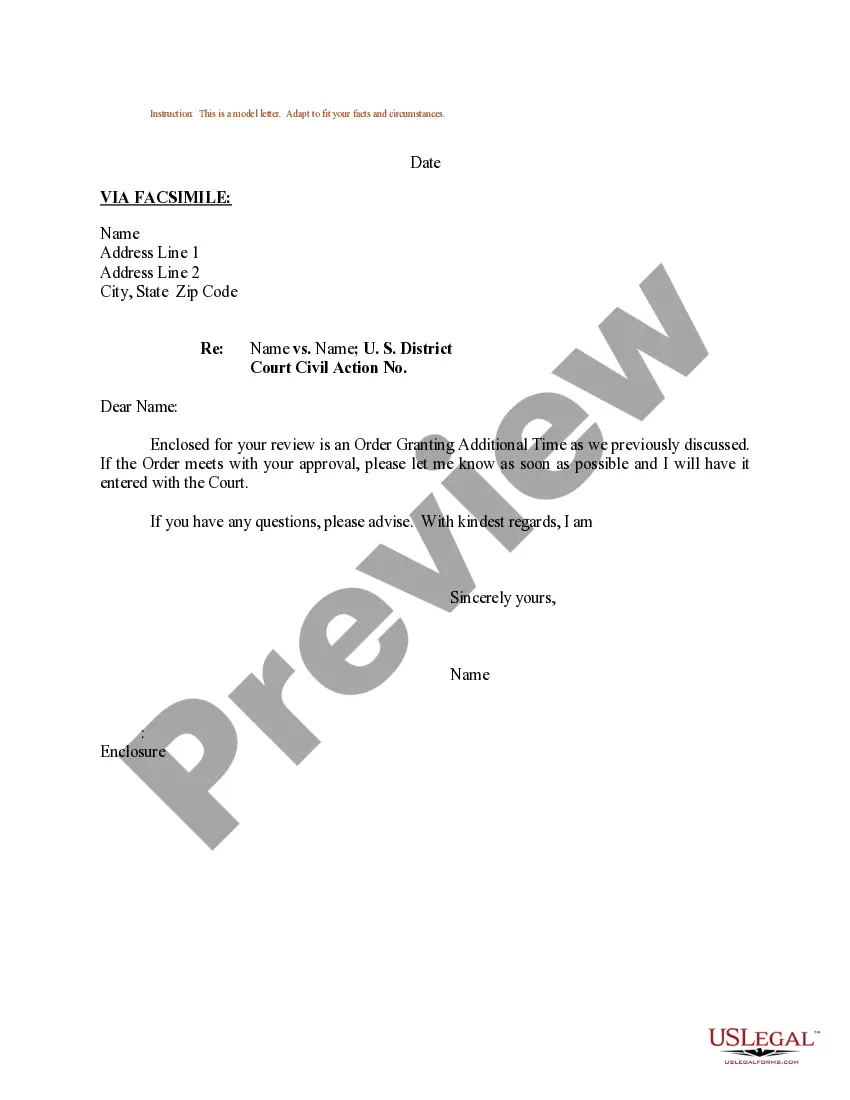
Get your form ready online
Our built-in tools help you complete, sign, share, and store your documents in one place.
Make edits, fill in missing information, and update formatting in US Legal Forms—just like you would in MS Word.
Download a copy, print it, send it by email, or mail it via USPS—whatever works best for your next step.
Sign and collect signatures with our SignNow integration. Send to multiple recipients, set reminders, and more. Go Premium to unlock E-Sign.
If this form requires notarization, complete it online through a secure video call—no need to meet a notary in person or wait for an appointment.
We protect your documents and personal data by following strict security and privacy standards.
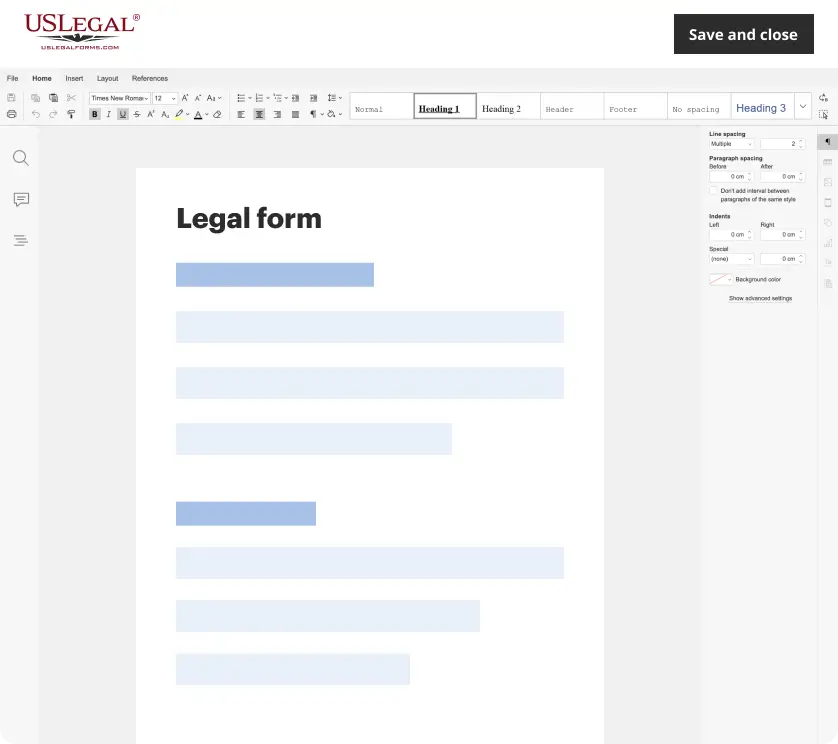
Make edits, fill in missing information, and update formatting in US Legal Forms—just like you would in MS Word.
Download a copy, print it, send it by email, or mail it via USPS—whatever works best for your next step.
Sign and collect signatures with our SignNow integration. Send to multiple recipients, set reminders, and more. Go Premium to unlock E-Sign.

If this form requires notarization, complete it online through a secure video call—no need to meet a notary in person or wait for an appointment.
We protect your documents and personal data by following strict security and privacy standards.
Looking for another form?



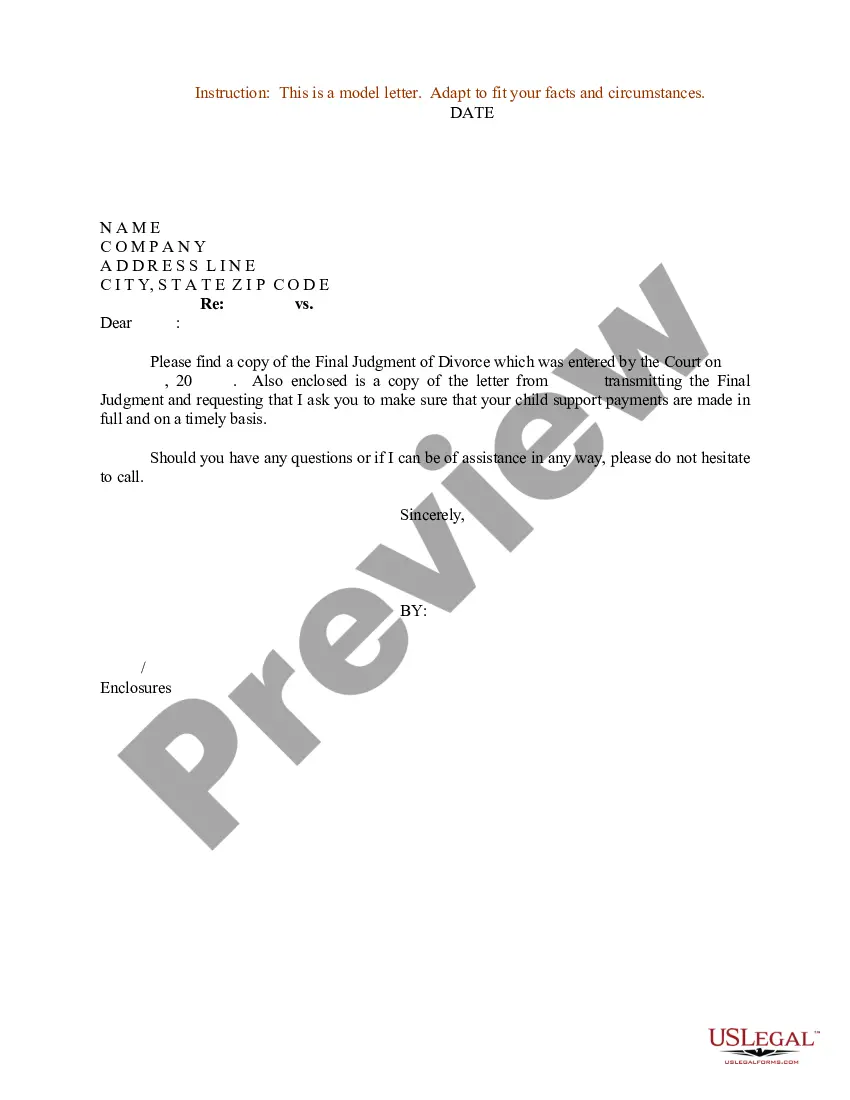



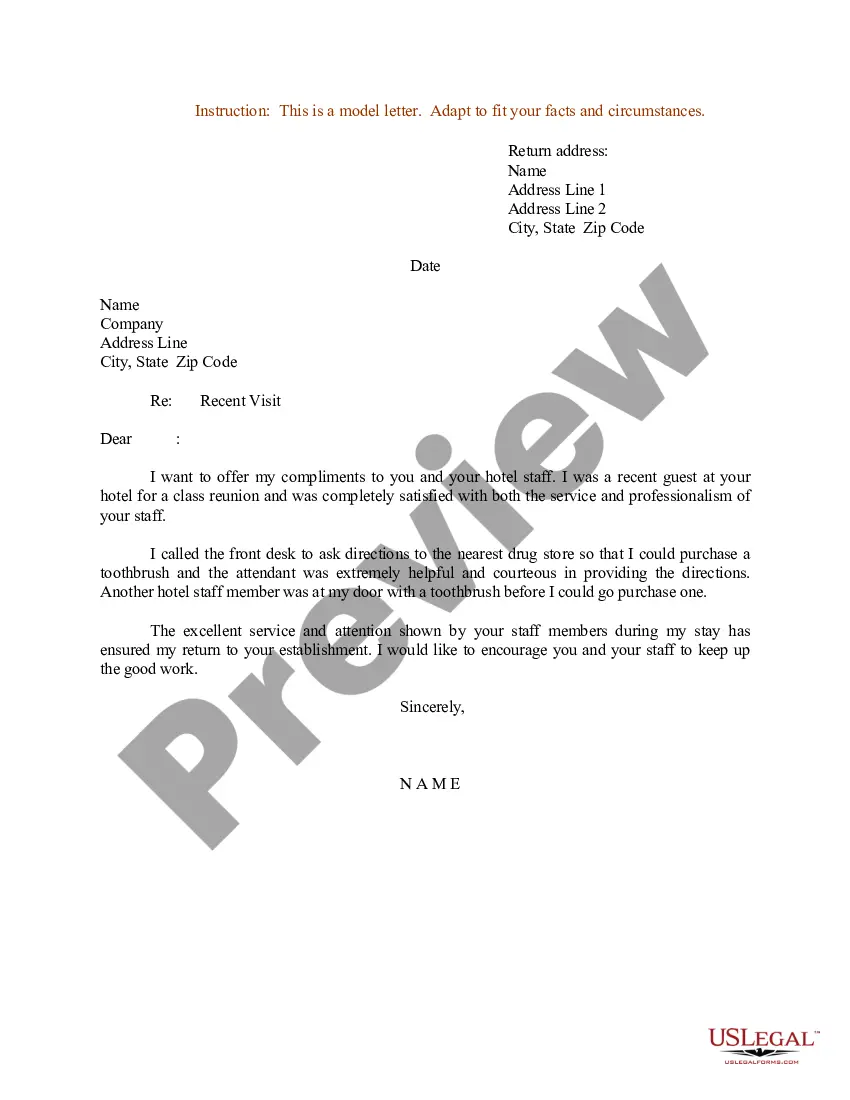

How to fill out Sample Letter Confirming Additional Time To Respond To Defendant's First Set Of Interrogatories And First Request For Production Of Documents?
US Legal Forms - one of the largest collections of legal documents in the United States - provides a broad array of legal document samples that you can download or print. Through the website, you can access thousands of forms for business and personal purposes, categorized by types, states, or keywords. You can find the most recent versions of forms such as the Guam Sample Letter Confirming Additional Time to Respond to Defendant's First Set of Interrogatories and First Request for Production of Documents in just a few minutes.
If you already possess a subscription, Log In and download the Guam Sample Letter Confirming Additional Time to Respond to Defendant's First Set of Interrogatories and First Request for Production of Documents from the US Legal Forms library. The Acquire button will appear on each form you view. You can access all previously saved forms from the My documents section of your account.
If you are using US Legal Forms for the first time, here are simple instructions to get started: Ensure you have selected the correct form for your city/state. Click the Preview button to review the form's content. Read the form description to confirm that you have chosen the right form. If the form does not meet your requirements, utilize the Search field at the top of the screen to find the one that does. If you are satisfied with the form, confirm your choice by clicking the Purchase now button. Then, select the pricing plan you prefer and provide your details to register for an account. Process the transaction. Use your credit card or PayPal account to complete the transaction. Choose the format and download the form to your device. Make modifications. Complete, edit, print, and sign the saved Guam Sample Letter Confirming Additional Time to Respond to Defendant's First Set of Interrogatories and First Request for Production of Documents.
- Every template you added to your account has no expiration date and belongs to you permanently.
- So, if you wish to download or print another version, just go to the My documents section and click on the form you need.
- Access the Guam Sample Letter Confirming Additional Time to Respond to Defendant's First Set of Interrogatories and First Request for Production of Documents with US Legal Forms, the most extensive library of legal document templates.
- Utilize a vast selection of professional and state-specific templates that fulfill your business or personal needs and requirements.
- Enjoy a user-friendly experience for all your legal document needs.
- Find the right legal documents with ease and efficiency.
Form popularity
FAQ
They are provided for your information. There is no form for your answer, but you typically have to respond in a specified format, using paper with numbers down the left-hand side, with your name and address at the top left, the name of the court and of the case, and the case number.
In law, interrogatories (also known as requests for further information) are a formal set of written questions propounded by one litigant and required to be answered by an adversary in order to clarify matters of fact and help to determine in advance what facts will be presented at any trial in the case.
First Set of Interrogatories means the Applicant's first set of interrogatories served on Opposer contemporaneously with these Requests.
A Request for Production (also known as a Demand for Inspection) asks the other side to produce and allow copying or inspection and measuring of a document or thing.
A nice prompt is ?a reply at your earliest convenience would be much appreciated.? Alternatively, ?I look forward to your reply.? If you need a response by a certain date or day, let them known, include a time to give more of a sense of urgency. ?I would appreciate your reply by Wednesday 7th at 5pm please.?.
Interrogatories are lists of questions sent to the other party that s/he must respond to in writing. You can use interrogatories to find out facts about a case but they cannot be used for questions that draw a legal conclusion.
A Request for Production (also known as a Demand for Inspection) asks the other side to produce and allow copying or inspection and measuring of a document or thing.
How to write a response email Respond quickly. ... Start with a greeting. ... Reply to questions or concerns in separate lines. ... Ask for confirmation of understanding. ... Include closing remarks and your signature.
Your response to a request for production consists of two parts: One part is a written response to the requests, in which you state under penalty of perjury that you will produce the requested items; that you will not produce and why; or that you object to a request on legal grounds.
What types of questions can I ask in interrogatories? Questions about the other party's position or arguments in the case. Questions about the facts of the case. Questions about the other party's knowledge or understanding of relevant events or circumstances. Questions about the other party's witnesses or experts.
