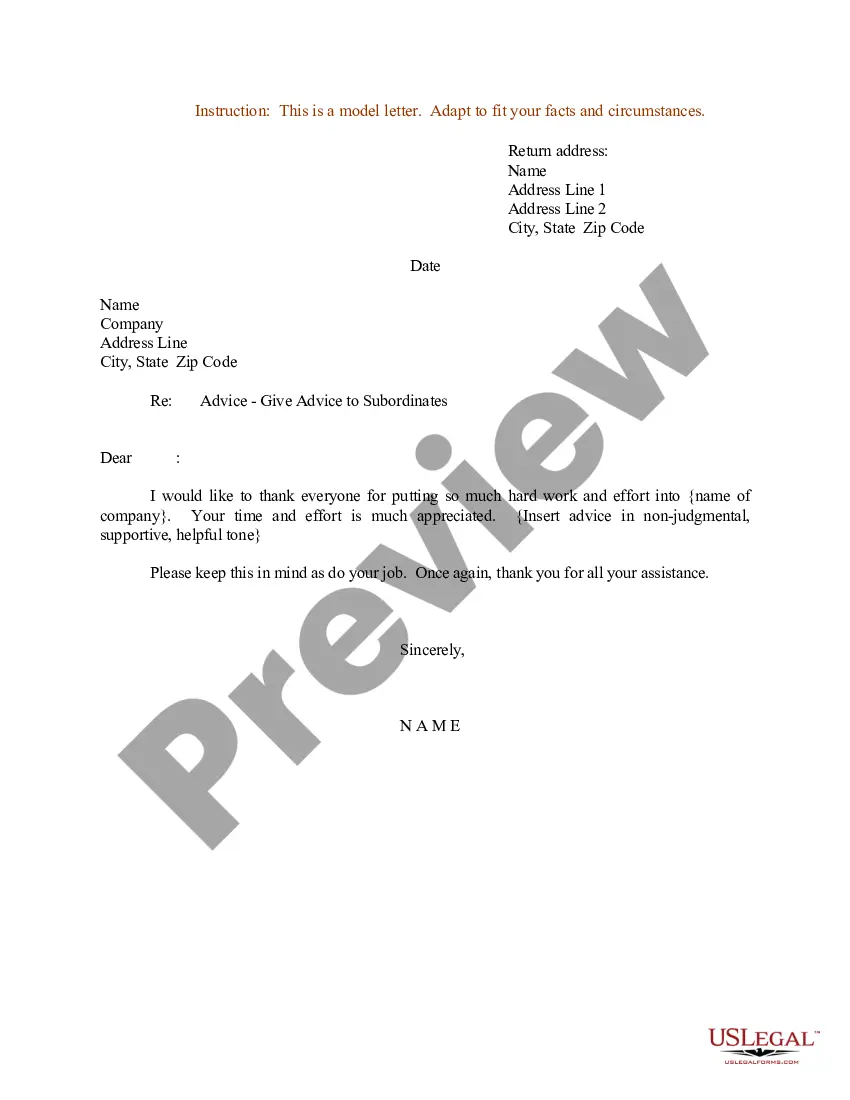
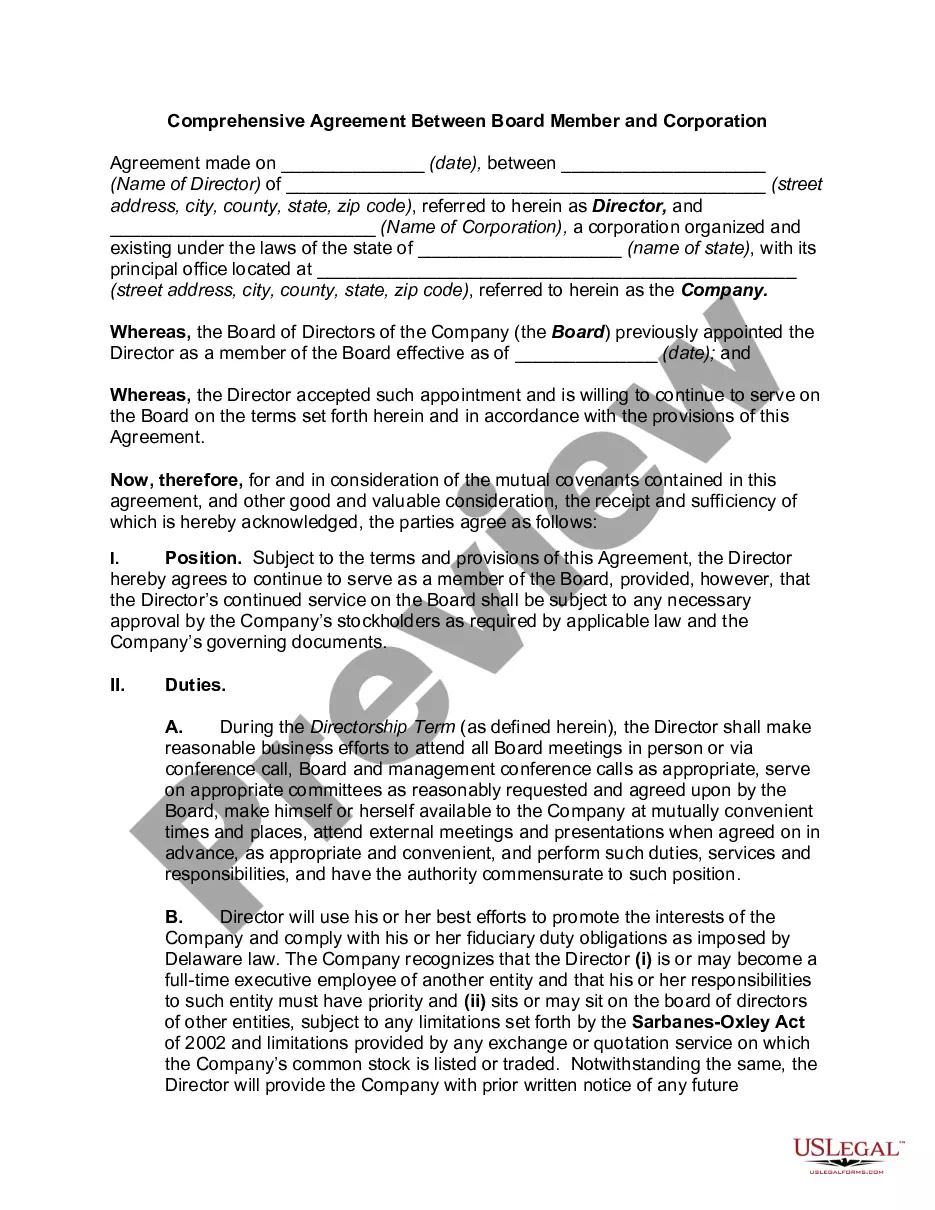
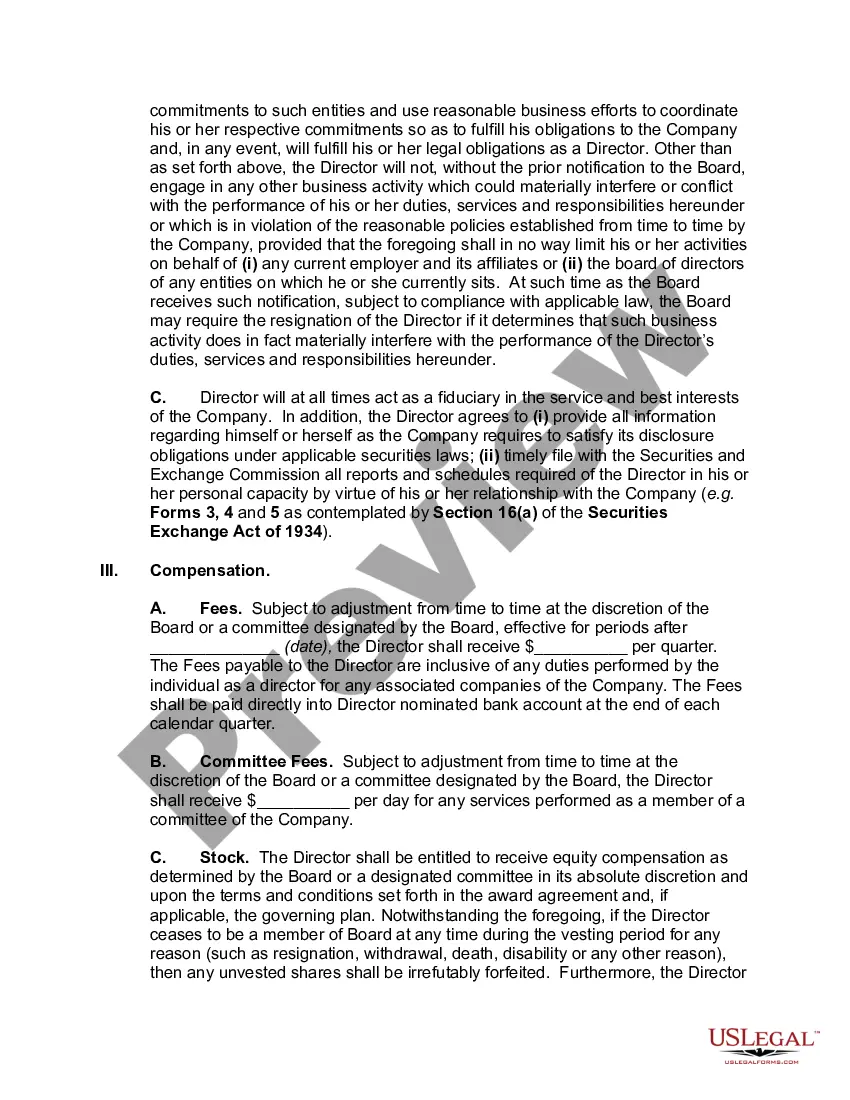
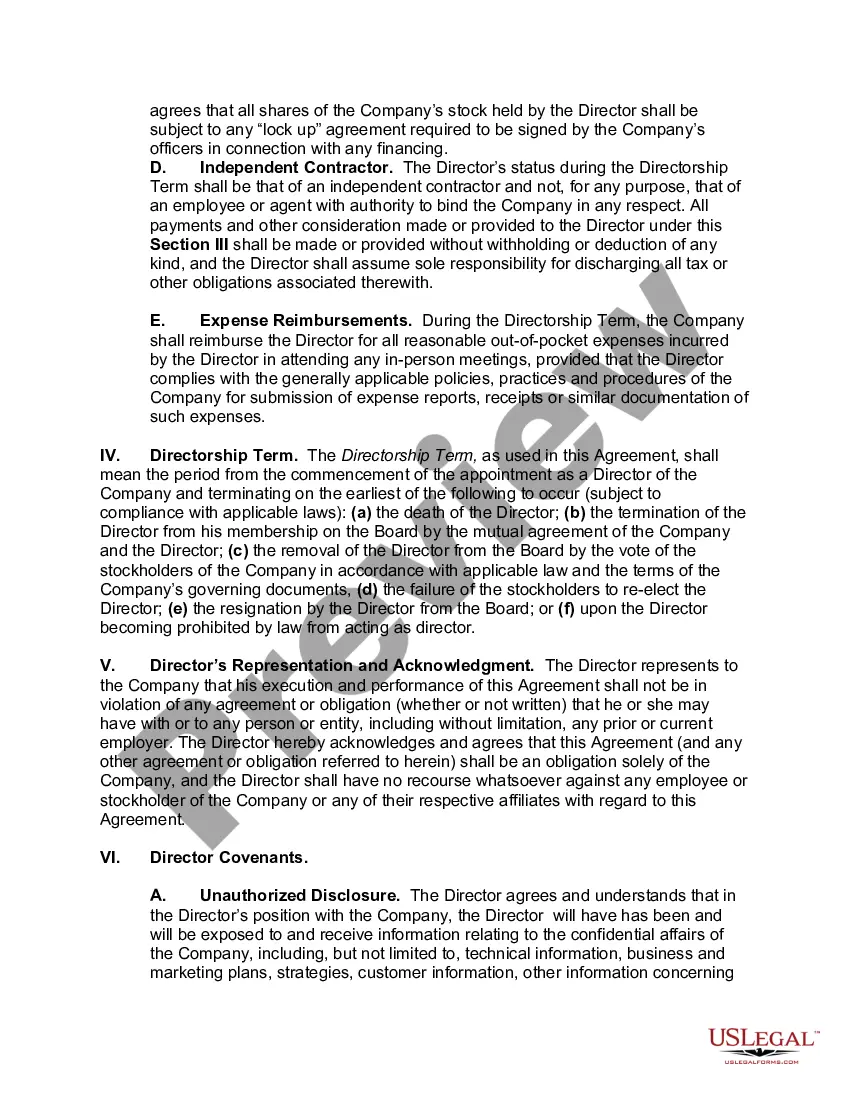
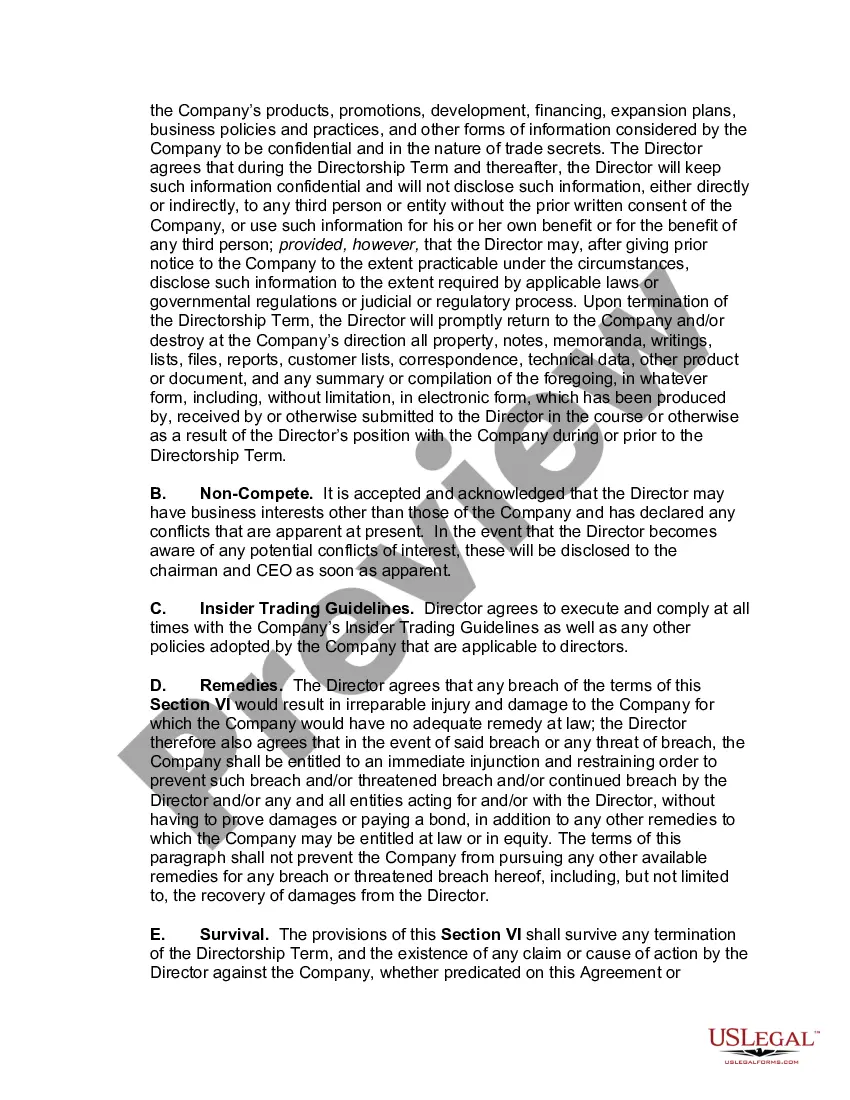
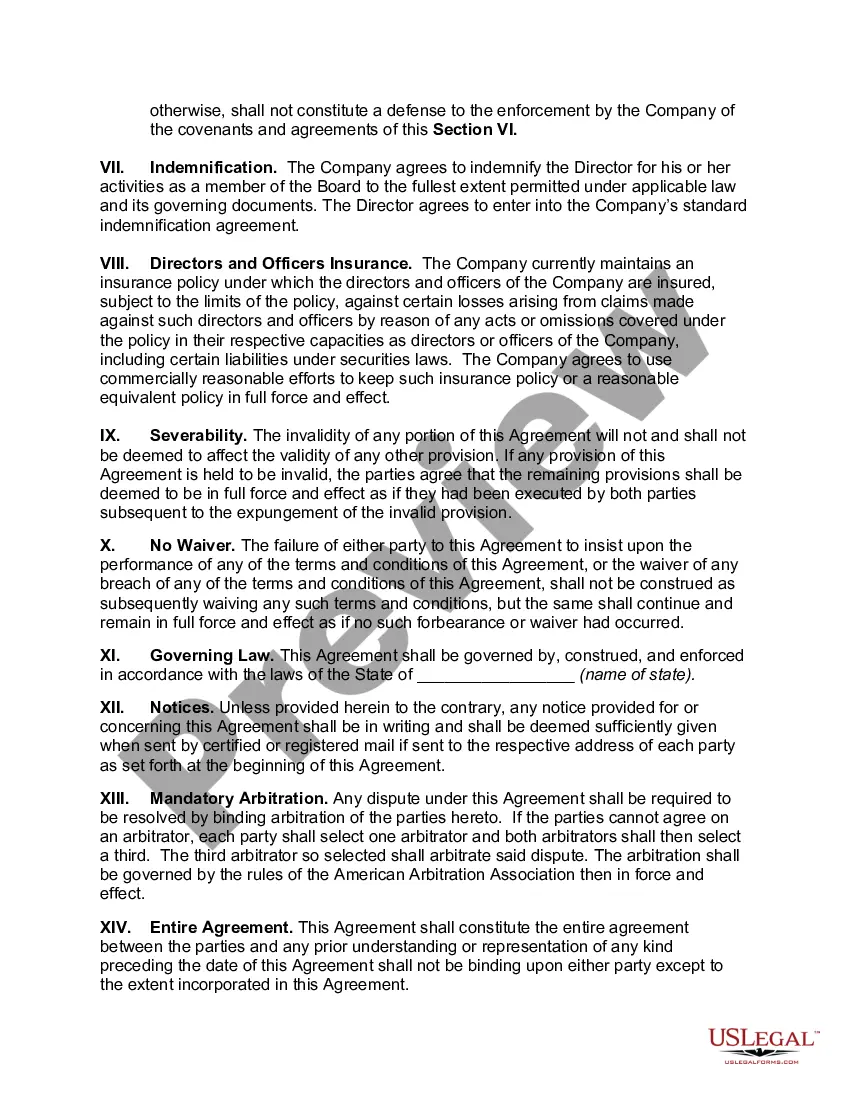
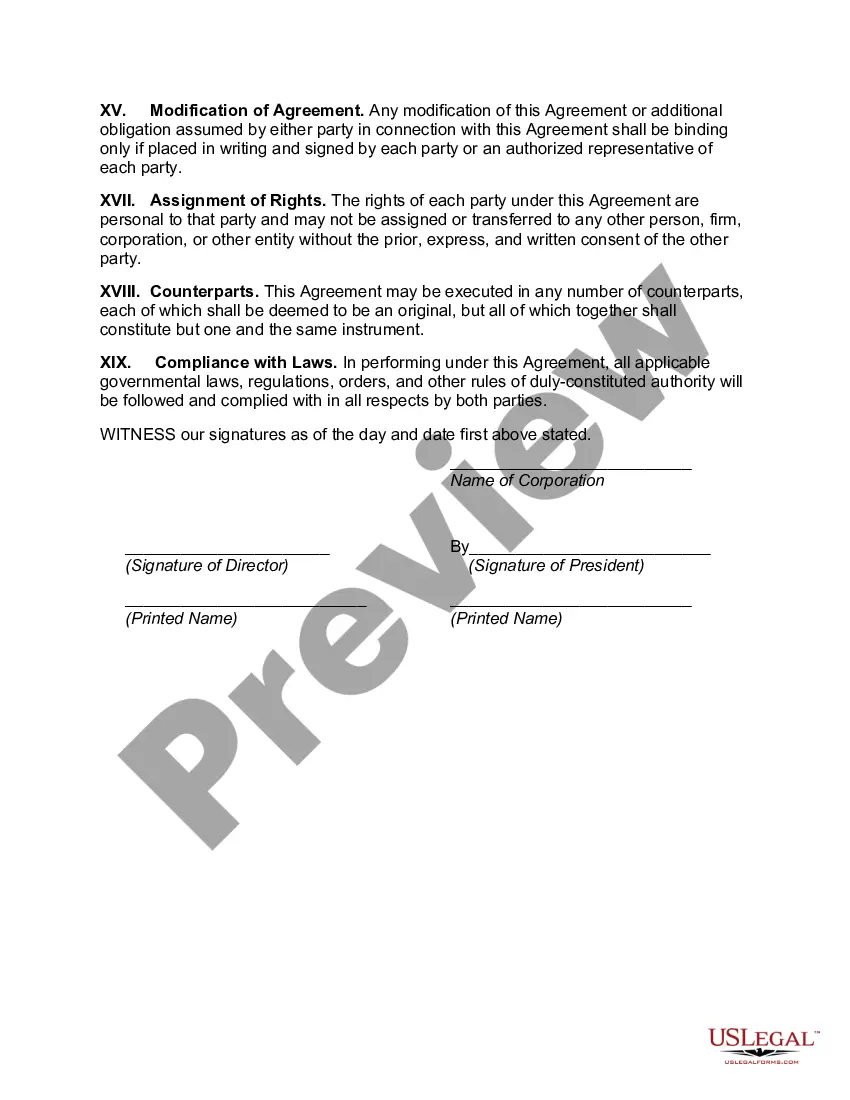
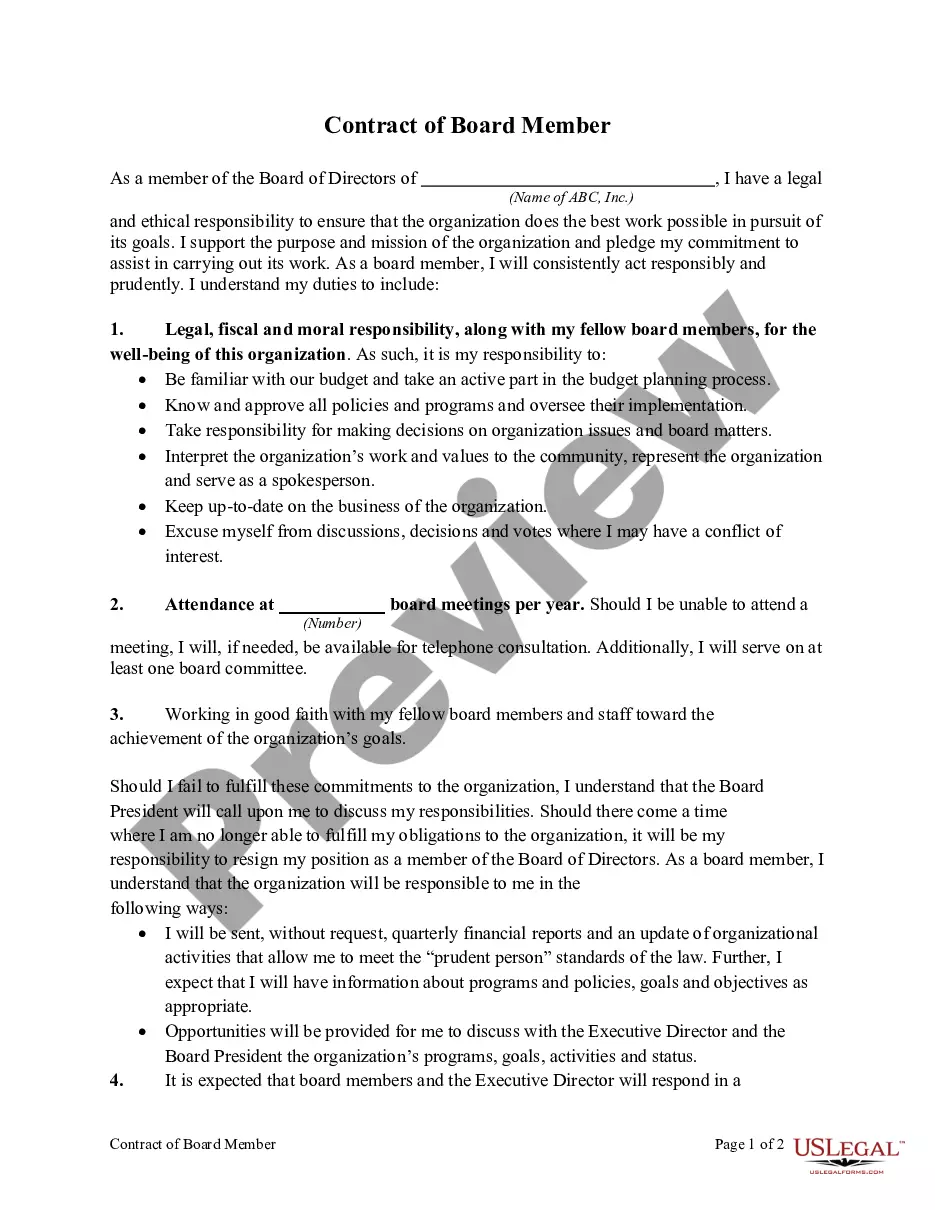
Georgia Comprehensive Agreement Between Board Member and Corporation
Description
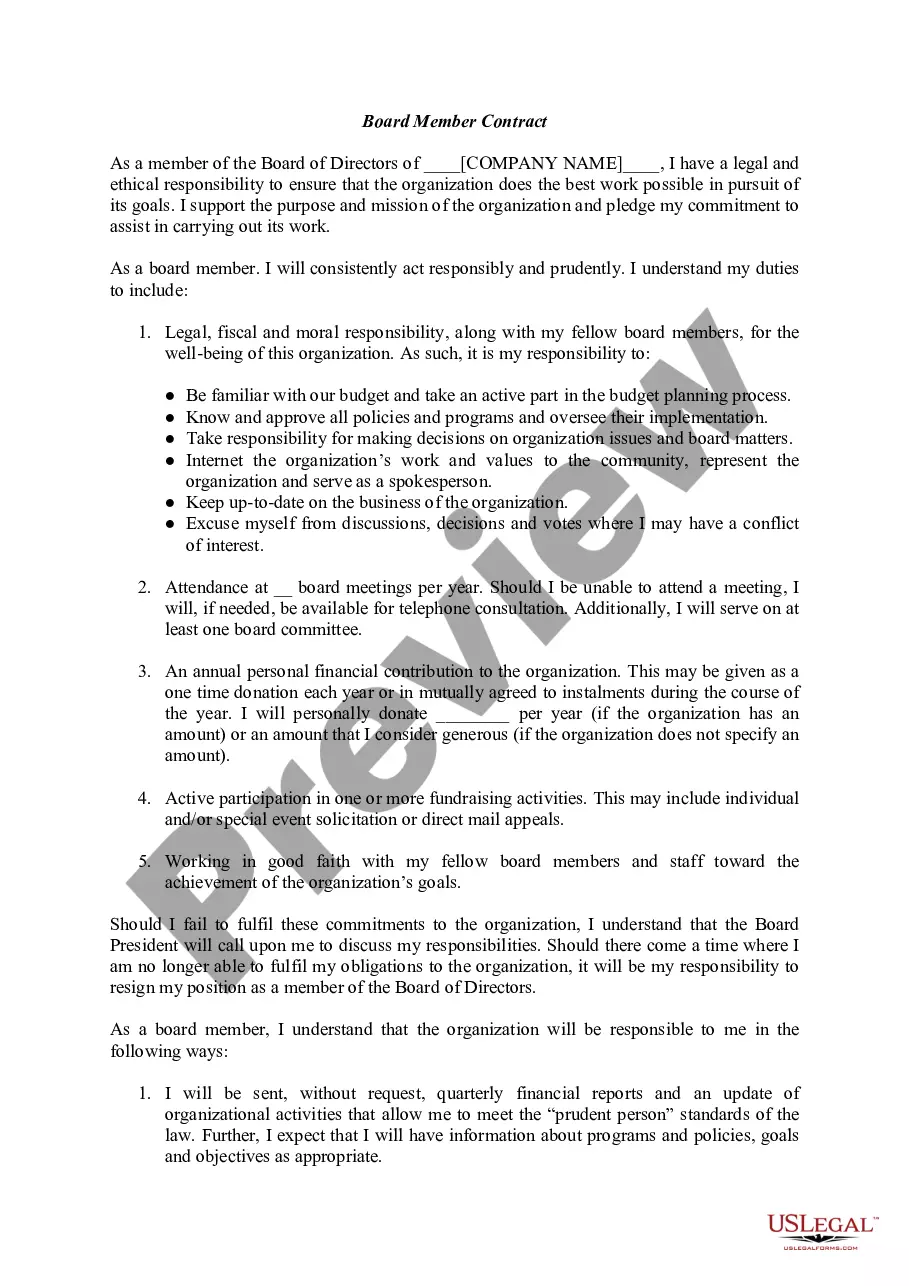
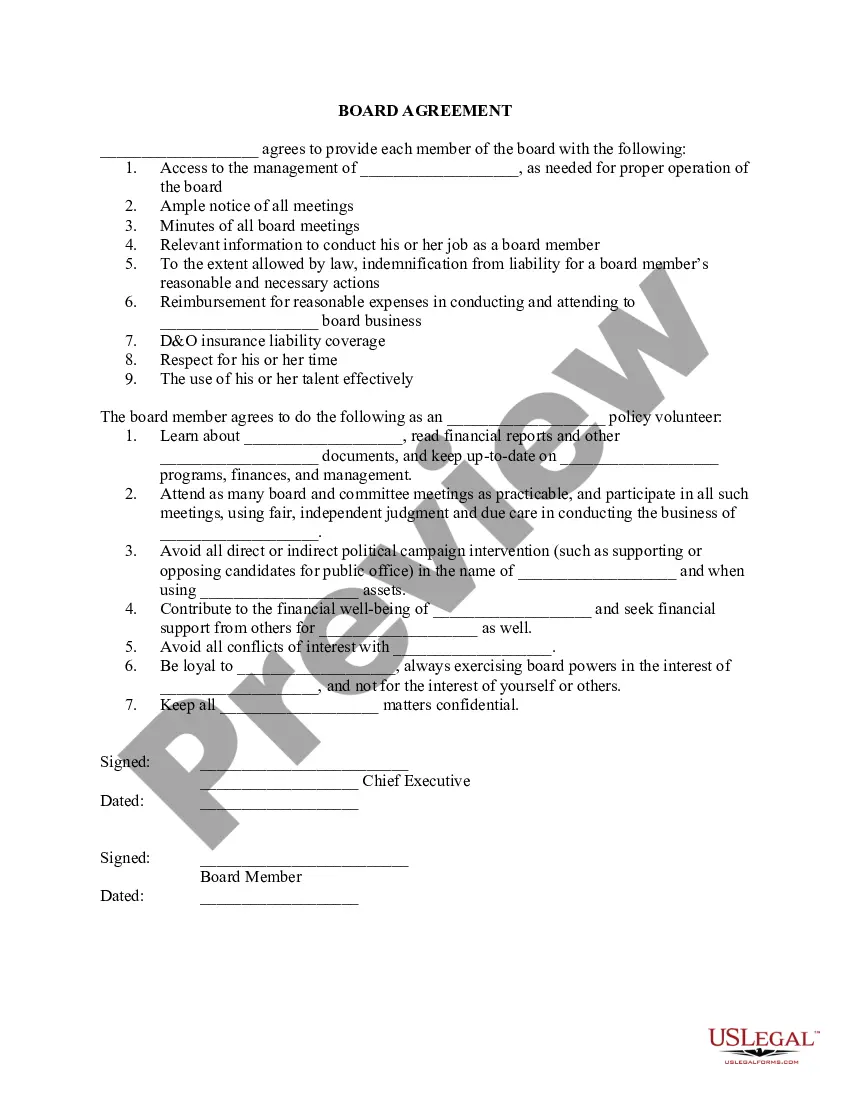
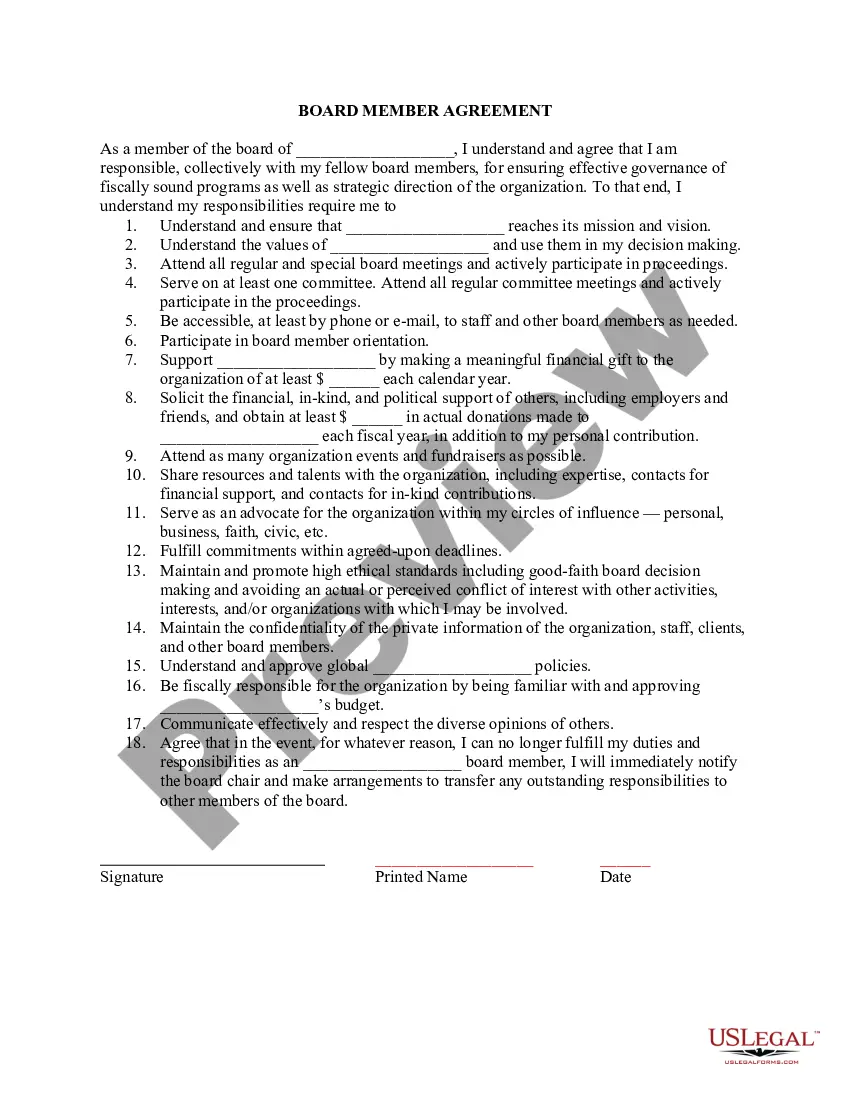
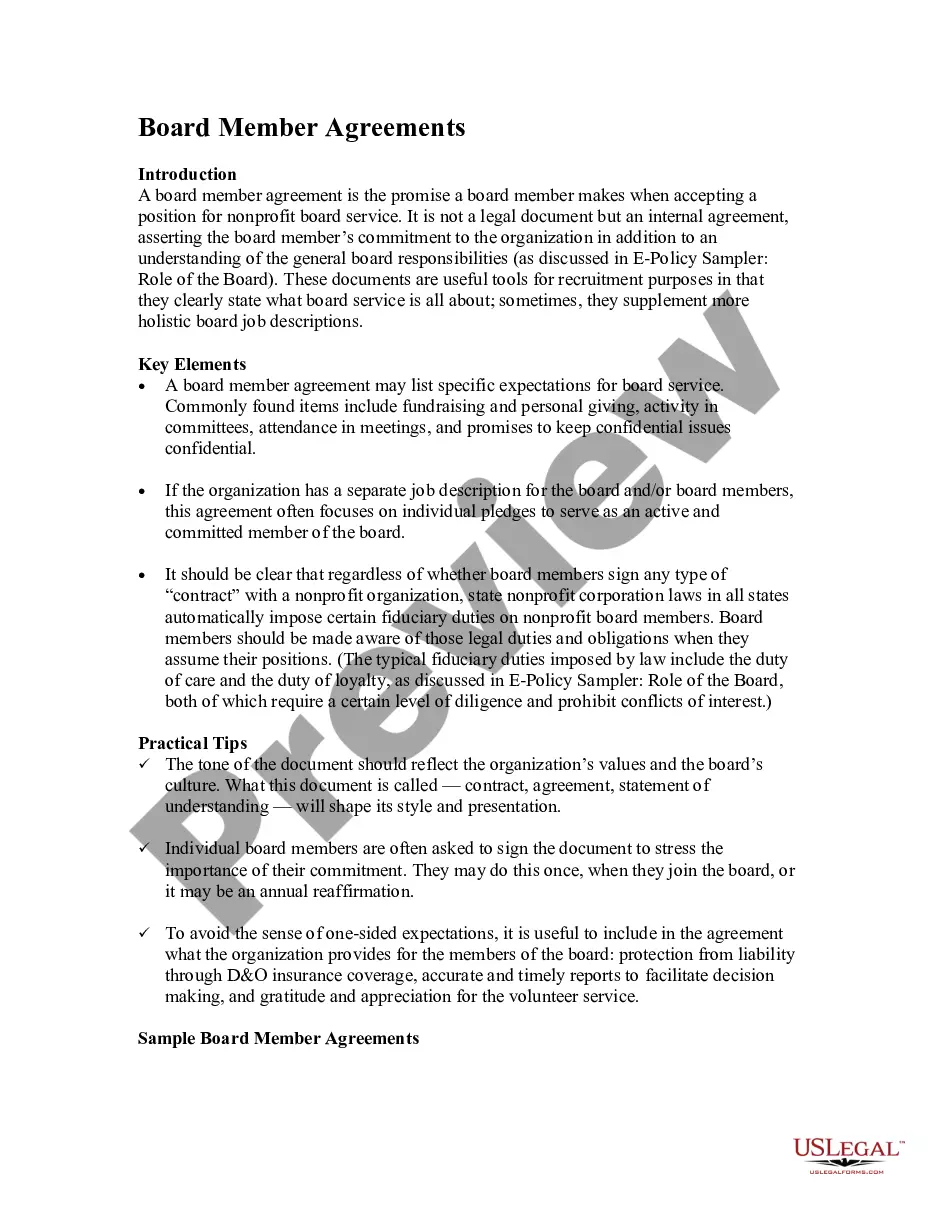
Get your form ready online
Our built-in tools help you complete, sign, share, and store your documents in one place.
Make edits, fill in missing information, and update formatting in US Legal Forms—just like you would in MS Word.
Download a copy, print it, send it by email, or mail it via USPS—whatever works best for your next step.
Sign and collect signatures with our SignNow integration. Send to multiple recipients, set reminders, and more. Go Premium to unlock E-Sign.
If this form requires notarization, complete it online through a secure video call—no need to meet a notary in person or wait for an appointment.
We protect your documents and personal data by following strict security and privacy standards.

Make edits, fill in missing information, and update formatting in US Legal Forms—just like you would in MS Word.

Download a copy, print it, send it by email, or mail it via USPS—whatever works best for your next step.

Sign and collect signatures with our SignNow integration. Send to multiple recipients, set reminders, and more. Go Premium to unlock E-Sign.

If this form requires notarization, complete it online through a secure video call—no need to meet a notary in person or wait for an appointment.

We protect your documents and personal data by following strict security and privacy standards.
Looking for another form?
How to fill out Comprehensive Agreement Between Board Member And Corporation?
It is feasible to dedicate time online attempting to locate the sanctioned paperwork template that aligns with the state and federal requirements you need.
US Legal Forms provides an extensive collection of legal templates that are evaluated by professionals.
It is easy to obtain or generate the Georgia Comprehensive Agreement Between Board Member and Corporation from our offerings.
If available, utilize the Preview button to review the document template as well. If you wish to find an alternative version of your form, use the Search field to locate the template that satisfies your needs and requirements.
- If you possess a US Legal Forms account, you may Log In and click the Download button.
- Subsequently, you can fill out, edit, print, or sign the Georgia Comprehensive Agreement Between Board Member and Corporation.
- Each legal document template you receive is yours permanently.
- To obtain another copy of the acquired form, navigate to the My documents tab and click the appropriate button.
- If you are accessing the US Legal Forms site for the first time, follow the simple instructions provided below.
- Firstly, ensure you have selected the correct document template for the state/city of your choice.
- Review the form description to confirm that you have chosen the precise form.
Form popularity
FAQ
If your business is a corporation, then you are required by law to have a board of directors. Depending on your particular corporate structure and your state, one or two directors may be all that's legally required.
The new member can be added to the board of directors if a majority of current members vote in support. Propose an amendment to the bylaws if the board is currently at the maximum number of members allowed. An amendment should be circulated in advance of a general board meeting, discussed at the meeting and voted upon.
Some states require a majority vote of shareholders to seat new board members, and a corporation's bylaws may require approval of a majority of shareholders before any new director can be added to the board.
Unlike voting trusts, voting agreements can be for any duration and do not need to be filed with the corporation.
In fact, smaller corporations might have one board member who is also an officer of the company. Some corporations might choose to have a board of directors who also all operate as officers of the business. Generally, the more complex and larger the corporation, the more people on the board.
Following such corporate practice is atypical for foundations. Survey data in the table below suggests only about 25% of foundation CEOs serve as voting board members and just a small percentage of foundations CEOs are voting board member while also serving as board chair.
The new member can be added to the board of directors if a majority of current members vote in support. Propose an amendment to the bylaws if the board is currently at the maximum number of members allowed. An amendment should be circulated in advance of a general board meeting, discussed at the meeting and voted upon.
Chosen by shareholders, the primary job of a public company's board of directors is to look out for the shareholders' interests. In fact, directors are legally required to put shareholders' interests ahead of their own. The board plays a supervisory role, overseeing corporate activities and assessing performance.
Corporate bylaws are legally required in Georgia. Georgia code § 14-2-206 (2021) requires the incorporators or board of directors to adopt bylaws. The board of directors usually adopts initial bylaws at the first organizational meeting.
The board creates governing documents, sets policy, and hires and directs executive employees. Board members have a fiduciary duty of responsibility for the corporation's assets and its shareholders. A good board member must have integrity, leadership experience, and a commitment to the company.