Georgia Road Maintenance Agreement
Description
Get your form ready online
Our built-in tools help you complete, sign, share, and store your documents in one place.
Make edits, fill in missing information, and update formatting in US Legal Forms—just like you would in MS Word.
Download a copy, print it, send it by email, or mail it via USPS—whatever works best for your next step.
Sign and collect signatures with our SignNow integration. Send to multiple recipients, set reminders, and more. Go Premium to unlock E-Sign.
If this form requires notarization, complete it online through a secure video call—no need to meet a notary in person or wait for an appointment.
We protect your documents and personal data by following strict security and privacy standards.

Make edits, fill in missing information, and update formatting in US Legal Forms—just like you would in MS Word.

Download a copy, print it, send it by email, or mail it via USPS—whatever works best for your next step.

Sign and collect signatures with our SignNow integration. Send to multiple recipients, set reminders, and more. Go Premium to unlock E-Sign.

If this form requires notarization, complete it online through a secure video call—no need to meet a notary in person or wait for an appointment.

We protect your documents and personal data by following strict security and privacy standards.
Looking for another form?
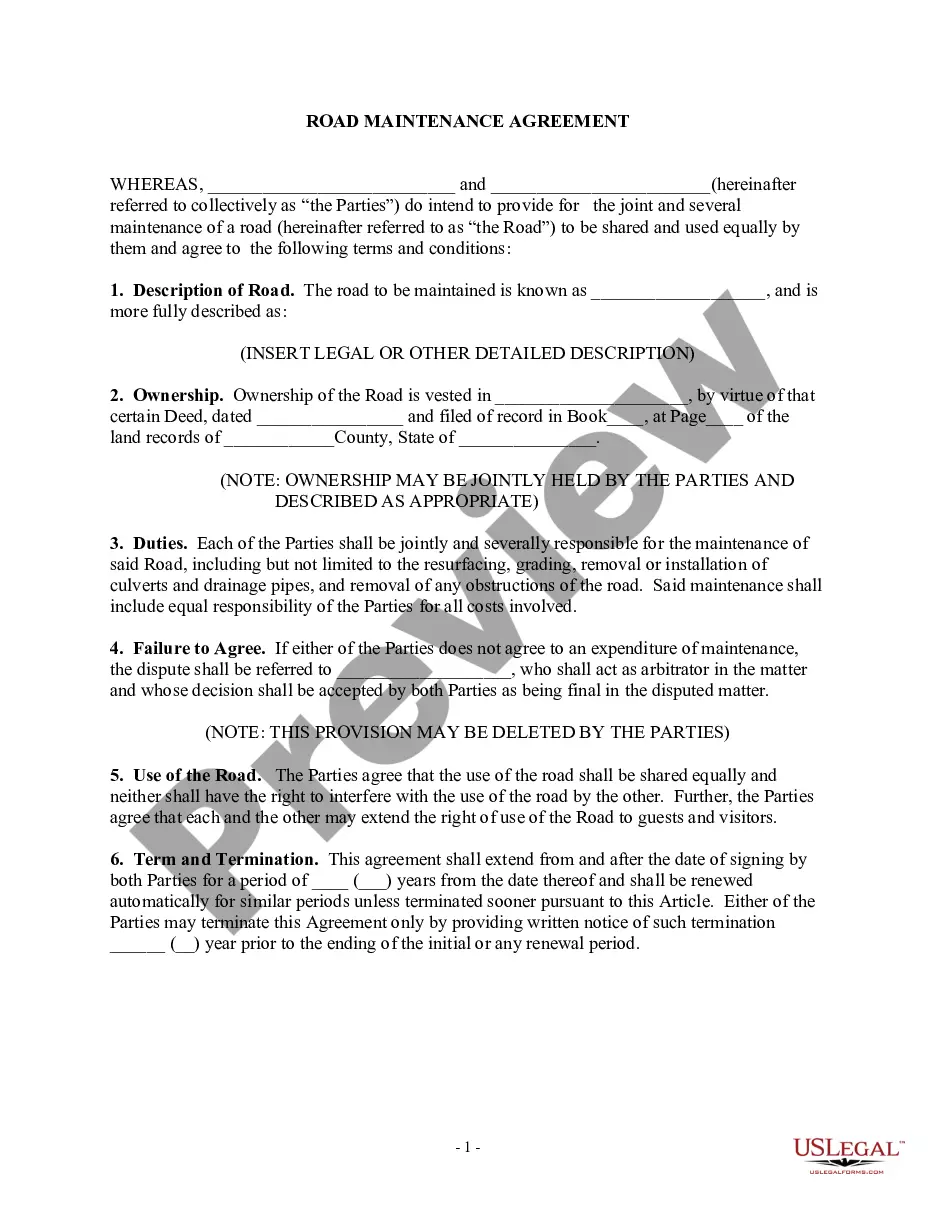
How to fill out Road Maintenance Agreement?
US Legal Forms - among the most prominent repositories of legal documents in the USA - provides an array of legal form templates that you can download or print.
By utilizing the website, you can access thousands of forms for business and personal use, categorized by categories, states, or keywords. You can find the latest versions of forms such as the Georgia Road Maintenance Agreement in just minutes.
If you currently have a membership, Log In and download the Georgia Road Maintenance Agreement from the US Legal Forms library. The Download button will be visible on every form you view. You can access all previously downloaded forms in the My documents section of your account.
Complete the transaction. Use your credit card or PayPal account to finalize the payment.
Select the format and download the form to your device.
- Ensure you have selected the correct form for your city/state.
- Click the Review button to examine the form's details.
- Read the form summary to confirm you've chosen the correct form.
- If the form does not meet your requirements, use the Search box at the top of the screen to find the appropriate one.
- Once satisfied with the form, confirm your choice by clicking the Download now button.
- Then, choose your preferred payment plan and provide your information to register for an account.
Form popularity
FAQ
To write a Georgia Road Maintenance Agreement, start by clearly defining the responsibilities of each party involved. Include sections on the scope of work, payment terms, duration of the agreement, and methods for resolving disputes. You can use platforms like uslegalforms to access templates that simplify this process and ensure you cover all necessary legal bases.
A Georgia Road Maintenance Agreement covers various aspects, including road repairs, resurfacing, drainage management, and snow removal. Additionally, it may specify how maintenance costs will be divided among property owners or stakeholders. By detailing these aspects, the agreement ensures all necessary maintenance services are adequately addressed.
A maintenance contract in Georgia typically involves a written agreement outlining the specific maintenance tasks to be performed, as well as the parties responsible for those tasks. These contracts are often reviewed periodically to ensure compliance with agreed terms. Effective maintenance contracts can lead to better road conditions and lower long-term costs.
An AMC, or Association for Maintenance Contracts, offers a unified approach to managing road upkeep among various stakeholders. It fosters collaboration and ensures that all voices are heard when making decisions regarding maintenance activities. This is particularly valuable in Georgia, where local governance can vary widely.
A maintenance agreement is important because it provides structure and accountability for road maintenance in Georgia. It helps prevent deterioration of the road over time, promoting safety and usability. By having this agreement, all parties know their responsibilities and can work together effectively.
The main purpose of a Georgia Road Maintenance Agreement is to establish a formal understanding between parties regarding road upkeep. This agreement helps maintain road quality, ensures safety for users, and defines how costs will be shared. It serves as a framework for collaboration and communication among stakeholders.
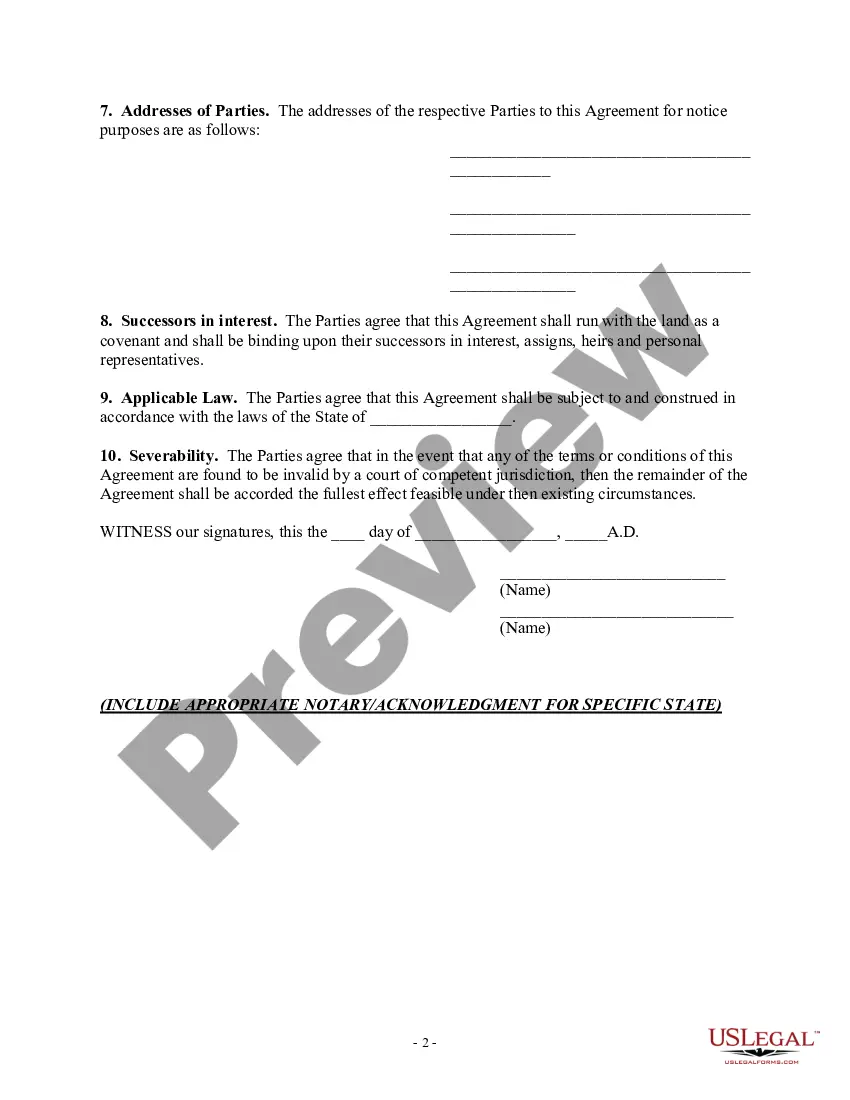
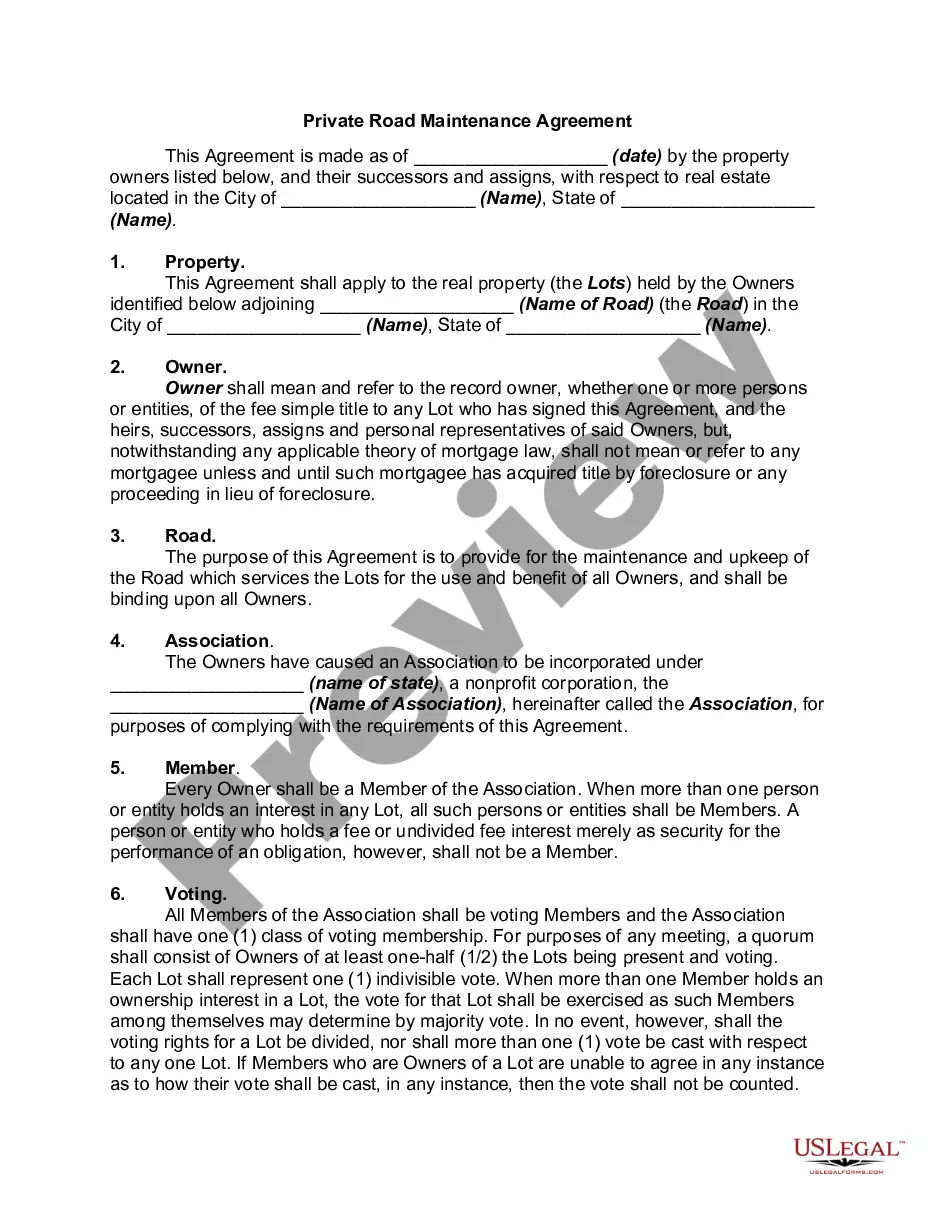
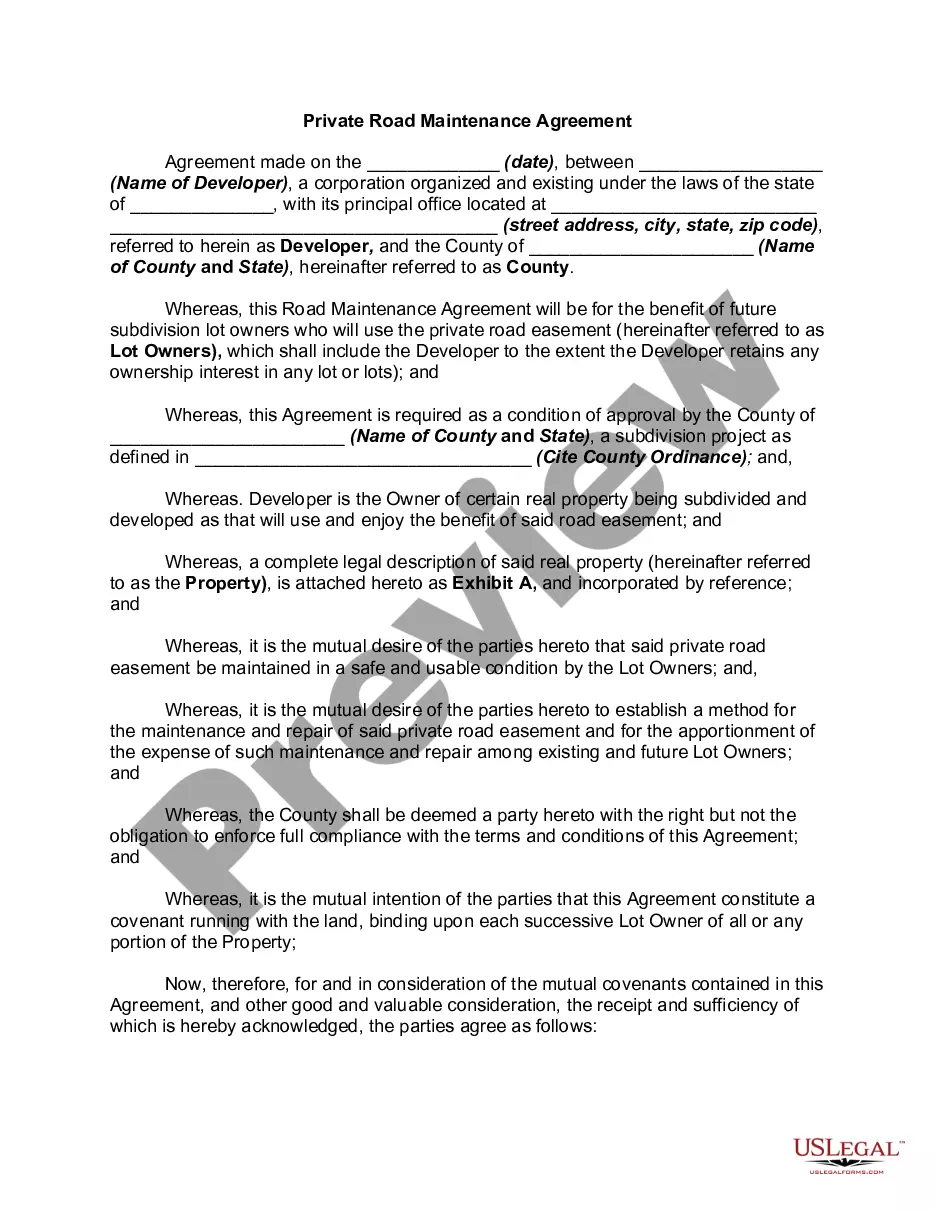
A Georgia Road Maintenance Agreement should clearly outline the responsibilities of each party involved in maintaining the road. Key elements include the scope of work, frequency of maintenance activities, funding mechanisms, and procedures for dispute resolution. By defining these aspects, all parties can ensure clarity and prevent future misunderstandings.
Road maintenance is typically managed by local or state governments, depending on the road's designation. State governments handle highways and interstates, while local governments focus on city and residential roads. A Georgia Road Maintenance Agreement can streamline communication between residents and local authorities, encouraging proactive maintenance and better road conditions for all.
In Georgia, road maintenance is generally carried out by local departments of transportation or county authorities. These entities focus on ensuring roadways are safe and serviceable for the public. By utilizing a Georgia Road Maintenance Agreement, residents can collaborate effectively with these departments and have a say in maintaining the roads that serve their community.
Control of the roads usually falls to the local government or county authorities. They have the authority to implement regulations and maintain road conditions. However, with a Georgia Road Maintenance Agreement, communities can outline specific terms for shared control and responsibilities, fostering a cooperative approach to road management among residents.