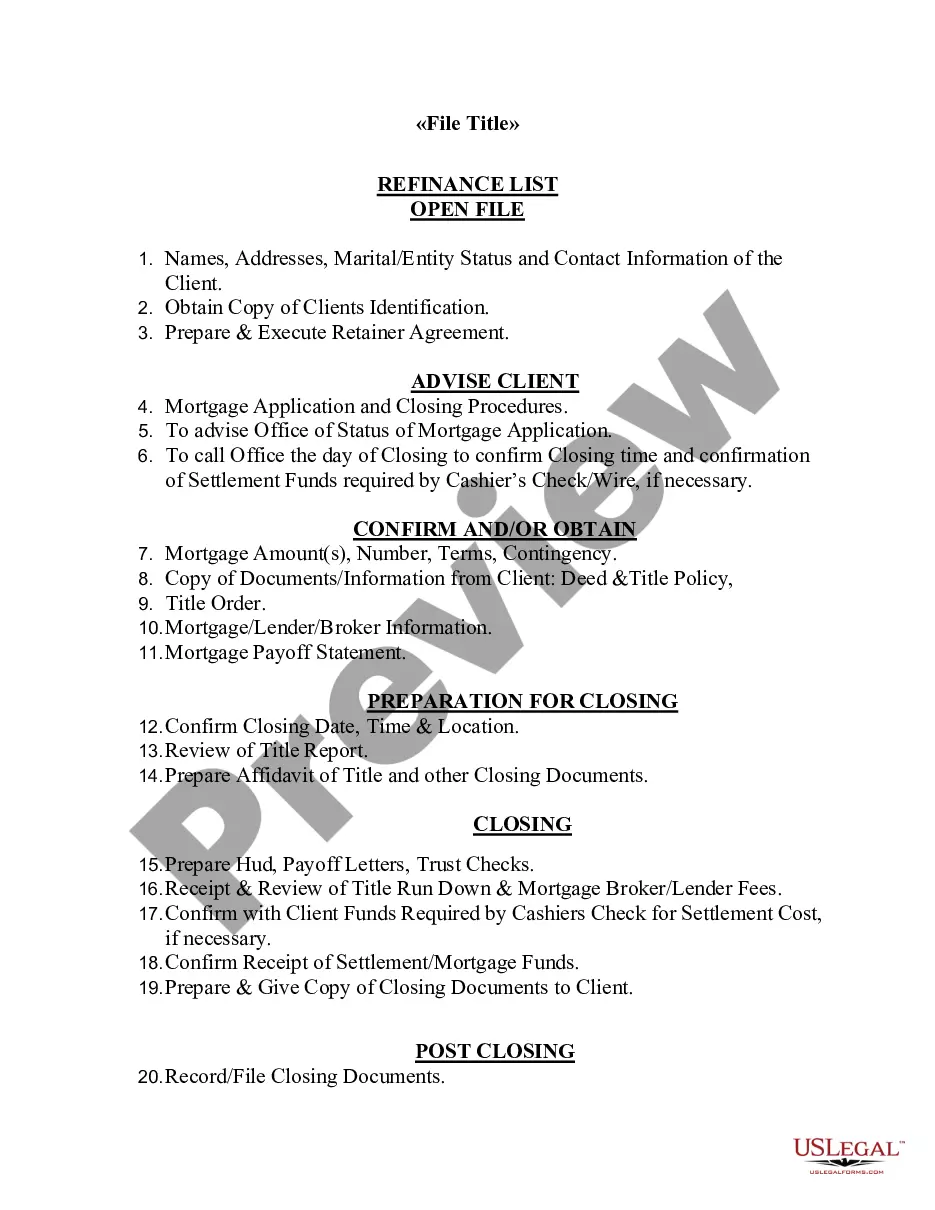
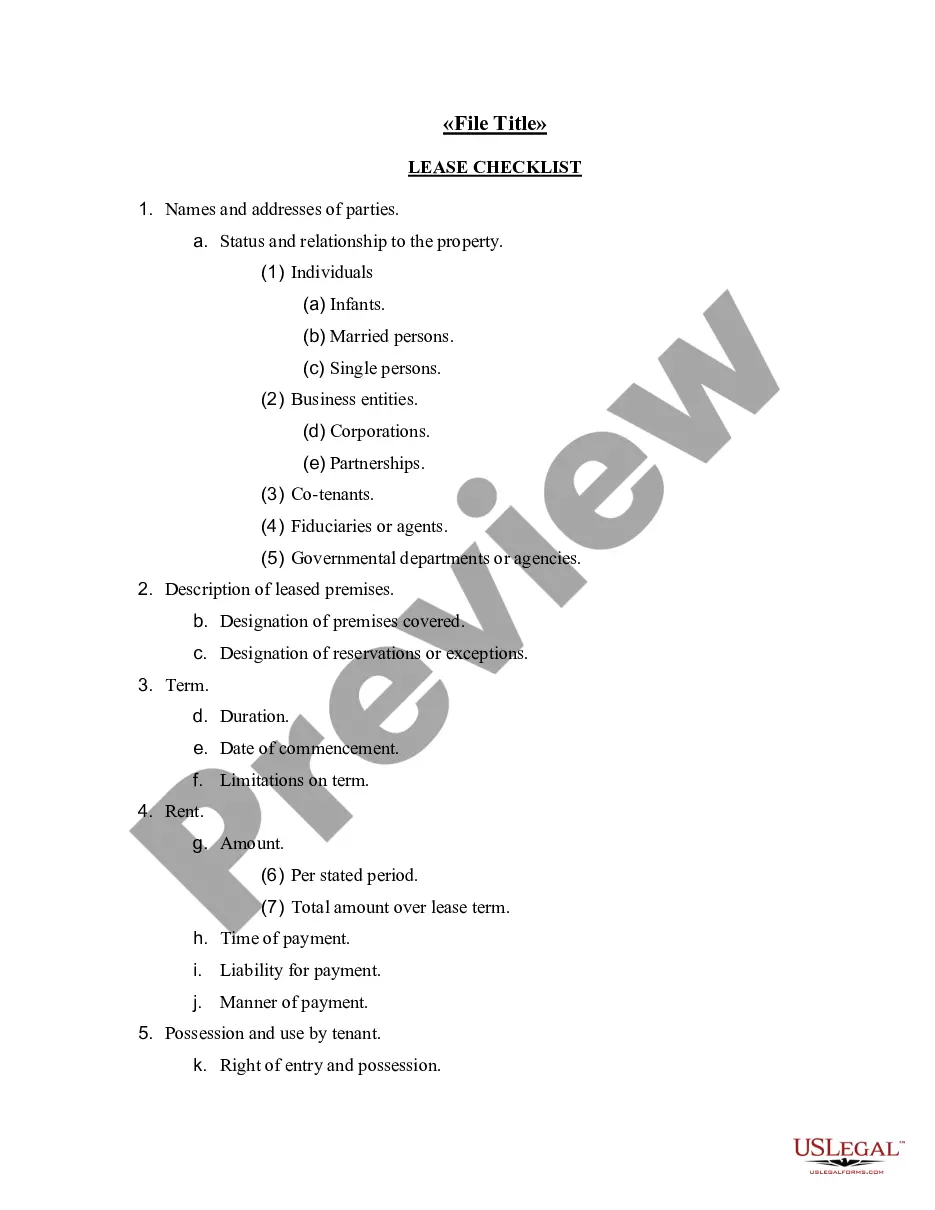
Georgia Motion for an Order Requiring that Juror Questionnaires be Sent With the Juror Summons to Each Prospective Juror
Description
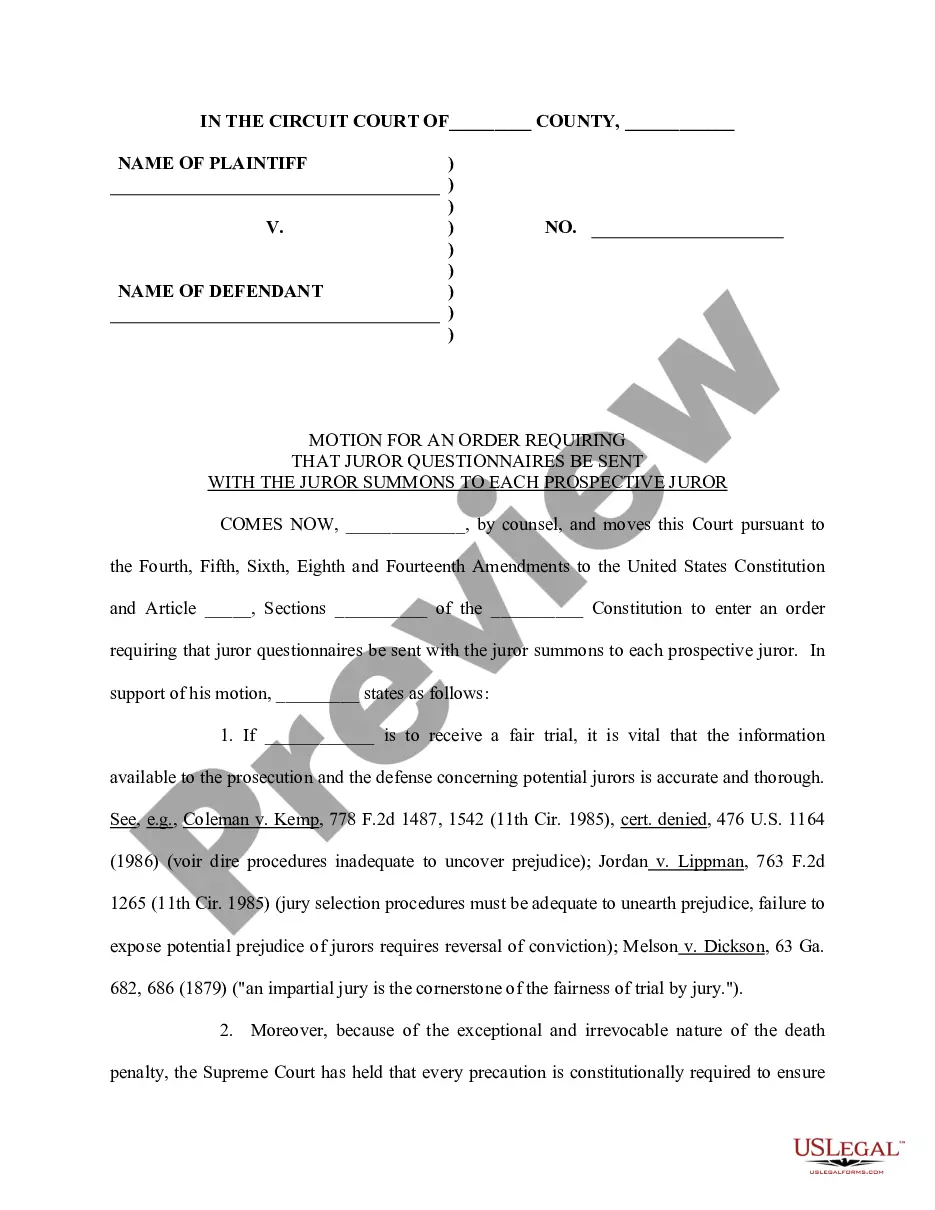
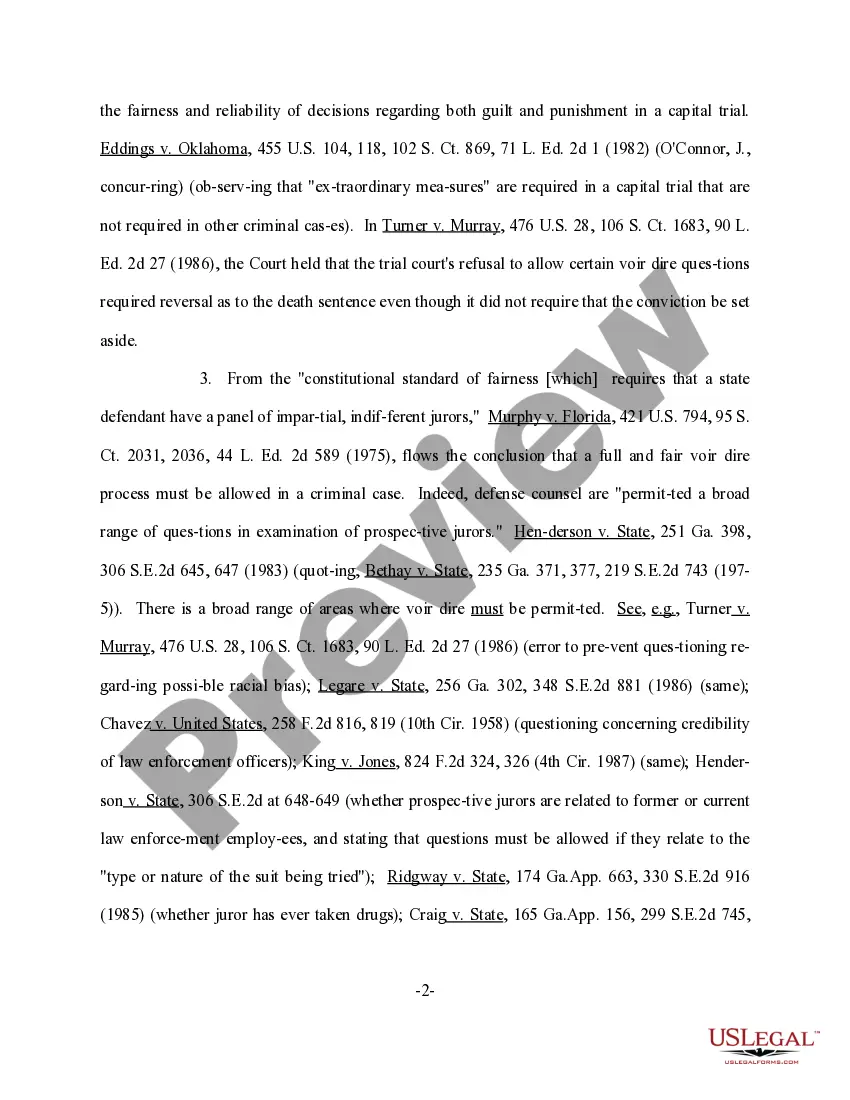
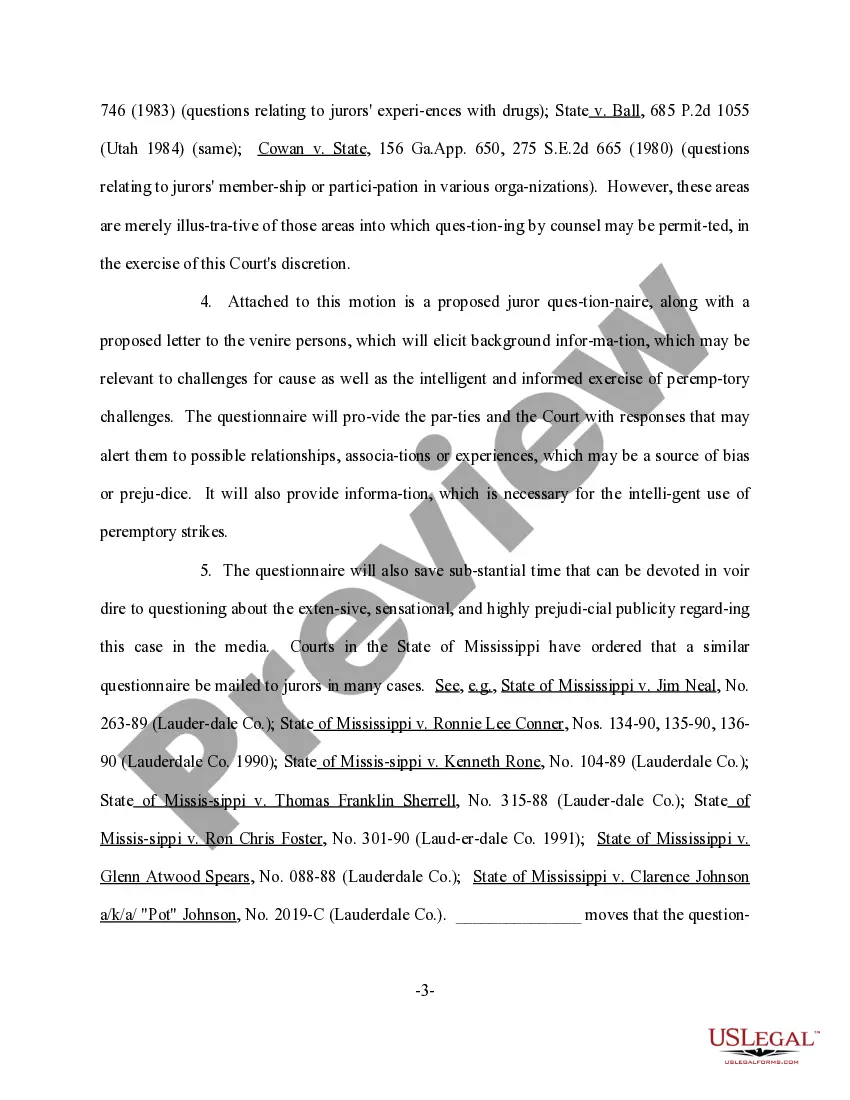
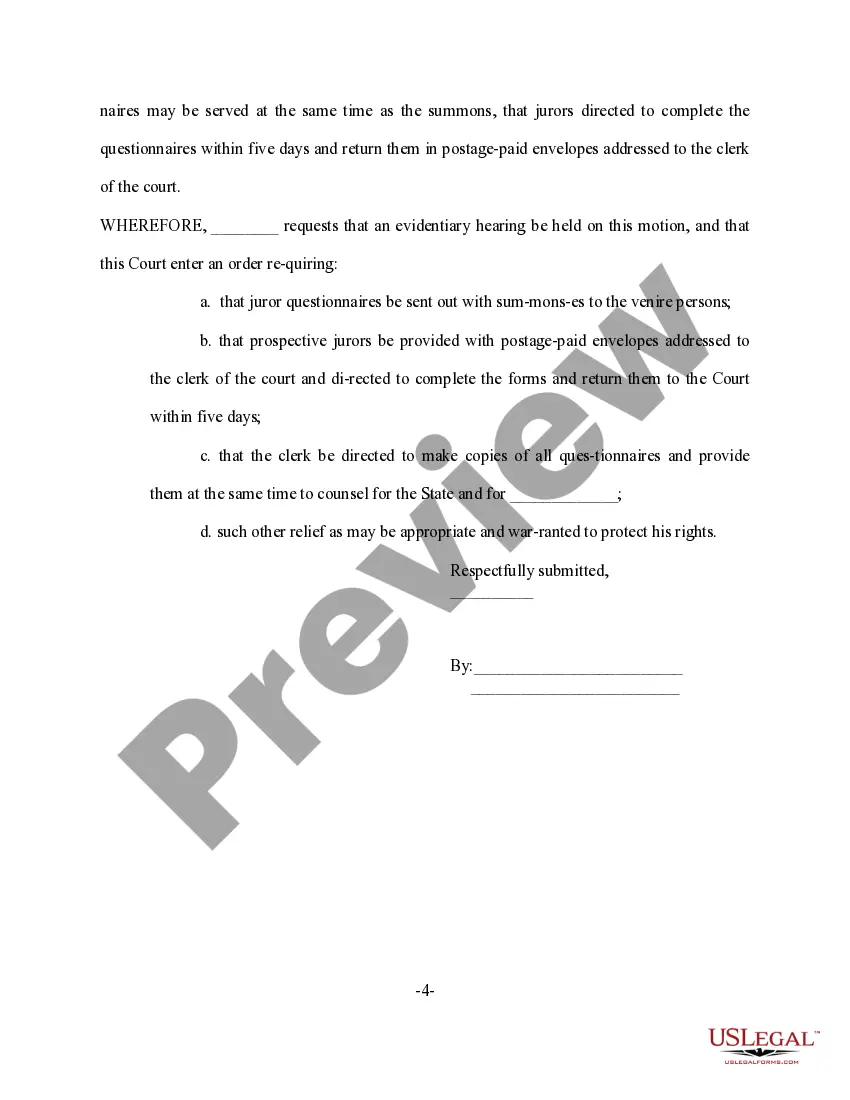
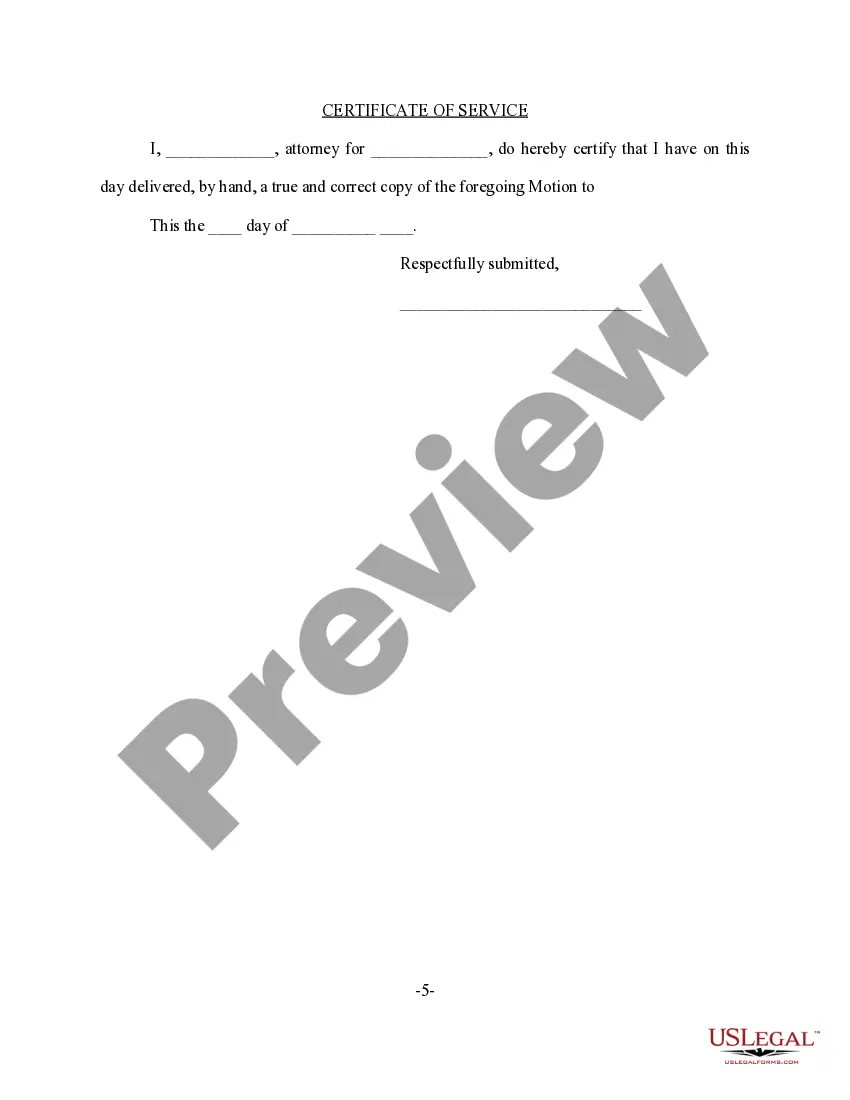
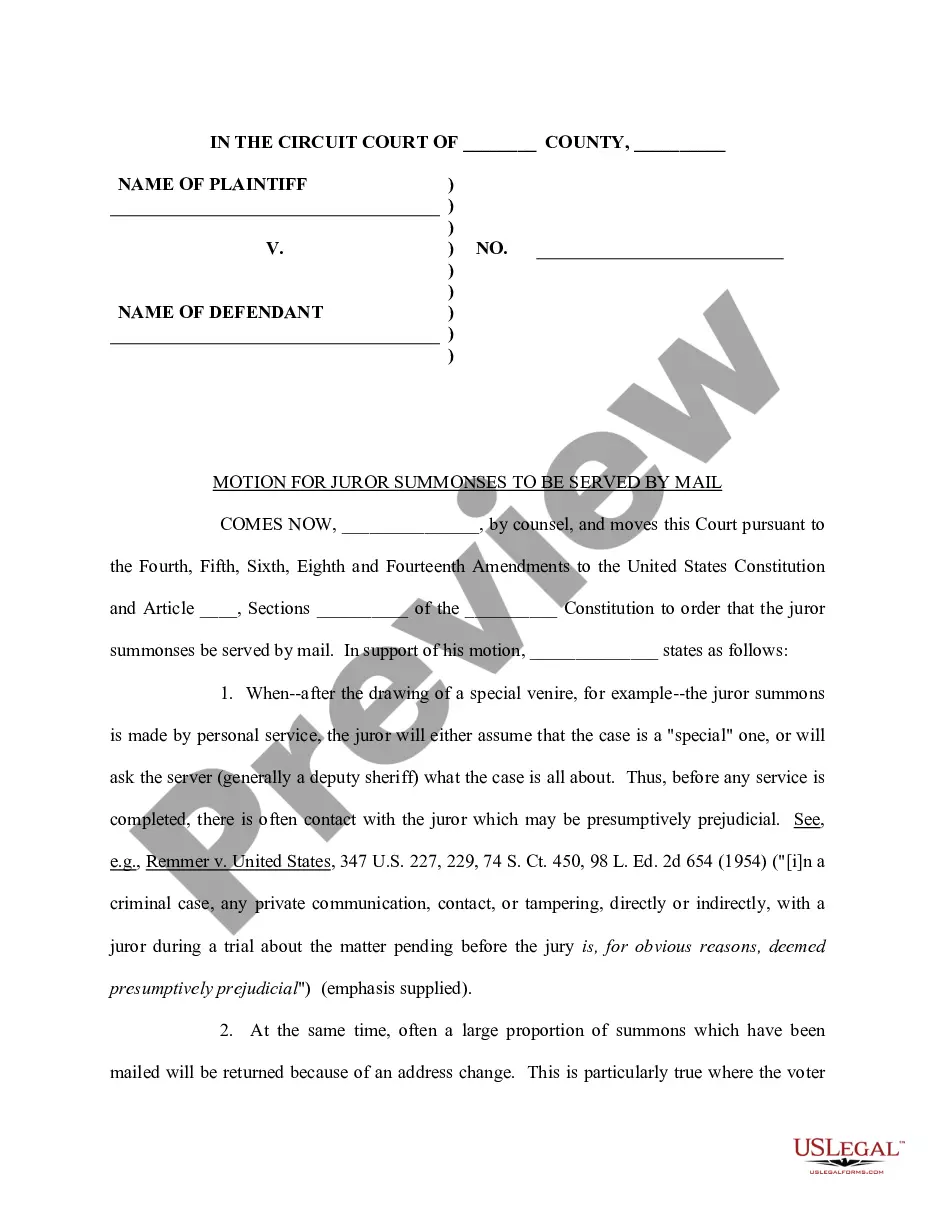
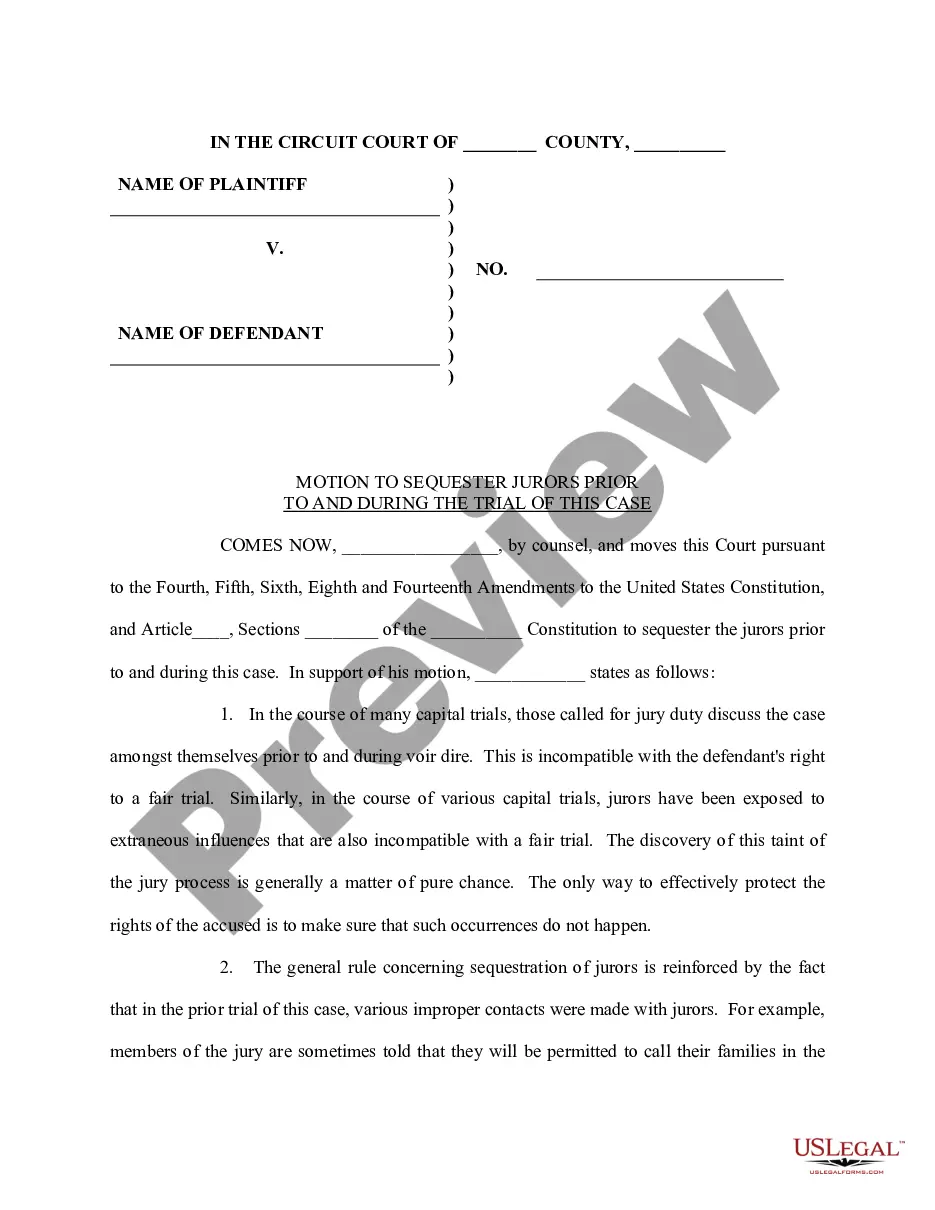
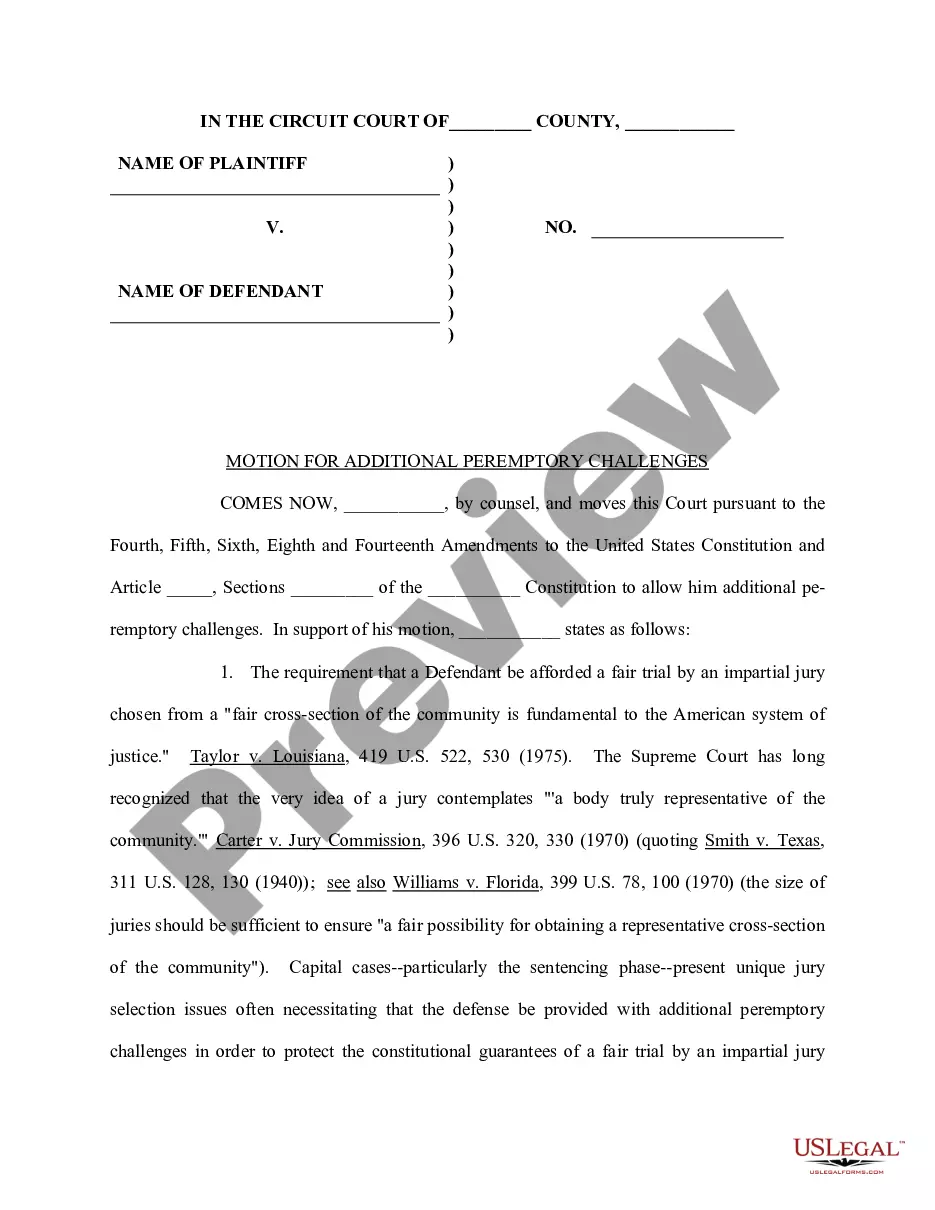
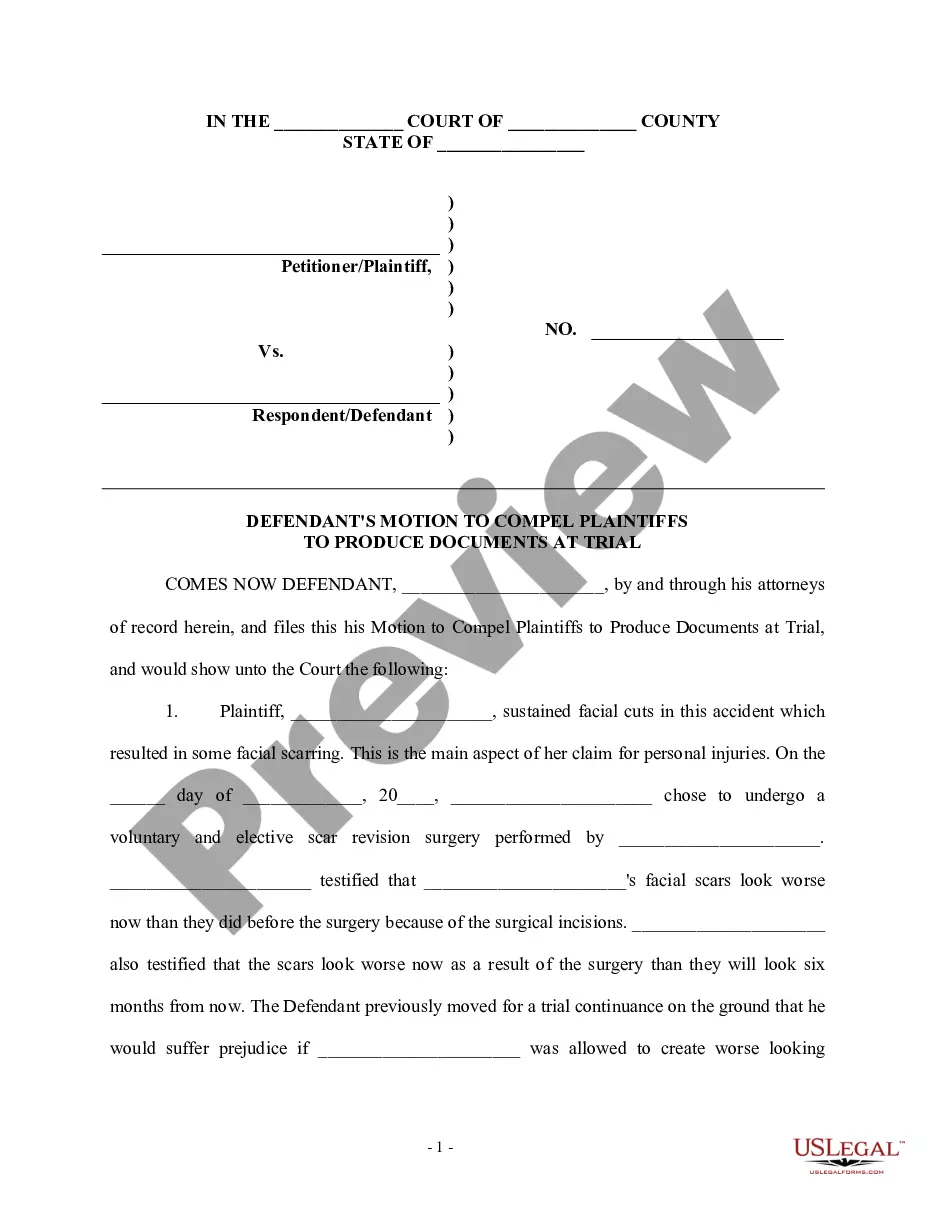
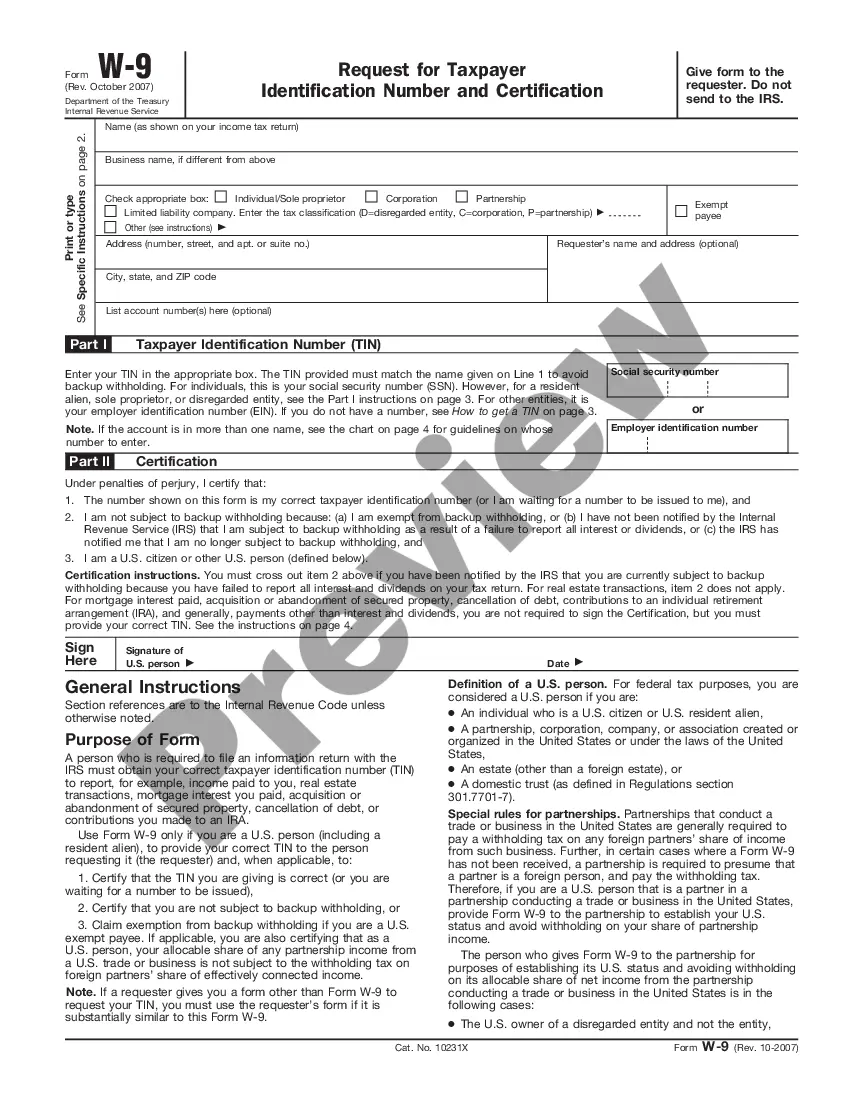
How to fill out Motion For An Order Requiring That Juror Questionnaires Be Sent With The Juror Summons To Each Prospective Juror?
You can spend numerous hours online searching for the legal document template that meets the state and federal criteria you require. US Legal Forms offers a vast array of legal forms that can be reviewed by professionals.
You can obtain or print the Georgia Motion for an Order Requiring that Juror Questionnaires be Sent With the Juror Summons to Each Prospective Juror from my service. If you already have a US Legal Forms account, you can Log In and then click the Download button.
Then, you can complete, edit, print, or sign the Georgia Motion for an Order Requiring that Juror Questionnaires be Sent With the Juror Summons to Each Prospective Juror. Each legal document template you receive is yours permanently. To obtain an additional copy of a purchased form, visit the My documents section and click the appropriate button.
- If you are using the US Legal Forms website for the first time, follow the simple instructions below.
- First, ensure you have selected the correct document template for the county/town of your choice. Review the form description to confirm you have chosen the right form.
- If available, use the Preview button to view the document template as well.
- If you wish to find another version of your form, use the Search field to locate the template that suits your needs and specifications.
- Once you have found the template you want, click Get now to proceed.
- Select the pricing plan you prefer, enter your information, and register for your account on US Legal Forms.
- Complete the purchase. You can use your credit card or PayPal account to buy the legal form.
- Choose the format of your document and download it to your system.
- Make modifications to your document if necessary. You can complete, edit, sign, and print the Georgia Motion for an Order Requiring that Juror Questionnaires be Sent With the Juror Summons to Each Prospective Juror.
- Download and print numerous document templates using the US Legal Forms website, which offers the largest collection of legal forms. Utilize professional and state-specific templates to meet your business or personal needs.
Form popularity
FAQ
Voir dire: Translated from the French, means 'to speak the truth. ' With regard to juries, it is the questioning that occurs in jury selection to decide whether the potential jurors may serve on the jury.
The judge and attorneys ask the potential jurors questions, general or related to the specific case before them, to determine their suitability to serve on the jury. This process is called voir dire, which typically results in some prospective jurors being excused, based on their answers, from serving in that trial.
Examination. n. 1) the questioning of a witness by an attorney. Direct examination is interrogation by the attorney who called the witness, and cross-examination is questioning by the opposing attorney.
In Georgia state courts, you may ask to be excused from jury duty if: You are a full-time student currently taking classes, You are the primary caregiver to a child age six or younger. ... You are the primary teacher in a home study program. ... You are the primary unpaid caregiver for a person over the age of six.
Voir dire. (vwahr [with a near-silent "r"] deer) n. from French "to see to speak," the questioning of prospective jurors by a judge and attorneys in court.
The judge and attorneys ask the potential jurors questions, general or related to the specific case before them, to determine their suitability to serve on the jury. This process is called voir dire, which typically results in some prospective jurors being excused, based on their answers, from serving in that trial.
The judge and the attorneys ask jurors questions to determine if the jurors are free of bias (prejudice) or whether there is any other reason why any of them cannot be fair and impartial; this process is called voir dire.
You may be held in contempt of court and you can be fined for failing to respond to a jury service summons. What if the website or recording tells me I don't have to report?