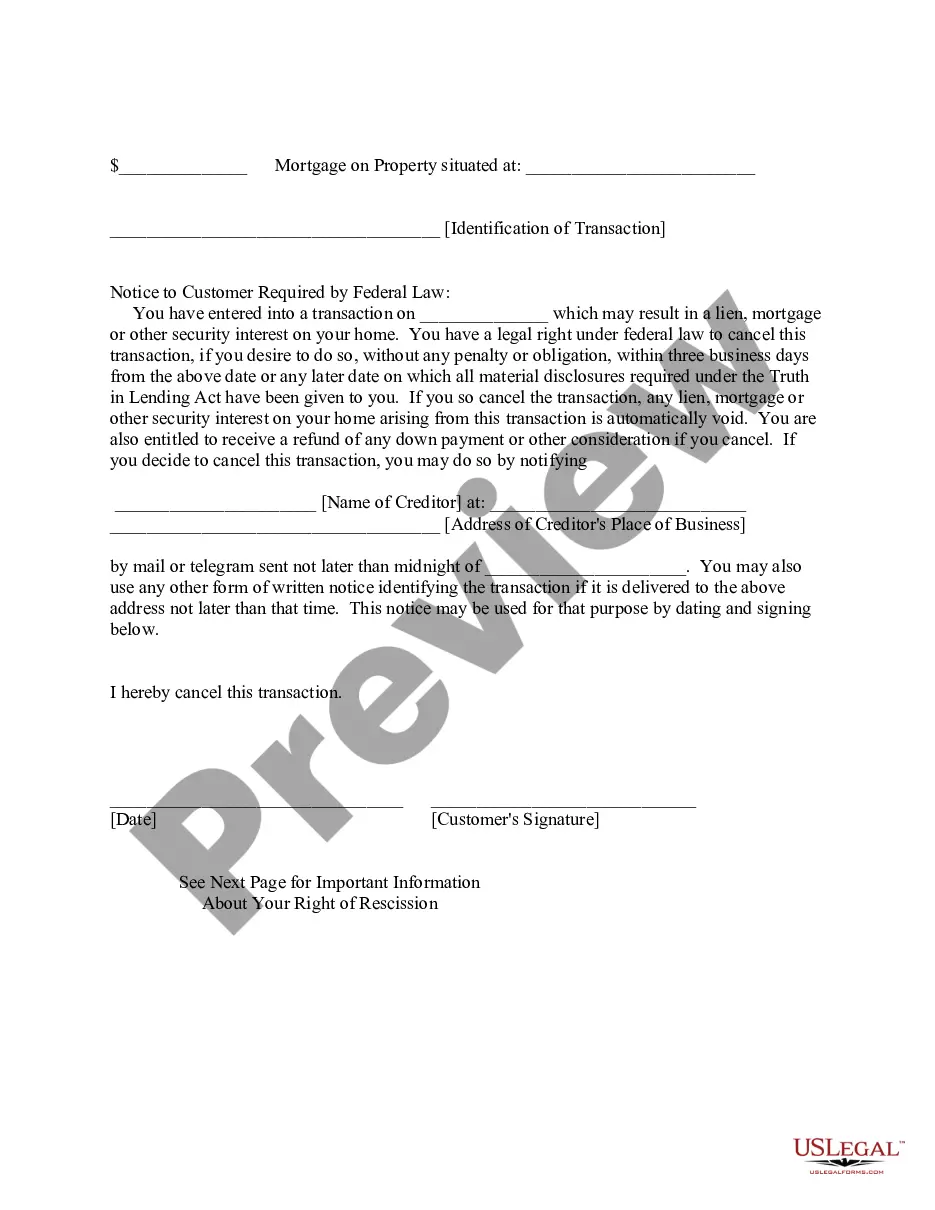
This is a multi-state form covering the subject matter of the title.
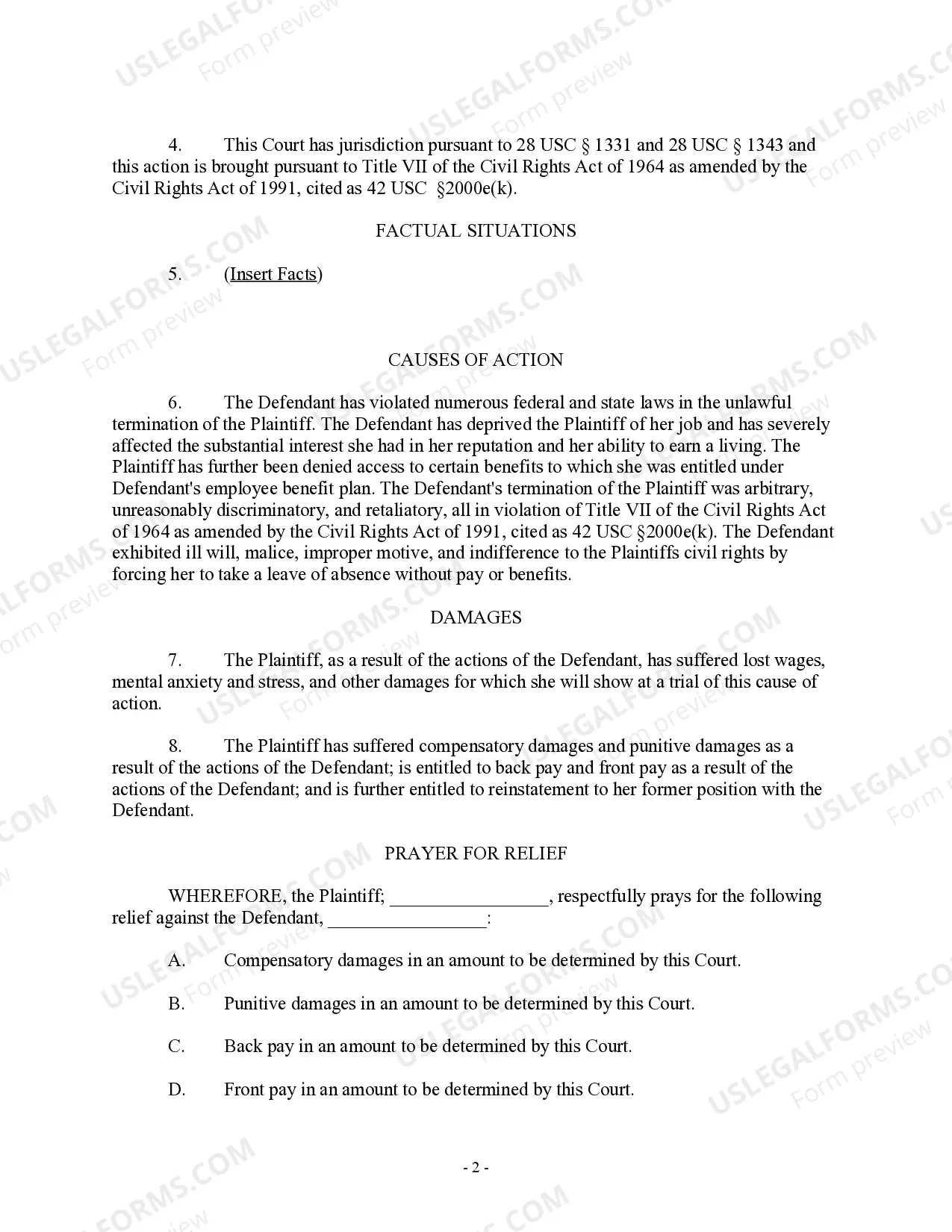
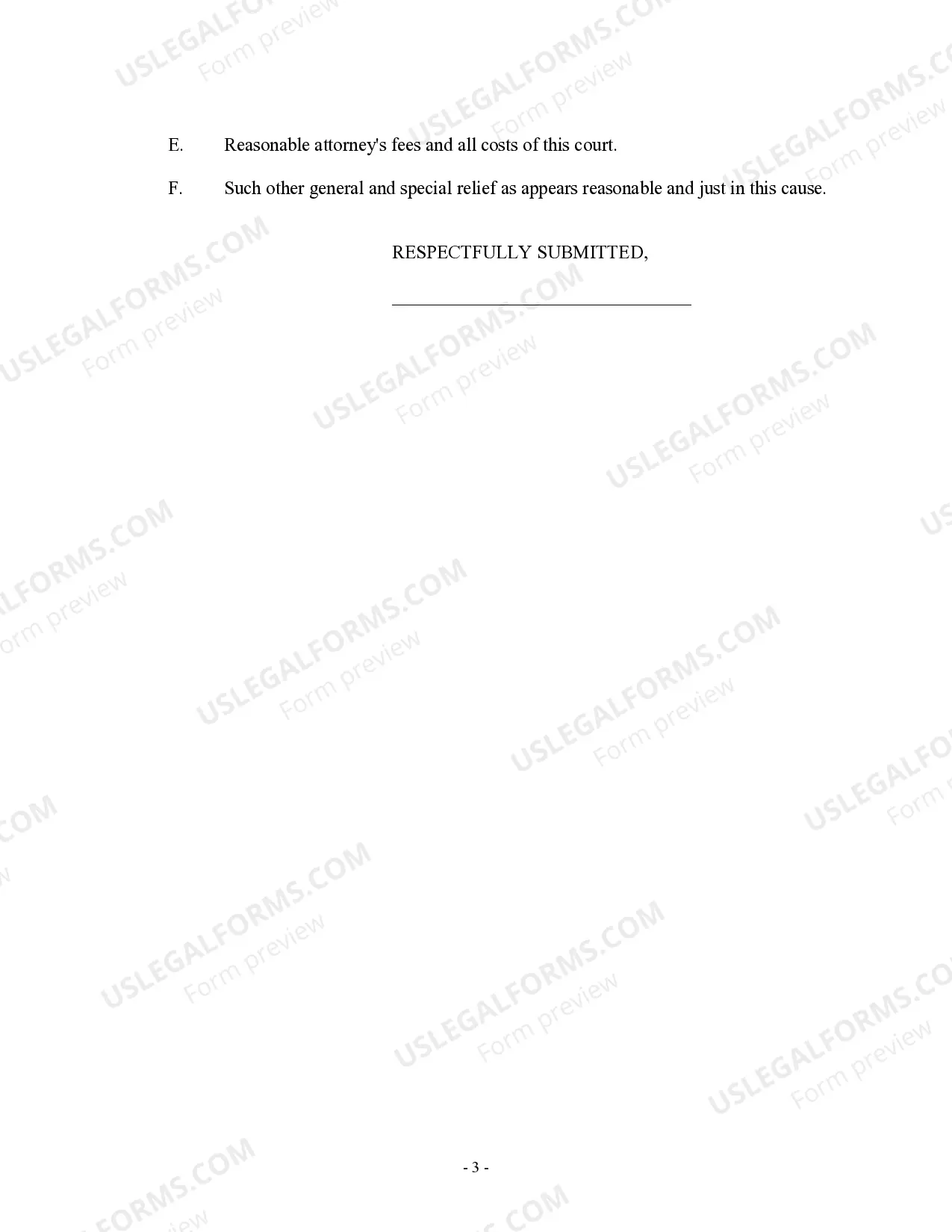
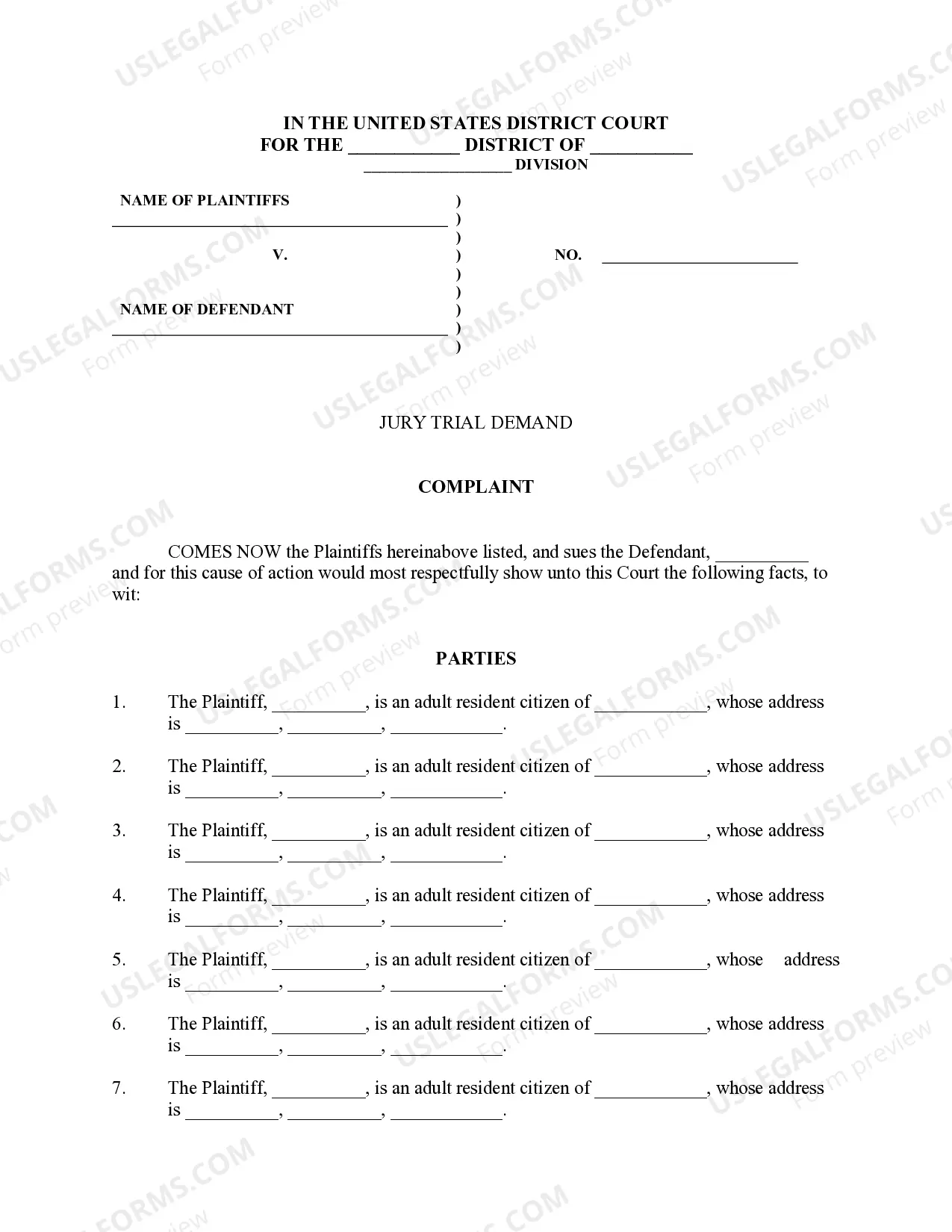
Georgia Complaint For Wrongful Termination - Title VII Civil Rights Act - Pregnancy Discrimination Act - Jury Trial Demand
Category:
State:
Multi-State
Control #:
US-000291
Format:
Word;
Rich Text
Instant download
Description
Free preview




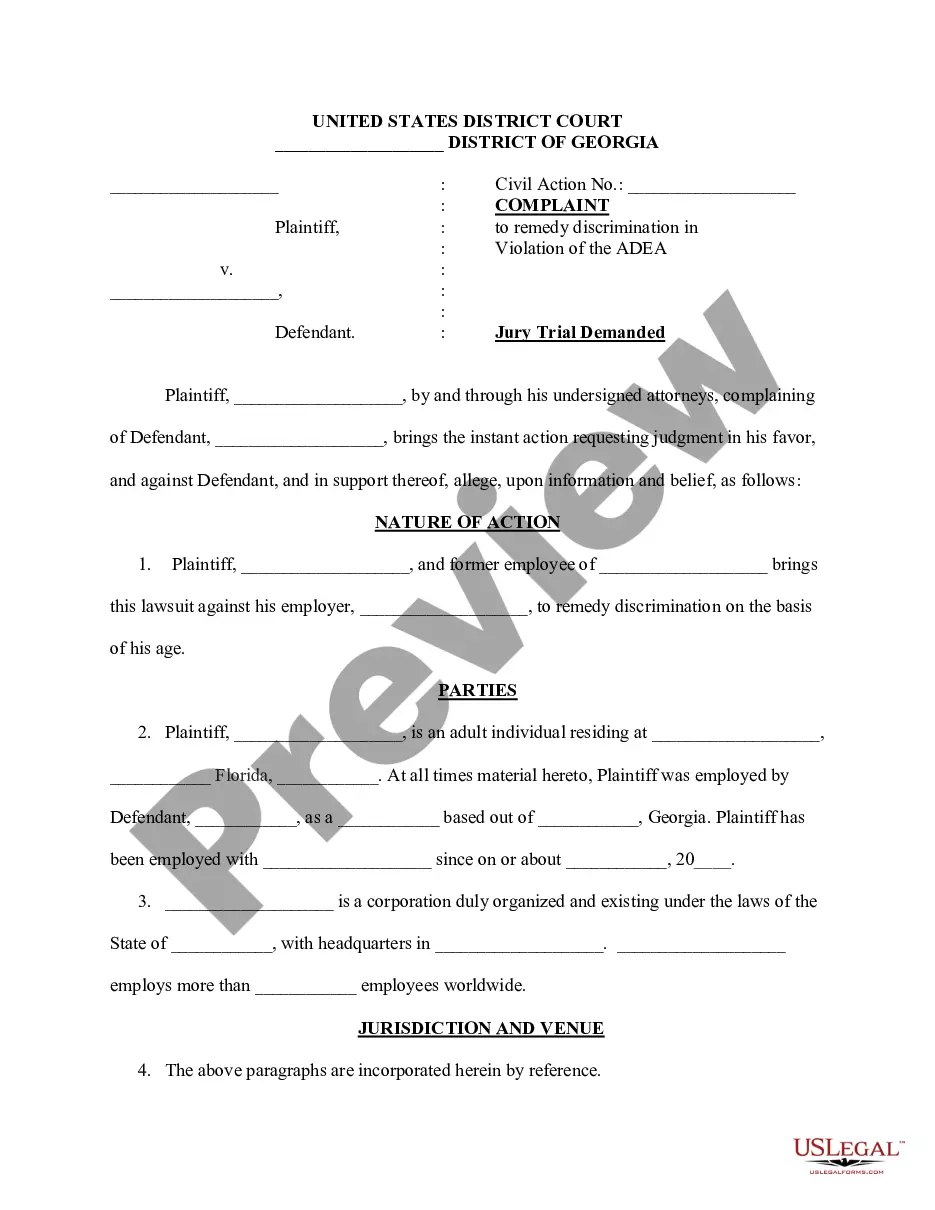
Get your form ready online
Our built-in tools help you complete, sign, share, and store your documents in one place.
Built-in online Word editor
Make edits, fill in missing information, and update formatting in US Legal Forms—just like you would in MS Word.
Export easily
Download a copy, print it, send it by email, or mail it via USPS—whatever works best for your next step.
E-sign your document
Sign and collect signatures with our SignNow integration. Send to multiple recipients, set reminders, and more. Go Premium to unlock E-Sign.
Notarize online 24/7
If this form requires notarization, complete it online through a secure video call—no need to meet a notary in person or wait for an appointment.
Store your document securely
We protect your documents and personal data by following strict security and privacy standards.

Make edits, fill in missing information, and update formatting in US Legal Forms—just like you would in MS Word.

Download a copy, print it, send it by email, or mail it via USPS—whatever works best for your next step.

Sign and collect signatures with our SignNow integration. Send to multiple recipients, set reminders, and more. Go Premium to unlock E-Sign.

If this form requires notarization, complete it online through a secure video call—no need to meet a notary in person or wait for an appointment.

We protect your documents and personal data by following strict security and privacy standards.
Looking for another form?


How to fill out Complaint For Wrongful Termination - Title VII Civil Rights Act - Pregnancy Discrimination Act - Jury Trial Demand?
It is feasible to spend time online looking for the legal document template that meets the federal and state requirements you need.
US Legal Forms provides a wide array of legal forms that are evaluated by experts.
You can easily download or print the Georgia Complaint For Wrongful Termination - Title VII Civil Rights Act - Pregnancy Discrimination Act - Jury Trial Demand from their services.
If available, utilize the Review button to view the document template simultaneously. If you wish to find another version of the form, use the Lookup section to search for the template that suits your needs and requirements. Once you have found the template you need, click Purchase now to proceed. Select the pricing plan you want, enter your credentials, and sign up for an account on US Legal Forms. Complete the transaction. You can use your credit card or PayPal account to purchase the legal form. Choose the format of the document and download it to your device. Make alterations to your document if necessary. You can fill out, modify, and sign and print the Georgia Complaint For Wrongful Termination - Title VII Civil Rights Act - Pregnancy Discrimination Act - Jury Trial Demand. Obtain and print numerous document templates using the US Legal Forms site, which offers the largest collection of legal forms. Utilize professional and state-specific templates to address your business or personal needs.
- If you have a US Legal Forms account, you can Log In and click the Obtain button.
- Then, you can fill out, modify, print, or sign the Georgia Complaint For Wrongful Termination - Title VII Civil Rights Act - Pregnancy Discrimination Act - Jury Trial Demand.
- Every legal document template you acquire is yours indefinitely.
- To obtain another copy of any purchased form, visit the My documents tab and click the corresponding button.
- If you are using the US Legal Forms site for the first time, follow the simple steps below.
- First, ensure that you have chosen the correct document template for the region/area of your choice.
- Check the form description to confirm you have selected the appropriate form.
Form popularity
FAQ
To file a wrongful termination claim in Georgia, you should first gather documentation related to your termination and any relevant communications regarding your pregnancy. Next, you can file a complaint with the Equal Employment Opportunity Commission (EEOC) under the Georgia Complaint For Wrongful Termination - Title VII Civil Rights Act - Pregnancy Discrimination Act - Jury Trial Demand. Consulting with a legal professional can help ensure that your claim is well-prepared and submitted within the required timeframe.
The amount you can sue for wrongful termination due to pregnancy varies based on several factors, including lost wages, emotional distress, and punitive damages. Under the Georgia Complaint For Wrongful Termination - Title VII Civil Rights Act - Pregnancy Discrimination Act - Jury Trial Demand, you may claim both economic and non-economic damages. It’s essential to consult with a legal expert to understand the specifics of your situation and maximize your potential compensation.
Examples of wrongful termination Due to discrimination. In violation of a federal or state labor law. Because you reported and refused to participate in harassment. Because you reported and refused to conduct an illegal act or safety violation.
If you settle (or prevail in court), the amount of money you receive is ordinarily based on the following: the costs of finding a new job, medical expenses, lost wages, benefits lost, reason of termination and mental anguish. The average wrongful termination settlement in Georgia is between $4,000 and $100,000.
How Much Do These Cases Settle for ? Against an Employer? If a woman is fired or terminated from her job for the sole reason that she was pregnant, she can get anywhere from $200,000 up to around $425,000 or slightly less for that recovery compensation related to the lawsuit.
If you can prove that there was a breach of contract, then this may be considered wrongful termination and you may have grounds for suing your employer. Your employer cannot terminate your employment if you have taken sickness leave, or have taken time off because of a bereavement.
Can I sue for wrongful termination in Georgia? Yes, you can sue for wrongful termination in Georgia, but there are specific, limited conditions under which you can do so. Because Georgia is an ?at-will? employment state, employers are allowed to terminate employees for almost any reason. However, there are exceptions.
The Pregnancy Discrimination Act of 1978 (?PDA?) amended Title VII to include pregnancy, childbirth, and related medical conditions in the prohibition on sex-based discrimination. Women affected by pregnancy, childbirth, or a related condition must be treated the same as other employees who are similarly qualified.
In Georgia, most of these laws have a 180-day statute of limitations, which means you have 180 days from when you first learned of the unlawful act to file a complaint with the Equal Employment Opportunity Commission (EEOC).