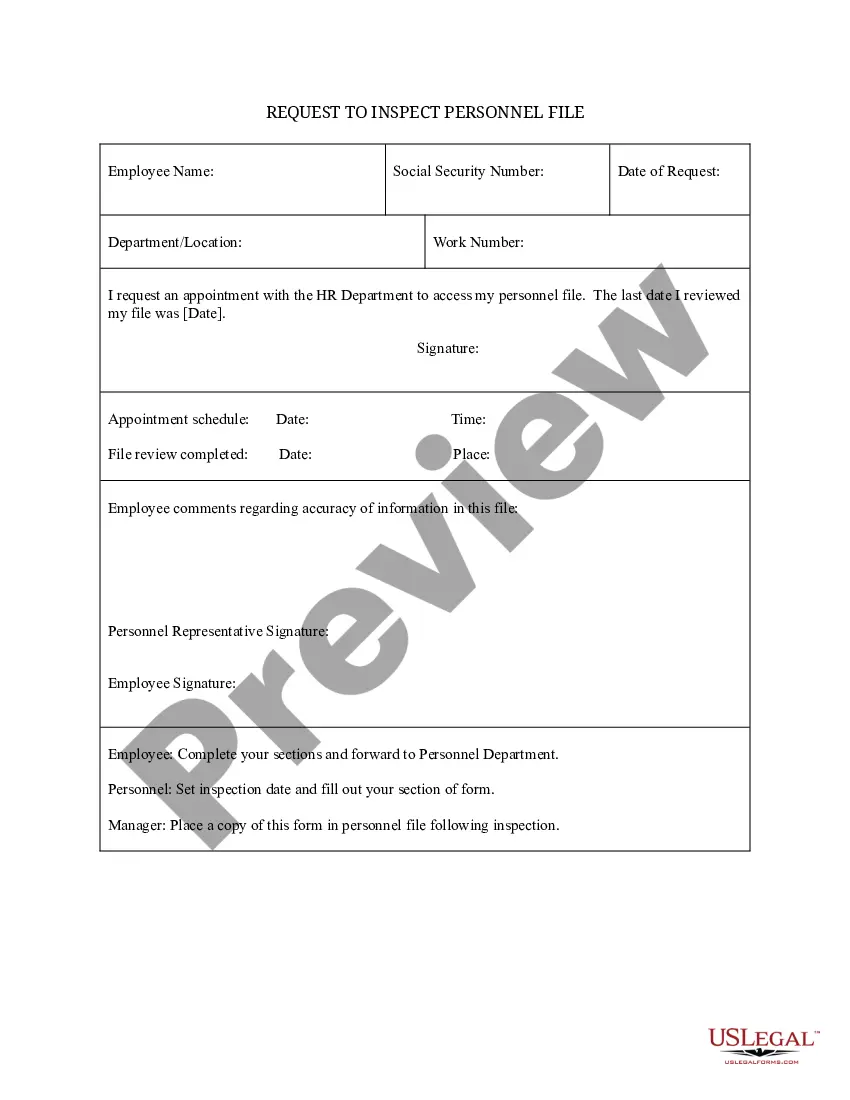
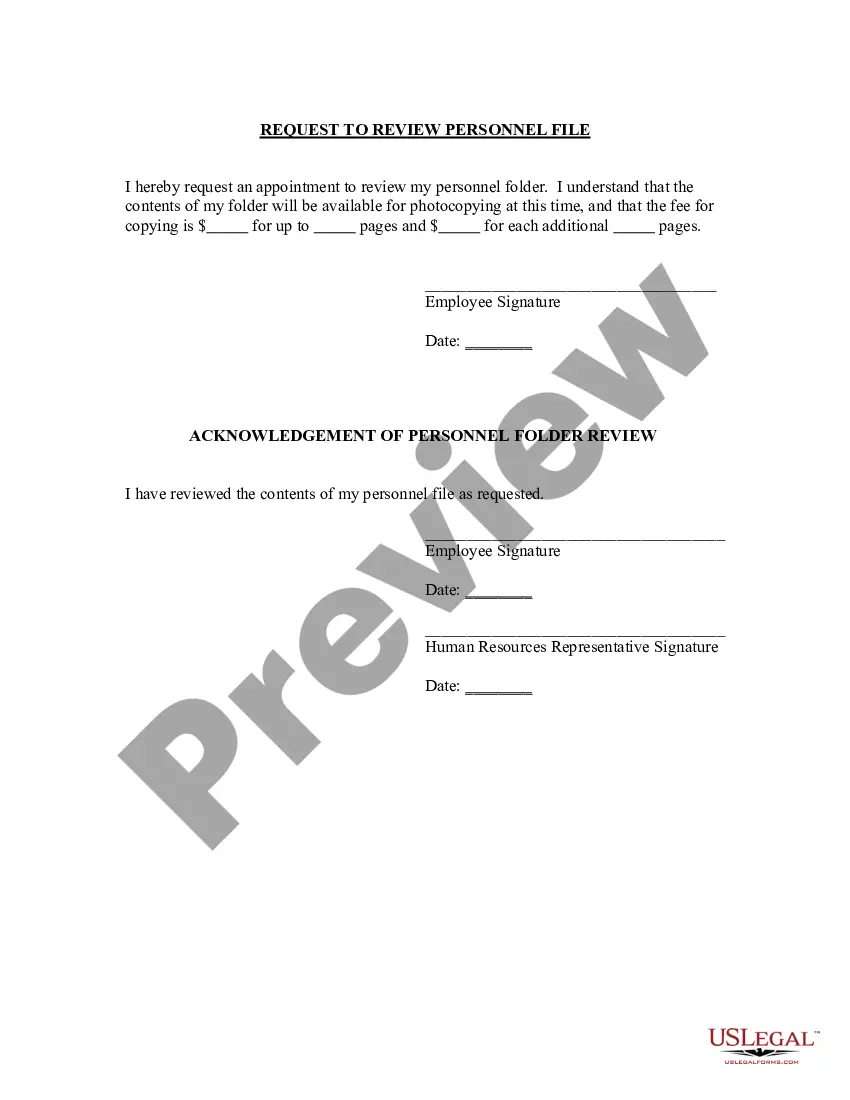
Florida Request to Inspect Personnel File
Description
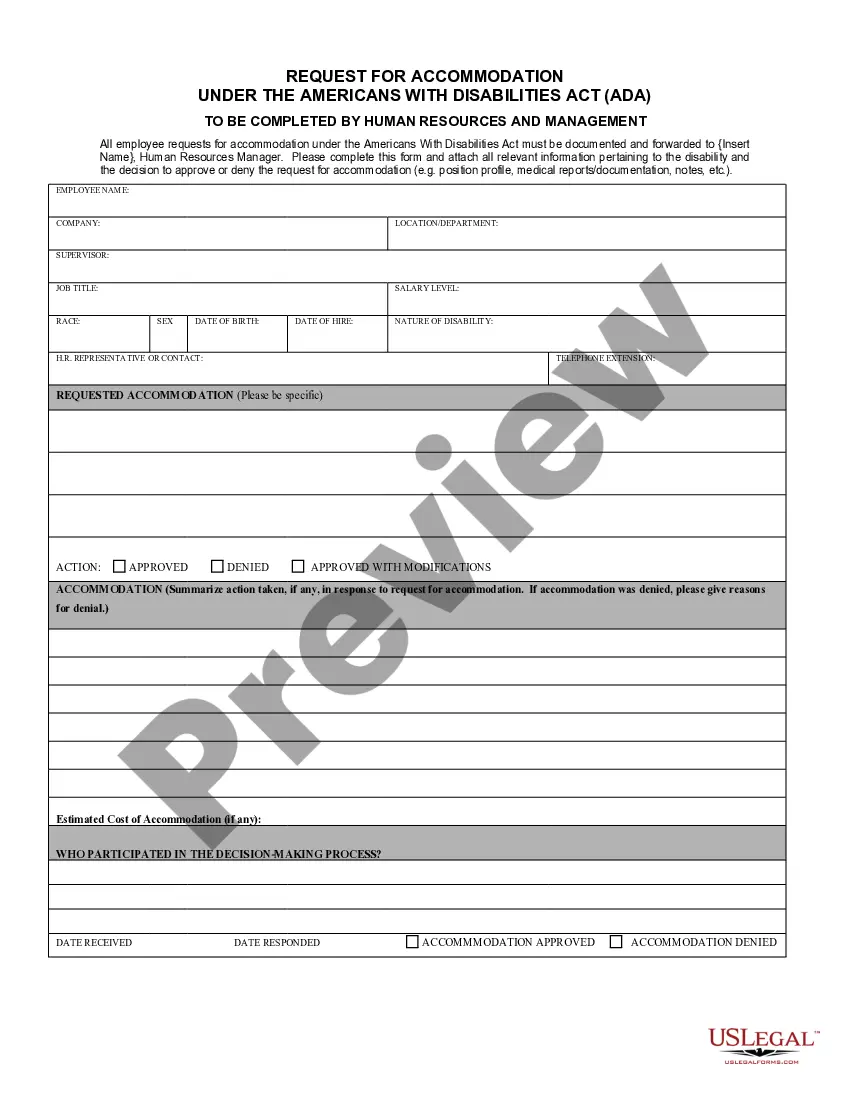
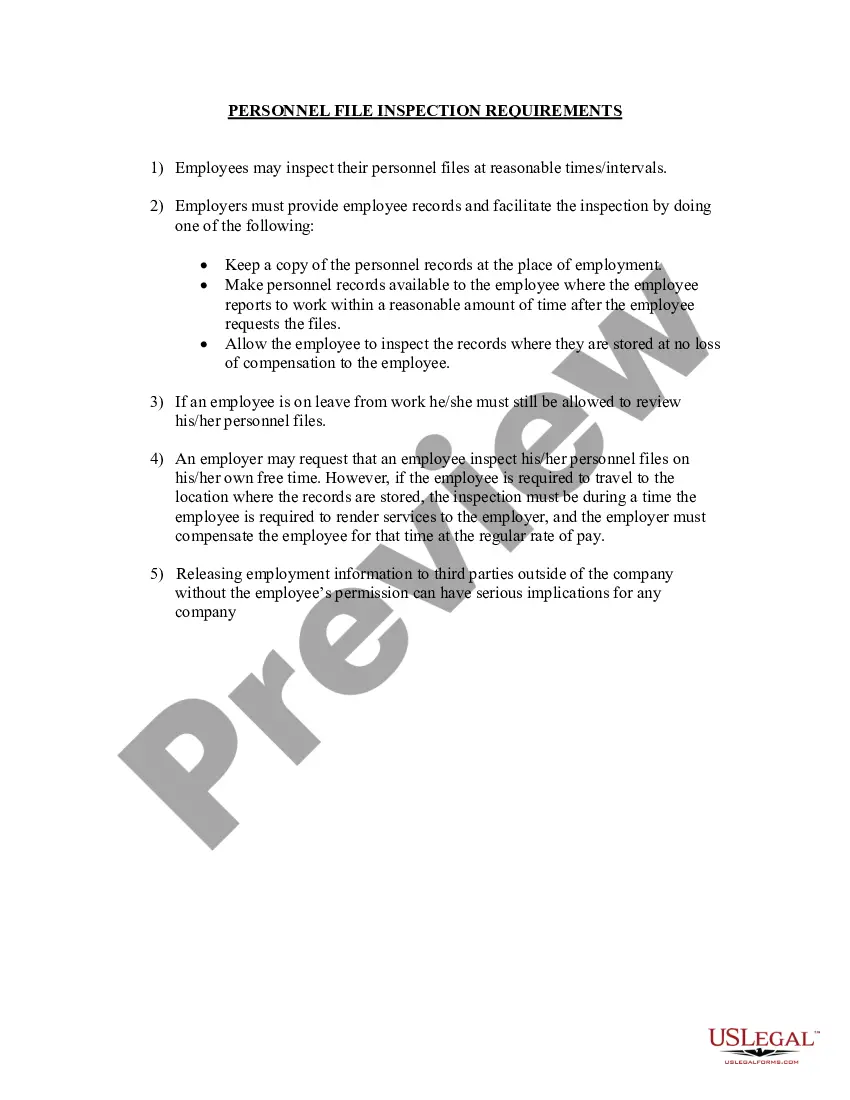
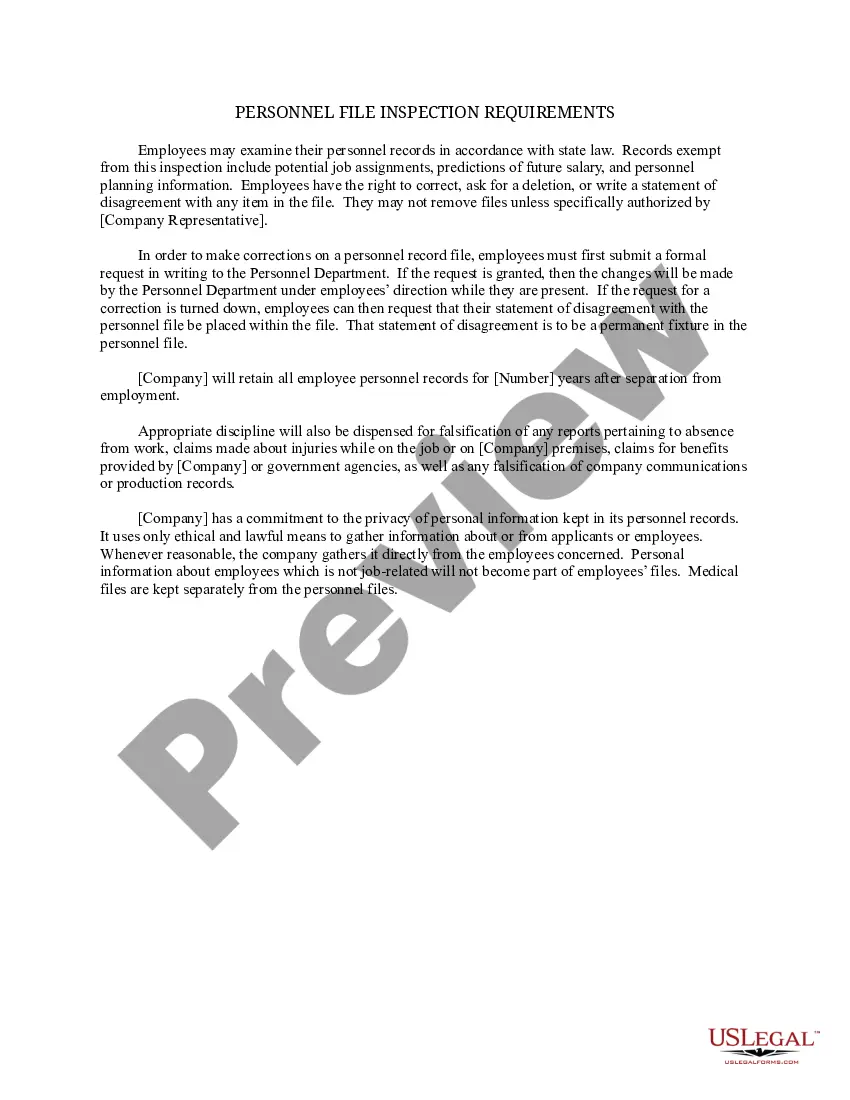
Get your form ready online
Our built-in tools help you complete, sign, share, and store your documents in one place.
Make edits, fill in missing information, and update formatting in US Legal Forms—just like you would in MS Word.
Download a copy, print it, send it by email, or mail it via USPS—whatever works best for your next step.
Sign and collect signatures with our SignNow integration. Send to multiple recipients, set reminders, and more. Go Premium to unlock E-Sign.
If this form requires notarization, complete it online through a secure video call—no need to meet a notary in person or wait for an appointment.
We protect your documents and personal data by following strict security and privacy standards.

Make edits, fill in missing information, and update formatting in US Legal Forms—just like you would in MS Word.

Download a copy, print it, send it by email, or mail it via USPS—whatever works best for your next step.

Sign and collect signatures with our SignNow integration. Send to multiple recipients, set reminders, and more. Go Premium to unlock E-Sign.

If this form requires notarization, complete it online through a secure video call—no need to meet a notary in person or wait for an appointment.

We protect your documents and personal data by following strict security and privacy standards.
Looking for another form?




How to fill out Request To Inspect Personnel File?
If you intend to finalize, obtain, or print certified document templates, utilize US Legal Forms, the largest collection of legal forms, accessible online.
Employ the site's straightforward and convenient search function to locate the documents you require.
Numerous templates for business and personal purposes are sorted by categories and states, or keywords.
Step 4. Once you have found the form you need, click the Get Now button. Choose the pricing plan you prefer and enter your credentials to register for an account.
Step 5. Complete the payment process. You can use your credit card or PayPal account to finalize the transaction.
- Utilize US Legal Forms to find the Florida Request to Examine Personnel File in just a few clicks.
- If you are currently a US Legal Forms customer, Log In to your account and click the Download button to obtain the Florida Request to Examine Personnel File.
- You can also access forms you previously saved within the My documents tab of your account.
- If you are using US Legal Forms for the first time, follow the instructions below.
- Step 1. Ensure you have selected the form for the appropriate area/state.
- Step 2. Use the Review function to examine the form's content. Remember to read the description.
- Step 3. If you are unsatisfied with the form, utilize the Search area at the top of the screen to find alternative versions of the legal form template.
Form popularity
FAQ
Request Letter FormatThe full legal name of the person to whom the letter is sent.Address of the person, official address.All the necessary details of the person.Salutation can be formal and respectful.The body of the letter should address the purpose of the letter as clearly as possible.
All Personnel Files and Training Records: 6 years from the end of employment. Redundancy Records: 6 years. Sickness Absence Records: A minimum of 3 months but potentially up to 6 years after employment ends.
Florida law does not prohibit employers from providing any information about employees as long as it is truthful; however, employers may be liable if they give negative information in a reference that the employee disputes. Thus, employers may wish to avoid giving extra information to reduce their risk of lawsuit.
In Florida, the law makes clear that public employees can do a public record request for certain information contained in a personnel file. However, private employees do not have the same right to the information contained in the personnel file that their employer keeps.
EEOC Regulations require that employers keep all personnel or employment records for one year. If an employee is involuntarily terminated, his/her personnel records must be retained for one year from the date of termination.
As an employee, do I have a right to see my personnel files? The short answer is 'yes'. You have a right to make a SAR to your employer, asking to see your personnel files, at any time. Your employer has the right to ask why you want to see your files, but must then provide all your records to you.
An employee's personnel file usually contains information related to their performance, salary, and any investigations of misconduct or medical issues. As a result, these records are generally considered private and can be accessed by only the employer and the employee.
No federal law grants employees the right to inspect their personnel files. However, many states do give employees such rights and spell out the terms under which employees are allowed to inspect those files.
As an employee, do I have a right to see my personnel files? The short answer is 'yes'. You have a right to make a SAR to your employer, asking to see your personnel files, at any time. Your employer has the right to ask why you want to see your files, but must then provide all your records to you.
Employees of private employers are not entitled to access or a copy of his or her personnel file. However, there are exceptions to this when the employer has a policy allowing access or there is a collective bargaining agreement that gives an employee the right to his or her personnel file.