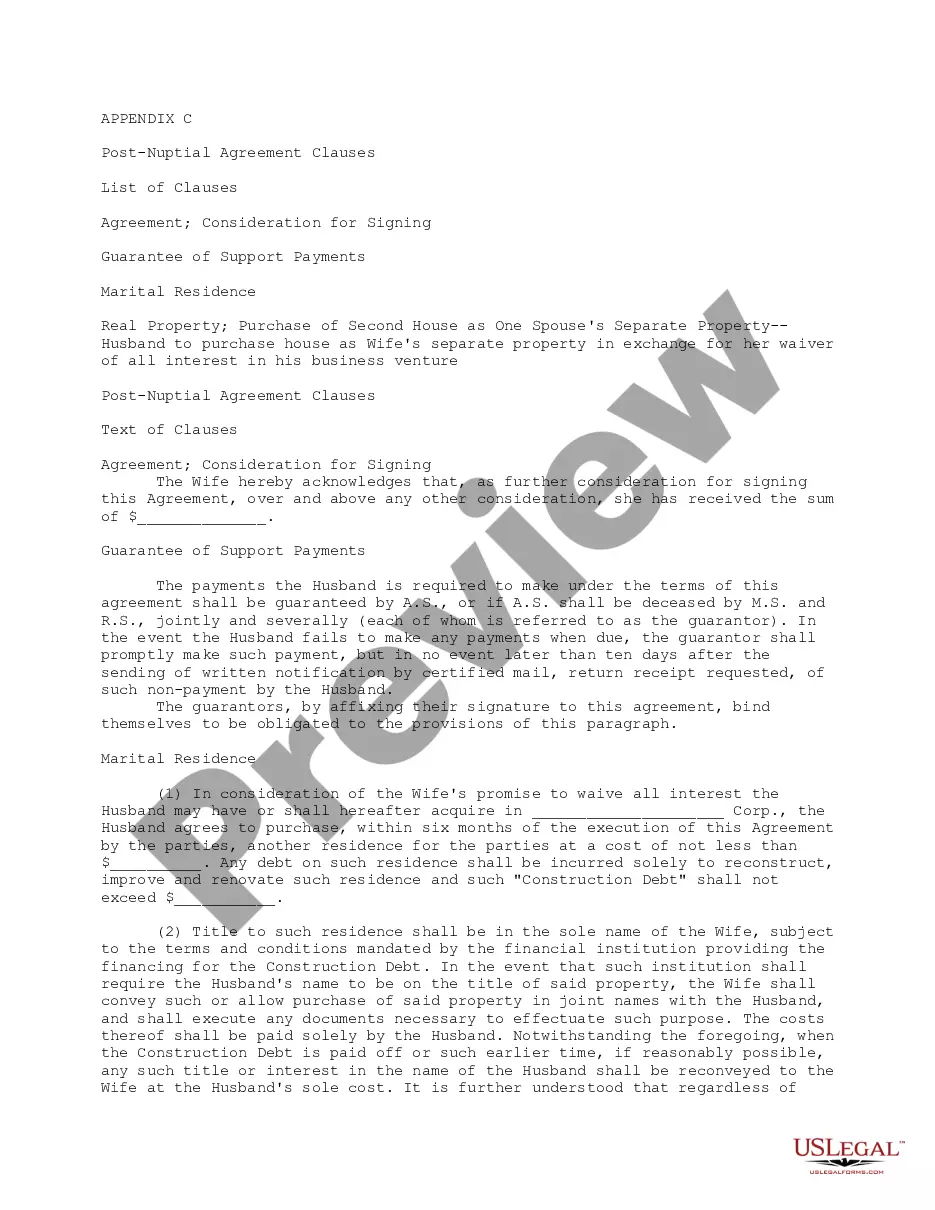
Florida Certification of Health Care Provider under the FMLA of 1993
Description
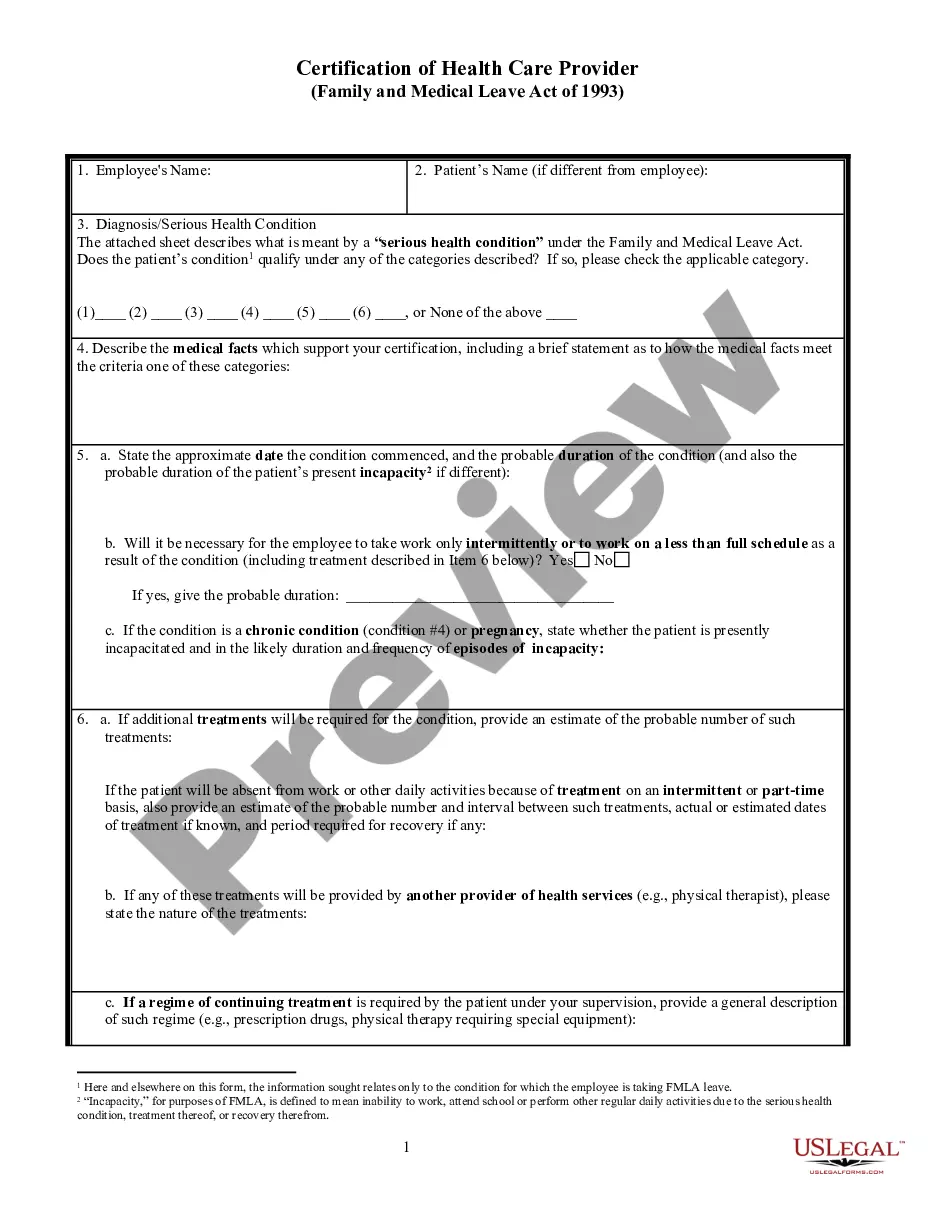
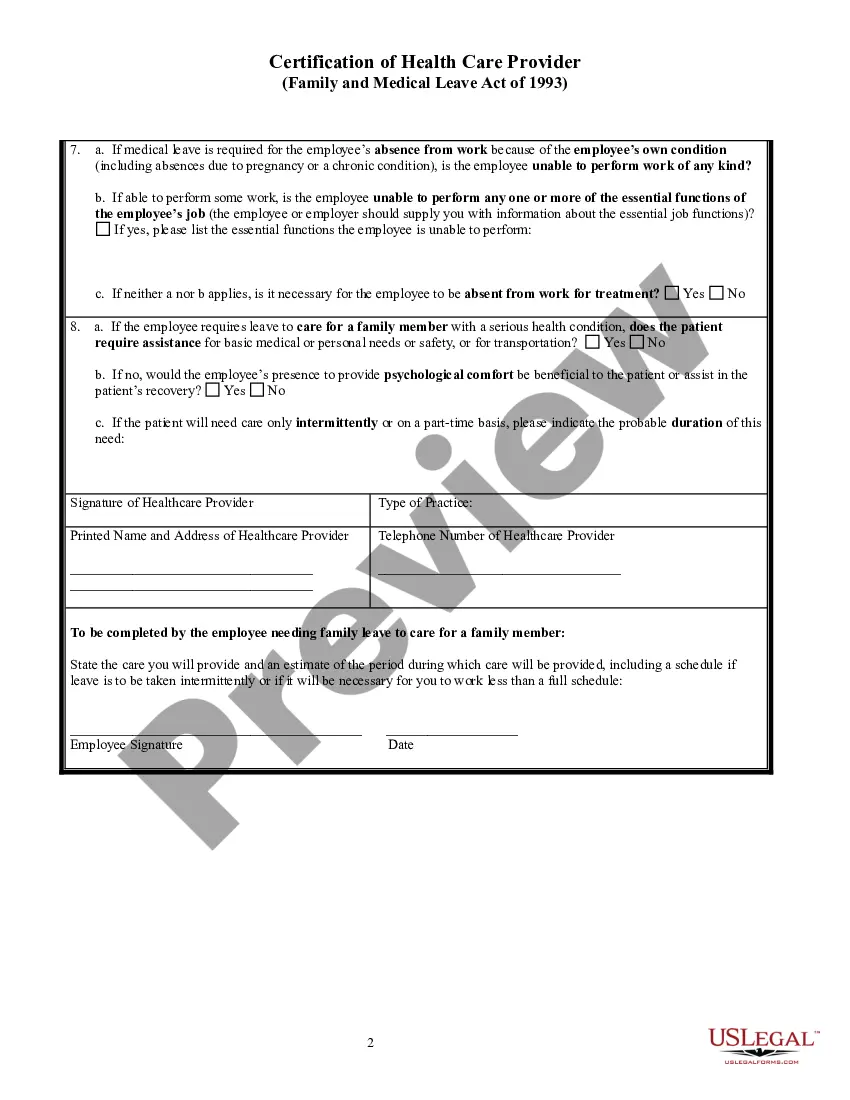
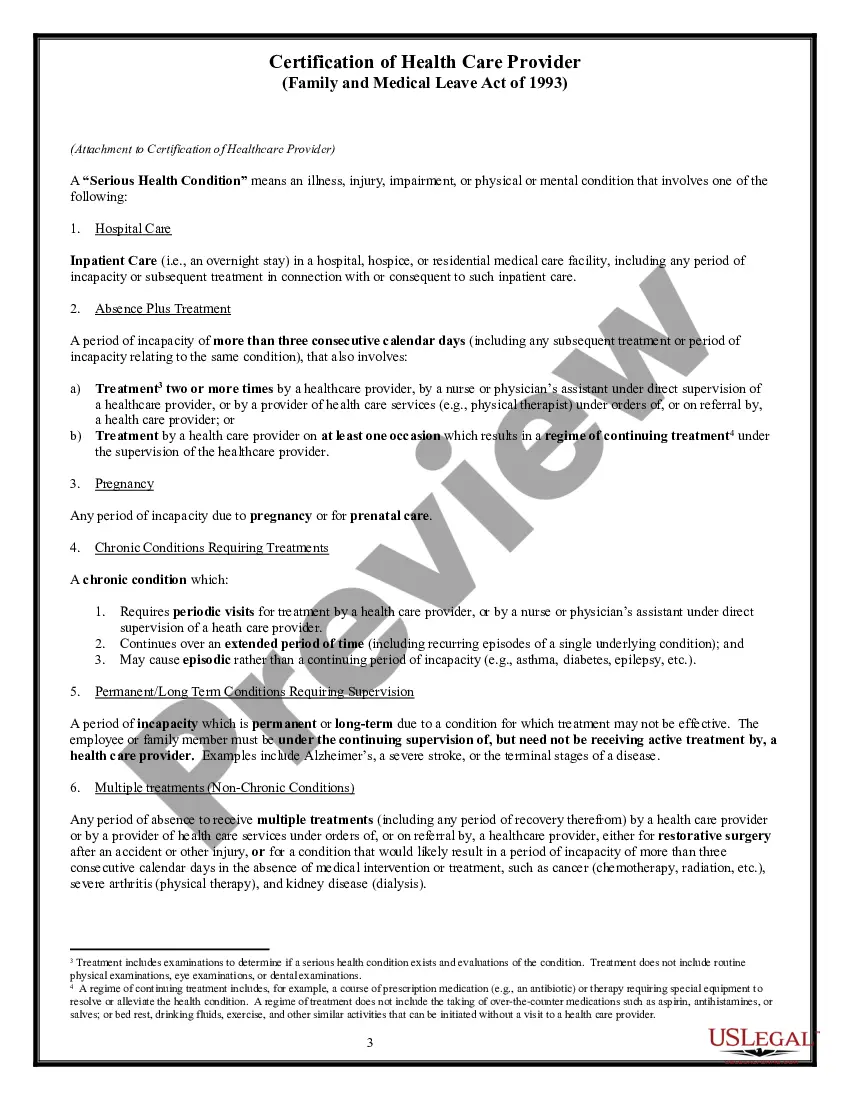
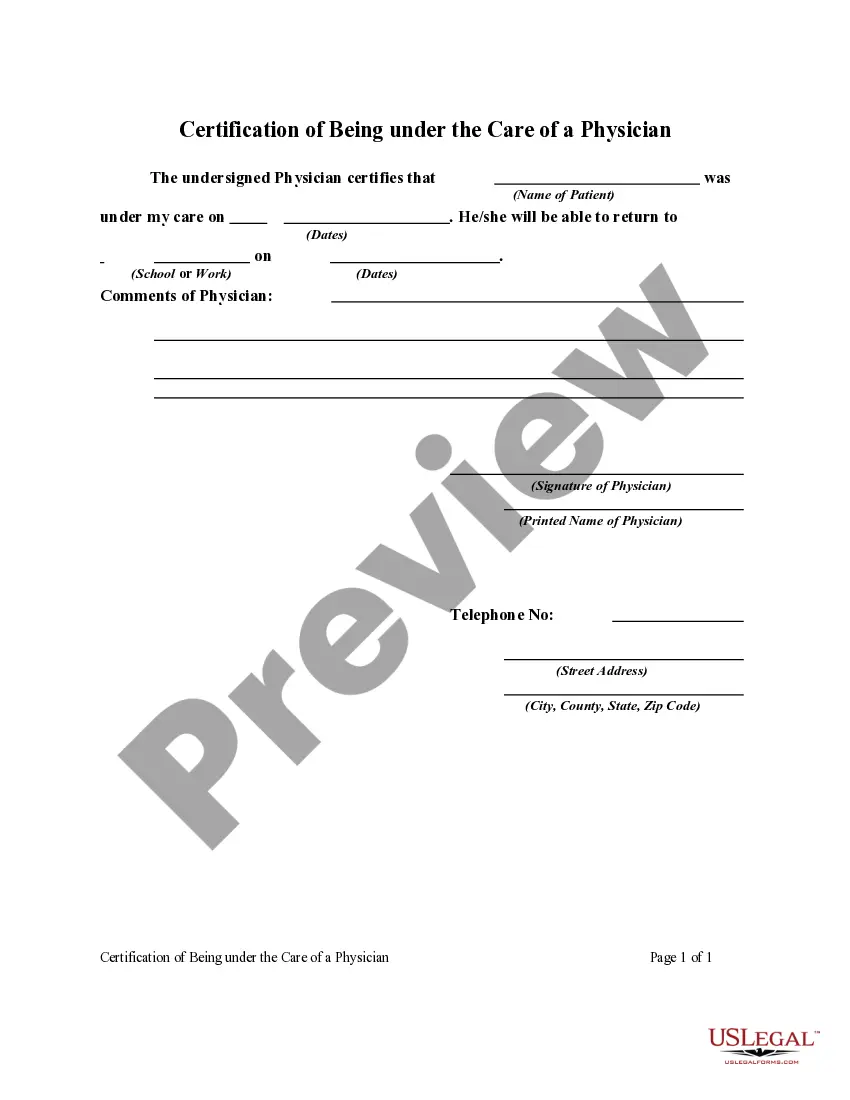
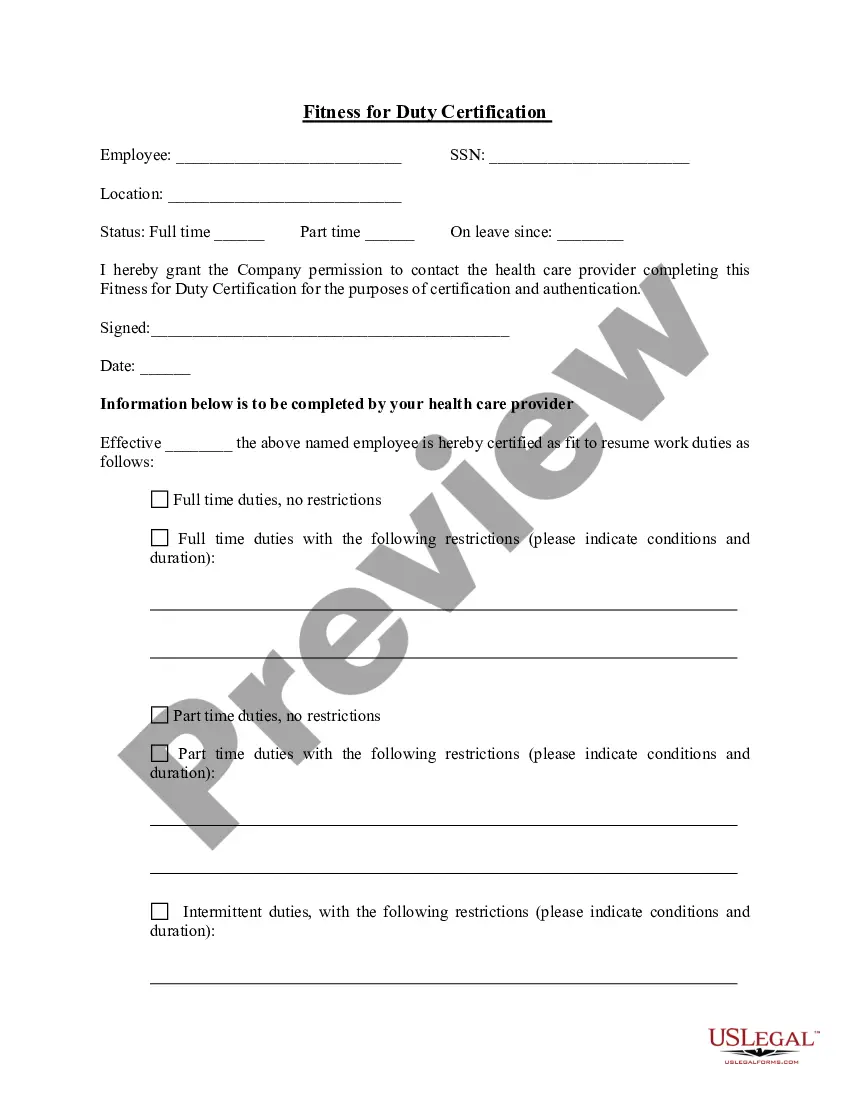
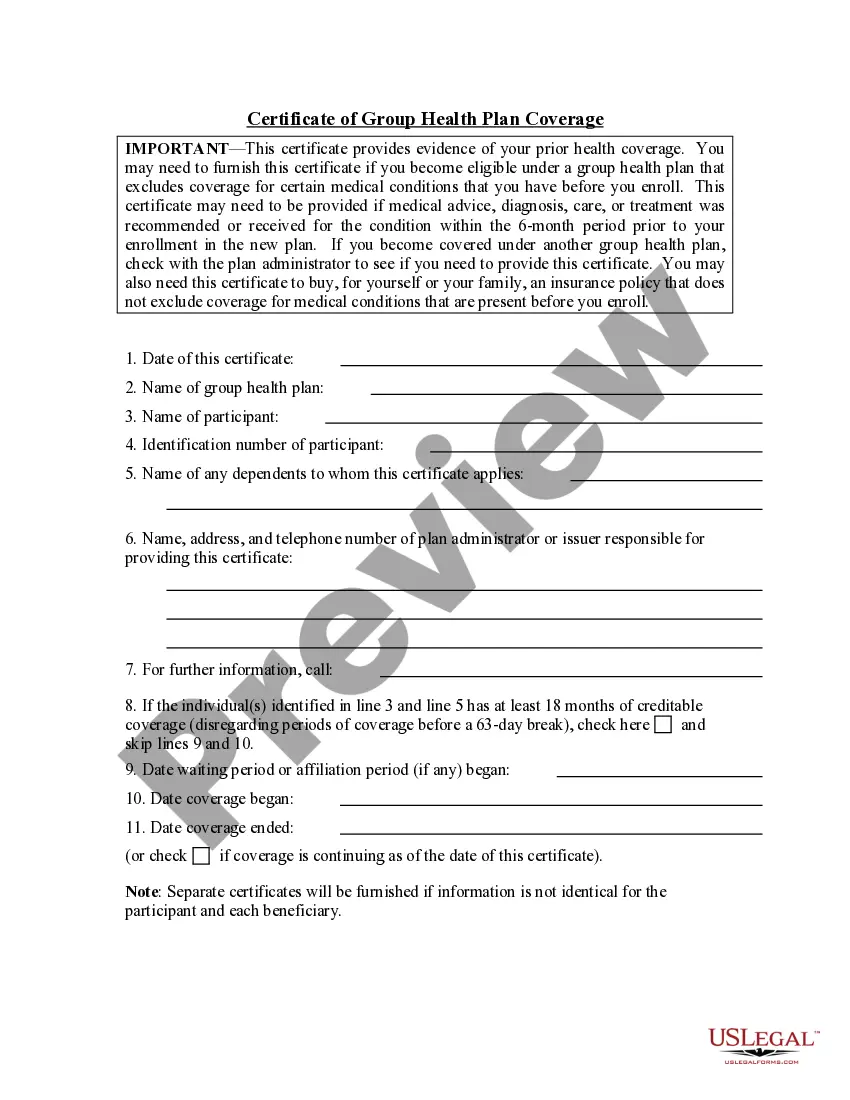
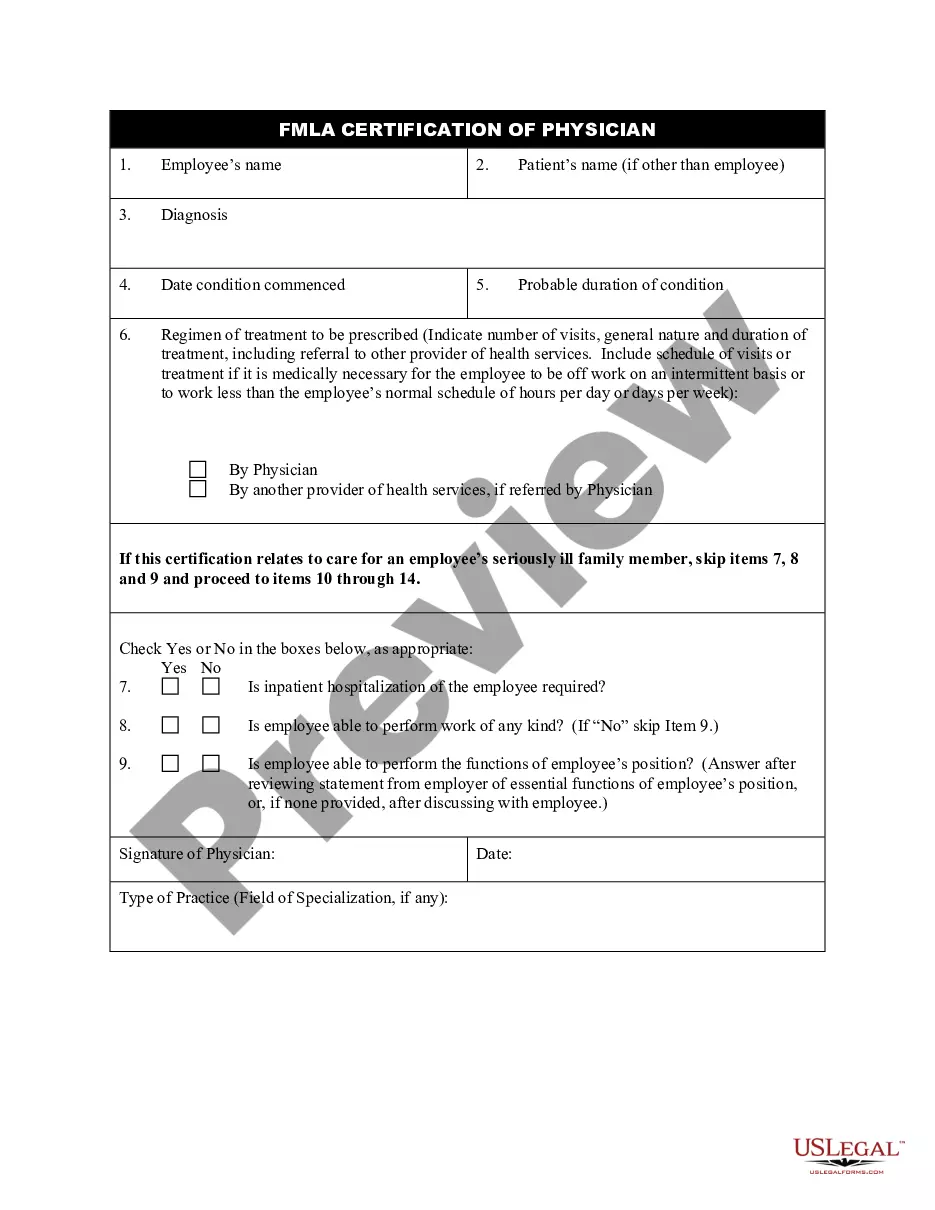
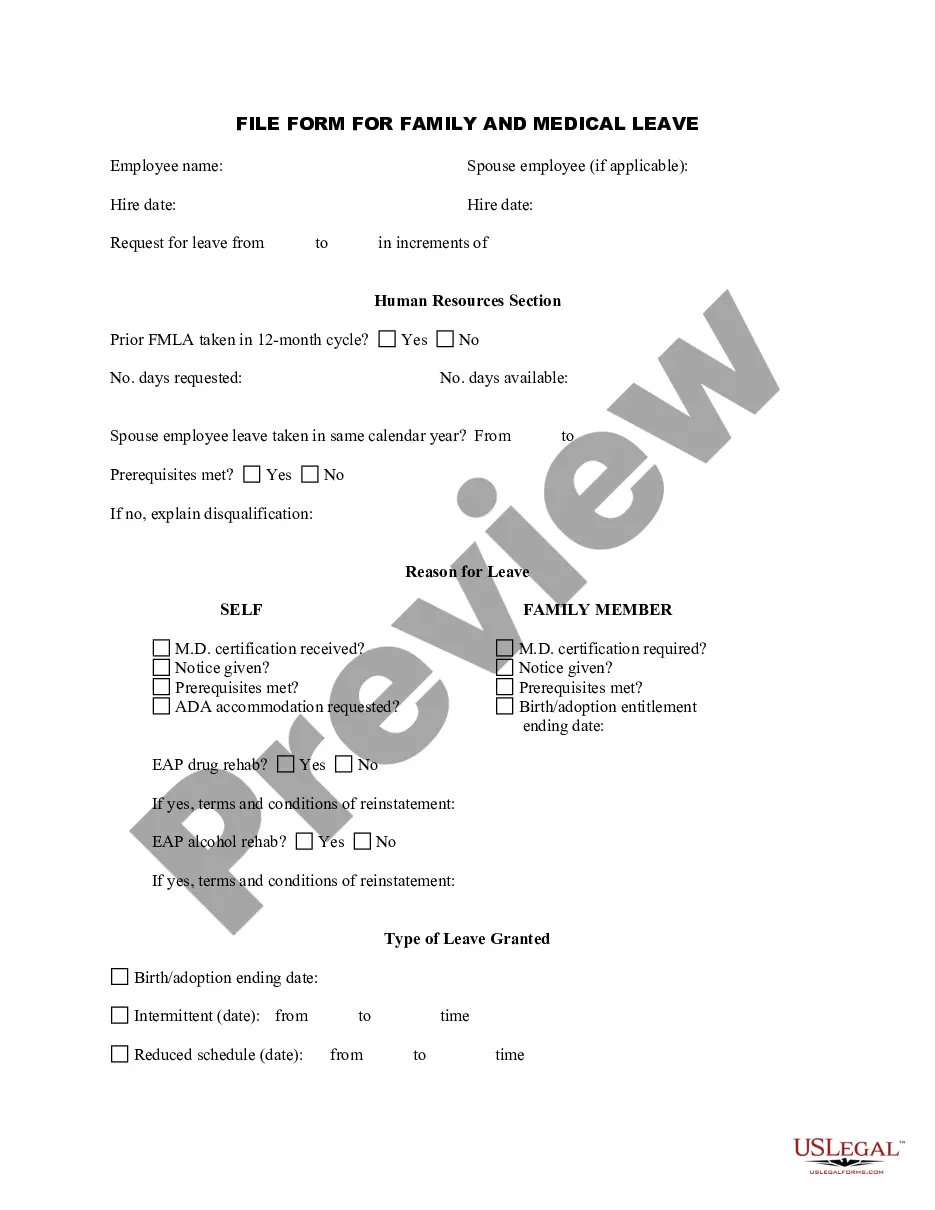
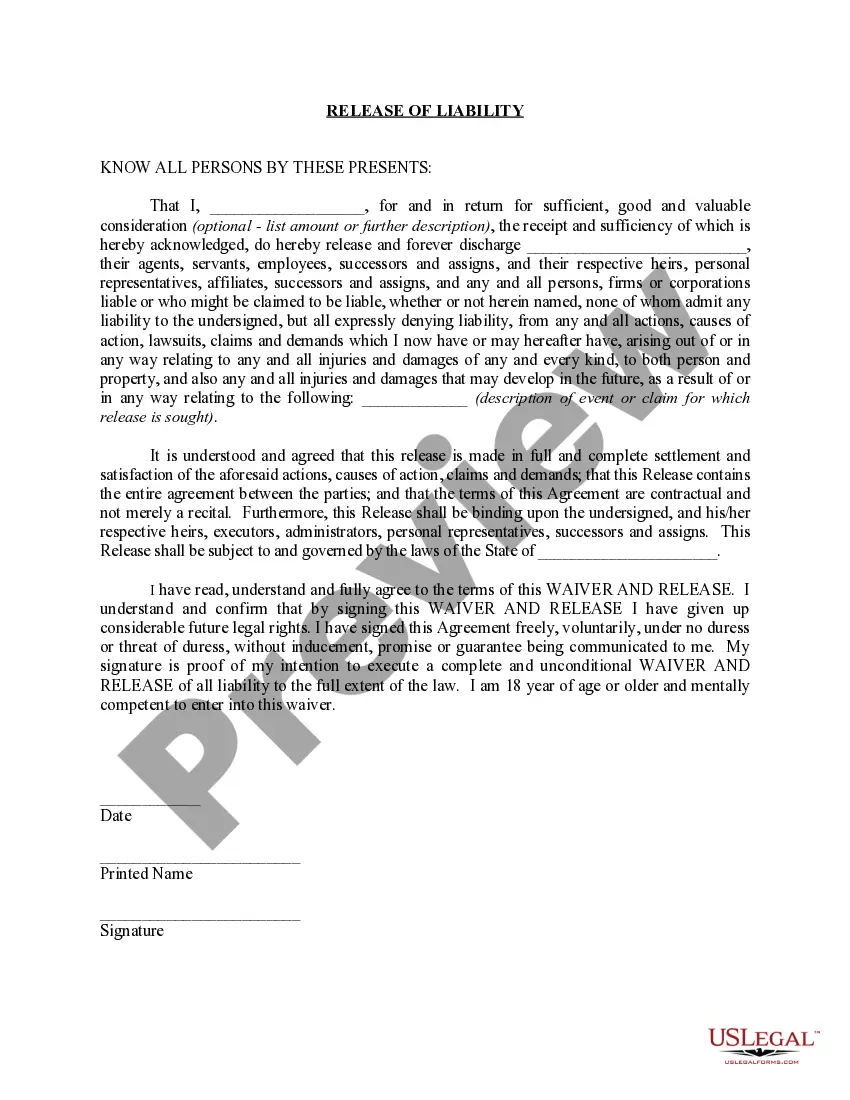
How to fill out Certification Of Health Care Provider Under The FMLA Of 1993?
Locating the correct official document format can be challenging.
Of course, there are numerous templates accessible online, but how do you discover the official version you require.
Utilize the US Legal Forms website. The platform offers a vast array of templates, including the Florida Certification of Health Care Provider under the FMLA of 1993, suitable for both business and personal purposes.
You can browse the form using the Preview button and review the form details to confirm it is suitable for you.
- All the forms are reviewed by experts and adhere to state and federal regulations.
- If you are already registered, Log In to your account and click the Get button to obtain the Florida Certification of Health Care Provider under the FMLA of 1993.
- Use your account to search through the legal forms you may have purchased previously.
- Go to the My documents tab of your account and retrieve an additional copy of the document you require.
- If you are a first-time user of US Legal Forms, here are simple instructions that you can follow.
- First, ensure that you have selected the correct form for your city/region.
Form popularity
FAQ
In Florida, various health conditions qualify for FMLA leave, such as serious health issues affecting you or a family member. The Florida Certification of Health Care Provider under the FMLA of 1993 is vital to substantiate your leave request. Common conditions include chronic illnesses, long-term medical treatments, and certain complications during pregnancy. Always consult your healthcare provider to determine whether your situation qualifies.
The FMLA was signed into law by President Bill Clinton in 1993. It allows workers to take up to 12 weeks of unpaid leave to bond with a newborn, newly adopted or newly placed child; care for a seriously ill child, spouse or parent; or care for their own serious health condition without fear of losing their jobs.
The FMLA was signed into law by President Bill Clinton in 1993. It allows workers to take up to 12 weeks of unpaid leave to bond with a newborn, newly adopted or newly placed child; care for a seriously ill child, spouse or parent; or care for their own serious health condition without fear of losing their jobs.
Who is eligible for FMLA:Employee who has worked for the employer for 12 months, AND.Employee has worked 1,250 hours in the preceding 12 month period, AND.Employee works for an employer with 50 or more employees.
The Family and Medical Leave Act (FMLA) provides eligible employees up to 12 workweeks of unpaid leave a year, and requires group health benefits to be maintained during the leave as if employees continued to work instead of taking leave.
The Family and Medical Leave Act (FMLA) provides certain employees with up to 12 weeks of unpaid, job-protected leave per year. It also requires that their group health benefits be maintained during the leave.
1993; Requires employers with 50 or more workers to grant up to 12 weeks of unpaid leave a year to allow workers to take time off to help care for a new baby or an ill family member without fear of losing their jobs.
Unfortunately, there haven't been any other significant changes to the FMLA, although proposals have been made. Some include extending the FMLA to smaller employers, allowing leave for situations not involving a serious health condition and expanding who is eligible for leave.
The Act defines health care provider as: A doctor of medicine or osteopathy who is authorized to practice medicine or surgery (as appropriate) by the State in which the doctor practices; or. Any other person determined by the Secretary to be capable of providing health care services.
The 1993 Family and Medical Leave Act (FMLA) allows parents to take time from work for births and adoptions.