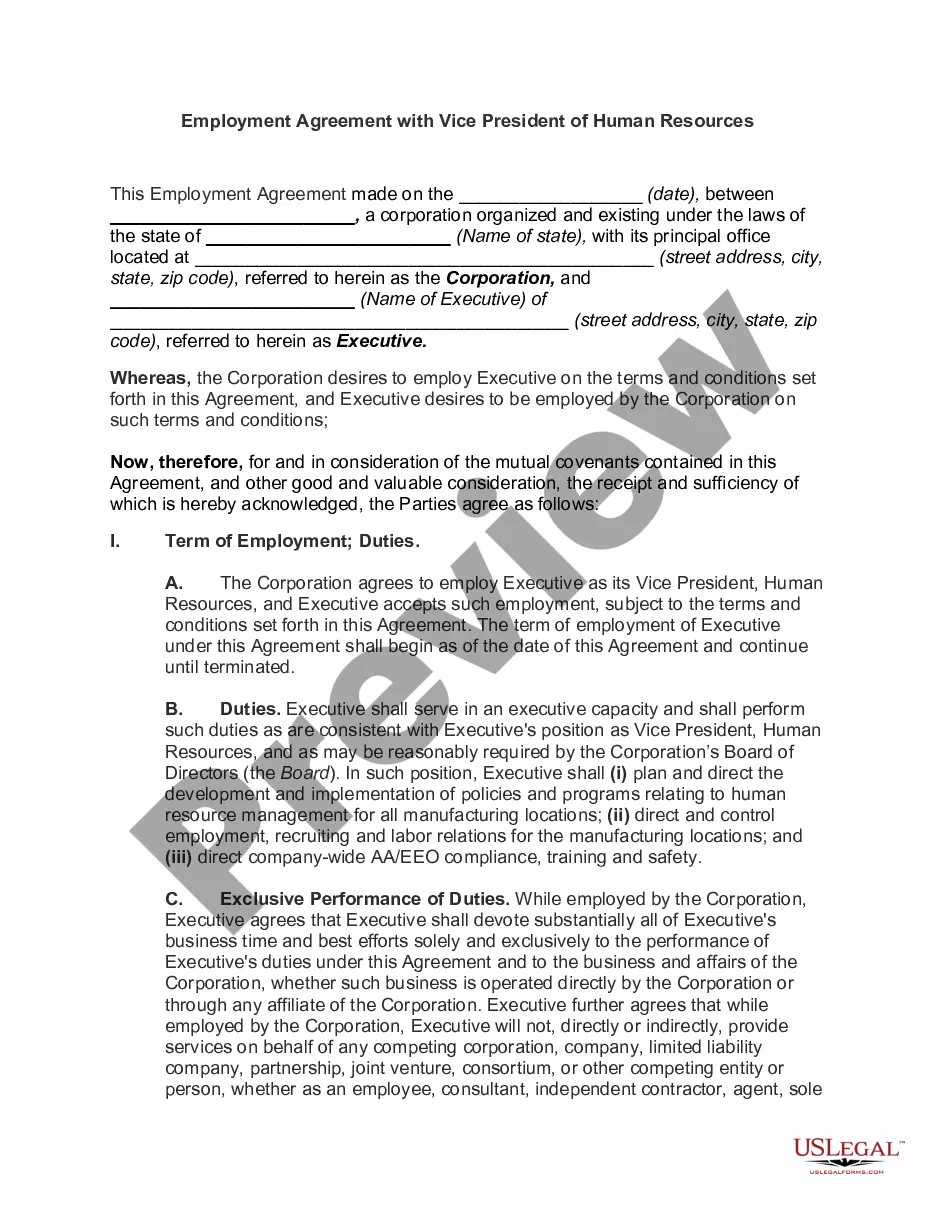
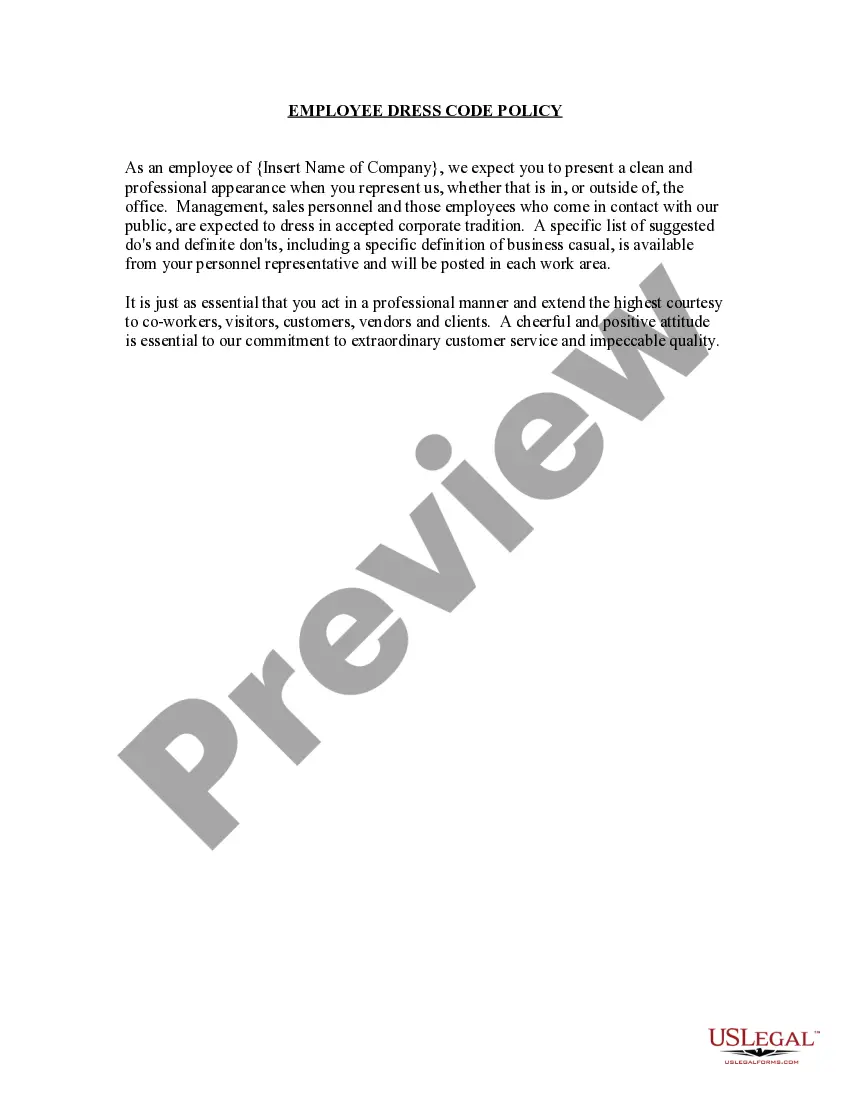
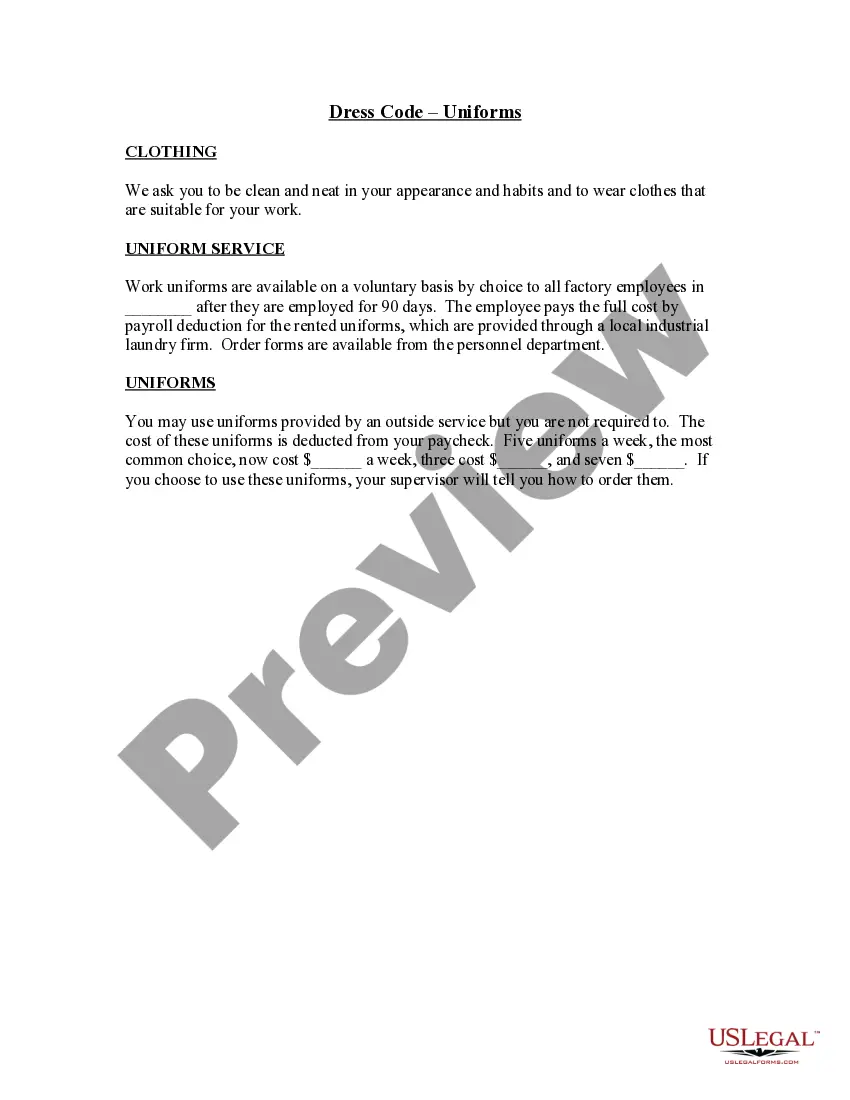
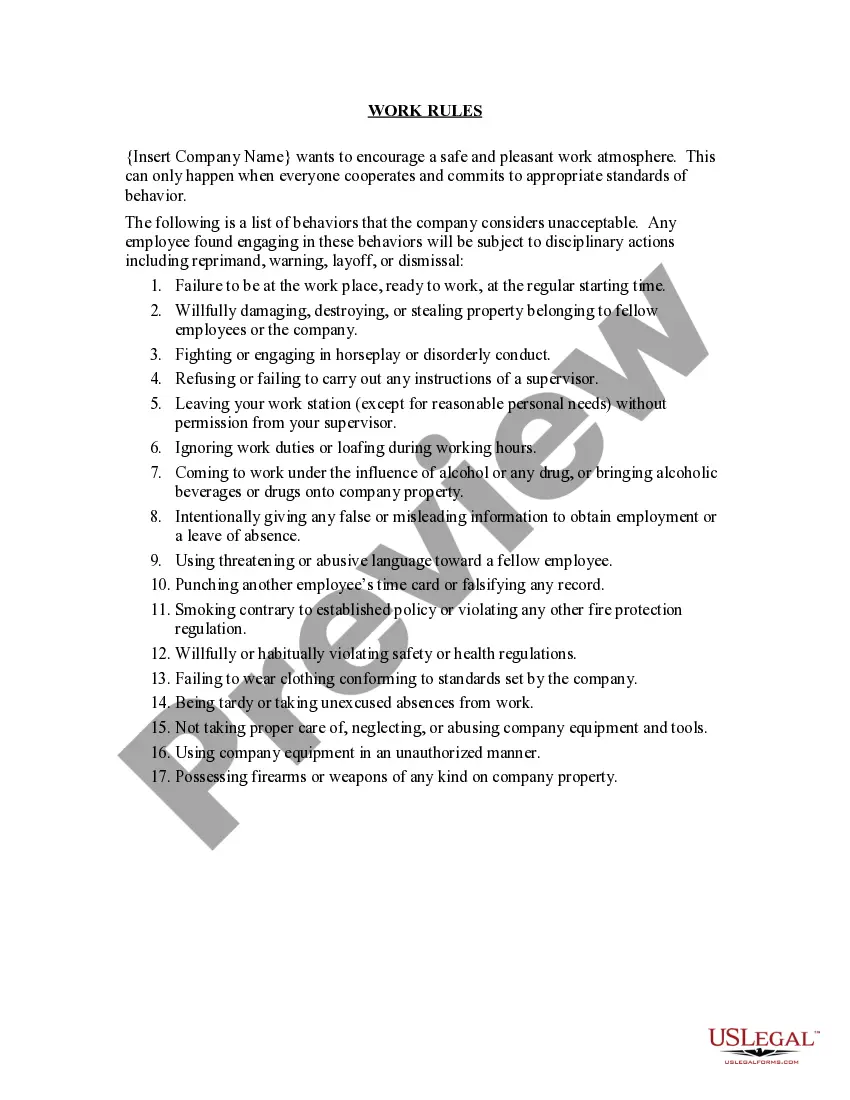
Florida Employee Dress Code Policy - General
Description
Get your form ready online
Our built-in tools help you complete, sign, share, and store your documents in one place.
Make edits, fill in missing information, and update formatting in US Legal Forms—just like you would in MS Word.
Download a copy, print it, send it by email, or mail it via USPS—whatever works best for your next step.
Sign and collect signatures with our SignNow integration. Send to multiple recipients, set reminders, and more. Go Premium to unlock E-Sign.
If this form requires notarization, complete it online through a secure video call—no need to meet a notary in person or wait for an appointment.
We protect your documents and personal data by following strict security and privacy standards.

Make edits, fill in missing information, and update formatting in US Legal Forms—just like you would in MS Word.

Download a copy, print it, send it by email, or mail it via USPS—whatever works best for your next step.

Sign and collect signatures with our SignNow integration. Send to multiple recipients, set reminders, and more. Go Premium to unlock E-Sign.

If this form requires notarization, complete it online through a secure video call—no need to meet a notary in person or wait for an appointment.

We protect your documents and personal data by following strict security and privacy standards.
Looking for another form?
How to fill out Employee Dress Code Policy - General?
If you're looking for thorough, downloading, or printing valid document templates, utilize US Legal Forms, the largest collection of legal forms available online.
Take advantage of the site's straightforward and user-friendly search to find the documents you need.
A range of templates for business and personal needs are organized by categories, states, or keywords.
Step 4. Once you have found the form you need, click the Purchase now button. Select the pricing plan you prefer and provide your details to register for an account.
Step 5. Process the payment. You can use a credit card or PayPal account to complete the transaction.
- Use US Legal Forms to obtain the Florida Employee Dress Code Policy - General with just a few clicks.
- If you are already a US Legal Forms user, Log In to your account and click the Acquire button to obtain the Florida Employee Dress Code Policy - General.
- You can also view forms you previously downloaded in the My documents section of your account.
- If you are using US Legal Forms for the first time, follow the instructions below.
- Step 1. Ensure you have selected the form for the correct city/state.
- Step 2. Use the Preview option to review the form’s content. Don't forget to read the description.
- Step 3. If you are not satisfied with the form, use the Search field at the top of the page to find alternative versions of the legal form template.
Form popularity
FAQ
Clothes should still be pressed, neat, and appropriate for the type of work you do. For men, you can expect casual pants and slacks with collared polos or crew-neck sweaters. Women have the freedom to wear nicely-fitted tops and blouses, slacks or skirts. Fun patterns and colors are acceptable with a casual dress code.
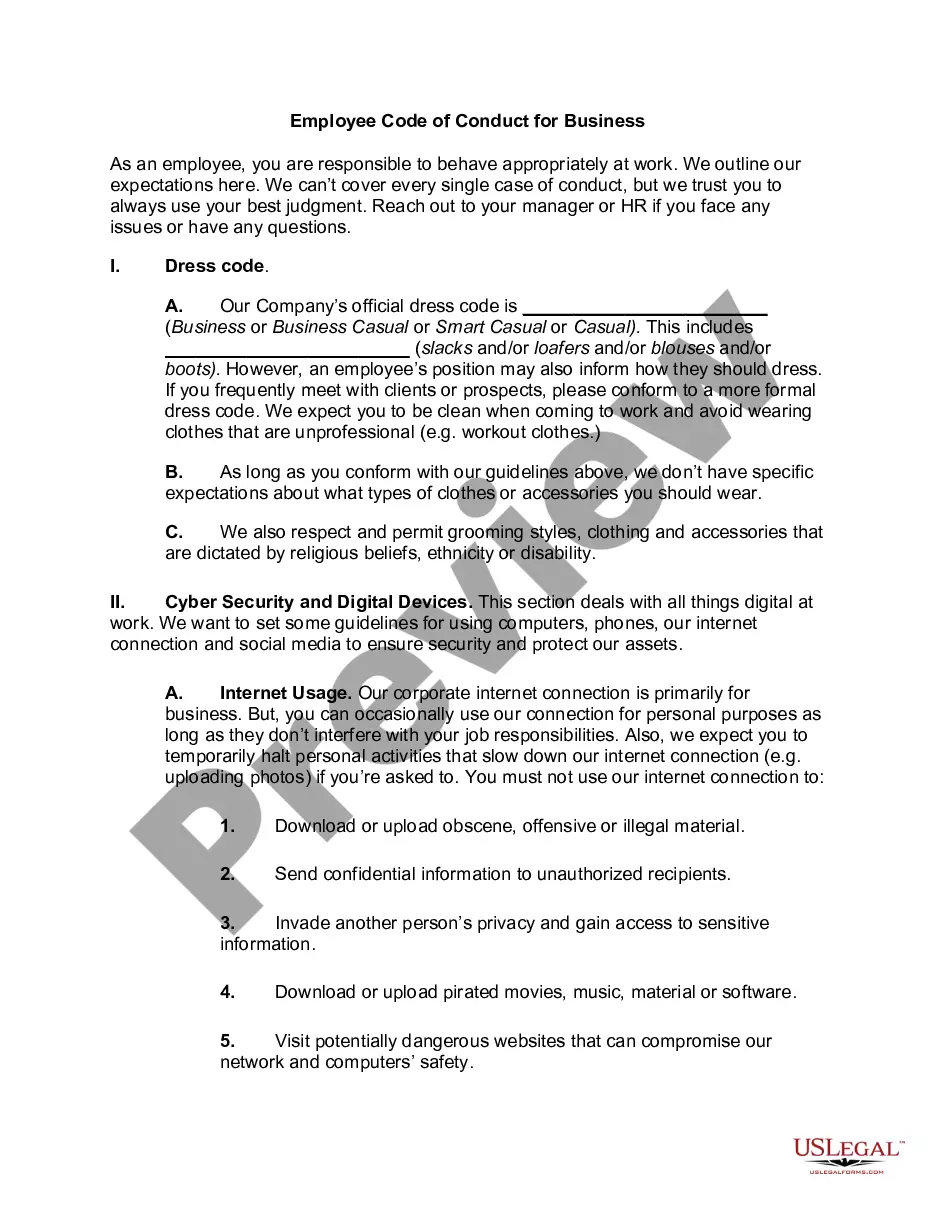
The dress code: You should clearly state what the general dress code of the company is and should also list exceptions when employees may need to follow a different dress code. Accommodations: To prevent any possible issues, state that employees can address any concerns about the dress code to human resources.
1. Can my employer tell me how to dress? Yes. In general, employers are allowed to regulate their employees' appearance, as long as they do not end up discriminating against certain employees.
A dress code policy is a document, typically associated with the employee handbook, that specifies what is appropriate for employees to wear to work. Dress codes will vary from company to company, especially in different industries.
Everyone is expected to be well-groomed and wear clean clothing, free of holes, tears, or other signs of wear. Clothing with offensive or inappropriate designs or stamps are not allowed. Clothing should not be too revealing. Clothing and grooming styles dictated by religion or ethnicity are exempt.
Appropriate business casual dress typically includes slacks or khakis, dress shirt or blouse, open-collar or polo shirt, optional tie or seasonal sport coat, a dress or skirt at knee-length or below, a tailored blazer, knit shirt or sweater, and loafers or dress shoes that cover all or most of the foot.
There are typically four types of corporate dress codes: business formal, business professional, business casual, and casual.
Casual Dress Code The key differentiators of business attire in a casual workplace include allowing employees to wear jeans, shorts, and athletic shoes daily. Additionally, clothing items such as t-shirts, sandals, and very informal pants and shirts are allowed.
Business casual is the most common dress code in American workplaces, and it can vary based on each workplace. Men typically wear dress pants or khaki pants with collared button-up shirts, and they may also wear a sweater over this shirt. Women can wear business separates and blouses or shirts without collars.
Yes, your employer may (within limits) be able to specify how you dress at work. Your contract, and associated documents such as the staff handbook, may state that you need to dress in a certain manner, or wear a specific uniform.