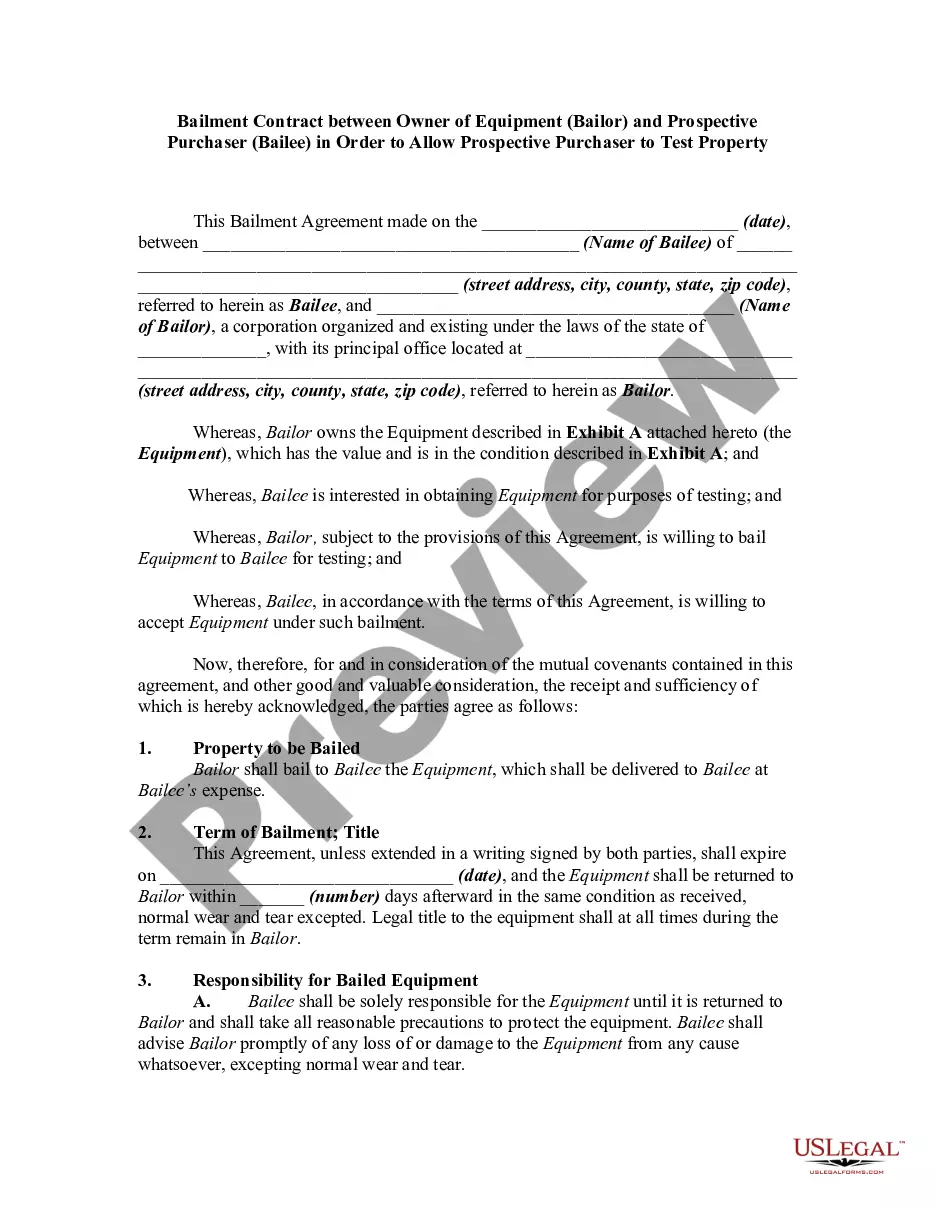
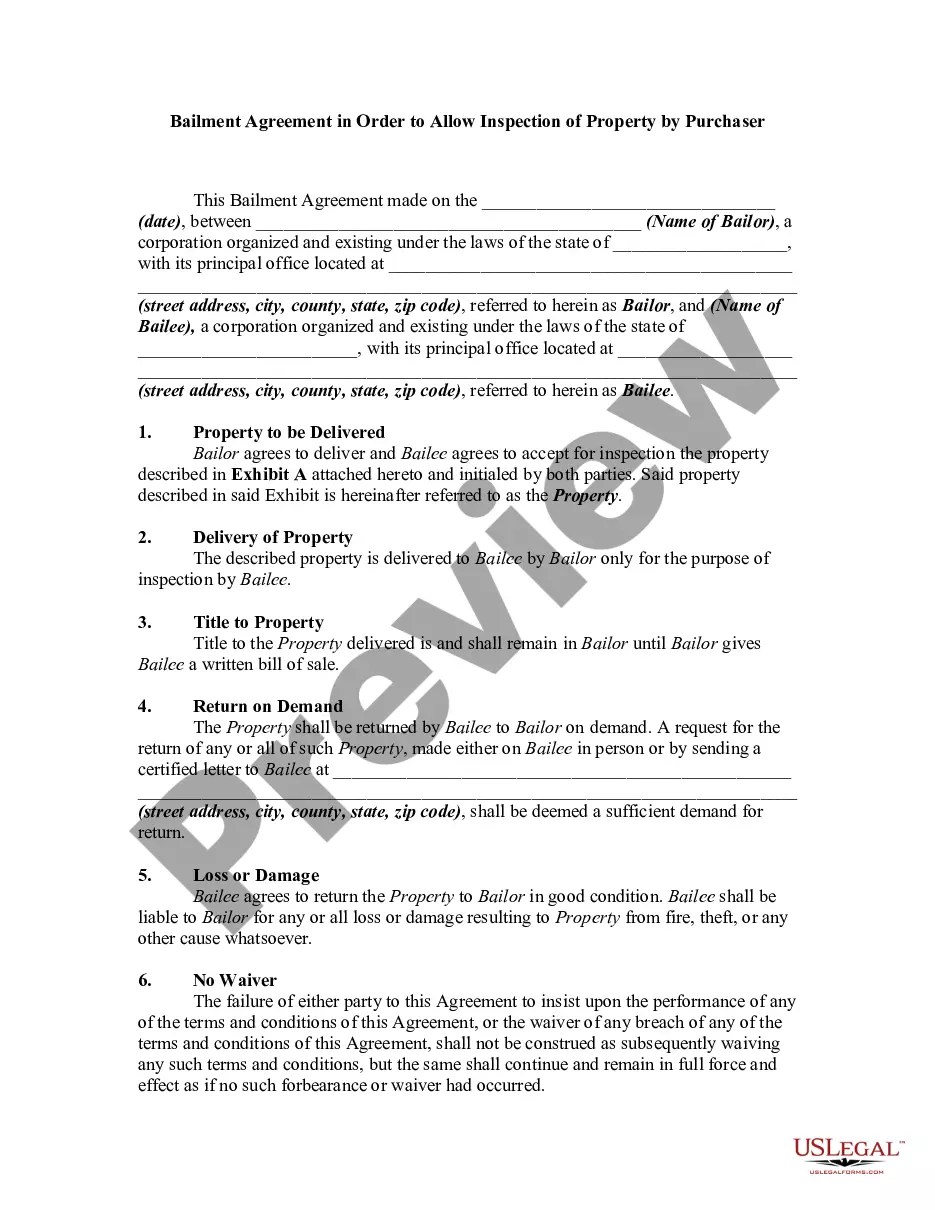
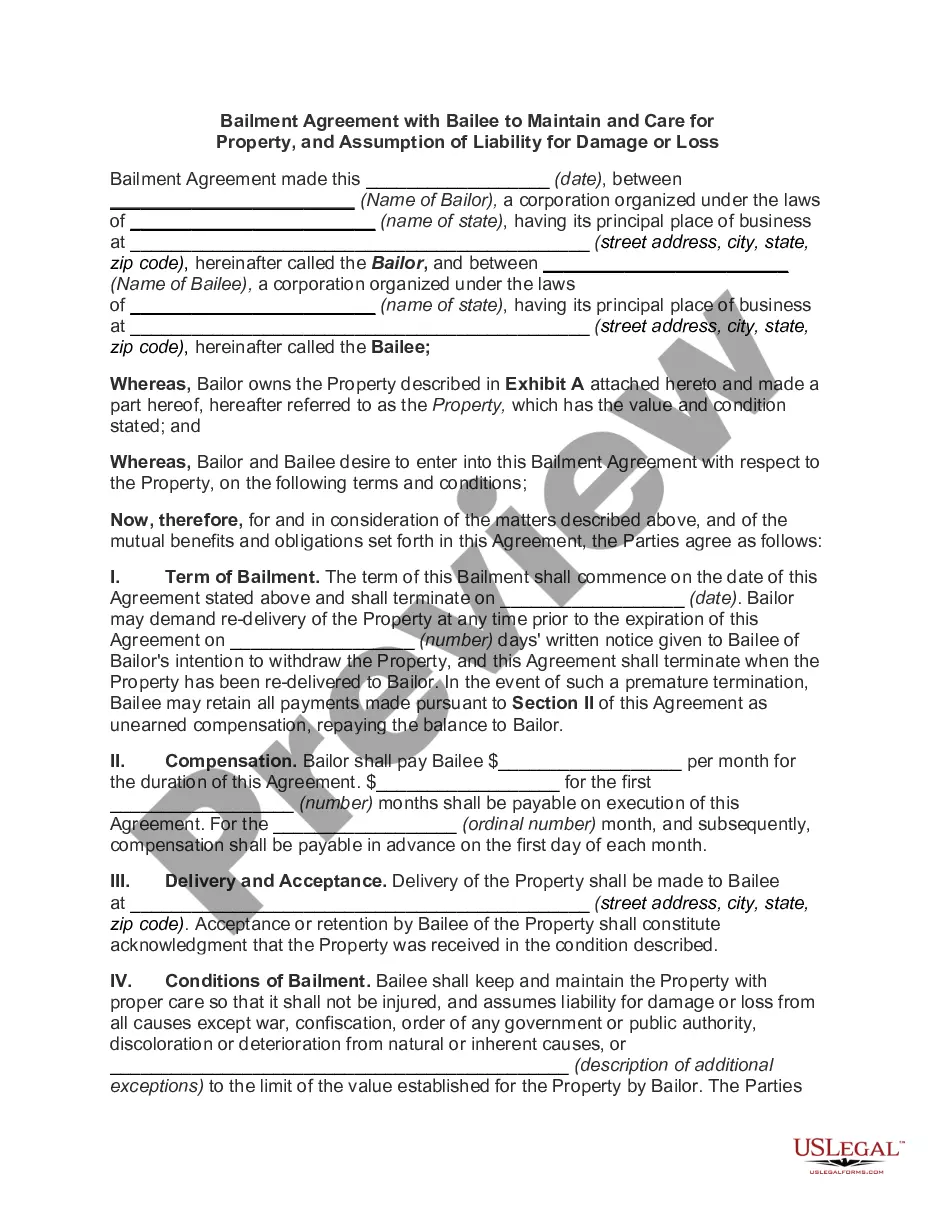
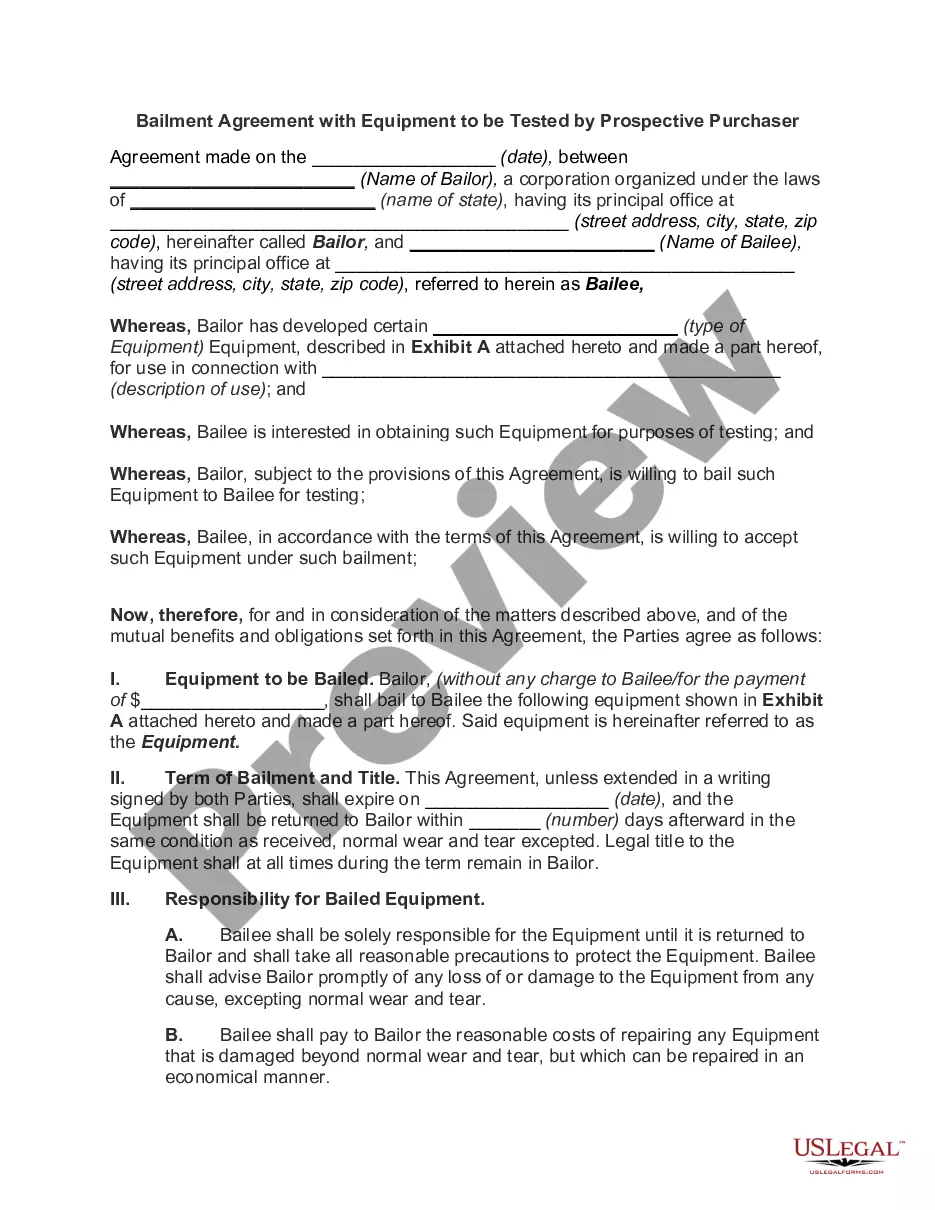
Florida Bailment Agreement with Bailee to Maintain and Care for Property, and Assume Liability for Damage or Loss
Description
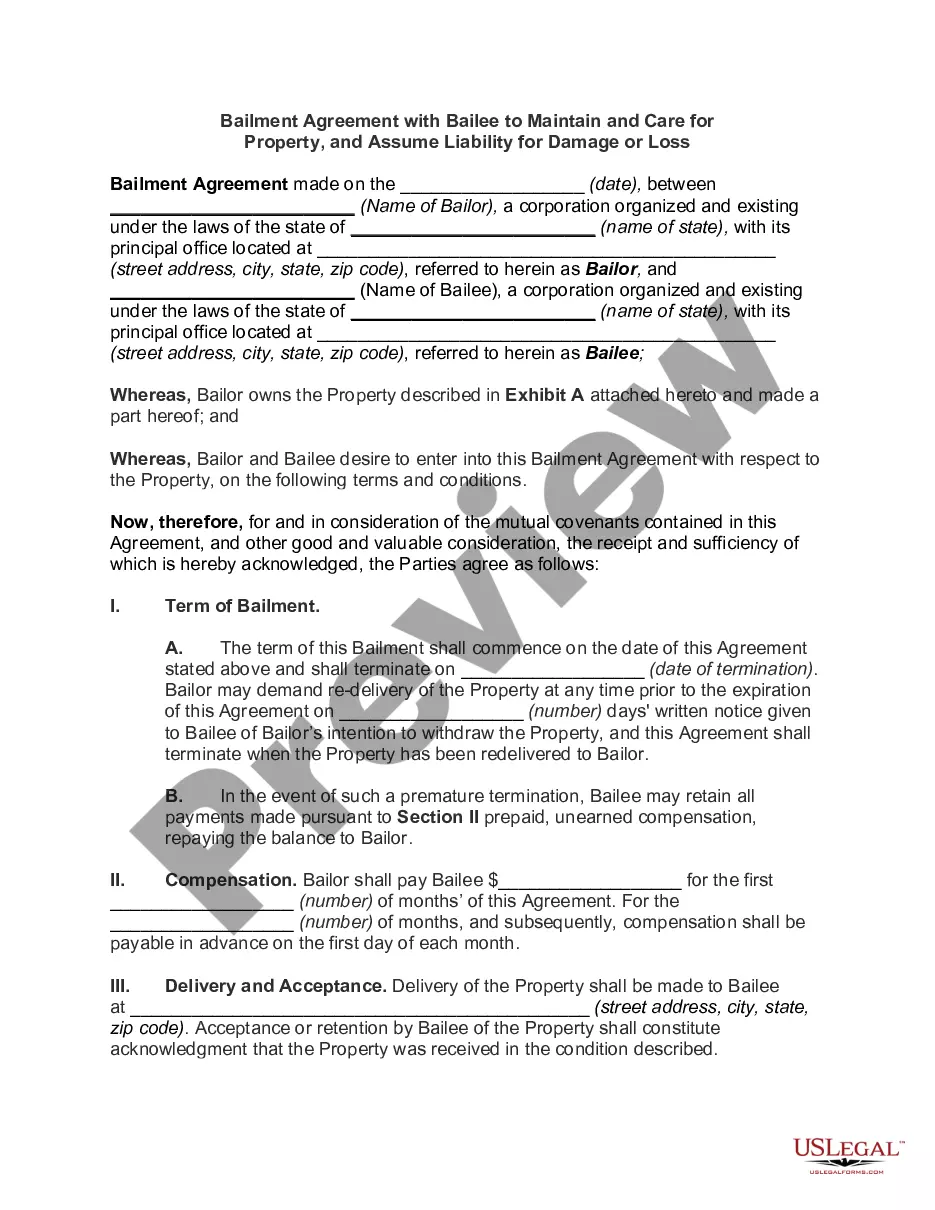
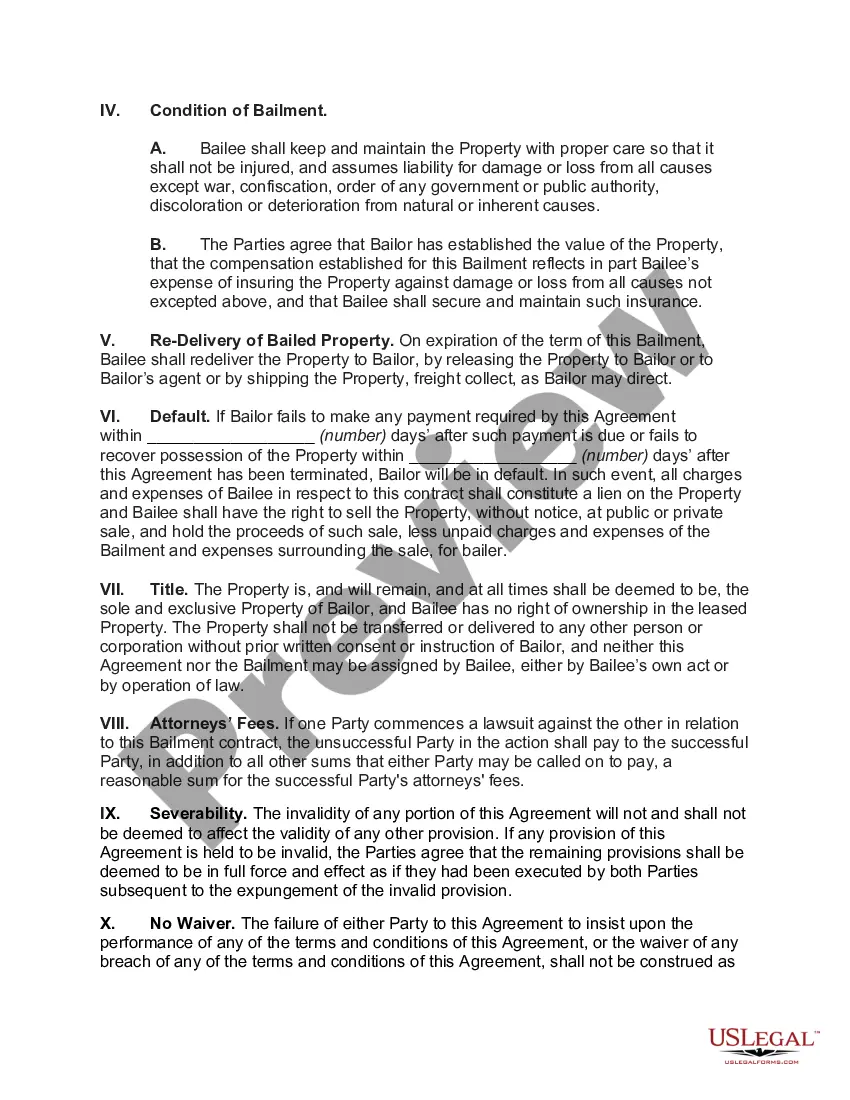
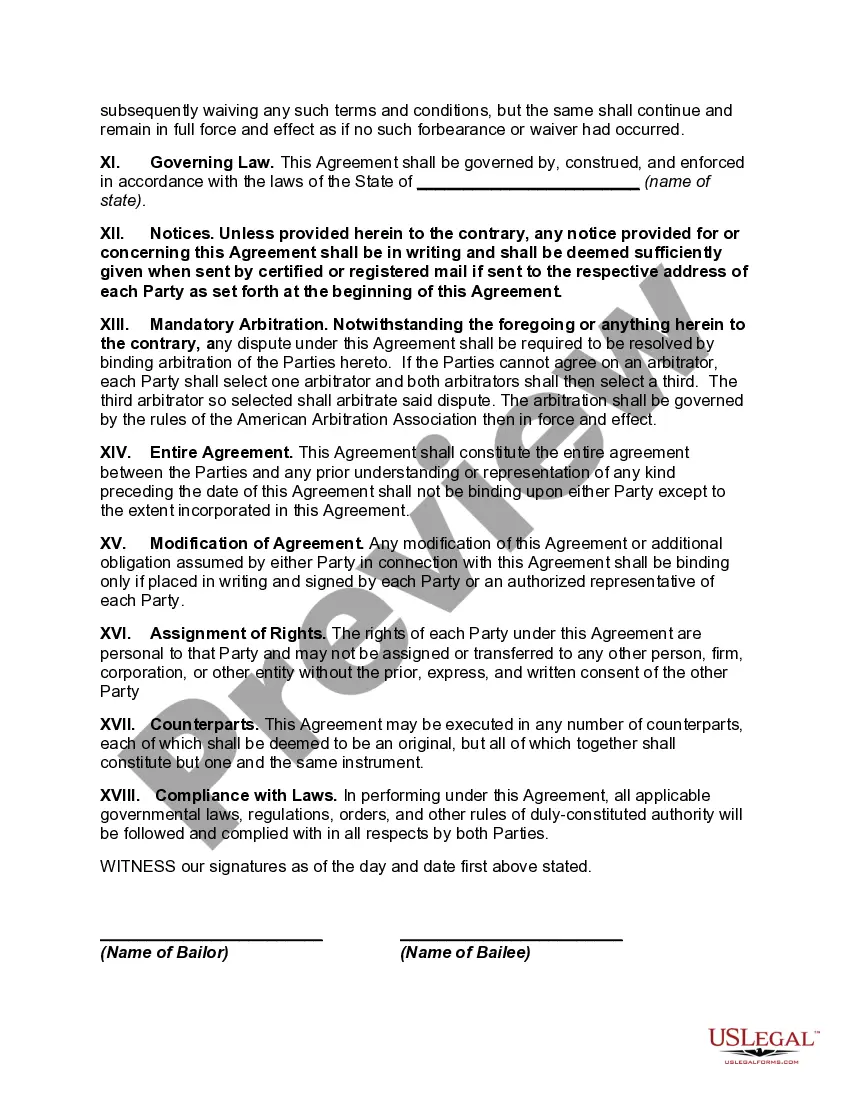
Get your form ready online
Our built-in tools help you complete, sign, share, and store your documents in one place.
Make edits, fill in missing information, and update formatting in US Legal Forms—just like you would in MS Word.
Download a copy, print it, send it by email, or mail it via USPS—whatever works best for your next step.
Sign and collect signatures with our SignNow integration. Send to multiple recipients, set reminders, and more. Go Premium to unlock E-Sign.
If this form requires notarization, complete it online through a secure video call—no need to meet a notary in person or wait for an appointment.
We protect your documents and personal data by following strict security and privacy standards.

Make edits, fill in missing information, and update formatting in US Legal Forms—just like you would in MS Word.

Download a copy, print it, send it by email, or mail it via USPS—whatever works best for your next step.

Sign and collect signatures with our SignNow integration. Send to multiple recipients, set reminders, and more. Go Premium to unlock E-Sign.

If this form requires notarization, complete it online through a secure video call—no need to meet a notary in person or wait for an appointment.

We protect your documents and personal data by following strict security and privacy standards.
Looking for another form?

How to fill out Bailment Agreement With Bailee To Maintain And Care For Property, And Assume Liability For Damage Or Loss?
US Legal Forms - one of the largest collections of legal documents in the United States - offers a variety of legal templates that you can download or print.
By using the site, you can access thousands of forms for business and personal use, organized by categories, states, or keywords.
You can find the latest forms such as the Florida Bailment Agreement with Bailee to Maintain and Care for Property, and Assume Liability within seconds.
Select the Review button to examine the form's details. Review the form information to confirm you have chosen the right form.
If the form does not meet your needs, use the Search field at the top of the screen to find the one that does.
- If you already have a monthly subscription, Log In and download the Florida Bailment Agreement with Bailee to Maintain and Care for Property, and Assume Liability from your US Legal Forms account.
- The Download button will appear on every form you see.
- You have access to all previously acquired forms from the My documents tab of your account.
- To use US Legal Forms for the first time, here are simple steps to get started.
- Ensure you have selected the correct form for your location/area.
Form popularity
FAQ
The Florida Bailment Agreement with Bailee to Maintain and Care for Property, and Assume Liability for Damage or Loss outlines clear duties for both the bailor and the bailee. The bailor must provide the property in a safe condition, while the bailee must use the property as agreed and return it in good condition. Both parties can expect that the property will be returned once the agreement concludes. By acknowledging these rights and duties, both sides can ensure a smooth transaction.
In a Florida Bailment Agreement with Bailee to Maintain and Care for Property, the bailee has specific rights and liabilities. They have the right to use the property only as permitted within the terms of the agreement. Conversely, they are liable for any damages or loss that occur due to their failure to exercise due care. This balance of rights and responsibilities ensures that both parties are protected and understand their obligations under the agreement.
The bailee is not liable if the delay in delivering the goods or disposal of goods is due to default of others. Unexplained failure to return the thing bailed is presumed to be by the bailee's default;12And it would be presumed as his negligence.
The duty of the bailee is to return the goods without demand on the accomplishment of the purpose or the expiration of the time period. In case of his failure to do so, he shall be liable for the loss, destruction, deterioration, damages or destruction of goods even without negligence.
In either case reasonable disclaimers of liability are allowed. If the bailed goods need repair while in the bailee's possession, the usual rule is that ordinary repairs are the bailee's responsibility, extraordinary ones the bailor's.
The bailee is liable for any damages arising from their own negligence or the negligence of others who gain access to the item, for example, the item is stolen by an unknown third party while in the borrower's possession, or someone else uses the borrowed car while in the borrower's possession.
It is well established now that Bailee will be liable for any loss or damage to the bailor which arises due to the negligence or lack of reasonable care of the goods bailed.
In a bailment for mutual benefit, the bailee must take reasonable care of the bailed property. A bailee who fails to do so may be held liable for any damages incurred from his or her NEGLIGENCE.
The bailee has a duty to take reasonable care of the goods and return them in accordance with the terms of any express or implied contract of bailment.
The bailee is liable for all injuries to the property from failure to properly care for or use it. Once the purpose of the bailment has been completed, the bailee usually must return the property to the bailor, or account for it, depending upon the terms of the contract.