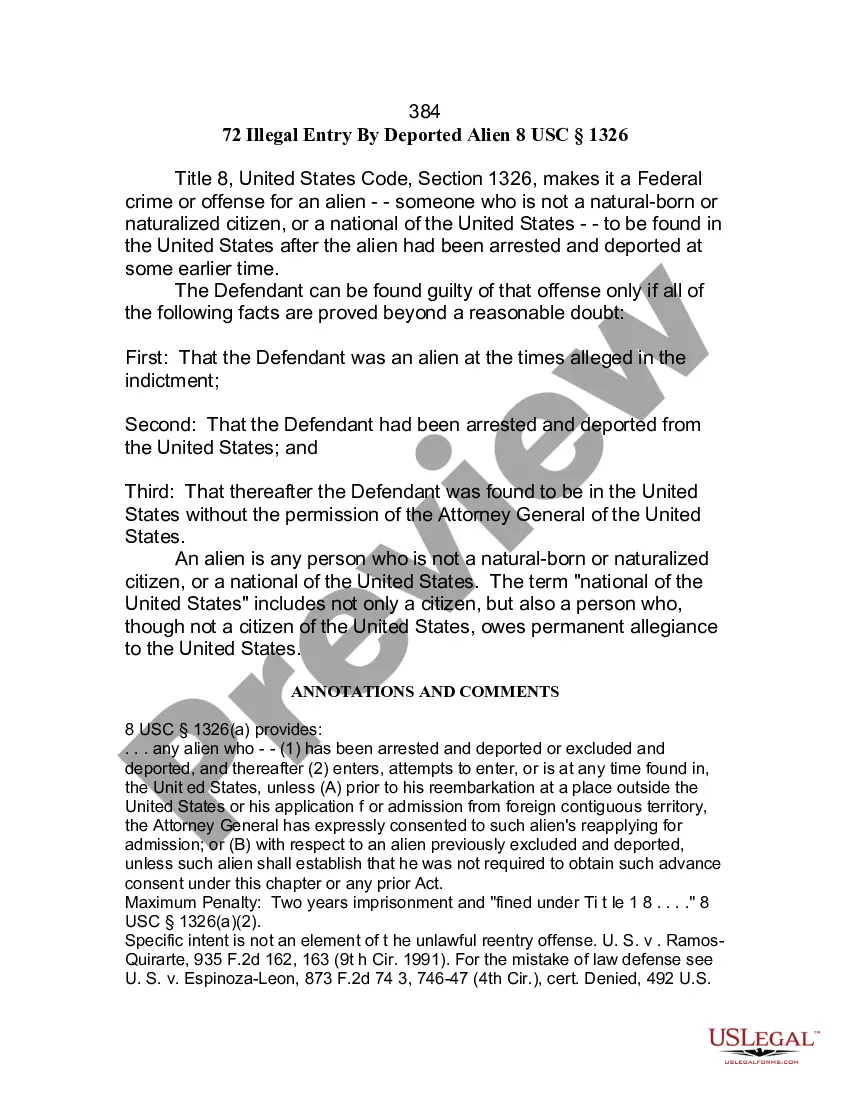
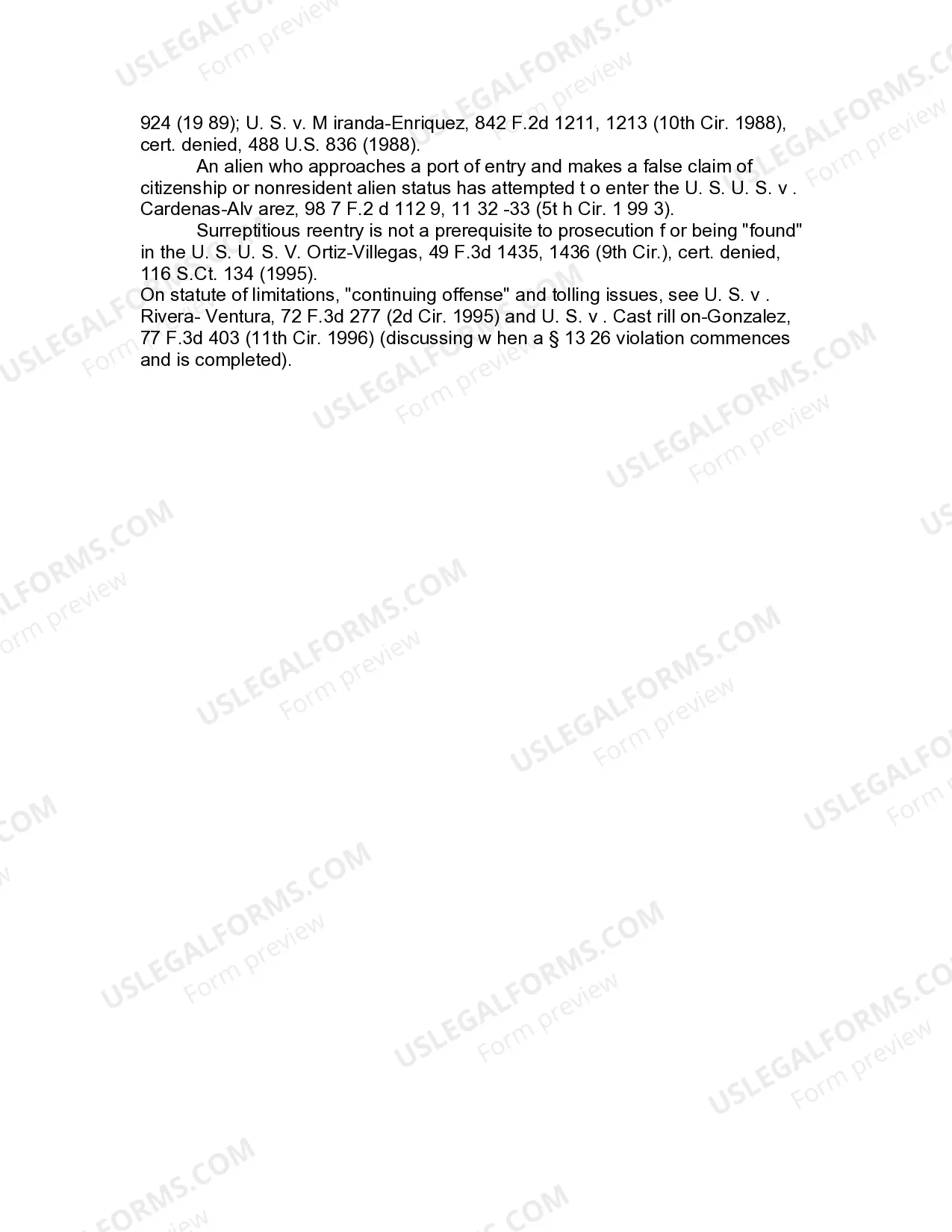
Florida Jury Instruction - Illegal Entry By Deported Alien
Description
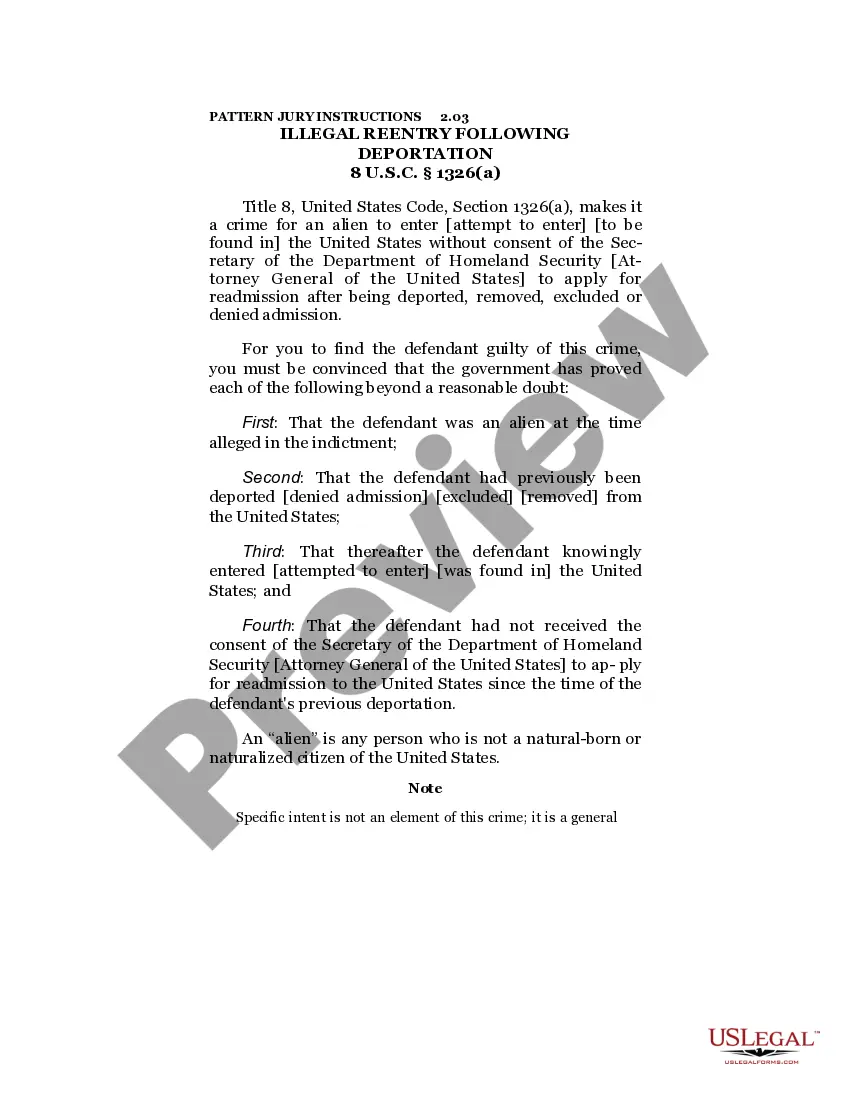
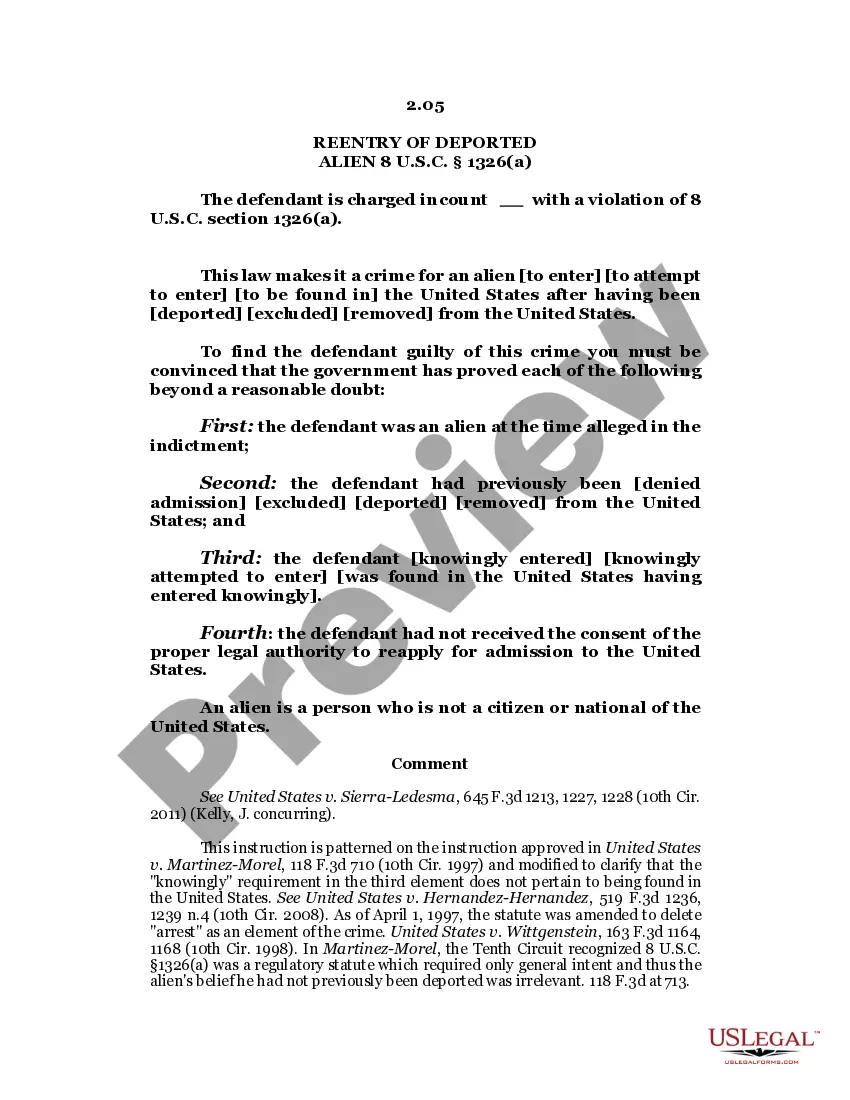
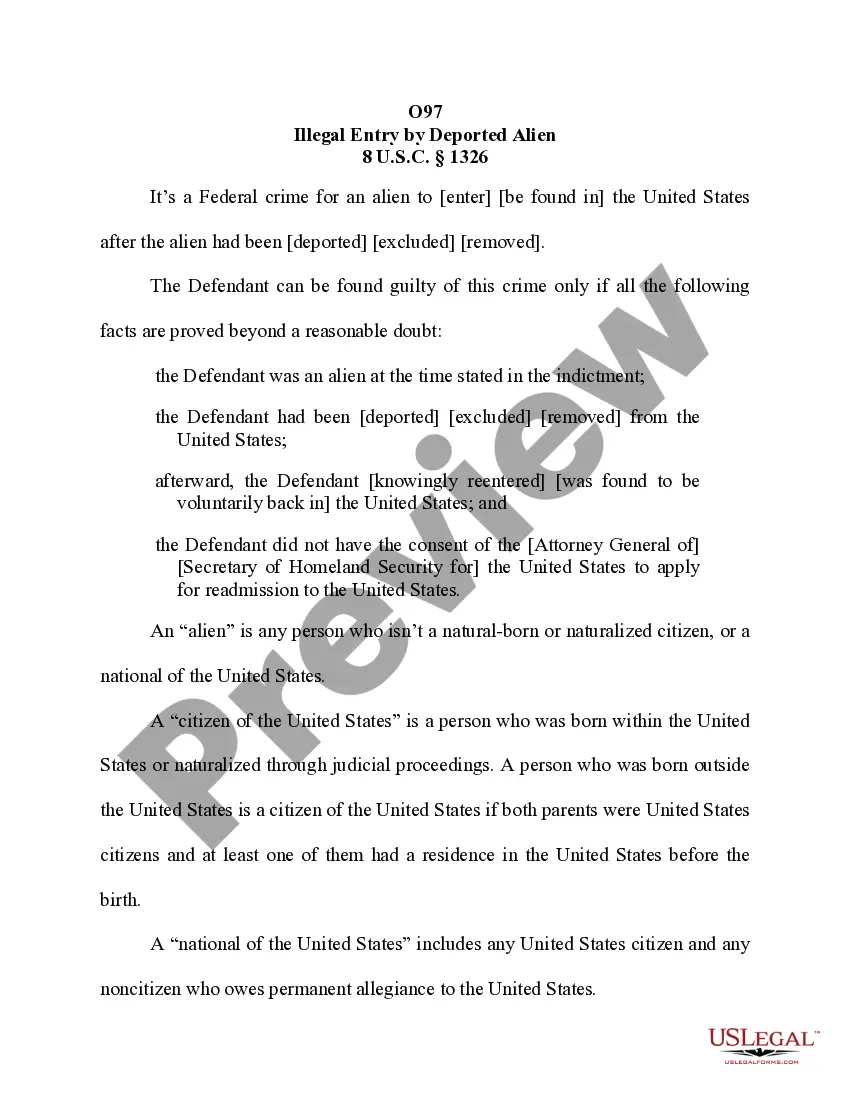
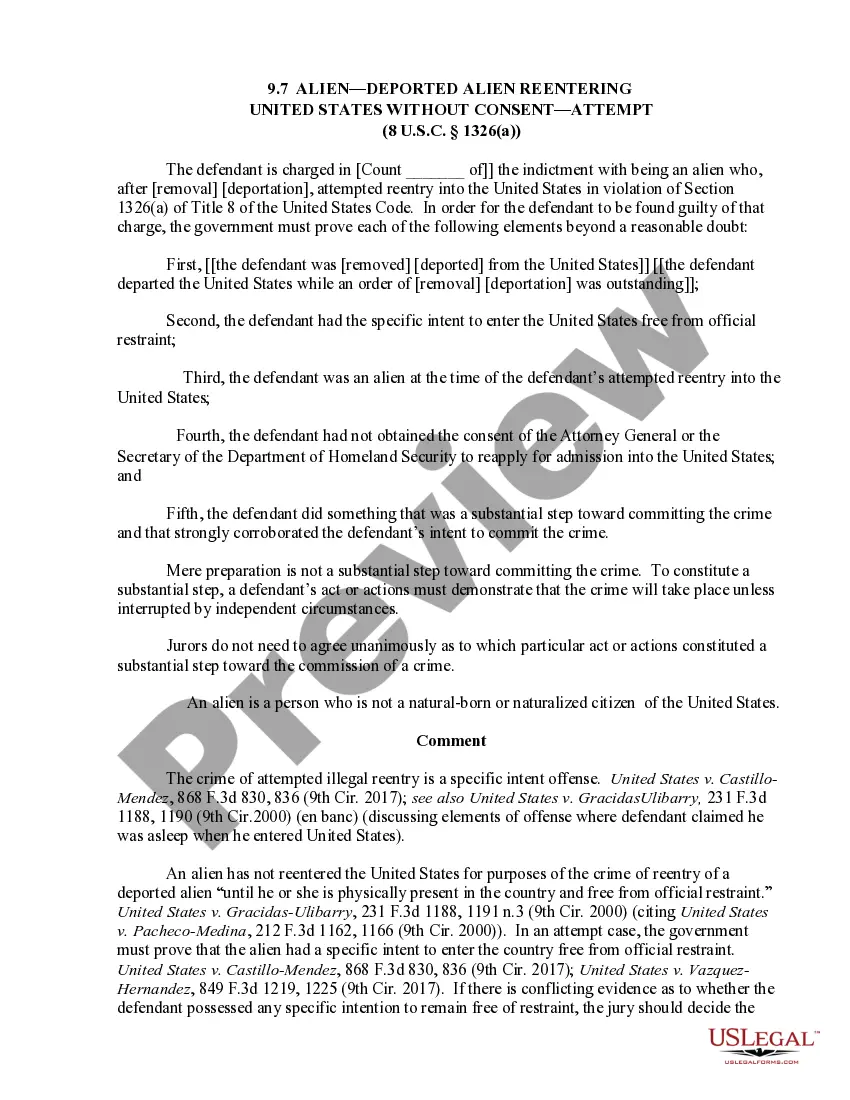
Get your form ready online
Our built-in tools help you complete, sign, share, and store your documents in one place.
Make edits, fill in missing information, and update formatting in US Legal Forms—just like you would in MS Word.
Download a copy, print it, send it by email, or mail it via USPS—whatever works best for your next step.
Sign and collect signatures with our SignNow integration. Send to multiple recipients, set reminders, and more. Go Premium to unlock E-Sign.
If this form requires notarization, complete it online through a secure video call—no need to meet a notary in person or wait for an appointment.
We protect your documents and personal data by following strict security and privacy standards.

Make edits, fill in missing information, and update formatting in US Legal Forms—just like you would in MS Word.

Download a copy, print it, send it by email, or mail it via USPS—whatever works best for your next step.

Sign and collect signatures with our SignNow integration. Send to multiple recipients, set reminders, and more. Go Premium to unlock E-Sign.

If this form requires notarization, complete it online through a secure video call—no need to meet a notary in person or wait for an appointment.

We protect your documents and personal data by following strict security and privacy standards.
Looking for another form?


How to fill out Jury Instruction - Illegal Entry By Deported Alien?
Discovering the right lawful record format could be a have difficulties. Needless to say, there are plenty of themes accessible on the Internet, but how do you get the lawful develop you require? Take advantage of the US Legal Forms site. The assistance offers a large number of themes, for example the Florida Jury Instruction - Illegal Entry By Deported Alien, that can be used for enterprise and personal requires. All of the forms are inspected by experts and meet up with state and federal specifications.
In case you are previously listed, log in in your profile and click the Download button to obtain the Florida Jury Instruction - Illegal Entry By Deported Alien. Utilize your profile to look with the lawful forms you might have acquired earlier. Check out the My Forms tab of your own profile and acquire one more version of your record you require.
In case you are a fresh end user of US Legal Forms, listed here are straightforward guidelines so that you can comply with:
- Initial, make certain you have chosen the proper develop to your town/county. It is possible to look over the form utilizing the Preview button and study the form information to guarantee it will be the right one for you.
- In case the develop does not meet up with your expectations, utilize the Seach field to discover the appropriate develop.
- When you are certain that the form would work, go through the Purchase now button to obtain the develop.
- Select the prices plan you desire and enter in the needed info. Create your profile and purchase an order making use of your PayPal profile or credit card.
- Choose the file structure and obtain the lawful record format in your product.
- Full, revise and print out and indication the received Florida Jury Instruction - Illegal Entry By Deported Alien.
US Legal Forms is the largest local library of lawful forms for which you can see various record themes. Take advantage of the company to obtain expertly-manufactured documents that comply with state specifications.
Form popularity
FAQ
The Florida Standard Jury Instruction #501.5(a) states that jurors should try to separate the amount of harm caused by the accident versus the harm that had existed previously in the body. However, if they cannot do so, then they should award damages for the entire condition suffered by the claimant.
How Do You Prove Reasonable Doubt? The jurors must walk into the courtroom presuming the accused is innocent. Reasonable doubt exists unless the prosecution can prove that the accused is guilty. This can be achieved by supplying evidence and inviting people to testify on the stand.
Presumption of Innocence: The judge will instruct the jury that the defendant is presumed innocent until proven guilty beyond a reasonable doubt. They should not assume guilt but must consider all the evidence presented during the trial.
To get to ?beyond reasonable doubt? the prosecution needs to convince the jury that there is no other reasonable explanation for what occurred other than the guilt of the person charged.
Prosecutors must present evidence proving a defendant is guilty beyond a reasonable doubt to make a conviction. ing to Florida's jury instructions, beyond a reasonable doubt means if jury members have any hesitations about who is guilty, then the burden has not been satisfied.
In Florida, reasonable doubt is ?a doubt based on reason and common sense after a careful and impartial consideration of all the evidence in the case.? This means that, for a defendant to be convicted, the prosecution must present evidence that is strong enough to convince a reasonable person, based on reason and ...
Reasonable doubt exists when you are not firmly convinced of the Defendant's guilt, after you have weighed and considered all the evidence. A Defendant must not be convicted on suspicion or speculation. It is not enough for the State to show that the Defendant is probably guilty.