Florida Application and Agreement for Clubhouse of Condominium Association
Description
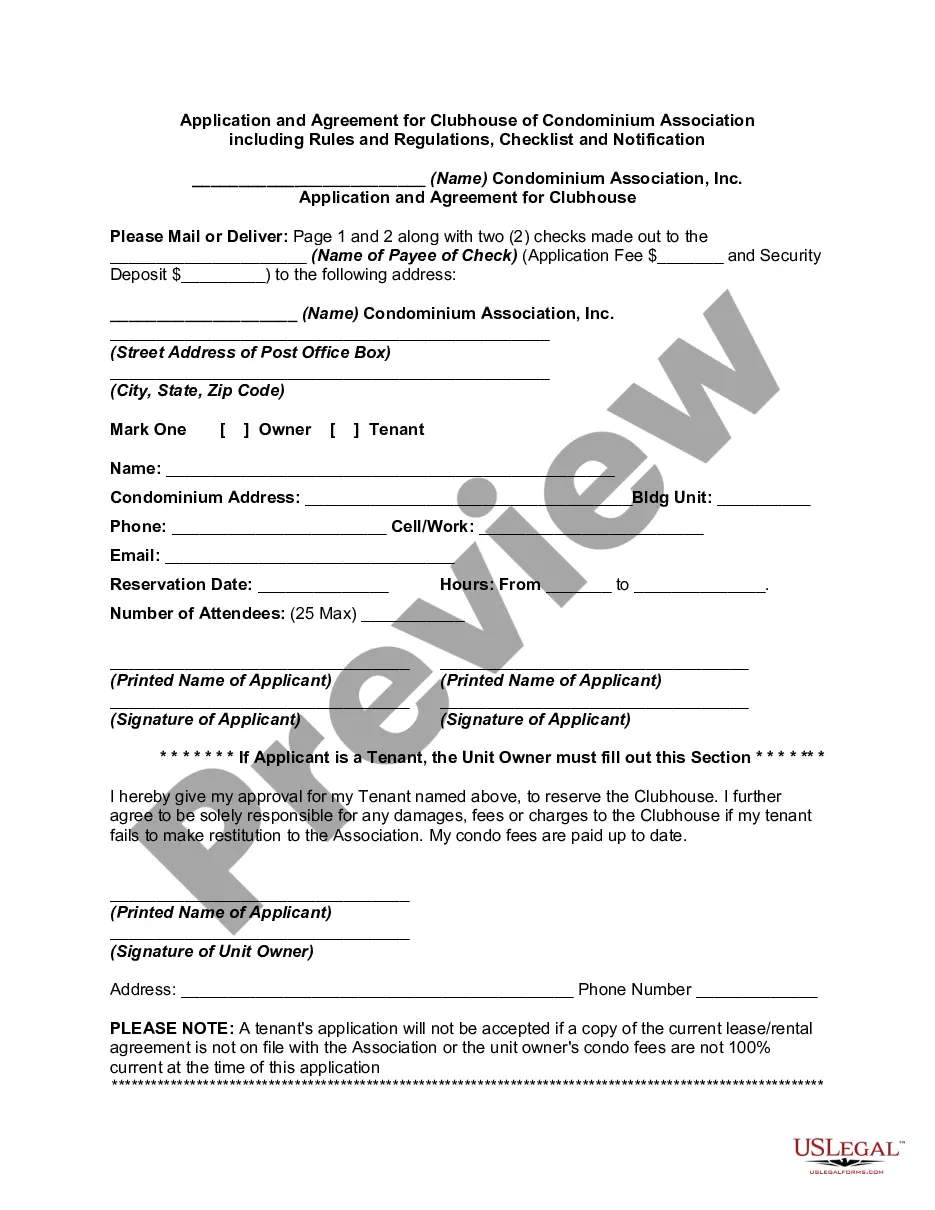
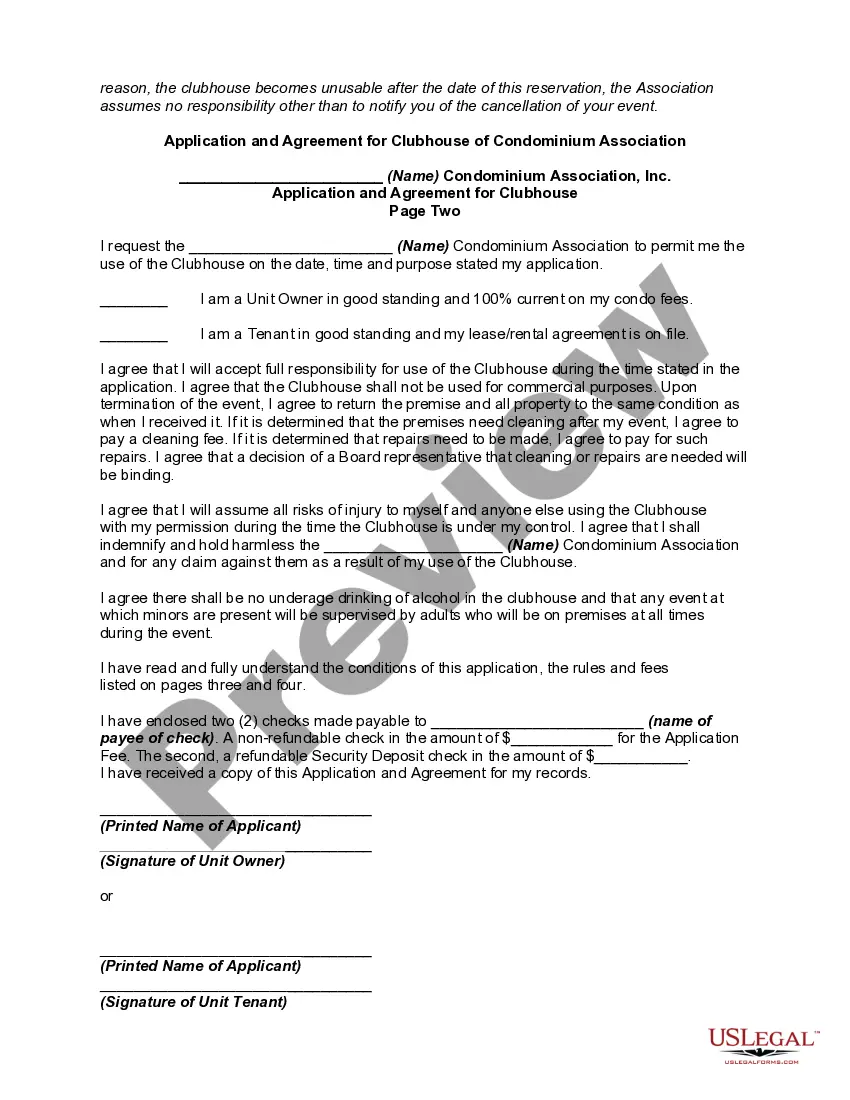
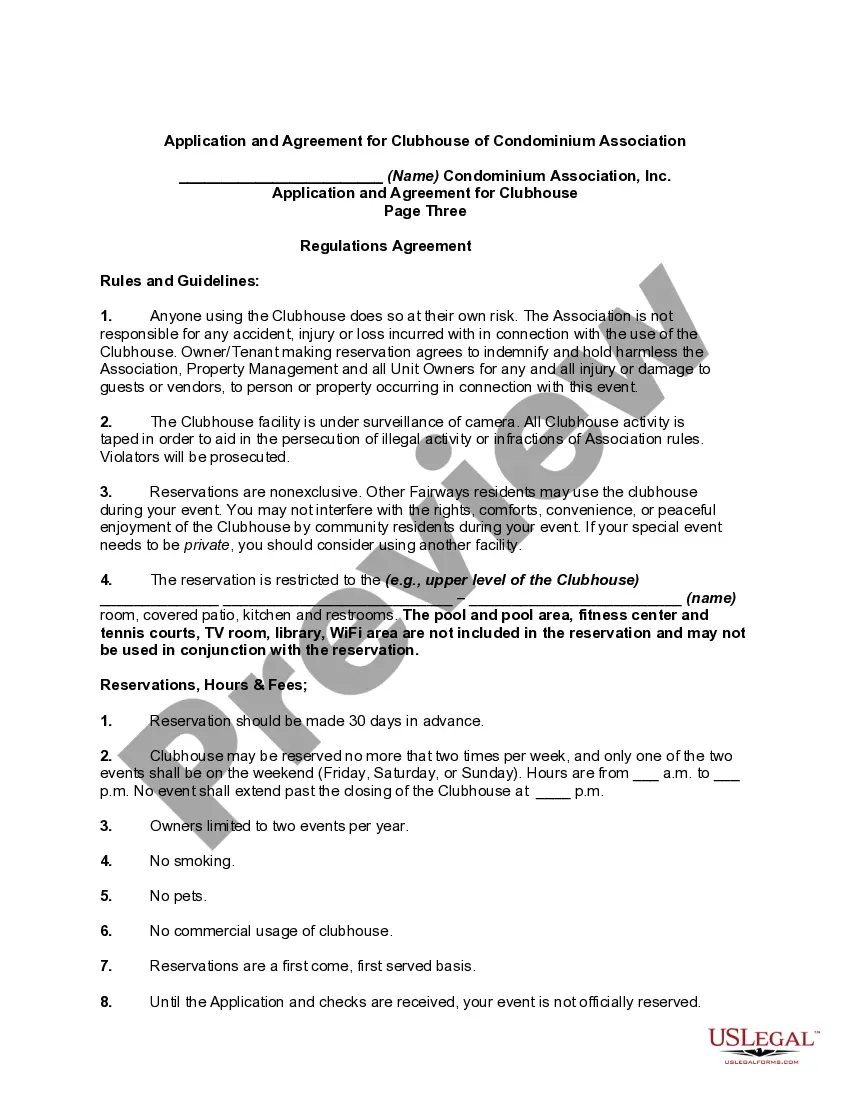
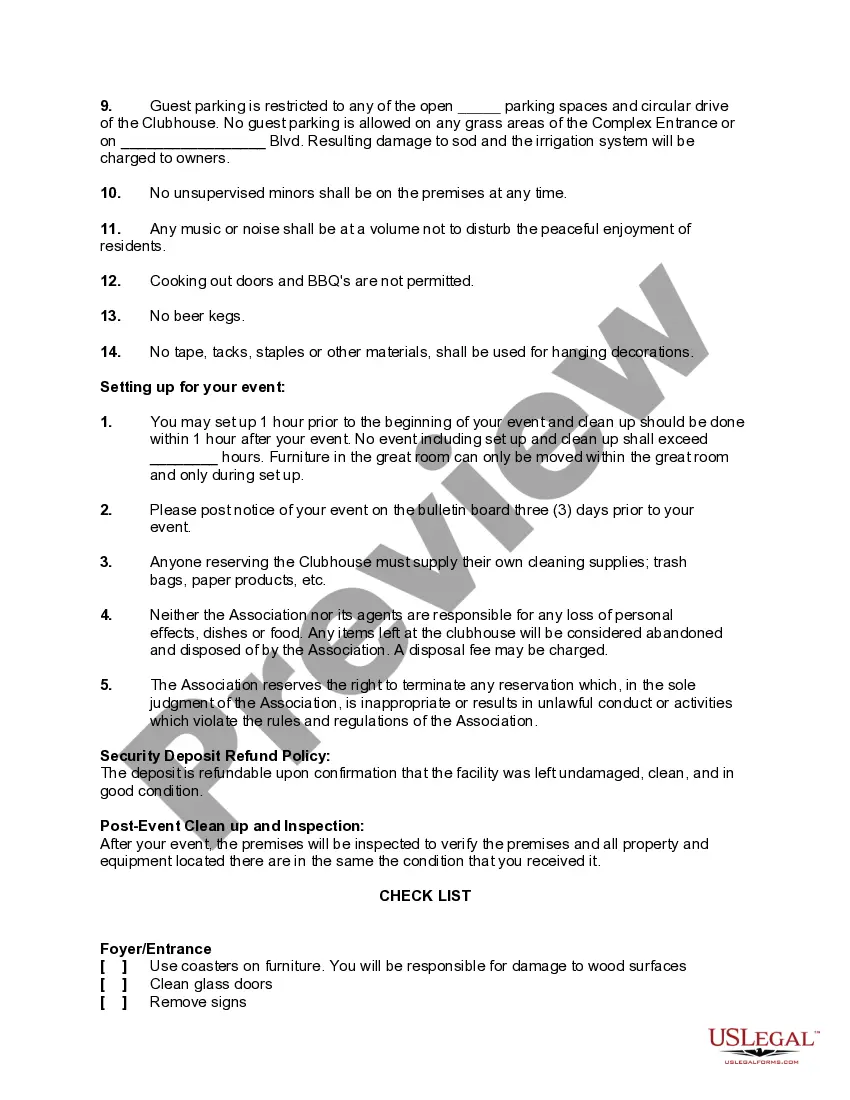
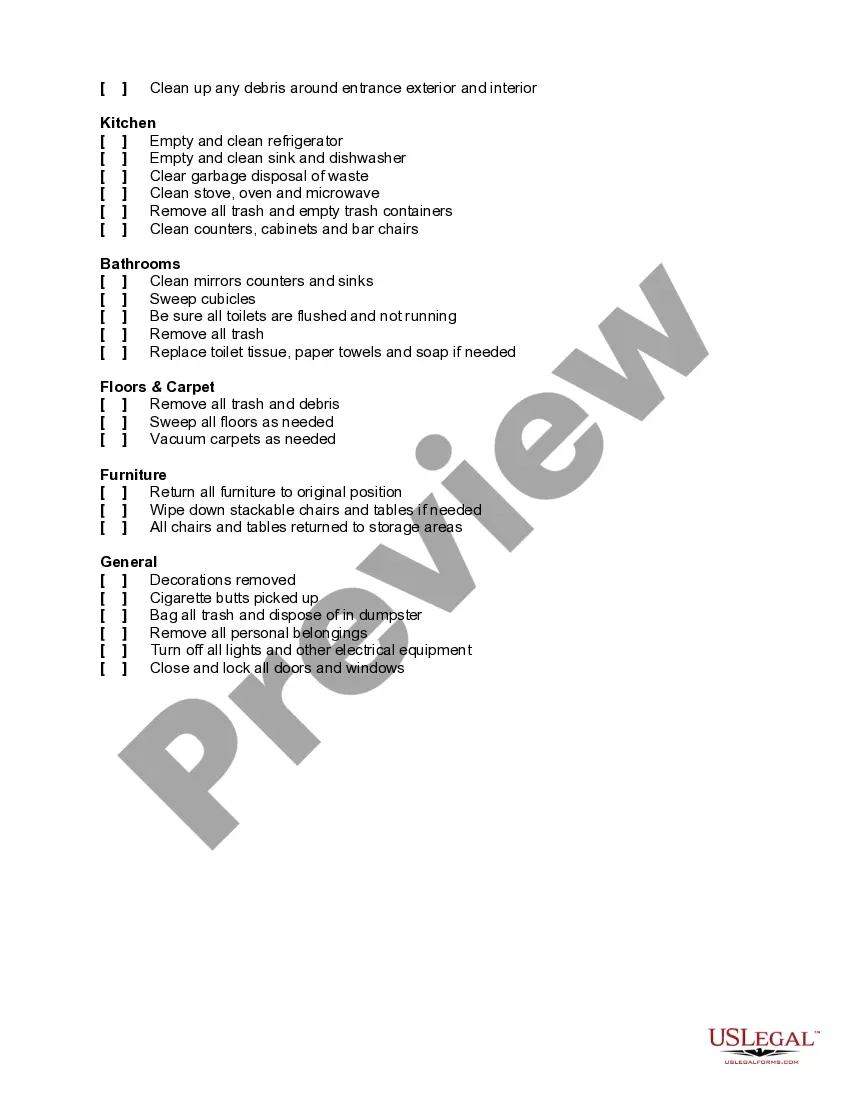
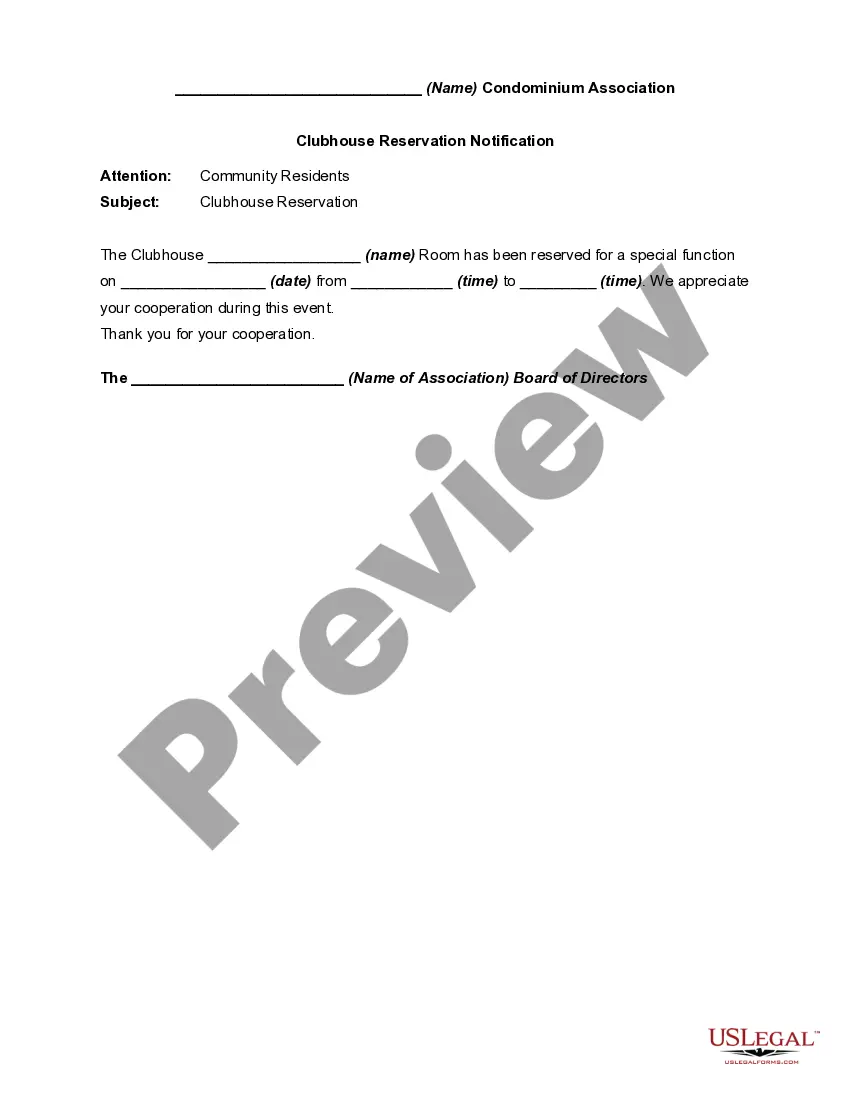
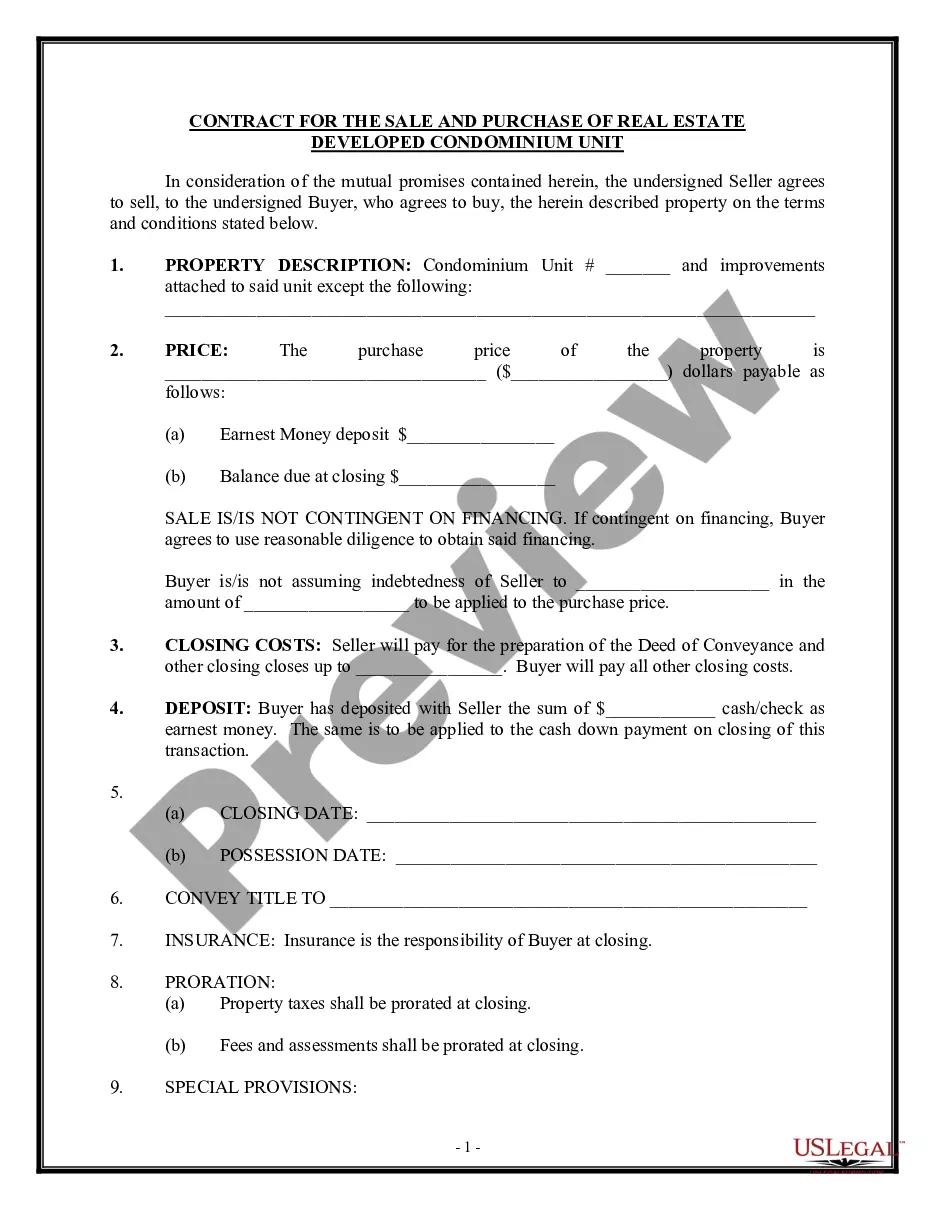
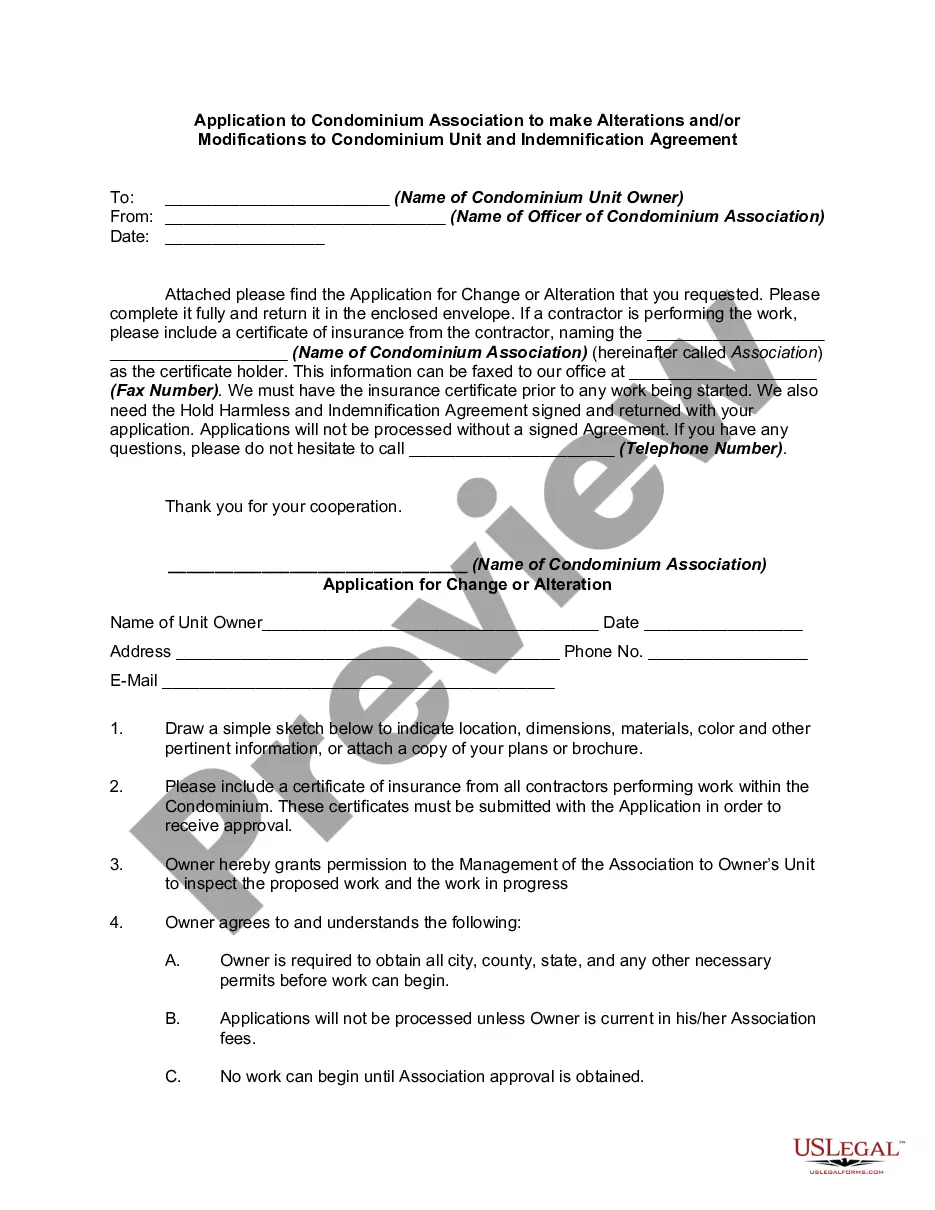
Get your form ready online
Our built-in tools help you complete, sign, share, and store your documents in one place.
Make edits, fill in missing information, and update formatting in US Legal Forms—just like you would in MS Word.
Download a copy, print it, send it by email, or mail it via USPS—whatever works best for your next step.
Sign and collect signatures with our SignNow integration. Send to multiple recipients, set reminders, and more. Go Premium to unlock E-Sign.
If this form requires notarization, complete it online through a secure video call—no need to meet a notary in person or wait for an appointment.
We protect your documents and personal data by following strict security and privacy standards.

Make edits, fill in missing information, and update formatting in US Legal Forms—just like you would in MS Word.

Download a copy, print it, send it by email, or mail it via USPS—whatever works best for your next step.

Sign and collect signatures with our SignNow integration. Send to multiple recipients, set reminders, and more. Go Premium to unlock E-Sign.

If this form requires notarization, complete it online through a secure video call—no need to meet a notary in person or wait for an appointment.

We protect your documents and personal data by following strict security and privacy standards.
Looking for another form?
How to fill out Application And Agreement For Clubhouse Of Condominium Association?
Are you in a circumstance where you frequently require documents for both business or personal purposes? There is a plethora of legal document templates accessible online, but finding reliable versions can be challenging.
US Legal Forms provides a vast assortment of form templates, including the Florida Application and Agreement for Clubhouse of Condominium Association, which are designed to comply with state and federal regulations.
If you are already familiar with the US Legal Forms website and possess an account, simply Log In. Then, you can download the Florida Application and Agreement for Clubhouse of Condominium Association template.
Access all the document templates you have purchased in the My documents section. You can obtain an extra copy of the Florida Application and Agreement for Clubhouse of Condominium Association at any time if needed. Just click the desired form to download or print the template.
Utilize US Legal Forms, one of the largest collections of legal documents, to save time and avoid errors. The service offers professionally crafted legal document templates that can be used for various purposes. Create an account on US Legal Forms and start simplifying your life.
- Search for the document you need and confirm it pertains to your specific city/region.
- Utilize the Review button to assess the form.
- Examine the description to ensure you have selected the right document.
- If the form does not meet your needs, use the Search box to locate the form that fulfills your requirements.
- Once you find the appropriate form, click Get now.
- Select the pricing plan you prefer, provide the necessary details to create your account, and complete your purchase using PayPal or credit card.
- Choose a convenient document format and download your copy.
Form popularity
FAQ
The new law in Florida regarding HOAs focuses on improving governance and protecting homeowner rights. It includes provisions for better financial disclosures and transparency in decision-making processes. Staying informed about these legal updates is crucial as you complete your Florida Application and Agreement for Clubhouse of Condominium Association, ensuring your compliance with current regulations.
Filling out an HOA addendum in Florida requires careful attention to detail and adherence to the association’s specific requirements. You should include all relevant information as outlined by your HOA, ensuring compliance with existing rules. Completing this correctly is vital when submitting your Florida Application and Agreement for Clubhouse of Condominium Association to avoid potential issues later.
To amend your HOA covenants in Florida, you typically need to follow a specific process that involves drafting the proposed changes and collecting signatures from the community members. It’s important to adhere to the guidelines established in your existing covenant document to ensure legality. Utilizing resources like the Florida Application and Agreement for Clubhouse of Condominium Association can help streamline this process.
The recent law for condo associations in Florida aims to enhance transparency and accountability within these organizations. Key changes include stricter rules regarding board member conduct and strengthened rights for residents. Familiarizing yourself with these new regulations is essential when filling out your Florida Application and Agreement for Clubhouse of Condominium Association, ensuring you remain compliant.
Yes, an HOA can place a lien on your property for unpaid dues or violations of community rules in Florida. This legal action serves as a method to encourage compliance and ensure residents adhere to community standards. Understanding this is important when you consider submitting your Florida Application and Agreement for Clubhouse of Condominium Association, as it highlights the seriousness of abiding by the rules.
The HOA addendum is typically provided by the homeowners association itself or its board members. This document is crucial for outlining any specific rules or regulations that apply to residents. During your Florida Application and Agreement for Clubhouse of Condominium Association process, reviewing this addendum can clarify your rights and obligations within the community.
In Florida, a condo association must have at least three board members. This structure helps facilitate decision-making and allows for a diverse range of perspectives. As you navigate your Florida Application and Agreement for Clubhouse of Condominium Association, be sure to consider the importance of a balanced board for effective management.
A condo association agreement is a legal document that outlines the rules and regulations governing a condominium community. This agreement details the responsibilities of both the association and the residents, ensuring that the community operates smoothly. When submitting a Florida Application and Agreement for Clubhouse of Condominium Association, this document serves as a foundation for maintaining harmony among residents.
Chapter 720 applies to homeowners associations and outlines their governance, while chapter 718 addresses the rules for condominium associations. This difference is significant in terms of ownership rights and responsibilities. For those using the Florida Application and Agreement for Clubhouse of Condominium Association, knowing the applicable chapter ensures compliance with the correct regulations.
Homeowners associations have legal authority to enforce rules and collect dues, whereas neighborhood associations typically serve as voluntary groups without enforceable authority. The distinction impacts the engagement and obligations of residents. Understanding this difference is crucial, especially when dealing with the Florida Application and Agreement for Clubhouse of Condominium Association.