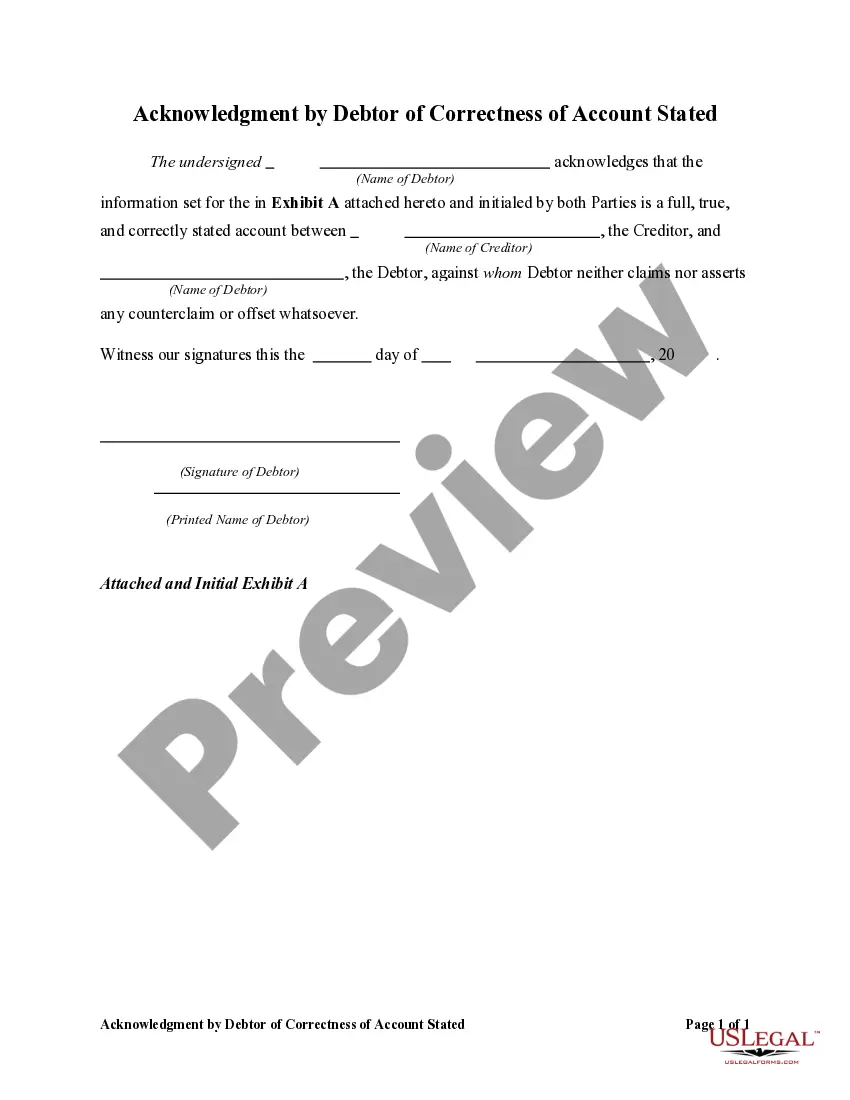
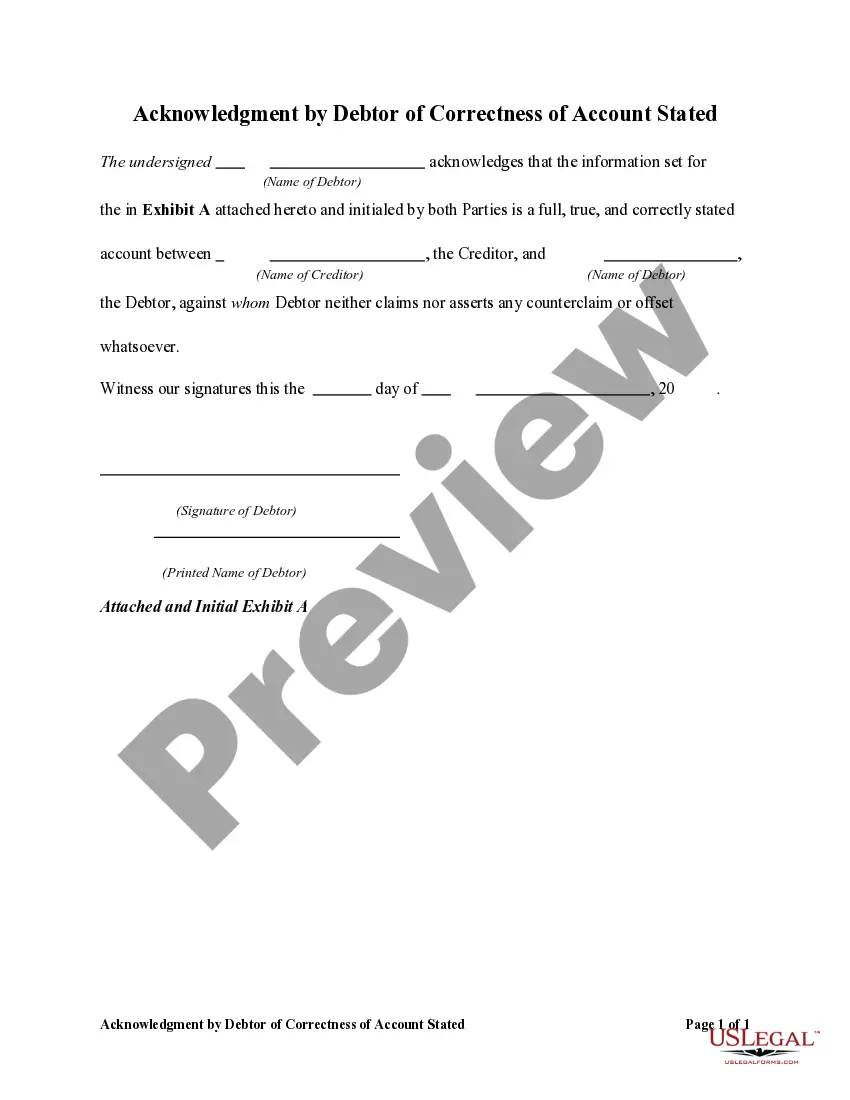
Florida Acknowledgment by Debtor of Correctness of Account Stated
Description
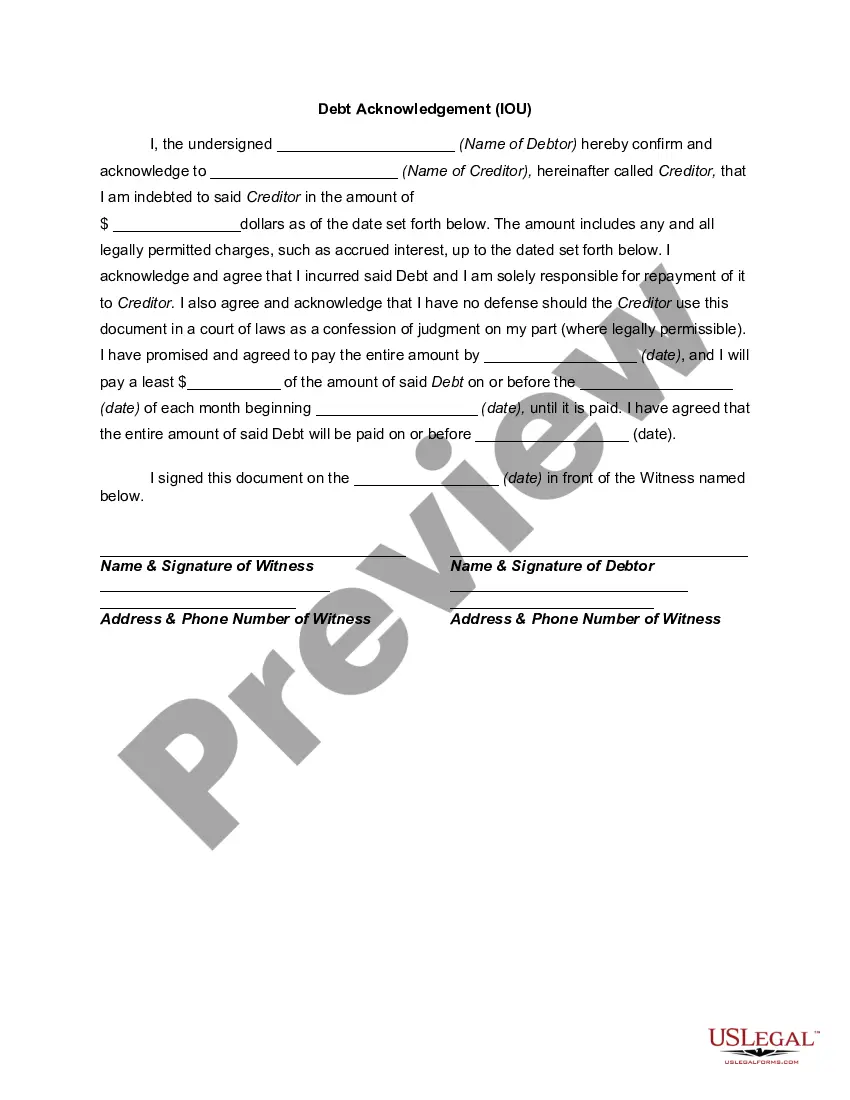
Get your form ready online
Our built-in tools help you complete, sign, share, and store your documents in one place.
Make edits, fill in missing information, and update formatting in US Legal Forms—just like you would in MS Word.
Download a copy, print it, send it by email, or mail it via USPS—whatever works best for your next step.
Sign and collect signatures with our SignNow integration. Send to multiple recipients, set reminders, and more. Go Premium to unlock E-Sign.
If this form requires notarization, complete it online through a secure video call—no need to meet a notary in person or wait for an appointment.
We protect your documents and personal data by following strict security and privacy standards.

Make edits, fill in missing information, and update formatting in US Legal Forms—just like you would in MS Word.

Download a copy, print it, send it by email, or mail it via USPS—whatever works best for your next step.

Sign and collect signatures with our SignNow integration. Send to multiple recipients, set reminders, and more. Go Premium to unlock E-Sign.

If this form requires notarization, complete it online through a secure video call—no need to meet a notary in person or wait for an appointment.

We protect your documents and personal data by following strict security and privacy standards.
Looking for another form?
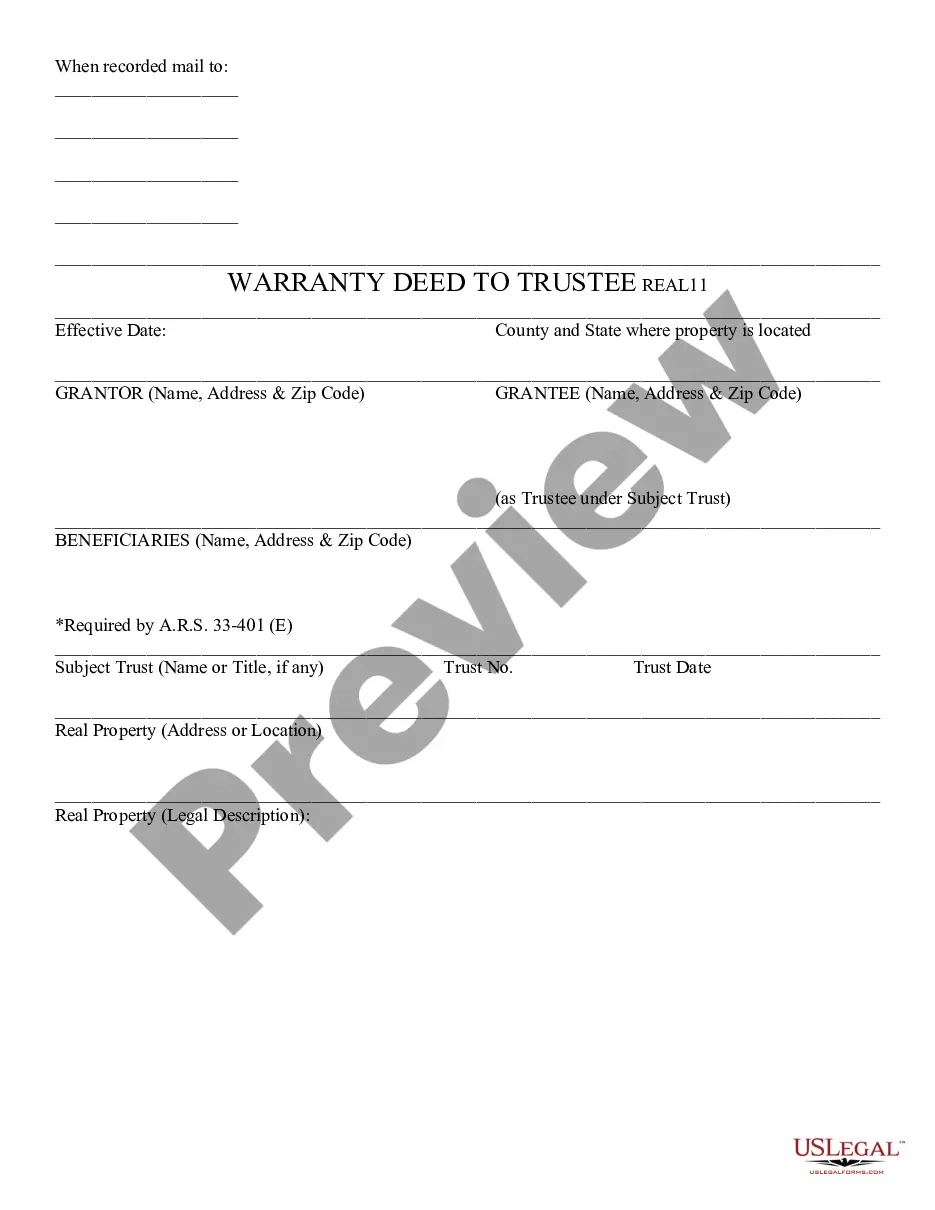
How to fill out Acknowledgment By Debtor Of Correctness Of Account Stated?
US Legal Forms - one of the largest collections of legal documents in the United States - offers a broad selection of legal document templates that you can download or create. By using the website, you can access thousands of forms for business and personal use, organized by categories, states, or keywords.
You can find the most recent versions of forms like the Florida Acknowledgment by Debtor of Correctness of Account Stated in just moments. If you already have a monthly subscription, Log In and download the Florida Acknowledgment by Debtor of Correctness of Account Stated from the US Legal Forms library. The Download button will appear on every form you view. You can access all previously saved forms in the My documents section of your account.
If you are using US Legal Forms for the first time, here are simple steps to get started: Make sure you have selected the appropriate form for your city/state. Click the Review button to examine the form's content. Read the form description to confirm that you have chosen the correct form. If the form does not meet your requirements, use the Search box at the top of the screen to find one that does. Once you are satisfied with the form, confirm your choice by clicking the Get now button. Then, choose your preferred payment plan and provide your details to register for an account.
- Process the transaction. Use your Visa or Mastercard or PayPal account to complete the transaction.
- Choose the format and download the form to your device.
- Make modifications. Fill out, edit, and print and sign the saved Florida Acknowledgment by Debtor of Correctness of Account Stated.
- Any template you added to your account does not have an expiration date and is yours indefinitely. So, if you wish to download or create another version, just visit the My documents section and click on the form you need.
- Access the Florida Acknowledgment by Debtor of Correctness of Account Stated with US Legal Forms, the most comprehensive collection of legal document templates.
- Utilize a vast number of professional and state-specific templates that fulfill your personal or business requirements.
Form popularity
FAQ
A civil lawsuit maintained under thecommon lawto recover money owed on an account. The action on account was one of the ancient forms of action. Dating back to the thirteenth century, it offered a remedy for the breach of obligations owed by fiduciaries.
The cause of action for an account stated is based on the agreement of the parties to pay the amount due upon the accounting, and not any written instrument.
Account stated refers to a document summarizing the amount a debtor owes a creditor. An account stated is also a cause of action in many states that allows a creditor to sue for payment.
The cause of action of an account stated is based on principles of contract law. There must be an express or implied agreement between the creditor and debtor that the debtor owes the amount set forth in the account.
The elements of account stated are: (1) prior transactions between the parties which establish a debtor-creditor relationship; (2)an express or implied agreement between the parties as to the amount due; and (3) an express or implied promise from the debtor to pay the amount due.
An Account Stated establishes an implied contract, whereas a breach of contract traditionally refers to an expressly written contract. Account Stated is used when no contract exists or when the plaintiff cannot prove the existence of the contract.
Collections actions involving the sale of goods often include two varieties of ?account? claims in addition to traditional breach of contract theories: ?account stated? and ?open account.? Generally, an account stated claim alleges the failure to pay an agreed-upon balance, while an open account claim alleges an ...