The decree of the bankruptcy court which terminates the bankruptcy proceedings is generally a discharge that releases the debtor from most debts. A bankruptcy court may refuse to grant a discharge under certain conditions.
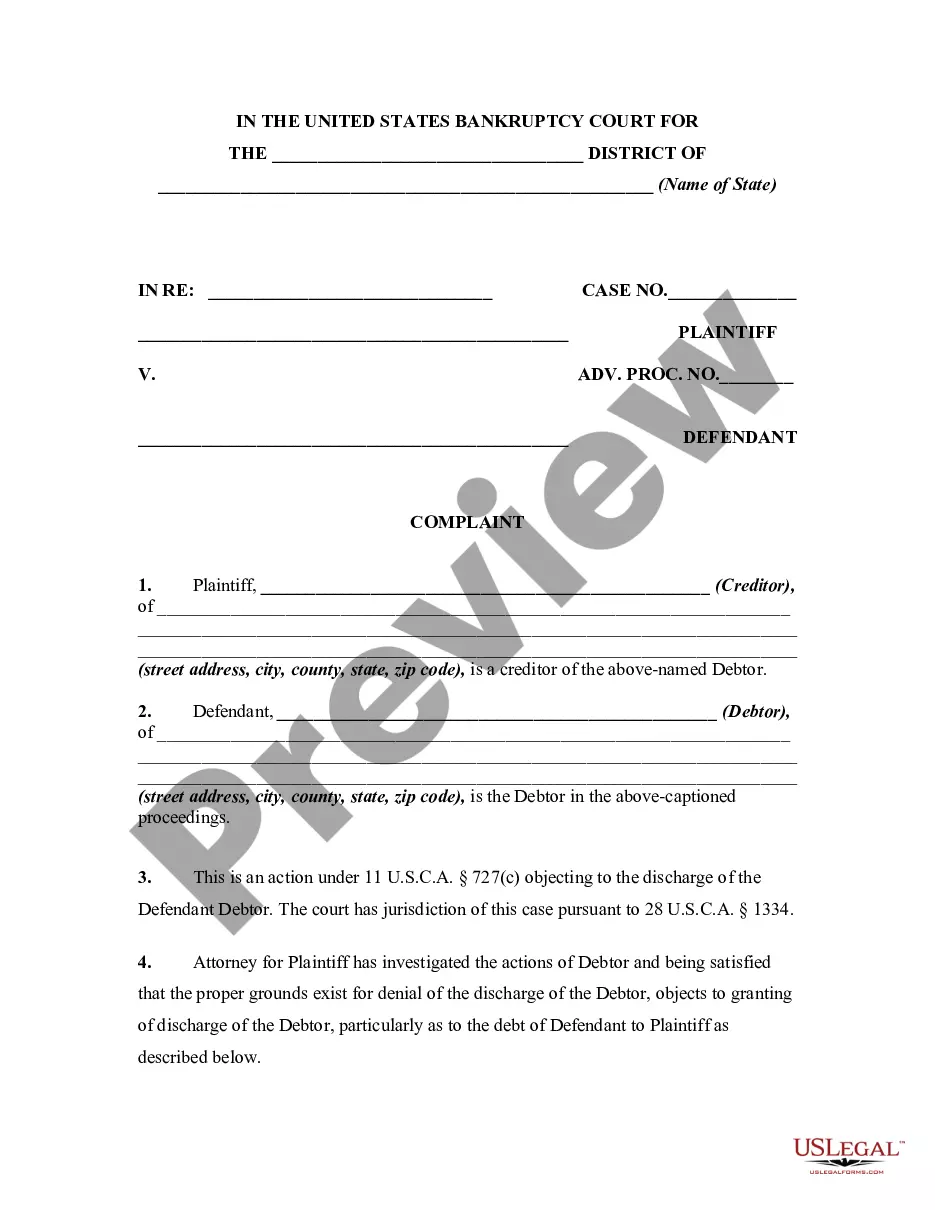
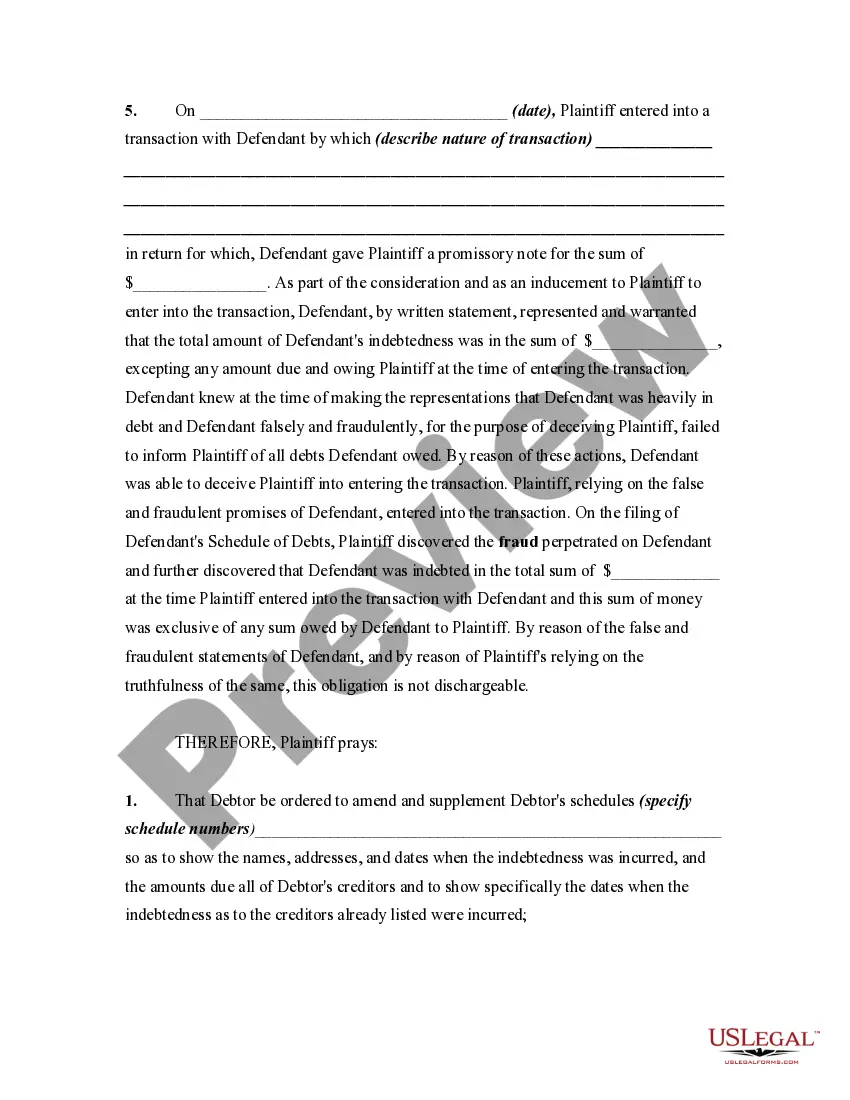
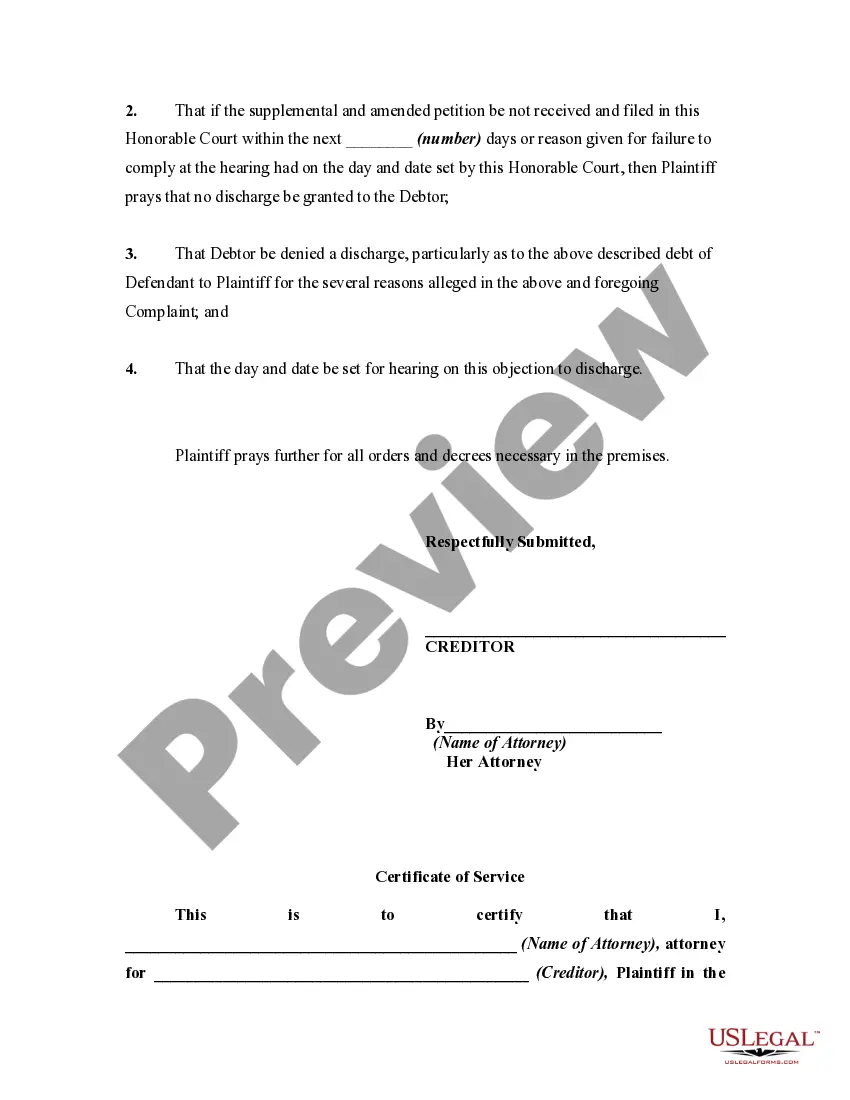
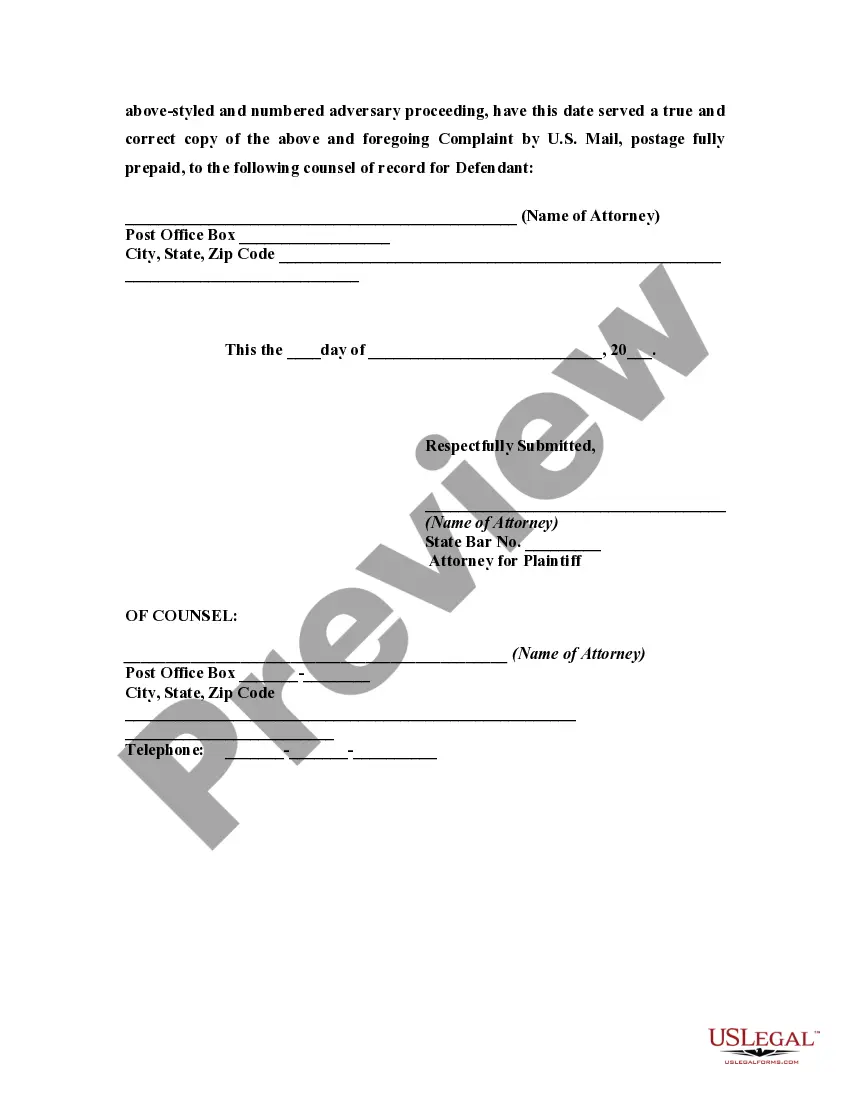
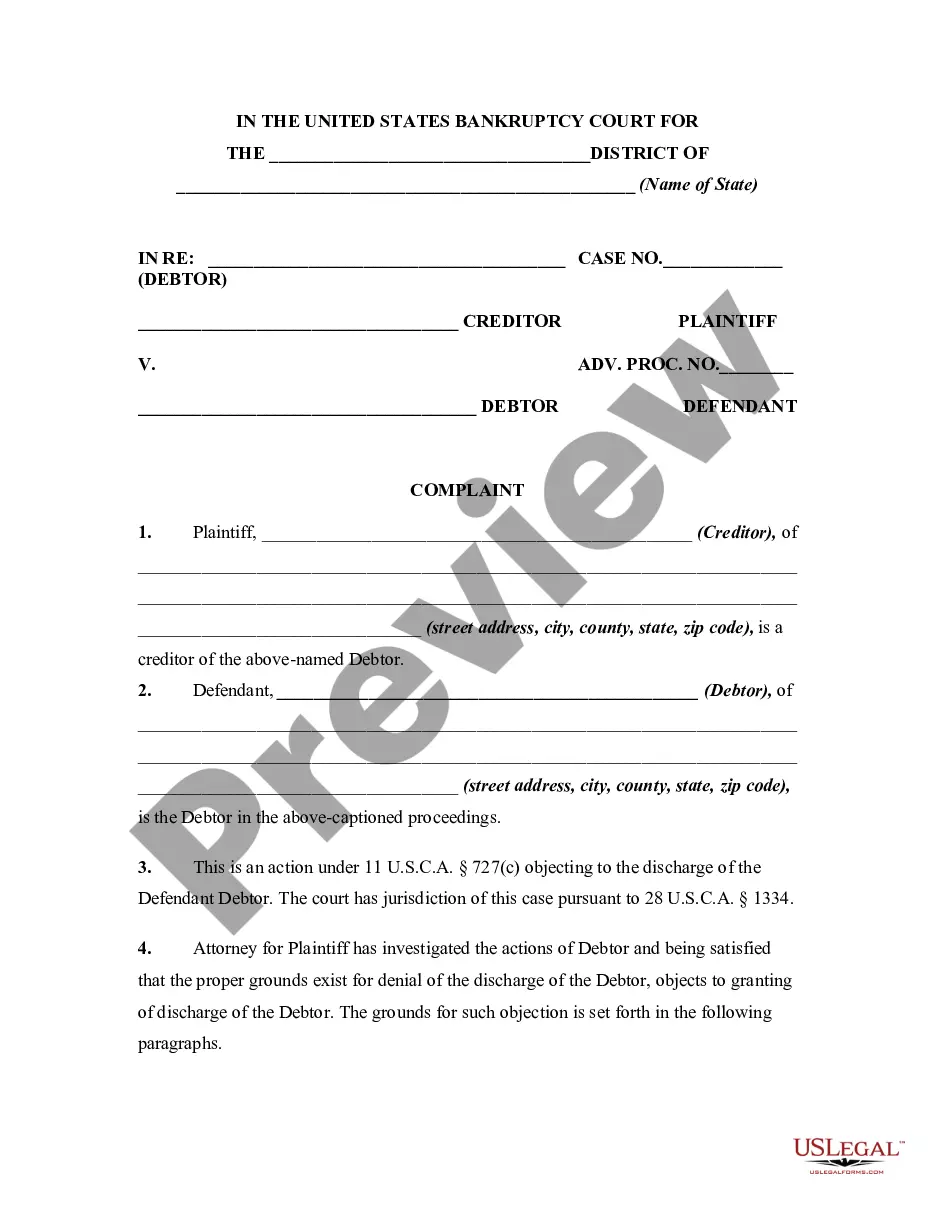
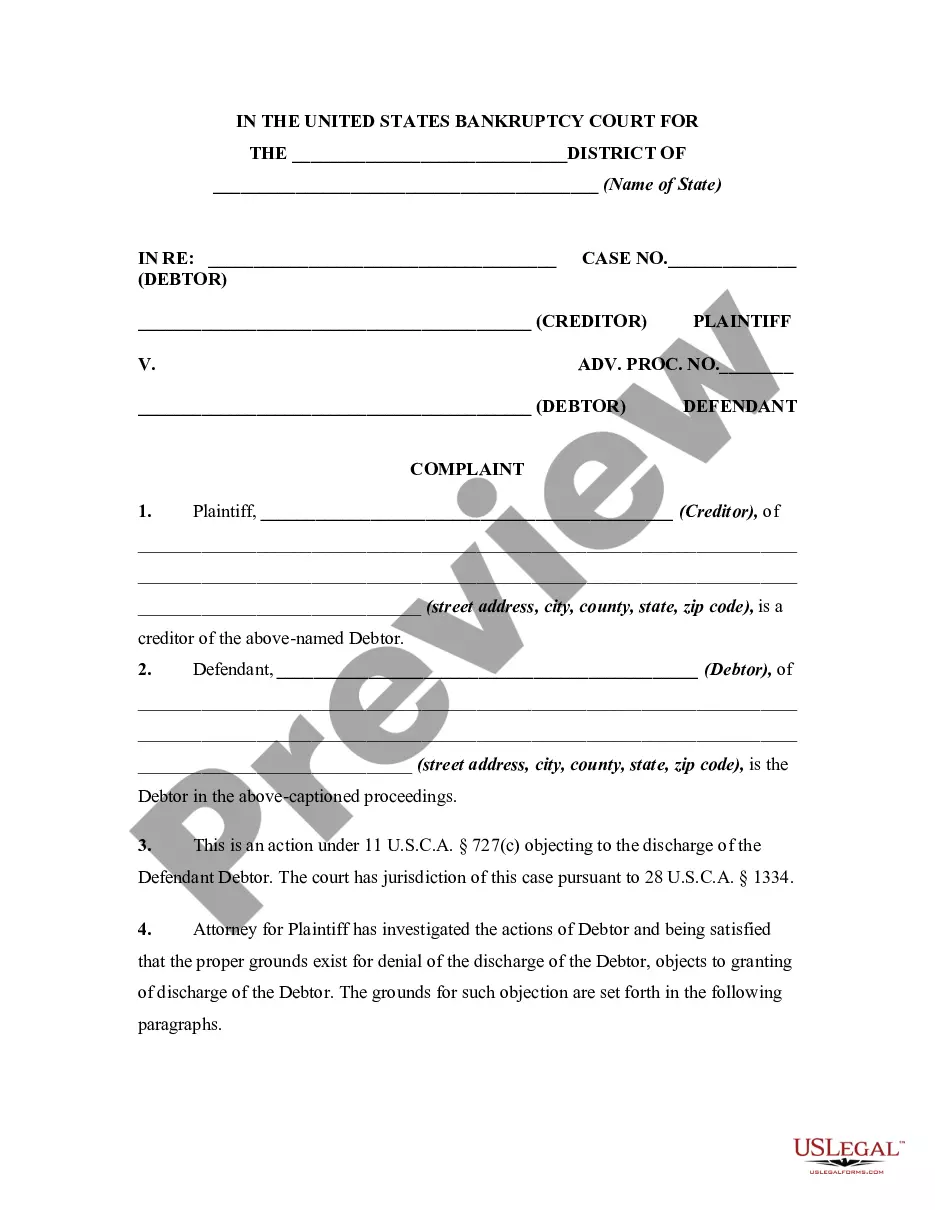
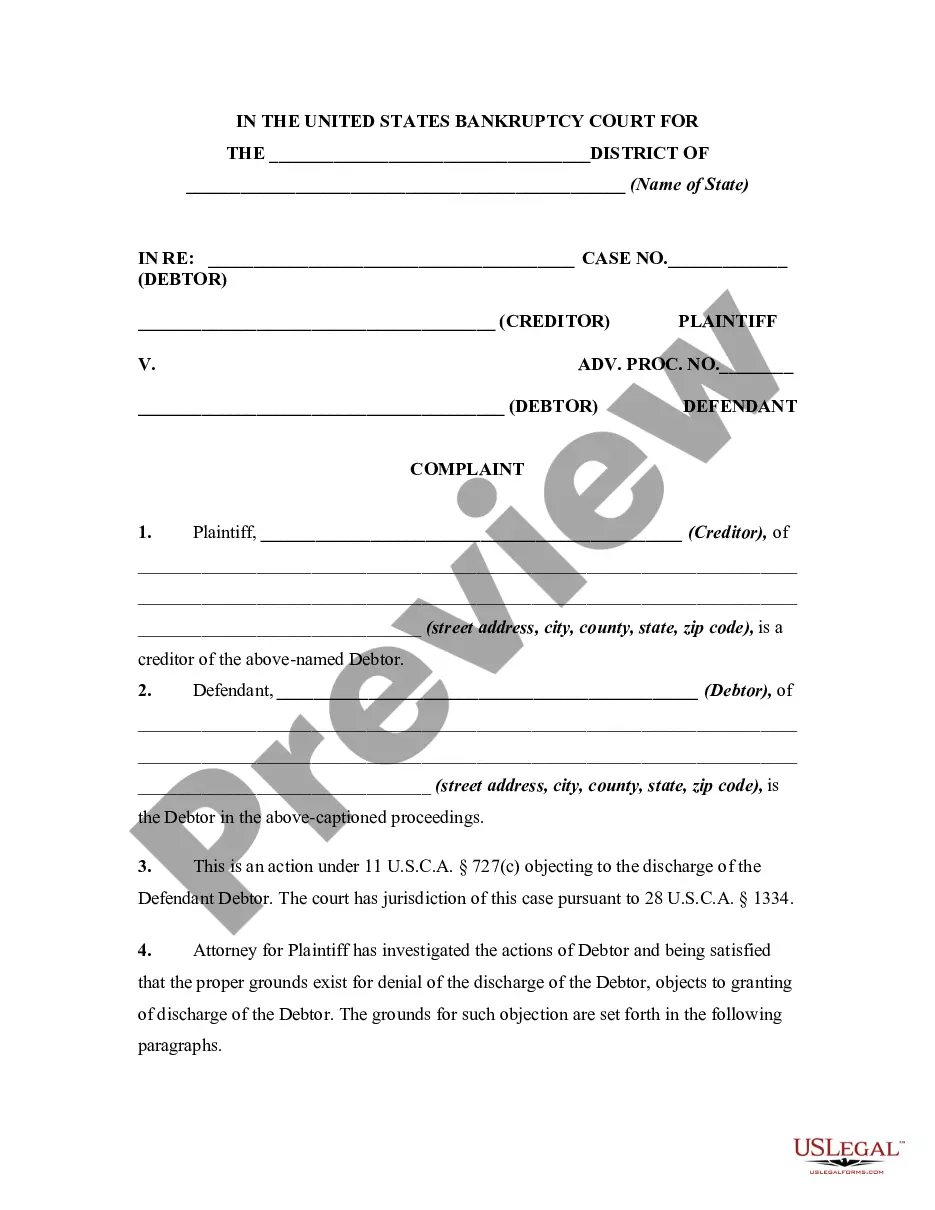
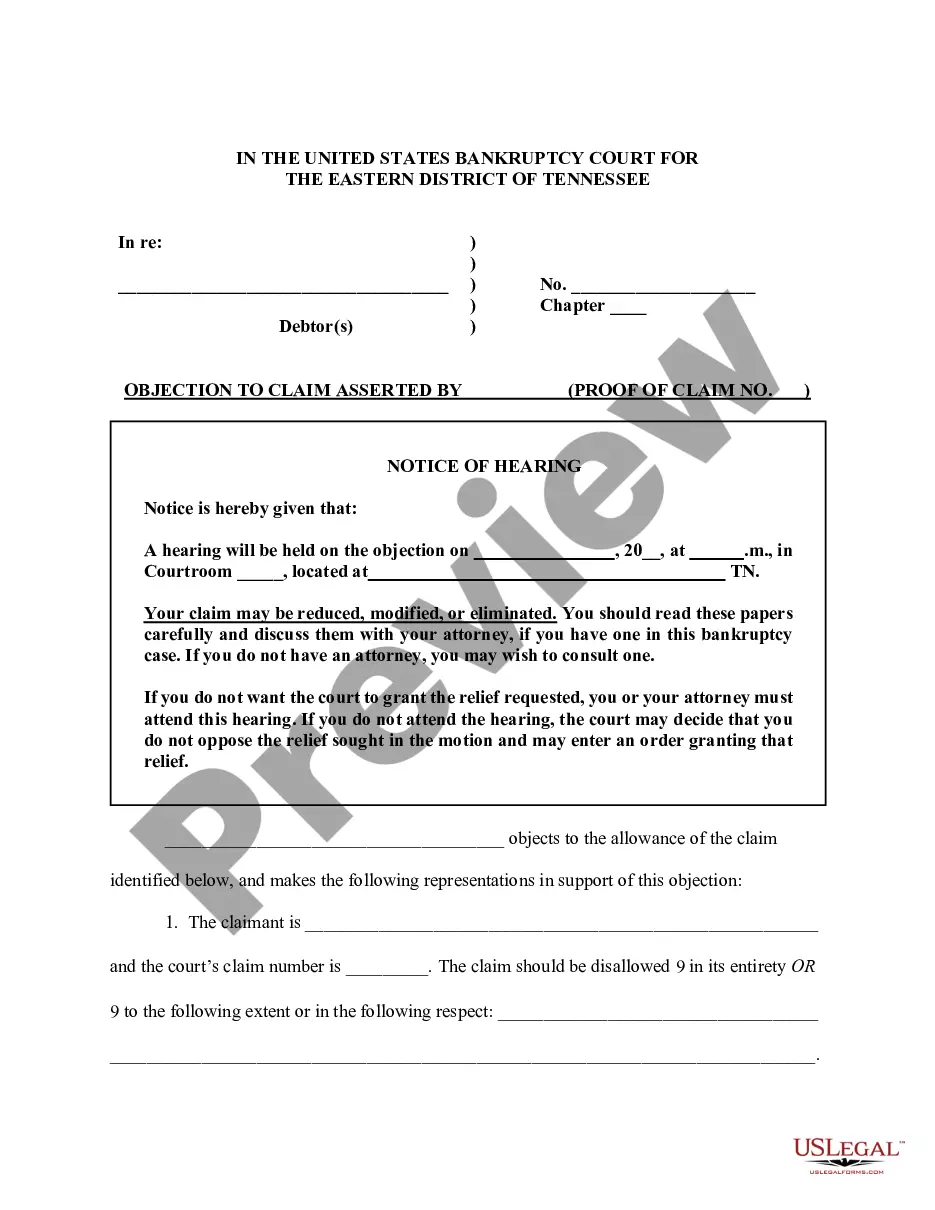
Florida Complaint Objecting to Discharge by Bankruptcy Court on the Grounds that Transaction was Induced by Fraud Regarding Debtor's Financial Condition
State:
Multi-State
Control #:
US-01070BG
Format:
Word;
Rich Text
78 downloads
Description
Free preview
Get your form ready online
Our built-in tools help you complete, sign, share, and store your documents in one place.
Built-in online Word editor
Make edits, fill in missing information, and update formatting in US Legal Forms—just like you would in MS Word.
Export easily
Download a copy, print it, send it by email, or mail it via USPS—whatever works best for your next step.
E-sign your document
Sign and collect signatures with our SignNow integration. Send to multiple recipients, set reminders, and more. Go Premium to unlock E-Sign.
Notarize online 24/7
If this form requires notarization, complete it online through a secure video call—no need to meet a notary in person or wait for an appointment.
Store your document securely
We protect your documents and personal data by following strict security and privacy standards.

Make edits, fill in missing information, and update formatting in US Legal Forms—just like you would in MS Word.

Download a copy, print it, send it by email, or mail it via USPS—whatever works best for your next step.

Sign and collect signatures with our SignNow integration. Send to multiple recipients, set reminders, and more. Go Premium to unlock E-Sign.

If this form requires notarization, complete it online through a secure video call—no need to meet a notary in person or wait for an appointment.

We protect your documents and personal data by following strict security and privacy standards.
Looking for another form?

How to fill out Complaint Objecting To Discharge By Bankruptcy Court On The Grounds That Transaction Was Induced By Fraud Regarding Debtor's Financial Condition?
Have you ever been in a situation where you require documents for both business or personal reasons almost every day.
There are numerous legal document templates available online, but finding reliable versions can be challenging.
US Legal Forms offers a vast array of template forms, including the Florida Complaint Objecting to Discharge by Bankruptcy Court on the Grounds that Transaction was Induced by Fraud Regarding, designed to comply with state and federal regulations.
Select the pricing plan you want, provide the necessary information to create your account, and pay for the order using your PayPal or Visa/MasterCard.
Choose a preferred file format and download your copy. You can find all the document templates you have acquired in the My documents list. You can download an additional copy of the Florida Complaint Objecting to Discharge by Bankruptcy Court on the Grounds that Transaction was Induced by Fraud Regarding at any time if needed. Click on the desired form to download or print the document template. Use US Legal Forms, the largest collection of legal forms, to save time and avoid mistakes. The service provides professionally crafted legal document templates that you can utilize for various purposes. Create an account on US Legal Forms and start making your life easier.
- If you are already familiar with the US Legal Forms website and possess an account, simply Log In.
- Then, you can download the Florida Complaint Objecting to Discharge by Bankruptcy Court on the Grounds that Transaction was Induced by Fraud Regarding template.
- If you do not have an account and wish to start using US Legal Forms, follow these instructions.
- Obtain the form you need and ensure it is for the correct state/region.
- Use the Review button to examine the form.
- Read the description to confirm that you have selected the right form.
- If the form is not what you are looking for, utilize the Search area to find the form that meets your needs and requirements.
- Once you find the correct form, simply click Purchase now.
Form popularity
FAQ
Chapter 7 - In a Chapter 7, Debtors are permitted to retain certain "exempt" property, while the remaining assets are liquidated by the trustee. The trustee will distribute the funds from the liquidation to holders of claims (creditors) in ance with the provisions of the Bankruptcy Code.
An Objection to Discharge is a motion by a creditor to a bankruptcy court asking the court not to discharge a person's specific debt owed to that creditor. If the court grants the motion, the debt is not discharged in bankruptcy and remains due.
Types of debt that cannot be discharged in bankruptcy include alimony, child support, and certain unpaid taxes. Other types of debt that cannot be alleviated in bankruptcy include debts for willful and malicious injury to another person or property.
In the United States, about 10 percent of bankruptcy filings involve fraudulent claims. The four most commonly encountered fraud schemes are concealment of assets, petition mills, multiple-filing schemes, and bust-out schemes.
The debt is excepted from discharge if it was not scheduled in time to permit timely action by the creditor to protect his rights, unless the creditor had notice or actual knowledge of the case.
The most common types of nondischargeable debts are certain types of tax claims, debts not set forth by the debtor on the lists and schedules the debtor must file with the court, debts for spousal or child support or alimony, debts for willful and malicious injuries to person or property, debts to governmental units ...
Another exception to Discharge is for fraud while acting in a fiduciary capacity, embezzlement, or larceny. Domestic obligations are not dischargeable in Bankruptcy. Damages resulting from the willful and malicious injury by the debtor of another person or his property, are also not dischargeable in Bankruptcy.
An Objection to Discharge is a motion by a creditor to a bankruptcy court asking the court not to discharge a person's specific debt owed to that creditor. If the court grants the motion, the debt is not discharged in bankruptcy and remains due.