Florida Agreement to Sell Property
What is this form?
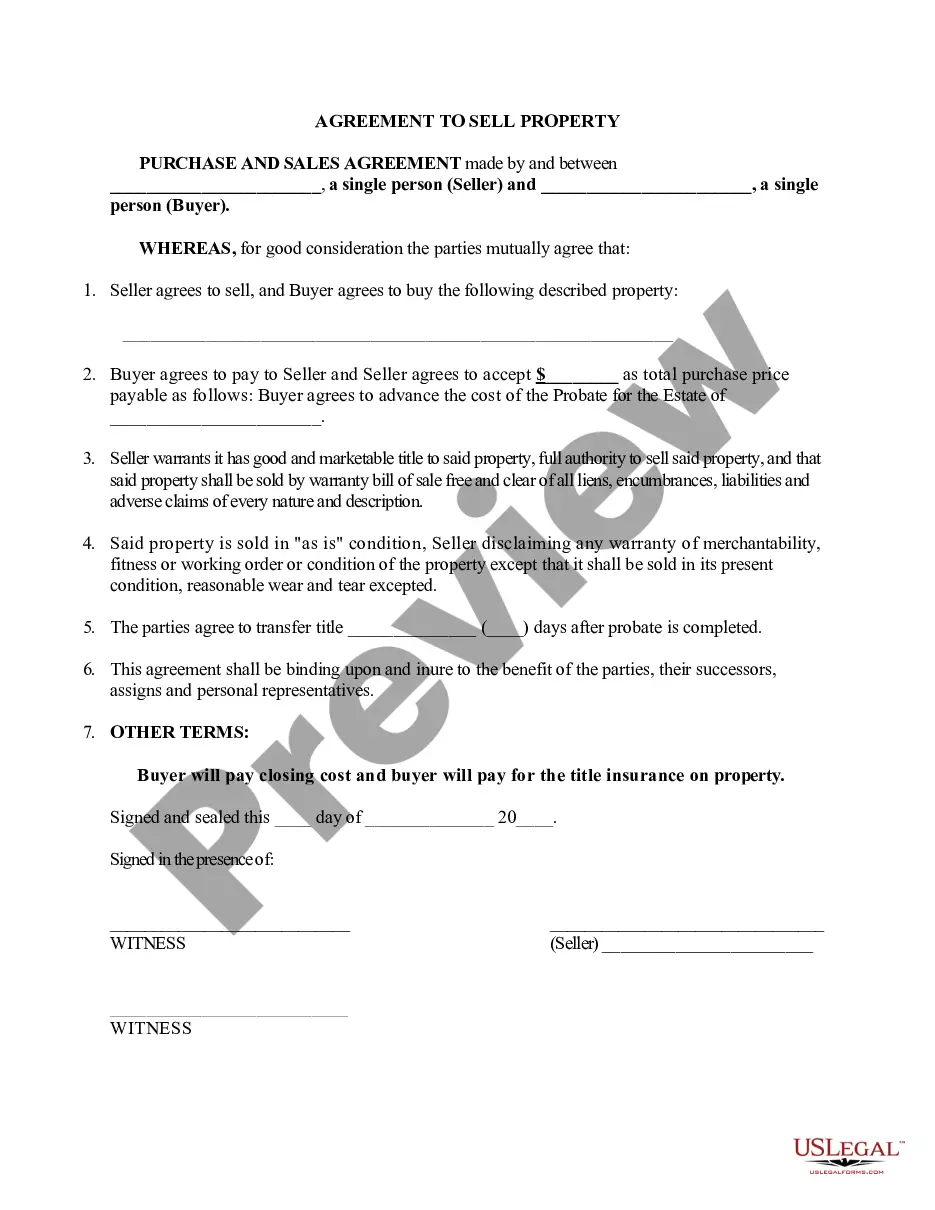
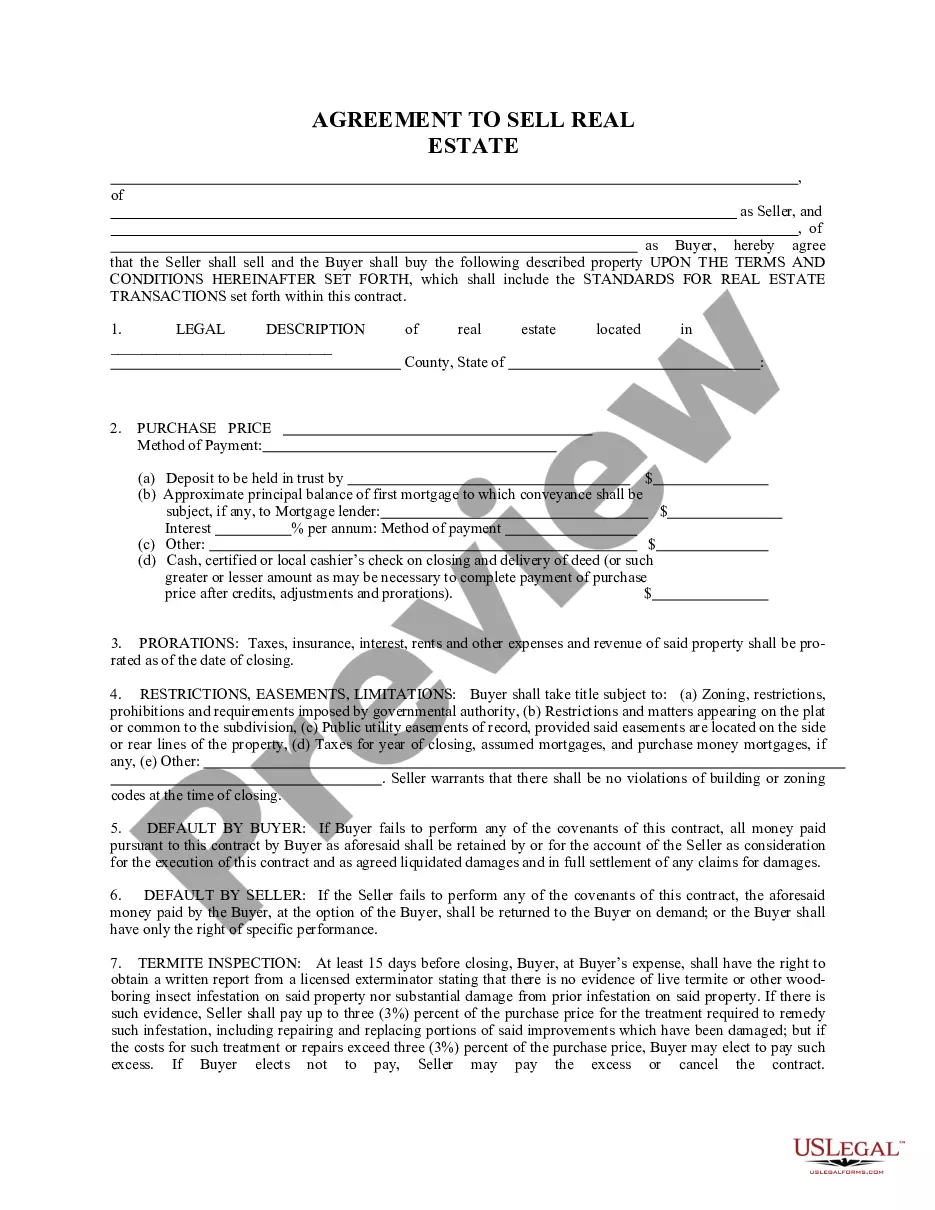
The Agreement to Sell Property is a legal document that outlines the terms of sale between a single buyer and a single seller of real estate. This form uniquely serves unmarried individuals and is significant for establishing a clear agreement about the purchase price, payment responsibilities, and condition of the property being sold. It is essential for ensuring that both parties are aware of their rights and obligations in the transaction.
Main sections of this form
- Names of the parties involved (Buyer and Seller).
- Description of the property being sold.
- Total purchase price and payment arrangements.
- Warranties provided by the Seller regarding the property title.
- Condition of the property sold "as is."
- Agreement on closing costs and title insurance responsibilities.
When to use this form
This form should be used when a single (unmarried) individual wishes to purchase property from another single (unmarried) person. It is ideal for private real estate transactions where both the buyer and seller agree on the terms of the sale, including any prerequisites such as probating an estate. The form ensures that all essential details are documented to avoid disputes later in the transaction process.
Who needs this form
- Unmarried individuals looking to buy or sell property.
- Individuals involved in private real estate transactions without a real estate agent.
- Buyers who are willing to cover closing costs and title insurance expenses.
- Estate executors selling property as part of probate.
How to prepare this document
- Identify and enter the names of the Buyer and Seller.
- Provide a detailed description of the property being sold.
- Specify the total purchase price and payment arrangement, including any probate costs.
- Include the number of days for the transfer of title after probate completion.
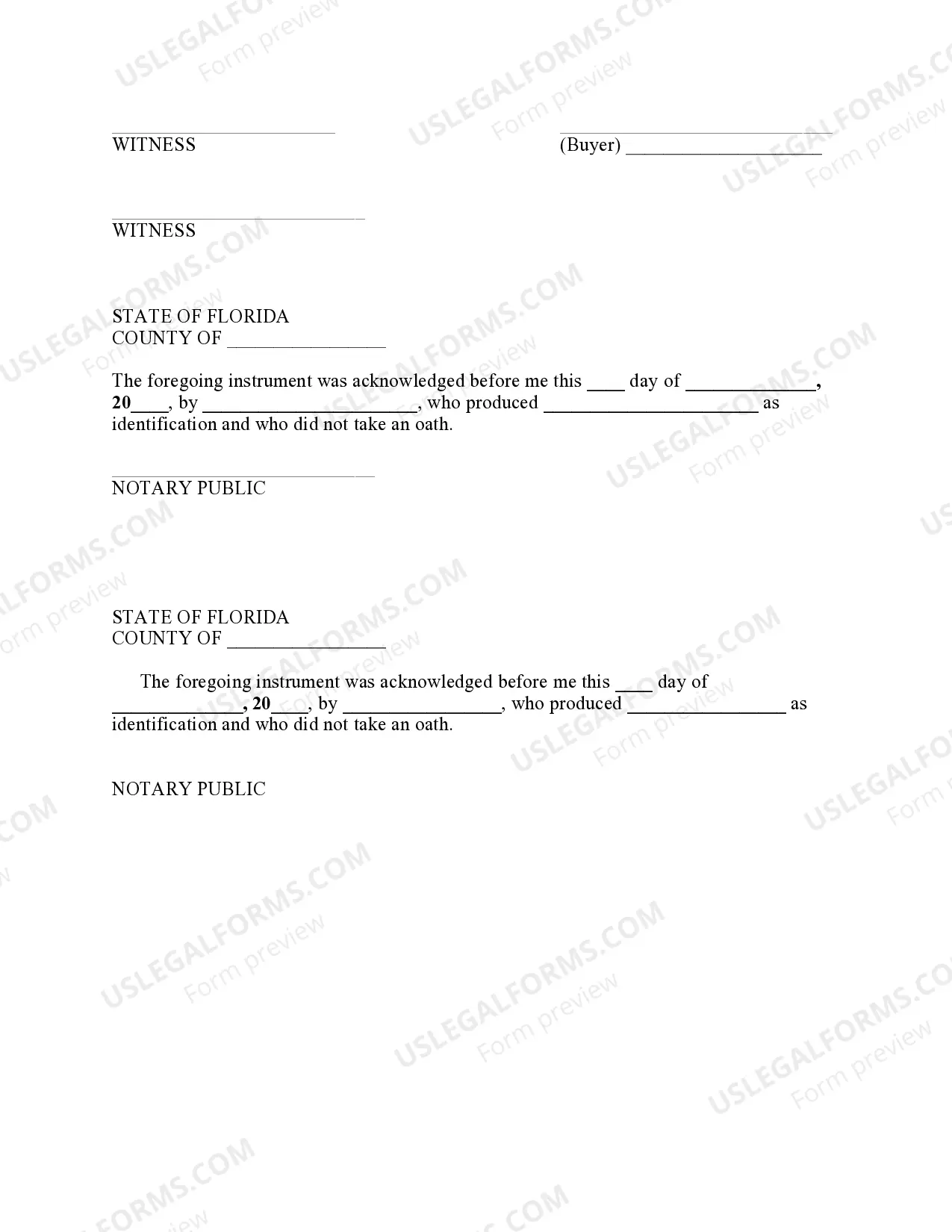
- Have all parties sign the document in the presence of witnesses and a notary public.
Is notarization required?
Yes, this form must be notarized to be legally valid. It requires signatures in the presence of a notary public to ensure that all parties acknowledge the agreement willingly. US Legal Forms offers integrated online notarization services, available 24/7 through secure video calls.
Get your form ready online
Our built-in tools help you complete, sign, share, and store your documents in one place.
Make edits, fill in missing information, and update formatting in US Legal Forms—just like you would in MS Word.
Download a copy, print it, send it by email, or mail it via USPS—whatever works best for your next step.
Sign and collect signatures with our SignNow integration. Send to multiple recipients, set reminders, and more. Go Premium to unlock E-Sign.
If this form requires notarization, complete it online through a secure video call—no need to meet a notary in person or wait for an appointment.
We protect your documents and personal data by following strict security and privacy standards.

Make edits, fill in missing information, and update formatting in US Legal Forms—just like you would in MS Word.

Download a copy, print it, send it by email, or mail it via USPS—whatever works best for your next step.

Sign and collect signatures with our SignNow integration. Send to multiple recipients, set reminders, and more. Go Premium to unlock E-Sign.

If this form requires notarization, complete it online through a secure video call—no need to meet a notary in person or wait for an appointment.

We protect your documents and personal data by following strict security and privacy standards.
Common mistakes
- Failing to provide a complete description of the property.
- Not specifying payment terms clearly.
- Overlooking the need for witnesses during signing.
- Ignoring local laws regarding property sales and disclosures.
Benefits of using this form online
- Convenient access to legal forms from anywhere.
- Editable templates that can be customized to fit specific needs.
- Reliable documents drafted by licensed attorneys.
- Immediate downloads for quick use.
Looking for another form?
Form popularity
FAQ
It is not mandatory to have an attorney when selling property in Florida, but it is advisable. An attorney can assist you with drafting the Florida Agreement to Sell Property, ensuring that all legal aspects are covered. Additionally, having professional guidance can minimize the risks involved in the transaction, making the process smoother and more efficient.
While it is not required to have a lawyer for real estate closing in Florida, having one can be very beneficial. A lawyer can help protect your interests by reviewing the Florida Agreement to Sell Property and ensuring all necessary paperwork is complete. Their guidance can also facilitate negotiations and clarify any legal issues that arise during the closing process.
In Florida, you do not necessarily need an attorney to settle an estate, but it is highly recommended. Navigating the legalities surrounding the Florida Agreement to Sell Property can be complex. An attorney can help ensure that documentation is properly completed and filed. Moreover, their expertise can save you time and prevent costly mistakes.
All listing agreements in Florida must contain a statement that the seller has the legal right to sell the property. This statement affirms that there are no existing encumbrances that could affect the sale. Including this crucial aspect in the Florida Agreement to Sell Property solidifies the seller’s ownership and clearly communicates their intent to proceed with the transaction.
You do not need an attorney to sell your house in Florida, but it is highly recommended. An attorney's expertise can lend credibility to your transaction and help you navigate the terms of the Florida Agreement to Sell Property. They can also assist with negotiations and ensure that all legal obligations are met, making the process smoother for you.
Yes, sellers in Florida typically incur closing costs when selling a property. These costs can include title insurance, documentary stamp taxes, and agent commissions, among others. Before finalizing your Florida Agreement to Sell Property, it's important to discuss these potential costs with your real estate professional or attorney to ensure you are fully informed.
While it is not legally required to hire a lawyer when selling property in Florida, having one can be beneficial. A lawyer can guide you through the legal complexities, clarify the terms of the Florida Agreement to Sell Property, and ensure that all necessary paperwork is completed correctly. Their expertise can help avoid potential pitfalls and protect your interests during the transaction.
Yes, all heirs typically must agree to sell property in Florida. This consensus is important to avoid disputes and ensure a smooth transaction. The Florida Agreement to Sell Property can help document the agreement among heirs, making it clear and legally binding. Using a template from uslegalforms can streamline the process, ensuring every detail is covered and all parties are informed.
You can write your own contract agreement in Florida. However, it's crucial that your document adheres to state laws and includes all necessary terms to protect your interests. A Florida Agreement to Sell Property template from uslegalforms can help you create a reliable contract without missing any important sections. This approach allows you to customize the agreement to fit your specific situation.