Florida Supplemental Final Judgment Modifying Alimony
About this form
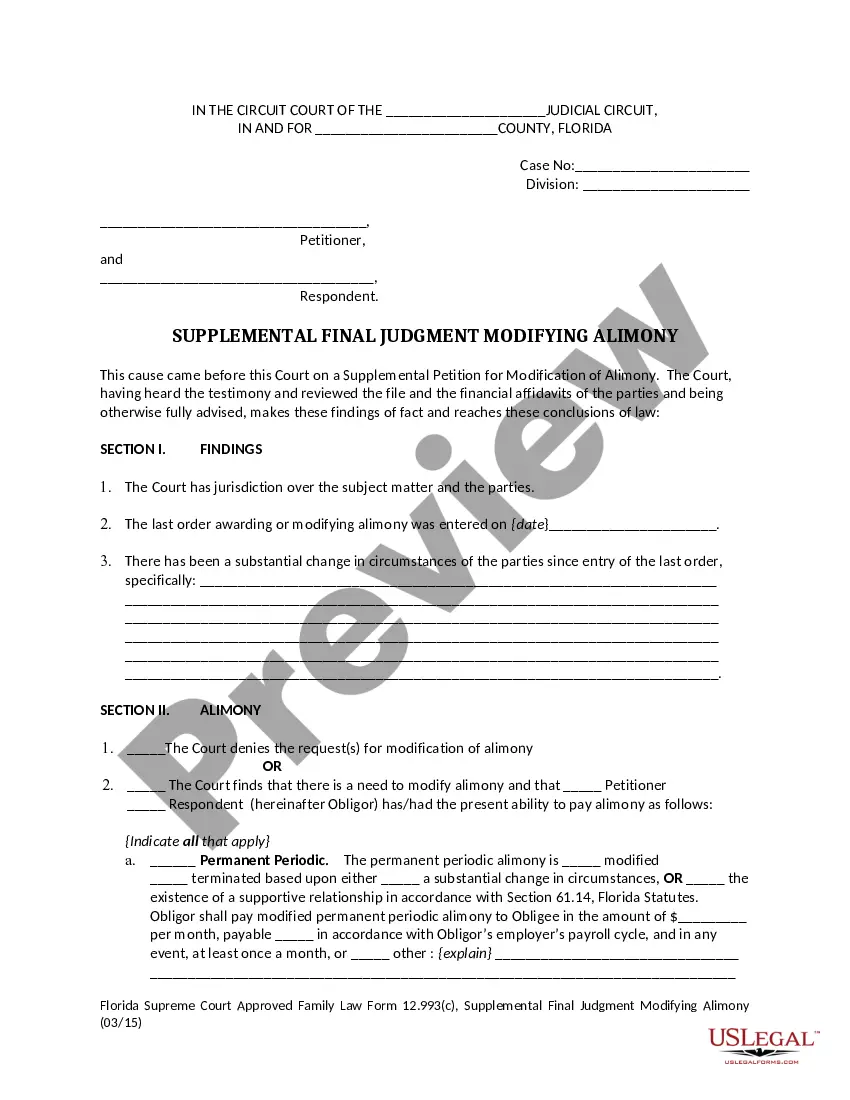
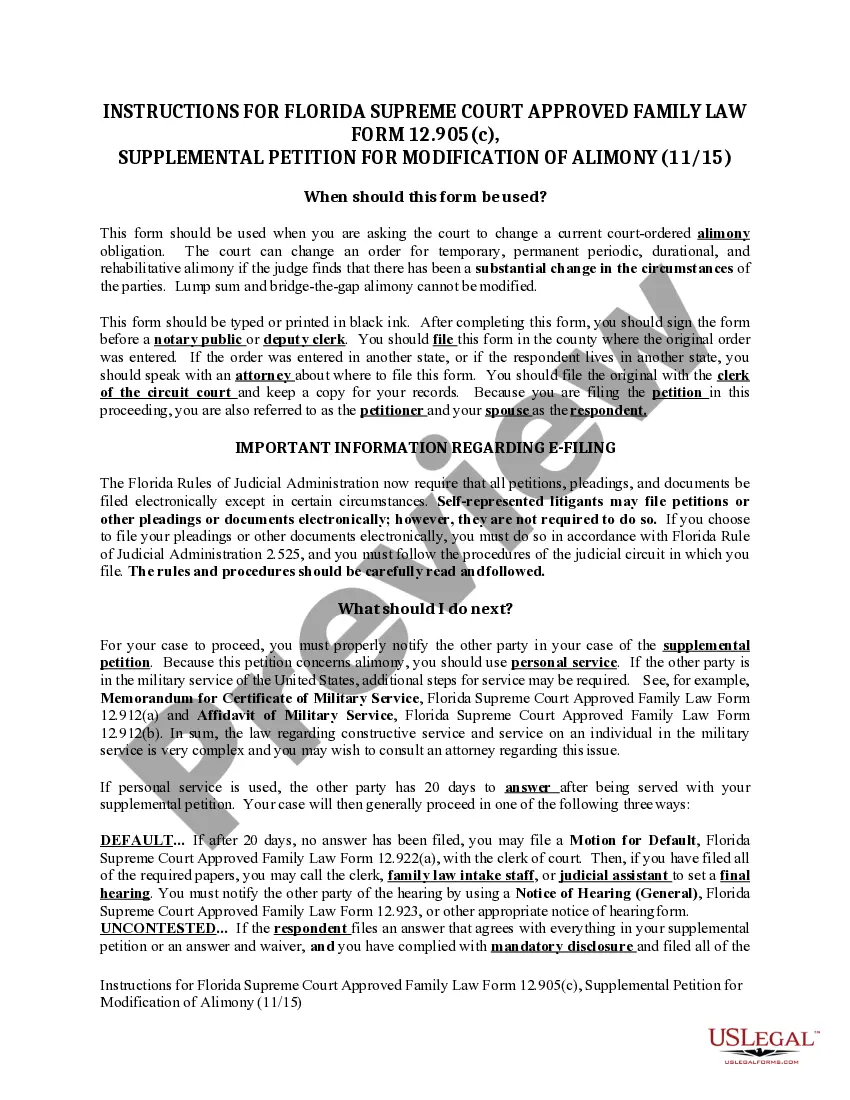
The Supplemental Final Judgment Modifying Alimony is an official document from the Florida Circuit Court. This form is utilized to modify an existing alimony order due to a significant change in circumstances. It is specifically tailored to ensure compliance with state laws and statutes, making it distinct from other judicial forms related to alimony. This form helps parties formally seek changes to their alimony obligations based on updated financial or personal situations.
Key components of this form
- Case identification section for entering county, case number, and division.
- Findings of fact to establish jurisdiction and changes in circumstances.
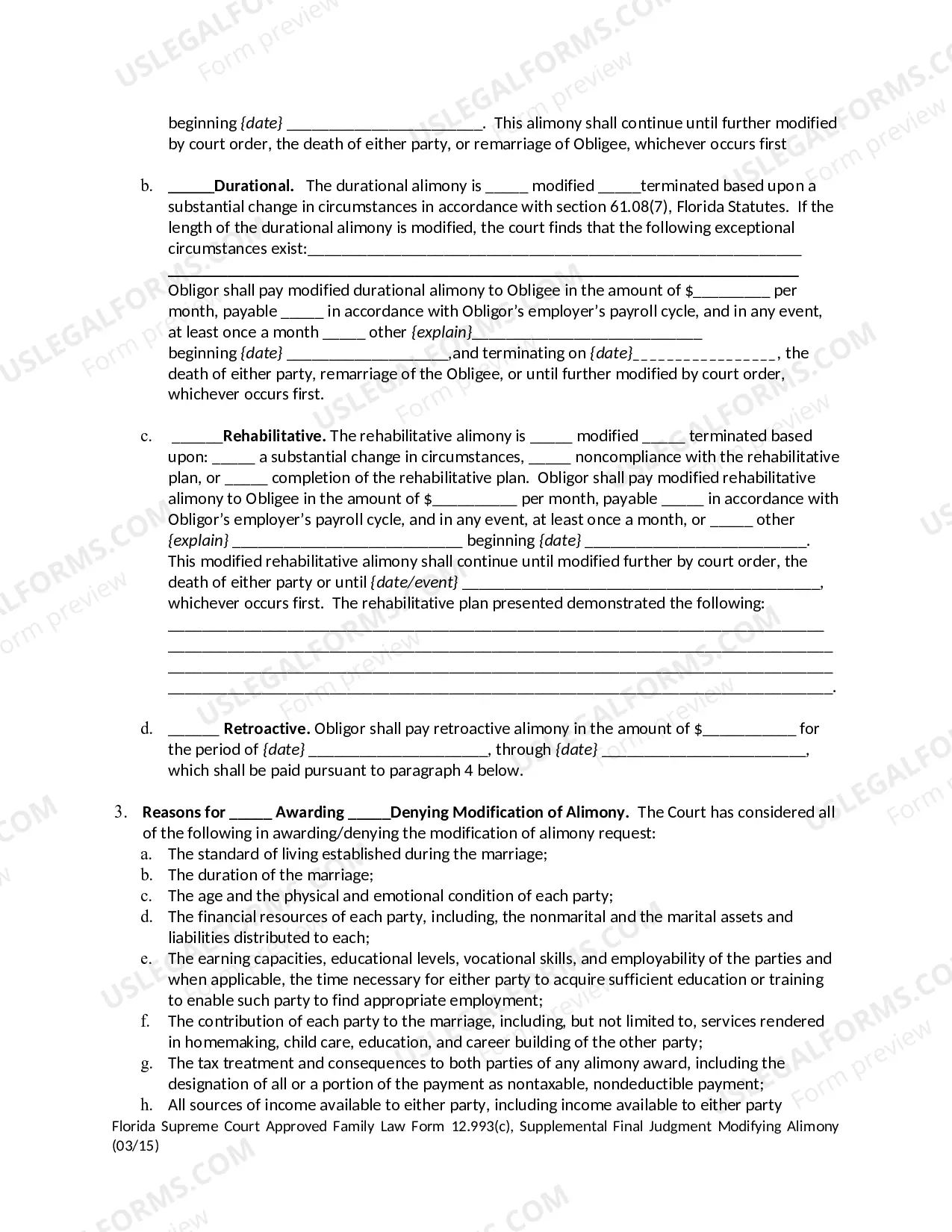
- Sections for detailing types of alimony modification: permanent, durational, and rehabilitative.
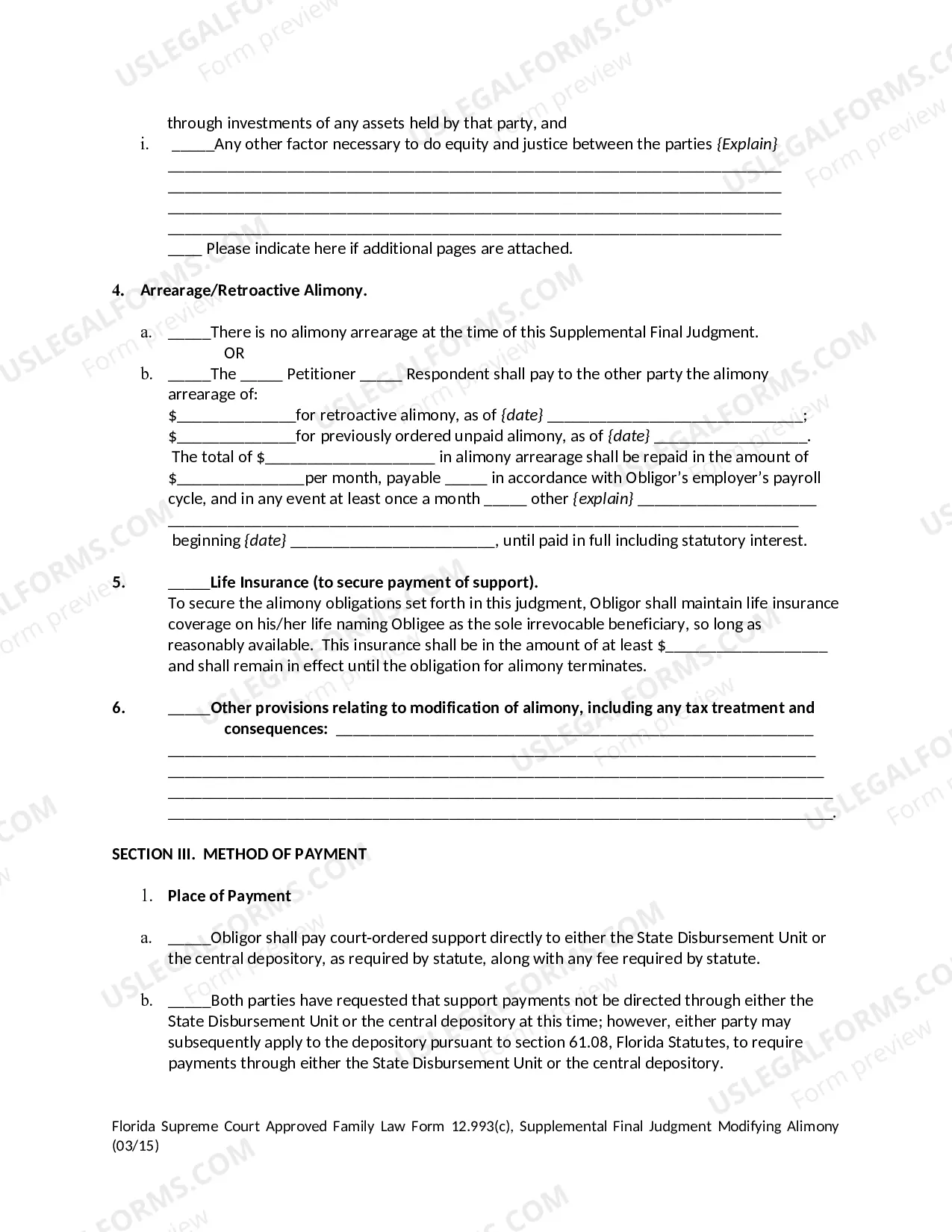
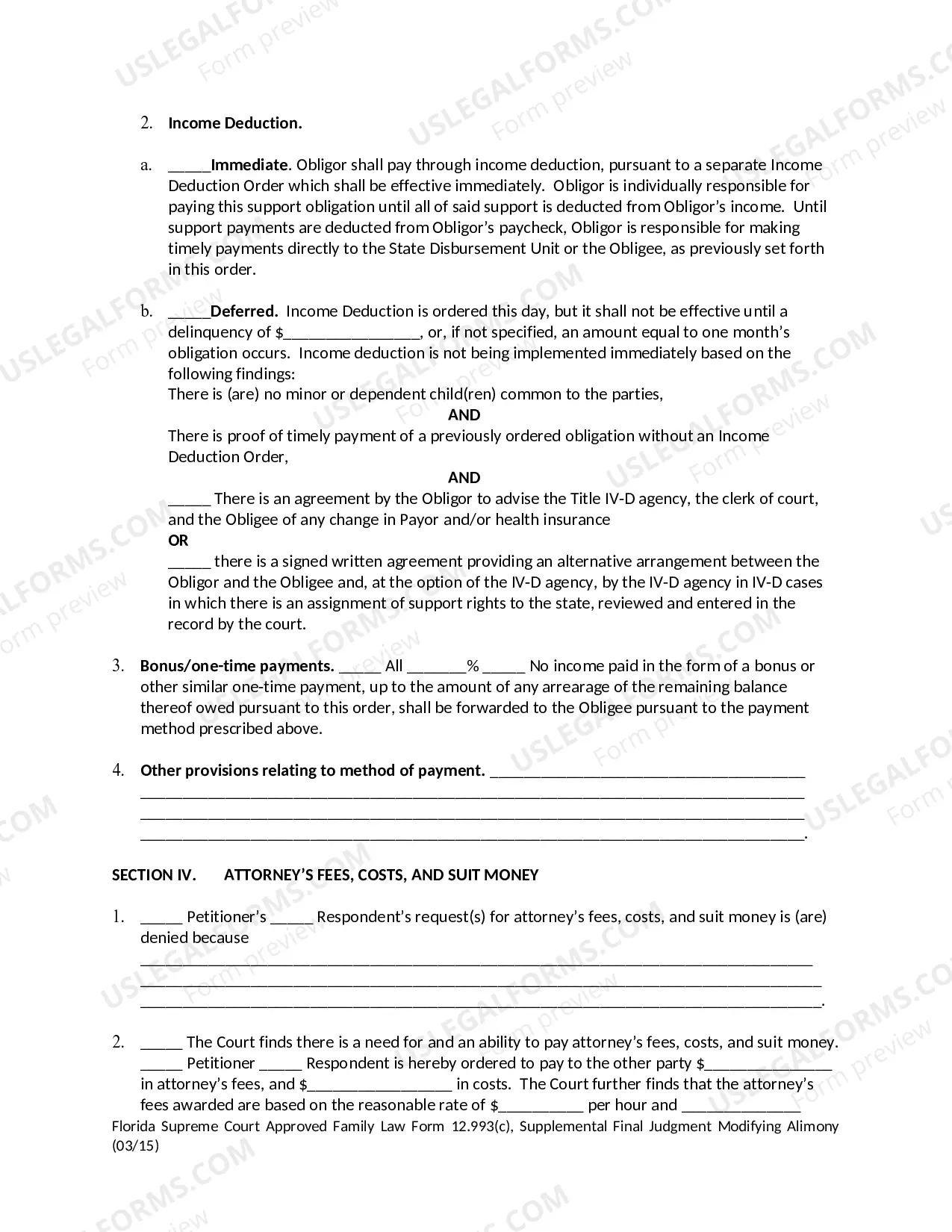
- Provisions for payment methods and potential retroactive alimony obligations.
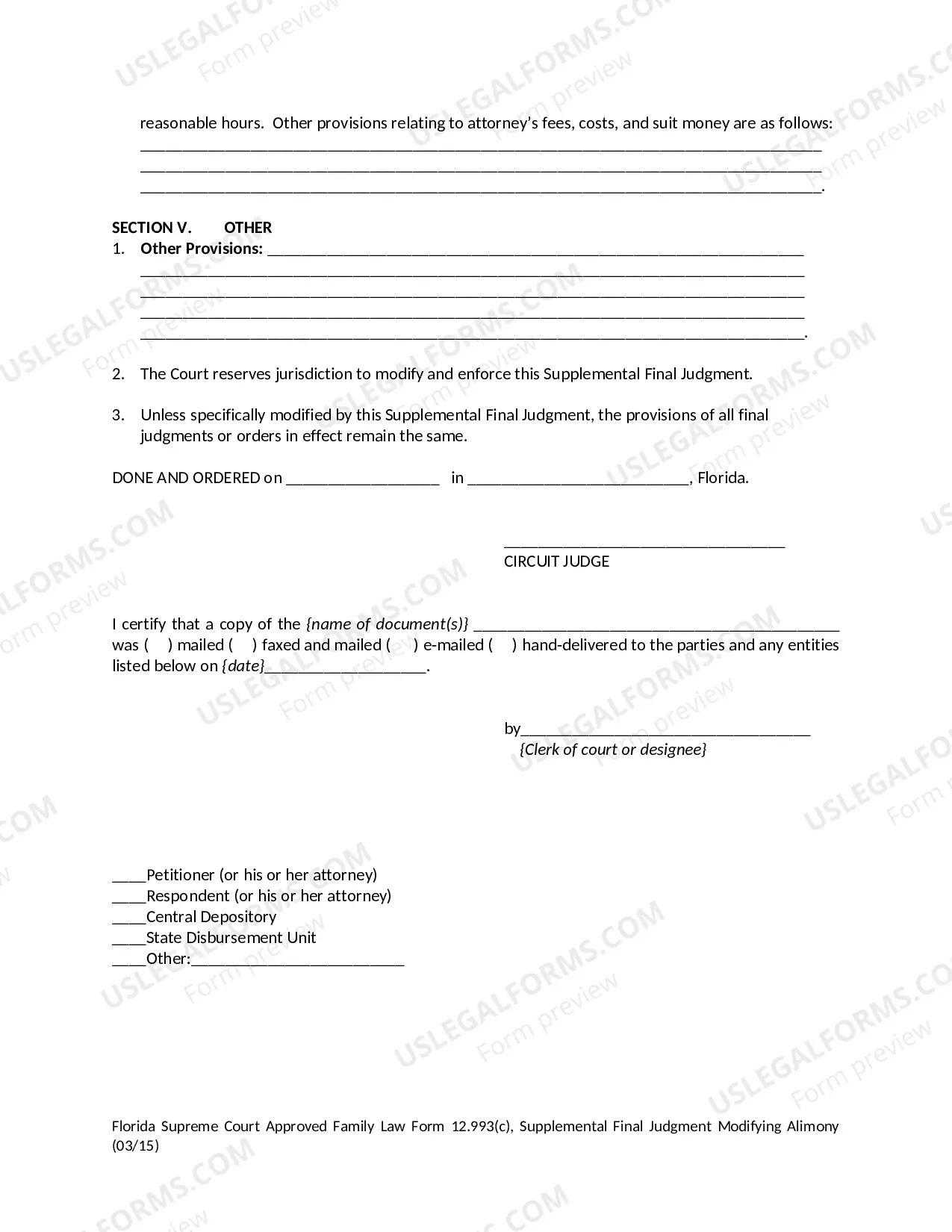
- Considerations for attorney fees and costs related to the modification process.
When to use this form
This form should be used when an individual desires to request a modification of alimony that has previously been ordered by a court. Situations may include changes in income, employment status, health issues, or changes in living situations that impact financial obligations. It can also be relevant when one party has established a supportive relationship that affects alimony needs.
Intended users of this form
- Anyone who has been previously awarded alimony in a Florida court.
- Individuals facing significant financial changes that could affect their alimony obligations.
- Parties who have experienced changes in circumstances that may justify requesting a modification.
- Legal representatives of individuals seeking to modify alimony orders.
Steps to complete this form
- Identify and fill out the case information, including county, case number, and division.
- Provide detailed findings of fact, highlighting the substantial change in circumstances since the last order.
- Select the type of alimony modification (permanent, durational, or rehabilitative) and fill in the relevant details, including payment amounts and schedules.
- Include information regarding any retroactive alimony obligations if applicable.
- Review and sign the form to complete the modification request.
Notarization guidance
This form does not typically require notarization to be legally valid. However, some jurisdictions or document types may still require it. US Legal Forms provides secure online notarization powered by Notarize, available 24/7 for added convenience.
Get your form ready online
Our built-in tools help you complete, sign, share, and store your documents in one place.
Make edits, fill in missing information, and update formatting in US Legal Forms—just like you would in MS Word.
Download a copy, print it, send it by email, or mail it via USPS—whatever works best for your next step.
Sign and collect signatures with our SignNow integration. Send to multiple recipients, set reminders, and more. Go Premium to unlock E-Sign.
If this form requires notarization, complete it online through a secure video call—no need to meet a notary in person or wait for an appointment.
We protect your documents and personal data by following strict security and privacy standards.

Make edits, fill in missing information, and update formatting in US Legal Forms—just like you would in MS Word.

Download a copy, print it, send it by email, or mail it via USPS—whatever works best for your next step.

Sign and collect signatures with our SignNow integration. Send to multiple recipients, set reminders, and more. Go Premium to unlock E-Sign.

If this form requires notarization, complete it online through a secure video call—no need to meet a notary in person or wait for an appointment.

We protect your documents and personal data by following strict security and privacy standards.
Common mistakes
- Failing to provide adequate evidence of a substantial change in circumstances.
- Omitting crucial information in the payment terms and schedules.
- Neglecting to include past alimony obligations that may affect the modification.
- Not filing the form in the appropriate jurisdiction or court.
Why use this form online
- Immediate access to the latest version of the official form, ensuring compliance with legal standards.
- Conveniently downloadable and fillable format allows for easy customization.
- Reduces the chances of errors by providing structured fields for input.
- Facilitates faster submissions to the court without the need for physical paperwork.
Looking for another form?
Form popularity
FAQ
Recent changes in Florida law regarding alimony have made it easier for individuals to modify existing agreements. The new legislation emphasizes justifying modifications based on changed circumstances, making it clearer when one may request a Florida Supplemental Final Judgment Modifying Alimony. Staying informed about these updates is crucial as they can significantly impact your alimony arrangements. Consulting legal resources ensures you're up to date with the current laws.
You can modify alimony in Florida if you meet specific legal standards. The process involves filing a Florida Supplemental Final Judgment Modifying Alimony and proving the necessary changes in your situation. It's important to gather evidence of these changes to support your case effectively. Working with a knowledgeable professional can help navigate this process smoothly.
In Florida, a marital settlement agreement can be changed if there are valid grounds for modification. If both parties consent, you may seek a Florida Supplemental Final Judgment Modifying Alimony to reflect those changes. Always consult an attorney to navigate the legalities efficiently.
Yes, a settlement agreement can be amended if both parties agree to the new terms. The changes must be formalized through a Florida Supplemental Final Judgment Modifying Alimony. It is advisable to work with a legal professional to ensure the amended agreement meets all legal requirements.
To modify a marital settlement agreement in Florida, you need to demonstrate a significant change in circumstances. File a motion for a Florida Supplemental Final Judgment Modifying Alimony with the court, outlining the reasons for the modification. Consulting with a legal expert can simplify this process for you.
Renegotiating a divorce settlement succession is possible, particularly if there are changed circumstances. A Florida Supplemental Final Judgment Modifying Alimony may be necessary to amend the original terms. Seeking legal guidance can help you navigate this process smoothly.
Yes, a marital settlement agreement can be changed under certain circumstances. If both parties agree to the changes, they can file for a Florida Supplemental Final Judgment Modifying Alimony. It’s important to document these changes legally to ensure they are enforceable.
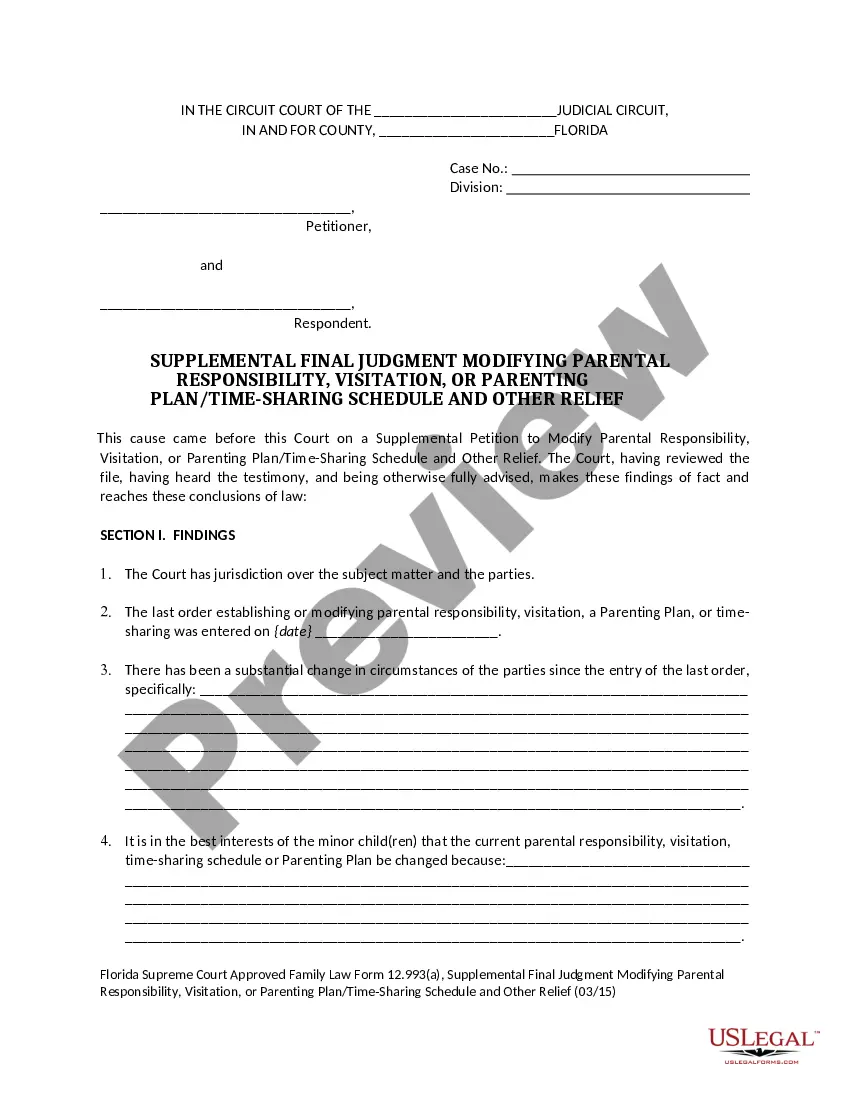
Modifying a parenting plan in Florida can also vary in difficulty based on individual circumstances and the specifics of your case. The court requires evidence of substantial changes since the original plan was established, similar to alimony modifications. Understanding the legal criteria and being prepared with the right documents can make the process smoother. For detailed guidance, consider using resources from platforms like USLegalForms to assist with Florida Supplemental Final Judgment Modifying Alimony and related parenting issues.
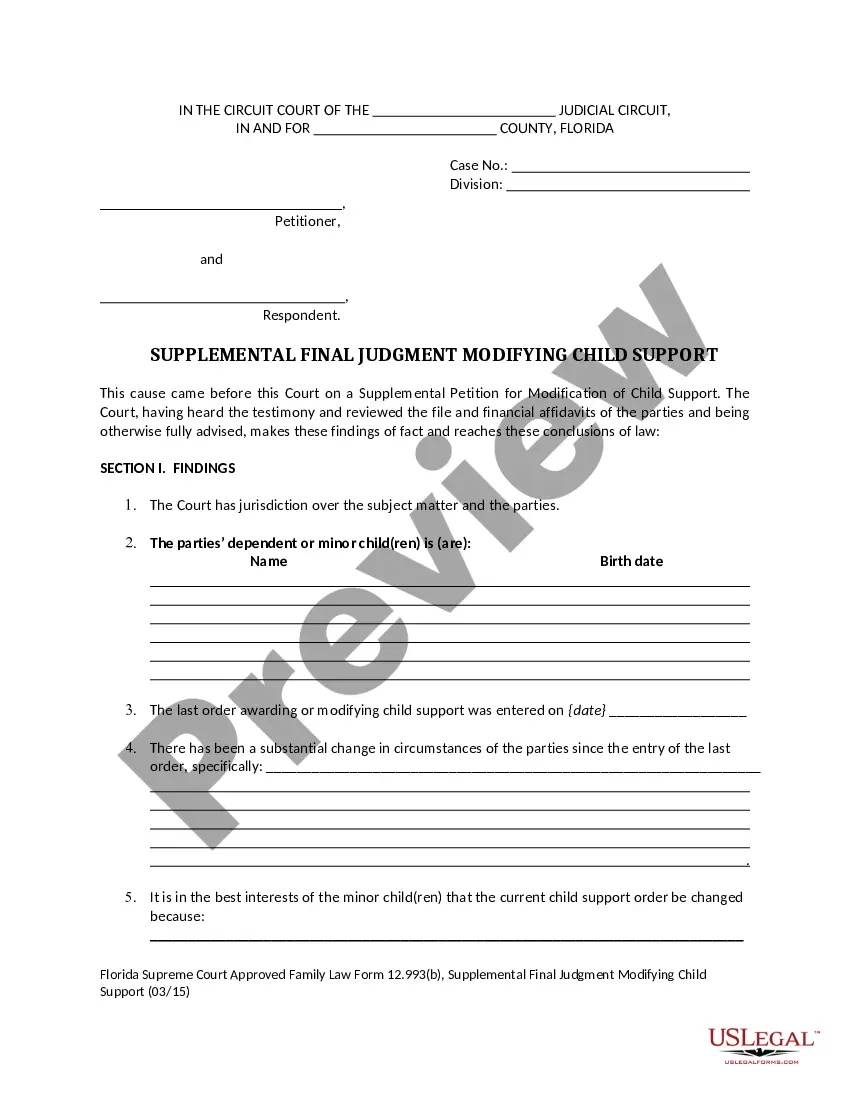
The difficulty in modifying alimony in Florida primarily depends on the complexity of your case and the evidence you present. While some cases can be straightforward, others may require significant legal preparation and documentation. Engaging with professionals can streamline the process and improve your chances of a favorable outcome. This is where platforms like USLegalForms can assist you in navigating Florida Supplemental Final Judgment Modifying Alimony efficiently.
A supplemental petition for modification in Florida is a legal document filed to request changes to an existing court order regarding alimony or other support issues. It outlines the reasons for the requested modification, citing substantial evidence of changes in circumstances. Filing this petition correctly is essential for your case to be heard. This process is part of the Florida Supplemental Final Judgment Modifying Alimony framework.