Delaware Employment Non- Disclosure, Non- Solicitation, and Intellectual Property Assignment Agreement
Description
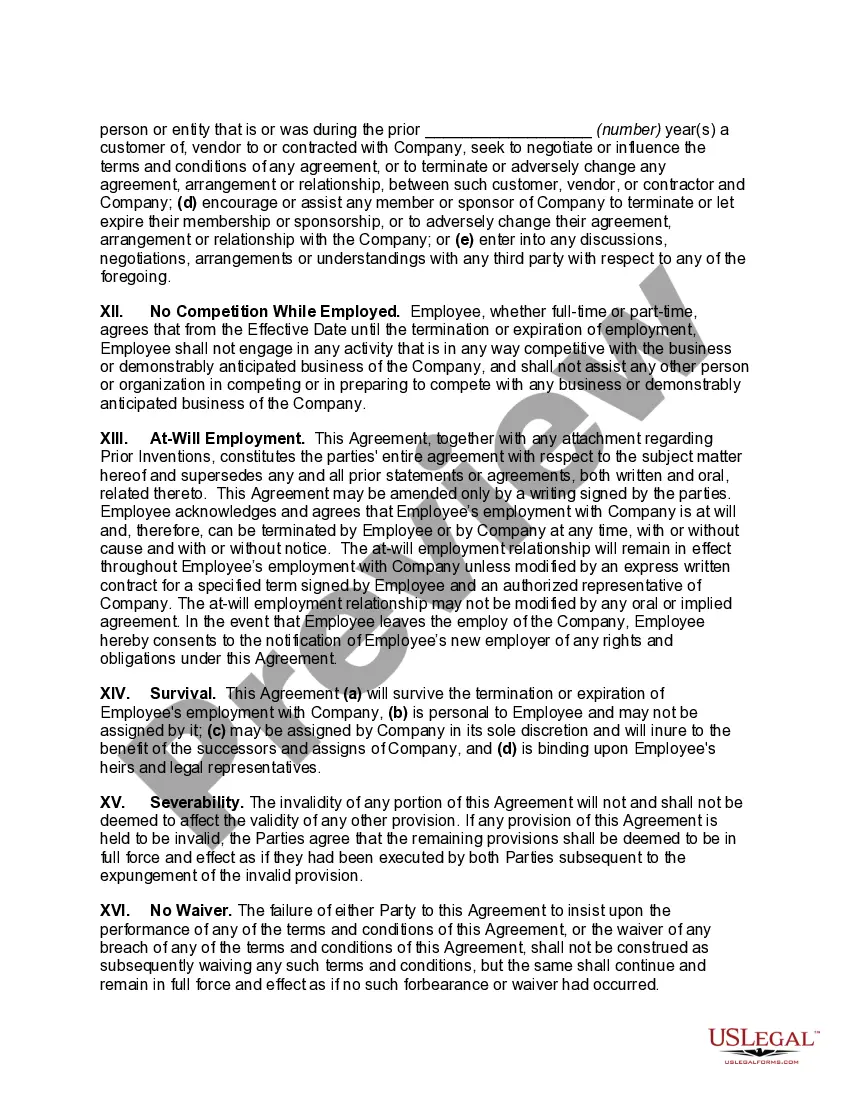
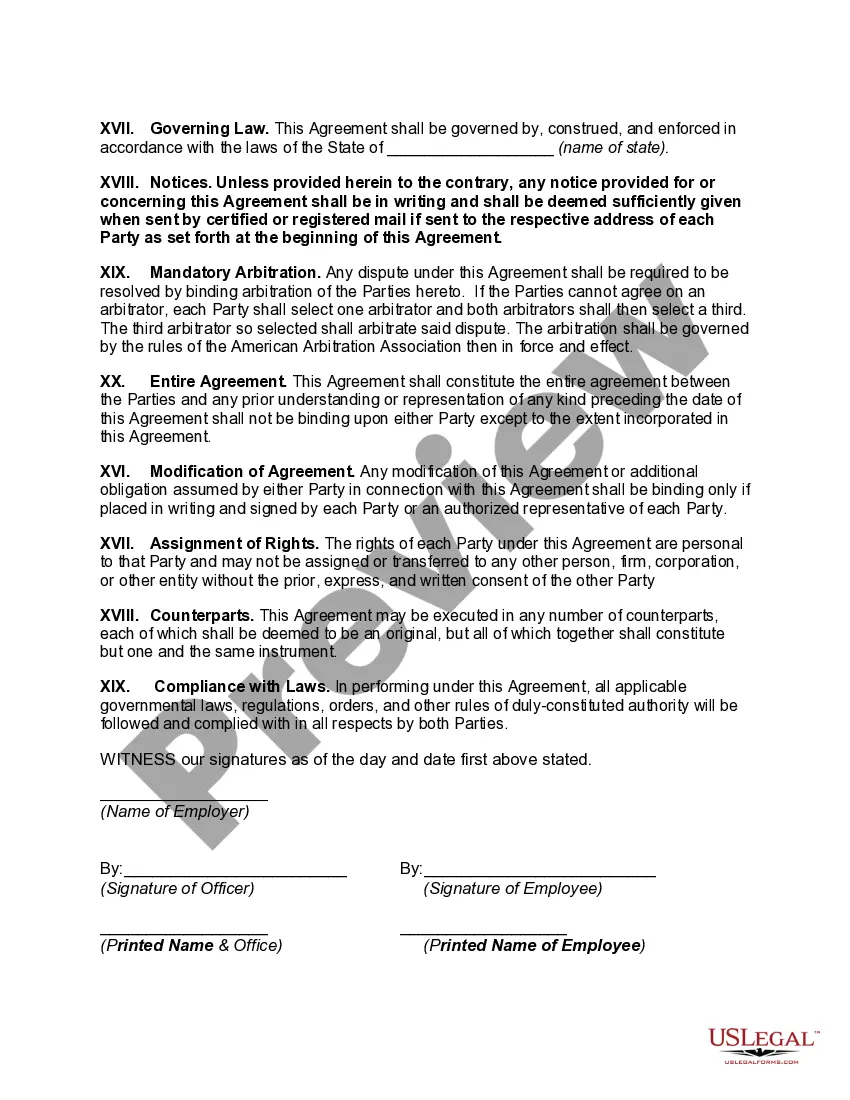
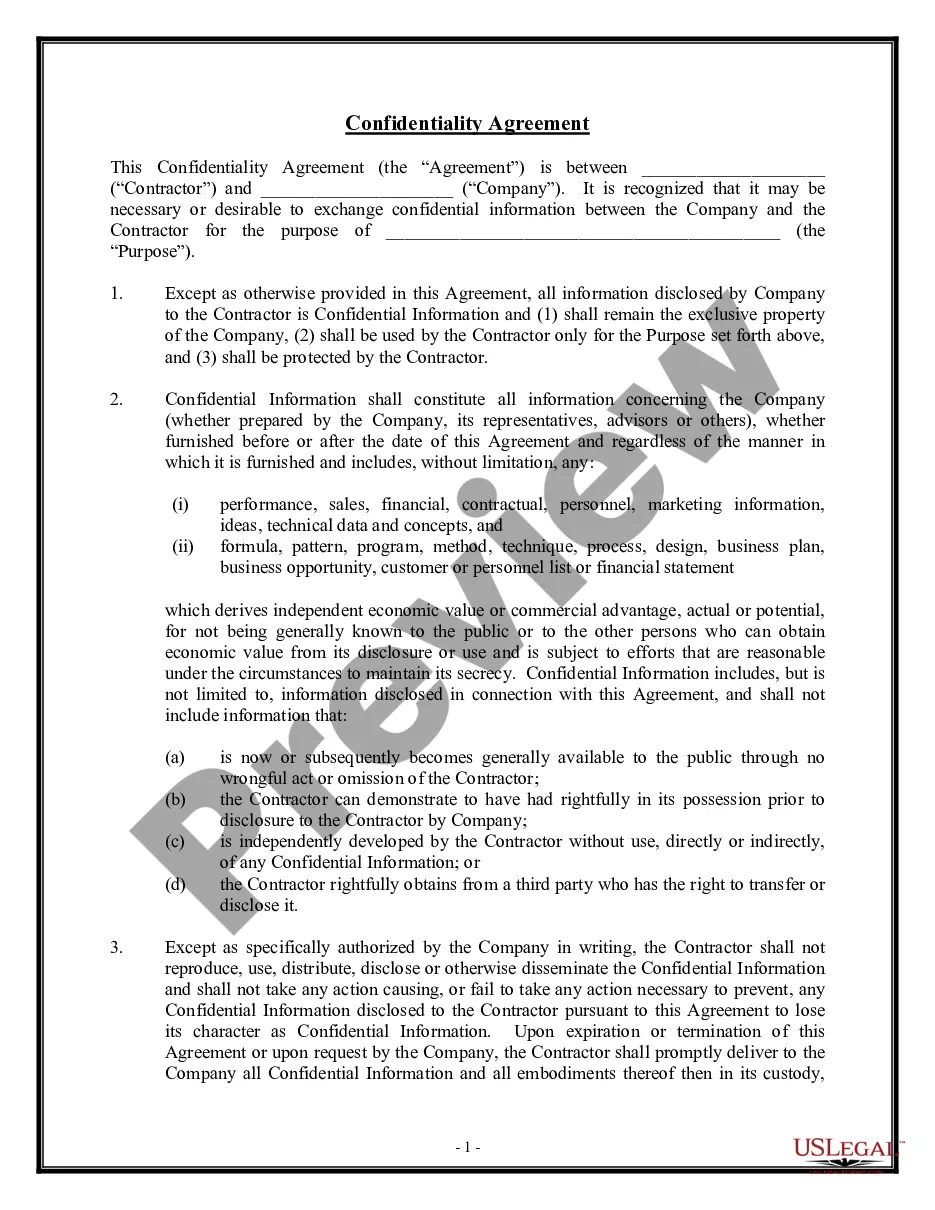
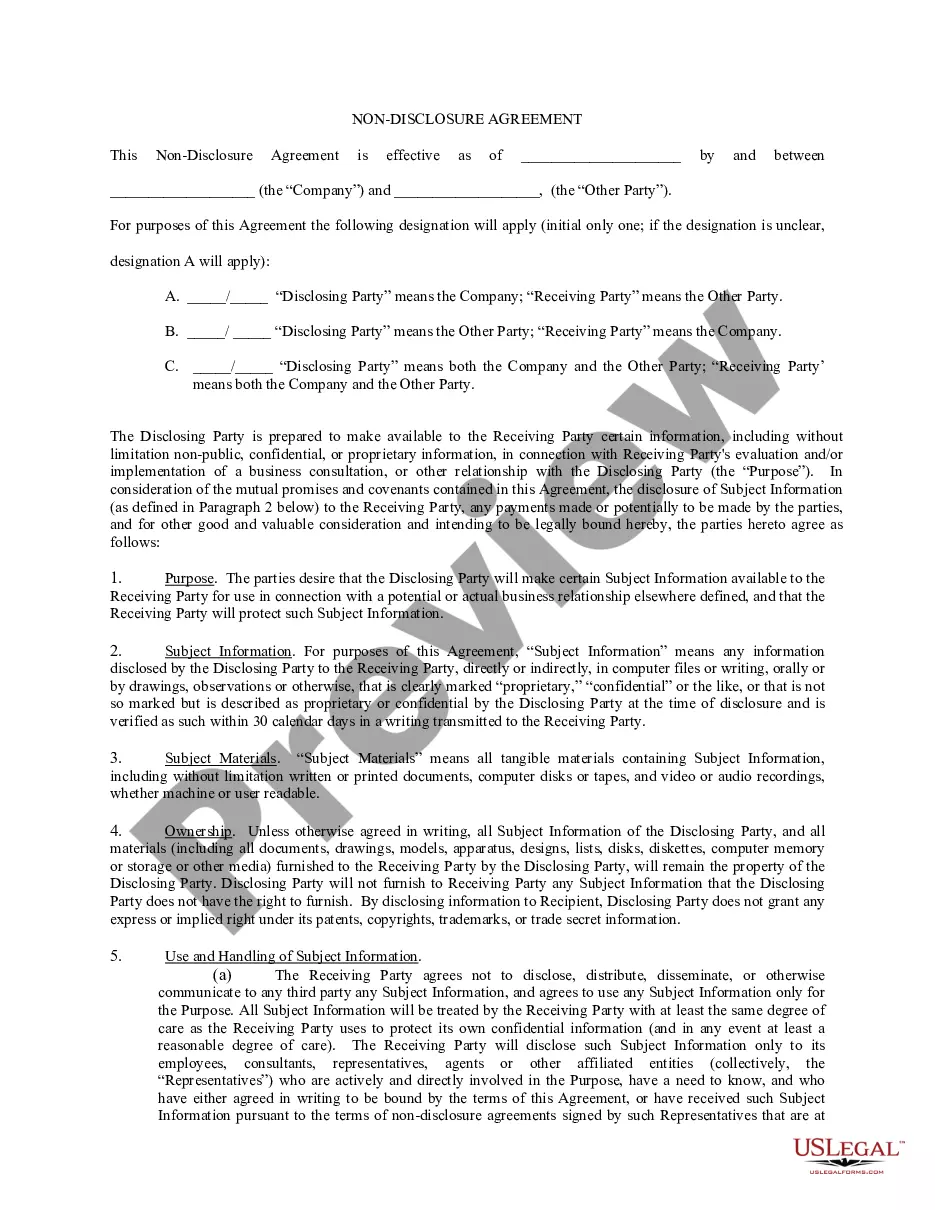
Get your form ready online
Our built-in tools help you complete, sign, share, and store your documents in one place.
Make edits, fill in missing information, and update formatting in US Legal Forms—just like you would in MS Word.
Download a copy, print it, send it by email, or mail it via USPS—whatever works best for your next step.
Sign and collect signatures with our SignNow integration. Send to multiple recipients, set reminders, and more. Go Premium to unlock E-Sign.
If this form requires notarization, complete it online through a secure video call—no need to meet a notary in person or wait for an appointment.
We protect your documents and personal data by following strict security and privacy standards.

Make edits, fill in missing information, and update formatting in US Legal Forms—just like you would in MS Word.

Download a copy, print it, send it by email, or mail it via USPS—whatever works best for your next step.

Sign and collect signatures with our SignNow integration. Send to multiple recipients, set reminders, and more. Go Premium to unlock E-Sign.

If this form requires notarization, complete it online through a secure video call—no need to meet a notary in person or wait for an appointment.

We protect your documents and personal data by following strict security and privacy standards.
Looking for another form?

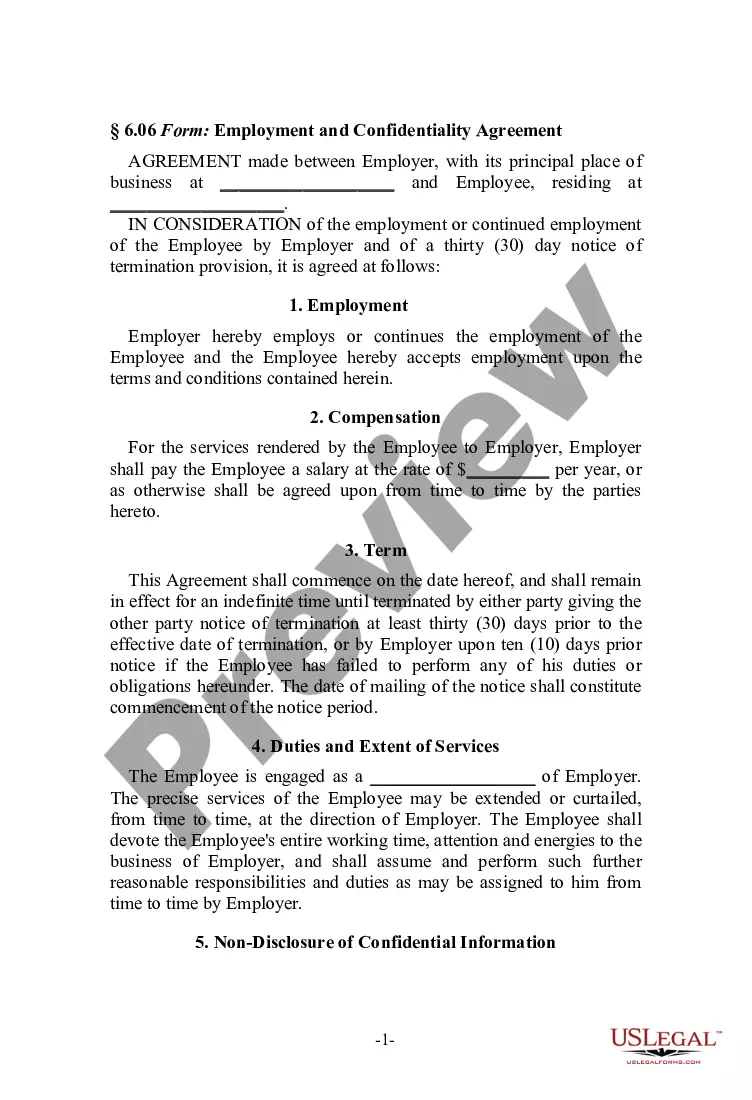
How to fill out Employment Non- Disclosure, Non- Solicitation, And Intellectual Property Assignment Agreement?
Are you currently in a location where you require documents for either business or personal purposes almost every day.
There are numerous legal document templates accessible online, but finding reliable ones isn't straightforward.
US Legal Forms offers thousands of template options, such as the Delaware Employment Non-Disclosure, Non-Solicitation, and Intellectual Property Assignment Agreement, which can be tailored to comply with federal and state regulations.
Once you locate the correct form, click Acquire now.
Choose a pricing plan you prefer, fill out the required information to create your account, and pay for your order using PayPal or a credit card.
- If you are already familiar with the US Legal Forms website and have your account, just Log In.
- Then, you can download the Delaware Employment Non-Disclosure, Non-Solicitation, and Intellectual Property Assignment Agreement template.
- If you do not have an account and wish to start using US Legal Forms, follow these steps.
- Select the form you need and ensure it is appropriate for your area/county.
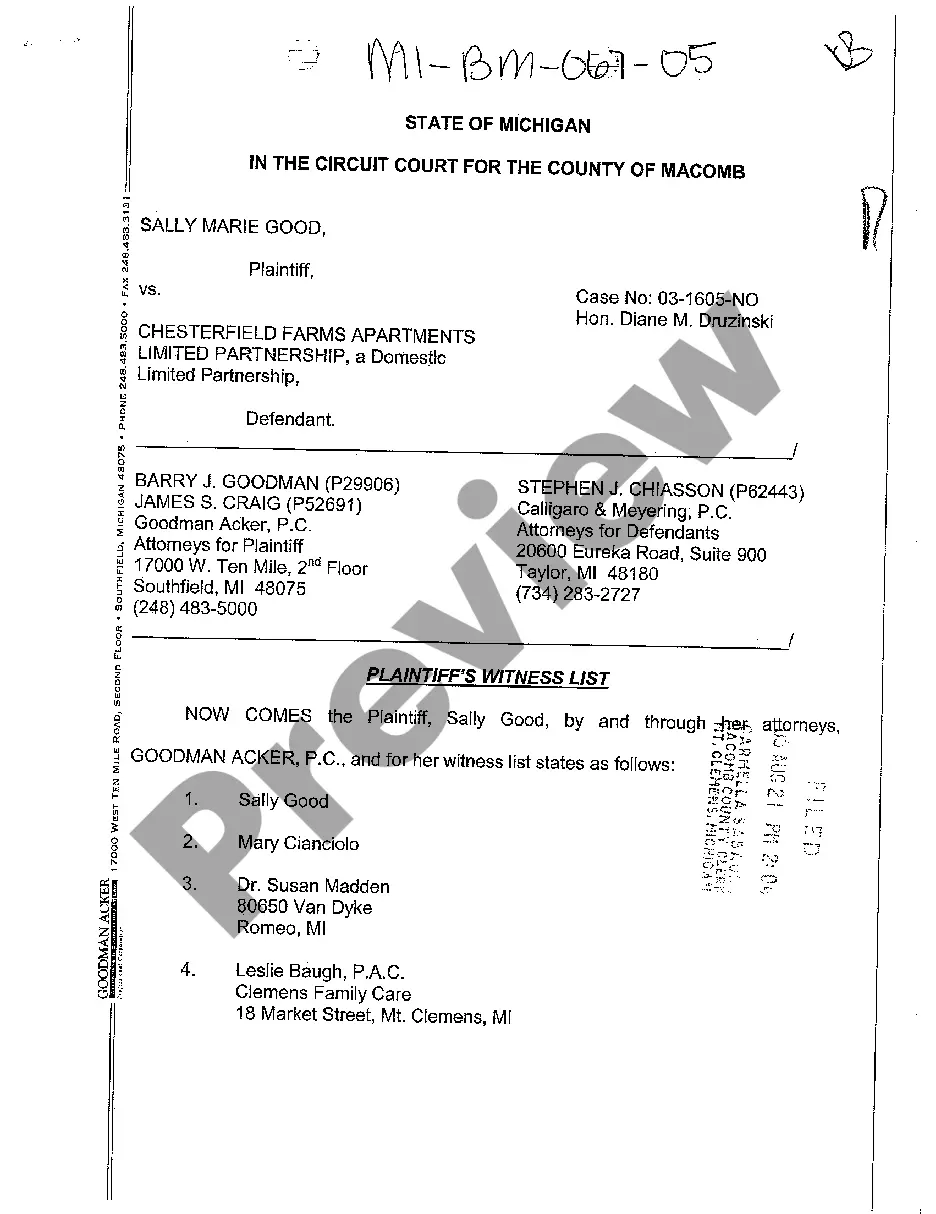
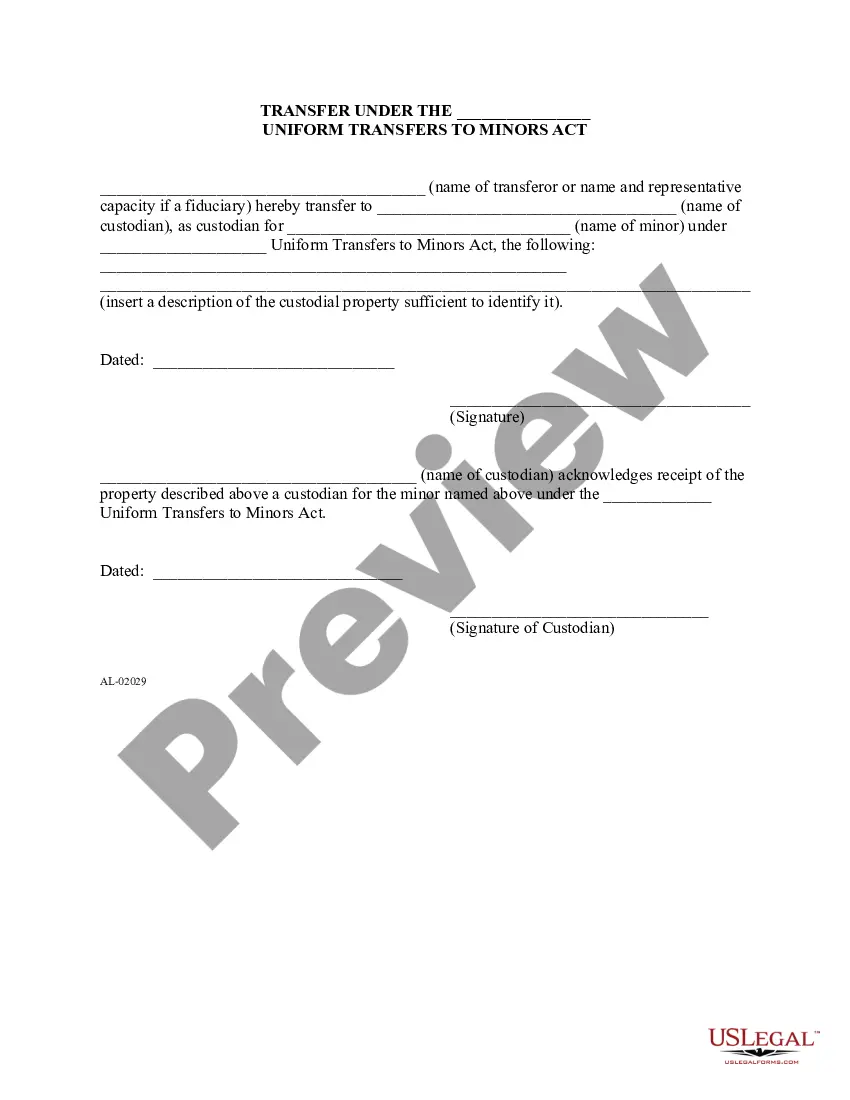
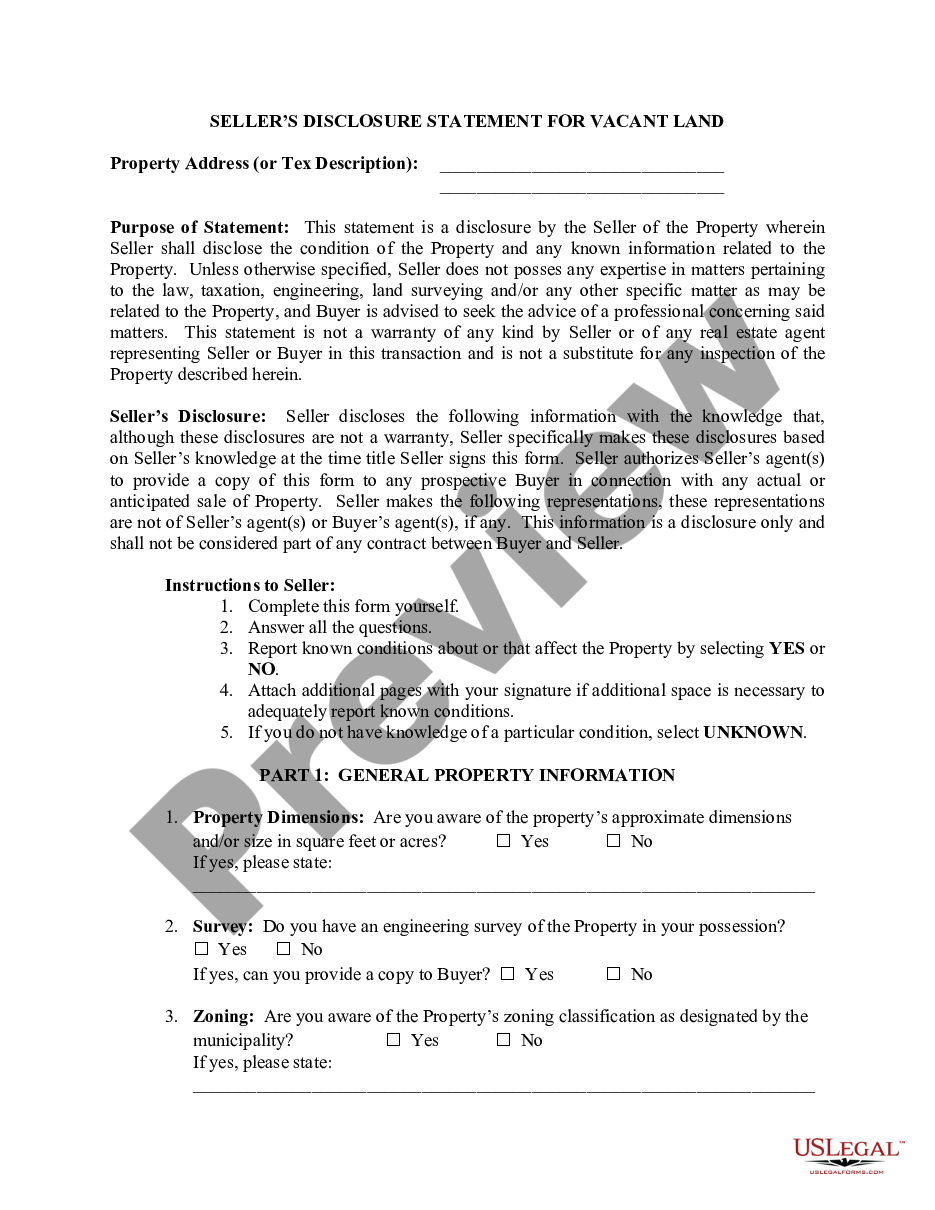
- Utilize the Preview button to examine the document.
- Review the summary to verify that you have chosen the correct form.
- If the form isn't what you are looking for, use the Search field to find the form that fulfills your requirements.
Form popularity
FAQ
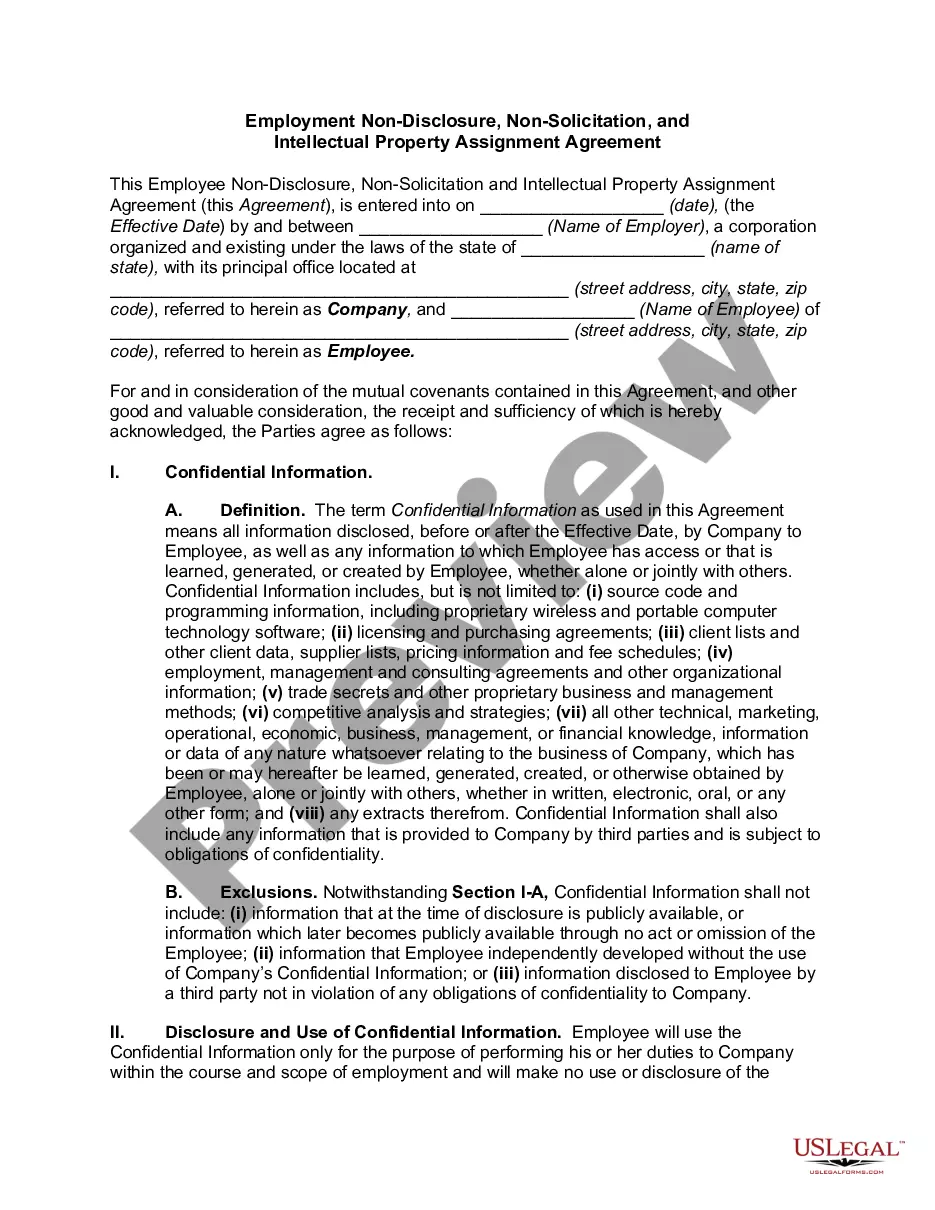
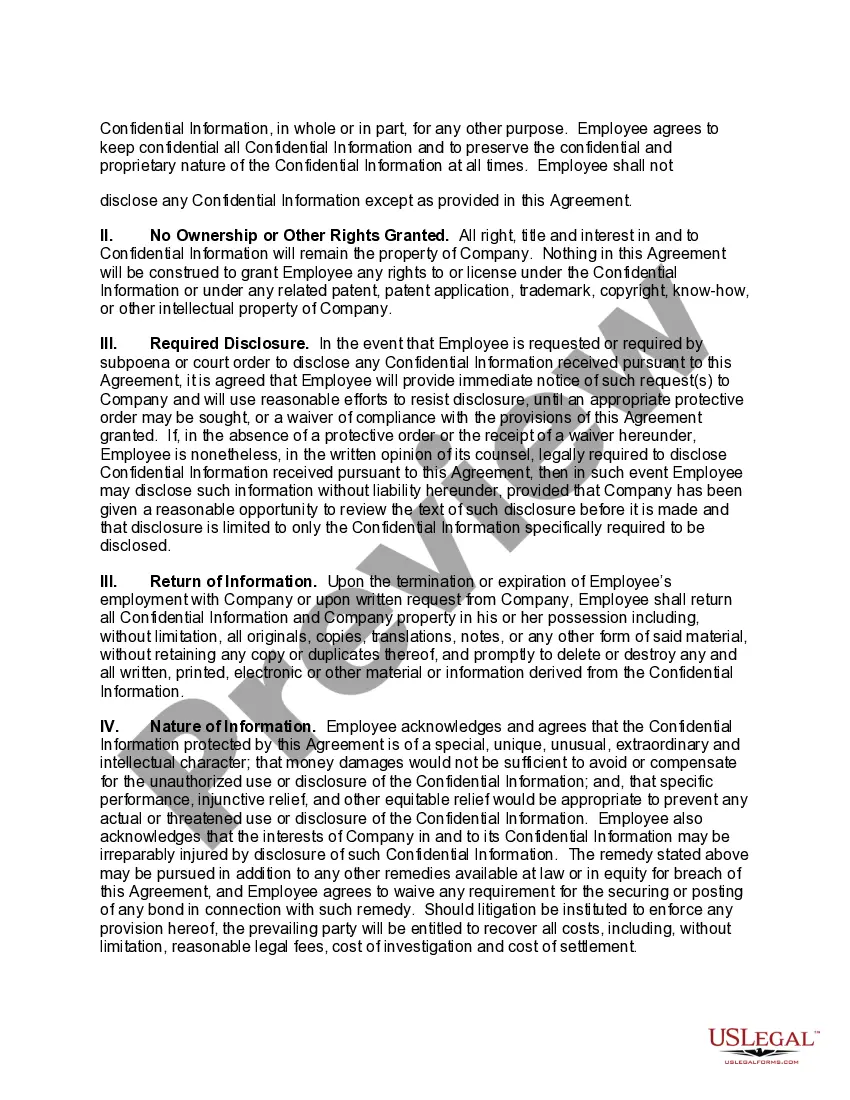
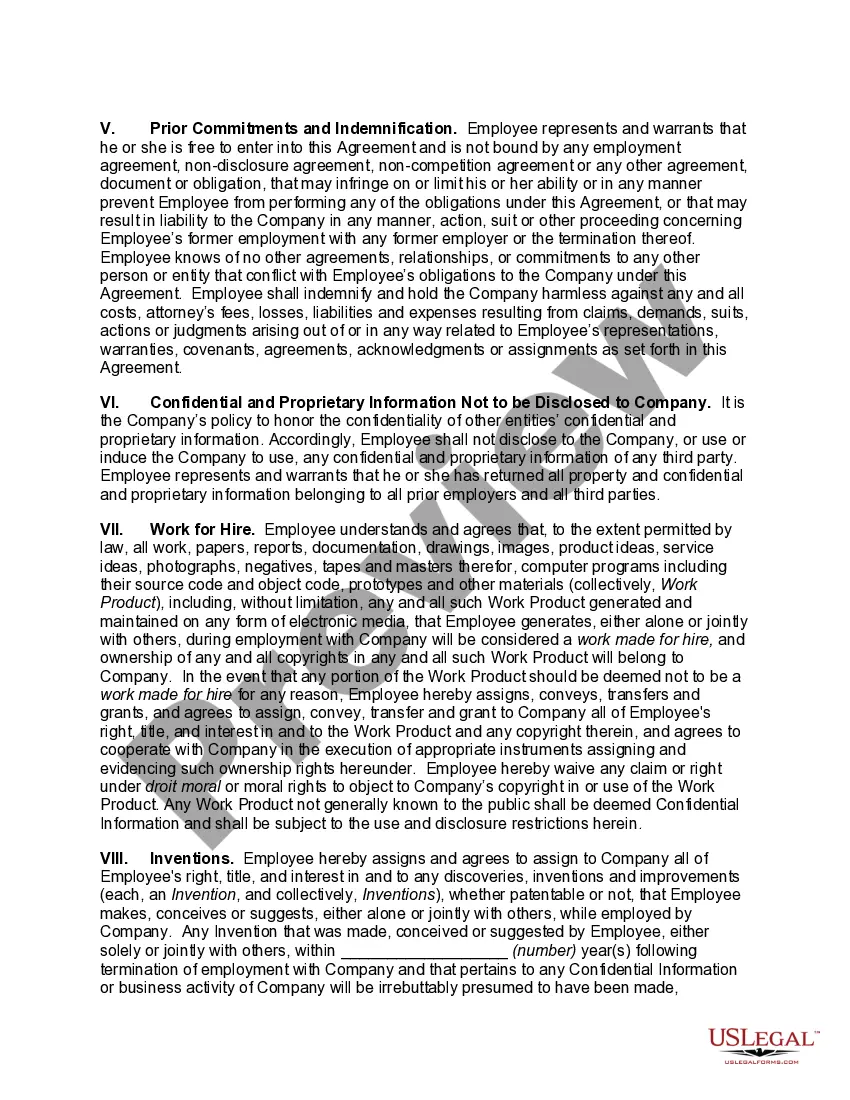
The employee non-disclosure and invention assignment agreement combines confidentiality and IP ownership provisions in one document. It prevents employees from sharing sensitive information while outlining that any inventions they create during their employment belong to the employer. This agreement is a critical part of the Delaware Employment Non-Disclosure, Non-Solicitation, and Intellectual Property Assignment Agreement landscape.
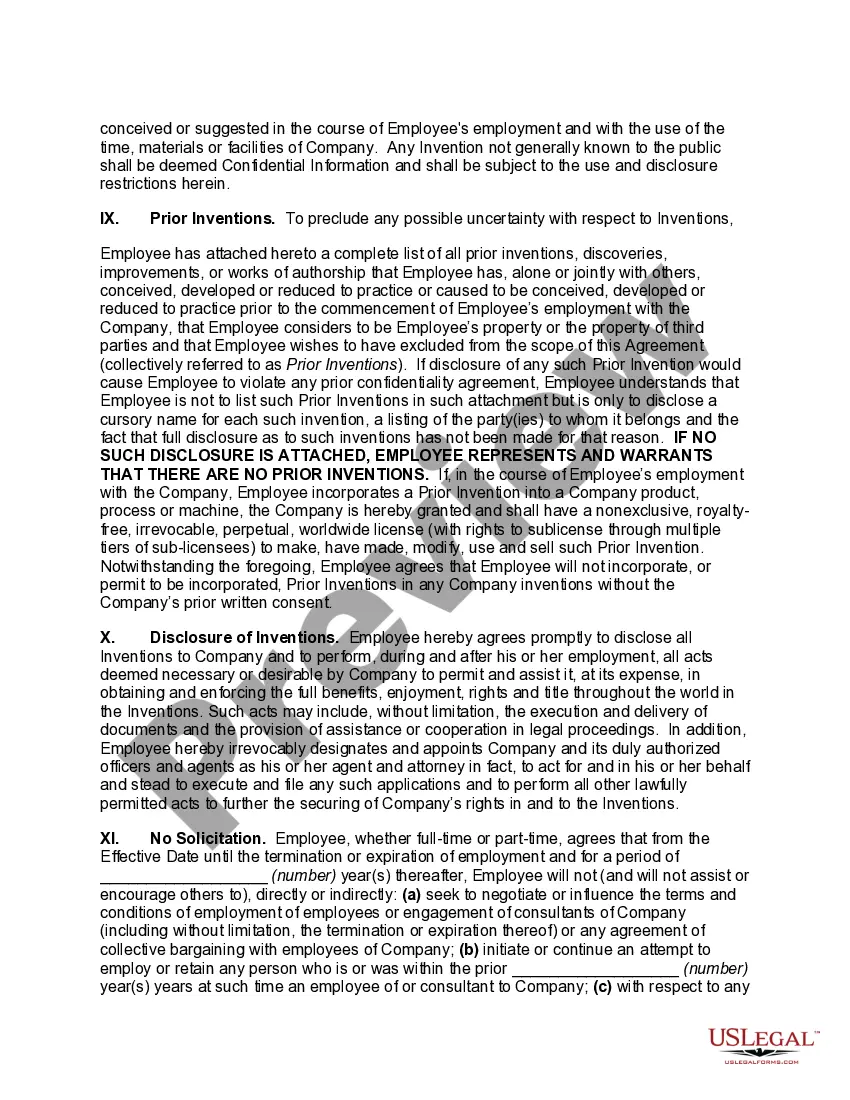
Non-solicitation clauses that are clear, carefully drafted, and suitably retrained in temporal and spatial terms, are often enforceable. An appropriate clause will serve the purpose of protecting the employer without unduly compromising a person's ability to work in their industry.
Nonsolicitation agreements. A nonsolicitation agreement restricts an employee from soliciting the business of specific customers of the employer, typically within a set time period. Nonsolicitation agreements are almost always void and unenforceable in California.
A nondisclosure agreement (NDA), sometimes called a confidentiality agreement, allows a company to share its intellectual property with others whose input it needs without unduly jeopardizing that information.
Delaware law does not have this provision. Accordingly, a three-year non-compete agreement is more likely to be enforced by a court under Delaware law, but if the court concluded that three years was unreasonable, the entire non-compete agreement becomes unenforceable.
Escaping Nonsolicitation AgreementsDon't sign.Build your book independently.Carve out pre-existing relationships.Require for cause termination as the trigger.Provide for a payoff.Turn clients into friends.Don't treat clients as trade secrets.Invest in your own business.
disclosure agreement is a legally binding contract that establishes a confidential relationship. The party or parties signing the agreement agree that sensitive information they may obtain will not be made available to any others. An NDA may also be referred to as a confidentiality agreement.
California State Law and Employee Non-Solicitation Agreements. California courts have already determined that non-disclosure and client/customer non-solicitation agreements are not valid or enforceable.
The Law In Delaware Delaware courts have determined that restrictive covenants are enforceable if the terms are reasonable and necessary to protect certain business interests of the employer such as customer relationships or trade secrets.
Escaping Nonsolicitation AgreementsDon't sign.Build your book independently.Carve out pre-existing relationships.Require for cause termination as the trigger.Provide for a payoff.Turn clients into friends.Don't treat clients as trade secrets.Invest in your own business.