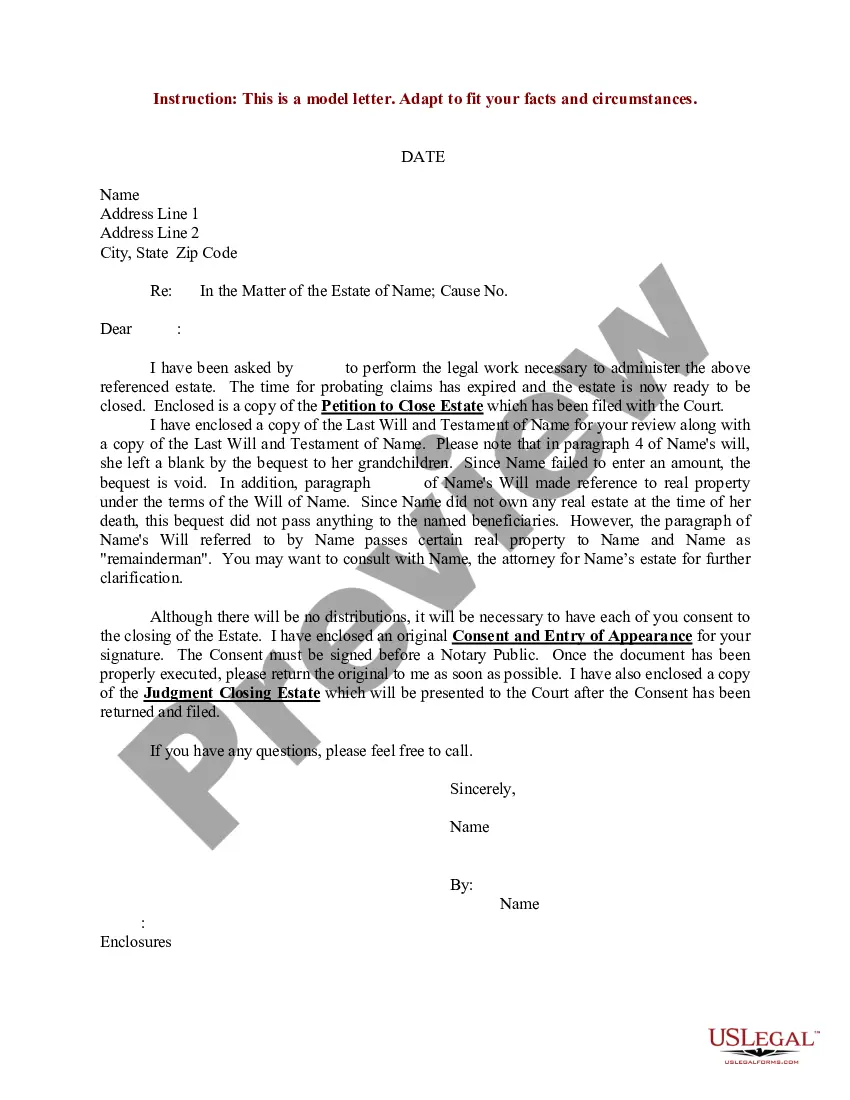
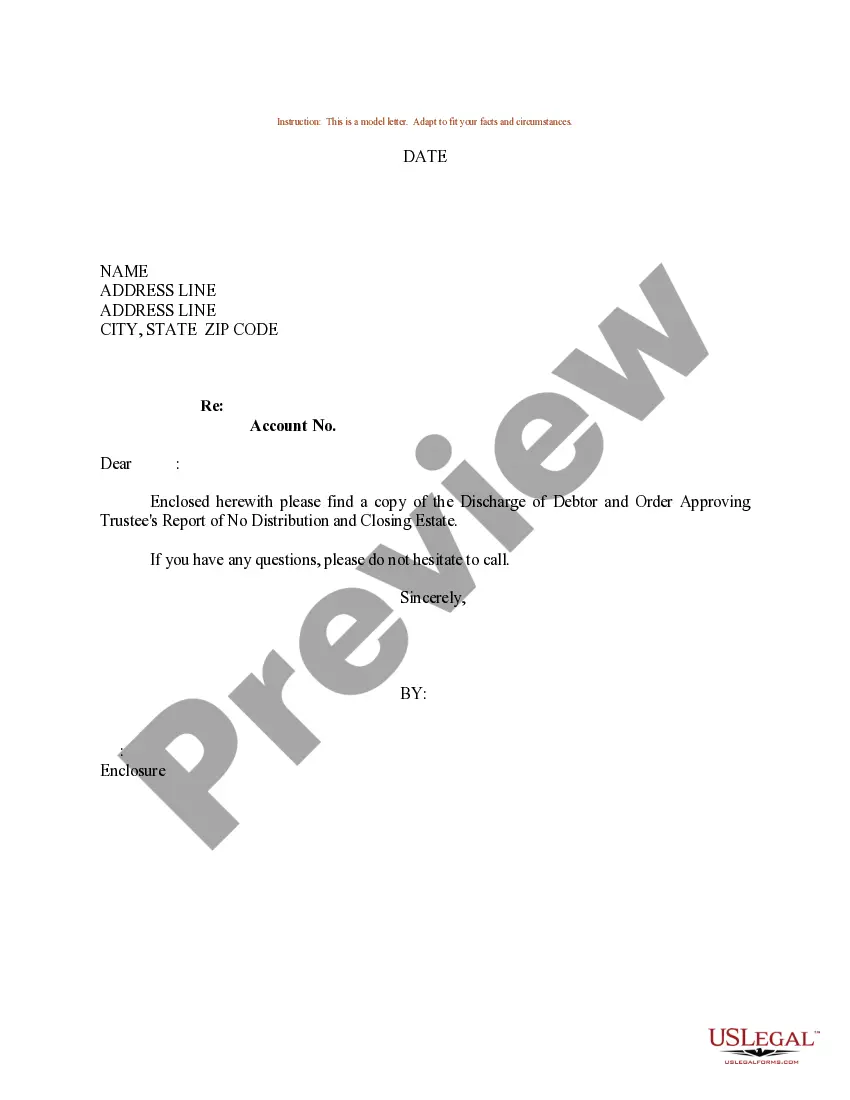
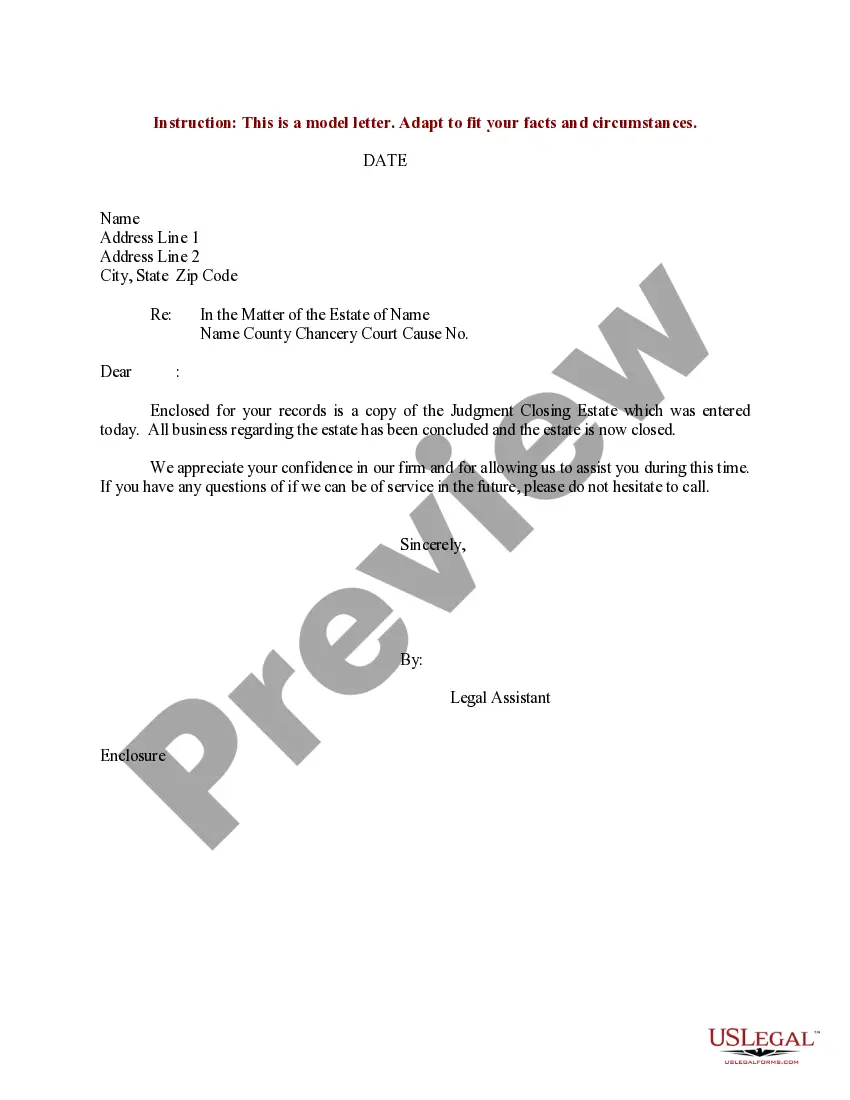
Delaware Sample Letter for Closing of Estate with no Distribution
Description
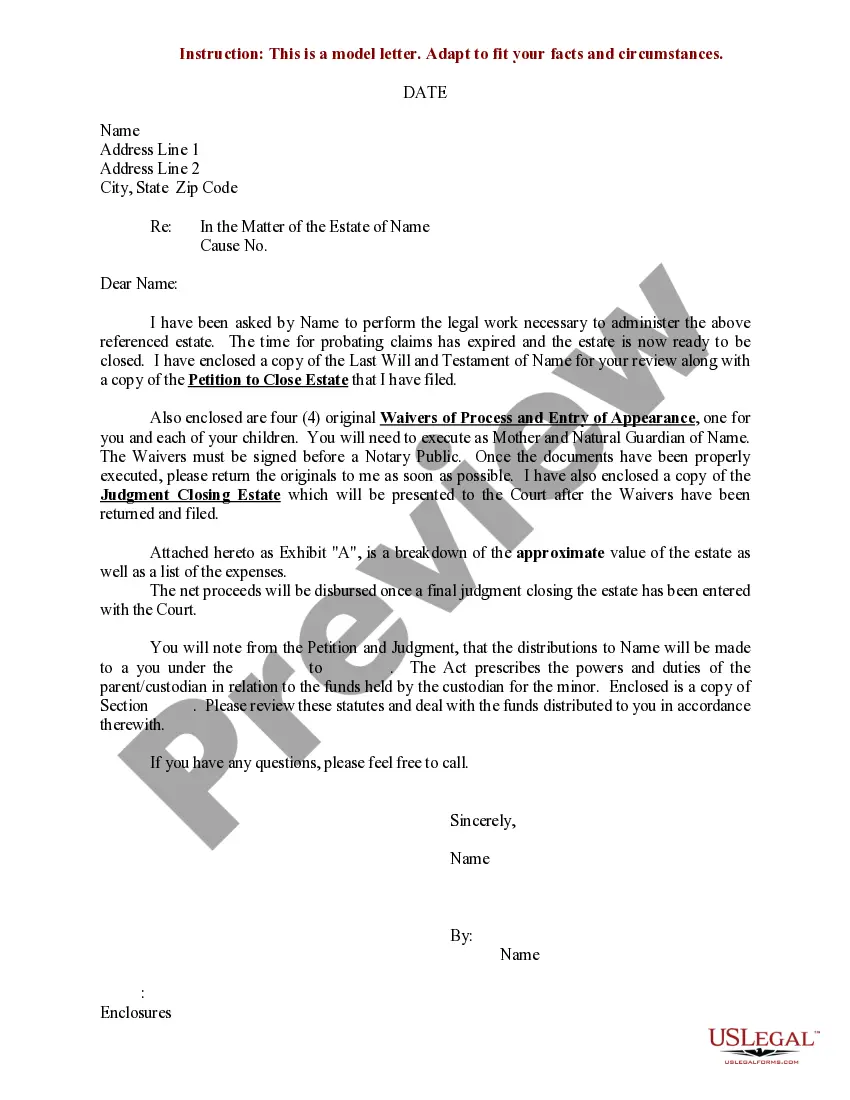
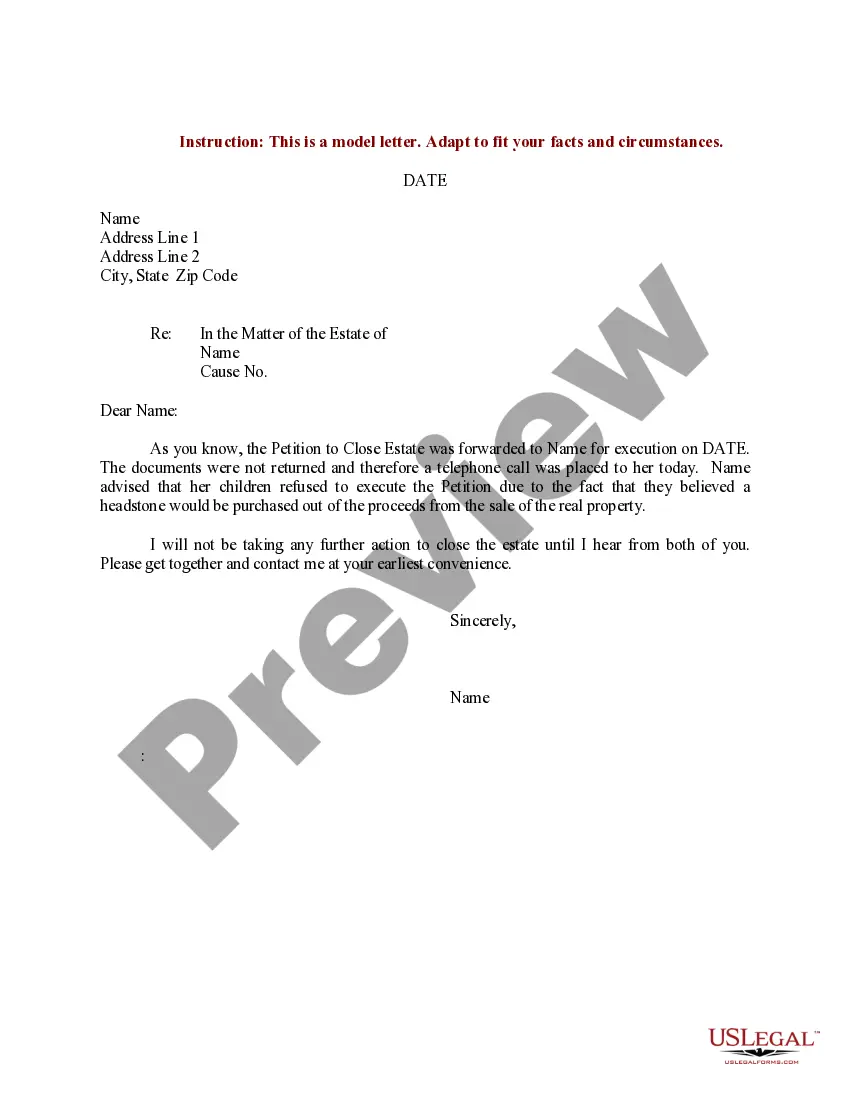
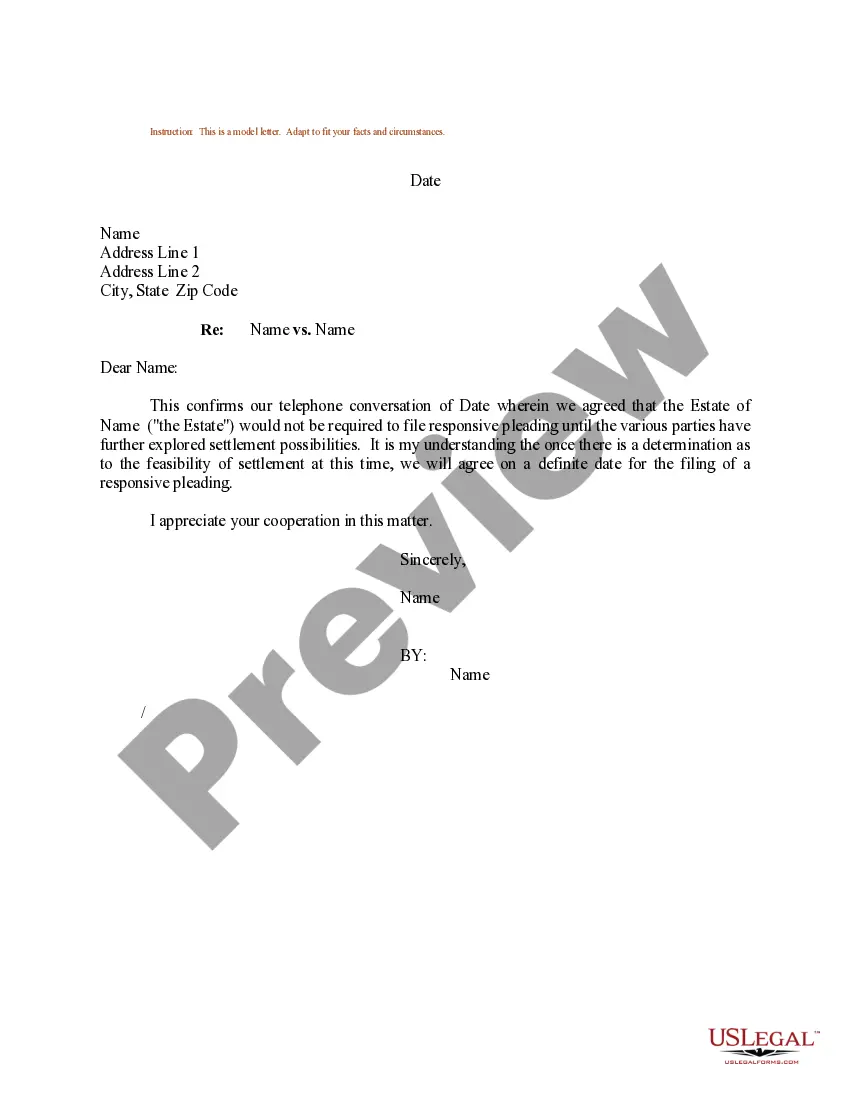
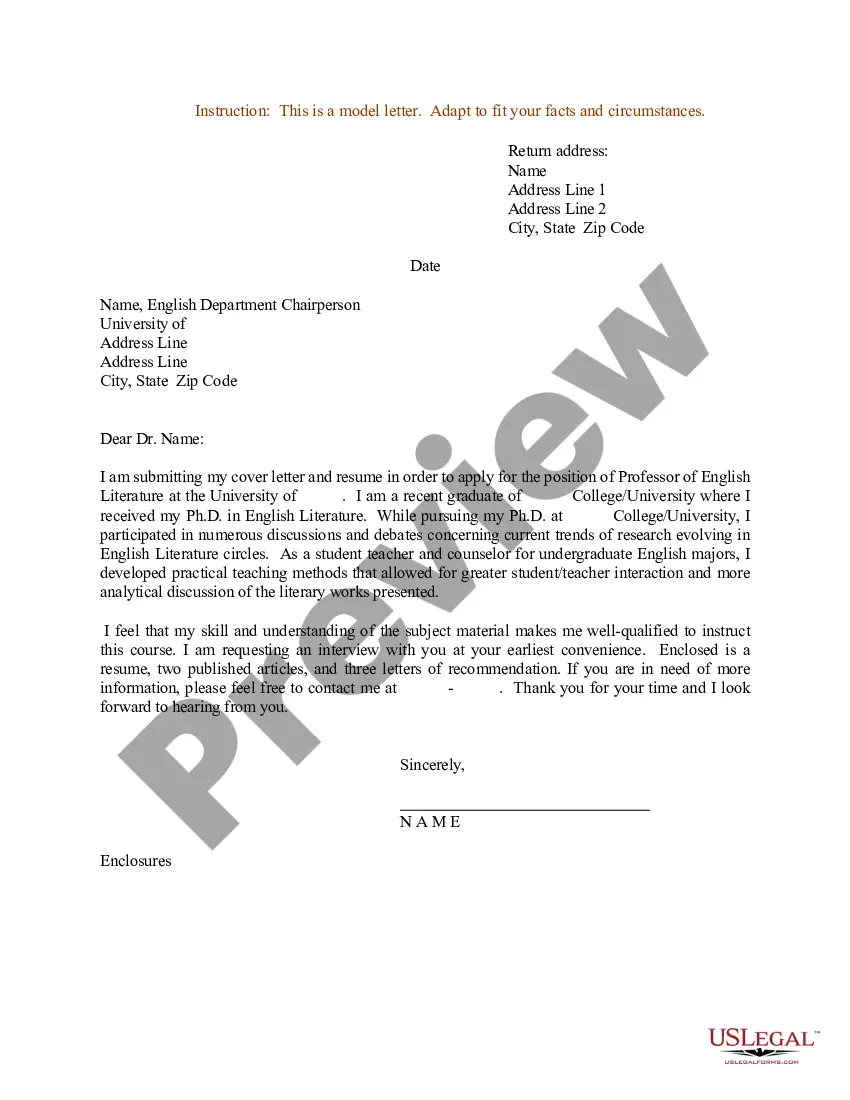
How to fill out Sample Letter For Closing Of Estate With No Distribution?
Are you in the position the place you need papers for possibly business or person uses virtually every time? There are plenty of authorized papers web templates available on the Internet, but finding ones you can rely is not straightforward. US Legal Forms delivers a large number of develop web templates, just like the Delaware Sample Letter for Closing of Estate with no Distribution, that happen to be composed to fulfill state and federal demands.
In case you are previously knowledgeable about US Legal Forms internet site and also have an account, just log in. Following that, you may obtain the Delaware Sample Letter for Closing of Estate with no Distribution web template.
Unless you come with an bank account and wish to begin using US Legal Forms, abide by these steps:
- Find the develop you want and make sure it is for that right metropolis/state.
- Utilize the Preview switch to examine the shape.
- Browse the outline to ensure that you have selected the correct develop.
- When the develop is not what you`re searching for, use the Look for field to discover the develop that meets your requirements and demands.
- When you obtain the right develop, simply click Buy now.
- Choose the costs program you would like, fill out the specified information and facts to generate your money, and purchase your order making use of your PayPal or Visa or Mastercard.
- Select a practical file structure and obtain your duplicate.
Find all the papers web templates you have purchased in the My Forms food list. You can get a extra duplicate of Delaware Sample Letter for Closing of Estate with no Distribution whenever, if needed. Just go through the required develop to obtain or produce the papers web template.
Use US Legal Forms, by far the most extensive variety of authorized types, to conserve some time and avoid blunders. The assistance delivers expertly created authorized papers web templates that you can use for an array of uses. Create an account on US Legal Forms and commence generating your life a little easier.
Form popularity
FAQ
A will, or a last will and testament, is a legal document that describes how you would like your property and other assets to be distributed after your death.
Except where circumstances justify a longer period, an executor or administrator shall have 1 year from the date of letters for settling the estate of the decedent; and until the expiration of that time, the executor or administrator shall not be required to make distribution, nor be chargeable with interest upon the ...
A Letter of Testamentary is a document granted to the Executor of an estate by the probate court. This document gives the Executor the authority he or she will need to formally act on behalf of the decedent. It gives the right to handle financial and other affairs related to closing out the estate.
Despite the lack of statutory guidance on executor fees in Delaware, the general consensus among legal professionals is that an executor can expect to receive about 2-5% of the estate's value. However, this percentage can fluctuate based on the specifics of the estate and the executor's responsibilities.
Every estate is different and can take a different length of time to administer depending on its complexity. There is a general expectation that an executor or administrator should try to complete the estate administration within a year of the death, and this is referred to as the executor's year.
Delaware probate follows this general flow: contact the court, get appointed as personal representative, submit will if it exists, inventory and submit valuations of all relevant assets, have the court and beneficiaries approve it, and then distribute the assets to beneficiaries.
If you die with a surviving spouse and with children with someone other than that spouse, the spouse gets ½ of your intestate assets, plus the right to use any intestate real estate for life. Your children get everything else. If you die with children but no surviving spouse, your children inherit everything.
In Delaware, creditors have a window of eight months from the date of death to make claims against the estate for any debts owed. Paying Debts and Taxes: The executor must then pay off any valid claims from the estate's assets and settle any final income taxes or estate taxes owed.