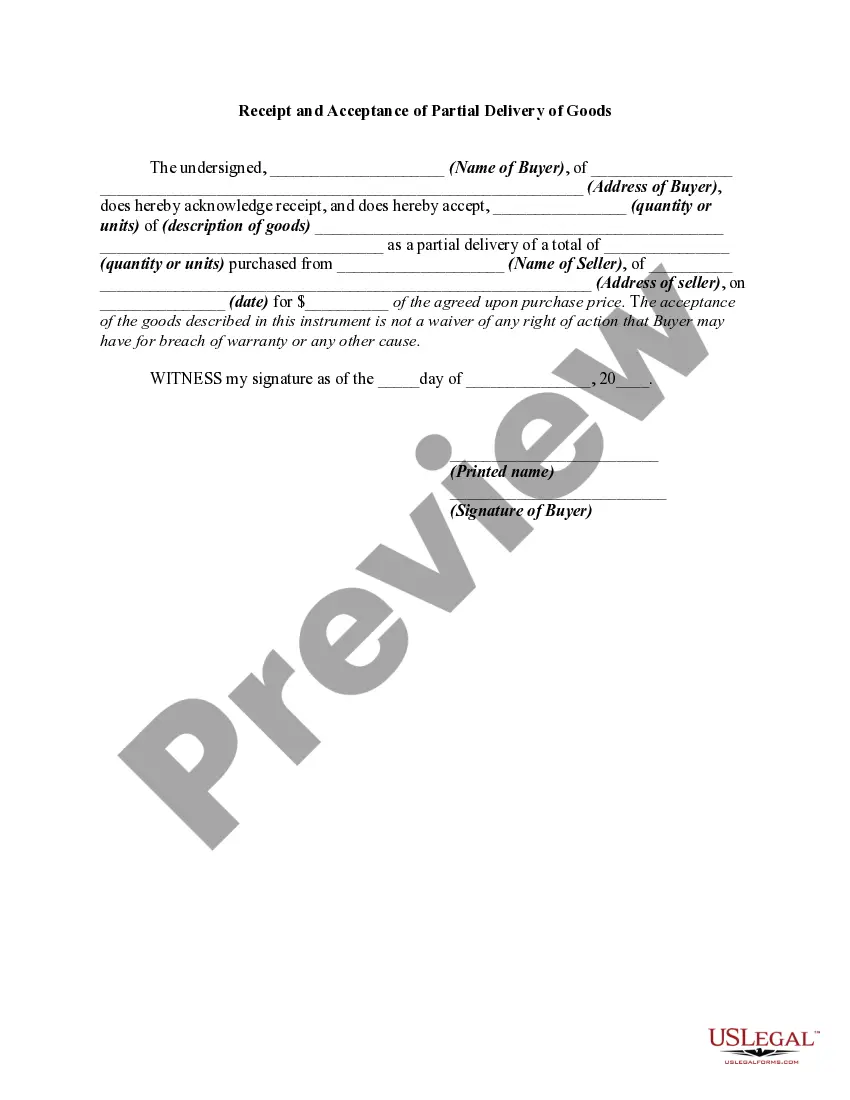
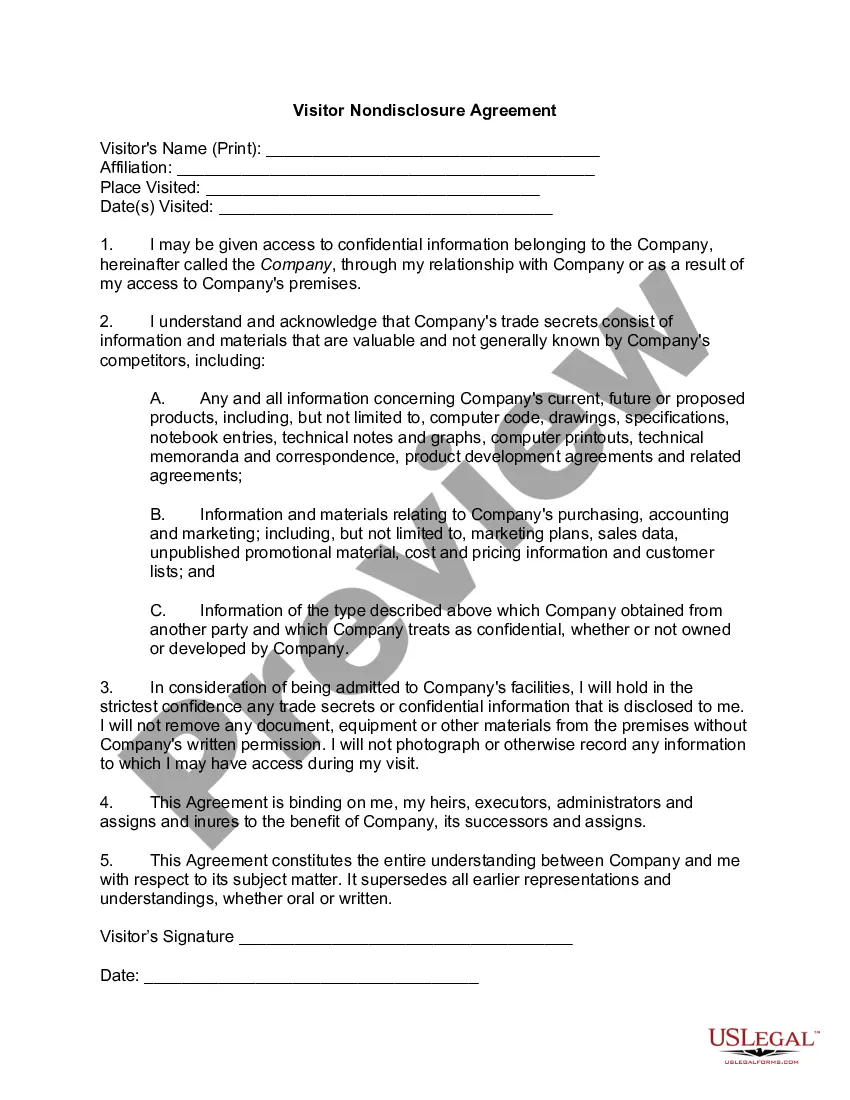
Delaware Visitor Nondisclosure Agreement
Description
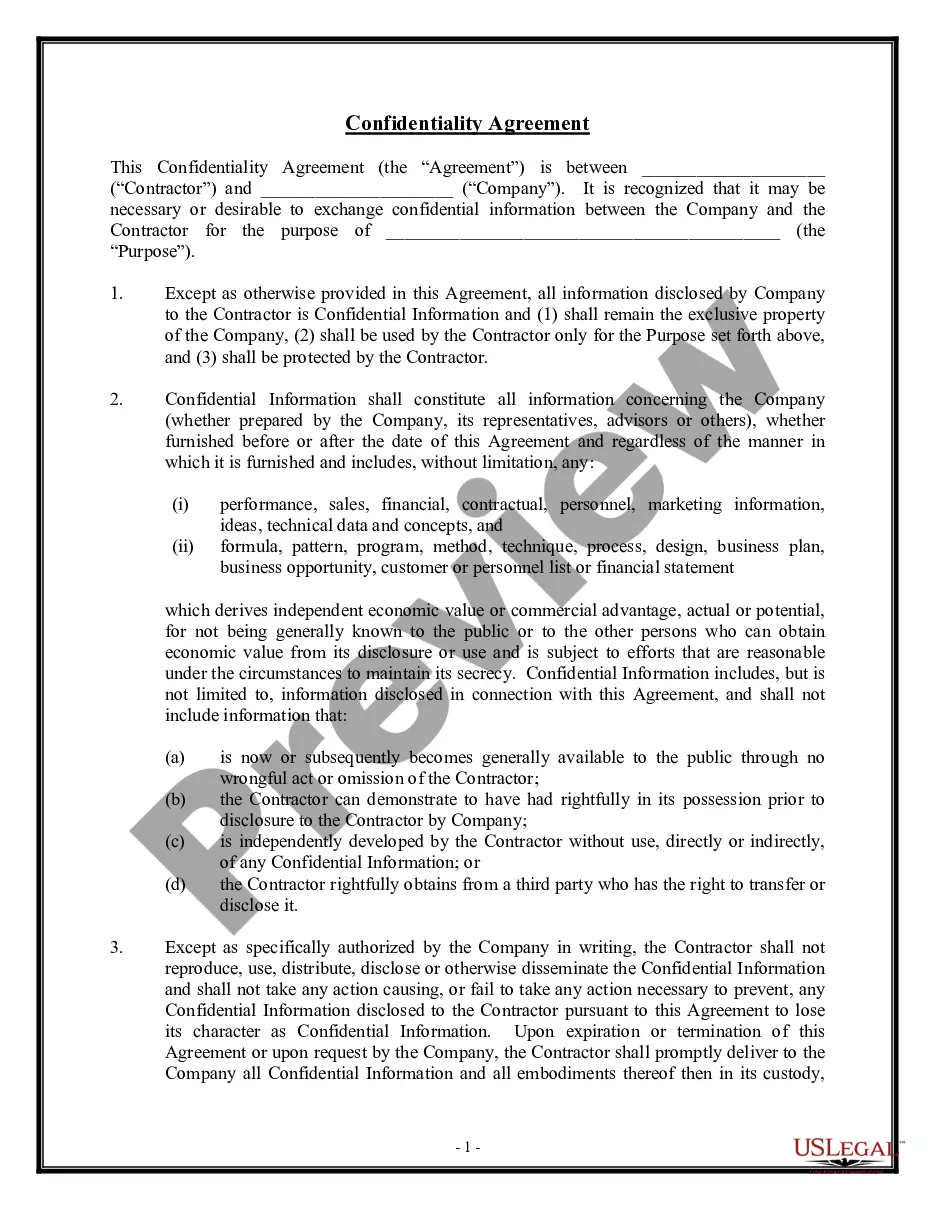
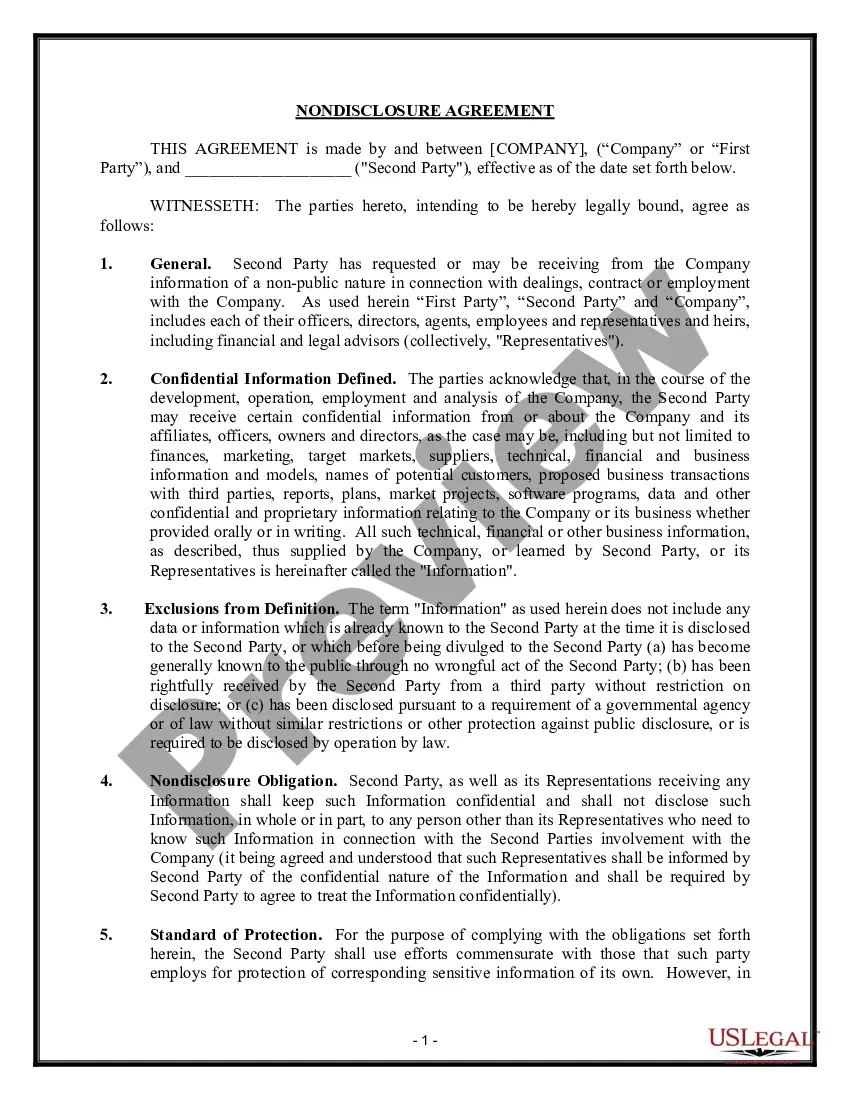
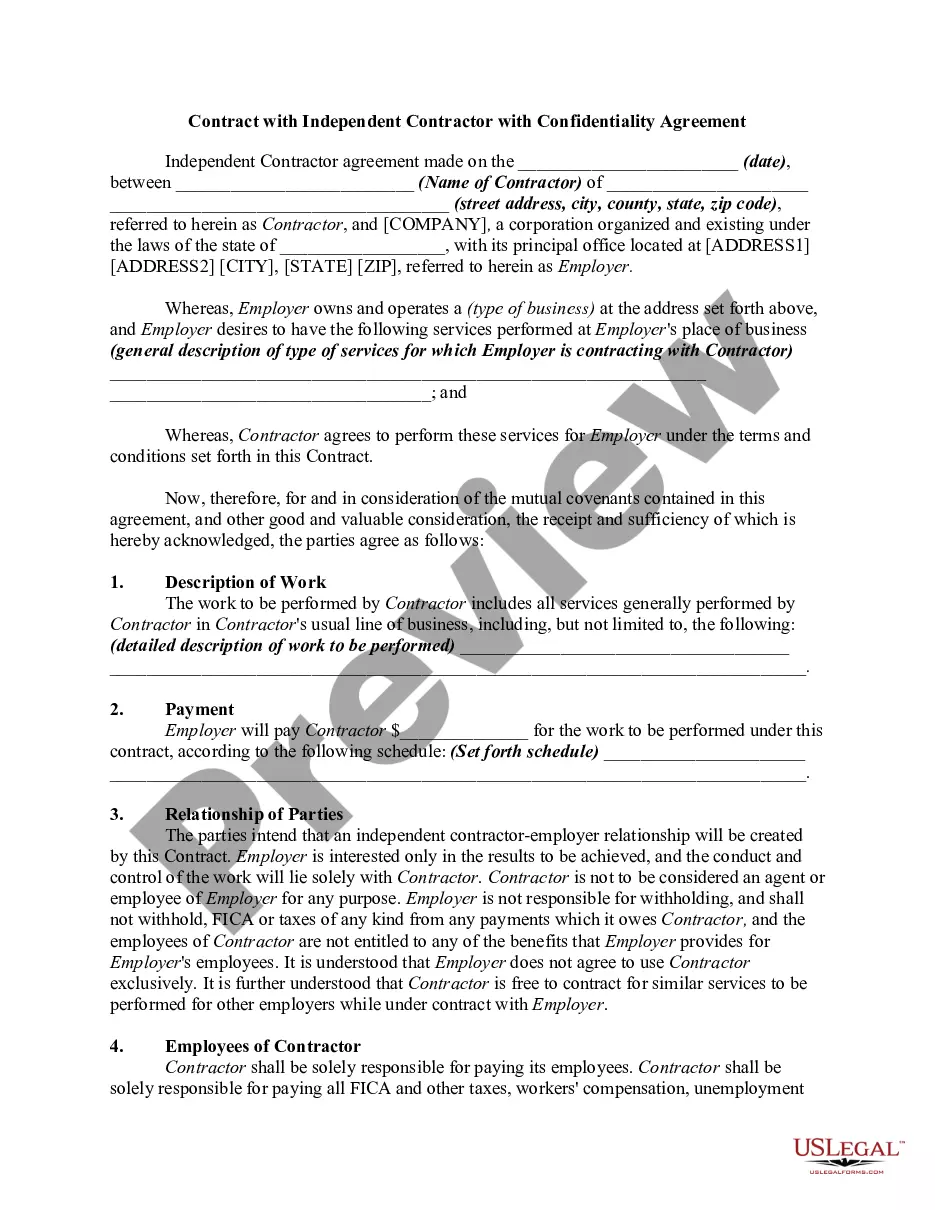
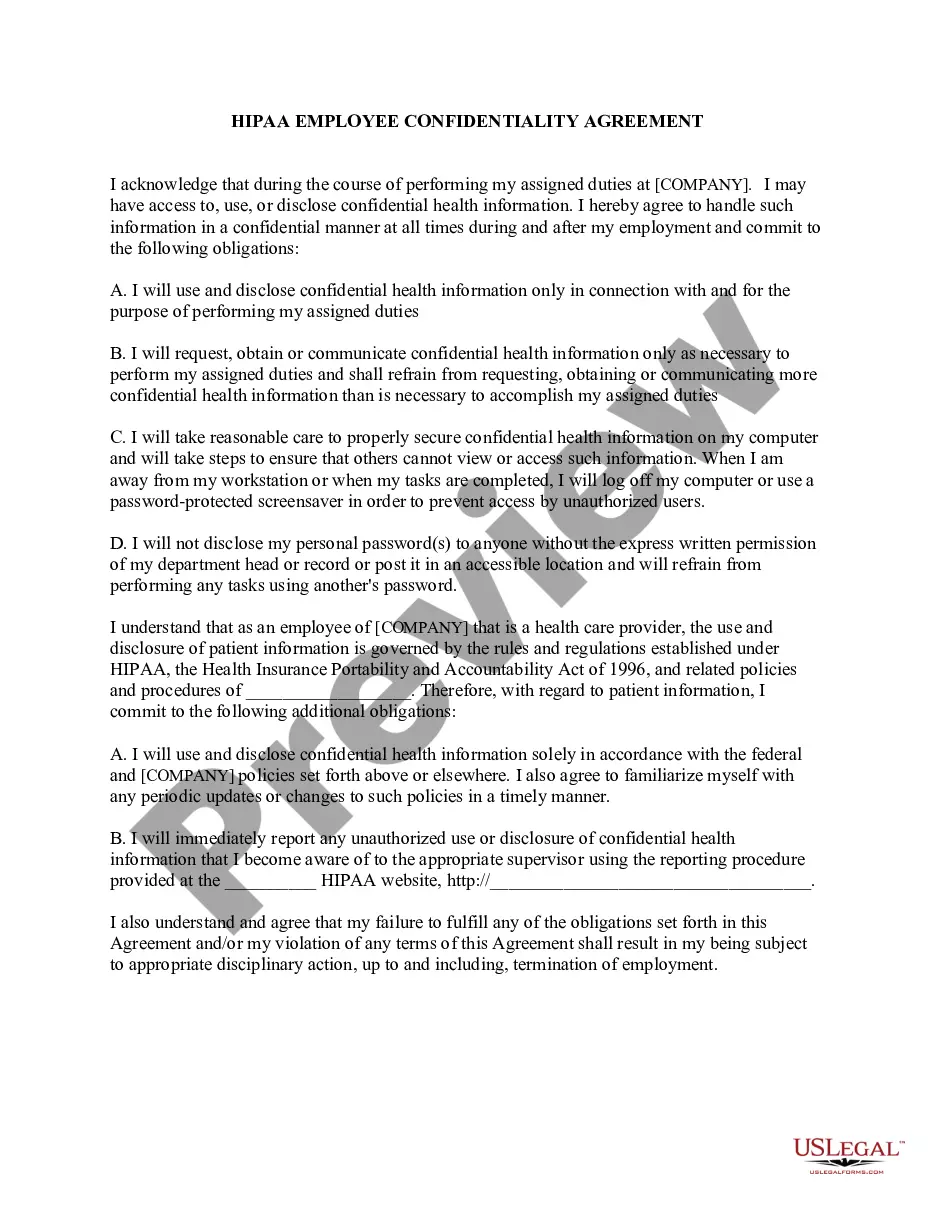
How to fill out Visitor Nondisclosure Agreement?
If you need to finalize, acquire, or print valid document templates, utilize US Legal Forms, the largest array of valid forms available online.
Take advantage of the site's straightforward and user-friendly search to locate the documents you require.
Various templates for business and personal uses are classified by categories and states, or keywords.
Step 4. Once you have found the form you need, select the Purchase now button. Choose the pricing plan you prefer and enter your information to create an account.
Step 5. Complete the transaction. You can use your credit card or PayPal account to finalize the purchase.
- Utilize US Legal Forms to obtain the Delaware Visitor Nondisclosure Agreement with just a few clicks.
- If you are already a US Legal Forms user, Log In to your account and click the Download button to retrieve the Delaware Visitor Nondisclosure Agreement.
- You can also access forms you previously saved in the My documents section of your account.
- If you are using US Legal Forms for the first time, follow the steps below.
- Step 1. Ensure you have selected the form for the correct city/state.
- Step 2. Use the Review option to examine the form's content. Be sure to read the details.
- Step 3. If you are not satisfied with the form, use the Search field at the top of the screen to find other types of your required legal form format.
Form popularity
FAQ
Disclosure Agreement (NDA) and a Mutual NonDisclosure Agreement (MNDA) serve similar purposes but differ in their approach. An NDA typically protects one party's confidential information, while an MNDA offers mutual protection for both parties involved. If you're considering sharing sensitive information, a Delaware Visitor Nondisclosure Agreement can provide clarity and security. Using our platform, you can easily create the appropriate agreement that meets your specific needs.
Yes, you can create your own non-disclosure agreement. To ensure it serves its purpose, make sure to include clear definitions of what constitutes confidential information, the duration of the agreement, and any obligations of the receiving party. Consider using templates from platforms like uslegalforms for a streamlined approach, as these can help you formulate an effective Delaware Visitor Nondisclosure Agreement tailored to your needs.
Creating a legal non-disclosure agreement, such as a Delaware Visitor Nondisclosure Agreement, involves several steps. Start by defining the confidential information you want to protect, then outline the responsibilities of the parties involved. Using templates from resources like uslegalforms can guide you through the process, ensuring your NDA meets legal standards and effectively safeguards your information.
In general, a Delaware Visitor Nondisclosure Agreement does not need to be notarized to be legally binding. However, notarization can add an extra layer of validation, especially in more complex agreements. If you choose to notarize your NDA, it can help establish credibility and offer further protection in case of disputes.
Yes, you can write a non-disclosure agreement (NDA) for yourself. A well-crafted Delaware Visitor Nondisclosure Agreement can protect your sensitive information when discussing potential business opportunities. While you can create one on your own, using templates from a trusted source, like uslegalforms, can ensure that you cover all necessary legal elements, making it easier for you.
The NDA for visitors is designed to protect sensitive information disclosed to individuals visiting a company or organization. This agreement ensures that visitors, such as business partners or consultants, do not share confidential information with unauthorized third parties. Utilizing a Delaware Visitor Nondisclosure Agreement helps maintain confidentiality and safeguards your business interests.
Yes, nondisclosure agreements are generally enforceable in Delaware as long as they meet specific criteria. The Delaware Visitor Nondisclosure Agreement must clearly outline the confidential information, the obligations of the parties, and the terms of enforcement. It is advisable to consult legal counsel to ensure your NDA is compliant with state laws.
An example of a nondisclosure agreement violation occurs when one party discloses the confidential information to a third party without consent. For instance, if a visitor shares company secrets they learned while under a Delaware Visitor Nondisclosure Agreement, they could face legal repercussions. Such violations undermine trust and can result in significant legal consequences.
Filling in a nondisclosure agreement requires you to enter specific information into designated fields. Start with the parties' names, then clarify the confidential information that is being shared. Also, include provisions regarding the duration of the confidentiality obligation, and be sure to sign and date the agreement to make it legally binding.
The three types of nondisclosure agreements are unilateral, bilateral, and multilateral NDAs. A unilateral NDA involves one party disclosing information, while a bilateral NDA is for two parties sharing information reciprocally. Multilateral NDAs involve three or more parties and are often used when multiple entities are involved in a business relationship.