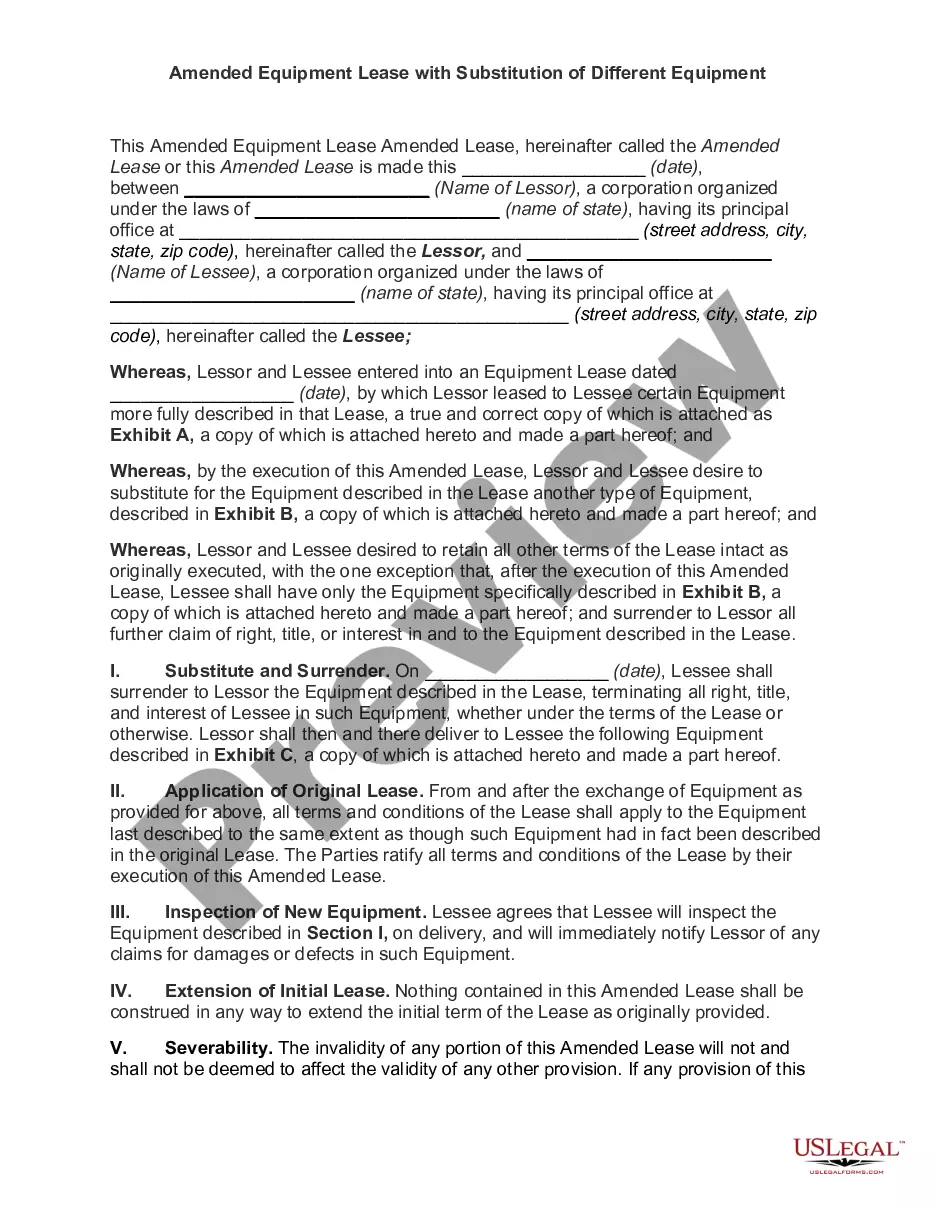
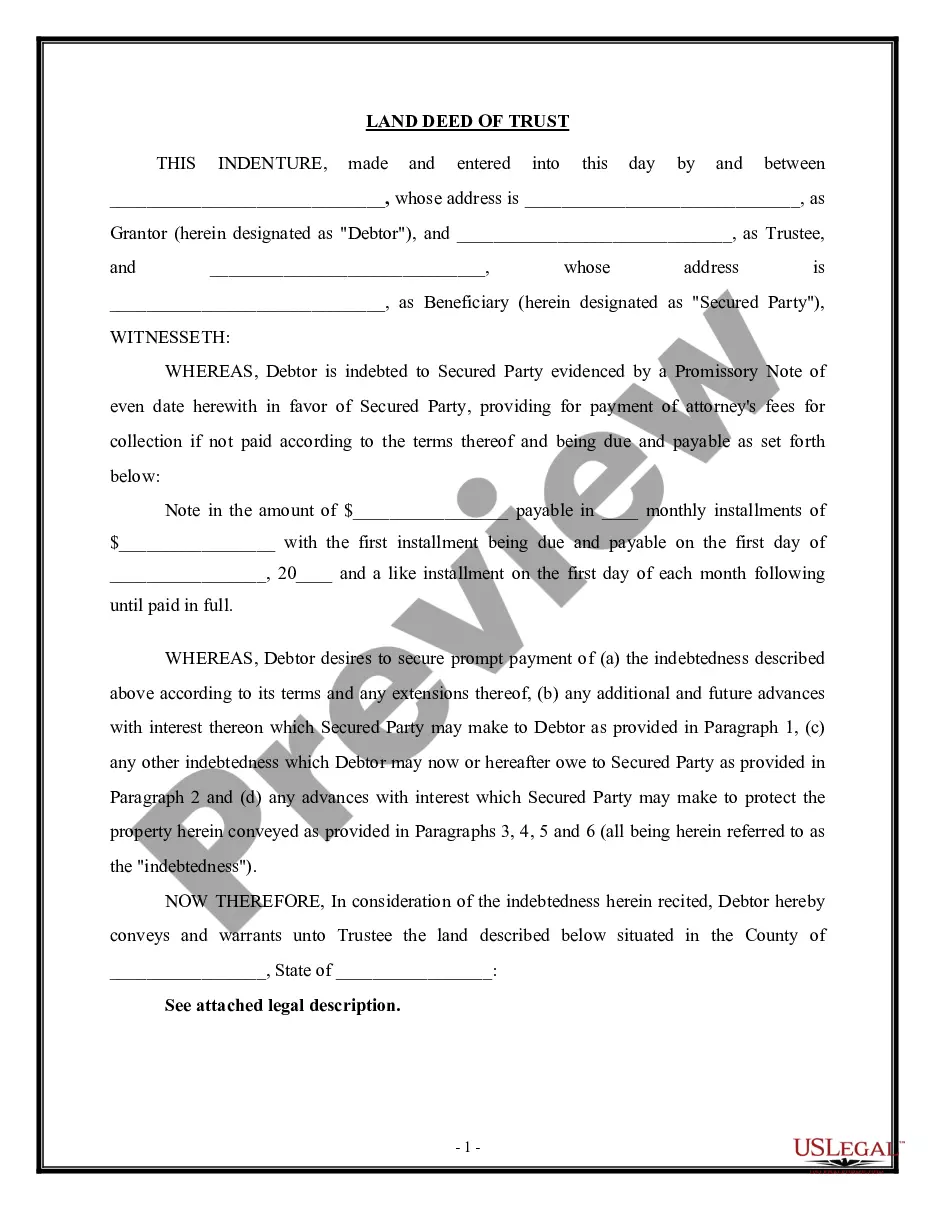
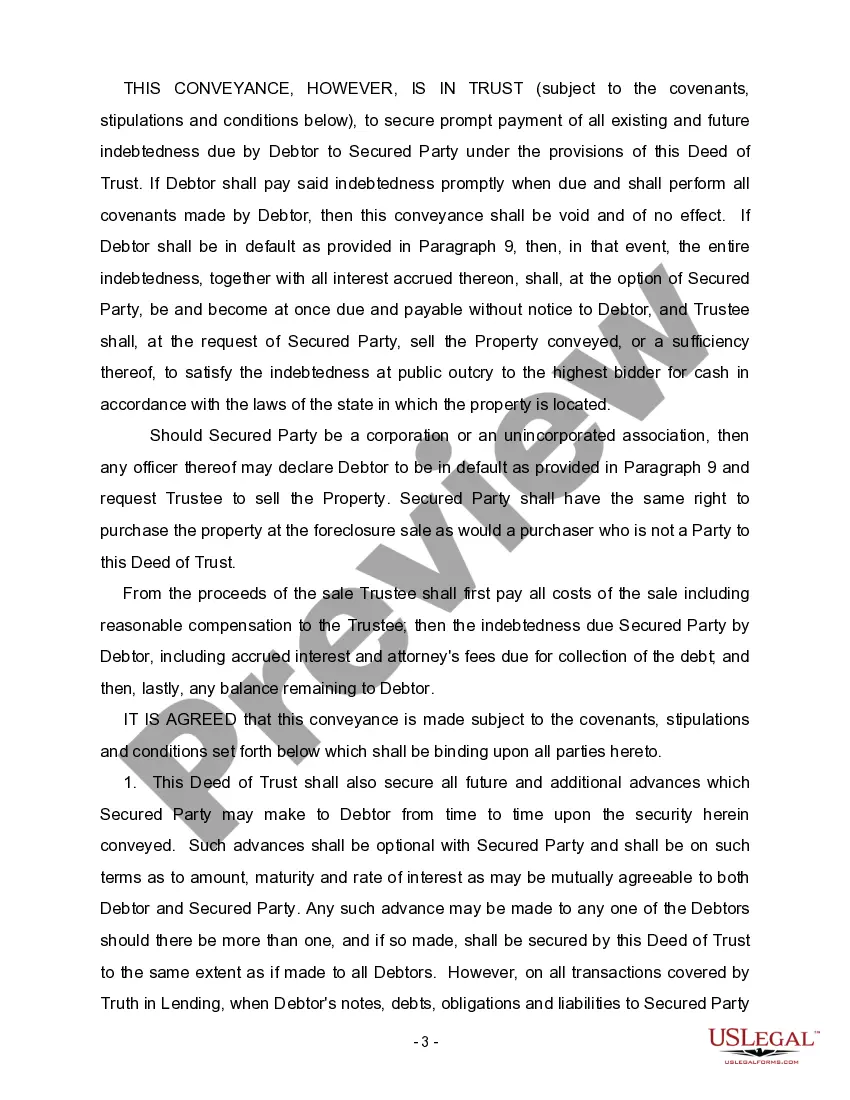
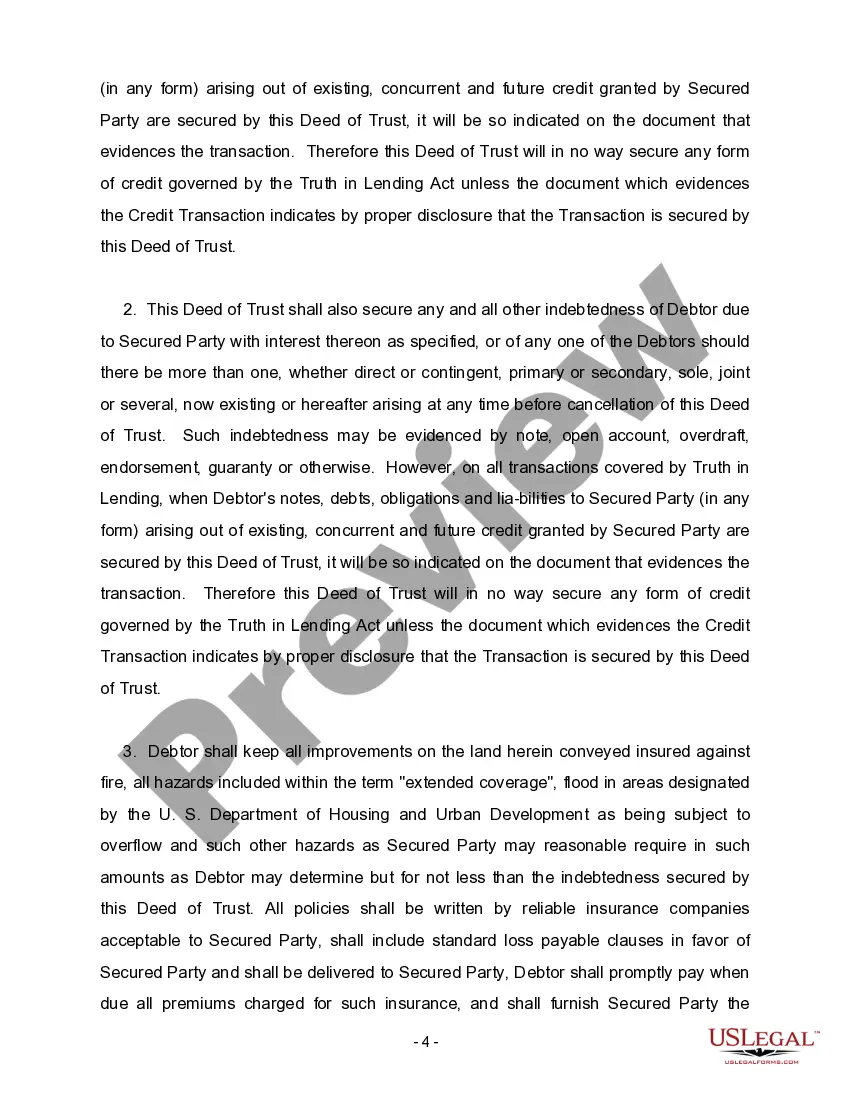
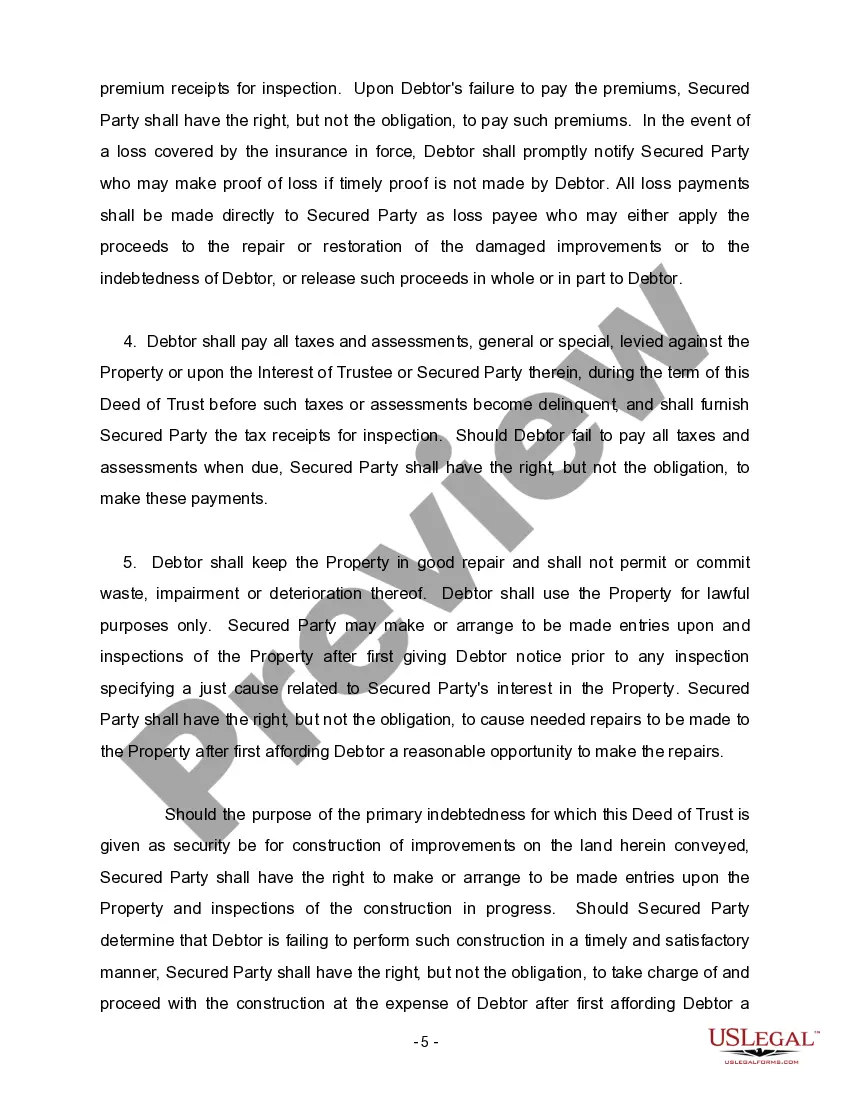
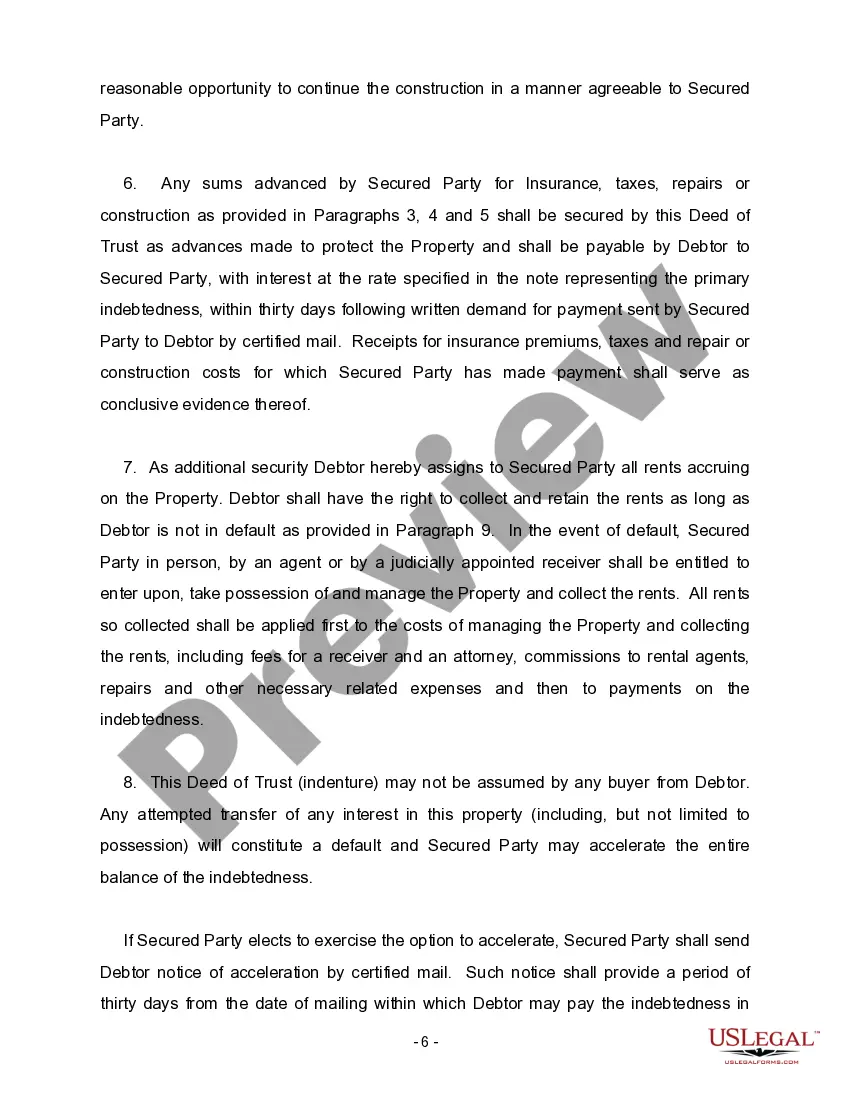
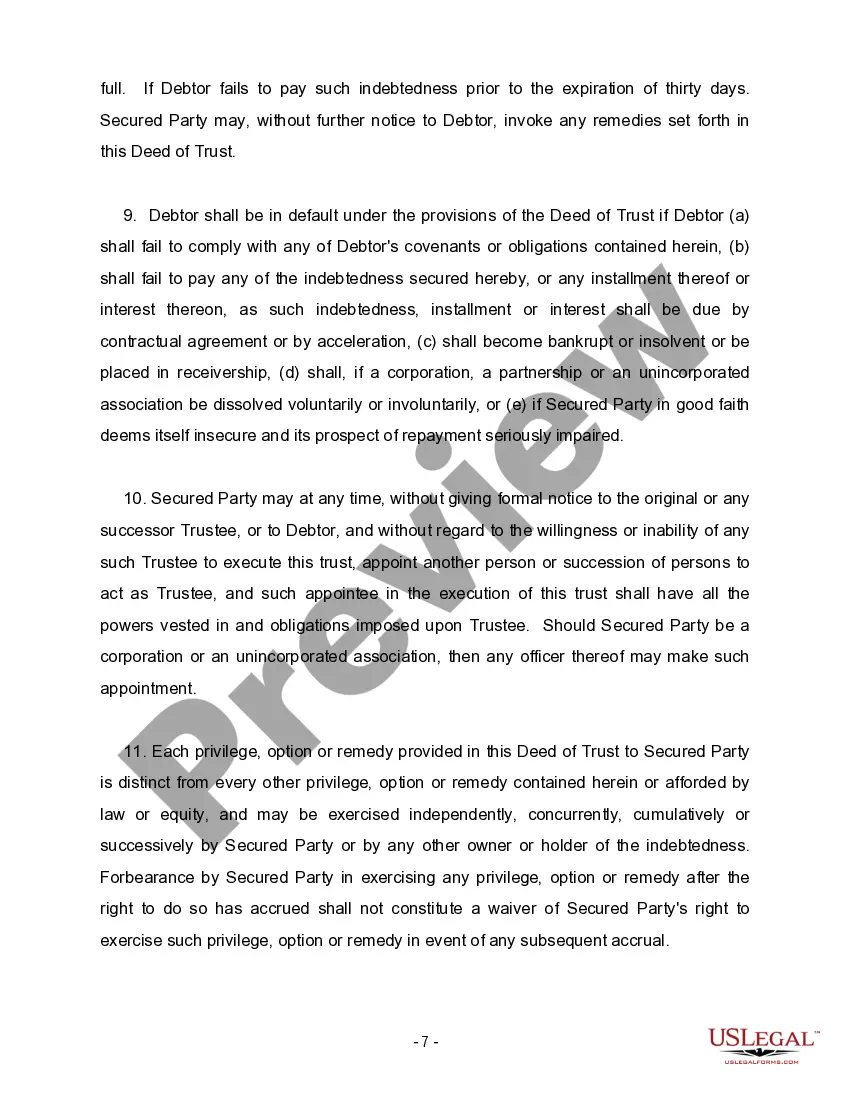
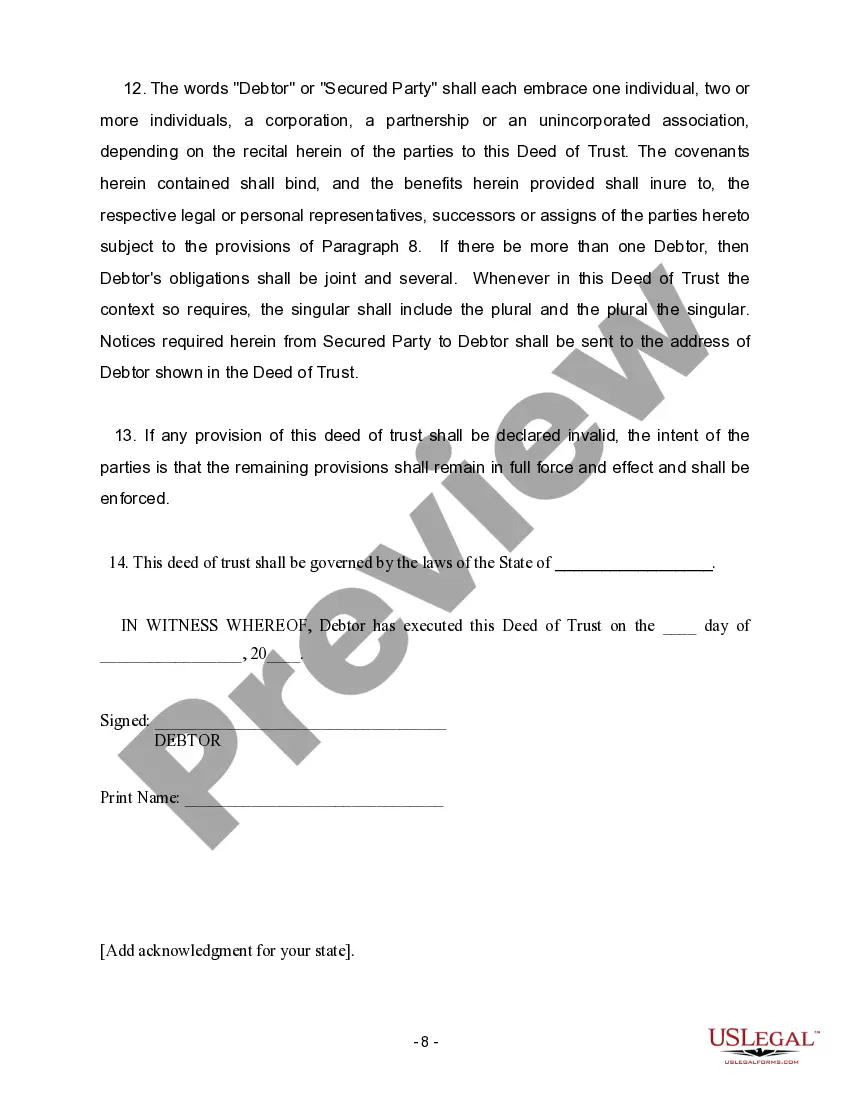
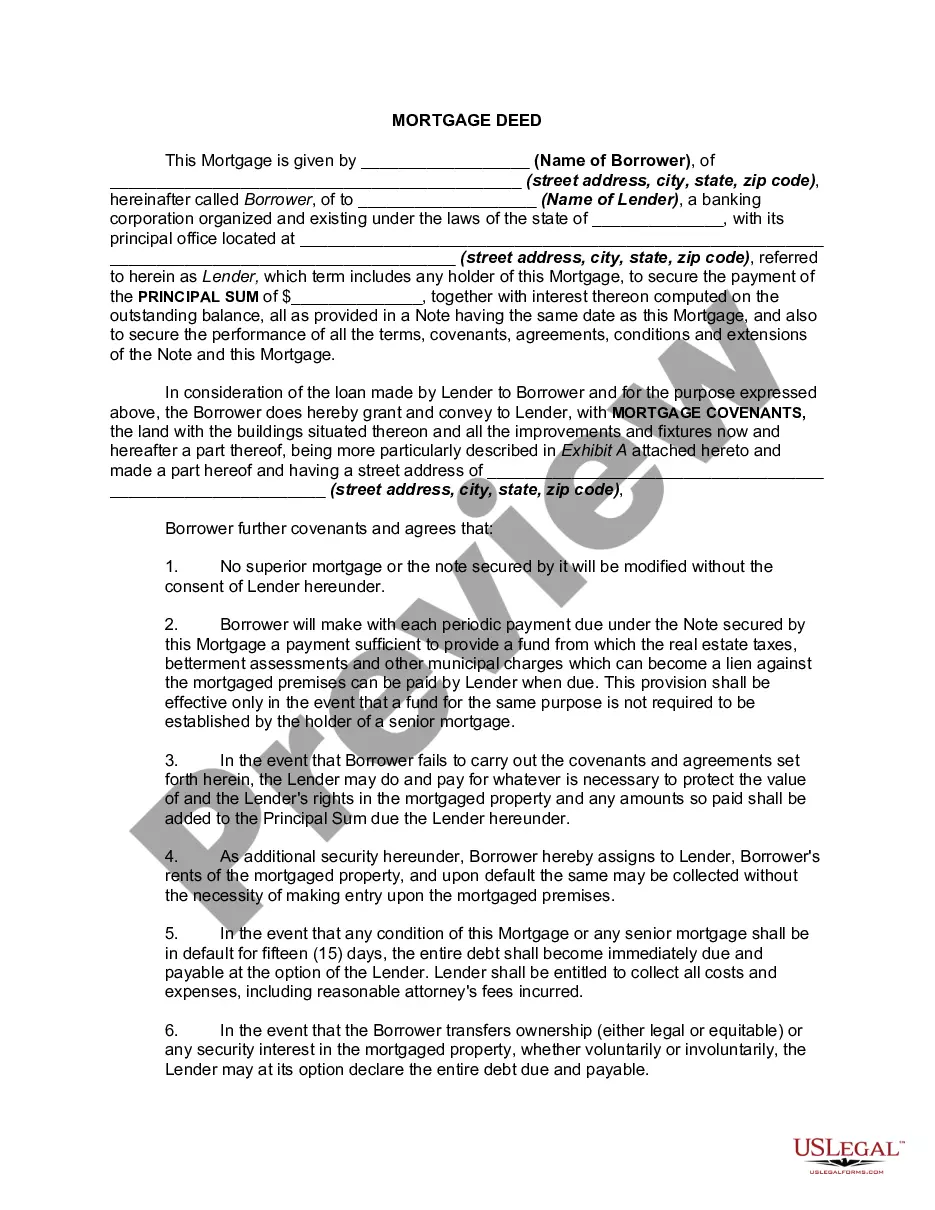
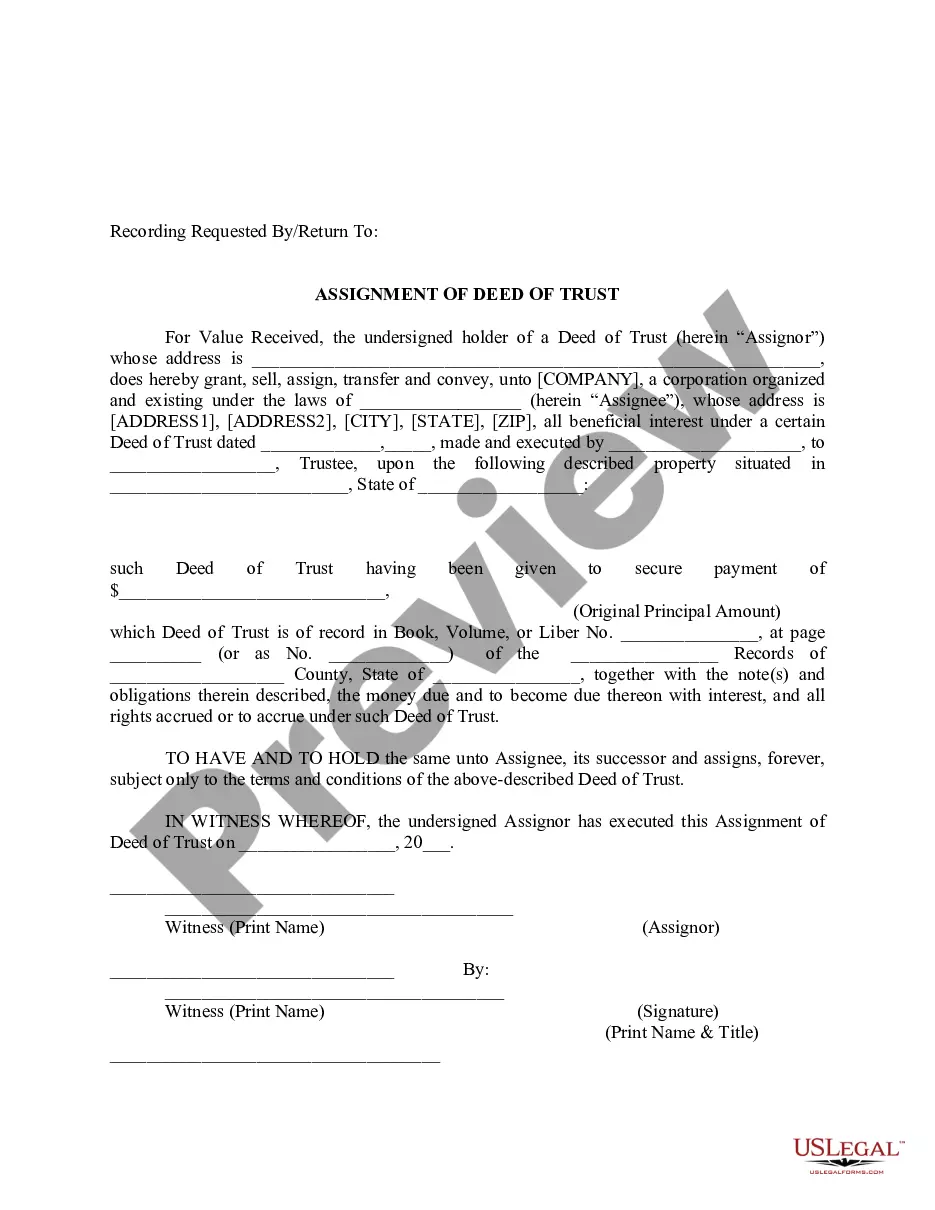
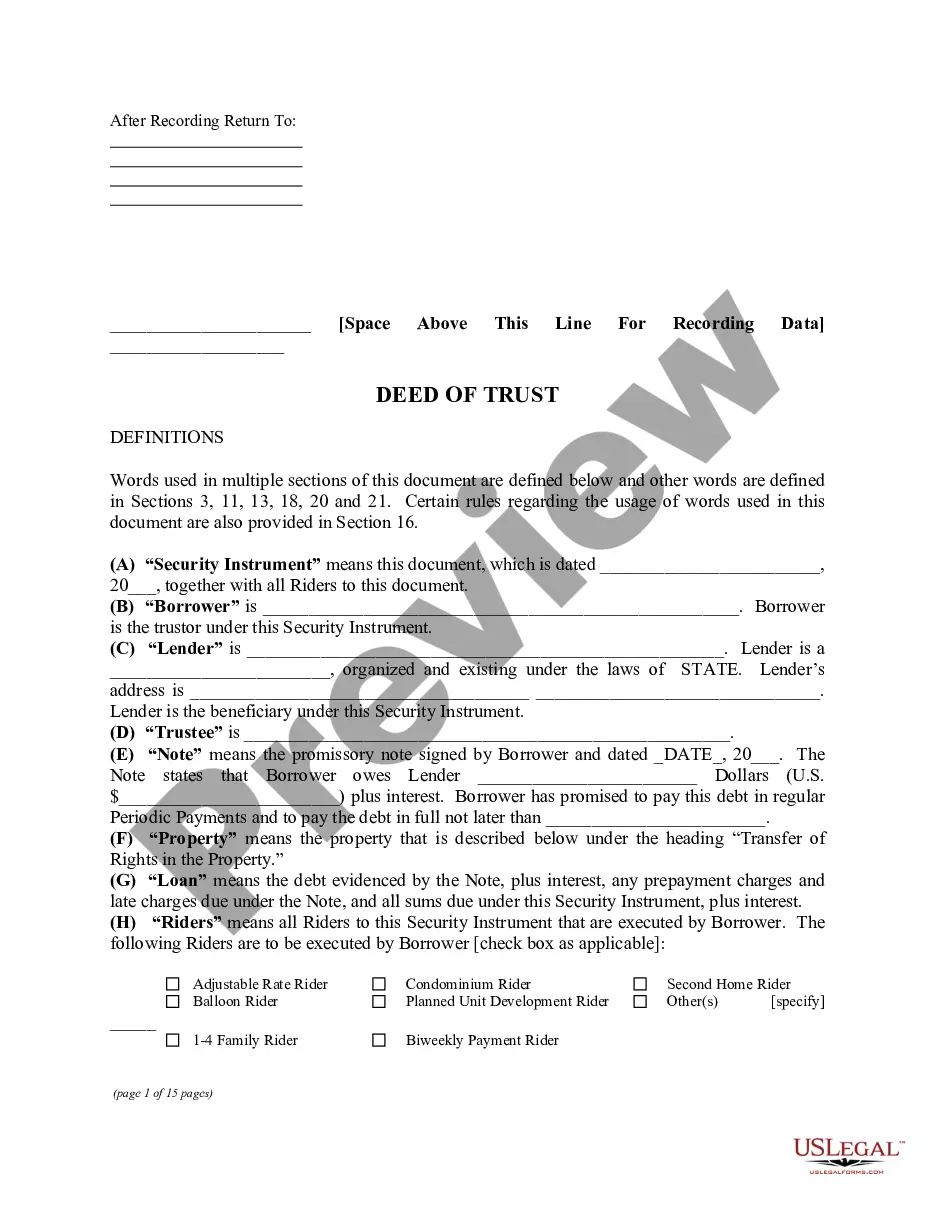
In consideration of a debt owed to the trustee, debtor conveys and warrants to trustee a certain piece of property described in the deed of trust.
Delaware Deed of Trust - Multistate
State:
Multi-State
Control #:
US-00486
Format:
Word;
Rich Text
Instant download
Description
Free preview



How to fill out Deed Of Trust - Multistate?
US Legal Forms - one of the most prominent collections of legal documents in the United States - provides a broad selection of legal form templates that you can obtain or create. By utilizing the website, you can discover thousands of forms for business and personal purposes, categorized by types, states, or keywords.
You can access the latest versions of forms such as the Delaware Deed of Trust - Multistate in just a few minutes. If you already hold a subscription, Log In and obtain the Delaware Deed of Trust - Multistate from the US Legal Forms library. The Download button will be visible on every form you view. You can access all previously downloaded forms in the My documents section of your account.
To use US Legal Forms for the first time, here are simple guidelines to help you get started: Ensure you have selected the correct form for your area/state. Click the Review button to analyze the form's content. Check the form description to ensure you have chosen the right form. If the form does not meet your requirements, utilize the Search area at the top of the screen to find one that does. If you are satisfied with the form, confirm your choice by clicking the Buy now button. Then, select the pricing plan you prefer and provide your information to register for the account.
- Complete the transaction. Use your Visa or Mastercard or PayPal account to finalize the transaction.
- Select the format and download the form to your device.
- Make modifications. Fill out, edit, print, and sign the downloaded Delaware Deed of Trust - Multistate.
- Every template you added to your account has no expiration date and is yours indefinitely. Therefore, to obtain or create another copy, simply navigate to the My documents section and click on the form you need.
- Access the Delaware Deed of Trust - Multistate with US Legal Forms, one of the most extensive collections of legal document templates.
- Utilize a vast array of professional and state-specific templates that cater to your business or personal needs and requirements.
Form popularity
FAQ
Delaware is the leading trust jurisdiction in the United States offering advantages that include attractive tax laws, investment control and flexibility, asset protection, modification/decanting provisions and confidentiality.
Delaware Statutory Trusts (DSTs) typically offer a cash-on-cash return of 5-9% per year, with the potential for additional appreciation.
However, they also have many potential drawbacks, including illiquidity, fees, lack of control and few opportunities for early exit. Investors should carefully weigh the pros and cons of DSTs to determine how this investment vehicle aligns with their investment strategies.
§ 3807. Trustee in State; registered agent. (a) Every statutory trust shall at all times have at least 1 trustee which, in the case of a natural person, shall be a person who is a resident of this State or which, in all other cases, has its principal place of business in this State.
The Deferred Sales Trust and the Delaware statutory trust are two very different investment strategies. Both methods help the seller defer paying capital gains taxes, but they do so in very distinct ways. Despite their differences, they are often confused because they share the same abbreviation: DST.
Delaware Statutory Trust Cons In A 1031 Exchange This lack of liquidity could be a Delaware Statutory Trust Con for some people. In order to have a successful portfolio, the investment timeline is typically 10 years. If you do not have a long term investment horizon, this could be a Delaware Statutory Trust Con.
Like all real estate investments, investing in Delaware Statutory Trusts involve many of the same risks, including potential lack of return and loss of principal. As long-term, income-focused investments, DST performance is largely dependent upon the tenants' ability to pay rent.
As a real estate investor, there are many pros and cons to consider when investing in Delaware Statutory Trusts (DSTs). The advantages of DSTs include access to larger assets, tax benefits, and lower risk. They are often great passive investment options, too. But, DSTs are not for everyone.