Delaware Termination of Assignment of Rents
Understanding this form
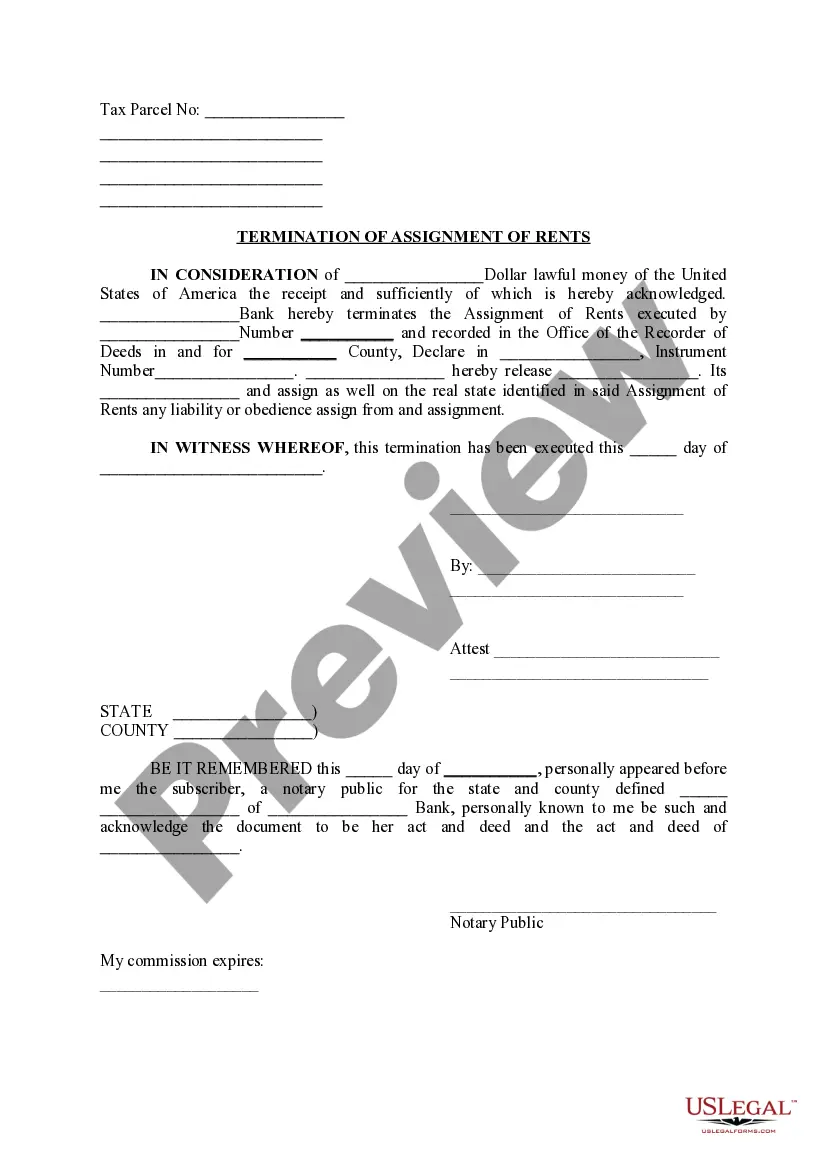
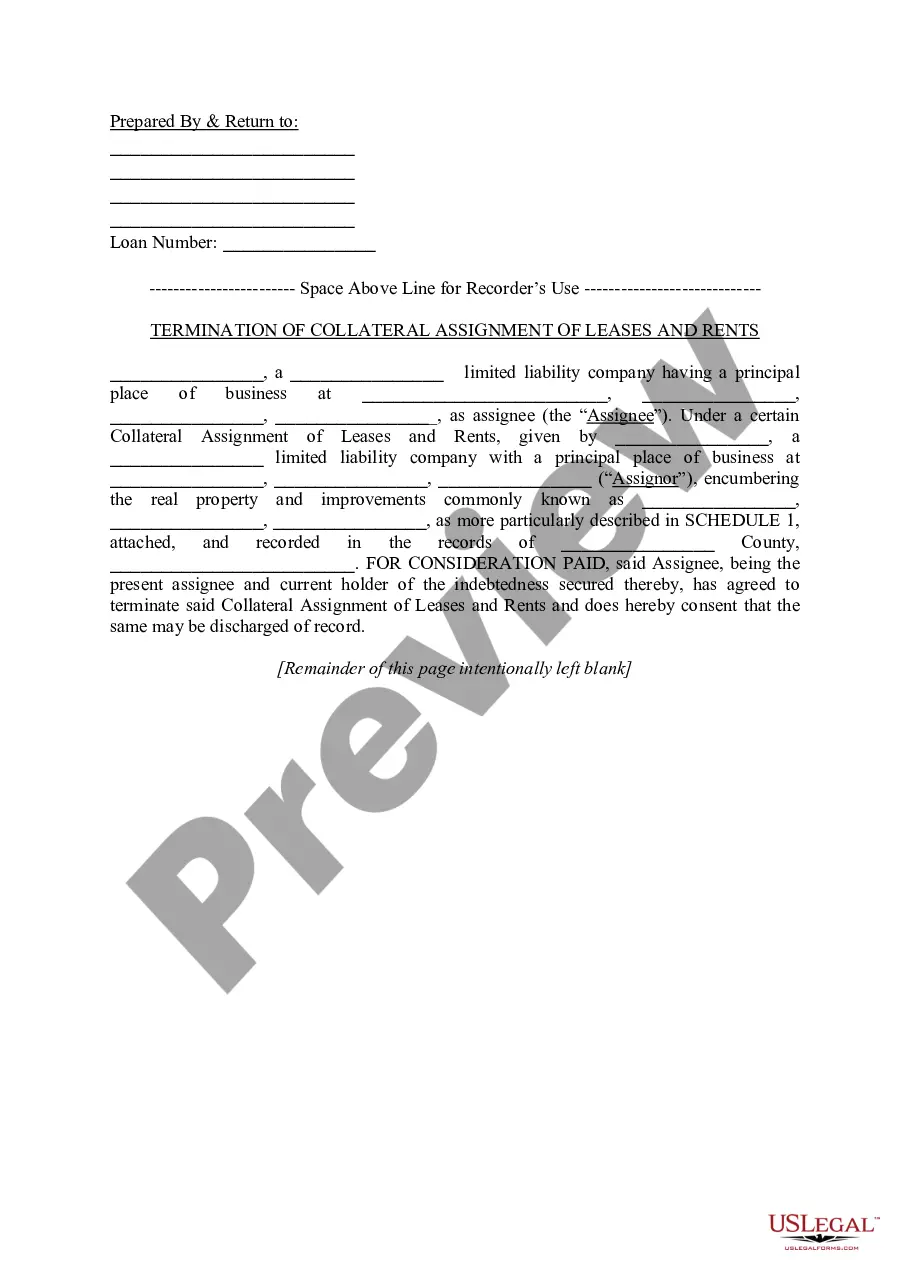
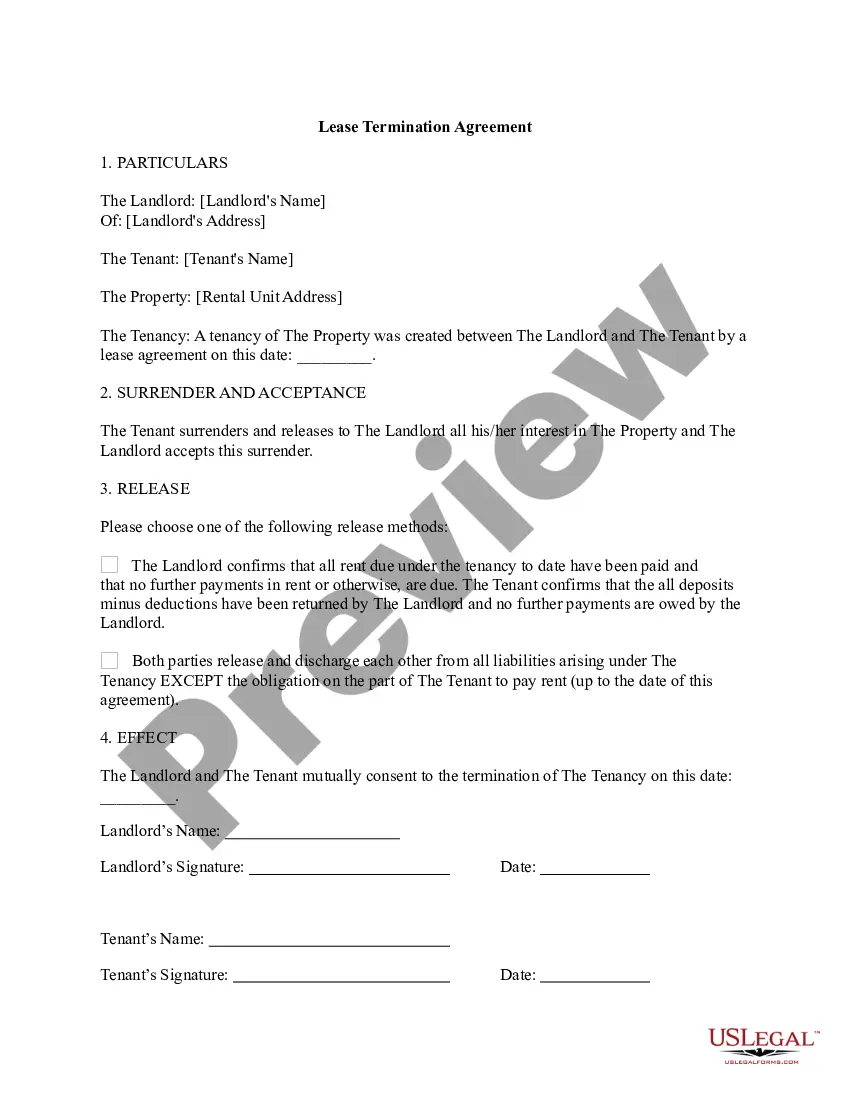
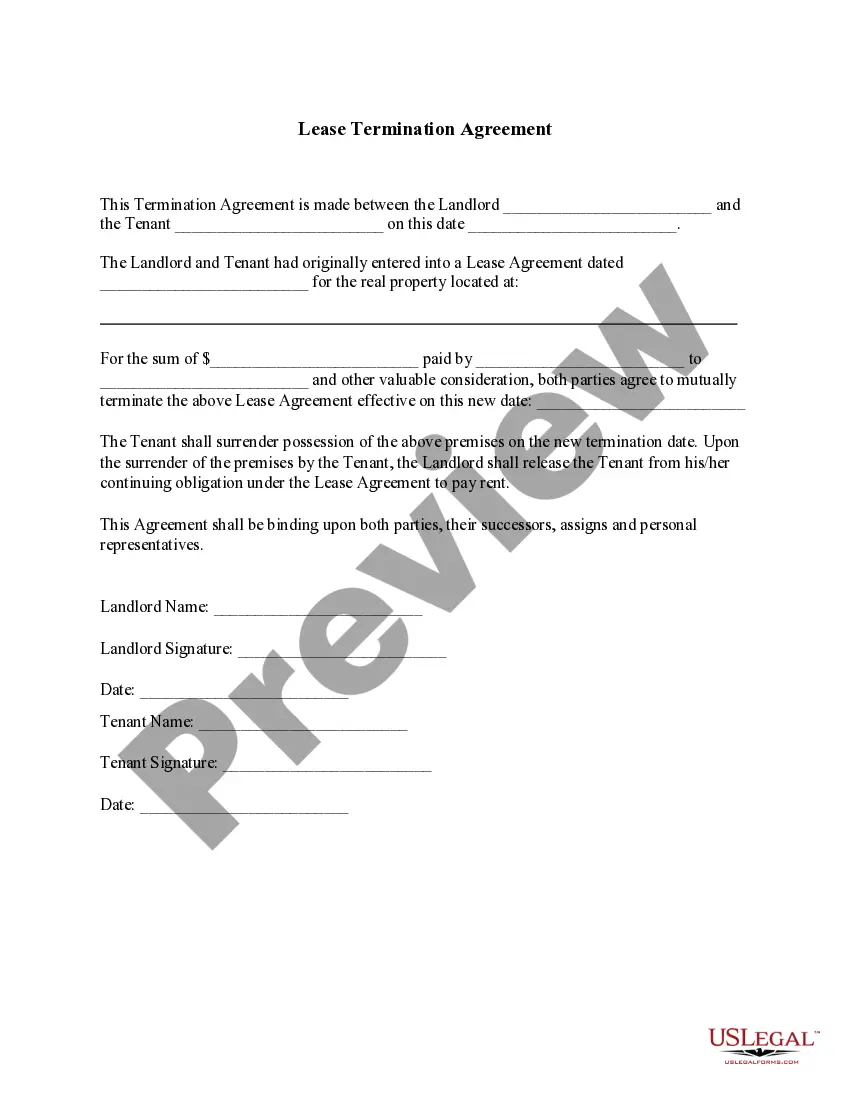
The Termination of Assignment of Rents form is a legal document used to formally end an assignment of leases, rents, and profits. This form is essential when the parties involved agree to release a property from the obligations outlined in the original assignment. Unlike similar agreements, this form specifically addresses the termination aspect and includes acknowledgment of any necessary payments made to the assignee, making it distinct from full assignment agreements or lease agreements.
What’s included in this form
- Tax Parcel Number: Identifies the property associated with the assignment.
- Consideration Amount: States the monetary amount acknowledged as part of the termination.
- Bank Details: Specifies the financial institution involved in the transaction.
- Execution Date: Indicates the date the termination is executed.
- Notary Acknowledgment: Provides proof of identity and that the termination was signed voluntarily.
When to use this form
This form is used when the original parties to an assignment of rents wish to terminate that agreement. Common scenarios include situations where a property is sold, the lease is renegotiated, or both parties wish to free themselves from previous obligations. If any payment conditions outlined in the original assignment have been fulfilled, this form should be executed to legally document the termination.
Intended users of this form
- Property owners who need to release an assignment of rents.
- Assignees who have received payment and need to confirm termination.
- Real estate attorneys representing clients involved in lease agreements.
How to prepare this document
- Identify the parties involved and include their names and addresses.
- Enter the Tax Parcel Number corresponding to the property.
- Specify the amount of consideration being acknowledged.
- Include the details of the bank involved in the process.
- Fill in the execution date and ensure all parties sign the document.
- Have a notary public witness and acknowledge the signatures to finalize the form.
Notarization requirements for this form
Yes, this form must be notarized to be legally valid. This ensures that the signatures are authenticated and the document is executed properly. US Legal Forms offers an integrated online notarization service, making it simple and secure to get this document notarized at any time without having to travel.
Get your form ready online
Our built-in tools help you complete, sign, share, and store your documents in one place.
Make edits, fill in missing information, and update formatting in US Legal Forms—just like you would in MS Word.
Download a copy, print it, send it by email, or mail it via USPS—whatever works best for your next step.
Sign and collect signatures with our SignNow integration. Send to multiple recipients, set reminders, and more. Go Premium to unlock E-Sign.
If this form requires notarization, complete it online through a secure video call—no need to meet a notary in person or wait for an appointment.
We protect your documents and personal data by following strict security and privacy standards.

Make edits, fill in missing information, and update formatting in US Legal Forms—just like you would in MS Word.

Download a copy, print it, send it by email, or mail it via USPS—whatever works best for your next step.

Sign and collect signatures with our SignNow integration. Send to multiple recipients, set reminders, and more. Go Premium to unlock E-Sign.

If this form requires notarization, complete it online through a secure video call—no need to meet a notary in person or wait for an appointment.

We protect your documents and personal data by following strict security and privacy standards.
Common mistakes
- Failing to enter the correct Tax Parcel Number.
- Leaving out the consideration amount can make the document invalid.
- Not obtaining necessary signatures from all parties involved.
- Skipping the notarization step, which could invalidate the termination.
Benefits of completing this form online
- Convenience of downloading and completing the form from anywhere.
- Editability allows users to customize the form to their specific needs.
- Reliable templates drafted by licensed attorneys ensure compliance.
Main things to remember
- The Termination of Assignment of Rents form is crucial for ending rental agreements legally.
- Ensure all required fields are completed accurately to avoid errors.
- Notarization is necessary for legal validity of the document.
Looking for another form?
Form popularity
FAQ
Writing a letter for a Delaware Termination of Assignment of Rents requires clear communication. Start with your name, address, and date. Include the tenant’s information and a straightforward statement regarding the termination. Make sure to specify the reason for termination, relevant dates, and any actions needed from the tenant.
Section 5314 of the Delaware Residential Landlord Tenant Code deals with the rights and responsibilities of landlords regarding the termination of rental agreements. This section emphasizes the conditions under which a landlord can terminate a lease and highlights important aspects of tenant protection. Familiarity with this section can enhance your understanding of the Delaware Termination of Assignment of Rents. Utilizing platforms like USLegalForms can guide you through the necessary documents for a smooth process.
Section 5514 of the Delaware landlord/tenant code addresses the procedures and requirements for the termination of an assignment of rents. This section outlines the obligations of landlords and tenants involved in such agreements. Understanding this section is crucial for anyone navigating the Delaware Termination of Assignment of Rents process. It is advisable to consult legal resources or professionals to ensure compliance with all requirements.
A release of assignment refers to the cancellation of a legal assignment, such as a lease or assignment of rents. This document effectively restores the original rights to the assignor, allowing them to regain control. It is particularly relevant in real estate situations, where clarity about such transfers is necessary. For individuals navigating the Delaware termination of assignment of rents, seeking legal guidance can be beneficial in ensuring the proper execution of a release of assignment.
To terminate a lease in Delaware, you must follow the terms specified in your lease agreement, which usually includes providing proper notice. Depending on the lease type, different notice periods may apply. If your lease involves any assignments of rents, it's vital to understand how these affect the termination process. USLegalForms offers valuable resources to help you navigate the Delaware termination of assignment of rents and lease terminations.
An assignment of lease allows a tenant to transfer their lease obligations to another party, effectively handing over their rights and responsibilities. This provides flexibility for tenants who may need to move or cannot fulfill their lease terms. In Delaware, it's important to comply with local laws concerning lease assignments. This relates closely to understanding the Delaware termination of assignment of rents, ensuring that all aspects of lease agreements are managed effectively.
A release of assignment of rents is a legal document that nullifies a previously established assignment of rents. This typically occurs when the transfer of rental income rights is no longer necessary or desired. By executing this release, the landlord reclaims their rights to collect rent directly from the tenant. Understanding this process is essential, especially when dealing with the Delaware termination of assignment of rents.
To terminate a rental agreement in Delaware, the landlord or tenant must follow the terms outlined in the lease. This often involves providing written notice to the other party, specifying the intention to end the lease. If the lease includes an assignment of rents, you should ensure that this provision is addressed properly. For guidance on managing the Delaware termination of assignment of rents, consider using platforms like USLegalForms.
In Delaware, a landlord typically must provide a tenant with a 60-day notice to vacate the premises for a lease termination. However, this can vary depending on specific lease agreements and circumstances. If the tenant fails to leave, the landlord may pursue legal action to initiate an eviction process. Understanding the Delaware termination of assignment of rents is crucial for both landlords and tenants to navigate this process smoothly.