Delaware Acknowledgment for Attesting
Understanding this form
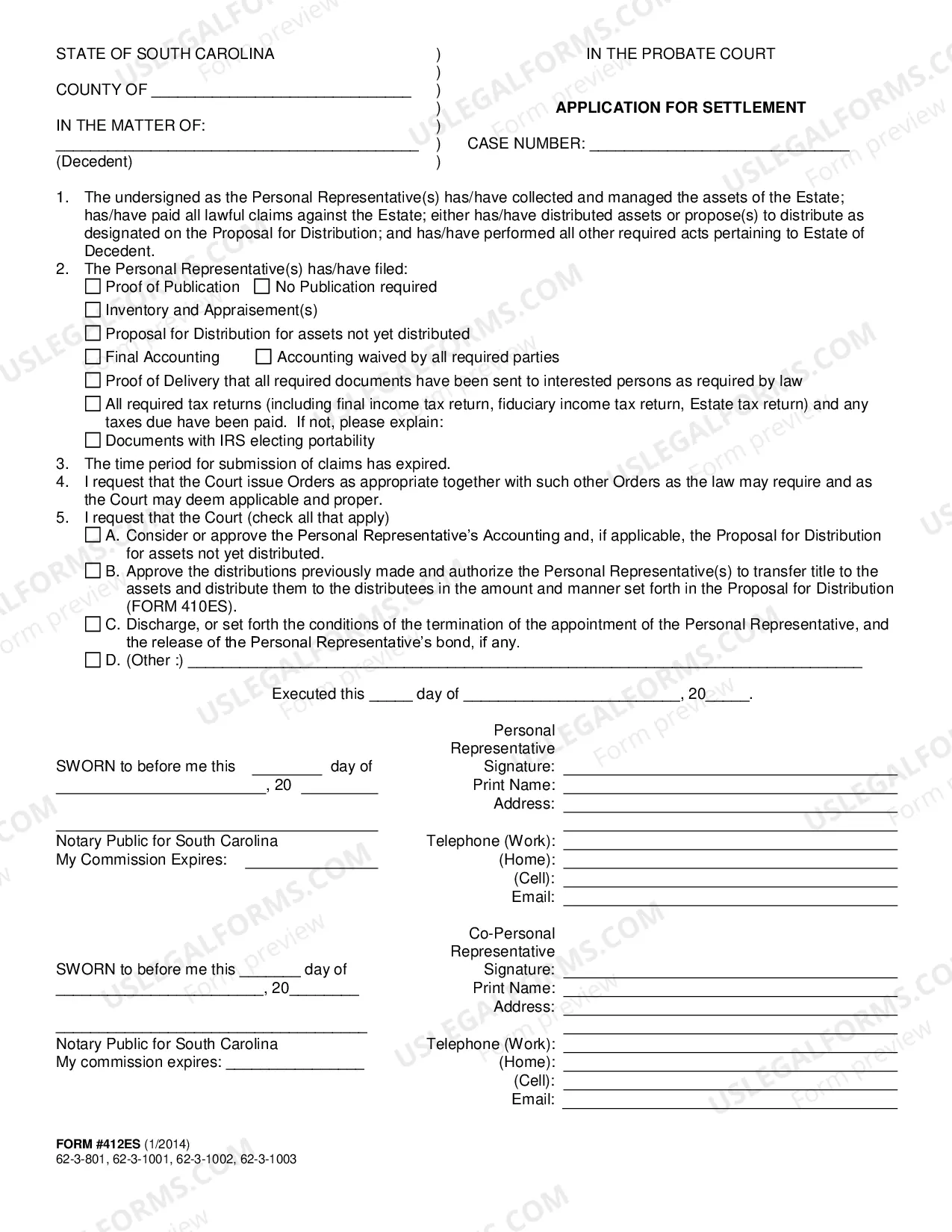
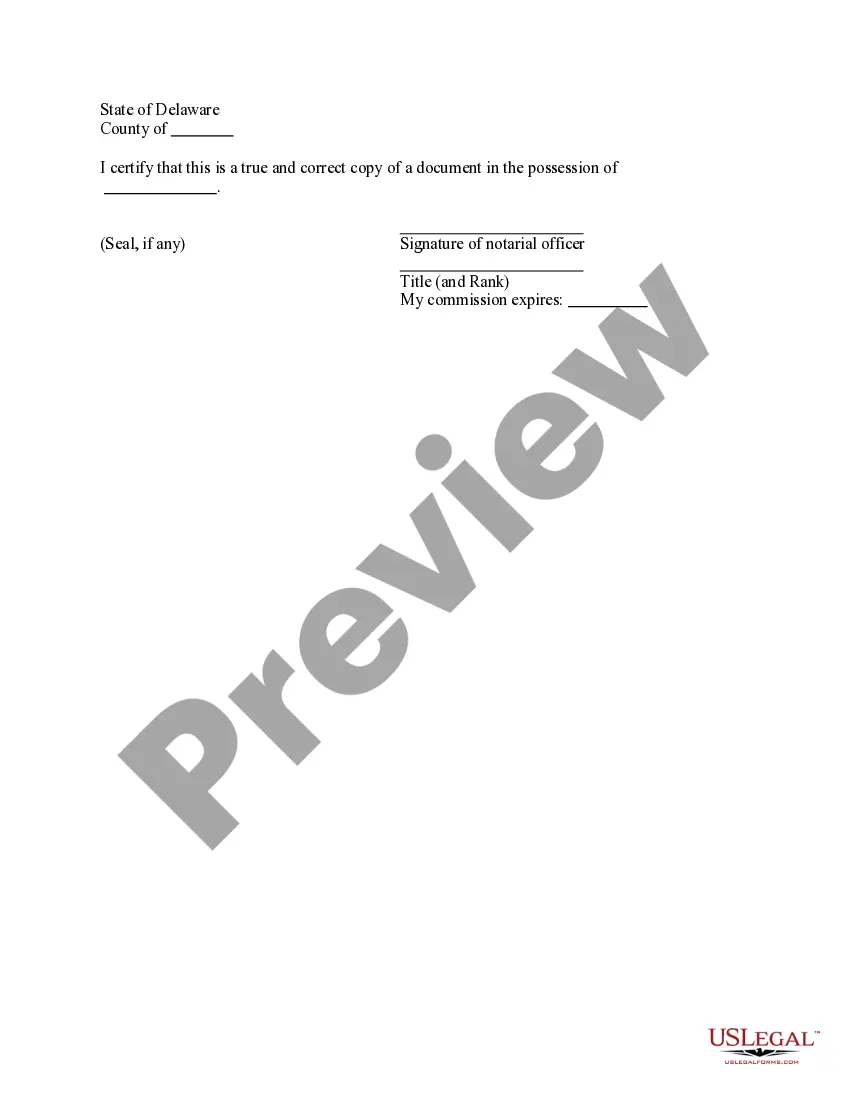
The Acknowledgment for Attesting is a legal document used to affirm the authenticity of a specific document or signature. This form is essential in situations where formal verification of identity and consent is required, setting it apart from other standard acknowledgment forms which may not include attestation. It ensures that the involved parties are legally recognized and that the attached documents hold valid legal weight.
Key components of this form
- Certification statement affirming the document's authenticity
- Signature block for the notarial officer
- Details regarding the notary's commission, including expiration
- Space for the official seal, if required
- Identification of the affiant and relevant document

When to use this document
This form is typically used when an individual needs to provide a formal acknowledgment of a document's authenticity in legal or official matters. Scenarios include signing contracts, real estate transactions, and court submissions where verification of identity and acknowledgment of specific documents are crucial to the process.
Who should use this form
This form is intended for:
- Individuals who need to authenticate signatures for legal documents
- Notaries public who are involved in attesting documents
- Parties engaged in contracts or agreements requiring formal acknowledgment
- Attorneys and legal representatives managing documentation for clients
How to complete this form
- Identify the parties involved and their relationship to the document.
- Specify the document being acknowledged by including titles and identifying features.
- Review the certification statement carefully and make sure it accurately reflects the facts.
- Ensure the notarial officer completes their signature and includes their title.
- Add the official seal of the notary in the designated area, if required.
Notarization guidance
This form needs to be notarized to ensure legal validity. US Legal Forms provides secure online notarization powered by Notarize, allowing you to complete the process through a verified video call, available anytime.
Get your form ready online
Our built-in tools help you complete, sign, share, and store your documents in one place.
Make edits, fill in missing information, and update formatting in US Legal Forms—just like you would in MS Word.
Download a copy, print it, send it by email, or mail it via USPS—whatever works best for your next step.
Sign and collect signatures with our SignNow integration. Send to multiple recipients, set reminders, and more. Go Premium to unlock E-Sign.
If this form requires notarization, complete it online through a secure video call—no need to meet a notary in person or wait for an appointment.
We protect your documents and personal data by following strict security and privacy standards.

Make edits, fill in missing information, and update formatting in US Legal Forms—just like you would in MS Word.

Download a copy, print it, send it by email, or mail it via USPS—whatever works best for your next step.

Sign and collect signatures with our SignNow integration. Send to multiple recipients, set reminders, and more. Go Premium to unlock E-Sign.

If this form requires notarization, complete it online through a secure video call—no need to meet a notary in person or wait for an appointment.

We protect your documents and personal data by following strict security and privacy standards.
Common mistakes
- Failing to accurately identify the document to be attested.
- Leaving out essential details in the notary's section, such as the commission expiration date.
- Not obtaining the required signatures before finalizing the document.
- Neglecting to include the notary's official seal where applicable.
Advantages of online completion
- Convenience of downloading and completing the form at your own pace.
- Editability allows you to tailor the content as needed before printing.
- Reliable templates drafted by licensed attorneys ensure compliance and accuracy.
- Quick access to legal forms removes the need for legal appointments for basic documents.
Looking for another form?
Form popularity
FAQ
The person acknowledging for a notary is typically the signer of the document, who confirms their identity and willingness to sign. This individual presents themselves before the notary public, allowing the notary to verify their signature. Ensuring proper Delaware Acknowledgment for Attesting enhances the integrity of the document, making it essential in legal matters.
Proof of Acknowledgment is essentially a statement or certificate from a notary public confirming the Acknowledgment of a document. This certificate signifies that the signer appeared before the notary and acknowledged the signature willingly. By following the Delaware Acknowledgment for Attesting process, individuals can secure comprehensive evidence of their document's legitimacy.
Proof of Acknowledgment is the evidence provided by a notary public that indicates a document was signed in their presence, confirming the identity of the signer. This proof helps to establish the legality of the document and protects against fraud. In Delaware, utilizing a Delaware Acknowledgment for Attesting can offer an added layer of security for all parties involved.
Confirmation of Acknowledgment refers to the notary public's action of certifying that the signer has willingly acknowledged their signature on a document. This confirmation serves as proof that the correct procedures were followed. In Delaware, having a solid Delaware Acknowledgment for Attesting ensures legal reliability and supports the enforcement of the document.
The Acknowledgment of a document refers to the formal declaration made by a signer before a notary public, affirming their willingness to sign the document. This step is crucial for validating the document's authenticity and ensuring the signer understands its content. In the context of Delaware Acknowledgment for Attesting, this process adds legal weight, providing assurance to all parties involved.
To properly perform an acknowledgment, the notary must confirm that the signer is present and fully understands the document before signing. The notary will then complete the Delaware Acknowledgment for Attesting form, documenting the details of the transaction. This process is essential for protecting the interests of all parties involved, ensuring the document can be legally enforced.
Key terms for an acknowledgment notary include 'signature verification,' 'witnessing,' and 'identity confirmation.' Understanding these terms helps clarify the role of a notary, especially in a Delaware Acknowledgment for Attesting process. Familiarizing yourself with this language can ensure better communication with legal professionals when handling documents.
In the context of a document, attestation refers to the act of witnessing the signing of that document. It validates that the signer appeared before a specified individual, often a notary public, during the signing process. A Delaware Acknowledgment for Attesting serves this purpose by providing a recognized method to affirm signature authenticity legally.
Not necessarily, but attestation often involves notarization. Notarizing a document typically includes the notary acting as a witness and verifying the identity of the signer, which is a form of attestation. However, some documents may be attested without notarization, depending on the legal requirements in specific situations.
Attestation involves a witness confirming that a document was executed in their presence, while acknowledgment verifies the signature of the person signing the document. In a Delaware Acknowledgment for Attesting, the notary public plays a key role by providing formal recognition of the signer’s identity and intent. Understanding this difference is vital for legal and official documents.