Delaware Non-Marital Cohabitation Living Together Agreement

State:
Delaware
Control #:
DE-513R
Format:
Word; 
Rich Text
Instant download

Overview of this form

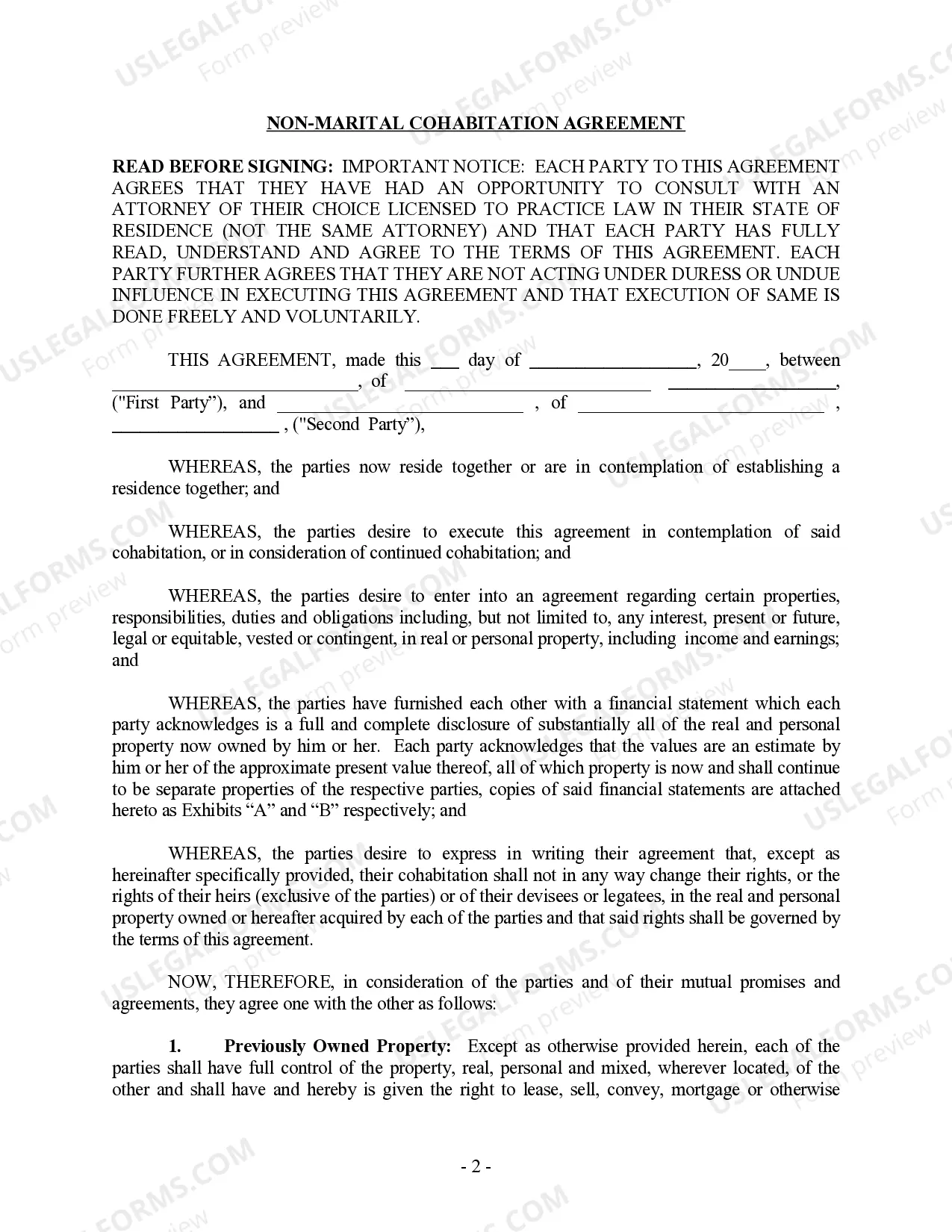
The Non-Marital Cohabitation Living Together Agreement is a legal document designed for individuals who are living together but are not married. This agreement clarifies expectations and responsibilities regarding joint expenses, property ownership, and what happens if the parties decide to separate. Unlike marriage contracts, this form specifically addresses the unique situations that arise in non-marital cohabitation, intending to reduce disputes and misunderstandings that may occur in such arrangements.

What’s included in this form

  • Identification of the parties involved.
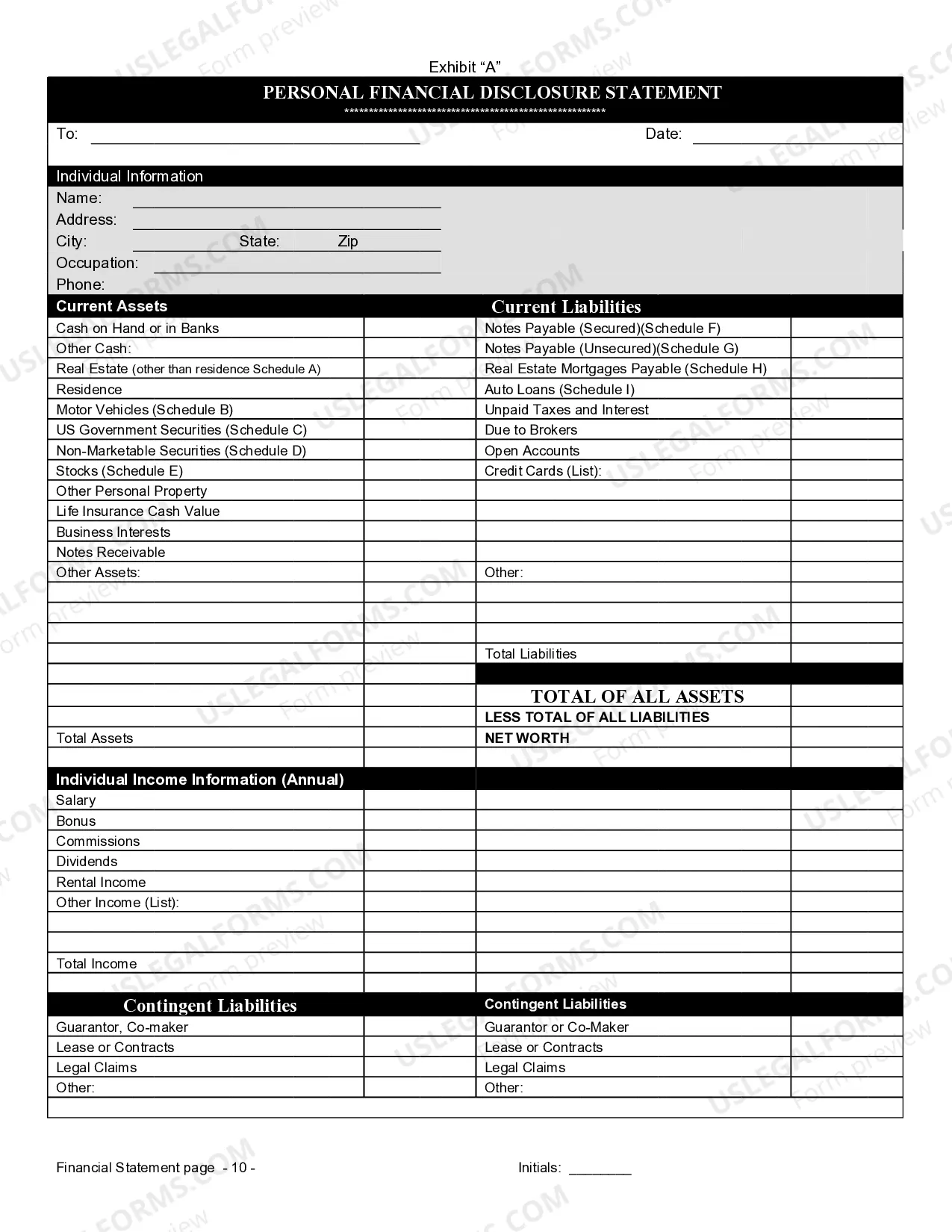
  • Disclosure of financial information by each party.
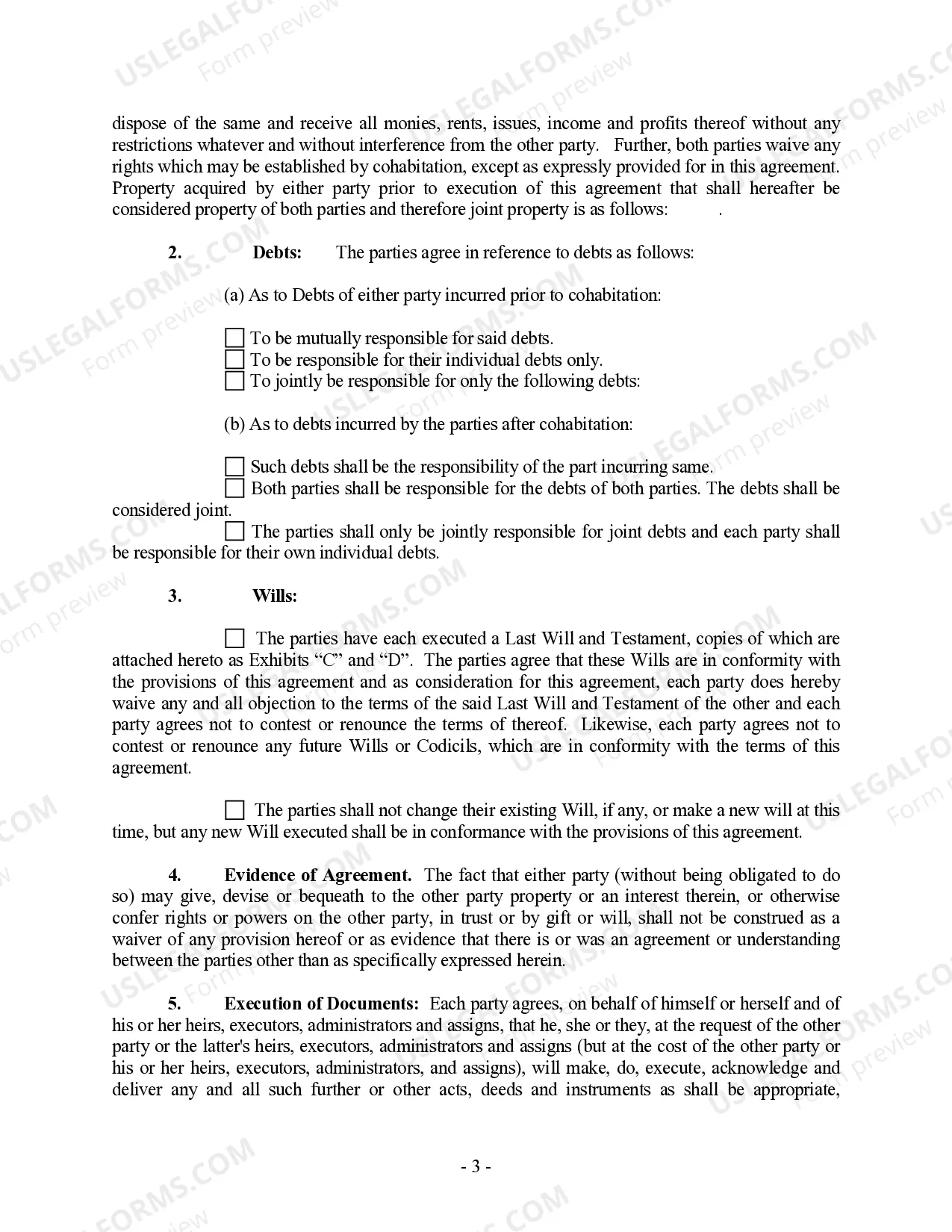
  • Provisions for joint and individual debts.
  • Details about property ownership and division of assets acquired during cohabitation.
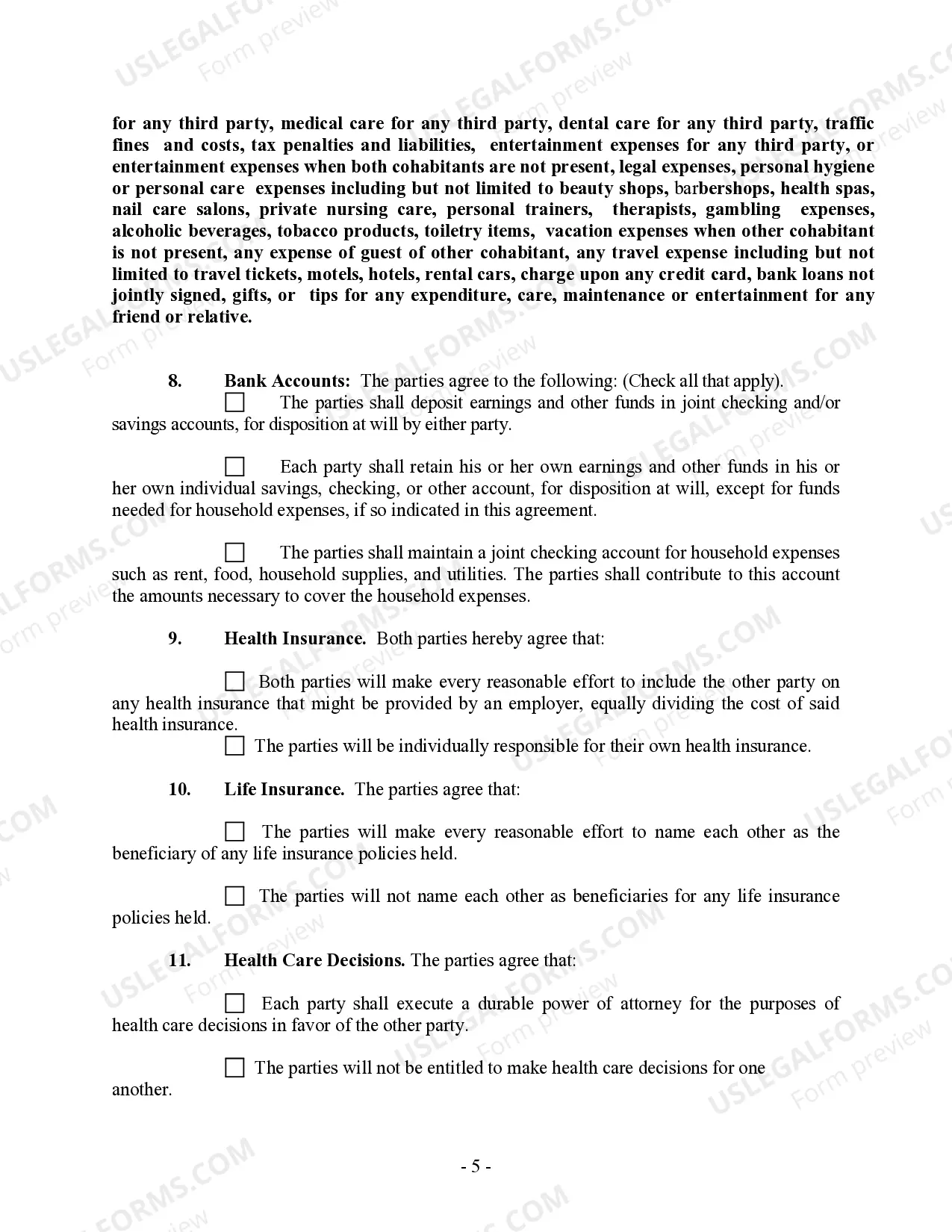
  • Clauses regarding health insurance, life insurance, and health care decisions.
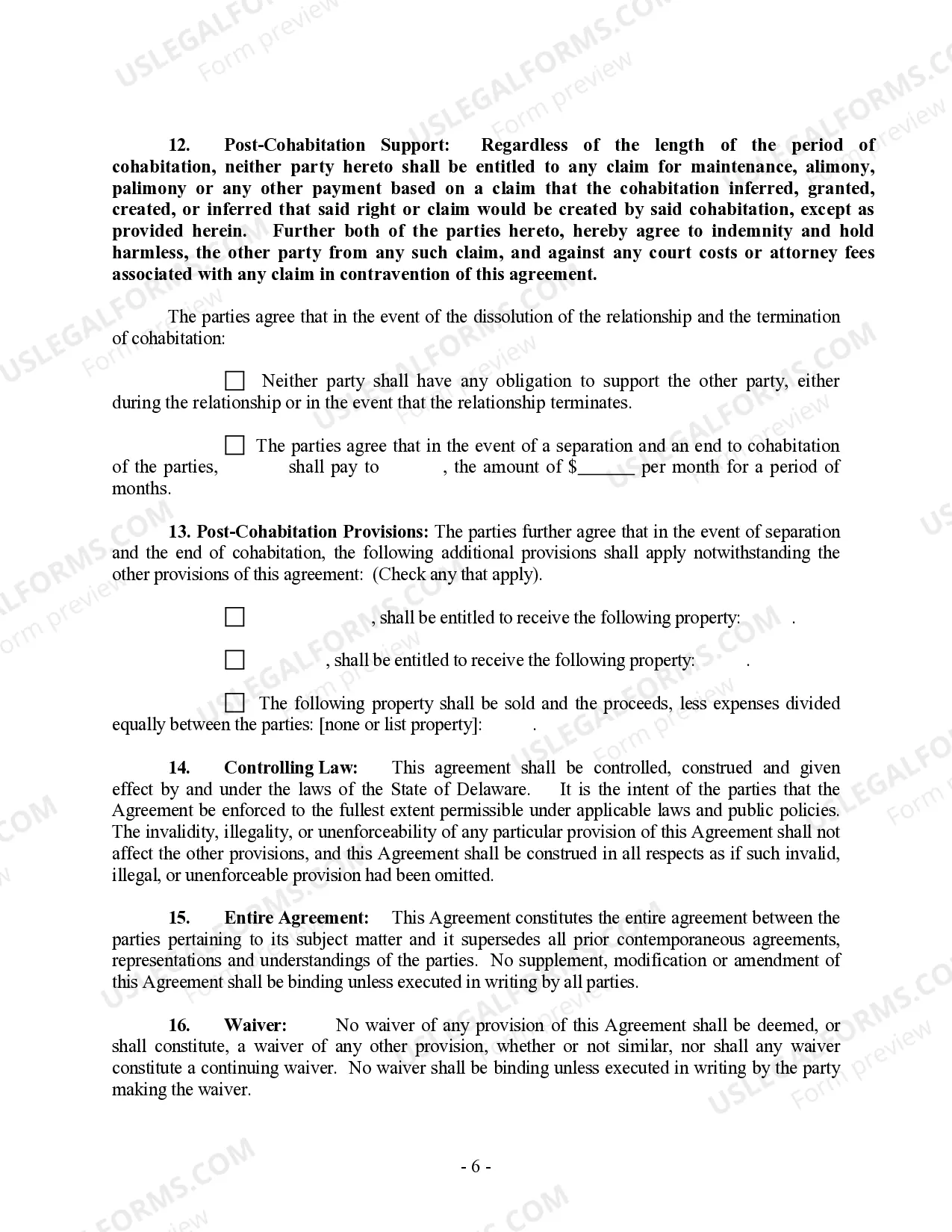
  • Terms regarding post-cohabitation support and termination of the agreement.
Free preview
  • Preview Non-Marital Cohabitation Living Together Agreement
  • Preview Non-Marital Cohabitation Living Together Agreement
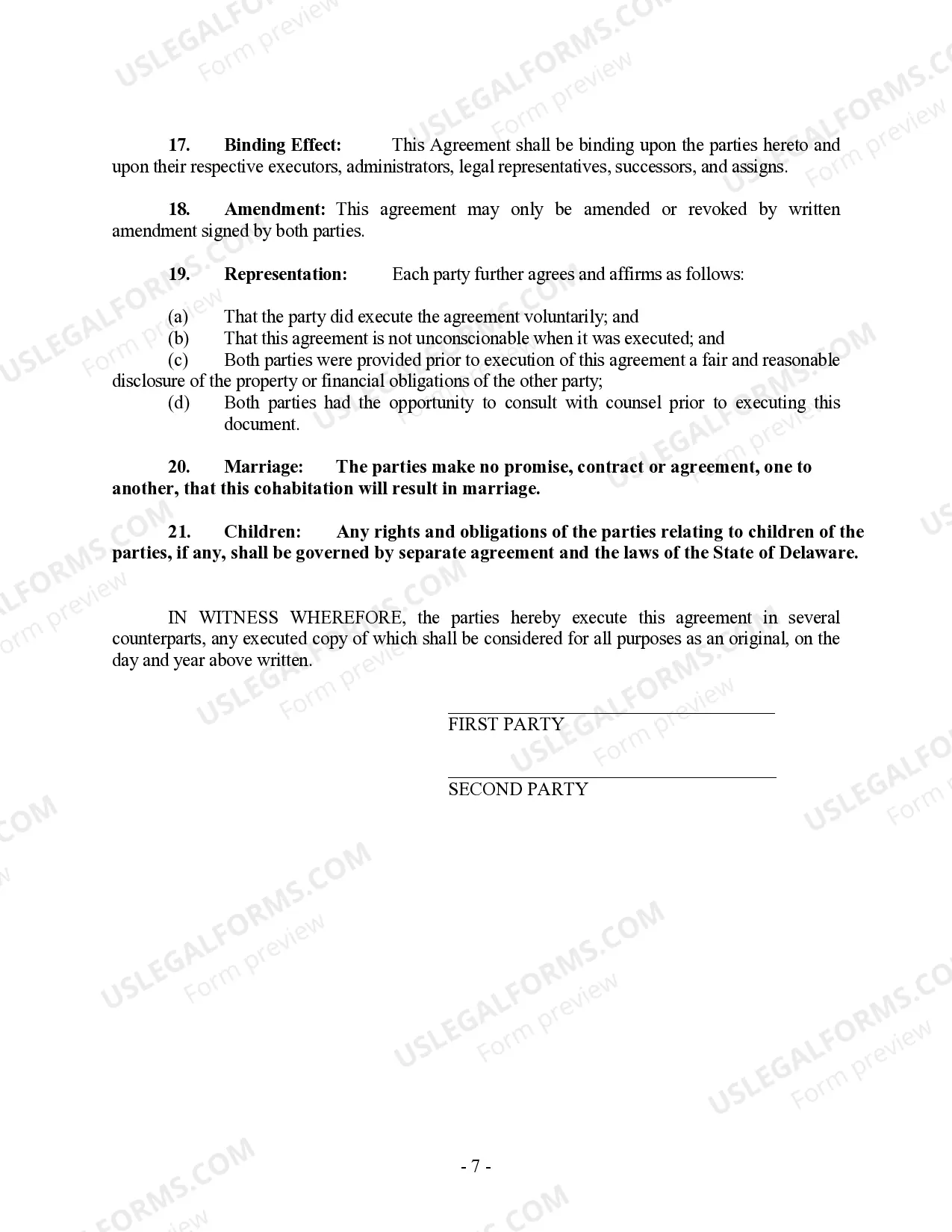
  • Preview Non-Marital Cohabitation Living Together Agreement
  • Preview Non-Marital Cohabitation Living Together Agreement
  • Preview Non-Marital Cohabitation Living Together Agreement
  • Preview Non-Marital Cohabitation Living Together Agreement
  • Preview Non-Marital Cohabitation Living Together Agreement
  • Preview Non-Marital Cohabitation Living Together Agreement
  • Preview Non-Marital Cohabitation Living Together Agreement
  • Preview Non-Marital Cohabitation Living Together Agreement
  • Preview Non-Marital Cohabitation Living Together Agreement

Situations where this form applies

This form should be used when two individuals decide to live together in a non-marital relationship. It is particularly useful for establishing clear agreements concerning shared expenses, property ownership, and each party's responsibilities. By defining these terms upfront, the agreement helps prevent future conflicts and misunderstandings about financial and legal matters should the cohabitation come to an end.

Who should use this form

  • Cohabiting partners who want to outline their financial responsibilities.
  • Individuals seeking to protect their personal assets in the event of separation.
  • Couples wanting to clarify property ownership and debt responsibilities.
  • Parties interested in establishing mutual agreements regarding health care and insurance.

Completing this form step by step

  • Identify and enter the names and addresses of both parties involved.
  • Complete the financial disclosure statements to provide transparency regarding assets and debts.
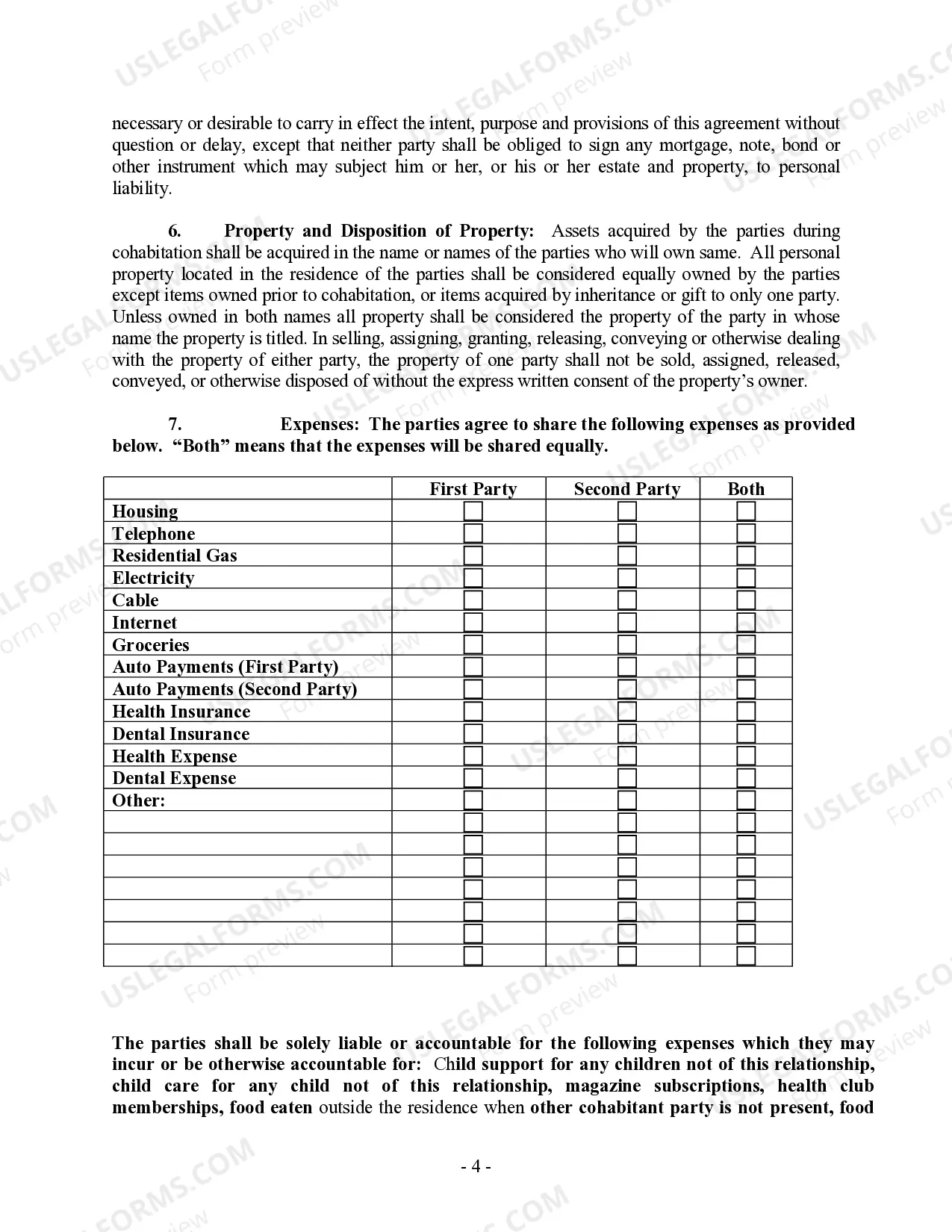
  • Specify the details regarding shared expenses, including any joint accounts or shared financial obligations.
  • Include terms related to property ownership and what will happen to shared property if the relationship ends.
  • Ensure both parties sign and date the agreement in the presence of a notary public, if required.

Does this form need to be notarized?

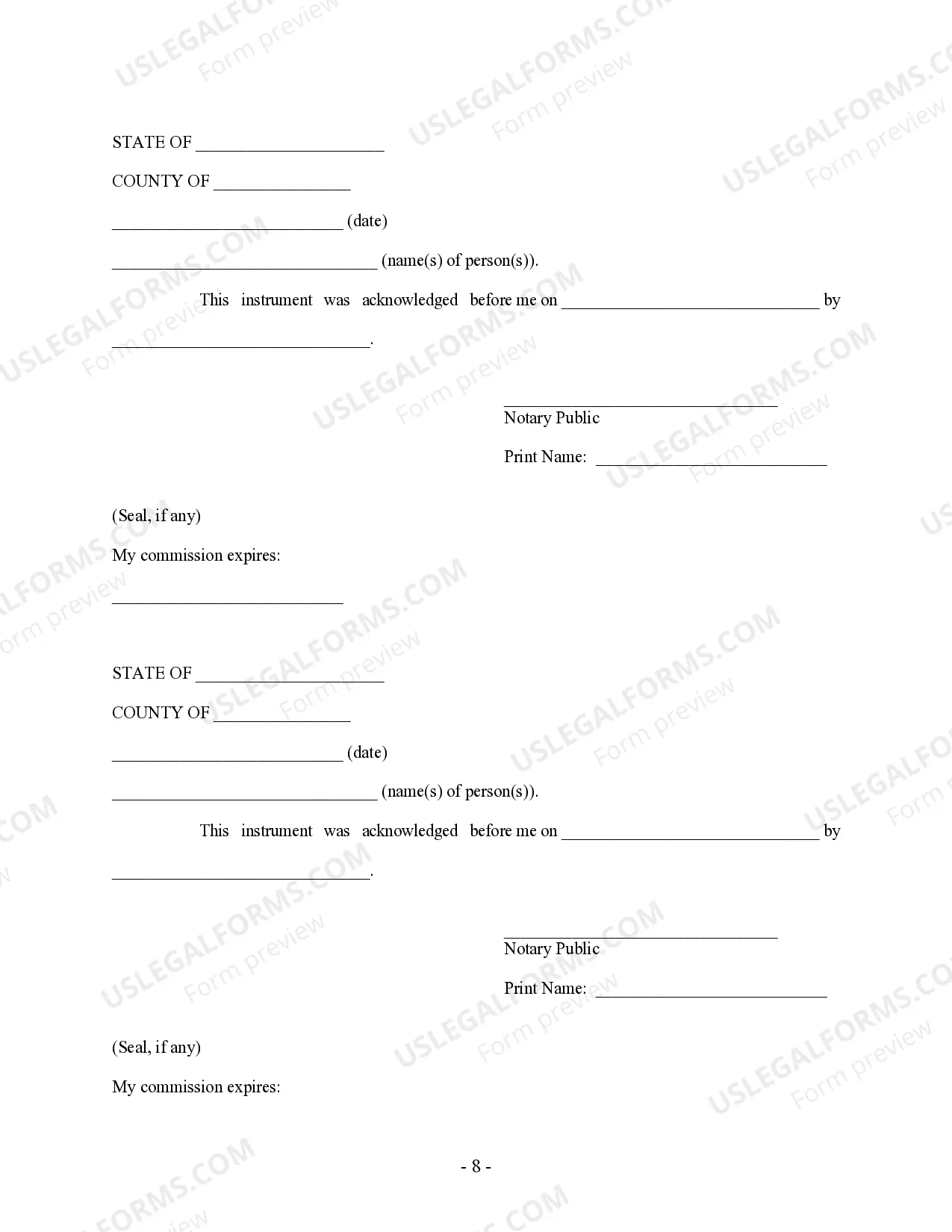
Notarization is required for this form to take effect. Our online notarization service, powered by Notarize, lets you verify and sign documents remotely through an encrypted video session, available 24/7.

Get your form ready online

Our built-in tools help you complete, sign, share, and store your documents in one place.

Built-in online Word editor

Make edits, fill in missing information, and update formatting in US Legal Forms—just like you would in MS Word.

Export easily

Download a copy, print it, send it by email, or mail it via USPS—whatever works best for your next step.

E-sign your document

Sign and collect signatures with our SignNow integration. Send to multiple recipients, set reminders, and more. Go Premium to unlock E-Sign.

Notarize online 24/7

If this form requires notarization, complete it online through a secure video call—no need to meet a notary in person or wait for an appointment.

Store your document securely

We protect your documents and personal data by following strict security and privacy standards.

Form selector

Make edits, fill in missing information, and update formatting in US Legal Forms—just like you would in MS Word.

Form selector

Download a copy, print it, send it by email, or mail it via USPS—whatever works best for your next step.

Form selector

Sign and collect signatures with our SignNow integration. Send to multiple recipients, set reminders, and more. Go Premium to unlock E-Sign.

Form selector

If this form requires notarization, complete it online through a secure video call—no need to meet a notary in person or wait for an appointment.

Form selector

We protect your documents and personal data by following strict security and privacy standards.

Typical mistakes to avoid

  • Failing to fully disclose financial information can lead to disputes later.
  • Not addressing how debts will be managed can create complications during a separation.
  • Overlooking to sign the document in front of a notary, if required.
  • Neglecting to review the agreement periodically as circumstances change.

Advantages of online completion

  • Convenience of preparing the agreement in the comfort of your home.
  • Editable format allows both parties to customize terms as needed.
  • Access to professionally drafted content, ensuring legal reliability.
  • Facilitated understanding of complex legal language in plain English.

Looking for another form?

This field is required
Virginia
Select state

Form popularity

FAQ

An affidavit of proof of living together is a legal document that confirms two individuals have been cohabiting. This statement often supports a Delaware Non-Marital Cohabitation Living Together Agreement by providing evidence of shared residence. Additionally, a well-drafted affidavit can outline the duration and nature of your relationship, which can be invaluable in legal contexts. Using a reliable platform like US Legal Forms can help you create this affidavit smoothly and ensure it meets all necessary requirements.

marital relationship is a partnership that exists without the legal contract of marriage. This type of relationship can vary widely in commitment levels and shared responsibilities. Couples in a nonmarital relationship may benefit from a Delaware NonMarital Cohabitation Living Together Agreement, as it offers clarity and structure to their living arrangement.

The legal term for a couple living together but not married is cohabitation. In this setup, both partners engage in a domestic partnership without the formalities of marriage. To protect each partner’s interests, it is advisable to consider a Delaware Non-Marital Cohabitation Living Together Agreement.

Cohabitation without marriage is when two individuals choose to live together without formalizing their relationship through marriage. This arrangement can often lead to shared responsibilities, finances, and property. A well-drafted Delaware Non-Marital Cohabitation Living Together Agreement can help clarify these aspects, ensuring both partners understand their rights.

Marital cohabitation occurs when two people live together as a married couple, regardless of their legal marital status. This arrangement typically includes shared financial responsibilities and day-to-day support for one another. In contrast, those in a non-marital relationship may opt for a Delaware Non-Marital Cohabitation Living Together Agreement to establish similar commitments without the legal framework of marriage.

Non-marital cohabitation refers to couples who choose to live together without being legally married. This arrangement can offer many of the same benefits as marriage, such as shared living expenses, without the legal ties. A Delaware Non-Marital Cohabitation Living Together Agreement is useful for these couples, as it helps clarify responsibilities and rights.

The four types of cohabitation include casual cohabitation, which is a less committed living arrangement, marriage-like cohabitation that mimics married life, cohabitation with intent to marry, and living together without the intention of marriage. Each type carries its own implications regarding legal rights and responsibilities. Understanding these categories can help you decide if a Delaware Non-Marital Cohabitation Living Together Agreement is right for your situation.

Unmarried couples living together often create a Delaware Non-Marital Cohabitation Living Together Agreement. This document outlines the rights and responsibilities of each partner regarding finances, property, and other shared interests. By having a clear agreement, both parties can mitigate conflicts and establish expectations in their partnership.

When you live with your partner but are not married, it is typically referred to as cohabitation. This arrangement allows couples to share their lives and responsibilities without the legal bindings of marriage. To ensure that both parties are protected, consider drafting a Delaware Non-Marital Cohabitation Living Together Agreement, which can help define each other's roles and protect your interests.

Yes, if you are living with your boyfriend, it is referred to as cohabitation. This living arrangement can have certain legal and financial implications, which is why it's beneficial to have a clear understanding of each other's rights and responsibilities. A Delaware Non-Marital Cohabitation Living Together Agreement can be an essential tool for outlining terms in your cohabitation.

Trusted and secure by over 3 million people of the world’s leading companies

Delaware Non-Marital Cohabitation Living Together Agreement