This form is to for a Landlord to provide notice of breach of a written lease for violating a specific provision of lease with no right to cure. It is for a Non-Residential lease. You insert the specific breach in the form. The lease should contain the specific provision which has been violated and provide that violation of that provision that cannot be cured, or the statutory law must state that this particular breach cannot be cured. This form is for use when a form for your specific situation is not available.
Delaware Notice of Breach of Written Lease for Violating Specific Provisions of Lease with No Right to Cure for Nonresidential Property from Landlord to Tenant
State:
Delaware
Control #:
DE-1503LT
Format:
Word;
Rich Text
Instant download
Description
Free preview
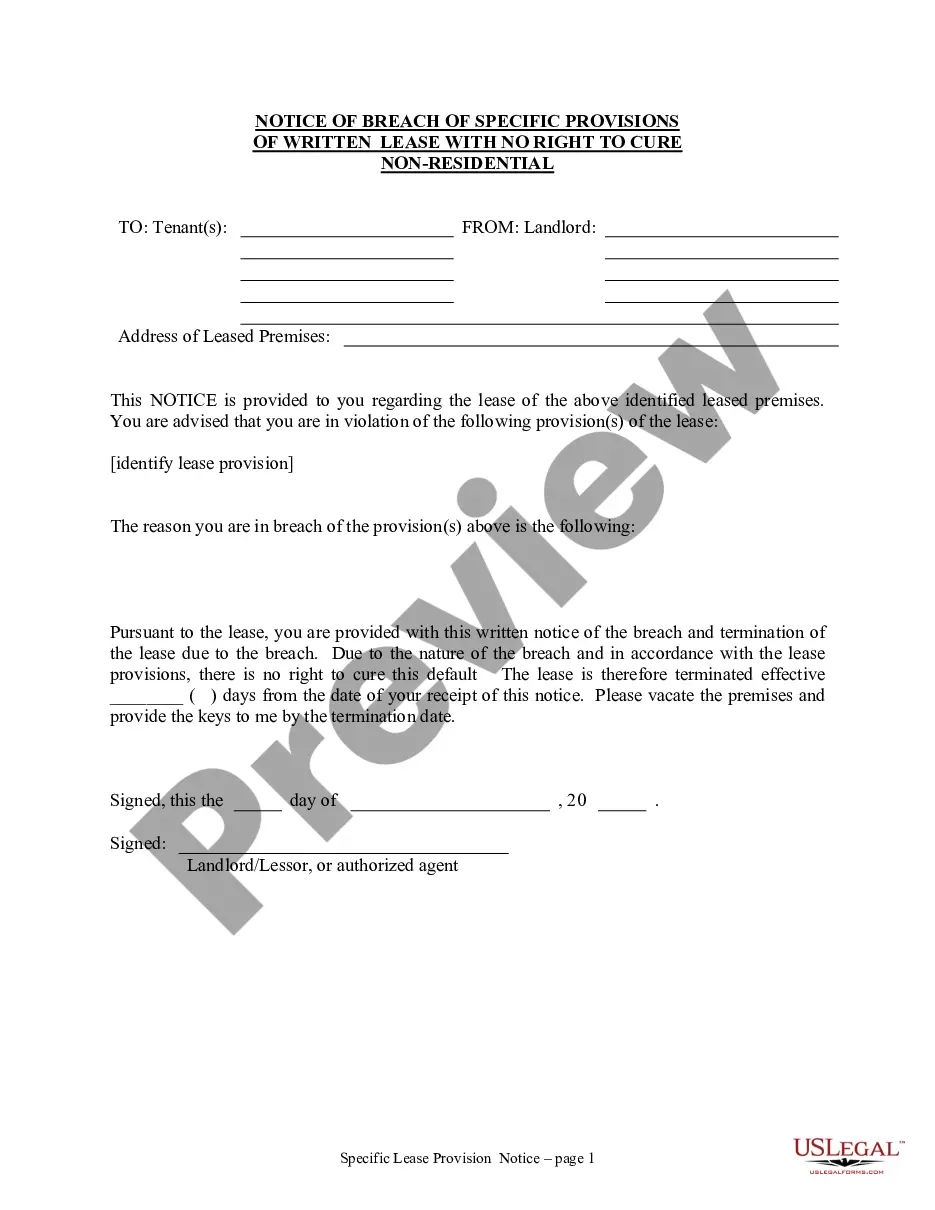
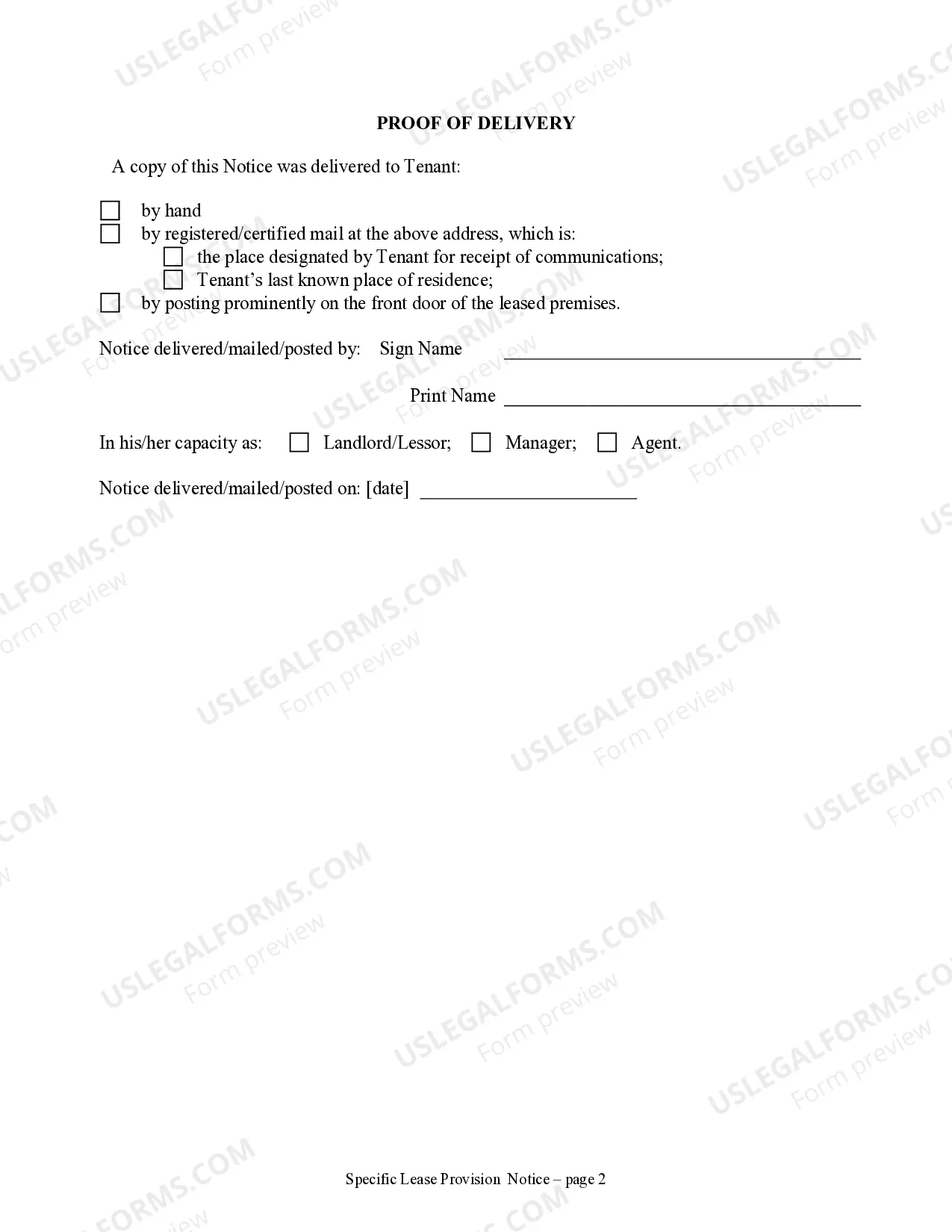
How to fill out Delaware Notice Of Breach Of Written Lease For Violating Specific Provisions Of Lease With No Right To Cure For Nonresidential Property From Landlord To Tenant?
The greater the number of documents you need to produce, the more uneasy you feel.
You can discover numerous Delaware Notice of Breach of Written Lease for Breaching Specific Lease Terms with No Opportunity to Cure for Nonresidential Property from Landlord to Tenant templates online; however, it may be unclear which ones to trust.
Remove the stress and simplify the process of locating samples by using US Legal Forms. Obtain expertly crafted documents designed to comply with state requirements.
Fill in the required details to create your account and complete the payment via PayPal or credit card. Choose a convenient file type and obtain your template. Access each sample you download in the My documents section. Simply navigate there to prepare a new version of your Delaware Notice of Breach of Written Lease for Breaching Specific Lease Terms with No Opportunity to Cure for Nonresidential Property from Landlord to Tenant. Despite having professionally drafted templates, it is still advisable to consult your local legal advisor to double-check the completed form to ensure that your document is accurately filled. Achieve more for less with US Legal Forms!
- If you have a US Legal Forms subscription, Log In to your account, and you'll find the Download button on the Delaware Notice of Breach of Written Lease for Breaching Specific Lease Terms with No Opportunity to Cure for Nonresidential Property from Landlord to Tenant's page.
- If you are new to our website, complete the registration process by following these guidelines.
- Verify if the Delaware Notice of Breach of Written Lease for Breaching Specific Lease Terms with No Opportunity to Cure for Nonresidential Property from Landlord to Tenant is applicable in your state.
- Revisit your selection by reading the description or utilizing the Preview feature if available for the chosen document.
- Click Buy Now to initiate the registration process and choose a pricing plan that fits your requirements.
Form popularity
FAQ
The most common action landlords take against tenants in breach of contract includes serving a Delaware Notice of Breach of Written Lease for Violating Specific Provisions of Lease with No Right to Cure for Nonresidential Property from Landlord to Tenant. This notice formally communicates the breach and provides an opportunity for landlords to pursue legal remedies. Typically, landlords seek eviction or recovery of unpaid rent once proper notifications have been issued.
Yes, a landlord can sue a tenant for breach of contract if the tenant fails to meet the terms of the lease agreement. This can include late rent payments, unauthorized alterations, or subletting without permission. It is essential for landlords to document any breaches and, if necessary, send a Delaware Notice of Breach of Written Lease for Violating Specific Provisions of Lease with No Right to Cure for Nonresidential Property from Landlord to Tenant. This formal notice ensures clarity and helps address disputes effectively.
Landlords can violate a lease by not adhering to the specific provisions outlined in the agreement. Common violations include failing to provide essential services, not maintaining the property, or not respecting the tenant's rights. If a tenant experiences these violations, they may receive a Delaware Notice of Breach of Written Lease for Violating Specific Provisions of Lease with No Right to Cure for Nonresidential Property from Landlord to Tenant. This notice serves as a formal reminder of the landlord's obligations and can help tenants take further action.
To break your lease without penalty in Delaware, review your lease for any clauses that permit early termination. Document any landlord violations or issues covered by the Delaware Notice of Breach of Written Lease for Violating Specific Provisions of Lease with No Right to Cure, as these facts may provide you with legal grounds to terminate the agreement without incurring penalties.
When writing a letter of violation for a lease, it’s important to include the tenant's name and address, the date, and the specific lease violations. Clearly outline what the violations are and cite the relevant sections of the lease. This letter serves as a formal Delaware Notice of Breach of Written Lease for Violating Specific Provisions of Lease with No Right to Cure and should be documented.
To write a formal letter to break a lease, begin with your address and the date, followed by your landlord's details. Clearly state your intention to terminate the lease, cite the relevant lease provisions, and include reasons for your decision. If applicable, refer to any Delaware Notice of Breach of Written Lease for Violating Specific Provisions of Lease with No Right to Cure to strengthen your position.
Breaking a lease in Delaware without penalty may be possible under specific circumstances, such as landlord violations or uninhabitable conditions. If you've received a Delaware Notice of Breach of Written Lease for Violating Specific Provisions of Lease with No Right to Cure, document the issues and communicate them to your landlord to support your case for an early termination.
In Delaware, there are generally no state limits on how much rent a landlord can increase. However, any rent adjustment should be stipulated in the lease agreement. When addressing potential rent increases, keep in mind the implications of a Delaware Notice of Breach of Written Lease for Violating Specific Provisions of Lease with No Right to Cure for Nonresidential Property.
Section 5106 of the Delaware landlord-tenant code addresses the rights and duties of landlords and tenants regarding the rental agreement. It specifies conditions under which a breach can lead to lease termination. Understanding this section is essential for creating a valid Delaware Notice of Breach of Written Lease for Violating Specific Provisions of Lease with No Right to Cure for Nonresidential Property.
In Delaware, a landlord must provide at least 60 days' notice for nonresidential properties if they intend to terminate the lease. This notice should be in writing, detailing the reasons for termination. If it pertains to a Delaware Notice of Breach of Written Lease for Violating Specific Provisions of Lease with No Right to Cure, ensure the tenant understands the grounds for eviction.