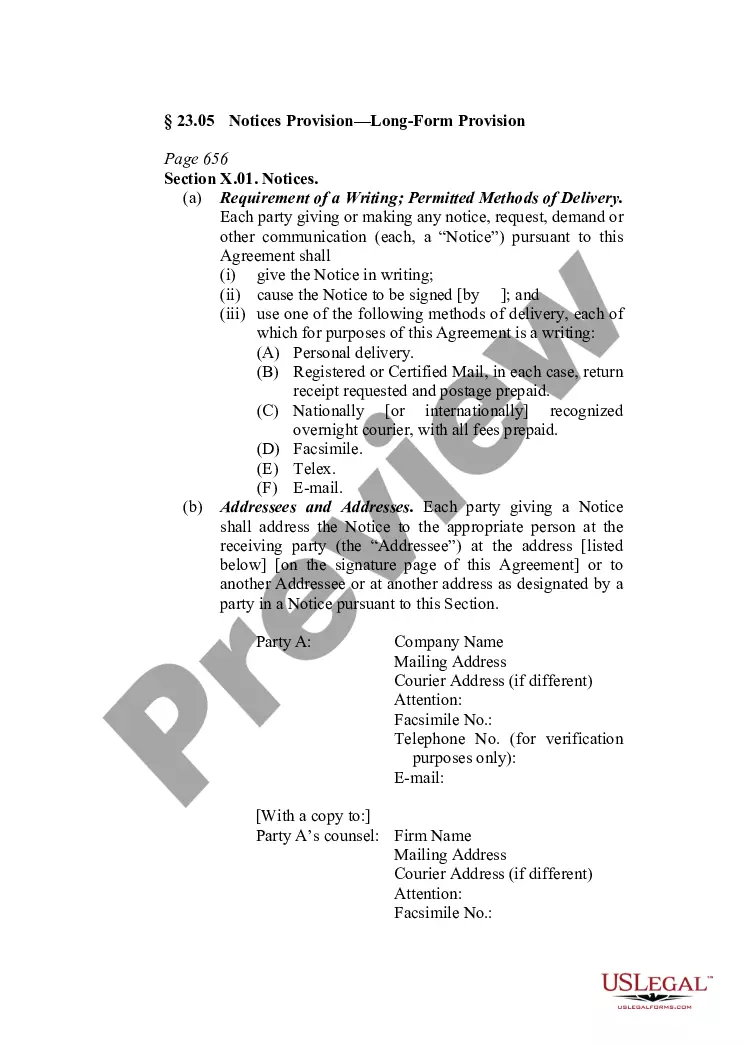
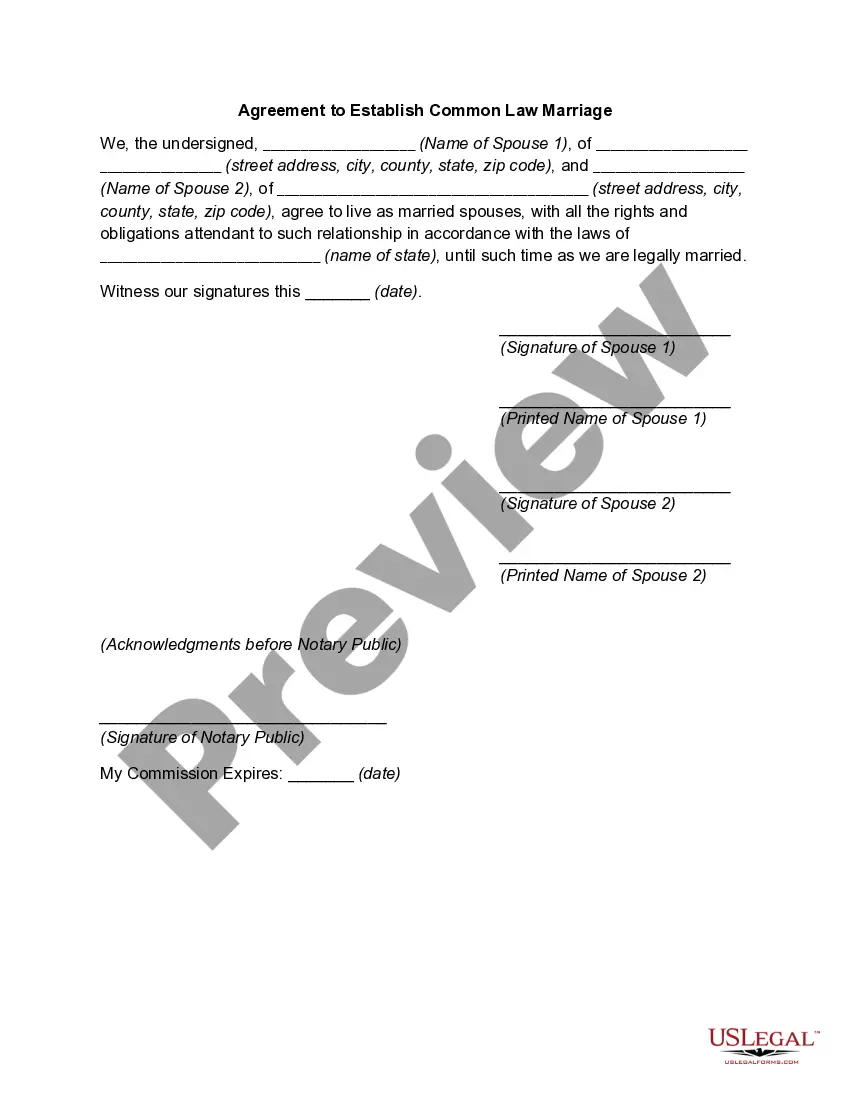
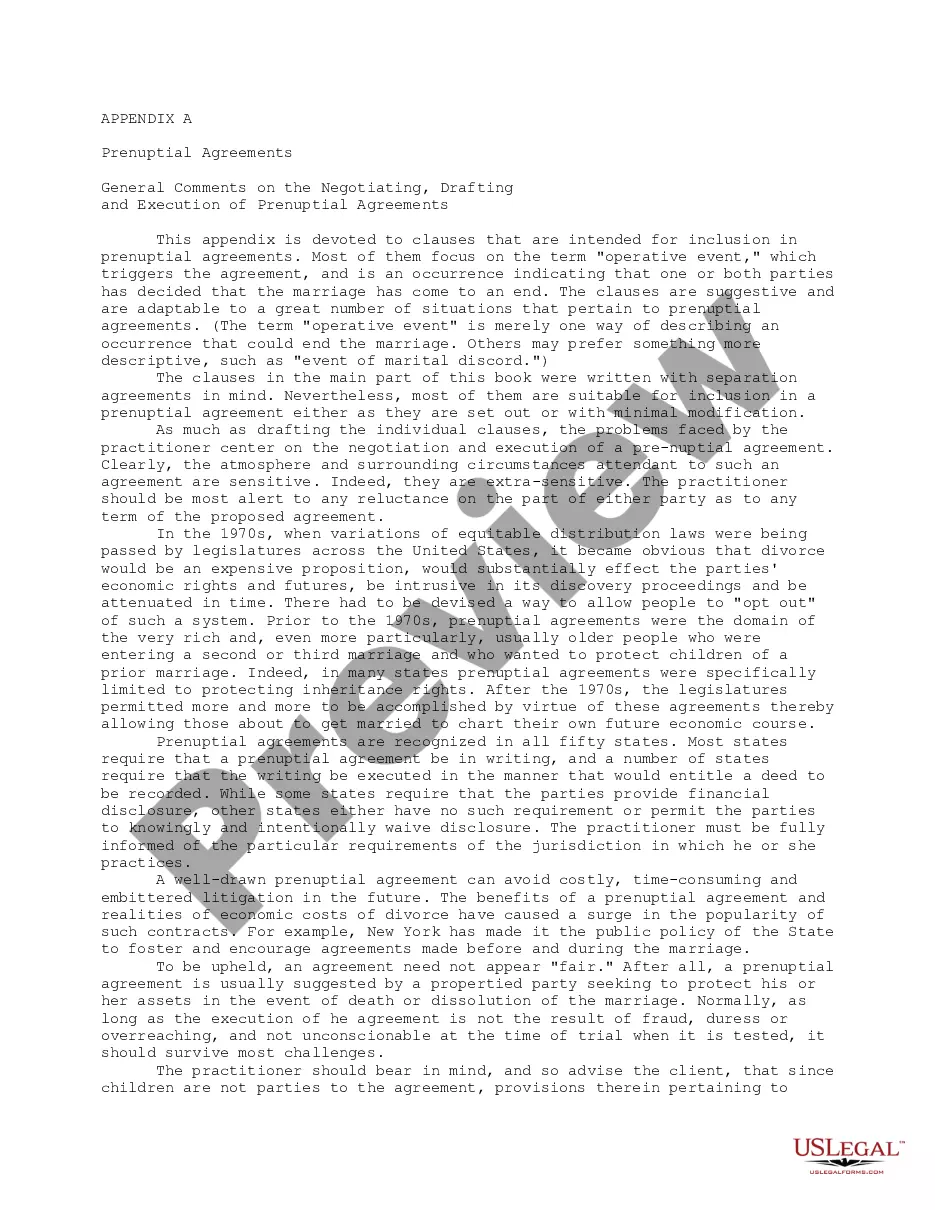
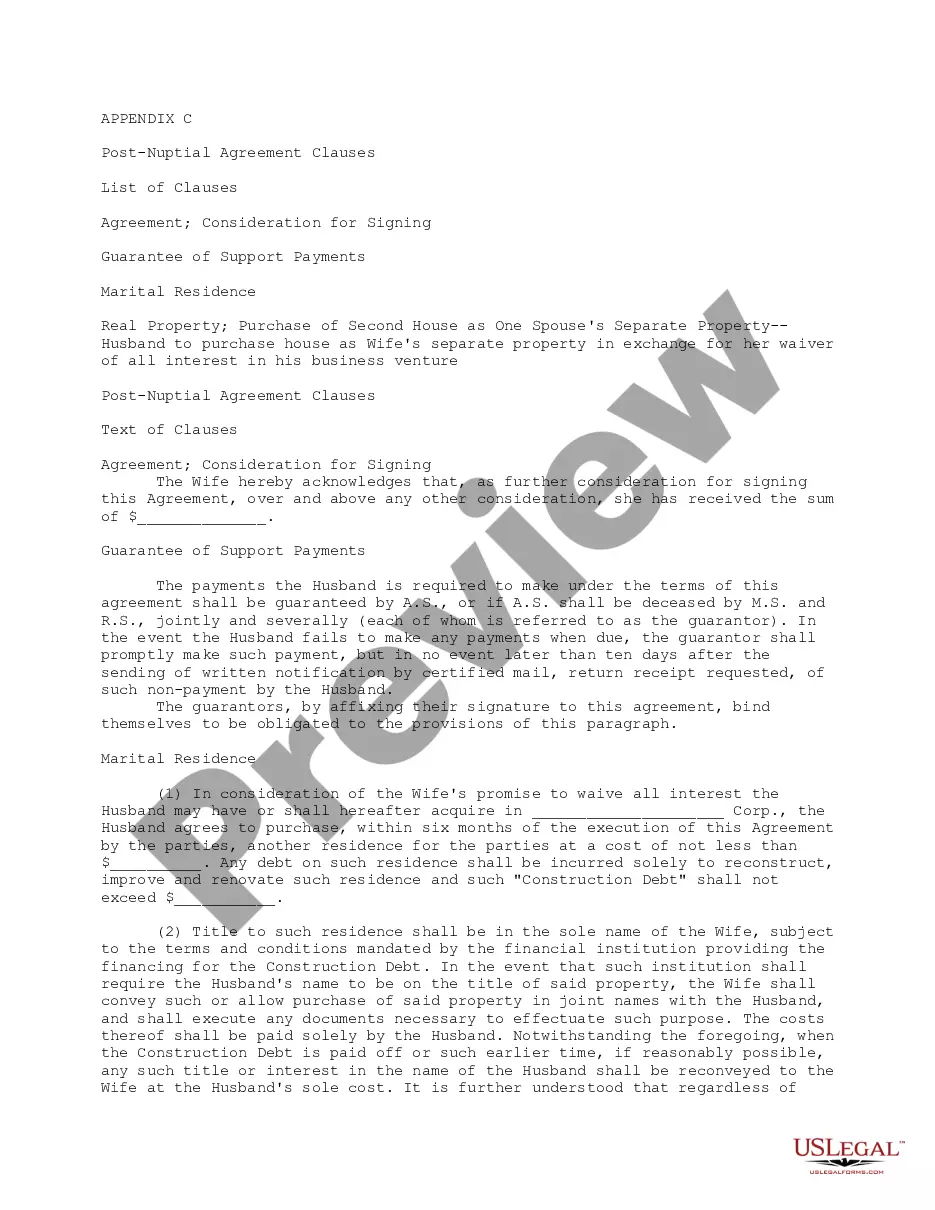
A Transmutation Agreement is a marital contract that provides that the ownership of a particular piece of property will, from the date of the agreement forward, be changed. Spouses can transmute, partition, or exchange community property to separate property by agreement. According to some authority, separate property can be transmuted into community property by an agreement between the spouses, but there is also authority to the contrary.
District of Columbia Transmutation or Postnuptial Agreement to Convert Community Property into Separate Property
Category:
State:
Multi-State
Control #:
US-02180BG
Format:
Word;
Rich Text
Instant download
Description
Free preview
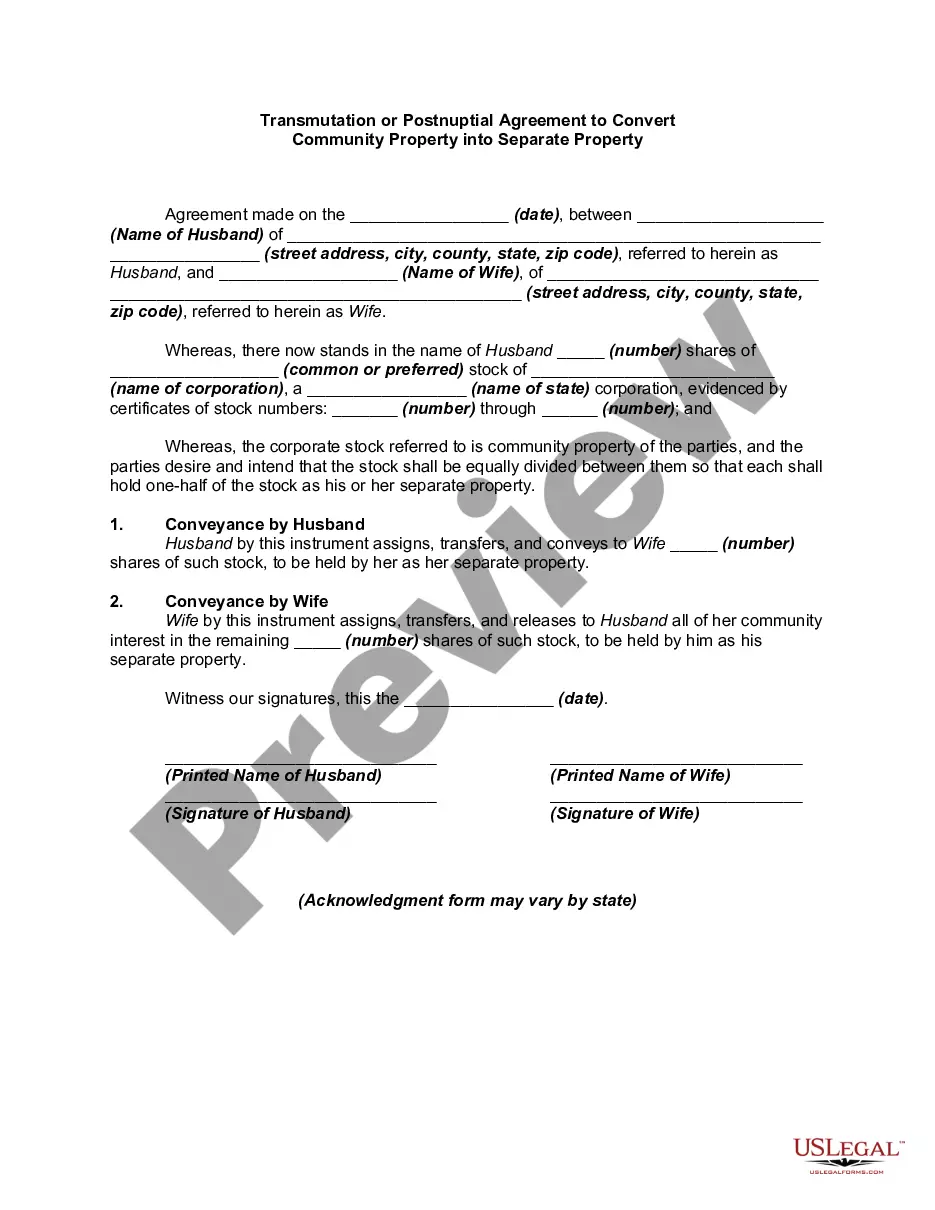
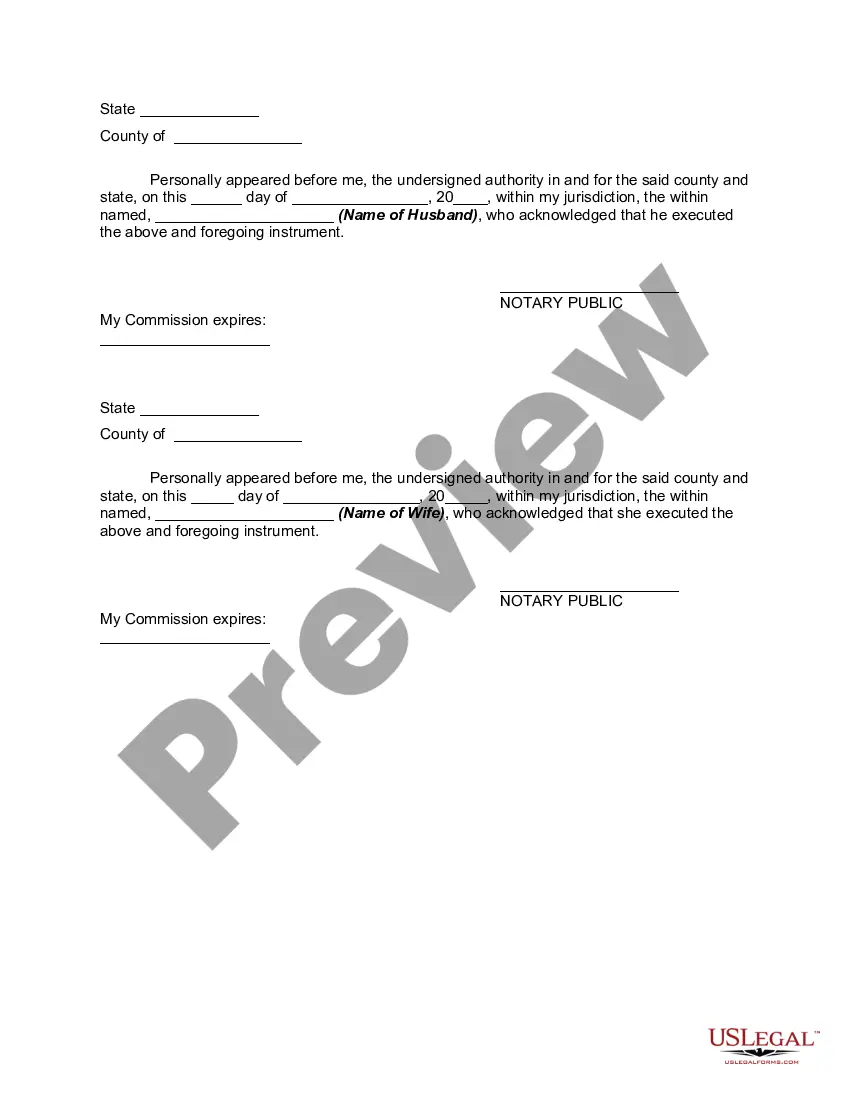
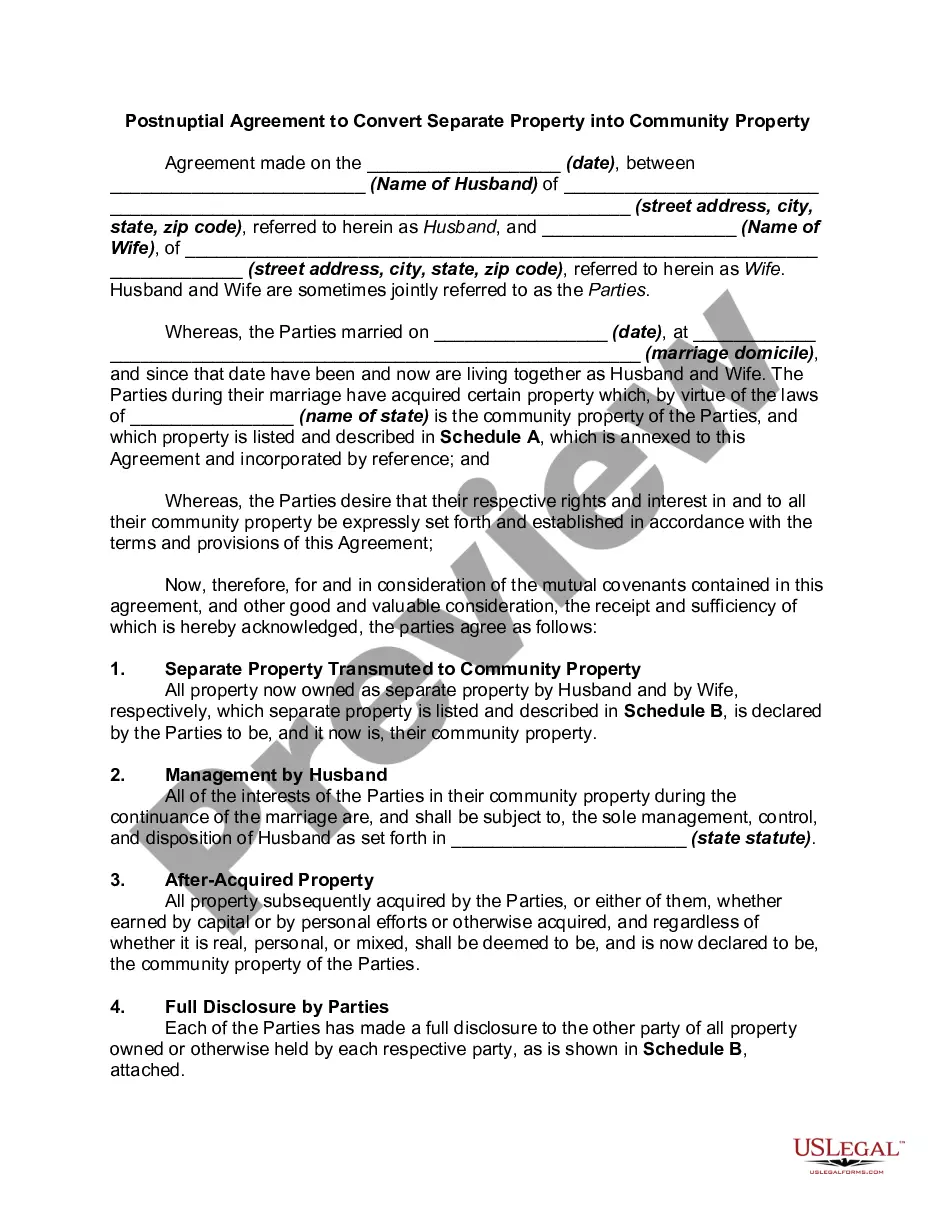

Get your form ready online
Our built-in tools help you complete, sign, share, and store your documents in one place.
Built-in online Word editor
Make edits, fill in missing information, and update formatting in US Legal Forms—just like you would in MS Word.
Export easily
Download a copy, print it, send it by email, or mail it via USPS—whatever works best for your next step.
E-sign your document
Sign and collect signatures with our SignNow integration. Send to multiple recipients, set reminders, and more. Go Premium to unlock E-Sign.
Notarize online 24/7
If this form requires notarization, complete it online through a secure video call—no need to meet a notary in person or wait for an appointment.
Store your document securely
We protect your documents and personal data by following strict security and privacy standards.

Make edits, fill in missing information, and update formatting in US Legal Forms—just like you would in MS Word.

Download a copy, print it, send it by email, or mail it via USPS—whatever works best for your next step.

Sign and collect signatures with our SignNow integration. Send to multiple recipients, set reminders, and more. Go Premium to unlock E-Sign.

If this form requires notarization, complete it online through a secure video call—no need to meet a notary in person or wait for an appointment.

We protect your documents and personal data by following strict security and privacy standards.
Looking for another form?



How to fill out Transmutation Or Postnuptial Agreement To Convert Community Property Into Separate Property?
Selecting the optimal legitimate document template can be challenging.
Clearly, there are multiple formats accessible online, but how would you identify the correct type you require.
Utilize the US Legal Forms website. The service offers a vast array of formats, such as the District of Columbia Transmutation or Postnuptial Agreement to Convert Community Property into Separate Property, which can be utilized for business and personal purposes.
First, ensure you have chosen the correct form for your city/county. You can browse the form using the Preview option and read the form description to confirm it is the right one for you.
- All the forms are reviewed by professionals and comply with state and federal regulations.
- If you are already registered, Log In to your account and then click the Download button to obtain the District of Columbia Transmutation or Postnuptial Agreement to Convert Community Property into Separate Property.
- Use your account to view the legitimate forms you have previously acquired.
- Visit the My documents tab in your account to access another copy of your required document.
- If you are a new user of US Legal Forms, here are simple instructions for you to follow.
Form popularity
FAQ
To file a post nuptial agreement in the District of Columbia, start by drafting the agreement with clear terms regarding your assets and liabilities. Make sure both spouses understand and agree with the content, as mutual consent is crucial. Once completed, both parties should sign the document in front of a notary public to ensure its validity. Finally, be sure to keep a copy of the District of Columbia Transmutation or Postnuptial Agreement to Convert Community Property into Separate Property for your records, and consider recording it if you want additional legal protection.
D.C. is not a 50/50 state for divorce; instead, it follows equitable distribution principles. This means that the court divides assets fairly based on various considerations but not necessarily equally. Therefore, understanding how a District of Columbia Transmutation or Postnuptial Agreement to Convert Community Property into Separate Property works is vital for couples looking to protect their interests during separation.
The nine community property states include Arizona, California, Idaho, Louisiana, Nevada, New Mexico, Texas, Washington, and Wisconsin. In these states, most property acquired during marriage is owned jointly by both spouses. Since the District of Columbia is not one of these states, a District of Columbia Transmutation or Postnuptial Agreement to Convert Community Property into Separate Property will be crucial for couples managing their assets.
In the District of Columbia, inherited property is generally considered separate property. This means that if one spouse inherits assets during the marriage, those assets are not subject to division during a divorce. However, to ensure clarity and protect your inheritance, consider utilizing a District of Columbia Transmutation or Postnuptial Agreement to Convert Community Property into Separate Property.
In D.C., assets are divided based on equitable distribution, which means a fair, but not necessarily equal, division of property. The court considers various factors, such as the duration of the marriage, the contributions of each spouse, and the financial needs of both parties. A District of Columbia Transmutation or Postnuptial Agreement to Convert Community Property into Separate Property can help clarify asset division before divorce proceedings.
The District of Columbia is not classified as a community property state. Unlike states where community property laws govern asset division, D.C. utilizes equitable distribution principles during divorce. Couples interested in managing their property through a District of Columbia Transmutation or Postnuptial Agreement to Convert Community Property into Separate Property can benefit from understanding these policies.
The District of Columbia is not one of the 50 states, but it holds a unique status as a federal district. It serves as the nation's capital and operates independently of any state governance. Therefore, residents of Washington, D.C. and those considering a District of Columbia Transmutation or Postnuptial Agreement to Convert Community Property into Separate Property should understand its unique legal structure.
To maintain separate property, clearly document your ownership before marriage and avoid commingling it with community property. You can use a District of Columbia Transmutation or Postnuptial Agreement to protect your assets. Legal advice can be invaluable in ensuring these protections are in place and effective.
A transmutation agreement specifically changes the classification of property between spouses, indicating whether it is separate or community property. In contrast, a postnuptial agreement is broader and can cover various aspects of financial arrangements and property distribution after marriage. Both can be crafted to meet individual situations in the District of Columbia.
The transmutation rule dictates that spouses can change the classification of their property from separate to community or vice versa through mutual agreement. This must be documented in writing and signed by both parties to be enforceable. For example, a District of Columbia Transmutation or Postnuptial Agreement can serve this purpose.