Connecticut Last Will and Testament for a Civil Union Partner with No Children
Understanding this form
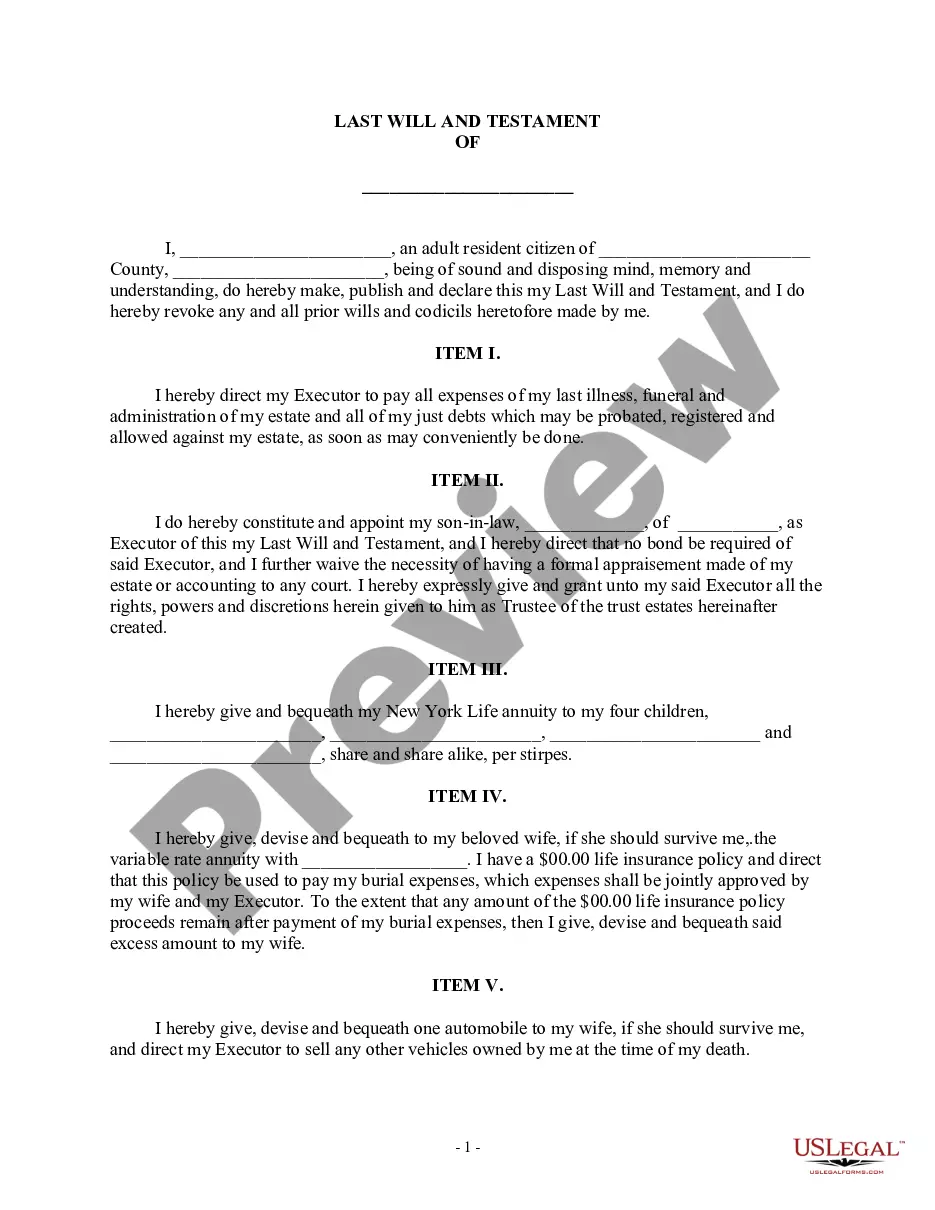
The Last Will and Testament for a Civil Union Partner with No Children is a legal document that outlines how a person wishes to distribute their assets upon their death. This Will is specifically tailored for individuals in a civil union without children, distinguishing it from traditional wills. It ensures that your partner is recognized and provided for, and includes vital sections such as appointing a personal representative and detailing property distribution.
What’s included in this form
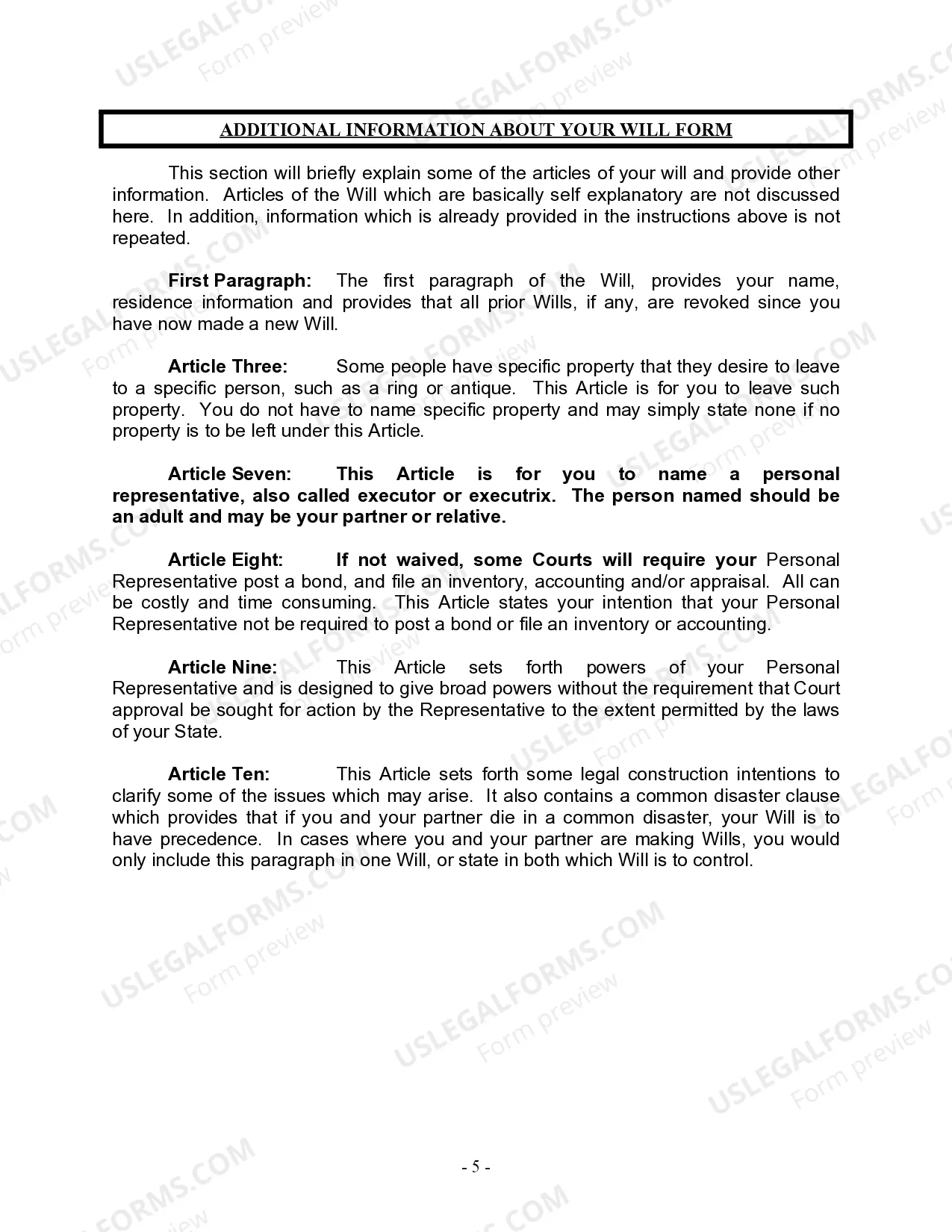
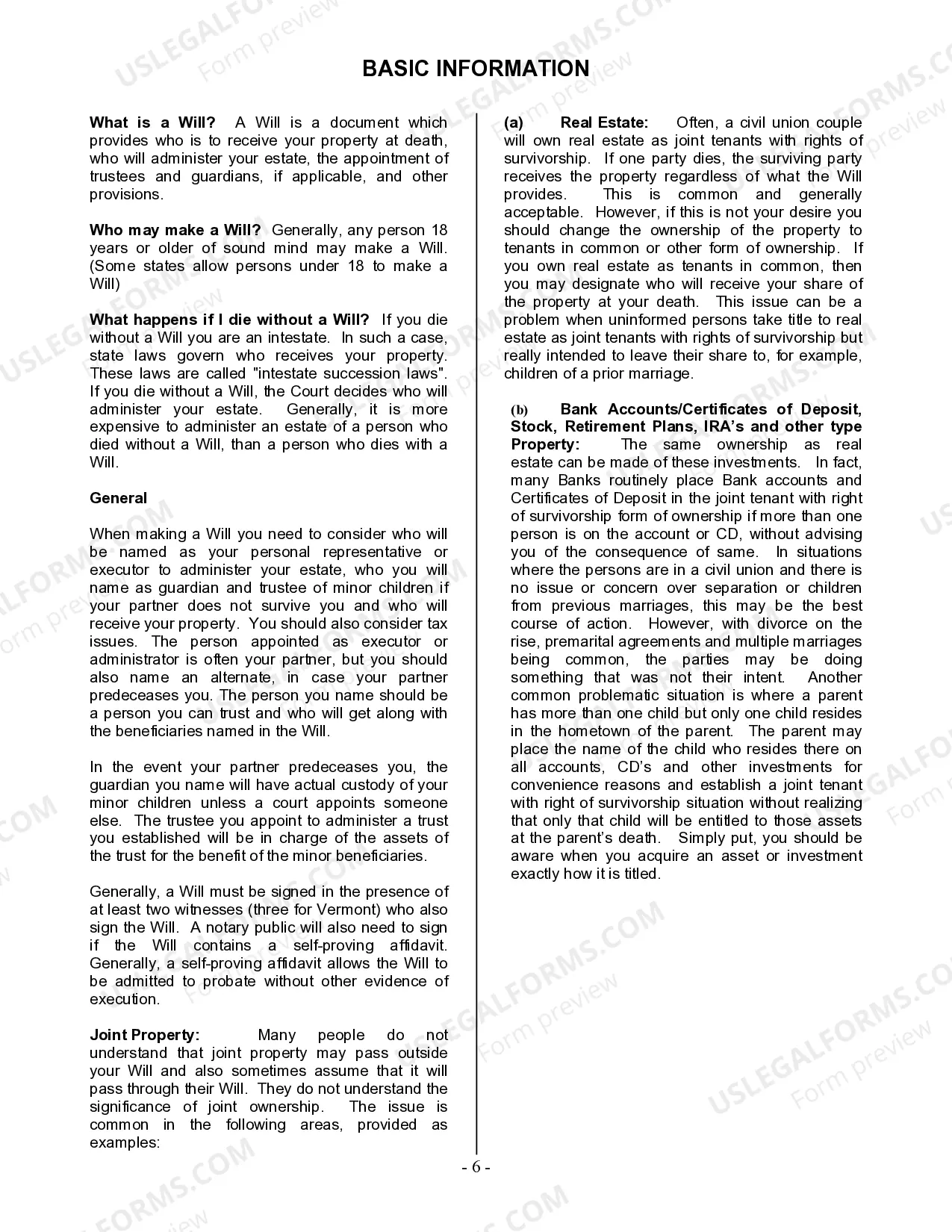
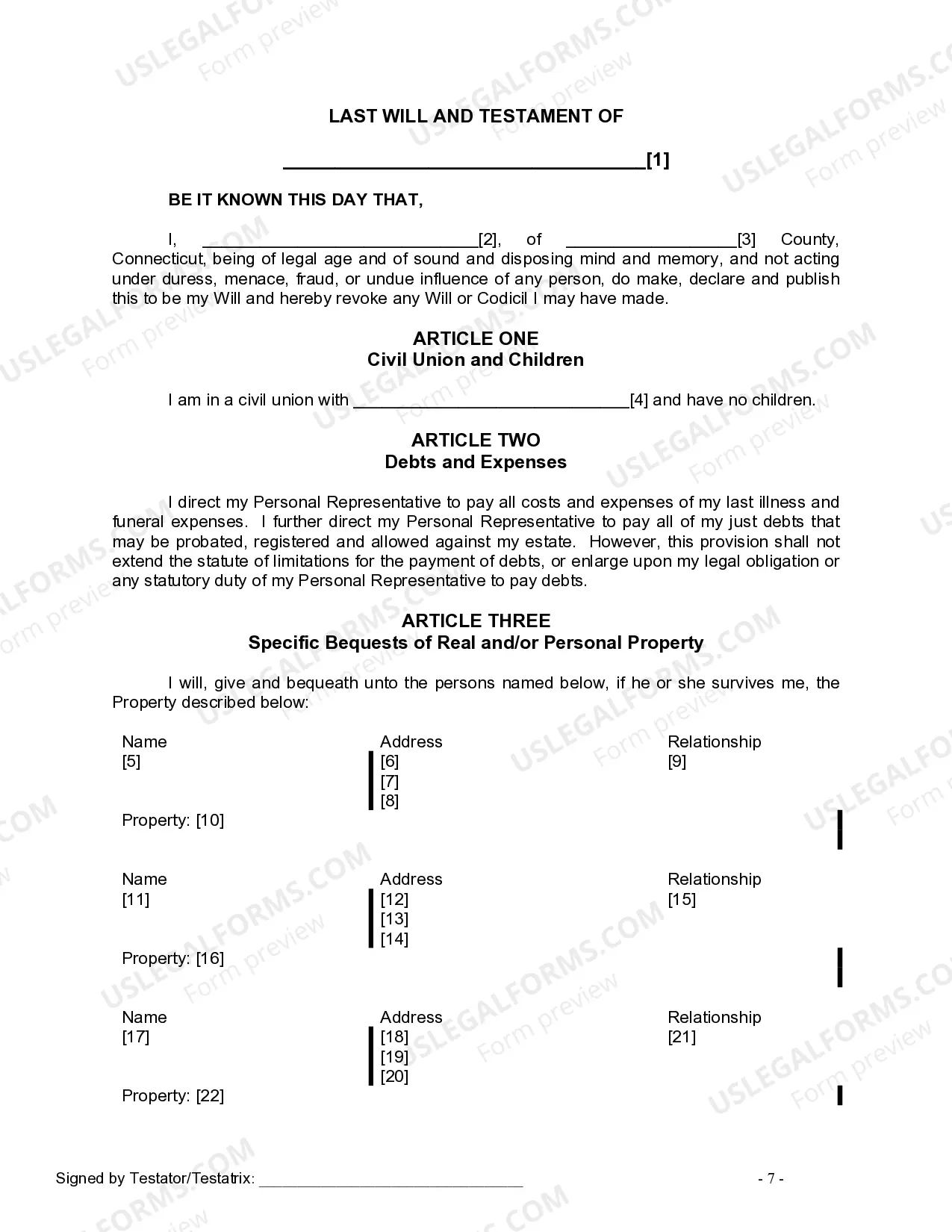
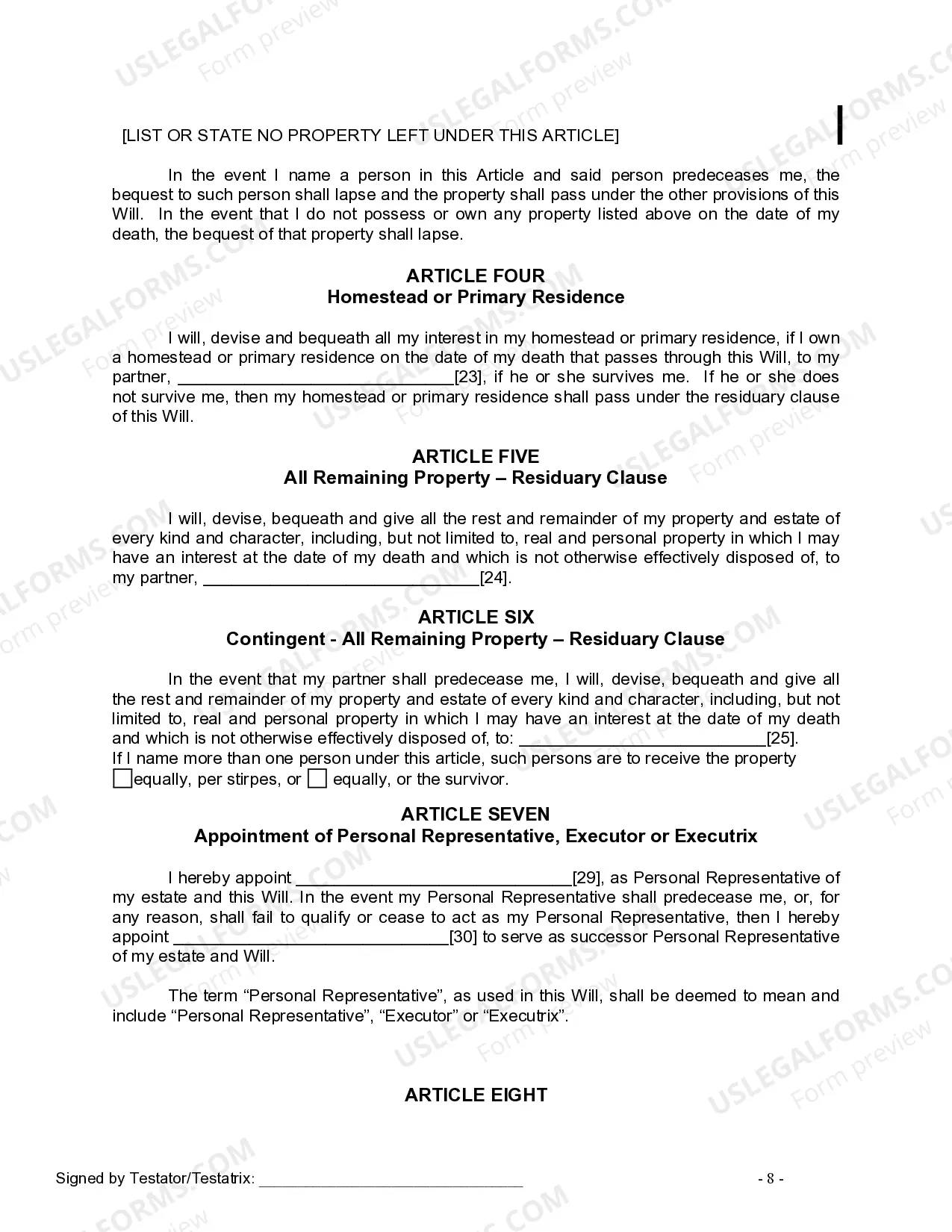
- Introduction: Declares the individual's identity and revokes previous wills.
- Article One: Acknowledges the civil union status and absence of children.
- Specific Bequests: Lists particular items or property intended for specific individuals.
- Homestead Provisions: Directs how the primary residence is to be handled.
- Residuary Clause: Distributes all remaining assets not specifically mentioned.
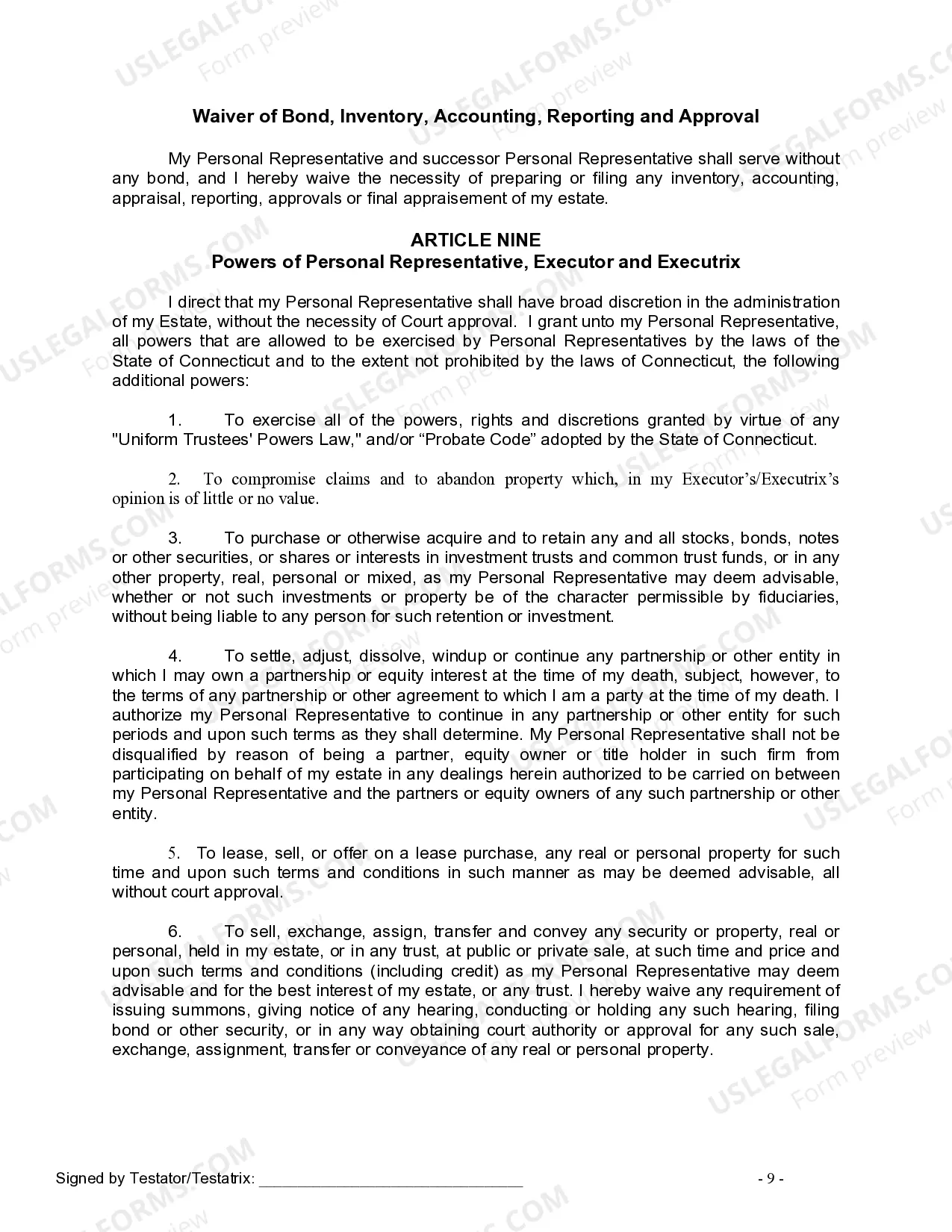
- Appointment of Personal Representative: Names an executor to manage the estate.
- Self-Proving Affidavit: Simplifies the probate process and supports the validity of the Will.




Situations where this form applies
This form is ideally used by individuals in a civil union who have no children and wish to ensure their partner is taken care of after their death. It is necessary when someone wants to specify how their assets should be distributed, appoint a trusted person to execute their wishes, and avoid the complications of intestate succession, which occurs when someone dies without a valid Will.
Who should use this form
- Civil union partners without children who wish to prepare their estate plans.
- Individuals looking to clarify their asset distribution preferences.
- Persons wanting to appoint a personal representative for their estate.
- Anyone wishing to streamline the probate process for their loved ones.
Steps to complete this form
- Start by entering your legal name and county of residence at the top of the form.
- In Article One, specify your partnerâs name to highlight your civil union.
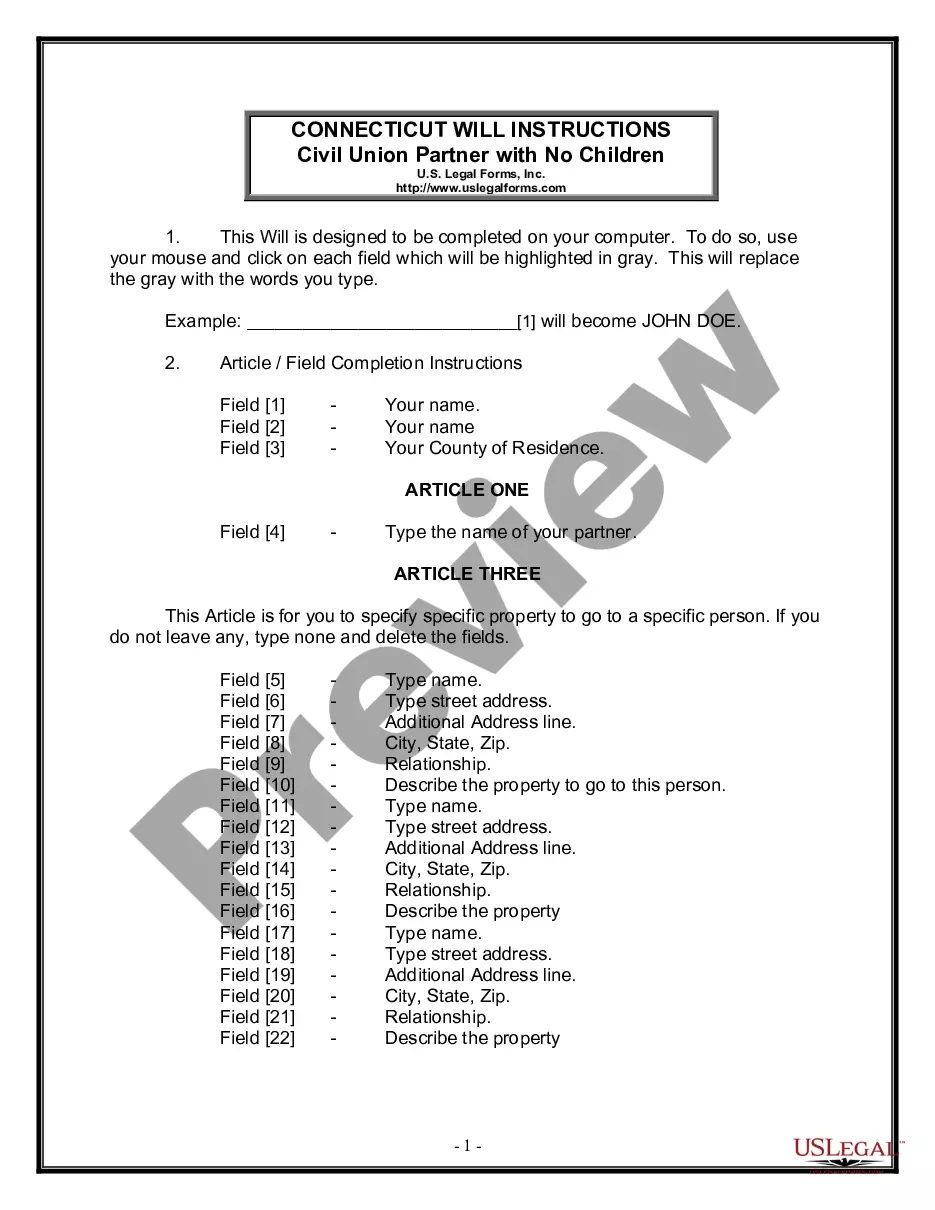
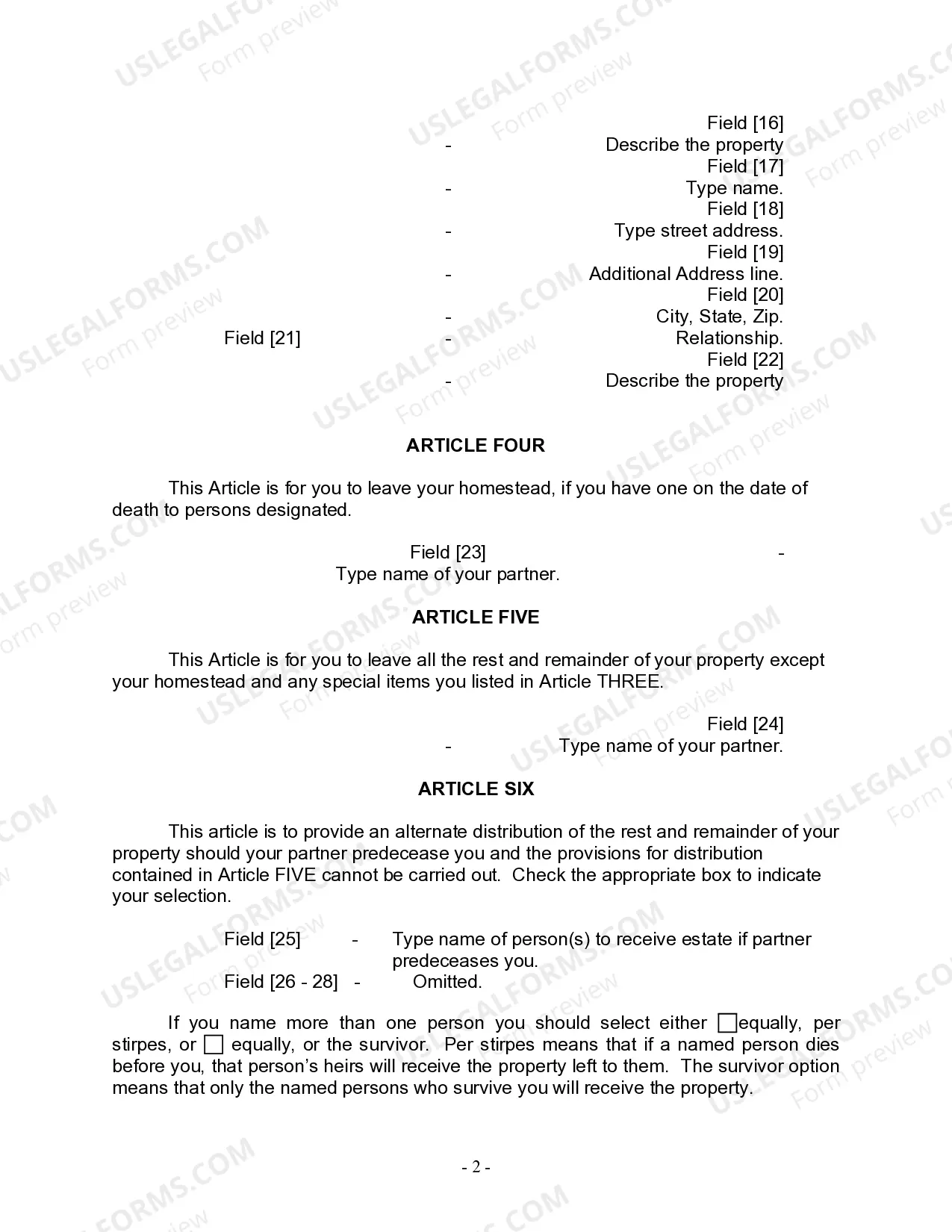
- List any specific bequests you wish to make in Article Three.
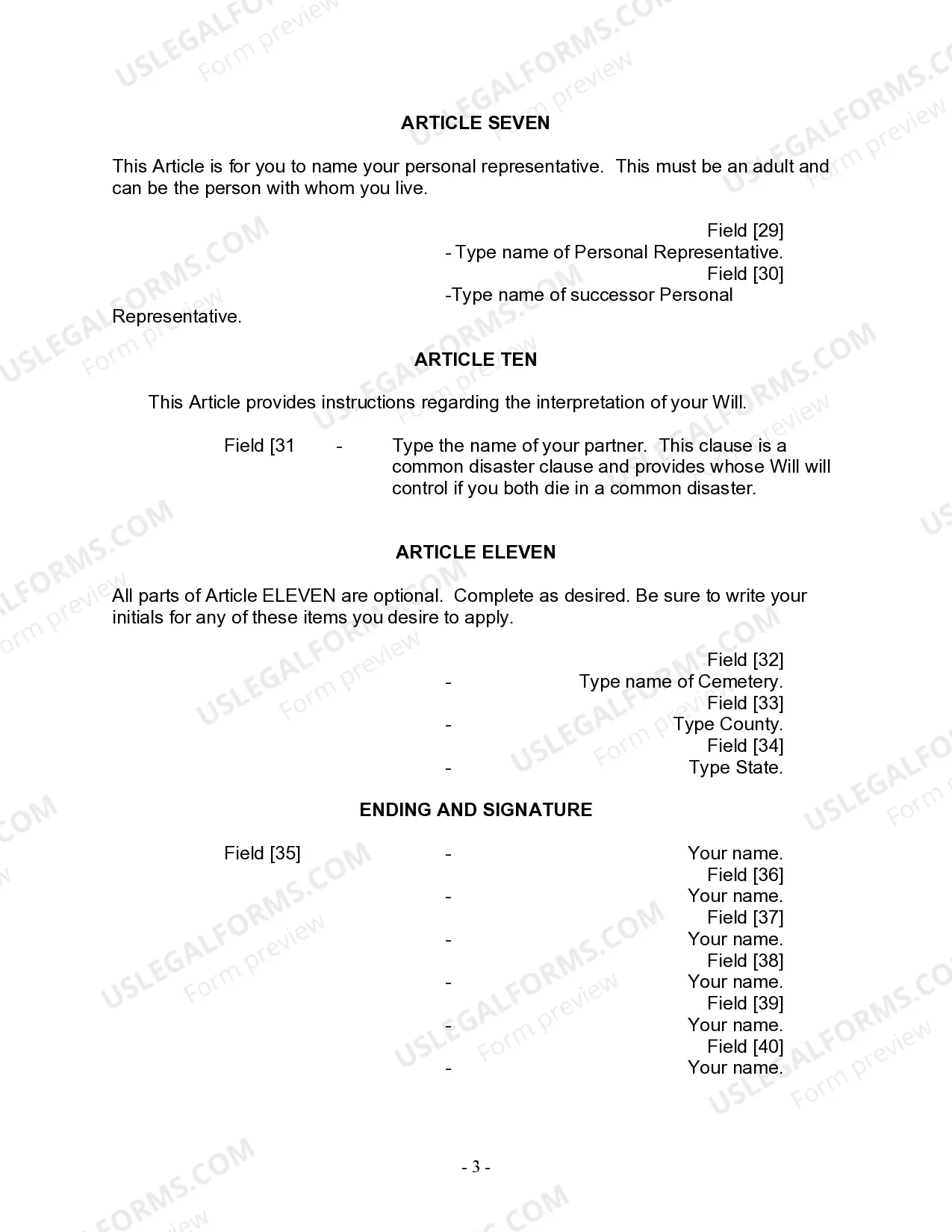
- Appoint your personal representative and any successors in Article Seven.
- Ensure to have the form signed by you and two witnesses in accordance with state laws.
- If applicable, have the self-proving affidavit completed by a notary public to ease probate procedures.
Does this document require notarization?
Yes, this form must be notarized to be legally valid in many jurisdictions. The self-proving affidavit included facilitates this process, allowing for easier probate without the need for witnesses post-death. US Legal Forms offers integrated online notarization for convenience, allowing you to notarize documents securely at your convenience.
Get your form ready online
Our built-in tools help you complete, sign, share, and store your documents in one place.
Make edits, fill in missing information, and update formatting in US Legal Forms—just like you would in MS Word.
Download a copy, print it, send it by email, or mail it via USPS—whatever works best for your next step.
Sign and collect signatures with our SignNow integration. Send to multiple recipients, set reminders, and more. Go Premium to unlock E-Sign.
If this form requires notarization, complete it online through a secure video call—no need to meet a notary in person or wait for an appointment.
We protect your documents and personal data by following strict security and privacy standards.

Make edits, fill in missing information, and update formatting in US Legal Forms—just like you would in MS Word.

Download a copy, print it, send it by email, or mail it via USPS—whatever works best for your next step.

Sign and collect signatures with our SignNow integration. Send to multiple recipients, set reminders, and more. Go Premium to unlock E-Sign.

If this form requires notarization, complete it online through a secure video call—no need to meet a notary in person or wait for an appointment.

We protect your documents and personal data by following strict security and privacy standards.
Mistakes to watch out for
- Failing to include a self-proving affidavit, which can complicate the probate process.
- Not having the Will signed in front of the appropriate number of witnesses.
- Leaving out specific bequests, which can lead to potential disputes.
- Not regularly updating the Will after significant life changes.
- Using unclear terms which can be misinterpreted during distribution.
Why complete this form online
- Convenience of accessing and completing the form from home.
- Editable format allows for easy adjustments and updates.
- Guided completion ensures all necessary sections are filled out correctly.
- Integrated options for notarization if required, enhancing the form's validity.
Main things to remember
- Creating a Will is crucial for civil union partners to ensure their assets are distributed according to their wishes.
- Legal requirements for execution and notarization are vital for the validity of the Will.
- Specific bequests and clear designations of personal representatives prevent future disputes.
- Regular updates to your Will are necessary to reflect any life changes.
Looking for another form?
Form popularity
FAQ
In Connecticut, your surviving partner may have access to certain inheritance rights, depending on the estate's structure. If you pass away and have a will that outlines specific distributions, your partner's rights will vary accordingly. It's advisable to create a Connecticut Last Will and Testament for a Civil Union Partner with No Children to clarify these matters and protect both your interests and those of your partner.
In Connecticut, when a spouse passes away, the surviving partner typically has a right to a portion of the deceased's estate. If there is a valid will, the distributions follow the terms outlined within it. Establishing a Connecticut Last Will and Testament for a Civil Union Partner with No Children helps clarify entitlements, offering peace of mind during a difficult time.
Yes, you can create a Connecticut Last Will and Testament for a Civil Union Partner with No Children without your partner's involvement. A legally recognized will allows you to designate how your assets should be distributed upon your death, even if your partner is not included. This approach provides clarity and ensures your wishes are clearly documented.
If your partner passes away and you are not listed on the deed, the property may be subject to probate. In such cases, your rights as a civil union partner may depend on the presence of a will. To safeguard your interests, creating a Connecticut Last Will and Testament for a Civil Union Partner with No Children ensures that you have a claim to shared assets and eliminates confusion.
Disinheritance in Connecticut is complex. While you can specify in your Connecticut Last Will and Testament for a Civil Union Partner with No Children that your partner will not receive an inheritance, state laws may grant them certain rights to a portion of your estate. It is essential to consult an attorney to ensure that your intentions are legally sound and enforceable.
In Connecticut, if a person dies without a valid will, the state's intestacy laws dictate how their assets are distributed. For partners in a civil union with no children, the surviving partner typically inherits a portion of the estate, often receiving the entirety if there are no other relatives. Having a Connecticut Last Will and Testament for a Civil Union Partner with No Children helps ensure your wishes are honored and can also alleviate potential disputes.
Yes, in Connecticut, most wills must go through probate to be executed as intended. This process ensures that the provisions of a Connecticut Last Will and Testament for a Civil Union Partner with No Children are carried out properly. Some assets may pass outside of probate, depending on how they are titled or designated. To understand your unique situation, consider exploring resources available on the uslegalforms platform.
A will becomes legal in Connecticut when it meets specific requirements set by law. This includes being in writing, signed by the testator, and witnessed by at least two individuals. For a Connecticut Last Will and Testament for a Civil Union Partner with No Children, ensuring your will adheres to these legalities is crucial. You can find useful templates and information on the uslegalforms platform to create a legal will.
To establish the validity of a will in Connecticut, the document must be in writing and signed by the testator. For a Connecticut Last Will and Testament for a Civil Union Partner with No Children, having two witnesses sign the document enhances its legitimacy. Additionally, the testator must have intended for the document to serve as their last will. If you have concerns about validity, uslegalforms offers resources to help you navigate the process.
In Connecticut, a will does not need to be notarized to be valid. However, having your Connecticut Last Will and Testament for a Civil Union Partner with No Children notarized can help protect it from challenges. It's beneficial to have witnesses as well, which adds an extra layer of authenticity. If you want peace of mind, consider using the uslegalforms platform for guidance.