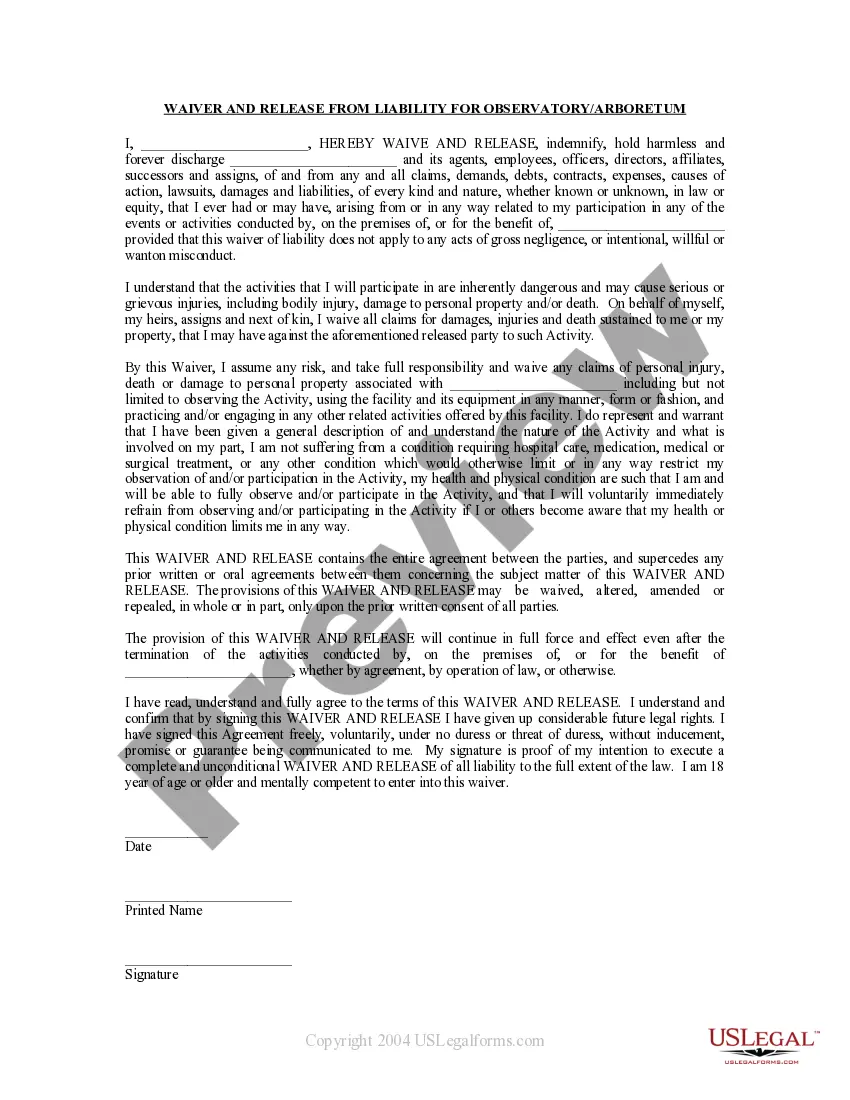
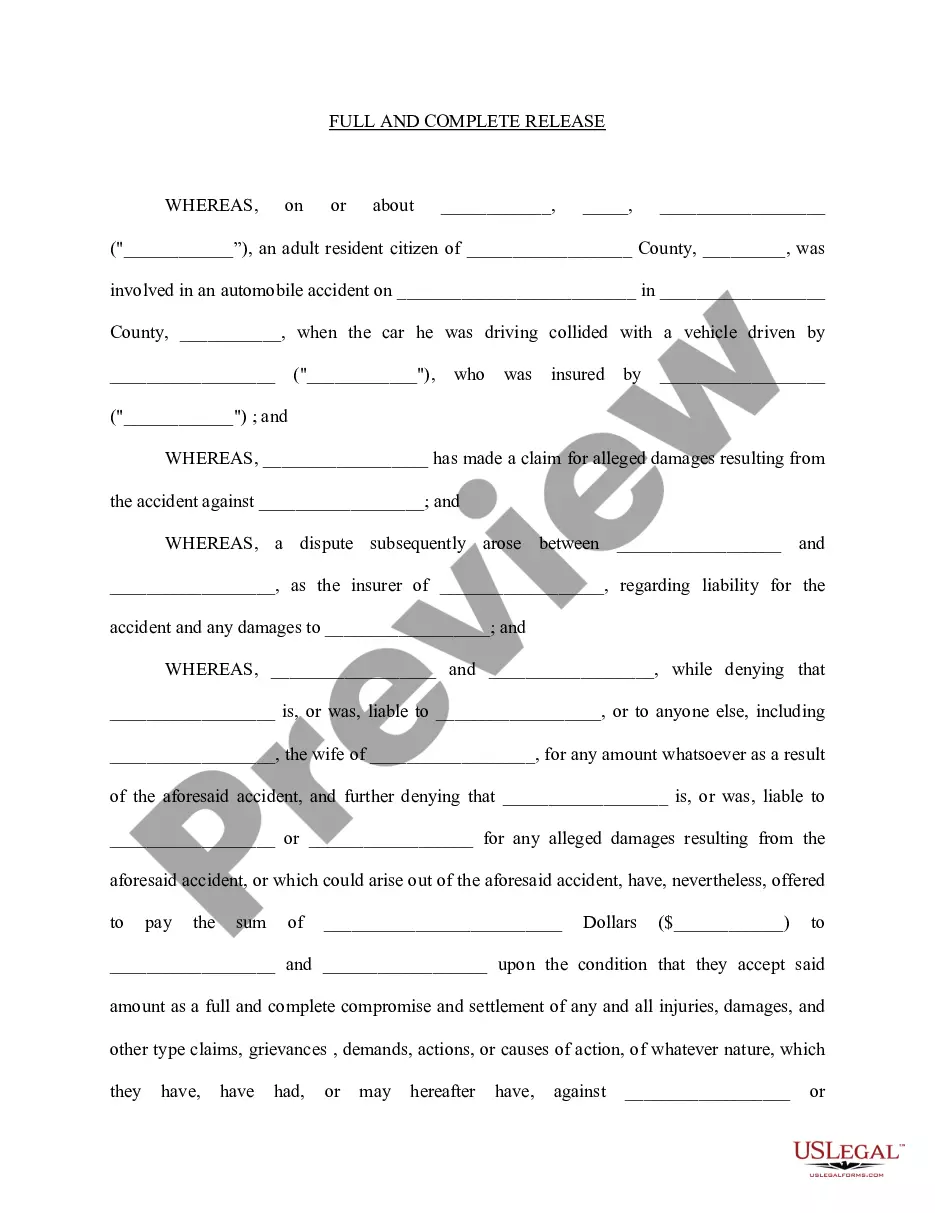
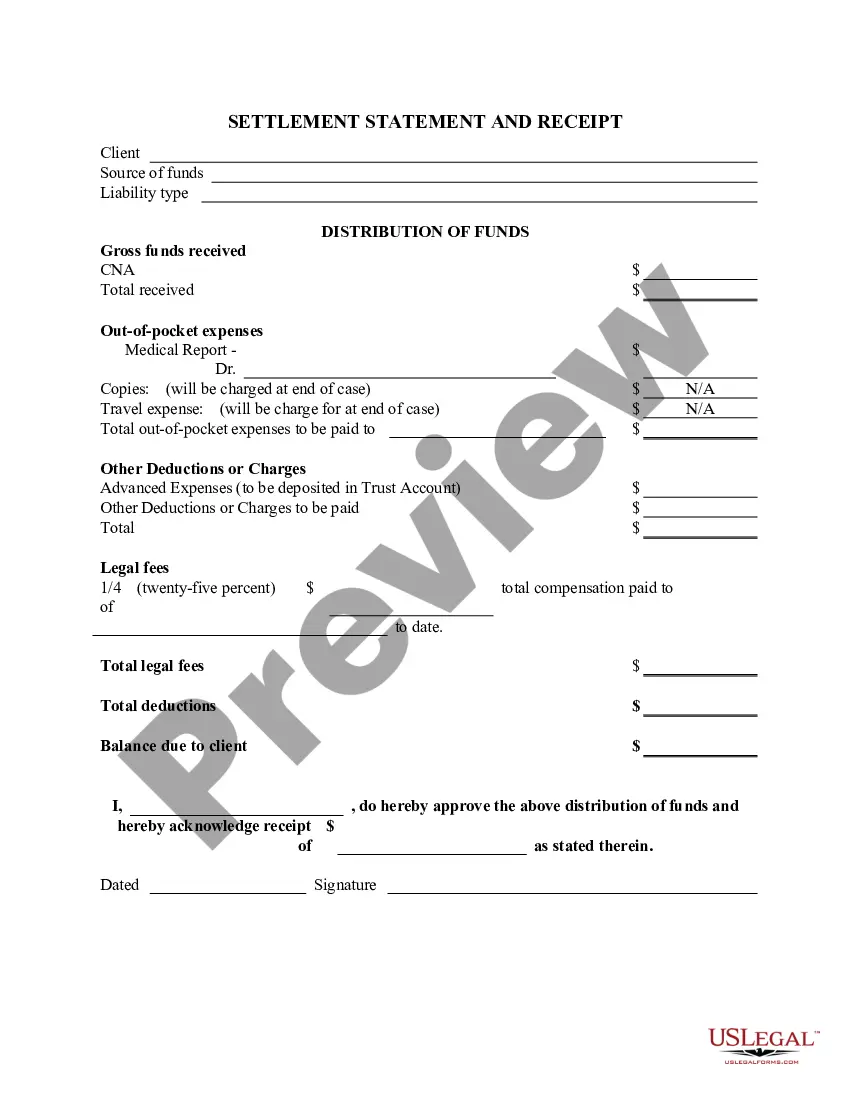
This form is a settlement statement provided by the attorney to the client detailing expenses and disbursements of client funds.
Connecticut Personal Injury Settlement Statement
State:
Multi-State
Control #:
US-PI-0228
Format:
Word;
Rich Text
Instant download
Description
Free preview

Get your form ready online
Our built-in tools help you complete, sign, share, and store your documents in one place.
Built-in online Word editor
Make edits, fill in missing information, and update formatting in US Legal Forms—just like you would in MS Word.
Export easily
Download a copy, print it, send it by email, or mail it via USPS—whatever works best for your next step.
E-sign your document
Sign and collect signatures with our SignNow integration. Send to multiple recipients, set reminders, and more. Go Premium to unlock E-Sign.
Notarize online 24/7
If this form requires notarization, complete it online through a secure video call—no need to meet a notary in person or wait for an appointment.
Store your document securely
We protect your documents and personal data by following strict security and privacy standards.

Make edits, fill in missing information, and update formatting in US Legal Forms—just like you would in MS Word.

Download a copy, print it, send it by email, or mail it via USPS—whatever works best for your next step.

Sign and collect signatures with our SignNow integration. Send to multiple recipients, set reminders, and more. Go Premium to unlock E-Sign.

If this form requires notarization, complete it online through a secure video call—no need to meet a notary in person or wait for an appointment.

We protect your documents and personal data by following strict security and privacy standards.
Looking for another form?
How to fill out Personal Injury Settlement Statement?
Choosing the right legitimate file format can be a have a problem. Needless to say, there are a lot of themes available on the net, but how can you get the legitimate type you want? Use the US Legal Forms web site. The service provides a large number of themes, such as the Connecticut Personal Injury Settlement Statement, that you can use for company and private needs. All the types are examined by pros and satisfy federal and state demands.
When you are already registered, log in in your accounts and click on the Obtain button to find the Connecticut Personal Injury Settlement Statement. Make use of your accounts to check through the legitimate types you possess bought previously. Check out the My Forms tab of your accounts and obtain an additional copy of your file you want.
When you are a fresh end user of US Legal Forms, listed here are simple guidelines that you can stick to:
- First, make certain you have selected the correct type to your town/region. You can look through the form making use of the Review button and browse the form description to make sure this is basically the best for you.
- In the event the type will not satisfy your preferences, make use of the Seach discipline to obtain the right type.
- When you are positive that the form is suitable, select the Purchase now button to find the type.
- Pick the pricing strategy you want and enter the necessary information. Build your accounts and pay money for an order using your PayPal accounts or Visa or Mastercard.
- Pick the data file formatting and down load the legitimate file format in your device.
- Comprehensive, modify and print out and indication the attained Connecticut Personal Injury Settlement Statement.
US Legal Forms is definitely the most significant local library of legitimate types for which you can find various file themes. Use the service to down load expertly-made papers that stick to condition demands.
Form popularity
FAQ
Money you receive as part of an insurance claim or settlement is typically not taxed. The IRS only levies taxes on income, which is money or payment received that results in you having more wealth than you did before.
Since these types of damages are meant to replace the income you would otherwise have earned from work and would have paid taxes on, they are considered to be taxable by the IRS and the State of California and will need to be reported.
Statutes of Limitations for Negligence or Recklessness / Medical Malpractice: 2 years from when an injury is ?sustained or discovered,? not to exceed 3 years from the date of the act. Conn. Gen. Stat.
So, to summarize, the general rule specific to personal injury claims is that the proceeds for compensatory damages are not taxable under federal or state law. This rule applies whether the claim was settled prior to or after filing a lawsuit, or whether the proceeds were awarded in a verdict following a trial.
However, settlement amounts depend on the type of damages involved. For instance, in 2020, the average bodily injury claim was $20,235, while the average property damage claim was just $4,711. The type of injuries you incur can also impact your settlement amount.
The general rule is that lawsuit settlements are taxable, except in cases that involve an actual, physical injury (?observable bodily harm?) or illness that you suffered. In other words: personal injury settlements usually aren't taxable, while other types of settlements usually are.
A structured settlement is an arrangement in which the settlement payment is paid out over time, rather than in a lump sum. This can help to avoid taxes on the settlement payment by spreading out the tax liability over a longer period of time.
Under 26 U.S. Code § 104(a)(2), compensation that you recover for your medical expenses for your physical injuries is excluded from your gross income and is generally not taxable by the IRS or the State of California.